
In 2015 Dublin City Council first proposed a plan and a strategy for giving the Liberties in Dublin 8 a greener look. This greening strategy set out to produce new parks and green areas while improving existing ones in the area.
The Liberties, an area notorious for its name and old Dublin heritage, was once one of the most deprived areas of Dublin. The last 20 years has seen a huge social and demographic shift, with rising house prices changing the profile of the area to one of greater affluence.
Yet the Liberties still has a dilapidated look to many of its buildings, and shop fronts with little or no green space. This prompted the council to instigate a new greening strategy that would tackle both the lack of green spaces, but also provide more trees to the area and an improvement to the shop fronts.
It has now been 10 years since the original strategy was put in place by Dublin City Council. We will look at the improvements and changes that the Liberties has undergone in this time, and the further improvements that are still yet to happen.
In the plan proposed by the council they discussed how they wanted to use two areas in which social housing had been demolished. Today we see that their proposal for the area was successful in the area around Bridgefoot Street.
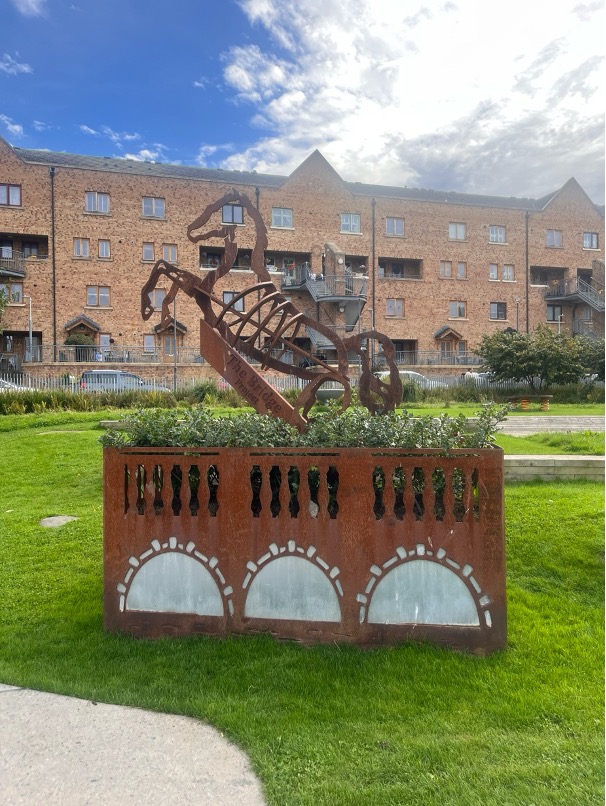
Bridgefoot street is now home to one of Dublin’s newest eco parks that embraces the ethos of recycle and reuse, having many unique features in the park that have been recycled. The park is also home to over 180 trees and has become a green space for all to use.

Recycled feature at Bridgefoot park. Photo: James Black.
Weaver Park is another green space which is new to the city and has become a beacon of joy for the children in the area as it was designed with a skating bowl and other skating features, with a playground in the park giving children full reign to enjoy its space.
Weaver Park was built on the second social housing site which was proposed in the strategy. “A neighbourhood park on the site of demolished Chamber St. flats. The site has been given the working title of Weaver Park which reflects the history of the area as a centre of weaving and linen manufacture,” according to the Dublin City Council.
The Council also planned to improve street level experiences for people in the Liberties. One of the plans involved improving High St with greenery and seats that would engage passers by.
Today we can see this level of greenery on the street but to say it engages the passerby may not be true as this part of they greening strategy did not go to plan like some of the other parks and plans proposed. “The proposal for High St seeks to enhance the pedestrian experience and visual coherency of the Dublin route,” says Dublin City Council.

High Street greenery. Photo By: James Black.
In the last 10 years the Liberties has seen massive improvements in the green sector, from parks to planted trees and it continues to see redevelopment and new construction regularly. There is also a push now in 2025 from the council to encourage new green start ups to consider the area for their business.
You must be logged in to post a comment.