Author: Kelly Smyth

  • All-day protest outside the Dáil demands movement on the Occupied Territories Bill 

    All-day protest outside the Dáil demands movement on the Occupied Territories Bill 

    Protesters gathering on Kildare Street in favour of the OTB. Photo credit: Kelly Smyth. 

    Dozens of protesters from across the country gathered outside Leinster House aiming to progress the passing of the Occupied Territories Bill (OTB), with many calling for services be added to the bill. 

    By Kelly Smyth 

    Demonstrators have gathered outside of the Dáil urging the Government to push forward on passing the OTB, with many branches of the pro-Palestinian movement uniting for the protest. 

    Groups from as far as Kerry joined in the demonstrations, with artistic performances, poetry and speeches being notable features of the all-day demo. The groups were accompanied by politicians, notably Senator Frances Black, throughout the day. 

    The OTB is a proposed piece of legislation that would criminalise Irish businesses trading goods with illegal settlements as per international law. The Bill aims to prevent trade with Israeli settlements in occupied Palestine, such as the West Bank and East Jerusalem.  

    A protestor from Limerick spray-painting a sign at the scene. Photo Credit: Kelly Smyth. 

    Caroline O’Keane, a member of Irish Healthcare Workers for Palestine, spoke on behalf of the group regarding their presence outside of Leinster House. 

    “We’re here today because what they’re doing there is completely against all of our ethical beliefs and everything that we work for,” said O’Keane. 

    “It’s a mystery to all of us here why the government has not enacted this bill. So we’re here to try and push this bill forward in the Dáil, get it enacted, and stop buying goods from the illegally occupied territories in Palestine.” 

    Caroline O’Keane alongside Irish Healthcare Workers for Palestine members. Photo Credit: Kelly Smyth. 

    Another protester, Eileen Yates, expressed a much more personal reason for her presence at the protest; her experience of motherhood guided her support for the OTB. 

    “I am a mam. I see kids like my own being killed. I have a friend in Gaza with four kids who have never seen a life without genocide,” said Yates. 

     Eileen Yates holding her handmade sign. Photo Credit: Kelly Smyth. 

    As part of the protest, Sinn Féin TD Donnachadh Ó Laoghaire addressed the crowd, calling for services to be added to the bill. 

    “Why shouldn’t there be consequences for who trades not only in goods, but also in services? The Irish Government has fallen behind,” he said. 

    Donnachadh Ó Laoghaire TD addressing the protesters. Photo Credit: Kelly Smyth. 

    Following Ó Laoghraire’s address, Senator Frances Black attended the demonstration, meeting many of the organisers of the event. 

    Speaking to TheCity, Black expressed disappointment with the Government’s delay in passing the bill. 

    “We’ve seen absolutely no signs of this bill getting moved at all. The people have not forgotten those promises, that’s why they’re here today. The activists are saying, ‘We want this bill passed’, and they want it passed as soon as possible,” she said. 

    Senator Frances Black speaking with a protestor. Photo Credit: Kelly Smyth. 

    Black, who first introduced the bill in 2018, believes the passing of the bill will set an example to the international community on upholding international law. 

    “There are no consequences to what Israel is doing, breaking international law on a daily basis. And the reality is that if there are no consequences to what they’re doing to the Palestinian people, if we don’t stand up for what’s right and for international law, then none of us are safe. And I think that’s really important to say. So we need to now really get this bill passed as soon as possible.” 

    The last time the OTB was discussed in the Dáil was in November, with the Government claiming the legality of implementing the Bill being a reason it is being delayed.  

    “The trade in services is considerably more complex than goods and there remains considerable legal uncertainty as to whether the inclusion of services is permissible under EU law. We know for certain that the inclusion of goods is permissible under EU law. 

    We need legal clarity on the point on services. We must take into account practical issues with regard to implementation should services be included in the scope of the Bill,” said Minister for State for Europe and Defence Thomas Byrne. 

    It remains to be seen whether the Bill will be passed in coming months or if services will be included in any progress despite pressures from protesters. 

  • ‘It’s time to stop being nightwalkers’: Identity coach Ché Fegan on creating a new landscape for gay men in Ireland 

    ‘It’s time to stop being nightwalkers’: Identity coach Ché Fegan on creating a new landscape for gay men in Ireland 

    Ché Fegan. Photo Credit: Alex O’Brien 

    In a time where many gay men still struggle to find themselves, Ché Fegan is making space for them to feel more honest and aligned with themselves. Following his own struggles and travelling the globe, Fegan reflects on his journey to finding himself.  

    By Kelly Smyth 

    As toxic masculinity and identity politics dominate the online world, identity coach and wellness practitioner Ché Fegan is making space in the real world for gay men to stop chasing validation and embrace who they truly are. 

    Hailing from a rural town in Northern Ireland, growing up wasn’t always simple for Fegan. “From a younger age I was always odd. I had this wild imagination and connection with the outdoors. I was very sensitive and in tune with my emotions,” he said.  

    While this was seen as acceptable for a young boy, things changed as he entered puberty, which is when he believes many men in Ireland are taught to deny who they are in favour of society’s masculine model. 

    “Once you hit puberty, you begin to look like a man instead of a boy. You are kind of pushed away by the men in your life. You are told ‘don’t feel anything’, ‘man up’, ‘toughen up’ – to fit into those already established gender roles. For men, that often means killing everything inside you,” he recalled.  

    For Fegan, being a young gay man caused issues; his sexuality attracted bullying. “It was a place where something different was a curse rather than a blessing,” he said. 

    Despite this, Fegan’s sexuality was a guiding light for who he wanted to be. Although it was “distorting” to be both gay and facing up to masculinity as a young man, his identity brought a real drive for equity in his heart. 

    “My homosexuality gave me a lot of needed fight, and I’ve always had a strong sense of fairness. It fires something up in me,” he said. 

    While this drive to move forward carried him through his teenage years, he found himself battling his identity and sexuality through his twenties. “As a man, regardless of sexuality, you can still go through identity issues. You tend to figure out things behind the scenes. It could be arguing, travelling, hypersexuality. Anything to get away,” he shared.  

    Much of his young adulthood was spent travelling, with his move to Australia finally breaking the cycle of battling his own identity. 

    “Between twenty-eight and thirty I lived in Australia, and I felt incredible loneliness. It was a moment when I was finally feeling. I remember thinking ‘this is f-cked up’ because I should have been able to feel comfortable by myself. But I felt like a stranger in myself. I thought I knew myself, but really, I was just a people pleaser. I had never truly known who I was,” he revealed.  

    This revelation is ultimately what led Fegan to spirituality, beginning with reiki before embracing breathwork, yoga, and sound healing. Part of his spiritual journey was almost serendipitous, with a book on Buddhism he found on the streets of Berlin introducing him to new ideas and a “broadening of the mind”. 

    Embracing wellness has led him to learn more about himself. Now he is ready to share it with others. “I am at a point where I know things now that I want to share. I want to help people feel how I feel now,” he said. 

    Ché Fegan leads one of his breathwork classes. Photo Credit: Ciaran Gildea. 

    Hearing more and more about men in Ireland struggling with their mental health and suicide, Fegan decided it was time to create space for men to find themselves. He also noticed gay men in particular had no spaces beyond nightlife.  

    “If you don’t drink or don’t go out it can be very isolating. It’s time to stop being nightwalkers and time to be seen and heard,” he said. “The space I want to create is based around community. I want to start getting men together and create an environment of softness.” 

    Part of how Fegan is doing this is by offering Men’s Circles, where any man can go to experience somatic movement, breathwork, and a sound bath aimed to help them reconnect with themselves. 

    Additionally, Fegan runs retreats for gay men to help them break harmful patterns surrounding their identity. 

    “Because the gay community is so new in terms of history, so many patterns of harm are repeating regarding shame. I want the next generation of gay men to heal. Why not rule out hate all together?” he said.  

    While many men who are on this journey tend to be older, Fegan reaffirms “the door is open to anyone who wants to come”. 

    “The work I do is about helping men slow down and actually reconnect with themselves through breathwork, nervous system work, and deeper pattern awareness. It’s not about fixing them. 

    “It’s about helping them understand themselves, so they can stop performing and start making choices that feel more honest and aligned with who they are. I think a lot of men are quietly dealing with this, but don’t always have spaces where they feel safe enough to explore it. That’s something I’m trying to change through the work I do.” 

  • Taoiseach faces backlash from Latin American activists over upcoming Shamrock Ceremony with Trump 

    Taoiseach faces backlash from Latin American activists over upcoming Shamrock Ceremony with Trump 

    Ireland-based Latinx collective Sobremesa en Disidencia claim the US should not receive ‘unconditional support’ from Ireland amid ICE violence and invasion of Venezuela.  

    By Kelly Smyth 

    Sobremesa en Disidencia organisers Catalina Hernández, Barbara Sena and Shoshi Chong. Photo Credits: Sobremesa en Disidencia. 

    As Taoiseach Micheál Martin is due his annual visit the White House this St. Patrick’s Day, activist group Sobremesa en Disidencia says the move is “very strange”.  

    The recently established feminist collective has emerged with strength in recent months, working closely with left-wing political group ROSA to represent Latinx diaspora in Irish politics. 

    Organiser Catalina Hernández said that she felt the decision to uphold the 70-year-old tradition following the recent foreign-policy actions of the Trump administration is not good diplomacy. 

    “We understand this is a long-standing tradition but visiting Trump is legitimising the policies that are harming marginalised communities,” she said. 

    Hernández, a Mexican expat who has lived in Ireland for over a decade, believes that Latin American diaspora living in Ireland have been forgotten in much of the debate surrounding the Taoiseach’s affirmation to visit the White House in coming weeks. 

    “I don’t think it is reflecting the opinion of people in Ireland. I live here, I am a part of the community,” said Hernández. 

    Fellow organiser Barbara Sena, who moved to Ireland from Brazil four years ago, also felt the gesture neglects to consider the large Latin American population living in Ireland, with over 27,000 Brazilian citizens alone living in Ireland according to the 2022 census.  

    “We accompany the politics by being here. We shouldn’t have the Taoiseach agree to meet with someone who kidnaps other presidents, invades countries and bombs them,” she said.  

    A poster advertising the protest on Dawson Street. Photo credits: Kelly Smyth.

    Sobremesa en Dicidencia is not the only group to object to the Taoiseach’s White House visit, with ROSA Socialist Feminists and TD Ruth Coppinger backing the ‘No Shamrocks for Trump’ protest that took place outside the Dáil on the 8th of March, with thousands attending.  

    In a social media statement, ROSA condemned the Irish government for upholding the tradition, stating: 

    “The latest Epstein files released detail grotesque allegations of child sexual abuse against Trump. The genocide in Palestine and the ICE terror of immigrants and people of colour should be enough for an Irish government to boycott but the Epstein file revelations are yet another reason,” said the statement.  

    While Sobremesa en Disidencia are optimistic about the protest, they do feel the public attention to the Epstein files has cast a shadow over the Trump administration’s policies towards Latin America. 

    “Every week there is something new with Trump and it is easy to forget other important issues. From our own perspective, Venezuela and ICE are forgotten because of the Epstein files,” said Sena.  

    Hernández argues was part of the reason for the Latin American diaspora turnout which attend the protest on International Women’s Day, saying, “We need to take a stand as immigrants in Ireland. We will not allow this ceremony to happen.” 

     The organisation understands that diplomacy is important between the two countries – with over 245,000 people in Ireland directly employed by US-owned companies.  

    “We need to be less economically dependent on the US. We can’t say anything. What else does Trump have to do to us to finally say something?” said Sena.  

    The organisation strongly believes in Ireland’s global voice, with the Government’s recognition of Palestine as a state in 2025 being a beacon of hope.  

    “The rest of the world recognises our actions. It makes me really proud to live here. We can always do more,” said Hernández, “One small action can send a message.” 

    “Neutrality doesn’t exist at all. Silence is complacency,” said Sena.  

    Despite the large turnout at the protest and US military activity in Iran, the Taoiseach has confirmed that he is still visiting the White House tomorrow.  

  • Irish ice hockey will be ‘completely transformed’ by arena development in Cherrywood, says IIHA President 

    Irish ice hockey will be ‘completely transformed’ by arena development in Cherrywood, says IIHA President 

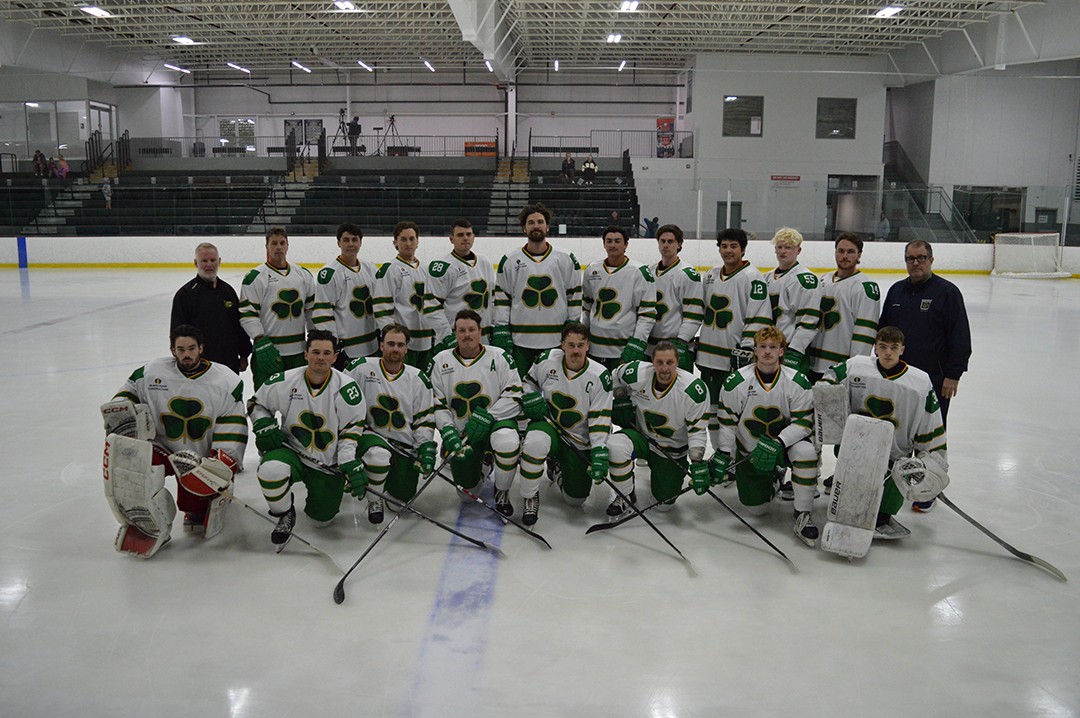
    The ice hockey community in Ireland rejoices as Prime Arena Holdings is to submit planning permission for the country’s first ever “permanent, Olympic-standard ice facility”. 

    By Kelly Smyth 

    In a recent statement, the Irish Ice Hockey Association expressed its full support of the National Ice Arena Project in Cherrywood, highlighting the need for Irish athletes to have a domestic space: 

    “For more than a decade, the IIHA has worked to advance the case for permanent Olympic-standard ice facilities in Ireland, in order to support athlete development, grow participation and allow Irish athletes to train and compete at home.” 

    “The Association therefore welcomes this proposal as a significant and positive milestone in that journey”. 

    Speaking to TheCity, IIHA President Aaron Guli, said he’s  relieved that the proposal is progressing, having advocated for a permanent rink for over a decade. 

    “The IIHA has been trying to make it happen. We are the only country in Europe without a permanent ice facility,” he said.  

    The proposed arena is to consist of two professional standard rinks, one of which would be home to a team like the Belfast Giants, while the second would be open to IIHA teams.  

    “A professional team and arena will help boost interest in the game at a grassroots level. The second rink would give us a home,” Guli said.  

    “It’s long overdue. Our closest neighbour, the UK, has over 66 rinks across the country while we don’t have one.” 

    Currently, players in the Republic of Ireland are forced to travel to Dundonald International Ice Rink in Co Down for training sessions and competitions, making it incredibly difficult to grow the sport domestically. 

    “I mean we have to travel to what is essentially another country to play the sport,” said Guli.  

    Co-founder of Dublin Buccaneers, Derek O’Neill, said he’s frustrated with the lack of local facilities, describing the journey to Dundonald as “very time consuming”. 

    “It’s about a seven-hour round-trip when you factor in the commute, getting ready, getting showered and being on ice,” said O’Neill.  

    O’Neill also revealed many of the open slots for training at the rink are rather late in the evening, further disrupting players’ ability to train.  

    “On a Friday, we can only get a slot at 9:15pm,” he said. “Sometimes you won’t be home until well past 1am.” 

    An Irish youth team practicing in the Dundonald International Ice Rink. Photo Credits: Derek O’Neill. 

    This challenge is not unique to the Buccaneers, and Guli said that the IIHA believes it is another major part in preventing ice hockey from thriving. 

    “If people don’t see the sport, they won’t play the sport. Nobody sees it because we are forced to go so far away even though we are here,” he said. 

    Guli claimed that the lack of ice hockey facilities in Ireland can also be limiting for many immigrants living in the country, who cannot play the sport they grew up with: 

    “There’s nothing here for diaspora. You have a lot of North American and Eastern European players who move here but don’t have the infrastructure to play.” 

    “It’s not the seventies or eighties anymore, Ireland has a very diverse population and there should be something for everyone, especially in a sports heavy country,” he added. 

    O’Neill agreed with this statement, highlighting the diverse range of players the Dublin Buccaneers have as one of the largest senior clubs in the country. 

    “Our team has such a broad spectrum. We have Canadians, Americans, Ukrainians, Latvians, and more,” he said.  

    He also emphasised that the team was also home to a large number of “home-grown” talents on the team, showing there is enough domestic interest to justify the development in Cherrywood.  

    “We are very eager to see it being built. Every few years we’ve been hearing rumours start and then fizzle out. You get a little cynical,” said O’Neill. 

    “This development is reliable; it’s got backing from official bodies like the Olympic federation, so that’s very exciting.” 

    The development may come sooner than expected, according to Guli, who revealed that the arena may be ready by as early as 2030. 

    “If all goes well, planning is due to be submitted by this May. It’s hard to know how long that will take, but we’d like to see the facility open in the next five years,” he said.  

    The IIHA holds hope that the development in Cherrywood will support domestic growth of the sport and see it go “mainstream”. 

    “I think that ice hockey in Ireland will be completely transformed,” said Guli.  

  • ‘Food is a uniting force’ – how the Dublin Sourdough Rotation became more than bread 

    ‘Food is a uniting force’ – how the Dublin Sourdough Rotation became more than bread 

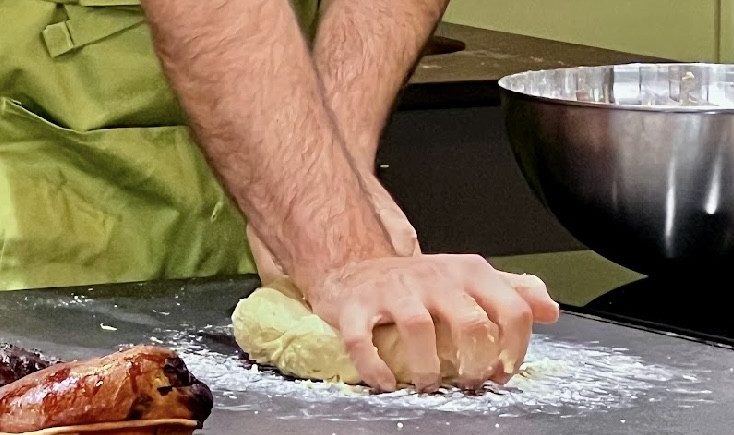
    In a city becoming ever more individualistic, the Dublin Sourdough Rotation is a breath of fresh  bread scented  air for many of its members.  

    Founder Niamh Lacy started the group in 2023, inspired by traditional community values and post-Covid disillusionment.  

    “I was really curious to find out if people would be willing to share food with strangers, and bread was the vehicle for that,” Lacy said.  

    Despite choosing sourdough as the centre of the effort, Niamh admitted she had never baked it before launching the group: 

    “I actually got the initial idea for a community like this about a year or so before I  turned it into something, and sourdough happened to have been pretty trendy during the pandemic. 

    I can admit I didn’t make sourdough before starting the project. I just thought it would be a strong but narrow enough group to start with.” 

    Luckily, she was right, as the community now boasts over 100 members based across Dublin City, with many members saying the project has become a big part of their lives. 

    Derek Kenny, a pharmaceutical quality director based in Dublin 7, joined in the early stages after seeing a flyer in his local café. As an experienced sourdough baker, he was drawn to the idea of finding like-minded people. 

    “I grew up with no real sense of community in Tallaght, so when I moved to Cabra, I found myself getting to know the local butchers, grocers, coffee places,” Kenny said. 

    “So, it was really nice to join an unpretentious, open and friendly community. It is low-stakes. You can challenge your baking, bring something new, and talk about food. What Niamh has built is really great,” he added. 

    A loaf baked by long-time member Derek, who is a member of the Dublin 7 rotation. Photo credit: Derek Kenny. 

    Another experienced baker, Pierce Lowe, found himself immersed in the group after leaving his job in Bread 41 to pursue a postgraduate degree. 

    “I really enjoyed getting to meet other people. Even the small exchanges like handing your loaf over to another person, the feeling of anticipation and getting ready,” Lowe said.  

    When asked about the power of food to unite people, he highlighted the world-wide significance of food. 

    “It’s one of the reasons I’m studying for my masters in sustainable development, food and co-ops. We need food to survive. It’s a whole integrated system. It’s a way to show you care about someone internationally. It gets people to socialise, it bridges gaps,” he said. 

    For new member, Mairi Kachur, this couldn’t be a truer statement. As a Scottish American woman who has lived in Germany, France, and Belgium, moving to Dublin was yet another daunting restart. 

    “I moved to Dublin to be with my fiancé and start my PhD in Trinity. Most of my friends were all made through him, so I really wanted to find my own people,” Kachur said. 

    “I had been living in Dublin for just 2 months when my neighbour told me about the group. So, I reached out to Niamh and went to my first group gathering in someone’s house.”  

    “I met my first friend in Dublin, who is now my best friend. It was really nice to make a friend outside of institutions like work or college.” 

    As an immigrant, she highlighted that she has had a very positive experience of meeting people in Ireland, with the group being a key component of it: “It really gave me something to hold onto when I moved to Ireland”. 

    The community has many other members who have come to Ireland over the years, with Kachur’s best friend Isabella also having previously lived in Belgium.  

    Brazilian member Pedro Ragonezi is also a notable figure, with the former baker being renowned for his “iconic” skills.  

    “I raised some money on Spacehive to run some workshops for members, which Pedro led demonstrations to help teach members some more skills,” Lacy said.  

    “He’s passionate about all sorts of dough and I’ve learned a lot while doing the workshops.” 

    Apart from sourdough, the group has also started sharing recipes for kombucha, kefir and many other fermented foods.  

    Lacy hopes to develop more shared ownership of the community in the future. 

    “I’d love each postcode to organise their meetups and schedules as the group grows,” she said. 

    She added that she would love to see people set up similar groups across Dublin, encouraging the return to traditional neighbourly values with a modern twist. 

    “I really hope people can trust each other more in the future,” she said.