Author: Johnny Byrnes

  • European exchange rates rising in Ireland: Erasmus in Dublin

    European exchange rates rising in Ireland: Erasmus in Dublin

    Dublin has been no stranger to hosting representatives from the European Union in recent years – just ask the Finance Minister Michael Noonan – but a different cohort of continental visitors that stay a little longer and enjoy a more better welcome are Erasmus students.

    Bridge 3
    Bridging the gap: Dublin is now a popular choice amongst Erasmus students. Photo: Johnny Byrnes

    Established in 1987, this academic exchange programme has perfectly dovetailed with the expansion of the European Union and the ability to travel freely within its continental borders. With over 4,000 scholarly institutions signed up to participate in the scheme, the list of possible destinations is a long one. Dublin – an English speaking capital city – is a popular choice amongst travellers. Residents of our city must wonder what those visiting make of us; well why don’t we find out.

    Valentijn de Jongh (24) is a civil law student from Leiden, The Netherlands and he chose to spend his academic sojourn at Trinity College Dublin because he visited the campus in his teenage years. When asked what his initial impressions of Dublin were, two main points sprang to mind, “One thing that has surprised me is the weather; it is not too bad! Also, sometimes the English spoken by the lecturers and the students is a little different and difficult to comprehend.”

    Kristie de Jong (19) – a Dutch student studying International Communication and Media in Utrecht, The Netherlands – initially didn’t plan on visiting Dublin. “To be honest, I chose Dublin for a simple reason. I actually wanted to go to London as it is an English-speaking capital city, but because my home university didn’t have any partnerships with colleges there, I chose the next best option, Dublin and the Dublin Institute of Technology (DIT).”

    Kristie isn’t regretting her decision though, and she has taken a particular fancy to one of Ireland’s core traditions. “I really like the live music in the pubs; at home you don’t really have that. To just go into a pub you want and listen to the live music all night, that is really great. I even know some of the Irish songs now!”

    WP_20140814_001[1]
    Ireland’s nature – in this case St. Stephen’s Green – is always a major attraction for visitors. Photo: Johnny Byrnes
    Martin De Neuville (21) is a Belgian student enrolled on a mechanical engineering course in the Université Catholique de Louvain. Like Valentijn, he is also studying at Trinity College and both are involved with the college’s hockey team this season. The chance to play hockey in a different environment was a factor in Martin’s choice, but he has found the work/sport balance a little unfamiliar here. “The way of teaching is quite different to what I’m used to. The majority of lectures here are mandatory and there is not a lot of continuous assessment, so almost of the grades depend on the exams.”

    Accommodation and the rise in rent prices has been a talking point in Irish society in the last 2-3 years and it is a problem that Erasmus students are not immune to, with both Kristie and Martin having to deal with the fallout. “It’s so expensive! To live in my room of 8m2, I have to pay around €170, which is insane!” Kristie said.

    Martin added, “Accommodation is a terrible problem here in Dublin. I’m actually still looking for something closer to the city centre. I really hated my first few weeks here when I was running around to attend room visitations. I’ve seen so many crap places for an exorbitant price. It should really be regulated”.

    The Erasmus Student Network (ESN) is a volunteer-based organisation that tries to bring together all of the international students in a given university/city to try and make their exchange programme as enjoyable as possible. The ESN Dublin team are based in UCD and have organised events this semester including trips to Belfast, Kerry and Glendalough, as well as an international dinner and an end of semester Gala night.

    A recent QS Best Student Cities survey placed Dublin as 32nd on the list of top places to study in the world, a drop of 17 places from the corresponding survey done 12 months ago.

    When asked what complaints they often receive from Erasmus students, the ESN Dublin team were in unison when they stated that the public transport system and the weather were the main issues that left visitors feeling aggrieved.

    Taxis 4
    Dublin’s struggle with traffic congestion is proving to be a nuisance for many. Photo: Johnny Byrnes

    Martin himself has not been impressed with the transport network in Dublin, “The public transport is far behind other European capitals. It’s very expensive and the traffic is so dense that you lose a considerable amount of time.”

    With the debate raging on about how Irish students represent themselves whilst abroad – either on J1 visas in America or during their summer holidays – should the Erasmus programme be promoted more in Irish colleges to encourage more people to take this academic avenue to travel?

    The ESN Dublin team’s webmaster Sean Judge thinks so, “I myself went abroad and loved it. It gave me the chance to meet new people, see new places and get a lot of new stories as a result.”

    So if any future Erasmus students are mulling over the possibility of visiting Dublin or indeed Ireland, these final words of advice come from ESN Dublin’s President Aoife Sands. “Try your best to get your accommodation sorted before coming to Ireland, look into setting up an Irish bank account if your currency is different, and bring an umbrella!”
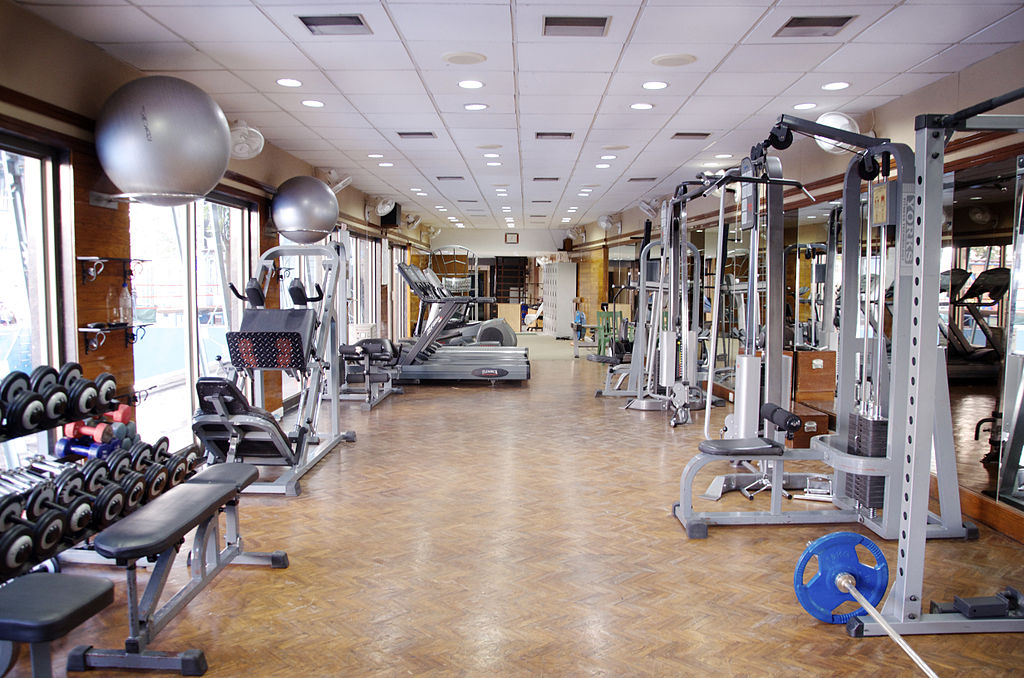
  • Body Image – Men and the Gym

    Body Image – Men and the Gym

    The topic of body image has long been associated with women. However, with the modern man seemingly taking equal or even more care of themselves, The City paid a visit to RAW Condition Gym in Dublin 2 to talk to Rob Lipsett, a qualified personal trainer, to hear his take on the matter.

  • You have the right to tell me everything: The Powers of Freedom Of Information

    You have the right to tell me everything: The Powers of Freedom Of Information

    The release of the letter written by Jean-Claude Trichet from these ECB offices has brought the Freedom of Information debate back to the fore. Photo: Eric Chan
    The release of the letter written by Jean-Claude Trichet from these ECB offices has brought the Freedom of Information debate back to the fore. Photo: Eric Chan

    So often the bridesmaid but never the bride, the Freedom of Information Act finally got its day in the Irish media limelight in early November of 2014 following the publication of the infamous letter sent in 2010 by the European Central Bank to the then Irish Finance Minister, the late Brian Lenihan.

    As members of the public digested the significance of this historic document, they could be forgiven for overlooking the tireless work that went in over a three-year period to obtain it and release it out into the public domain.

    Indeed, while the majority of the national news publications/broadcasters carried the story, all of them are indebted to the tireless and determined work of independent Irish journalist Gavin Sheridan, whose individual campaign to take on the establishment was finally rewarded.

    Sheridan’s preferred methodology when it comes to reporting is to use an asset that fellow journalists and many other members of the Irish public often neglect: the Freedom of Information Act.

    For a system that simply involves writing a request to the necessary entity (for free following the abolition of the €15 fee), the culture of obtaining data using the Freedom of Information Act in Ireland is unquestionably under-used.

    Many are deterred by the bureaucratic nature of the application process and the sheer length of time it takes to retrieve the desired information. However, for those journalists who stick to their initial objective, a potential treasure trove of newspaper articles and broadcast packages is waiting at the end of it all.

    The latest version of the Freedom of Information Act in Ireland came into law in October 2014. Governments past and present have had differing opinions on the Act, but no-one can deny its importance in a transparent democracy like the one we wake up to every day.

    The ratification of the Aarhus Convention by our government in 2012 and the subsequent passing of the Access to Information on the Environment Regulations mean that there are now in fact two gateways into the process of legitimately asking for information to be made public knowledge in Ireland.

    Although there is a broad and quite substantial list of public bodies covered by the Act, it’s often the one big omission from the list that garners the most attention. Ireland is one of a few countries that does not have direct access to documents relating to its police force, in our case An Garda Síochána.

    Regulations regarding the transparency of our police force need modernizing. Photo: Ticketautomat
    Regulations regarding the transparency of our police force need modernizing. Photo: Ticketautomat

    Understandably, many of the documents are to do with confidential information or issues pertaining to national security, but the recent GSOC scandals and the findings outlined in the Garda Inspectorate Report highlight the urgent need for an updated checks and balances system.

    So rather than holding out for a whistleblower or waiting to follow-up on another publication’s scoop, journalists should be availing of a service that is perfectly constitutional. Investigative or breaking news stories relating to the proposed new children’s hospital, the TV licence fee or to data relating to third-level institutions and their expenses could all be sitting in governmental filing cabinets. The powers of the FOI Act are in our hands.

  • Ben Howard’s new LP targets the purist punters

    Ben Howard’s new LP targets the purist punters

    Ben Howard Image
    Howard’s concerts are widely known for their intensity and simplicity. Photo: Abigail Hoekstra

    A couple of Brit Awards, a Glastonbury performance on the Pyramid Stage and a debut album raved about by fans and peers. Life is pretty sweet for Ben Howard and the singer has just released his long-awaited second album I Forgot Where We Were.  

    As his new album’s title suggests, Howard’s fans have been left shorn of fresh material from the English singer-songwriter. That wait – thankfully – is finally over.

    If the 27-year-old’s debut album Every Kingdom was seen as quintessential Ben Howard (acoustic melodies blended in with expressive lyrics as exemplified in classics like ‘The Fear’ and ‘Only Love’), Howard’s new album I Forget Where We Were can definitely be seen as an electronic experiment. Howard’s latest offering also sets him down the start of a different path than that travelled by others in his genre such as James Vincent McMorrow, George Ezra and Nick Mulvey.

    The opening song ‘Small Things’ serves as a fitting bridge between albums new and old, with Howard’s poetic lyrics being complemented by a new, reverberating sound. The album’s title track and ‘Time Is Dancing’ are also worth a second or third listen.

    An album filled with atmospheric instrumentals, the sheer lengths of the songs (seven of the 10 playing over the five-minute mark) make this less of a radio-targeted album and more of one for the purists, perhaps those that prefer the returning medium of vinyl.

    Having the potential to be a perfect driving album, one wonders whether Ben Howard pieced together the ideas behind this soundtrack during his travels from the professionalism of London and beyond to where he really feels at home: the countryside and surfing-friendly shores of Devon, England.

    Ben Howard will play two sold-out concerts in the Olympia Theatre, Dublin on December 7 and 8.

  • New travel routes announced at Dublin Airport

    New travel routes announced at Dublin Airport

    Sunset falling on Dublin Airport's Terminal 2. Photo: Philip Wall
    Sun rises on Dublin Airport’s Terminal 2 and its new travel plans. Photo: Philip Wall/Twitter

    Passengers looking to get away from Ireland for a short holiday or weekend break this winter can now broaden their destination plans as Dublin Airport has announced 19 new routes.

    These new routes include potential short trips to Inverness (Scotland) and Cologne (Germany) as well as the continuation of long-haul flights to San Francisco (USA) and Toronto (Canada).

    Dublin Airport says that they will have an extra 950,000 seats available this upcoming winter, a 10% rise from the same time last year.

    Speaking about the new announcement, the airport’s Managing Director,Vincent Harrison said, “These new winter services, coupled with the additional frequency and capacity on many existing routes, significantly strengthens Dublin Airport’s route network, providing even more choice and flexibility for our customers.”

    The introduction of Dublin Airport’s Terminal 2 in November 2010 and its sustained success has seen the transport hub become increasingly popular among tourists and those passing by on stop-over flights.

    Ireland's main airline Aer Lingus is continuing to grow on the international market. Photo: Flickr
    Ireland’s main airline Aer Lingus is continuing to grow on the international market. Photo: Eric Salard/Flickr

    Dublin Airport is ranked just outside the top 20 busiest airports in Europe. It handled nearly 20.2 million passengers in 2013 and that number is set to rise significantly come the end of 2014.

    The airport has a large presence on social media and their free WiFi service is in contrast to many other airports around the world where customers have to pay to access the internet. It has 89,400 Twitter followers, over 6,300 Instagram followers and over 60,500 likes on Facebook.

    The airport’s ability to generate business interest for Ireland was rewarded in September 2014 when they won an aviation marketing award at the World Routes Award ceremony in Chicago.

    With new routes planned to Reykjavik (Iceland), Helsinki (announced by Finnair) and a link from Los Angeles to Addis Ababa (Ethiopia) for 2015, residents of Dublin and the wider commuter belt can start to plan some exciting escapes.