Author: Conor McMahon

  • The Irish Way of Living and Dying: An interview with Aoife Kelleher

    The Irish Way of Living and Dying: An interview with Aoife Kelleher

    Aoife Kelleher’s debut feature-length documentary, One Million Dubliners, explores life at Glasnevin cemetery – the final resting place of some of Ireland’s greatest modern heroes.

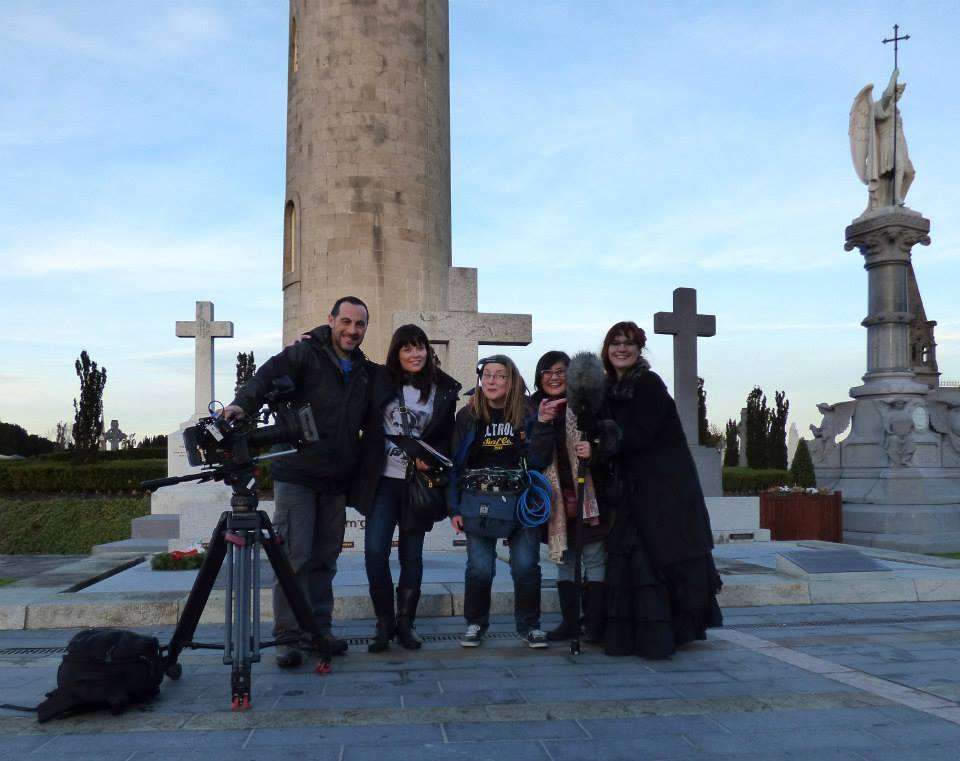
    Aoife Kelleher pictured second from left
    Aoife Kelleher pictured second from left. Picture courtesy of Aoife Kelleher

    This wasn’t Aoife’s first time to explore the topic of death. Corrigan’s Funeral Home on Aungier Street was the subject of her first documentary as a film student in DIT.

    “I’m sure it sounds incredibly macabre, but I always found that stuff interesting,” she says. “It’s an area that is present for everyone, but not really spoken about.”

    Producer Rachel Lysaght – who thought it was interesting that Glasnevin cemetery had its own marketing department – first approached Aoife about the idea of making a film about the site. The two had previously worked on a number of projects together including a short film called Home for the Irish Film Board’s Reality Bites scheme.

    “Between myself and Rachel and James Mitchell, the executive producer, [we] wrote up the full proposal treatment for BAI submission over the summer of 2013. We got funding in September and we started immediately.”

    one-million-dublinersFrom the outset, One Million Dubliners was not going to be ‘just a historical documentary’ – it would tell modern stories as well.

    “The idea of merging history and the contemporary life of the cemetery was [challenging] from the point of view of how to structure it,” Aoife says. “So I decided to follow the tour.”

    The tour was guided by the late Shane MacThomais, Glasnevin’s resident historian and storyteller, and the leading character in One Million Dubliners.

    “As soon as I was on the tour, it became immediately apparent that he would be one of the central people in the documentary. It just made sense then to follow his tour [throughout the documentary] because he was just so warm and engaging. [He was] so good with everyone, from tourists just off a red-eye flight to kids on a school tour.”

    Aoife clearly has a lot of affection for Shane, which comes across in the documentary. Shane is a very likeable character; a real header who provides comic relief for the audience as well as some intriguing insights about his own perspective on death.

    He was an amazing guy,for us as a film crew and for everyone who visited Glasnevin. He was really, really generous with his time and very, very funny. It was really wonderful spending time with him. If I had a question, he would be great and really helpful about answering…He was great at introducing me to people…It was just a real privilege to get to know him.

    Aoife and the team had one day of shooting left in their budget: Easter Sunday, a significant date in Glasnevin’s calendar. However, Shane died suddenly before filming was complete.

    “I was in the edit with our extraordinary editor Emer Reynolds. We had been in there for two weeks planning the structure and how best to tell the various stories that we had. And then we got the really, really terrible news about Shane. It really was absolutely devastating for everyone. I can’t explain how much of a shock it was…When making a film about the rituals [of death] and talking to people about how they live and die, that will never prepare for the reality of someone actually passing away.”

    Rachel Lysaght and Aoife travelled to Glasnevin to recalculate how they would finish the film.

    They contacted Shane’s family and his colleagues at the Glasnevin Trust to seek advice on how best to complete production.

    “When something like that happens I think you have to acknowledge as a documentary maker…that you have to be guided by other people…Everyone in his family and all of his friends knew he really enjoyed the process of making the film. It captured so much of his work within the cemetery and all that he had done for Glasnevin. His family really wanted him to stay in [the film], and to show everything that he had done.”

    Although Shane steers a lot of the narrative, there is a wealth of strong characters who give an insight into Dublin today and the importance of death and funerals in Irish culture.

    For Aoife, the documentary is not only about Glasnevin:

    I think that in some ways, beyond anything else, it’s about Dublin and it’s about Ireland. It’s about the Irish way of living and dying and how we talk about it and the stories we tell about it. I think that there’s something completely unique and really intriguing about the Irish attitude to life and death. I think that’s what we conveyed above anything else.

    “Every single person we interviewed had a completely different attitude, and a completely different take on life and death and on what happens when we die. That was fascinating.”

    Tracking the common causes of death logged in the death register at the cemetery “teaches you so much about Irish society and inequality” from 1832 to today.

    Having tackled such a universal topic as death, I wonder if One Million Dubliners has influenced Aoife’s view on death:

    “I think that really what the film does is acknowledge that everyone’s view is completely unique and also everyone’s view seems completely offbeat to anyone else’s…I think that what the film does is give everyone the space to explore their own ideas. I think that’s what I’m still doing.”

    One Million Dubliners is out on DVD now.

    Read Conor McMahon’s review of One Million Dubliners on the city.ie.
  • Live it up in Lisbon

    Live it up in Lisbon

    This slideshow requires JavaScript.

    Cheap food, fine wines, boutique hostels – Lisbon has it all. For budget holidaymakers, it doesn’t get much better than this.

    Located only 30 minutes from the beach town of Cascais, Lisbon is a great destination if you’re after a short, cultural city break and want to get your share of beach time as well.

    If you can get it, that is. When I arrive in the Portuguese capital, it’s a washout, but my guide Carmo promises temperatures of up to 30 degrees during the summer.

    First off, accommodation: The Independente is your best bet any time of the year.

    Located near Bairro Alto (the heart of Lisbon’s nightlife), the trendy hostel is run by the three S’Eça Leal brothers. The price is very agreeable: an average night in one of the bright dorms with the cork bunk beds costs €12.

    What’s more, The Independente’s restaurant, The Decadente, boasts an excellent menu and hipster-friendly décor. A three-course lunch will set you back a mere €10 and coffee costs 60c. Need I say more?

    Tram 28 is one of the most popular ways of getting around the city. Or you can opt for the Yellow Bus tour, which will bring you to the usual touristy spots as well as the more off-the-track attractions. Bottom line: Lisbon is a city of seven hills, so prepare for some serious hill-walking. The tiled paths can be slippery in the heat, so good footwear is essential.

    The city is relatively small, so it won’t take you long to find your feet. And besides, Lisbon is the birthplace of Saint Anthony, the patron saint of lost articles, so if you do get lost, pray to him and he’ll help you find the right path.

    If you’re looking to get your fill of culture, pay a visit to the wonderful Belém district, where your first stop should be the Jeronimós monastery. It is one of the oldest structures in Lisbon and survived the famous 1531 Lisbon earthquake and subsequent tsunami and fires.

    Colloquially known as “the pepper monastery”, Lisbon’s history is literally written on its walls. All the motifs that appear on the tiles that line Lisbon’s streets are here – sea monsters, elephants, lions, etc. – and the tomb of Portugal’s greatest explorer Vasco da Gama is housed at Jeronimós.

    While you’re in Belém, grab a Pastéis de Belém pastry at Antiga Cafeitaria. Sprinkled with cinnamon and icing sugar, these custardy, flaky treats will melt in your mouth. But watch your timing: cruise calls bring hundreds of tourists to the café and it can get pretty full around lunchtime.

    Although Lisbon is the oldest city in Western Europe, its architecture is quite diverse. Modern buildings sit comfortably alongside traditional structures.

    Juxtaposed to the 15th century Jeronimós is the very modern Museu Coleçao Berardo. The Berardo collection is home to some of the 20th century’s greatest artworks. Pablo Picasso, Andy Warhol and David Hockney all find their place in the permanent collection, which is free to visit.

    On the way back, stop-off at the LX Factory in Rua Rodrigues de Faria. It mightn’t look like much from the outside, but this former printing factory is home to some of Lisbon’s most unique cafés, restaurants and shops.

    Around 150 companies have set up camp in the LX Factory, making use of its old warehouses, cafeteria and shops to create a trendy haven. You could easily spend half a day here, wandering around the impressive Ler Devagar bookshop-café, admiring the artwork in Studioteambox Gallery and filling up on Landeau chocolate cake.

    Comercio Square in the city centre is a popular meeting point for tourists, and the Lisboa Tourist Board has given the square a revamp by renting out spaces to new restaurants and attractions like the Lisbon Story Centre. The multimedia experience takes about 50 minutes to complete and tells you all you need to know about Lisbon’s rich history.

    Rua Augusta, one of Lisbon’s busiest shopping streets, leads off Comercio Square. The pedestrianized street offers the usual high street shops as well as a couple of unique design shops like Typographia, a shop that sells Portuguese themed t-shirts by Lisboan designers.

    If you head away from Lisbon’s historic centre and visit Parque das Nações, you’ll find that the former Expo 98 site has been put to good use with attractions like Oceanário de Lisboa aquarium.

    In Lisbon, cod is king. It’s said that the Portuguese have invented 365 different ways to cook cod (one for every day of the year). I sampled only six but can confirm that if you’re banking on cod alone during a week’s holiday, you’ll do just fine.

    One of the most delicious dishes is served at Restaurante 5 Ocenaos: sea bass cooked and served in salt and a white wine.

    The most exciting cod dish is the incredible bacalhau à bras with exploding olives by Michelin-star chef José Avillez. The young chef owns a string of restaurants in Lisbon, including Pizzaria Lisboa on Rua dos Duques de Bragança – a unique experience to be served pizza from a Michelin-star chef.

    One of the biggest nuisances for tourists is the constant hassle from “drug dealers” at every corner in the city centre. They constantly pick on visitors to buy “hashish”. If partial to a joint, don’t be fooled: what’s on offer looks suspiciously like green tea.

    Apart from that, there’s very little bad to say about Lisbon. It’s cheap, it’s cheerful, it’s a platter of culture. What more could you want?

    Conor McMahon travelled to Lisbon courtesy of the Portuguese Tourism Board and Ryanair.

  • ‘One Million Dubliners’ Review

    ‘One Million Dubliners’ Review


    Aoife Kelleher’s One Million Dubliners is a beautiful homage to the people of Glasnevin Cemetery – living and dead.

    Resident historian Shane MacThomáis, the obvious star of the show, is our guide throughout the documentary.

    With great wit, he tells the stories of Parnell, de Valera, Collins, Markievicz, Behan and the many other 19th and 20th century heroes buried here. He recalls the stories of ordinary Dubliners too, with equal charisma and passion.

    There are more people under the ground at Glasnevin than walking the streets of Dublin today. That neat little sum is plugged throughout the film as proof that the cemetery serves as Ireland’s national burial grounds; modern Irish history can be mapped out simply by the names and ailments listed on the death register.

    As we quickly learn, Michael Collins’ grave draws the most interest from visitors. He gets flowers for Valentine’s Day (while de Valera gets none).

    We meet the “mysterious” Frenchwoman who regularly visits to place roses by Collins’ graveside. She has fallen in love with him (or rather, Liam Neeson’s portrayal of him in the eponymous biopic). She vows never to marry because no man can live up to Collins.

    Far from being the oddball we might expect, the woman actually offers a unique insight into our devotion to heroes and how we celebrate the lives of the dead.

    Her Vietnamese friend offers the best quote of the film: People are not truly dead “until the day I forget them”.

    What really makes the film is the chirpy cast of characters: the florists; the gravediggers; the funeral director. They guide us through the history of the cemetery, with MacThomáis at the helm.

    Kelleher beautifully captures the spirit of Dublin and explores the mysteries and sadness of death without being over sentimental.

    Footage of the Angels Memory Garden, the resting place of thousands of stillborn infants, makes for the most difficult viewing. Such tragedies have affected many families in Ireland and Kelleher handles this sensitive topic with such care.

    One Million Dubliners is naturally very moving and emotive, but it also bluntly answers some unspoken questions: What happens to the body when it is cremated? How does a gravedigger go about his work? Do funeral directors harden to death?

    A must-see, One Million Dubliners will get you thinking about the big questions — and it will lift your spirits

    One Million Dubliners is showing at the Light House Cinema until November 27 or catch it on the RTÉ Player

  • A sort of homecoming: Morrissey plays Dublin

    A sort of homecoming: Morrissey plays Dublin

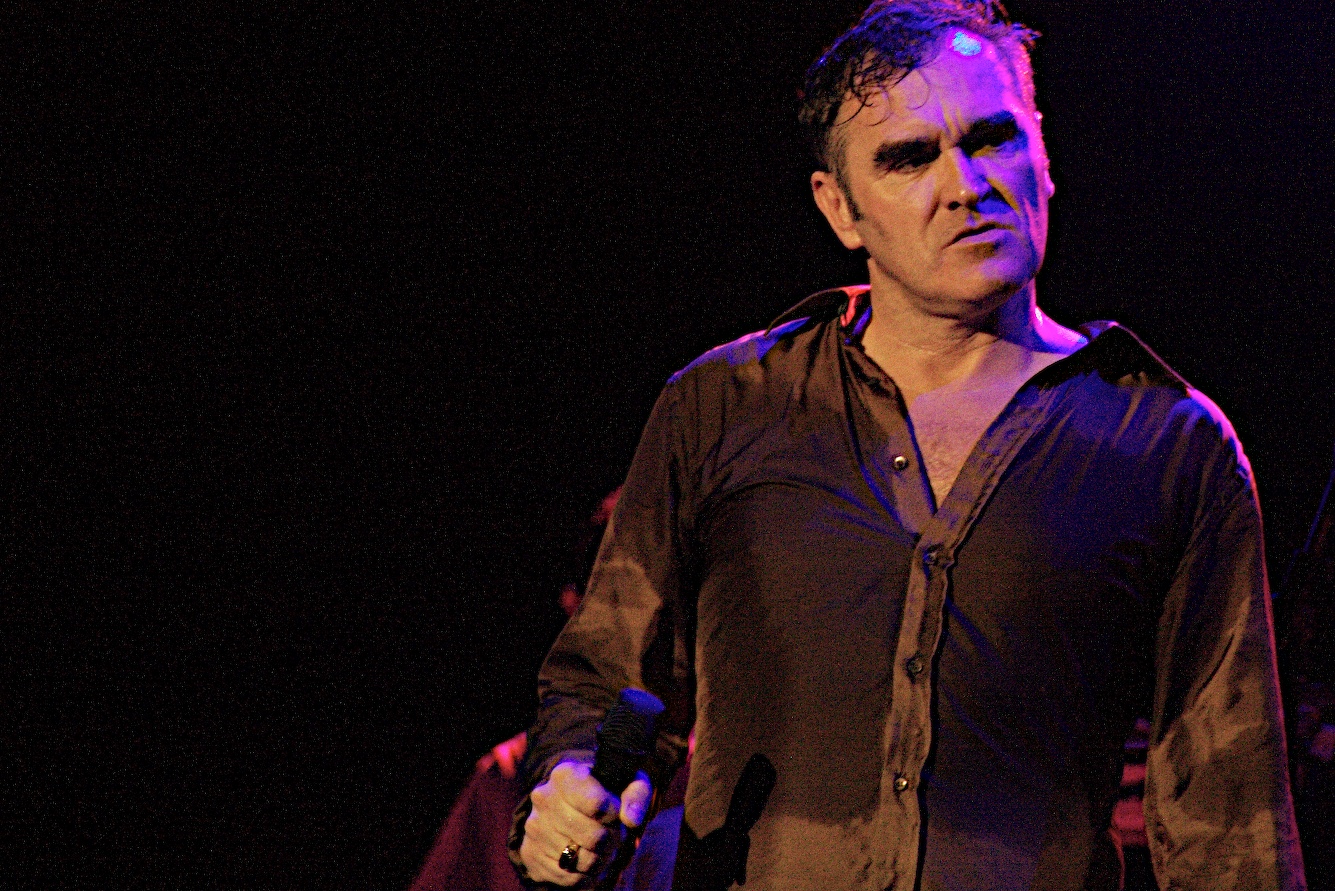
    morrissey-live
    Picture via Wikimedia/Wiki Commons

    Former Smiths frontman Morrissey plays the 3Arena on Monday (December 1). The City spoke to UL sociology lecturer Eoin Devereux about the significance of the gig for Moz’s Irish fans.

    As much as I hate to admit it, I can hardly count myself as a real Mozaphile. Yes, I can recite the words to ‘Alma Matters’, and a host of other gems no bother, but I just don’t have the vast wealth of knowledge a true Mozhead has.

    Put it this way: I’m more of a lowly private than a medalled general in the #MozArmy. I’ll work myself up the ranks someday, but for now I’ll just keep studying the back catalogue.

    The clue is in the quiff. You can always tell Morrissey’s most devoted fans by their great sweeping fringes, and most are infantile compared to Dr Eoin Devereux’s.

    Picture by Liam Burke/Press 22 courtesy of Eoin Devereux
    Picture by Liam Burke/Press 22 courtesy of Eoin Devereux

    Dr Devereux (pictured) is Senior Lecturer in Sociology at UL and co-director of the Popular Music and Popular Culture Research Cluster. He is Ireland’s Morrissey expert.

    He has a host of Mozzer gigs under his belt after first seeing The Smiths in Galway in 1984 and has “never looked back since”.

    Writing in an email, he explains what first attracted him to Morrissey: “[His] status as the Outsider’s Outsider is at the core of his appeal for me.  He sings about the lonely, the sad, the disenfranchised. That has been the constant thread for me. He is a raconteur of the marginalised and is wonderfully anti establishment.”

    It’s common for people who get Morrissey to describe how he gets them. His music changed their lives, which is common rhetoric for music fans, but there’s something different about Morrissey fans. He’s more than just a pop hero.

    Dr Devereux explains: “While fandom in general is a continuum and levels of fandom vary, Morrissey fans are passionate, sensitive and devoted.  I don’t mean devoted in a slavish way. I mean they display huge dedication to knowing and understanding as much as is possible about the object of their fandom and the things that influence him. It’s striking how many of them talk of how their Morrissey fandom has led them to reading Oscar Wilde.”

    Perhaps more obscurely, Mozafiles also celebrate the work of Manchester dramatist Shelagh Delaney because of her influence on Morrissey’s songwriting (The first Shelagh Delaney Day took place last Tuesday).

    My inaugural Moz gig was three years ago at Vicar Street. I was amazed by the great urgency for the audience to propel themselves at their hero. Some punters defied security and flung themselves on stage just so they could touch His Mozness. This is a common occurrence at his concerts. (Take a look at the pandemonium at a recent gig in Berlin).

    “There is almost a sacred dimension in evidence at Morrissey gigs in terms of the need of fans to touch the hand of their often reluctant icon,” Dr Devereux says. “This is particularly intense where his Chicano/Latino fans are concerned.”

    If you don’t already know, Morrissey has a very strong Latino following, which might be a bit surprising. But think about it, Latinos are marginalised in the States. Morrissey is marginalised everywhere (at least in his own eyes), so it makes sense.

    He gets most stick in the British red tops, often for saying something unflattering about the Queen or the meat industry. After all, he is a sexually ambiguous, reclusive, celibate, vegetarian pop star who doesn’t take drugs, so the tabs can’t really make any sense of him unless they can squeeze him under a headline like Heaven Knows He’s Miserable Now or Bigmouth Strikes Again.

    Much like my other hero, Leonard Cohen, Morrissey is often misunderstood as a depressing whinge (The Pope of Mope, they call him). Yes, he does sing about loneliness, but he does so in a very empowering way. And he’s actually very funny. He writes witty, kitchen sink lyrics Jarvis Cocker can only dream of. Listen to ‘Girlfriend in a Coma’ or ‘You’re the one for me, Fatty’ and you’ll see.

    Born to Irish-emigrant parents in 1950s Manchester, Morrissey considers himself “ten parts Crumlin, ten parts Old Trafford” and is clearly proud of his Irish blood and English heart.

    But is there anything unique about his fans in Ireland? Do we have a stronger connection with him since he is “one of us”?

    “Fans around the world have different kinds of connections with Morrissey,” Dr Devereux says. “Where Ireland is concerned I think that apart from his Irish roots (and influences) his anti establishment position on a range of issues makes a firm favourite here.  His Second Generation Irish and Catholic upbringing are still strongly in evidence in his creative output.”

    So if we were to draw a tour map of Morrissey’s Dublin, where would we go? First stop Crumlin, where next?

    “The National Stadium where The Smiths and Morrissey have played; the site of the old SFX; the Point Depot (3Arena) where he talked in 2004 of being ’10 parts Crumlin, 10 parts Old Trafford’, Swords and anywhere associated with his beloved Oscar Wilde.”

    So he has made his mark on this city and its people. And if he hasn’t made his mark on you, where should you start?

    Viva Hate would be the one [Morrissey’s debut solo album],” Dr Devereux says. “It’s still a great record and bridges the world of The Smiths and Morrissey’s solo career.  For ‘Late Night, Maudlin Street’ or ‘Margaret on the Guillotine’ alone it’s a great album.”

    I wonder if Dr Devereux has ever met Morrissey, surely the most sacred experience for any Mozaphile:

    “I haven’t met Morrissey,” he says. “I don’t think I would like to, really. Never meet your anti-heroes!”

    Morrissey plays the 3Arena tonight.

  • Up to 5,000 seats added to DUB-LCY route


    LCY runway at dusk
    LCY runway. Credit: London City Airport

    From today (October 27), London City Airport (LCY) will receive up to 5,000 more seats a week from Dublin when British Airways and FlyBe join Cityjet on the Dublin to London route.

    British Airways commenced a five-a-day service from Dublin to London City Airport yesterday using a mix of Embraer 170 and 190 jets.

    Willie Walsh at launch of BA's DUB-LCY route
    Credit: Eoghan Corry/Travel Extra

    Willie Walsh (pictured), the Dublin-born chief executive of International Airlines Group, the parent company of British Airways, said: “[The DUB-LCY route] complements our existing London Heathrow service and the excellent schedule means customers will have plenty of choice whether flying for business or leisure.”

    The airline hopes to attract business travellers with an early morning departure from Dublin (07:00).

    Regional airline FlyBe’s new service launches today.  The airline is also targeting business travellers with four daily flights starting at 07:00 as well.

    Dublin’s US immigration pre-clearance facilities are an attractive feature for westbound travellers in Britain.  FlyBe recently signed an interline deal with Aer Lingus that allows travellers from Britain to connect on the Irish carrier’s transatlantic services using the same ticket.

    However, FlyBe chief executive Saad Hammad has suggested the airline will not immediately target this niche.

    Another Dublin native, Declan Collier, CEO of LCY, naturally welcomed the two new routes.

    “Our vision to position LCY as the airport of choice for both business and leisure passengers has received a huge boost as a result of this news,” he said.  “We believe that the increased capacity on the route is good news for passengers, offering more choice of when and how to travel.  And I can’t deny that I privately welcome the news as it greatly enhances my own options for flying back home to Ireland.”

    The route will now be serviced by 15 daily flights from three three airlines.

  • Trivago: Dublin top spot for midterm break

    Dublin is the most popular destination for domestic holidaymakers during the midterm break, according to data from hotel search site trivago.ie.

    Dublin's Shelbourne Hotel
    The Shelbourne Hotel. Picture: Conor McMahon


    The capital is also the most expensive domestic location, with a standard double room averaging €107 from October 24 to November 2.

    Despite this, average prices for Dublin in October 2014 dropped nine per cent compared to September, but increased 11 per cent compared to October 2013.

    Waterford is the cheapest destination in the top 10, with the average price of a standard hotel room at €81.

    The most popular international destination is London, also the most expensive, with an average room price of €195.

    John Pilkington of Trivago UK & Ireland says: “It is interesting to see that Dublin and London remain the top choices for Irish holidaymakers despite the higher prices found there. These two cities were also favourites for summer travel, showing their popularity in Ireland.”

    Unsurprisingly, city breaks and beach locations in Southern Europe make the Trivago’s top 15 most searched international destinations.

    Nine European capitals top the list — London, Belfast, Paris, Edinburgh, Lisbon, Amsterdam, Rome, Berlin and Prague — while four beach locations appear as well — Puerto del Carmen, Benidorm, Albufeira and Playa Blanca.

    See the top 10 Irish and top 15 international destinations below.

    Trivago-Intl Trivago-IRL

    Source: Trivago.ie

  • Wat-er you on about? Talking charges with your housemates

    Wat-er you on about? Talking charges with your housemates

    Water tap
    Photo: Conor McMahon


    The first water charges will gush in early next January, so its a good idea to consider how much responsibility lies with the landlord and how much trickles down to you?

    If you are a student living in rented accommodation, here are a few quick talking points you should run by your housemates when it comes to thinking about next year’s bill.

    Who pays – us or the landlord?                                                   

    Landlords should have received application packs from Irish Water, which they should have forwarded on to you. The Water Services legislation says “It shall be presumed, unless the contrary is proved, that the owner of a premises is also the occupier of that premises”, so it is their job to pass the application on to you unless they want to foot the bill. It is your responsibility to submit the form by October 31 (or apply online using your PPS number). Your landlord is only responsible for any unoccupied properties they own. If Irish Water doesn’t know that you are renting, then the pack will be addressed to you as ‘The Occupier’.

    We live in an apartment, so how will we be metered?

    Metering properties with a shared water supply (like an apartment complex) is a bit tricky. For now, apartments will not be metered, so renters will be issued a set unmetered bill in January. After that, the official line is: “Irish Water is looking at metering options for further phrases of the metering programme and apartments will be a part of this analysis process.” In other words, they don’t know how to monitor your water consumption just yet.

    We’re students. Don’t we get some sort of deduction?

    Probably not – especially since students are the most likely to own an iPhone, much to Joan Burton’s disgust. The Budget is rumoured to include a €100 per annum payment to long term unemployed people and some sort of tax relief for homeowners. No mention of broke ass students.

    If we don’t return the form, can Irish Water still charge us?

    Yes. If you don’t return the form, you’ll be billed as ‘The Occupier’ and Irish Water will base your bills on a “default unmetered charge”. In other words, they will assume you are a household with two adults and you will not be able to avail of the allowance of 30,000 litres of water that you won’t be charged for (worth 48c per litre).

    If I don’t pay, will my water be shut off?

    No, Irish Water doesn’t have the authority to do that. But they can restrict your allowance (a last resort, they say). So if you go down that route, get used to having Electric Picnic “showers” – a quick baby wipe under the pits followed by a douse of Lynx.

    Are we being charged for that leaky tap in the kitchen?

    Yes, but it is your landlord’s responsibility to get it fixed. Pipework past the property boundary is the responsibility of the landlord to maintain and repair at their own expense. The government has promised €51m to pay for fixing certain leaks on private property for “free”. The details have yet to emerge.

    If we move in to a place just as the first bills come in, will we have to pay charges racked up by the previous occupant?

    Nope. Irish Water should have their PPS number, so they can pursue them for any outstanding charges.

    And what should we do when we’re moving out?

    If the apartment becomes vacant, it is up to both you and your landlord to let Irish Water know. Any outstanding charges will be charged to your new account.

    Why does Irish Water need our PPS numbers?

    They said they need them to validate eligibility for water allowances (the 30,000 free litres). Irish Water is likely to share your PPS number with the Department of Social Protection to validate it. You have the right to request your personal data from Irish Water.

    How can we save money?

    The average Joe consumes 150 litres a day – two bathtubs full. That’s 54,750 litres per person a year. So how might you cut down this figure?

    • Never let the water run: Brushing your teeth with the tap on can use up to six litres of water per minute. Don’t say Barney didn’t tell you so.
    • Cut your shower time: Unsurprisingly, showers are big guzzlers of water, and power showers use up way more than electric showers. See if you can manage a three-minute shower (yes, it is possible). Seven minutes is now a luxury.
    • Pull the plug on baths: The average bath uses 80 litres of water compared to an average shower using 49 litres.
    • Tea for two, not four: Only fill the kettle with the amount of water you want to use.
    • Kill two birds with the one stone: We know that showers use a lot of water, but so too do toilets. One toilet flush equals about 10 litres of water a day. So you could try Go with the Flow’s idea: pee while having your shower (your housemates might not be impressed). Or if you’re not feeling adventurous, put a displacement device into the cistern – it can cut the volume of water per flush by three litres.