Author: David Seagrave

  • Dublin’s bus services pay heavy fines

    Dublin’s bus services pay heavy fines

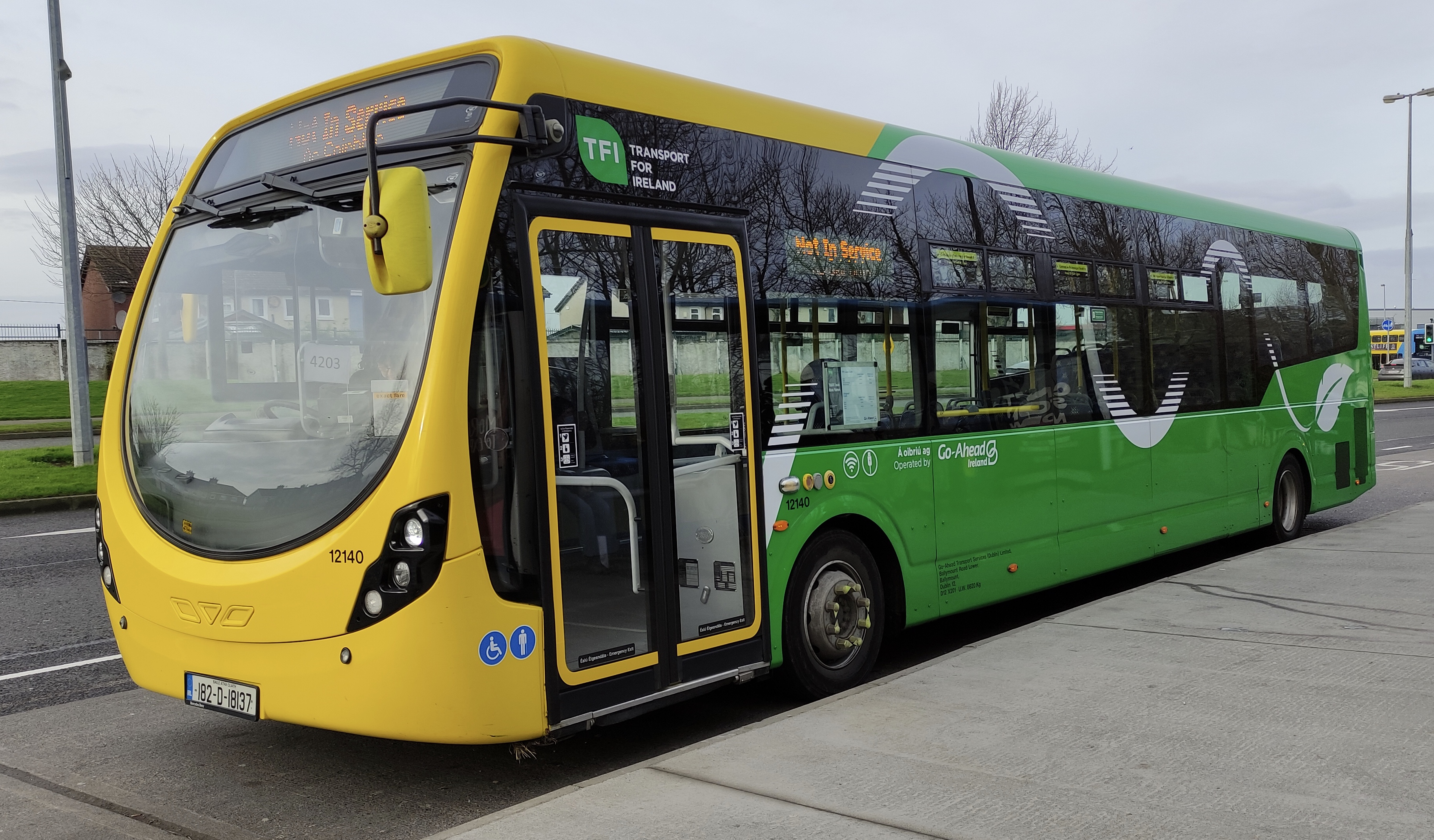
    Go-Ahead Ireland has reached their Minimum Performance Standard (MPS) regarding punctuality in just one period in the first half of this year.

    New data obtained via a Freedom of Information request shows that Go-Ahead Ireland reached their MPS of 80% in the first period of 2022, dated January 1st – January 30th

    Punctuality is a Key Performance Indicator of the performance of transport companies, as part of the terms of their Public Service Obligation (PSO) contract with the National Transport Authority. To measure punctuality and the MPS rate, Go-Ahead Ireland and Dublin Bus Routes use low-frequency routes only. 

    A low-frequency route is deemed a route “which operates less than 5 times per hour on a weekday, outside the peak periods” according to NTA reports.

    The report, made by the National Transport Authority, shows that Go-Ahead reached its target along the Outer Dublin Metropolitan Area (ODMA) corridor, while the Dublin Commuter Outer Metropolitan (DCOM) failed to reach its target once, with its highest score in the first half of this year hitting 79.5%. 

    This comes after Go-Ahead and Dublin Bus were heavily criticised by the Oireachtas Transport Committee last month. Both companies blamed staff shortages on their issues of punctuality, while the issue of ‘ghost’ buses was also discussed.

    Many bus users had reported a bus showing on Transport for Ireland’s Real-Time Passenger Information (RTPI), however, these buses never showed up. 

    The NTA, Dublin Bus and Go-Ahead chiefs blamed the ‘ghost’ buses on staffing issues, while also acknowledging technical issues as a major factor. 

    Dublin bus stated that they require an extra 150 drivers to accommodate their routes, while Go-Ahead was short by 45 drivers. 

    Speaking at the Oireachtas Transport Committee, Kildare North TD Réada Cronin said that the “job hadn’t been done” by Dublin Bus and Go-Ahead, labelling Go-Ahead’s 120 route as ‘appalling’, adding that she doesn’t think they should get the contract again.

    “It affects the economy, it affects your co-workers, it affects the service you’re delivering. It has a knock-on effect on absolutely everything, not to mention the stress it causes… You’re half an hour waiting for a bus if you’re ten minutes early. You’re standing in the rain for half an hour in Clane, or Prosperous, waiting for the bus. [If] the bus doesn’t show up, you’re another half hour waiting for the bus. You could be waiting an hour and ten minutes.”

    Go Ahead and Dublin Bus have paid heavy fines this year, with both companies paying just under €700,000 in punctuality deductions for their Dublin services. However, Dublin Bus also received over €100,000 in punctuality incentives, putting a small dent in their bill so far this year. 

    Both companies combined have paid over €2.5 million in fines, while Luas have also paid a similar amount for their cancellations and lack of punctuality. Irish Rail have paid just €15,000 in punctuality fines, while they have received €291,000 in incentive payments.

  • Dublin referees cancel planned strike

    Dublin referees cancel planned strike

    By David Seagrave

    The Dublin branch of the Irish Soccer Referee Society (ISRS) have cancelled a formerly planned two week strike.  

    The planned strike followed incidents of assault and attempted assault on referees in Dublin. Referee assaults can carry a minimum ban of one year, however both instances resulted in suspensions of less than seven games. 

    ISRS’s Dublin branch had previously said that they would ‘withdraw their services’  at all levels of the game from 18th November – 2nd December, however they reversed the decision following talks with the Football Association of Ireland.

    (Image source- Irish Soccer Referees Society)

    Last month it emerged that 234 reports of assault had been submitted to the ISRS, spanning across 18 of their 27 branches. Of those 234 reports, eight were physical assaults. 

    The FAI released a statement following the news of the planned strike, with CEO Jonathan Hill saying, “the FAI will do whatever we have to do”. 

    “Our disciplinary regulations carry clear and serious sanctions to be enforced on anyone who abuses a match official, and we are calling on all leagues to enforce those sanctions. We cannot, and will not tolerate any abuse aimed at a referee at any level of the game,” the statement added 

    David Bergin, Vice Chairman of St Francis FC says that more needs to be done to address assaults against referees. 

    “For the referees, it’s a hard job, it’s a thankless job. Nobody ever says ‘thanks for a great performance, they always have one comment or two comments. We have tried to instill that in our club, and we feel that we’ve made real progress. But that’s not the case everywhere.

    “I believe that every club is working towards an environment that’s safe for players, coaches and especially referees. For the refs, it’s frustrating that it isn’t translating onto the pitch all the time.”

     “The FAI have done some great video work on how to treat referees on the side-line… it’s a lot more prevalent this year, I don’t know what it is. There must be a reason for people being more vocal, but nobody benefits from it,” Bergin added.

    When asked about the lack of lengthy bans for offenders, Bergin replied “I don’t think anyone, in any club, would question a lengthy ban.”

    “They get a few bob to cover their transport costs, but it’s not phenomenal money, you know? It’s a great service, the kids need to be playing and they need referees. You don’t learn [the rules] without referees.”

     Despite criticism of the bans, Bergin also noted that the leagues were run on a voluntary basis – and that clubs also have to take responsibility. 

    “We understand how difficult it is for leagues to administrate and come up with the right size ban for everyone. Everyone appeals everything. The leagues have a thankless job as well, a bit of cop on is needed from everyone; the clubs, the coaches and the players, to make sure that we aren’t forcing volunteers to have to conduct these types of meetings and to go through the processes they have in place. 

    “We should be able to talk about the football, and the performances, and how we can improve going into the next week. We shouldn’t have to talk about referees,” Bergin added.