Author: Edward Ryan

  • “The whole climate and nature crisis, to me, is the reason I’m in politics.” Senator Malcolm Noonan on his political career

    “The whole climate and nature crisis, to me, is the reason I’m in politics.” Senator Malcolm Noonan on his political career

    Malcolm Noonan is someone who is well-known around Kilkenny. He was a member of Kilkenny County Council for almost 15 years and served as Mayor of Kilkenny between 2009 and 2010.  

    He was then elected to the Dáil in 2020, and served as a minister, before becoming a Senator this year. 

    From his office in Leinster House, I sat down to speak with Malcolm about life as a public servant, his experience in the world of politics, and the challenges that politicians face. 

    Politics wasn’t always Malcolm’s calling. Enviromental activism has always been a key tenet of his life. From a young age he was engaging with his local community and the world around him. “I was just interested in nature and the environment,” he said. 

    But politics came knocking when he was approached by the Green Party to run for Kilkenny County Council in the 2004 local elections. “They said, “would you be interested in running?” and I said, “I’m not so sure.” So, I gave it a bit of thought, and then I said, “Sure, what will be the worst thing to happen?” and then the worse thing happened. I got elected.” 

    Malcolm topped the polls in that election, a feeling he describes as “amazing.” Very soon, he began to realise the possibilities of the role, beyond his ideological goals. “It’s funny, when you get elected you actually realise, I can make a difference in people’s lives. I can get a disabled persons grant, I can help someone get a house.” 

    His entry into politics was certainly accidental, least of all did he think he would still be involved in it some 20 years later. Malcolm was very aware of the precarious nature of being an elected official. He studied for a Rural Development degree so that he would have something to fall back on. “When I stood in 2009, the party was in government, and we lost most of our council seats. That made me realise how vulnerable this could be.” 

    In his time on Kilkenny County Council, he was heavily involved in many community initiatives, including forming and chairing the Heritage Forum in Kilkenny, and establishing Kilkenny’s first Integration Forum. “These are refugees brought in by the state from refugee camps in Uganda and South Sudan. They were amazing families.” 

    Integration is something that Malcolm feels is still important today, especially with all of the discussion around immigration online. 

    After 15 years on the council, Malcolm contested the 2020 general election for the Green Party and won a seat for Carlow-Kilkenny, something he didn’t expect. “We went to the count centre, and I looked like I was dead and buried, and lo and behold I got a huge dump of transfers.” 

    As was well documented, the months after the general election were chaotic. The three big parties, Fianna Fáil, Sinn Féin, and Fine Gael were neck-and-neck. And then, just a few weeks after the vote, the pandemic hit. Malcolm initially thought that he would be spending the next five years in opposition, now he felt that his party couldn’t sit on the fence. 

    “The Greens will always go into government,” he said. “We feel we have a duty; we’re a policy driven party, and we should step-up where we’re needed.” 

    Noonan describes his appointment as a Minister with great enthusiasm. 

    “He [Eamon Ryan] called me down to his office and I recall it being like Charlie and the Chocolate Factory.” He was given the portfolio ‘Heritage and Electoral Reform’ (which later became ‘Nature, Heritage and Electoral Reform’), which entailed the National Parks and Wildlife Service, National Monument Service, and all of the biodiversity policy. “My immediate reaction was I skipped up the corridor, clicking my heels. I was delighted with myself. I’ll never forget the day I was appointed.” 

    The term of a government is both very short and very busy. “My legacy from that time was giving a huge uplift to the heritage sector, [and] the biodiversity sector.” 

    But all good things must come to an end, and the 2024 election was looking gloomy for the Green Party. Having lost many of their councillors in the local elections earlier in the year, the mood closer to election day was more sombre. 

    I asked Malcolm whether he felt that his colleagues in the other coalition parties had turned on the Greens, and I was surprised by the honesty of his response. 

    “There was a narrative emerging over time. Some of it was built around Eamon Ryan. It suited some in the media to attack Eamon. It suited some in a ‘business as usual’ agenda to target us. And then, perhaps, there’s an element of our colleagues who say, “all that bad stuff, carbon tax, that’s the Greens.” 

    But he doesn’t put all the blame solely on outside actors, he admits that there were failings in how the Green Party put itself across. 

    “I do feel that we spend so much time delivering, and I don’t think we did a good job of communicating why we were doing this stuff. Behavioural change is really hard.” 

    Malcolm is proud of the things that his party achieved in government, such as cutting public transport fares, expanding the LocalLink bus network, and installing free solar panels on schools, But as someone living in rural Ireland, I could see that the Greens were failing at advertising those achievements to the public. 

    Malcolm said, “I remember a man giving out to me. I was out at an event in a rural village and he was giving out yards about Eamon Ryan, and next thing the 891 (a LocalLink bus in county Kilkenny) passed and he said, “God, isn’t that great!” and I said, “That’s Eamon Ryan for you.” 

    When election day came, and in the days afterwards, it was clear that it was not looking good for the Greens, and Malcolm was knocked out at the 8th count. “You have to dust yourself off and say, “people have voted, that’s the way it is.”” 

    But opportunity came knocking again during the Seanad Elections this year, where Noonan was elected to the Agriculture Panel. Now Malcolm is a Senator, still roaming the halls of Leinster House.  

    I touch upon a serious topic, about the increase in hostility towards politicians, both online and in-person. It is quite shocking.  

    “I’ve had death threats, both in writing and on the street.” he said. “I’ve been physically assaulted; you get verbal abuse.” He says it doesn’t happen often, but it does make him question why he does the job, and why anyone, particularly young people, would want to get involved. “No other workplace would accept the level of abuse that politicians receive,” Noonan said. 

    Away from the politics, Malcolm Noonan is an artist. He paints, he draws, and he plays in a band. Like most people, there is the family side to it all. “Dad taxi”, as he calls it, to football matches. He admits that being in government kept him away from his family, so he’s enjoying having more time with them these days. 

    To finish up, I ask Malcolm what he is most concerned about, and optimistic about, in the future. 

    What he is most concerned about is what he is also most optimistic about: the climate. 

    “The whole climate and nature crisis, to me, is the reason I’m in politics. Every year there’s a COP, and every year they walk away with some kind of agreement on something. At the root of it all is our financial and economic system. I fundamentally believe that we need to move away from our reliance on economic growth as a measure of our progress as a nation.” 

    But it is young people who make him feel optimistic about the climate. The likes of Greta Thunberg, whom he is a big fan of. In a school in Urlingford, County Kilkenny, he tells me that the pupils received a handwritten letter from Sir David Attenborough, telling them to keep going with their Green Schools initiative. 
    “If David Attenborough, the most famous naturalist broadcaster in the world, can take time to handwrite a letter and handwrite an envelope, and send it to a school in Urlingford, County Kilkenny, well, there has to be hope.” 

  • Video: Electric Future on Display at NEVO Show

    Video: Electric Future on Display at NEVO Show

    2024 was a tough year for the electric vehicle industry in Ireland, with sales declining compared to 2023. 

    So far in 2025, electric car sales are up over 38% when compared with the same period in 2024. 

    With consumer demand growing, many people are looking for a chance to get a look at the latest cars on sale. 

    The NEVO Electric Vehicle show was held in the RDS on November 8th and drew a crowd of around twenty thousand people across the day. 

    The show was an exhibition of the latest electric and hybrid-electric vehicles on sale in Ireland, offering customers a chance to get up close with the cars. 

    But they weren’t just to be looked at, as customers could also book a test drive with a car of their choice. 

    There were also demonstrations, talks, and information available to people about financing, home charging, and solar power. 

  • In Picture: South Dublin Model Railway Club Exhibition 2025

    In Picture: South Dublin Model Railway Club Exhibition 2025

    Model railways are an age-old hobby, almost as old as the railways themselves. A favourite of generations past and present. If you ask your family, I’m sure someone will tell you about the Hornby train set they got for Christmas that brought them hours of joy.  

    In today’s modern world, the model railway is no longer as popular as it once was. Its popularity has been surpassed by new inventions, the most prominent of which is video games. How can a model railway compare to the likes of Train Simulator, where players can take charge of their own locomotives and simulate real world journeys in a detailed environment? 

    Or, more likely, they prefer to play something like EA Sports FC, Fortnite, or Call of Duty. I can’t say I’m an exception, as I’ve sunk hours into video games over the years. 

    But, in recent years, I have gained an interest in railways, and model railways have come part in parcel with that interest. In Dublin, there are two main clubs: The Model Railway Society of Ireland (MRSI), and the South Dublin Model Railway Club (SDMRC). In the name of fairness, the two clubs take it in turns to host an annual exhibition on the October Bank Holiday weekend, the biggest of its kind in Ireland. 

    This year was the turn of the SDMRC to host their show once again in Blackrock College, and once again, they did not disappoint. 

    The show has everything one could want; highly detailed layouts, passionate people excited to answer your questions about their work, the all-important tea and coffee stand, and, the source of financial ruin for many in this hobby, merchandise sellers. 

    The annual Dublin show has become a tradition for me. Here is just a selection of some of the layouts, and the people, who made a great exhibition. 

    This first layout is ‘Vesper Road’, by Adrian Clapa. It showcases a OO Gauge modern British freight yard.

    This is ‘BelleVue’, showcasing an American HO Scale (1:87) scene. Built by Ivan Thompson.

    This is ‘East Earlyton’, a scene showing the early years of the railways in Britain. I spoke to the owner at the Wexford show, and he explained that he designed the inside seen to be replaceable. the other scene is called ‘West Earlyton’, showing an early-American western railroad.

    ‘Past Avenue’ – OO Gauge Irish layout set in the late 20th century.

    ‘Dun Laoghaire DART’ – by the South Dublin Model Railway Club (SDMRC). This OO Gauge layout showcases Dun Laoghaire Station as it looked during the early years of the DART in the late-80’s.

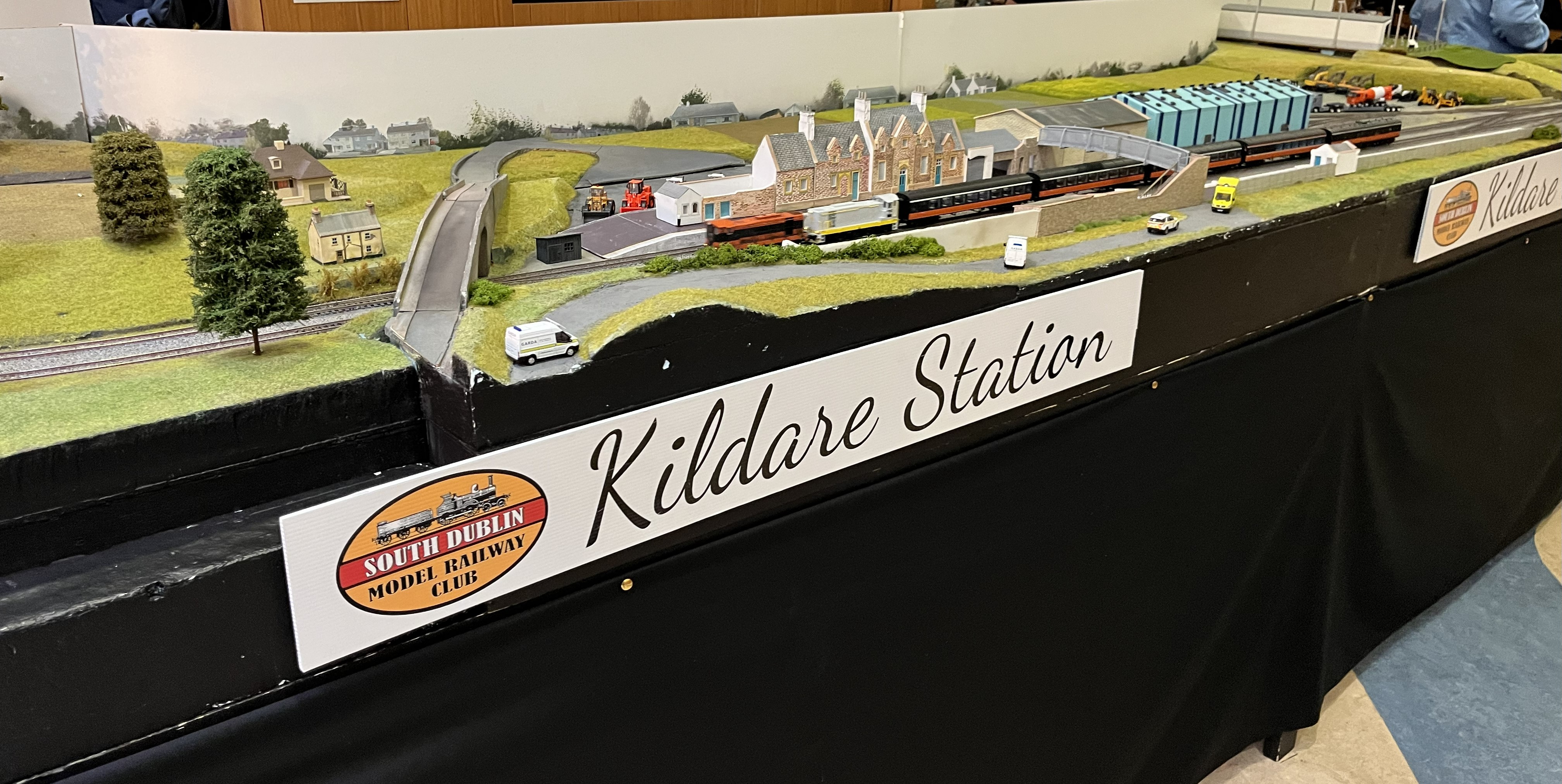
    ‘Kildare Town’ – SDMRC. A large layout capturing Kildare Station as it was up to the early-2000s. Used as a test bed by some of the manufacturers, such as Accurascale/ IRM and Murphy Models, to show off their latest samples.

    GSR/ CIÉ 800 Class by Accurascale/ IRM.
    Irish Rail 22000 Class by Accurascale/ IRM.

    Speaking of which, Accurascale/ Irish Railway Models brought samples of their upcoming releases: GSR/ CIÉ 800 class (Ireland’s largest steam locomotive), and the Irish Rail 22000 class (the backbone of the modern intercity fleet. Both highly detailed models are due for release in 2026.

    Also at the show were samples of their NIR 101 class ‘Hunslet’, and a sample of Murphy Models upcoming model of the new DART train, part of the DART+ programme.

    Samples of Accurascale IRM NIR Class 101 ‘Hunslet’ and Murphy Models 90000 Class DART from the 2024 Clontarf show

    This is Johnathan King a volunteer the Downpatrick & County Down Railway (DCDR), the only full-size heritage railway on the island of Ireland. “We run steam and diesel trains for families, for railway enthusiasts to keep our culture alive.” You can find more information on the DCDR website.

    This is Glen Dixon, a member of the Model Railway Society of Ireland, with his layout ‘7 Éire’. It’s an N Gauge (1:148) layout based on Dalkey and Killiney, with one of the main features being the ‘Éire sign’ present on the real life Dalkey Hill. These were dotted around the coast of Ireland during the Second World War to alert aircraft flying overhead that they were passing over Ireland. “The beach itself is [made with] sand off Killiney beach.”

    “The DARTs themselves are made by myself. They take around two weeks to construct.” Glen is also active on social media under the account @offdrails.

    This is Bill Garrioch, another member of the MRSI, with his layout ‘Castlefinn’. It is a OO9 narrow gauge layout based on Castlefinn in county Donegal, once a part of the famous Donegal Railway.

    “It’s no particular period; it’s just done up to look interesting and have a few cameos in it and interest the public.”

    Bill bought the layout from a club member, but detailed it all himself.

    “Recently, I did a complete revamp of all the scenery and made the little lights and everything with brass tubes.”

    The mighty ‘Dundalk Works’ by the MRSI, hosts of next year’s show in Clontarf. Built over a period of seven years, this scene is over 19ft long and has been featured in the Railway Modeller magazine.

    I spoke with Peter Kelly of the IPMS Ireland.

    “IPMS Ireland is the International Plastic Modelling Society, the Irish branch.”

    Members of the IPMS model everything from aircraft to tanks, and from Gundam to submarines.

    “People come together, put their models on the table. We have a chat about modelling, we have a Facebook group and Instagram.”

    “Because we’re a small country, and because the modelling is an even smaller community, we tend to all know each other. You get a lot of help from people, you get a lot of constructive criticism in the best possible way, and you get to meet new people.”

    “From a mental health point of view, it’s great to go be able to have something where you go and spend some time and switch off. It can be a bit isolating, that’s why the IPMS is so good. Because you meet people who are in the same boat.”

    “From six to ninety-six, everybody is welcome. It doesn’t matter what your level is.”

    ‘T-Trak’, a modular N Scale layout with an Irish setting. Many of the trains running round are custom made.

    ‘Morceaux Ville’ by David McFarlane – A HO Scale tram layout.

    And finally, we have ‘Rathmichael’ by the Wexford Model Railway Club (WMRC). This OO Gauge layout models represents the now disused (but hopefully not for too long more) South Wexford Line that links Rosslare with Waterford.

    It took the club over a year to build, and they run trains from the 1980’s onwards. This layout has won praise for its scenic detail.

    The layout was named in honour of Michael Curran, a founding member of the WMRC.

    And that’s just a small sample from this year’s South Dublin Model Railway Club exhibition. It was a year of anniversaries, with the SDMRC celebrating it’s fiftieth, and Irish Railway Models celebrating ten years in business.

    Next year’s show is back to Mount Temple Comprehensive School in Clontarf, hosted by the MRSI.

    But fear not, there’s plenty of other shows in the meantime, including Wexford MRC, Erne MRC, and the Mid-West MRC.

  • Green light for Airport Viewing Area 

    Green light for Airport Viewing Area 

    An Coimisiún Pleanála (APC) has given the Dublin Airport Authority the green light to build a new runway viewing platform on the Old Airport Road. 

    The plans for a dedicated viewing area will finally meet the demands of plane spotters across Ireland, who have been calling for such a facility for years. 

    The current viewing area, known as ‘The Mound’, is a simple dirt hill with a cleared space for people to park. This makes for a dangerous viewing area, as there is a ditch behind it with no protection. 

    Plane spotters risk falling into the ditch or slipping trying to climb ‘The Mound’ when the ground is wet. 

    The current airport viewing area, known as “The Mound”. (Image from Google Street View).

    Plane spotting has always been a popular activity, and ‘The Mound’ is regularly full of parked cars watching the comings and goings of Ireland’s busiest airport. 

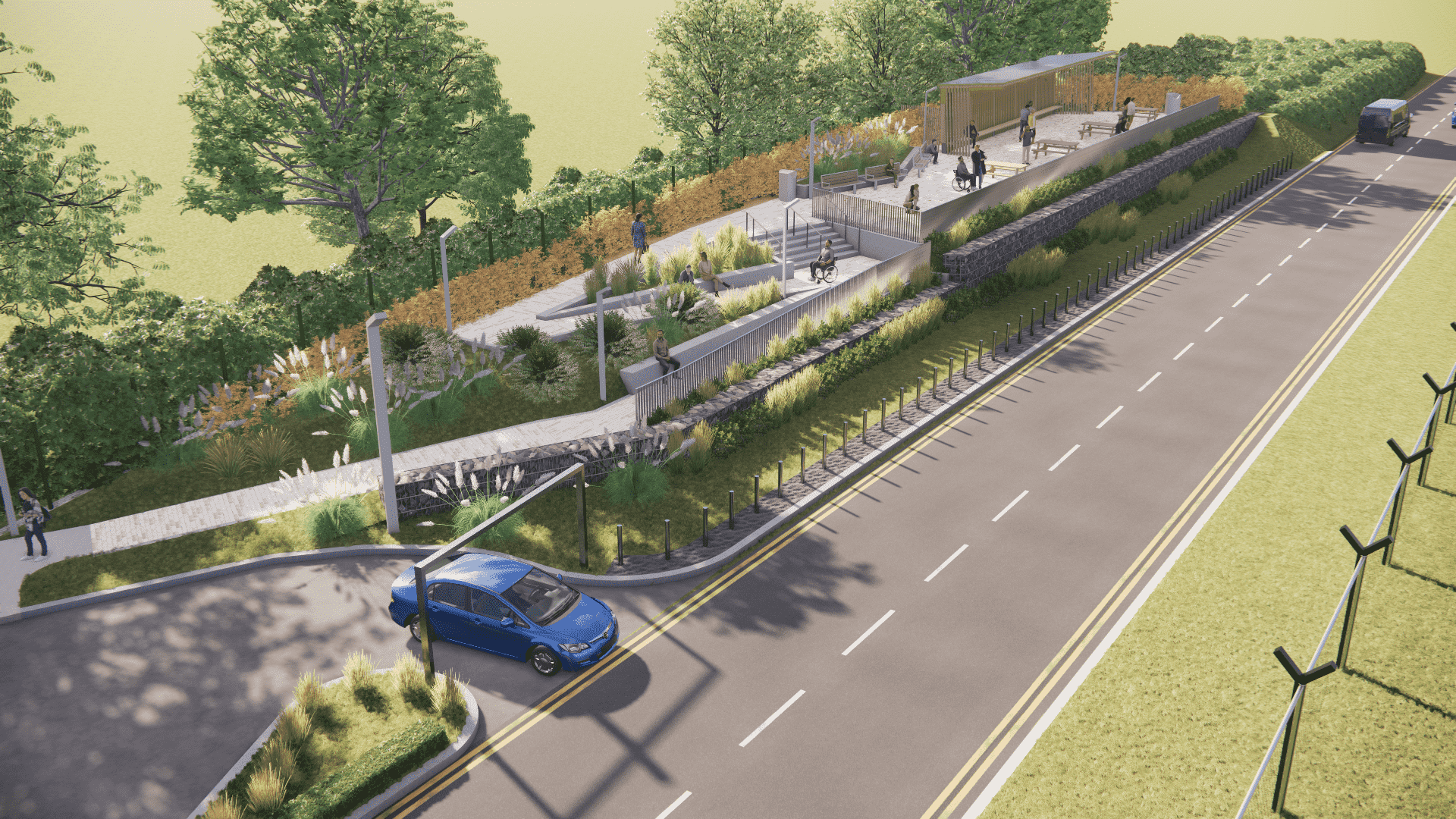
    The plans include an elevated viewing platform with views of the south and crosswind runways.  

    The platform will feature solar powered lighting, and a sheltered viewing area with seating. 

    There will be picnic benches and the platform will be accessible to persons with reduced mobility (PRM). 

    There will be upgrades to the parking arrangements, with plans for 22 spaces.  

    Two of these will be dedicated to PRMs, while another two will be family-friendly parking. 

    There will also be spaces for people to park their bikes. 

    A dedicated airport viewing area is something that Dublin lacks compared to its European counterparts. 

    Across Europe, many airports have dedicated viewing areas, either within the terminal or alongside runways or taxiways, that have plenty of facilities to provide people with a safe space to enjoy the view.  

    A statement from the DAA described the project as a “gamechanger”, saying, “For decades, “The Mound” has been an informal gathering point for families and enthusiasts to watch aircraft arriving and departing Dublin Airport.” 

    Kenny Jacobs, CEO of DAA, said, “This is good news for local families and the many aviation fans who love watching aircraft at Dublin Airport.” 

    “The new, free‑to‑access viewing area will be safer, more comfortable and more accessible, with clear views of both runways,” Jacobs said. 

    “Once we’ve worked through the planning conditions, we’ll progress delivery, fully funded by daa, and keep the community updated on timelines so people can enjoy a proper plane‑spotting experience at ‘The Mound’ for years to come,” Jacobs added.

    The viewing area is sure to make a great addition to Dublin Airport, offering a welcoming, accessible, and family-friendly space for people to plane spot. 

  • Students Demand Permanent Fees Cut Ahead of Budget

    Students Demand Permanent Fees Cut Ahead of Budget

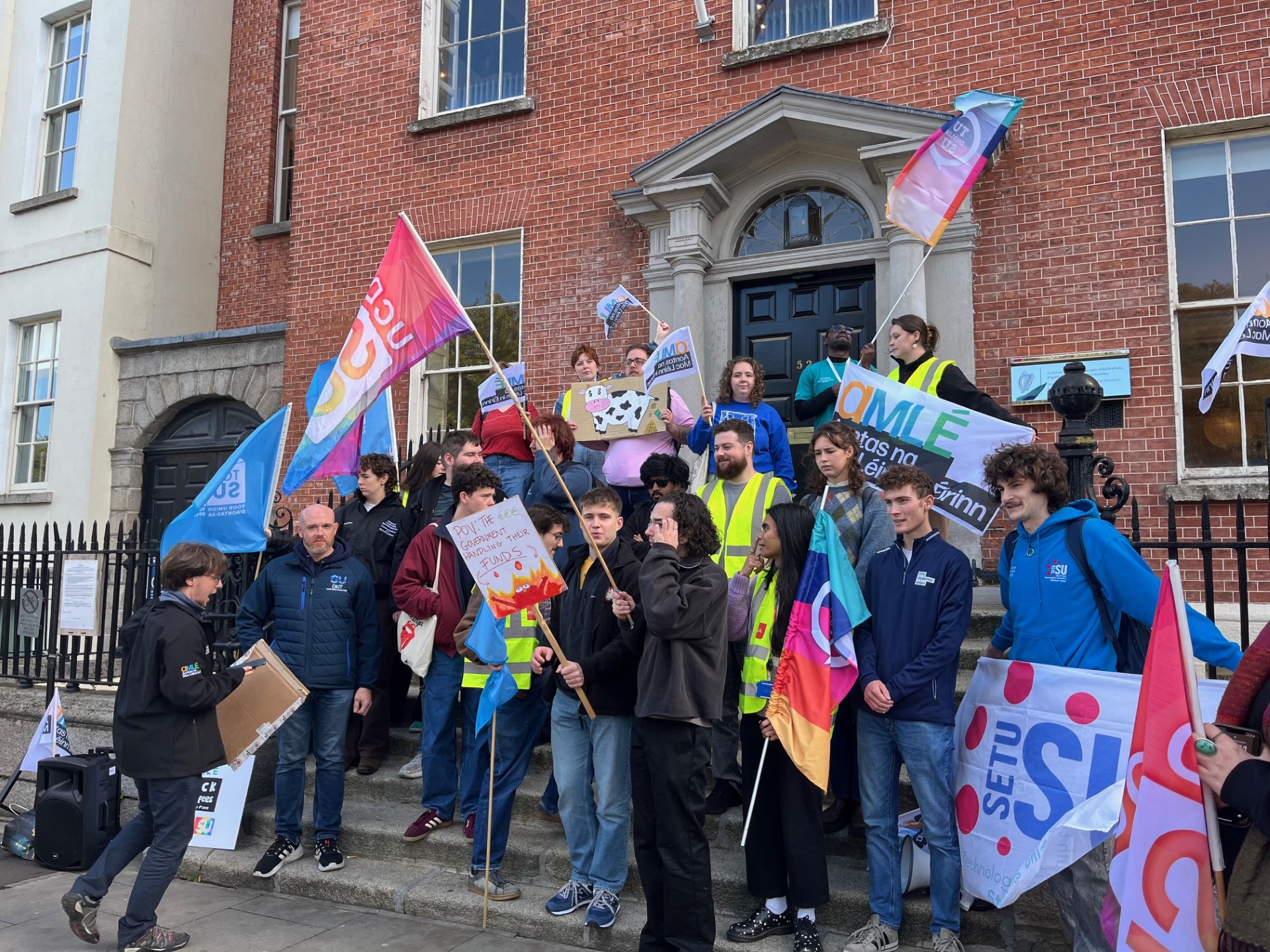
    A group of over sixty third level students from across the country gathered outside the Department of Further and Higher Education on Monday demanding a cut in third level fees in Tuesday’s Budget. 

    Representatives from AMLÉ (Aontas na Mac Léin, formally Union of Students in Ireland), along with members of various university student unions attended the demonstration demanding the government lower fees for third level students. 

    Many travelled from across the country for the protest, including representatives from University of Galway, and SETU Carlow. 

    Some of the speakers at the event highlighted the cost of accommodation across the country, and that many technological universities have no on campus accommodation. 

    One speaker said that only 18% of accommodation at University College Cork was owned by the college. 

    Also in attendance was the Labour Party leader Ivana Bacik, who said that education should be free. 

    Labour Party leader Ivana Bacik TD speaking at the protest against third level fee increases.

    “We will be fighting to ensure this budget does see a permanent reduction in fees,” she said. 

    As it stands, fees are currently around €3,000 for most students. But for the past three years, when the department was under Simon Harris and his successor Patrick O’Donovan, third level fees were reduced by €1,000 for the year, an act which was repeated each year. 

    Both Fianna Fáil and Fine Gael committed to cutting fees over the lifetime of the government during the 2024 election campaign, and it is something which features in the Programme for Government. 

    But the new minister for Further and Higher Education, James Lawless, shocked many students earlier this summer when he announced that it was unlikely that there would be another €1,000 reduction in Budget 2026. 

    Recent reports suggest that there will be a permanent €500 cut in fees this year, rather than another one-off reduction. 

    This news has angered students across the country, leading to Monday’s protest outside of the Minister’s office on Stephen’s Green. 

    Speakers led chants off, “Hey hey, ho ho! Student fees have got to go!” and “No way we won’t pay!” 

    There were also some expletive laden chants. 

    Over 60 students gathered outside the Department for Further and Higher Education to protest fee rises.

    The attendees at the protest are hopeful that they got their message across. 

    “I think it’s a shame to be honest,” said Barry Sexton, Vice President for Welfare and Equality in SETU Carlow Student’s Union. 

    “The Government is absolutely swelling with money. There’s money coming from every corner in this government,” he said. 

    “They don’t need to take money from the students, of all people, the most underprivileged people in the country.”  

    Barry Sexton, VP for Welfare & Equality in SETU Carlow Student’s Union.

    “Paying an extra €500 for people who are impoverished and less well-off is absolutely devastating.” 

    For Barry, he isn’t confident that the Government will keep their promise to abolish fees. “I don’t see it happening any time soon. Fianna Fáil and Fine Gael are in government together so they obviously should be working on the same goals, and they shouldn’t be falling back on what the other said to escape out of it.” 

    Members of Trinity College Student’s Union at Monday’s protest. Left to right: Lorenzo Cheasty, Natalie Byrne, Harry Johnston, Amelia Flanagan, Grace McNally.

    Most of the students felt strongly about the issue of fees. Amelia Flanagan, Environmental Officer for Trinity College, Dublin, Student’s Union said, “this is student fees, and if we can’t stand up for ourselves in this regard, what we stand up for ourselves, if we’re not showing out, then what’s the point of a student’s union existing if we can’t protest against a fee rise for ourselves?” 

    Grace O’Malley, Health Science VP for TCD SU shared a similar sentiment. “I think from a health science aspect as well, we already have so many hidden costs in our course like our uniforms, transportation, placements, living on placement, having to work unpaid for the entire week, and on top of that having to work an actual job where we do get paid.” 

    “Now our fees are going up, and we’re not even sure if they are going up. We’re going back to college, unsure, uncertain, and scared of what’s going to happen,” she said. 

    A spokesman for Minister Lawless told TheCity.ie that, “Budget negotiations are ongoing, and Minister Lawless remains committed to securing the strongest possible package for students and their families, with a clear focus on directing the greatest support to those who need it most. This, of course, remains dependent on the Department of Public Expenditure and Reform.” 

    The issue of fees is sure to be one of the biggest stories from this week’s budget and will be watched closely by students and their families across the country. 

  • Hope for thousands following major breakthrough in treatment for cruel disease  

    Hope for thousands following major breakthrough in treatment for cruel disease  

    By Edward Ryan 

    A team of researchers has successfully treated Huntington’s Disease for the first time.  

    The news has been described as “a game changer” by the Huntington’s Disease Association of Ireland.

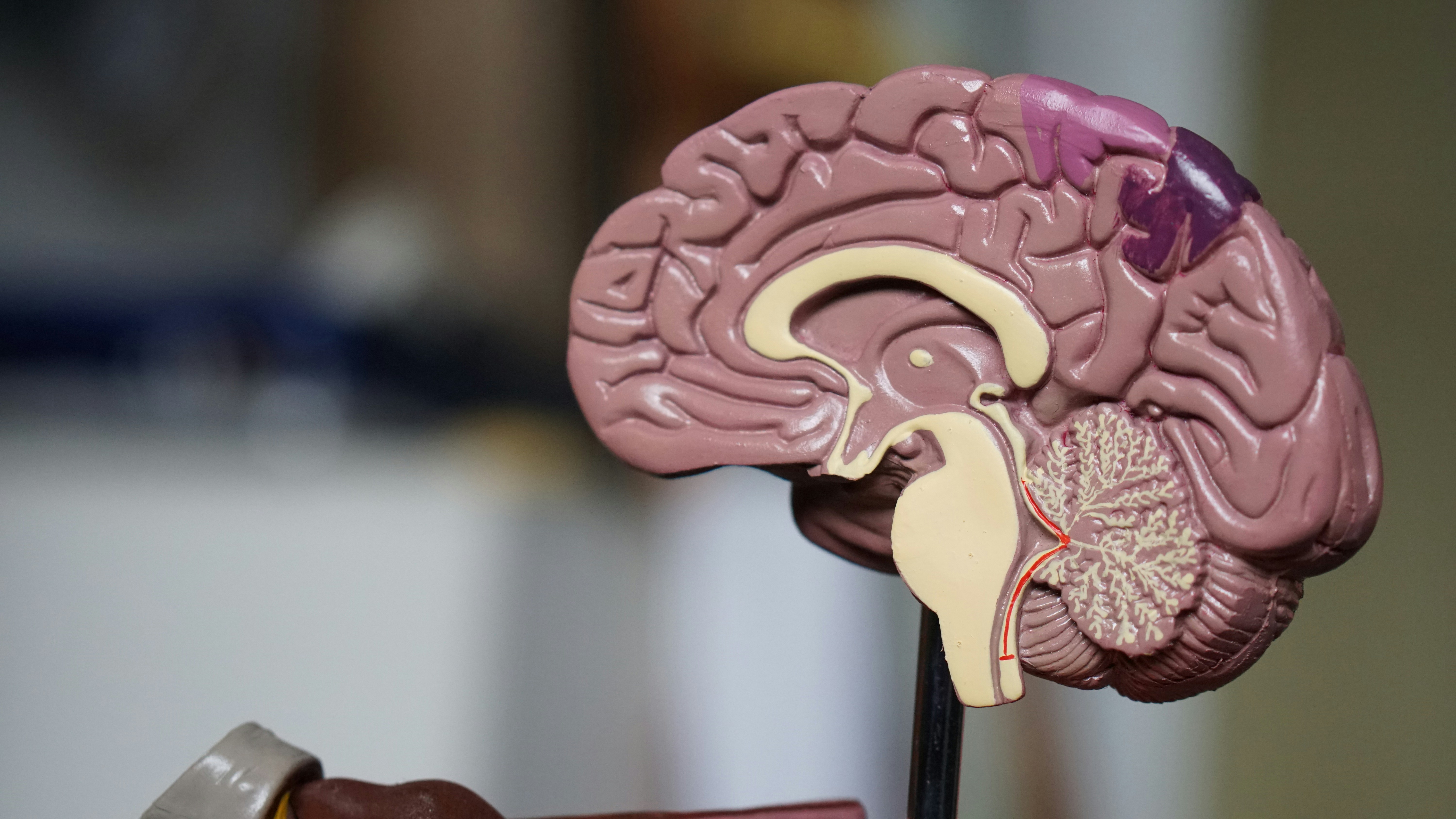
    Huntington’s is a degenerative disease that kills nerve cells in the brain and has been described as a combination of dementia, motor neuron disease, and Parkinson’s.  

    It is a very rare condition that affects thousands of people worldwide.  

    But on September 24th, biomedical company uniQure announced that it had successfully treated Huntington’s in a major clinical trial.  

    Huntington’s explained

    Huntington’s is caused by a change in genes and is hereditary, passing from a parent to their children.  

    It is caused by a mutation in the HTT gene. This gene makes a protein called huntingin, which helps with the function of the nerves.  

    Huntington’s Disease restricts the DNA’s ability to produce huntingin, which causes the proteins to grow abnormally and destroy the nerves rather than help them.  

    This decay occurs in the area of the brain that affects movement and can also target the brain cortex, causing cognitive and behavioural issues.  

    Huntington’s is an inherited disease. If one of your parents has Huntington’s, then the likelihood of you developing the disease is around 50%.  

    Symptoms of the disease often begin to appear in people in their late thirties, with the average lifespan after first symptoms ranging from 10-30 years.  

    The treatment 

    The trial involved a gene therapy called AMT-130 which was administered to patients during brain surgery.  

    AMT-130 contained a virus carrying a micro-RNA that was designed to target the  huntingin gene. 

    It was administered as a one-off during complex brain surgery that lasted anywhere from 12 to 18 hours. 

    The results of the study were astounding.  

    It showed a 75% slowing of disease progression in patients who received a high dose of the treatment after 36 months.  

    The study also found that there were no new drug-related serious adverse effects observed between December 2022 and the end of June 2025.  

    This major breakthrough will bring relief to people who have the gene for Huntington’s and there is hope that early treatment may prevent the emergence of symptoms completely.  

    In a statement announcing the news on Wednesday, Walid Abi-Saab, M.D., the Chief Medical Officer at uniQure said, “We are incredibly excited to about these topline results and what they may represent for individuals and families affected by Huntington’s disease.

    “These findings reinforce our conviction that AMT-130 has the potential to fundamentally transform the treatment landscape for Huntington’s disease, while also providing important evidence supporting one-time, precision delivered gene therapies for the treatment of neurological disorders.”  

    “It’s a game changer” 

    Patricia Towey is the Service Manager with the Huntington’s Disease Association of Ireland . She was delighted with this announcement. 

    “It’s really exciting news for so many families that are really struggling with this devastating neurodegenerative disease, you know, so this news is very exciting.” 

    She added,It’s the first time that the course of the disease has stopped by up to 75% for the people that have been treated. It’s three years of data and, yeah, it’s really a game changer in so many ways.” 

    Who is uniQure? 

    uniQure is a gene therapy company with teams of researchers based across the Netherlands, the UK, and the US. 

    They have an extensive track record in gene therapy and developed the first approved human gene therapy in the western world. 

    They also have worked on treatments for Haemophilia B throughout the years. 

    The study on AMT-130 has taken many years, but there is still a ways to go before the treatment is available to the public. 

    uniQure is aiming to have the treatment available in the US some time in 2026, but costs for the treatment are expected to be very high. 

    Meanwhile, shares in uniQure jumped over 200% across various markets in the hours following the announcement.