Author: Jack Massey

  • “I definitely feel like I’ve given my eight-year-old self a voice”, an interview with Sarah Corbett Lynch

    “I definitely feel like I’ve given my eight-year-old self a voice”, an interview with Sarah Corbett Lynch

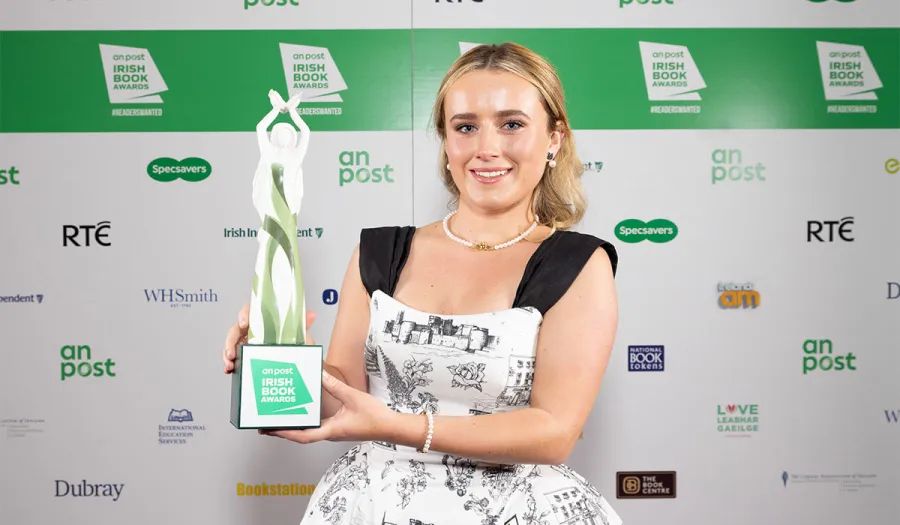
    Sarah Corbett Lynch An Post Irish Book Awards. Source – An Post Irish Book Awards Social Media

    Sarah Corbett Lynch was just eight years old when her father Jason Corbett was killed by her stepmother in their home in North Carolina. 

    The murder of Jason Corbett and the subsequent trials faced major media coverage both in Ireland and the United States. In 2025 Netflix released the documentary ‘A Deadly American Marriage’, which explored Corbett’s tragic death and the circumstances surrounding it. Jason Corbett’s wife Molly Martens and her father Tom Martens were initially convicted of second-degree murder in November 2017; however, their convictions were squashed upon appeal in 2020. A plea bargain for voluntary manslaughter saw the Martens spend minimal time in prison, and meant that Jack and Sarah, Jason’s bereaved children, were left without a chance to say their piece.  

    In the wake of Corbett’s death, the Martens made attempts to tarnish his memory, portraying him as an angry and violent man and claiming that he had instigated a fight on the night of his death. In 2025, Sarah Corbett Lynch, Jason’s daughter released her memoir ‘A Time for Truth’. This book recalls both the lead up and the aftermath of Jason’s death. Looking at when her family moved from Limerick to America, to Jason’s eventual murder. The blurb of the book describes ‘The use of manipulation and gaslighting by Molly Martens – the only mother she had ever known’.  

    I was lucky enough to get to talk to Corbett Lynch about her recent win at the Irish Book Awards, what life has been like since the release of her memoir, and what is next for her.  

    Firstly, it was only right to congratulate Corbett Lynch on bringing home the ‘Dubray Biography of the Year’ trophy at the An Post Irish Book Awards. Beating out the likes of broadcaster Miriam O’Callaghan and former Taoiseach Leo Veradkar, was this achievement a big deal to Corbett Lynch? “Absolutely. I found out that I got shortlisted about a month before the awards. So even being shortlisted was an absolute honour and I didn’t expect it.” 

    As for the awards themselves, an evening which saw Michael D Higgins receive the Bob Hughes Lifetime Achievement Award, Corbett Lynch found the event a warm experience. “It was very overwhelming being in a room with such influential people and I got to meet a lot of them, and everybody was so kind. There was definitely a big sense of camaraderie in the room, which was really nice. Everyone was really there for each other and excited for each other. And then actually winning the award was unbelievable and I really didn’t expect it.” 

    Since the book’s release earlier this year, Corbett Lynch has been on The Late Late Show, Ireland AM, This Morning, and countless other media outlets. How was the press tour experience for her? I wondered if given that the book she was promoting was written about such a tragedy, must there be a sense of bittersweetness? “I quite enjoyed the press tour. I definitely like to talk. So, it was really exciting in some ways as well. I got to meet amazing people that I wouldn’t have got to meet otherwise. And definitely some interviews were harder than others, but like I said, most people, especially in the publishing industry, are just really kind. But it gave me a voice to speak about issues that I wanted to talk about.” 

    Early in our conversation I remark at the shame she has put me to, being wiser beyond either of our years. An award-winning author of not one but two books, doing advocacy work for people who have faced similar situations, qualifying as a swim coach, lifeguard and commercial diver, all by the ripe young age of nineteen. Was Corbett Lynch always a ‘go getter’ or was this something that came with time and situations? “I definitely think that probably came from a lot of the trauma when I was younger. You don’t have years and years to do things, you might as well just do it now. And I’ve had a lot of great opportunities, just from the lifeguarding alone, it sent me into a load of different things like teaching, swimming and diving. So, I was extremely lucky in that way. But it’s with the help of a lot of other people as well. So, I definitely haven’t gotten to where I am without the help of lots of people.” 

    In our ‘Irishness’ it can still be hard to praise ourselves. Is Corbett Lynch proud of herself and her achievements? “I definitely feel like I’ve given my eight-year-old self a voice, and that was kind of what I wanted to do. And hoping that through sharing my experiences, it might help somebody else. And I’ve enjoyed the experience of publishing the book. And I definitely do have a sense of pride in the book.” 

    ‘Noodle Loses Dad’ by Sarah Corbett Lynch.

    A recurring theme in Corbett Lynch’s answers is her interest in people and relationships, and the potential to help others by sharing her story. One connection in particular stood out in her memory. “(There was) A woman, she had just had her first baby and her husband passed away. And she bought ‘Noodle Loses Dad’(Corbett Lynch’s children’s book, written to help young people deal with grief). And she read the story to her son as he grew up. And when I published A Time for Truth, she sent me a lovely message saying that he loves Noodle Loses Dad, the book, and she’s reading my book now, which was really nice to see that it’s actually helped somebody in some way and to connect with other people.” 

    With two books under her belt before reaching her twenties or finishing her degree (she is currently studying English and Drama in order to teach), can we expect any more publications from Corbett Lynch? “Me and my mom are exploring writing books together at the moment, so we’re kind of putting ideas together”. The mom who Corbett Lynch refers to is Tracey Corbett Lynch, sister of Jason Corbett. Tracey and her family took in Sarah and her brother Jack following Jason Corbett’s death and she is a constant presence in the book. It is clear from reading and from Sarah Corbett Lynch’s social media that the family she has now and the bond she has with her mom is something important to her. “I definitely wouldn’t be where I am without my mom. You know, I said it in my acceptance speech for the award that my mom started doing a word a day for me. It helped me be able to write and read and understand things that I wouldn’t have and on top of that, even just having the support of my mom being there. I won’t go into the interviews without my mom being there. As well as it’s handy for her to drive me.”  

    The last comment makes us both laugh, a light-hearted moment in what is a serious conversation, but a reminder that despite the wealth of knowledge and maturity that Sarah Corbett Lynch has been forced to obtain, she is a young woman who was dealt a bad hand and has truly made the most of it.  
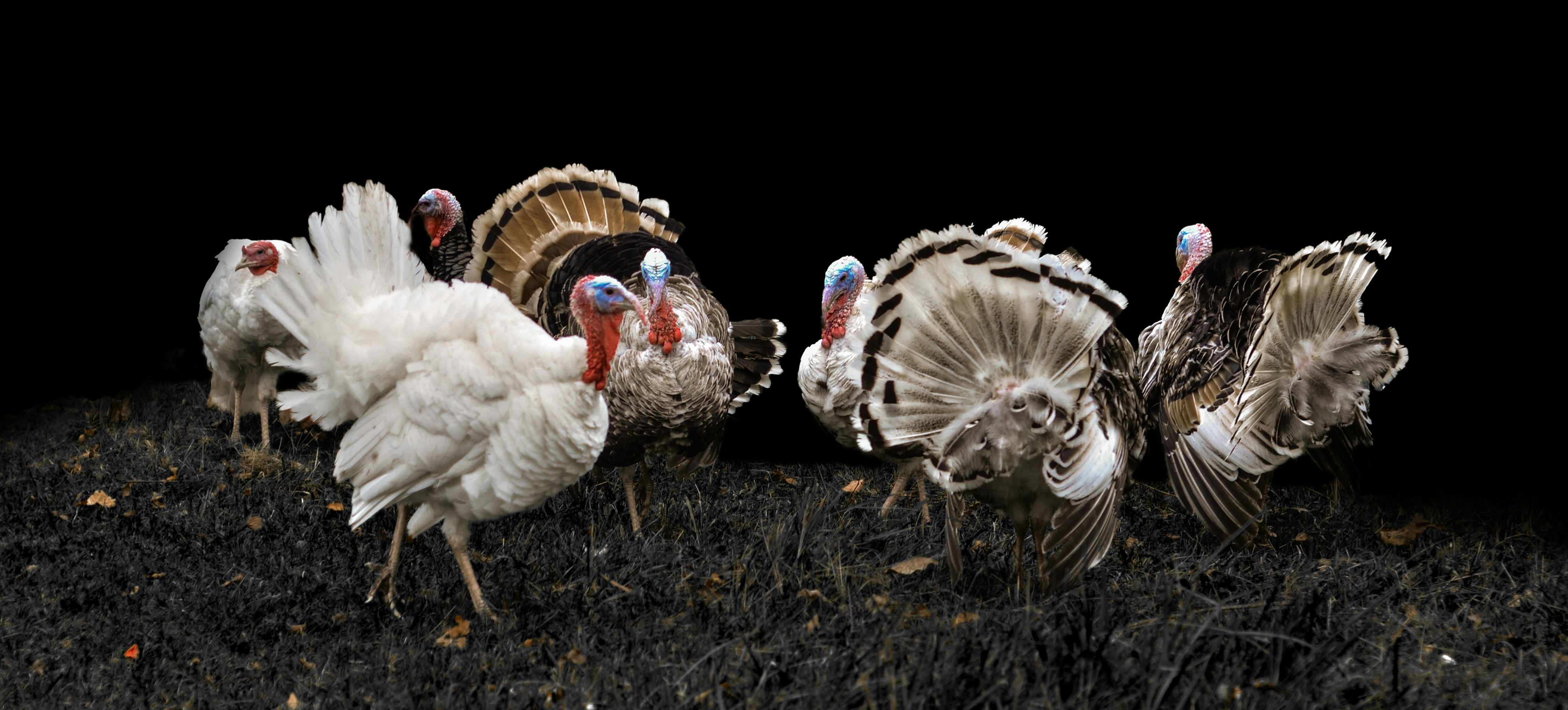
  • The rise of bird flu in turkey farms, will you be getting your Christmas Dinner?

    The rise of bird flu in turkey farms, will you be getting your Christmas Dinner?

    A rise in bird flu in turkey farms has caused worry. The farming and poultry communities are under pressure and are facing an array of questions from the public ahead of the Christmas season.

    People are worried about having turkey on their plate for their Christmas dinner. The City looked into the ongoing issue.

  • “I think it’s historic that there are four women here, two interviewers and two female candidates and that should be recognised” – Humphreys and Connolly go head-to-head for one final Presidential Debate 

    “I think it’s historic that there are four women here, two interviewers and two female candidates and that should be recognised” – Humphreys and Connolly go head-to-head for one final Presidential Debate 

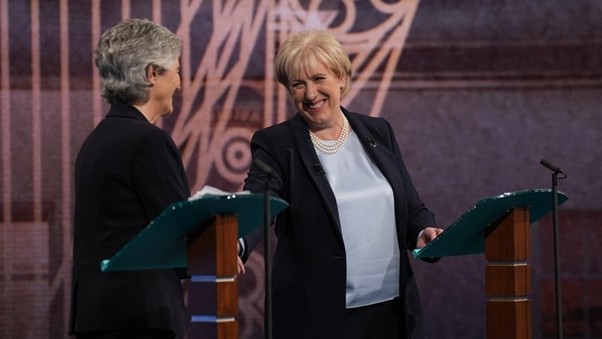
    On Tuesday 21 October, the final presidential debate took place on RTE’s Prime Time. Fine Gael’s Heather Humphreys and Independent Catherine Connolly’s final showdown came after what feels like a very long few months of campaigning, scandal, social media posts and debating. A breath of relief was let out across the country, as it does feel as though there have been more presidential debates than there are seasons of Grey’s Anatomy or films in the Scream franchise. 

    It’s a relatively peaceful hour with nothing said that we haven’t already heard in another debate or interview, and neither candidate says much to push themselves to new voters. Connolly refers to ‘when’ she is president, as opposed to ‘if’, a confidence which is yet to be deemed justified, while one could start a game in which they take a sip of their preferred beverage each time Humphreys starts the response to a question with “Well can I just say”, before dancing around what has been asked.  

    X Reacts to the final debate.

    The first question is to Humphreys. She is asked to assert why she would be a better president than the woman beside her. She doesn’t answer the question, she instead references the ongoing riots of the evening, which as important as they are, are not what was being asked. Miriam O’Callaghan states that she will come back to this topic, and encourages Humphreys to answer the question at hand: what will make her a better president than Connolly?  

    “I think it’s historic in the first instance that there are four women here, two interviewers and two female candidates and that should be recognised,” said Connolly. She was clever to make this point ahead of making her case for why she was a better presidential candidate, referencing herself, Humphreys, and hosts Miriam O’Callaghan and Sarah McInerney, who take turns asking the questions. “All women find it difficult to say I, but I believe that I have the characteristics to make a president. I represent a different kind of Ireland. Unfortunately, Heather is more of the same,” said Connolly.  

    Personally, I would have liked to see this final debate as a chance to show more humility from each candidate. I wonder if it was more normalised for a candidate to put their hands up and say, “Yes I made a mistake”, would that help or hurt their campaign?If there was more humanity in these candidates, more personability, would it be easier to feel like we are voting for actual people, not simply two seasoned politicians?  

    What follows is discussions around Gaza, Donald Trump, each woman’s career, questions around Connolly’s work on repossession cases that have been widely reported, to which she is adamant that she has been as clear as she can about the situation.  


    Personally, I would have liked to see this final debate as a chance to show more humility from each candidate. I wonder if it was more normalised for a candidate to put their hands up and say, “Yes I made a mistake”, would that help or hurt their campaign?If there was more humanity in these candidates, more personability, would it be easier to feel like we are voting for actual people, not simply two seasoned politicians?  

    What follows is discussions around Gaza, Donald Trump, each woman’s career, questions around Connolly’s work on repossession cases that have been widely reported, to which she is adamant that she has been as clear as she can about the situation.  

    “I’ve never avoided a question in my life. My life would be easier if I was less blunt.” – Catherine Connolly.  

    Humphreys is again questioned on the Irish language and her fluency and brief stint in the Gaeltacht. “I commit to returning to the Gaeltacht, returning to Donegal, I’m very proud of our language. I did spend a week in the Gaeltacht. I would like people to come on a journey with me.” My own Gaeilge abilities are called into question as Connolly and interviewer Miriam O’Callaghan have a back and forth in our native tongue. Connolly is clear to say that she has never criticised anyone for not speaking the language, and O’Callaghan talks about the use of the Irish language to alienate people, particularly in the northern part of the island. 

    Each candidate is asked about their plans for their Council of State. Humphreys says “I would like to appoint more women. First priority would be on women. I know that there are many women well qualified to sit on the Council of State.” Connolly made clear that all of her energy has gone into her campaign over the last three months, and that while she hasn’t specific people in mind, she knows what qualities she would look for. “I’ll be looking to have as diverse a range of people in those seven appointees. Disability, diversity, young and not so young.”  

    The point is made that a president must have humility, and each candidate is asked about something that they regret, in their professional career specifically. Humphreys speaks of Covid times. “What really hits me hard is the fact that there were regulations there that when a relative was dying you couldn’t hold their hand, you couldn’t whisper something in their ear and that stays with me, and I regret that I really do. I think we could’ve found some way,” she said. Connolly piggybacks on the same issue., “I regret agreeing with the Government (on the same issues). I agree with Heather, it was Government policy. My personal regret is that I agreed in the first place with the regulations.” She then uses the point to mention a break in trust (to which Humphreys interjects that they were following medical advice), and the evening draws to its close.  

    It is wrapped up nicely. The two women smile at each other and shake hands, perhaps just for the camera, but still a nice show of mutual respect. It can be assumed that both candidates must be exhausted after what has felt like a very long run up to Friday October 24th.  

  • “It is here, and I don’t think it is going away any time soon” – an evening with President Barack Obama.

    “It is here, and I don’t think it is going away any time soon” – an evening with President Barack Obama.

    It’s my first time in the 3Arena since I went to a Billy Joel concert in 2013. Two trips for two extremely influential men. The seats are great (they would want to be for the €140 that they cost), and the atmosphere is buzzy. One would be forgiven for thinking that we were soon to be treated to a rock concert, not a discussion between one of Ireland’s top journalists and the 44th President of the United States. 

    A short montage of some of Obama’s career highs, as well as his visit to Dublin in 2011, set to the well-known bars of U2’s ‘City of Blinding Lights’, (a song used repeatedly by Obama throughout both of his presidential campaigns) plays out before Irish Times Journalist Fintan O’Toole takes the stage to greet the audience and introduce President Obama.

    Obama himself carries with him a level of aura many world leaders would envy. His security team blend in so well in front of the stage that you would be forgiven for not noticing them. His comfortable walk and wave onto the stage show a man who is well versed in these kinds of events.

    What follows in the next ninety minutes is twofold. First, reflections. Reflections on visits to Ireland, on facing issues with race, and identity. “Much of the history we do consume is fabricated,, he notes. Obama speaks of Donald Trump and refers to his censorship of media and the censorship and fallback on certain late night chat show hosts, without naming any names, an act of class that his successor would never take on

    .

    World War Two, The Cold War, Palestine, there were not many stones unturned. Naturally, these reflections turn to looking towards the future. The work of his foundation hopes for a resolution in conflicts and instilling a level of hope for the future.

    “Much of the history we do consume is fabricated,”, he said.

    Why is it that the Irish are so fond of Barack Obama? His Irish ties could be cited, but it is very common for the American people to have cousins over on our side of the pond. Negating all of that, a huge part of Obama’s appeal in this day and age is what he represents, what he reminds people of.

    The first African American President, with a wife who vulnerably put herself in the spotlight in more ways than one. Michelle Obama appeared on teen series such as iCarly, featured in a ‘Carpool Karaoke’ segment with James Corden, busting out Stevie Wonder and Beyoncé classics.

    The love for the Obamas stems from their being in touch with the everyday world and being seen as very human. This is not the general consensus when looking at the current administration and its first family members.

    As for what the former president is up to these days, he spoke contently of his work with the Obama Foundation, the non-profit organisation set up by Obama and his wife that aims to help and educate people internationally. He spoke specifically of Nika Kovǎc, founding director of the Institute of 8th of March Institute, (a movement-building organization that uses storytelling and advocacy to confront gender and economic inequalities across Slovenia, according to its website), and the work and advocacy that she did in her home country with the help of the foundation.

    Kovǎc successfully ran two referendums in her home country, after learning via the Obama Foundation how to appeal to people and voters. A big point on that was to reach out to people on their own level, to not talk down to anyone, especially when in a position of power and education.

    An inevitable wind down comes upon the stage as Obama says his final part. It is clearly important that the former president wants people to be looking forward and to be educating themselves on the goings on of the world. Though he is busy with his foundation and other ventures, we can be assured that Obama (who was awarded Freedom of the City shortly before the event) will be back to our country that he seems to have such a strong connection to.

  • The Traitors sign off…… for now.

    The Traitors sign off…… for now.

    There was a bittersweet feeling amongst many households in Ireland at 21:35 on Tuesday September 23rd.  The finale of season one of The Traitors Ireland. Was there only twelve episodes? Was there life before August 31st when six hundred thousand people across this island sat down with their cups of tea to see if the Irish could make a good go with their version of The Traitors? I can’t honestly remember.  

    I had no idea what to expect when the series was first to air, I had never seen any of the other Traitors series and purposely avoided any information on them.  

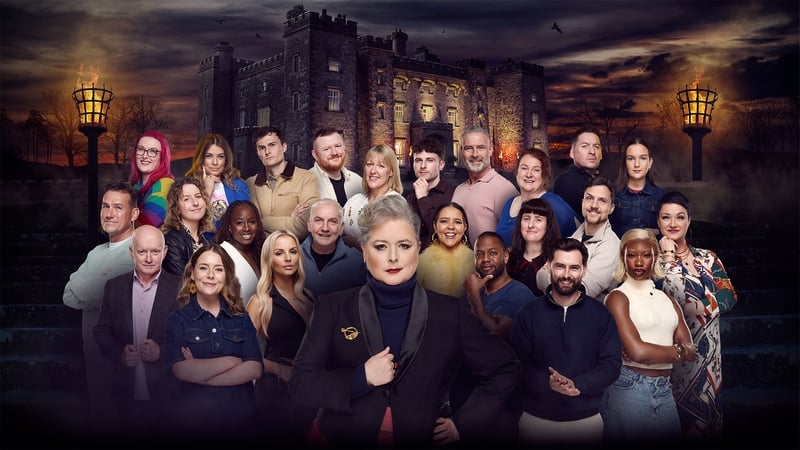
    For me, a big reason why the Traitors Ireland worked so well and was beloved by many was the authenticity and relatability of the contestants. Do we not all have an uncle like Paudie? Who plays dumb but is one step ahead of the game, or a colleague like Oyin, who doesn’t say much but takes everything in, or the local Garda who is slightly too big for his boots, I will refrain from naming a name here, but you can piece that one together yourselves. Whether or not they were playing characters as so many of the contestants tried to convince us that they were, it was hard not to identify them with people we know in our daily life.  

    There is something undeniably wholesome about a show like the Traitors. It’s not so much the content, but it’s the sense of community that it brings. The Traitors brought with it this sense of laughter and togetherness that isn’t often seen with modern television, not in the inter-generational sense that this show was watched. The varied ages of its contestants were like the varied ages in viewership. I watched with my parents who are in their fifties, talked about it in my part-time job with many pensioners, and if it weren’t for the late start time I would imagine there would be many children watching too. I would like to make it clear that I have not been paid to endorse or big up this series, I was just a major fan. 

    The viewership speaks for itself. According to RTÉ, “Across the 12 episodes, the series pulled in an average of 557,000 live and viewed on the same day as live (VOSDAL) viewers, with a 50% share of viewing. On RTÉ Player, it has been streamed 3.7 million times.” In reading and watching interviews with various members of the production cast it is evident that nothing happened by accident on this series. Each contestant was chosen methodically as were the different aspects of the daily challenges.  

    While there were many memorable contestants, both likeable and unlikeable, the true star of this series was Siobhán McSweeney. For many it would be hard to see her as anything other than her breakout role as deadpan Sister Michael in Derry Girls, and many felt that Claudia Winkleman’s shoes were big ones to fill across the pond, but McSweeney appeared to effortlessly fall into the role of host. The level of aura that followed her in every scene was second to none. If the series is to return, it would be impossible to imagine anyone else to take on that role. The notable use of Irish designers in her outfits was also a touch of class.  

    Looking at the finale itself, ultimately, the winners Oyin, Vanessa and Kelley have gained a lot of support online (a special note for whoever was in charge of the social media for the series, someone deserves a raise) when they were announced as the joint winners of the nearly €43k prize. In my humble opinion, Traitors Nick and Ben shot themselves in the foot when they made the decision to vote Faye out, thus eliminating their last true friend in the series.  

    And so, while there has been no official greenlight for series two, the RTÉ socials have put out callouts for contestants, so it can be assumed that things are looking good. So long Traitors, hope to see you soon.