Author: Jack Maher

  • Wolf Tones hope to reach Christmas Number One with Charity Single

    Wolf Tones hope to reach Christmas Number One with Charity Single

    680px-Derek_Warfield

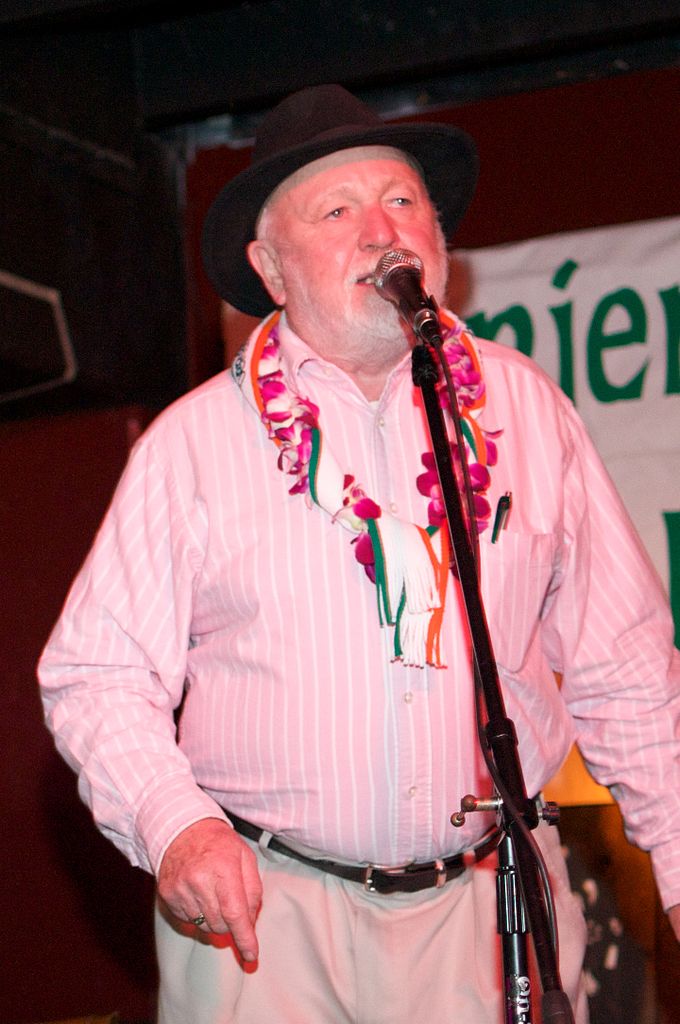
    The Wolf Tones are trying to reach the Christmas number one with a special release of their ballad ‘Joe McDonnell’, with all proceeds going to charity.

    Just a couple of weeks ago Football Association of Ireland CEO John Delaney was forced to make a grovelling apology, after he was recorded singing the controversial ballad in a Dublin pub following Ireland’s last game.

    The ballad is a tribute to Joe McDonnell, who was a member of the Provisional IRA, but was perhaps more well known as one of the casualties of the Hunger Strikes in 1981 having gone 61 days without food while protesting at prison conditions.

    The band have now tried to put a positive spin on the story, by releasing a special recording of the song that currently sits at number nine on the iTunes charts with all proceeds going towards the Simon Community.

    Clearly the furore over John Delaney caught the public’s attention, as the song has found its way into the top ten without any airplay, and due to its controversial nature it is unlikely to receive any.

    Proceeds from the single go towards The Simon Community, so it has received major attention in recent days after the fallout from the death of homeless man Jonathan Corrie.

    The Dublin Simon Community works to prevent and address homelessness in Dublin, Wicklow and Kildare. There are an additional seven centres dealing with homelessness in the different regions of the country. Currently the Dublin centre is providing a service for 3,000 people.

    The organisation relies heavily on fundraising and volunteers, which makes this move  a positive one as it has clearly already raised a lot for the charity with each download and will continue to do so.

    Image credit: Nathan Ichiriu
     

  • Rugby’s changing its attitudes towards concussions

    Rugby’s changing its attitudes towards concussions

    Finally it seems common sense has prevailed, as players are no longer allowed play the “hero” when they have sustained head injuries on the field of play. The power is now firmly in the hands of team doctors and referees.

    This was on full display in Ireland’s final game of the autumn series against Australia, where four Irish players Johnny Sexton, Gordon Darcy, Rob Kearney and Conor Murray were assessed for concussion. Murray’s case was particularly telling however as the player clearly didn’t want to come off after receiving an Australian knee to the head.

    Dr Eanna Falvey the Irish team doctor took control however, and made sure that proper protocols were observed before allowing the Irish scrumhalf to re-enter the game.

    Despite the potential repercussions at such a critical juncture in the game, taking a player out of the game in this instance sends out a very positive message to the rugby world.

    High profile instances like this are vital in order to change the culture within rugby and put player safety number one.

    Rugby still has a ways to go however, for example Ireland’s and Ulster’s Luke Marshall sustaining four concussions between March 2013 and February 2014 was not acceptable.

    Perhaps the IRB can learn from the NFL who were recently hit with an $675m concussion settlement with an additional $112m in player’s lawyer fees.

    This has resulted in much stricter protocols in regards to concussions especially in regards to a player suffering multiple concussions in a season. All players that suffer suspected concussions are automatically taken into the locker room for assessment and in most cases are ruled out of the remainder of the game.

    Although rugby’s process for assessing concussions on the pitch are up to scratch, perhaps they should take a leaf out of the NFL’s book in regards to multiple cases. Cleveland Tight End Jordan Cameron has missed a month of action after suffering multiple concussions this season in direct contrast to how Luke Marshall was treated.

    I’ve talked to Eoin Cremen who is the physio for Seapoint RFC who compete in Division 2A of the AIL. He told me how he had the power to remove a player from the pitch if they have suffered a concussion.

    He also said how awareness has made his job much easier as a referee’s can now request a player leave the field for assessment if deemed necessary. He outlined how attitudes are changing but it is an ongoing process as medics have little precedent due to rugby still being in early years of professionalism making it necessary to learn on a case-by-case basis.

  • Ireland see off Australia in epic clash

    Ireland see off Australia in epic clash

    IMG-20141122-WA0004

    Ireland saw off Australia 26-23 in what was their sternest test of the Autumn Series.

    The victory ensured Ireland completed a clean sweep in the November Internationals and as the third ranked side in the world, they will go into next year’s World Cup as one of the favourites.

    After a dream start saw Joe Schmidt’s charges go 17-0 up inside fifteen minutes the Irish side had to quell a ferocious comeback by the Aussies whose off the cuff style was on full display.

    Australia dominated the early exchanges with a number of excursions into the Irish 22, however, excellent use of the choke tackle so effective against the Wallabies in the past, meant the Irish defense held up. After an infringement in the ruck, Johnny Sexton was able to kick the first points of the evening after six minutes.

    Sexton missed his next attempt, however another successful deployment allowed Rory Best to rip possession away from the Aussie maul. Eventually, the ball was recycled to Johnny Sexton and after spotting the inexperienced Henry Speights out of position, he sent Simon Zebo clear with a kick to the corner.

    Just two minutes later as Australia were knocking on the door, Tommy Bowe, reminiscent of his effort at the World Cup three years ago, stepped out of the line to intercept a pass from Nick Phipps, only this time he took it to the house and after Sexton added the extras Ireland held a 17-0 lead.

    Just four minutes later Australia were on the board as a loose pass from Zebo was tipped and intercepted by Phipps, who avoided the Irish cover and touchdown atoning for his earlier error.

    Just five minutes later, Australia were over again with fly half Bernard Foley. After consulting with his TMO, the referee awarded the try making the score 17-12 after Foley shanked the conversion.

    Ten minutes later, Australia crossed again as Phipps went over for his second of the day after a free flowing move that was worthy of an IRB try of the year nomination.

    Another miss from Foley meant the game stayed level and after the teams traded late first half penalties it was 20-20 at the interval.

    After a free flowing first half the second half was a much more tense affair as the defences took a grip on proceedings.

    After an infringement in the ruck, Johnny Sexton was afforded the opportunity to restore the Irish lead and duly obliged with a monster kick from just inside Australia’s half. However, just three minutes later a Bernard Foley kick ensured the sides were level again. Amazingly, this was the last points the Aussies would get.

    Both sides were now trying to impose themselves on the game, but it was Ireland that were dominating territory. This brought about an audacious drop goal attempt from the 10 meter line which agonizingly rebounded of the inside of the upright.

    However, a couple of minutes later, Johnny Sexton punished another Aussie infringement with a long-range penalty, restoring the Irish lead.

    With heavyweights Kurtley Beale, Quade Cooper and Will Genia all on the field Ireland were holding on for dear life and with some stout defending, forced a number of key knock-ons, which allowed for the clock to tick down.

    Finally, a penalty against Adam Ashley Cooper for not releasing allowed Ian Madigan to boot the ball into touch as time expired for a final score 26-23.


  • Ireland dig deep to takedown South Africa 32-15

    Ireland dig deep to takedown South Africa 32-15

    IMG-20141110-WA0003

    Joe Schmidt’s charges are off to a flyer in the Autumn Internationals after humbling the Springboks.

    Knowing they couldn’t take on the South Africans in an arm-wrestle, Ireland played a very containing game in the first half dominating possession. This dominance was not entirely reflected on the scoreboard but thanks to a couple of Johnny Sexton penalties Ireland held a narrow 6-3 lead at the interval.

    Having contained the much fancied Springboks in the first half Ireland made a dream start to the second half as Rhys Ruddock, a late replacement for Chris Henry, slid in for the games opening try within two minutes. After Johnny Sexton nonchalantly slotted over the extras from the corner it became a two-possession game 13-3.

    After imposing their physicality South Africa eventually managed to breach the Irish defense for their opening try after 57 minutes, when Marcell Coetzee applied the finishing touches to an attacking maul.

    South Africa were clearly the dominant side at this stage as Ireland’s tackle count started to grow, however after some stout defending Johnny Sexton yet again punished a South African infringement at the breakdown with an excellent kick.

    Just three minutes later after clashing with Rob Kearney in the air, replacement South African hooker Adriaan Strauss was sin binned by referee Romain Poite who had consulted his TMO, a major turning point in the game.

    With ten minutes to go Ireland started to turn the screw as the new centre partnership of Robbie Henshaw and Jared Payne showed their potential as they threatened to break through for a try. However cynical play by the South Africans in the ruck resulted in another penalty which was duly slotted over by Johnny Sexton making it yet again a two-possession game 19-10.

    Just two minutes later Ireland were again knocking on the door of the South African 22, After a few near misses earlier in the game Connor Murray caught out South Africa’s flat defense as he sent Tommy Bowe clear with a grubber kick for a try in the corner. In his last act before making way for Ian Madigan Johnny Sexton slotted over the extras in what was a flawless kicking display and ultimately man of the match performance.

    Madigan also got his name on the score sheet with a cracking penalty from 45 meters before some slack Irish defending allowed Willie La Roux to send JP Pietersen clear for a consolation try and final score 29-15, but no one other than perfectionist Joe Schmidt really minded. Unfortunately it also meant Ireland fell just four points short of their largest ever margin of victory over the Springboks.

  • The Second Half Review

    The Second Half Review

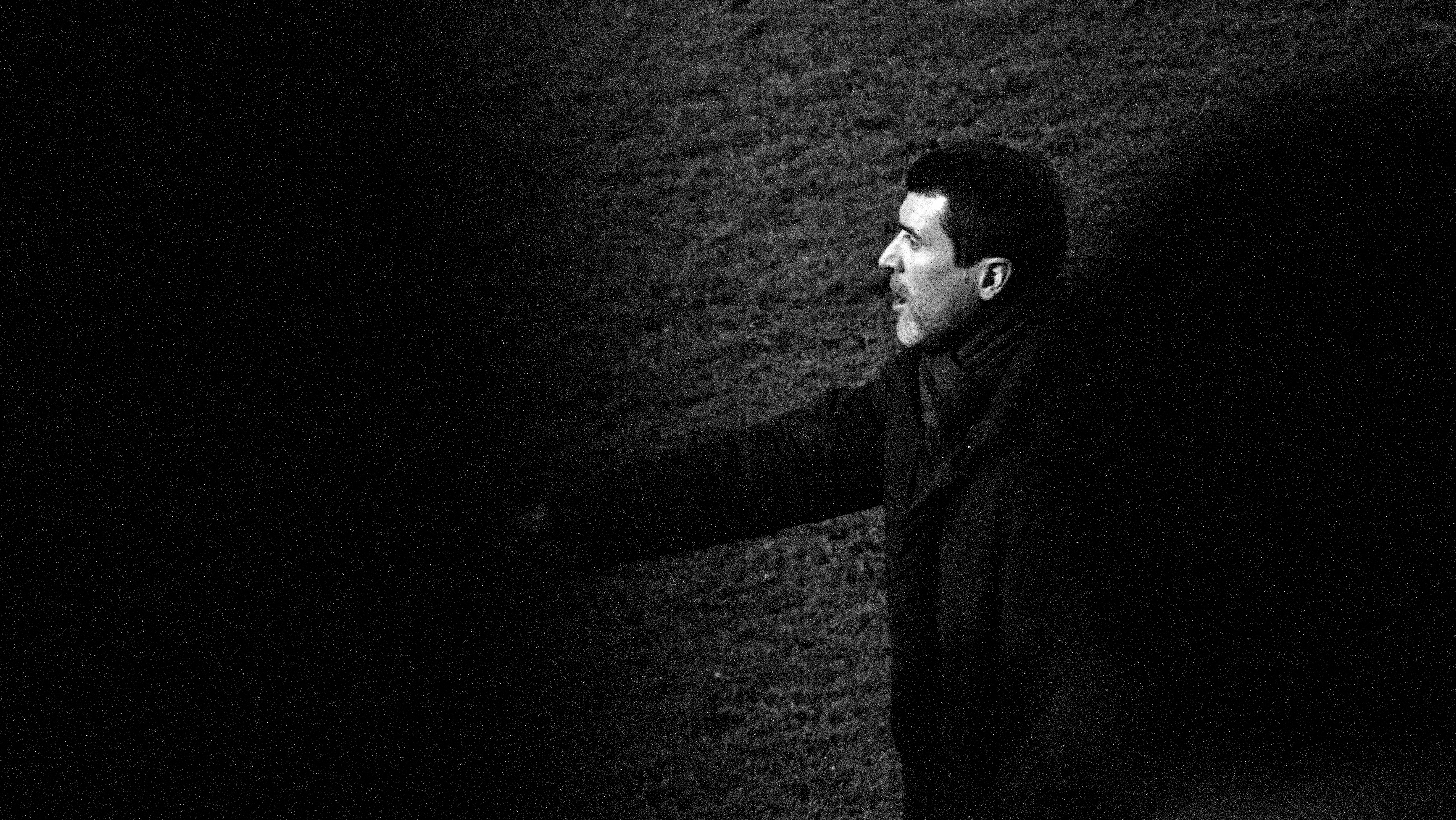
    Roy Keane’s new book is an intriguing masterpiece that finally reveals the hard-man midfielder’s well-hidden good points.

    Ghost written by Roddy Doyle The Second Half does little to dispel the notion that Keane could pick a fight in an empty room. At times it seems he is at pains to reassure us he was this monster of myth and legend, portraying his violent clashes in detail. Such as his infamous clash with Alf-Inge Haaland, the incident in the Highbury Tunnel and a fight with his own teammate Peter Schmeichel.

    Another intriguing part was Keane’s own take on the fallout with Alex Ferguson and the infamous MUTV interview. He even admits to breaking down in tears just two minutes from Old Trafford upon realizing it was all over.

    This was the first instance in the book where he shows his extraordinary capacity for self-analysis. Light years from how he appears on the surface as an individual with gruff indifference “This is me, if you don’t like me tough”.

    He shows a lot more of this side upon becoming a manager; there is definitely a lighter tone at that stage of the book. Such as when he got his office at Sunderland “I had a leather chair that swung around, a swivel chair. For the first few days I used to swing around on it. If any of the players or staff had peeped through the office window they would have seen me going, “Wheeeh!”

    There is also surprising self-doubt when explains his reasons for not getting too comfortable in the office by putting up family photos; if things went badly it could be cleared quickly “one box”. On the flipside he felt not having many photos might present an image to the players that he really is a hard case.

    He supplies a delightful putdown of Robbie Savage who he considered bringing to Sunderland to add character to the squad, “So I got Robbie’s number and rang him up. It went to his voicemail: “Hi, it’s Robbie — whazzup!” — like the Budweiser ad. I never called him back. I thought: “I can’t be f****** signing that”.

    Slowly he comes to love the club and becomes engaged in the complexities of management. After completing a massive turnaround in his first season Keane took Sunderland from the bottom to top of the championship and promotion. In his second season he managed to keep Sunderland up but after an okay start to his third season an innocuous phone call with new owner Ellis Short resulted in his resignation.

    After six months out of work he became manager of Ipswich, he didn’t enjoy his time there near as much and was sacked after 20 months. On this he was again brutally honest “I don’t think I’m a bad manager, but at Ipswich I managed badly”.

    The rest of the book covers his time as a pundit right up until his appointment as Ireland assistant to Martin O’Neil and subsequent appointment as Paul Lambert’s assistant at Aston Villa.


    Image courtesy of James FJ Rooney via Flickr, http://bit.ly/1wrcjWt

  • Irish sides get into gear for European Competition

    Irish sides get into gear for European Competition


    HeinekenCupFinal06MunsterVBiarritz200506SmallByMike

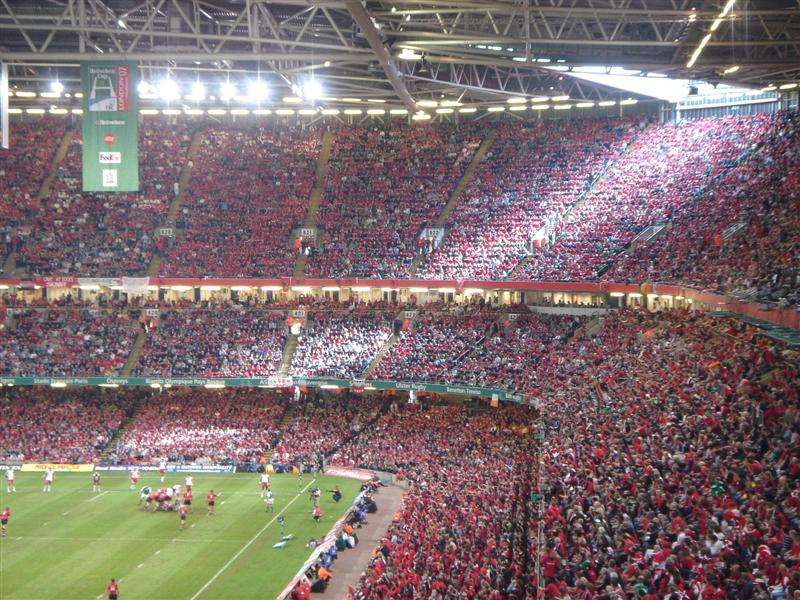
    With less than two weeks until the inaugural European Rugby Champions Cup, Ireland’s top two sides locked horns at the Aviva Stadium on Saturday evening; with Munster romping home to an emphatic win.

    The Red Army can be very optimistic of their chances in Europe this season following their dominating 34-23 victory in what was a first win over their bitter rivals at the Aviva.

    Munster are set to take on French powerhouses ASM Clermont, and English sides Saracens and Sale Sharks with rookie head coach Anthony “Axel” Foley remained cautiously optimistic, “To win the competition, you have to accumulate enough points to get out of your group. We know you don’t start talking about winning this competition until you’re in a final. It’s about getting there.”

    Leinster on the other hand have to be concerned after a lifeless performance, as Matt O’Connor’s outfit rarely matched the aggression and appetite for the game shown by Foley’s charges. Further concern for the Blue Army is a growing injury list, as Fergus McFadden joined long-term absentees Sean O’Brien and Cian Healy on the treatment table.

    Just like their rivals Leinster have also been drawn into a difficult pool with French side Castres and English sides Wasps and Harlequins. With a reduction of teams from 24 to 20 easy groups within the new competition should be a thing of the past.

    Something that should suit both these sides who have found easy groups hard to come by the last few years, unlike Ulster whose run of easy groups has emphatically ended as they have drawn champions Toulon, Scarlets and Leicester Tigers.

    Unfortunately with the restructured tournament Connacht won’t compete in the top tier this season, instead they will take part in the Challenge Cup this year. As the fourth tier Irish side they are unlikely to get a chance to achieve fairytale wins in the new structure such as those over Harlequins, Biarritz and perhaps the biggest shock in Heineken Cup history victory over Toulouse

    Photo: Whoelse http://bit.ly/1vdgpmc