
Author: Ruadhan Jones

  • How a controversial diet helped one woman combat her chronic skin condition

    How a controversial diet helped one woman combat her chronic skin condition

    Photo: Harriet-Wallace Mead

    TheCity.ie’s Ruadhan Jones speaks to a woman whose chronic skin condition led her to trying the controversial ketogenic diet.

    I’ve known Edel for a few months. She’s the good natured, happy-go-lucky type you want to be around. I worked with her for about six months in a retail job. That type of work can get you down, but it didn’t seem to have the same effect on Edel.

    It was a surprise to learn that she suffered from a chronic skin condition called discoid eczema. It’s a variant of the more common atopic eczema, a dryness of the skin that can become quite severe and uncomfortable.

    Edel’s condition caused her skin to become itchy, swollen and cracked in circular and oval shapes. At one stage, discoid eczema covered her body practically from head to toe.

    “Every time I blinked, my skin would stretch and start to bleed.”

    “The worst part was my eyelids,” she told me, with a half-smile. “Every time I blinked, my skin would stretch and start to bleed. That was the worst I’d ever had it.”

    The pain and the irritation it caused were upsetting to Edel. Traditional treatments, such as the use of emollients (moisturisers) or creams and ointments failed to relieve her. If the condition persists, then it’s advised that you visit a dermatologist to seek alternative treatments. So Edel started going to a dermatologist, but their efforts to treat her ailment weren’t successful until they changed her diet.

    “I started going to a skin specialist,” she said. “We tried a few different medicines and treatments, but they’d little effect. I tried a dairy-free diet first with limited results and on the back of that, my skin specialist recommended I try a new diet for a week – the ketogenic diet. I started it with little hope of success, just another on the list of things I was willing to try. My skin was worse than ever.”

    The ketogenic diet is liable to ring a few bells, potentially alarm bells. It is a controversial diet which involves a high-fat, low-carbohydrate intake. The aim is to produce “ketone bodies”, which are usually only present during energy restriction. 

    It has been in use since the 1920s as a treatment for epilepsy, but has come to be used as a “fad diet”, one of a number aimed at weight-loss and the like. Domini Kemp, the Irish chef, and Patricia Daly, an Irish nutritionist, claimed that it could be used to treat cancer. This was despite the lack of clinical trials, and the claim was denied by other scientists

    The keto diet has become one of many fad diets. Photo: Jennifer Burke

    “I knew that it was said to be controversial, but at the time I would have tried most things to help my skin.”

    “When I started this process,” Edel explains, “I was very concerned by some of the side effects I read about online and the like. I knew that it was said to be controversial, but at the time I would have tried most things to help my skin.

    “I did my research before beginning and decided that the minor side effects were worth trying it out. I’ve not experienced most of them and now I feel comfortable deciding what to eat. I’m not concerned anymore.”

    She speaks with a matter-of-fact approach, almost shrugging her shoulders while telling me this. It was something she simply had to try if she wanted relief.

    Among the potential side effects are: mineral and vitamin deficiency, effects on bone health, growth, and constipation. As well as this, the keto diet is one of the most intensive and restrictive out there, with carbohydrate intake reduced to as low as 20g (one potato is 15g). As a result, foods like bread, potatoes, pasta, and rice are effectively removed from the diet. Experts say it should only be conducted with the supervision of a qualified specialist. 

    Edel’s diet isn’t as restrictive as some, with her carb intake up around 30-50 grams per day. A typical meal plan of her day includes a variety of fruits and vegetables, low carb granola and rice cakes, egg, and protein rich fish or red meat. To her great relief, the effects have been very good.

    “I have very little eczema flare ups anymore, which is the biggest change because it was quite rampant for a long time.

    “I have very little eczema flare ups anymore,” she said, “which is the biggest change because it was quite rampant for a long time. I’ve also dropped around 4 to 5 stone with minimal exercise (only cardio) and my body just feels generally more healthy and full of energy.”

    “The only things that I’ve found to be unpleasant are the smells at the beginning and the thirst. Your breath and urine start to smell like nail polish remover because your body is changing so you have to constantly counteract that! And it’s nearly two years in and I still feel thirsty all of the time.”

    That being said, she is hopeful that the diet will not have to continue indefinitely.

    “The diet seems to have been working a lot better than anything else I have tried,” she told me. “But I’ll continue until other methods that I try work better for me. I think a lot of people don’t consider the relationship between the foods we eat and our skin because it’s not ‘inside’ our bodies. With more research going into skin conditions or autoimmune diseases I’m hoping that eventually I won’t have to be on a ketogenic or a dairy free diet.”

    Nutritional science is not an exact science and studies examining how foods influence health are inherently fraught. There are many different diets, and a lack of consensus on what exactly makes a diet healthy. Edel may have found one which works for her. This is a complex area and each individual’s experience may vary depending on the treatment they use. So any claim must be treated with caution.
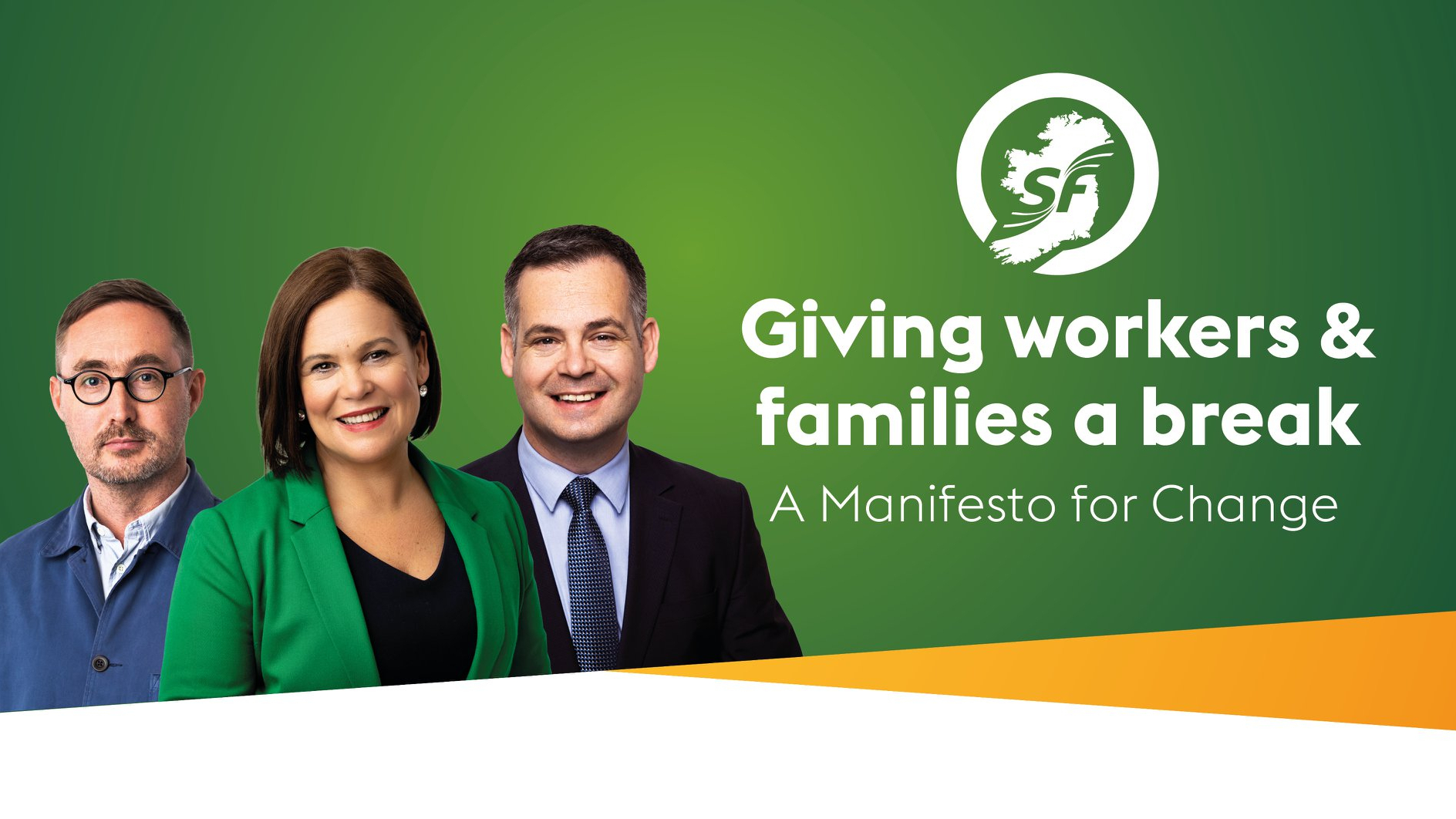
  • Opinion: are Sinn Féin really agents of change?

    Opinion: are Sinn Féin really agents of change?

    Sinn Féin are the first serious challenger of Fianna Fail and Fine Gael’s two-party hegemony in Ireland’s 100-year history as a state. There’s a sense, then, that we have experienced radical change.

    Sinn Fein received the majority of the popular vote and have a mandate for change, as the phrase goes. They face a great challenge, with crises in the housing and health sectors reaching exceptional levels. If change is to come, it will have to be far-reaching.

    But for all the talk of change afoot, there’s barely a breeze, let alone a gale.

    Regardless of what Sinn Fein do, we will still live in a broadly liberal state, whether liberal conservative or liberal liberal – right or left liberal. What do I mean by this? It seems confusing, given that the media typically delineates the battle lines along binary left-right grounds.

    What I mean is that the foundation of our political system – the nation state – is the inheritance liberal individualism’s precursor: The Protestant Reformation. This enshrined the principle of non-conformist individualism, stressing the individual’s agency to interrogate received traditions for him or herself.

    Dominion: How the Christian Revolution Remade the World. Photo: Amazon

    In his insightful new book, Dominion, Tom Holland argues that the modern secular state originates in Christianity. The efforts of Pope Gregory VII resulted in the first systemic split between Church and State, the sacred and secular. However, the balance of power rested with the Pope.

    Martin Luther feared this power and demanded that princes be given the ultimate right to govern. And so, due to the Reformation, the power shifted hands from the Pope to the princes. As democracies were formed, it passed from princes to, ostensibly, the people.

    Of course, the issue with this narrative is that the people do not have “the power”.

    This is a very rough sketch, but you get the idea. Of course, the issue with this narrative is that the people do not have “the power”. Or rather, they consider their political engagement, whether that means voting, protesting, lobbying, or striking, to be the guarantee that their voice is heard – to be the guarantee of their “power”.

    What this has effectively created, however, is an “elite” whose job it is to engage with political questions, to come up with solutions, and to convey these solutions to the public. But for this relationship to be maintained, the modern electorate must have only a simplified and impoverished account of the issues at hand.

    I don’t know how many of you read every party’s political manifesto. I have no background in political science, but I attempted it. The promises made were about vast sums of money and huge infrastructure, the kinds of promises the average citizen is unable to evaluate but which sound attractive. 

    What this highlighted to me is that the art of modern politics is to conceal more than you reveal – to imply more than is true. This is reinforced by the existence of spin gurus, that professionalised form of lying.

    What the narrative I outlined fails to convey, therefore, is that we, the West, have come to accept the nation-state as the best system for organising our society, and with it, the second pole, that of the market.

    Effectively, the state is no more than a “giant utility company”

    This narrative also fails to convey that the modern nation is broadly utilitarian in its functioning. Effectively, the state is no more than a “giant utility company” according to philosopher Alasdair MacIntyre.

    It is organised to provide services to individuals, not to pursue the common good. It guarantees the maximum amount of happiness to the maximum number of people. The role of the modern state, therefore, is to negotiate between the competing interests of individuals and the interest groups they form. The fundamental unit is, whether left or right, the individual citizen, and his or her happiness is paramount.

    What the left, in terms of Marxism and other forms of communitarianism, seeks to create is a community-oriented society. It seeks the good of the people, not the individual. It is also striking that it is the “good”, rather than the happiness, of people which is its ultimate aim. 

    Modern forms of democratic socialism, the type Sinn Fein purveys, similarly purports to work for the good of the people. It promotes a very active state and the sponsorship of public goods such as healthcare and education.

    Photo: Pexels

    This is not to say that the right does not seek the good of the people. But contemporary conservatism is effectively neoliberal, that is it supports an exceptionally strong market with limited intervention by the government. 

    What both of these ideologies accept is the idea that the state is the fulcrum around which their ideas pivot. And with the state, they accept the aims of their policies to be the maximising of happiness for the maximum number of citizens.

    To think therefore that Sinn Féin will produce any change in this regard, the most fundamental, would be wrongheaded. What Sinn Féin will do, by themselves or as part of a left-wing coalition, is repeat the mistake of left-wing governments in attempting to apply communitarian values to the nation state.

    Communitarian values emphasise the common good of communities over individuals. It supports the individual’s active participation in and identification with the community. By this means, the individual develops his or her practical reason and comes to understand how best to act.

    It is like making a deep commitment to your local supermarket, not realising that it is part of a multinational chain.

    But to attempt such an identification with or participation in the modern state is to misunderstand its function and its nature. It is like making a deep commitment to your local supermarket, not realising that it is part of a multinational chain. The loyalty is misplaced.

    So, whatever the government, whatever the policies they may promise, we are still stuck with a state no more our own than the stores we shop in. Our lives are still determined by an elite, whether left or right.

    Perhaps that’s why we don’t bat an eye at Saoirse McHugh’s idea of a devolved state. Is there a sense that the nation-state model isn’t working? It does seem to be the case, as dissatisfaction with democracy rises.

    So, while the political machinations continue and a government is formed, while historians and economists fill columns and airtime, and while the links between Sinn Fein and the IRA are investigated, you and I might sit here and wonder where all this “change” will take us?

    Hardly very far, it seems.

  • Government’s handling of refugees is ‘a national shame’, says Aontú Dáil hopeful

    Government’s handling of refugees is ‘a national shame’, says Aontú Dáil hopeful

    “The Government welcomed them with open arms, but never provided the resources they need”. Photo: Pexels.

    By Ruadhan Jones

    The Government’s handling of refugees and asylum seekers* is “a national shame”, a candidate standing for Ireland’s newest political party has said.  

    Speaking exclusively to TheCity.ie, Aontú candidate for Cork North-West Becky Kealy said: “These are people who have had to flee their own countries, but their cases aren’t being dealt with in a timely fashion.

    “The Government welcomed them with open arms, but never provided the resources they needed. 

    “I know of people who have spent six years in Direct Provision, with appalling services.”

    Becky Kealy, Aontú candidate for Cork North-West
    (Image credit: Becky Kealy)

    She added that “protests, fear, and hatred’ linked to far-right sentiment arise when the Government fails to consult with locals in areas where refugees and migrants settle.

    Aontú was established just over a year ago by former Sinn Féin TD Peadar Tóbín.

    The new party stresses Ireland’s responsibility to refugees and migrants – and calls for fairer management of numbers entering the country.

    But Tóbín was criticised for remarking at Aontú’s April 2019 launch that immigration “needs to be managed”.

    The party leader said at the time:

    “There is no doubt there is a growing unease and concern among many people in Ireland around the issue of immigration. 

    “Our view is very simple: there needs to be sustainable levels of immigration in this country. It needs to be managed.”

    He was swiftly criticised by Sinn Féin TD Pearse Doherty for “courting that area” for electoral support. Doherty added:

    “He is no fool. He knew exactly what he was doing.”

    Tóbín had quit Sinn Féin in November 2018 after clashing with the party over its decision to support the repeal of the Eighth Amendment.

    He’d been an SF member for 21 years and left “with a heavy heart”. 

    In its election manifesto, Aontú identifies two kinds of immigration – refugees and migrants.

    The party promises to shelter refugees “fleeing war, violence or hunger…in line with international law and moral obligation. Anything less would reduce who we are as a people”.

    They also highlight a need to take “climate degradation” and “climate change” into account.

    “Climate degradation is resulting in many people not being able to grow their own food due to drought, loss of soil fertility, polluted drinking water and dead zones in the sea,” Aontú’s manifesto says. 

    Credit: YouTube/Al Jazeera

    “Shortages in food due to climate change have fuelled war and regime changes throughout the developing world,” it adds.

    According to figures from Ireland’s Department of Justice, 70 million people have been forcibly displaced globally.

    In December 2019, Ireland pledged to accept 2,900 people between 2020 and 2023 under the the Irish Refugee Protection Programme (IRPP).

    However, the Jesuit Refugee Service of Ireland said the State needed to accept an additional 1,500 people per year from 2020 to 2022 – in order to meet the UN’s global resettlement needs.

    Under the Irish Refugee Protection Programme (IRPP), 2015-2019, Ireland promised to take on 4,000 refugees by the end of 2019 – but fell short by around 800.

    According to the Asylum Information Database, Ireland currently houses 6,355 asylum in Direct Provision – though the contracted capacity for the centres is 6,209.

    Twitter/@IrishRefugeeCo

    A further 936 people “are living in temporary accommodation like B&Bs and hostels”, says Nick Henderson, CEO of the Irish Refugee Council.

    Becky Kealy also stressed the need for improved infrastructure if Ireland is to take on increased levels of migration.

    The election candidate told TheCity.ie: “We’re well able to provide refuge, but we’re not providing new homes or schools, and the health system is in a crisis already. 

    “How are we to cope given the services and resources in place? 

    “There’s no point bringing in a surplus when we don’t even have the resources to take care of our own.’

    She added that far-right sentiment arises due to lack of consultation by the Government with locals in areas where refugees and migrants settle.

    Kealy said: “Immigrants have so much knowledge and information to share.

    “We can learn from them and they can learn from us. 

    “The Government never consulted with locals – and that’s where protests, fear, and hatred come from.”

    Meanwhile, Tóbín said his party will invest €2.2billion to build 10,000 social homes every year.

    Aontú calls for a sustainable immigration policy, one which balances “population growth and the necessary infrastructural development”.

    “Some people blame immigrants for the scarcity of resources when in truth it is the inept and wasteful policies of this government,” their manifesto says.

     “A sustainable migration plan should have broad democratic support after being discussed honestly and informed by the opinion of genuine experts,” it adds.

    Aontú says it wants to achieve a “reasonable and fair management of numbers entering our country”.

    To do this it will seek to use “mechanisms such as the European Parliament and Council Directive 2004/38/EC”.

    This directive relates to migrants from within the EU, confirming their right to freedom of movement while allowing the host member state to determine issues such as the granting of “social assistance”.

    *According to the UNHCR, refugees are those ‘forced to flee their homes due to armed conflict, human rights violations and persecution and are in need of international protection,’ while migrants ‘are those who choose to move…for a variety of socio-economic reasons.’

    Refugees do not travel in search of economic opportunity but to escape war, persecution, death, torture and rape. They are entitled to the protection and assistance of other states under international law, and under shared principles of human decency.

    Filippo Grandi
    UN High Commissioner for Refugees