Author: Aidan Kelly

  • Is December 8 still a bumper shopping day in Dublin?

    Is December 8 still a bumper shopping day in Dublin?

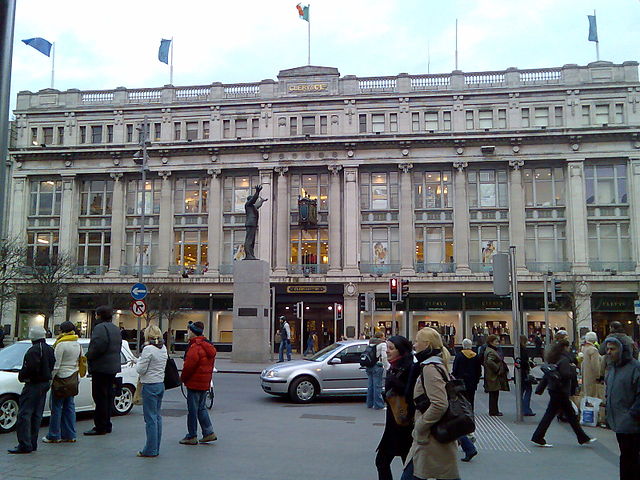
    December 8th has historically been a key date in the lead up to Christmas as shoppers from across the country would travel up to the Big Smoke for what’s been jokingly called ‘Culchie Shopping Day’.

    We at The City managed to speak to a number of people from outside the Pale to see what the day involves for them.

    Sarah Cummins (24), a student doctor from Tullamore, Co. Offaly, tells us of the traditions behind her annual pilgrimage: “It all started when I was younger, my mam would take us up to Dublin each year. Until I was 18, it was the only reason I’d ever had for coming up! We would all get the earliest bus up, have breakfast in the cafe, then spend the day on the move. I think I’ve seen more of the inside of Arnotts than any other part of the city.”

    Betty O’Sullivan (40), a former receptionist from Ventry, Co. Kerry, still uses the day to prepare for her family’s Christmas: “It was less busy than I would remember, maybe it’s because it’s a weekday. I used to be given the day off each year, so we would pack the car up [and] spend the day in town. My daughter lives in Dublin now, so the last two years I’ve come up the night before and stayed with her. It’s just a great excuse to see her.”

    James Munro (21), a student from Navan, Co. Meath, no longer enjoys the traditions: “When I was younger there used to be a big thing about going to Dublin on the 8th, but we haven’t really done it in years. The deals aren’t necessarily worth it and you have too many options, with Blanch being closer too. We do most of the shopping on the internet now anyway.”

    Sadhbh Long (20), a student from Dublin claims it’s not always just been a day for the non-Dubs: “I remember town would always be jammers on the 8th, but my mam would always traditionally bring us in to see Santa. I guess thinking back the atmosphere was what made it so special.”

  • 1916 Centenary – striking a balance between commerce and commemoration

    1916 Centenary – striking a balance between commerce and commemoration

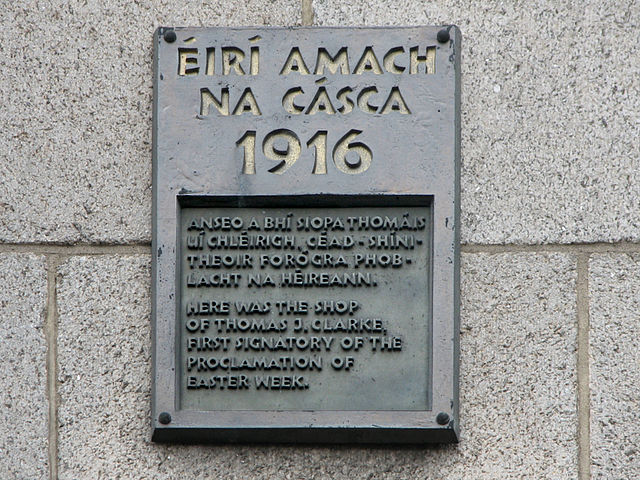
    Next year sees the 100th anniversary of the 1916 Easter Rising and while this may be an occasion for celebration for some, or reflection for others, it seems inevitable that some businesses will take advantage of the centennial.

    One company has already faced criticism for their use of Easter Rising themed merchandise to attempt to ‘commemorate’ the rising, but is this going to start a commercial trend?

    Fianna Fáil councillor Malcolm Byrne expressed reservations about the commemorations becoming a financial opportunity.

    “We need to ensure … it is not overly commercialised,” he said.

    “I believe that, in the same way as the state protects the use of the harp as the national symbol, there is a need for us to ensure that, however we mark 1916, that it’s appropriate, that it’s not overly commercialised, and that there is some way whereby material used is licensed.”

    Sinn Féin TD Aengus Ó Snodaigh thinks that a balance could be struck between commerce and commemoration.

    “There is always a danger that commercial firms will cash in on momentous occasions, especially historic celebrations, that will devalue the event,” he said.

    However, rather than banning these outright, the South Dublin representative has suggested that they instead use the income for good.

    “There is a respectful way for companies to play a part or their role in this instance, the centenary celebrations of the 1916 Rising and many could play a positive role and donate proceeds of sale to charities,” he said.

    With less than five months until the anniversary, the city is sure to see more efforts to commemorate the event.

  • Bressie talks mental health with students in DCU

    Bressie talks mental health with students in DCU

    Last Friday morning, Niall ‘Bressie’ Breslin held a talk in DCU about mental health.

    A talk by the singer, who is perhaps best known for being the former lead singer of ‘The Blizzards’ or as a coach for ‘The Voice of Ireland’, was organised by the DCU student health campaign, Stamp Out Stigma. It saw Bressie offer advice on those who are struggling with themselves, as well as reflecting on his own mental health struggles throughout his life.

    “It was never my illness that I wasn’t able to cope with. It was disguising it. It was the constant excuses that I had to make because of it and the constant repression of my own identity,” the singer outlined, rather eloquently.

    Bressie, who before entering the music industry played professional rugby with Leinster, explained at the start of the talk that this was something that he’s spent a fair deal of time learning about.

    “We have to start prioritising [so] that this becomes absolutely number one. From primary school, to secondary school, to third level because, guess what? Everything that you do in terms of your academic achievement and what you wanna do are worthless unless your head is able to cope with life. I learned that the hard way.”

    The 35-year old painted an extremely vivid picture of how he suffered as a teenager.

    “My only coping strategy was to completely avoid my friends … and as a 15-year-old, I was captain of my school football team, I was representing Leinster at (underage) rugby, I was in a band. I was the anti-stereotype. And I’ll tell you why, not because I was social, not because I was ‘Good-time Charlie’, but because the only time when that pain in my chest went away was when I set foot on the pitch, when I trained, or when I held an instrument. And only at that particular point did it go away. So, I became addicted.”

    Bressie went on to openly explain the extent of his demons, as panic attacks and sleepless nights became regular occurrences. He admits that at the time, it was something that when going into school, could easily go under the radar, but he feels that today teachers are more alert to it. “Our teachers are now recognising that this might not just be a kid who’s a bit of a lazy git, that [it] could be a kid in absolute distress, because I was.”

    Despite these troubles very much forming a massive part of his life, the star admitted that these problems are certainly responsible for making him the person he is today:

    “This is fundamentally where I get my belief that people who struggle with a mental health illness have an edge over other people… once they’re able to find that resilience, bring it out, nurture it, promote it, they’ll realise what they’re capable of.”

    Bressie today is a man who has learned how to do this. He uses everything he’s learned to better himself, as well as become a spokesperson for attempting to break down the stigma associated with mental health.

    “We have a very unusual relationship and understanding with what self-harm is and it’s absolutely different for everybody, but for me self-harming had nothing to do with attention, I didn’t want attention, it’s the last thing I wanted. It was a release,” he told the crowd.

    It wasn’t until he had his worst attack, to that point, when his anxiety led him into intentionally breaking his own arm in his bedroom, that he first spoke out about it, and even then it wasn’t the full story. “I didn’t tell her (his mum) the full picture, I said, ‘Mum, I’m a bit uneasy in myself at the moment.’ And, that was the difference.”

    However he admitted that the fear and shame was still too strong at this stage to really explain the extent of what he was dealing with, so he, “did what most Irish men do, I put the head down and went: ‘I’m fine, be grand.’” But, it wasn’t.

    From here, he tells the audience about the jump to third level-education, and how this only made things worse. Attempting to go to college in UCD was a step too far for his anxiety and led him to go to great lengths in order to attempt to deal with it.

    Self-medication, which Bressie attempted to outline as something that under no circumstances should be done by someone trying to get through their problems, was a measure that he sadly took to shield it. “And, here’s the funny thing about mental health illness. You think you can outrun it, you think you can do something new to make it go away, but you can’t.”

    Bressie’s problems forced him to take drastic decisions, closing important chapters in his life. Quitting rugby, he eventually moved back to Westmeath and started his band, ‘The Blizzards’. Again, despite finding success not only in Ireland, but across the UK, his inability to confront, or disclose, his ever-worsening condition led to the eventual breakdown of the band.

    “You cannot be in a relationship … if there isn’t 100% honesty. Honesty is the fundamental spine or backbone of any relationship, whether it’s a physical one, whether it’s a family one, whether it’s a friend,” he said.

    In a self-imposed exile, he moved to London, where he was barely able to leave his house. It was there he had what he describes as his one and only full-breakdown: “I was walking down the road, it was a really warm summer’s day. And, I can’t describe the fear that came over me. It just poisoned every part of my body.

    “I ran straight across a two dual-carriageway road, I didn’t even look left and right… and I ran into a park and I slept under a tree. I remember looking, I could see London city in the distance.”

    The distance from the world made him feel safe, and he slept there for the night.

    Very shortly after this, Bressie took a leap of faith. He agreed to join ‘The Voice of Ireland’ as a coach, admitting that the excuse to go home to Ireland each weekend and see his mother was the only thing motivating him to do it.

    From here he describes the overwhelming fear he had in the build up that he would suffer a panic attack on live television. After a lucky escape in just the third week of broadcast, the singer knew that he had to finally face the problem, and opened up.

    “I decided I needed to humanise it. I needed to give it a name, I needed to objectify it. So, I did… I called my mind Jeffery… I got hotel paper, and I wrote down everything I think Jeffery loves. Exercise… good people… healthy food… and on another page I wrote down everything I know that Jeffery hates, and the top of that list was toxic people.”

    From here, he made the decision to give every single therapeutic option a chance, in order to not only learn how to cope, but to garner a full understanding of what is going on with his mind. Bressie told the crowd that doing this allowed his mental fitness to reach a level he never thought imaginable.

    “It takes time for these things to work,” he said. But as someone listening to his words, it seems to have really made an impact. He cited cognitive behavioural therapy as one of the most influential treatments he used. It should be noted that he did however attempt to underline the fact that mental illness is incredibly subjective and certain treatments work differently on everyone.

    The hour long talk flew by with barely a sound uttered by those in the crowd until the end, where Bressie was met with a rapturous and respectful standing ovation for his time. With famous figures coming in to openly talk about these kinds of issues, I think it’s fair to say that we are coming a long way to finally stamping out the stigma in Ireland.

    If you ever need to reach out and talk about mental health or feeling down, contact Samaritans at: http://www.samaritans.org/.

    You can watch the talk in full at: https://www.youtube.com/watch?v=ffWsTemphhY&feature=youtu.be

  • Bluebell residents jet off for unique trip to Valencia

    Bluebell residents jet off for unique trip to Valencia

    Last month, an elderly gentleman’s group got to experience what might literally be the trip of a lifetime as they travelled to Valencia, Spain, thanks to the Bluebell Community Development Project (CDP).

    For many of them, it was a first trip outside of Ireland. Tommy Coombes, who manages the CDP, on behalf of the Canals Community Partnership, led the charge for this unique expedition.

    “I’m interested in life’s journey. There are 60 occupied housing units here in Bluebell, and they are occupied mainly by men. These are gents who would [in many cases have had tough lives]. We have tended to experience a strong sense of apathy amongst a lot of the men in this community,” Tommy explained.

    Tommy, a PHD student in Maynooth University, has worked in Bluebell for over seven years now. He has worked hard to try and promote health and a sense of well-being with these older men, in the hopes that it will bring them out of their shells, which seems to have been successful.

    “We’ve organised various trips, gone out fishing for example. We tend to try take these chances. Importantly, we do what the men want, not what we want.”

    This philosophy was what led to this whole trip coming to life.

    “One of the men a while ago said: ‘Why don’t we just get out of here for a while and do something?’ While you had a few lads up for it, with places like Limerick mentioned, he goes: ‘No I mean out of the bloody country!’

    “So since last January or February they’ve been saving to go to Valencia in Spain. Initially, when someone suggested Valencia because they had a mate who owns a pub there, most thought he actually meant Valentia in County Kerry. It became sort of a dream or wish and we set out to get funding through fundraisers. We engaged with local councillors, with Sinn Fein helping out massively,” explained Tommy.

    With most men having never left the country before, the organisers were met with many obstacles, most notably, the organisation of passports. Ed Nolan, also of the CDP, has lived in the community for less than a year. As the new kid on the block, he was tasked with the challenge of helping to get everything together.

    “Tommy asked me to organise the Valencia trip, so myself and a couple of others did the work for it. It took a lot of organisation, but we got there in the end. It’s all been worthwhile,” explained Ed.

    “Some people here hadn’t even had a passport before. It took a lot of work getting everything together, especially with first time passports. I had a scheme where everyone gave €3-4 a week so that when it came to the day, you would have a few bob in your pocket at the very least,” Ed added.

    Tommy, who himself is in his sixties, works hard to try and make sure that these men get the chance to continue to live fulfilled lives through retirement, and in this case, experience brand new things.

    “I suppose the idea was to allow the men to experience the life of other older men in another culture. Also, the adventure. With most men never having a passport, it was a serious challenge at first. Fears of flying, fears of the unknown. A general fear of being taken out of their own comfort zone. A lot of these men have a very set framework,” Tommy explained.

    “From getting up in the morning to going to bed at night, they have a strict structure that’s very hard to step out of. A lot of work from all the staff was pivotal in helping the men realise they could do this,” he added.

    While it might not seem like much of a battle to those lucky enough to travel abroad on a regular basis, it unfortunately was too daunting a leap for some.

    “Maybe to us who have gone away and travelled, it may not be a big deal, but for these lads, who may have barely seen the upstairs of a Dublin Bus, it’s a massive step. So much so, that a few men actually had to pull out because they couldn’t take that leap of faith,” Tommy revealed.

    However, one man that could make the trip was a resident suffering from cancer, who had just finished his final chemo treatment. As Ed recalled:

    “We didn’t ask him to come along originally as his chemo and radiology wouldn’t have been finished until the end of September when we had originally planned on going. Now because of funding and that we ended up going on the 18th of October, [he] was finished up by then.

    “Four or five days before we left I asked him if he would come. We checked with the doctors and he was well enough to go. As it turned out, he hadn’t got a passport either. I went down to the passport office morning, noon and night and we managed to get it literally the day before we were going. It was great.”

    On reflection, the whole event was deemed a massive success for Bluebell CDP, and for the group of men who got to have a life-changing trip that won’t be forgotten any time soon.

    Ed finished: “It was a great little experience for all the lads. Even some in wheelchairs got to go around and see what was an absolutely beautiful city. And of course we had an old sing-song in the evenings. You never know, this could be a yearly thing.”

    abt4c8y (1)

  • Locals march for mental health as budget brings hope

    Locals march for mental health as budget brings hope

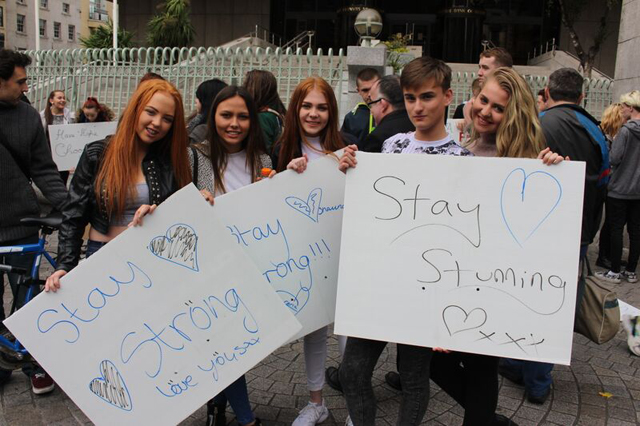
    World Mental Health Day took place last Saturday, and the afternoon saw a determined group of young people marching the streets of Dublin in the hopes of speaking up for mental health awareness.

    With the help of ‘Action For Suicide Prevention Dublin’, approximately 100 people came together at Dame Street’s Central Bank, armed with only their voices and cardboard signs. From there, they marched down by College Green, across the Liffey and up towards the Garden of Remembrance.

    With the budget taking place this week, the aim for the march was to attempt to generate as much noise as possible in order to remind people of the importance of mental health services.

    During the budget announcement, the Minister for Primary Care, Mental Health and Disability, Kathleen Lynch announced that the Government will continue to allocate an annual sum of €35 million towards mental health services.

    The march was organised by ‘Action For Suicide Prevention Dublin’ along with Jamie Harrington (16), a teen who gained recognition after saving the life of a man who was attempting to take his own life at the Ha’penny Bridge in 2014.

    “Jamie is a legend,” exclaimed marcher, Ryan McDermott, “he does so much work and really cares about people. He’s going to march for the homeless tonight as well.

    “We all know someone who’s been hurt because of their own problems. We’re marching in their memory and to give a chance to anyone who might suffer in the future,” he added.

    An estimated one in five people are directly affected by a form of mental health issue in their lifetime. There are many helplines and useful websites that you can access if you, or someone you know, is experiencing mental health concerns.

    Pieta House (Pieta.ie) – 01 601 0000
    Samaritans (Samaritans.org) – 18 506 09090