Author: Martin Phelan

  • Dublin Tocaor

    Dublin Tocaor

    John Walsh is one of the leading flamenco guitarists in Ireland. He has played at many prestigious venues in Spain and also composed music for, and performed with the National Ballet of Ireland.

    John has studied guitar in Dublin and in Algeciras, Spain where his musical hero and legendary tocaor Paco de Lucía was born.

    John spoke to The City about where his passion for flamenco came from and his upcoming debut album.

  • Review: Foxcatcher

    Review: Foxcatcher

    “Do I make the cheque out to David or Dave?”

    “No, it’s Mark… Dave couldn’t come today.”

    “I’m a gold medallist too.”

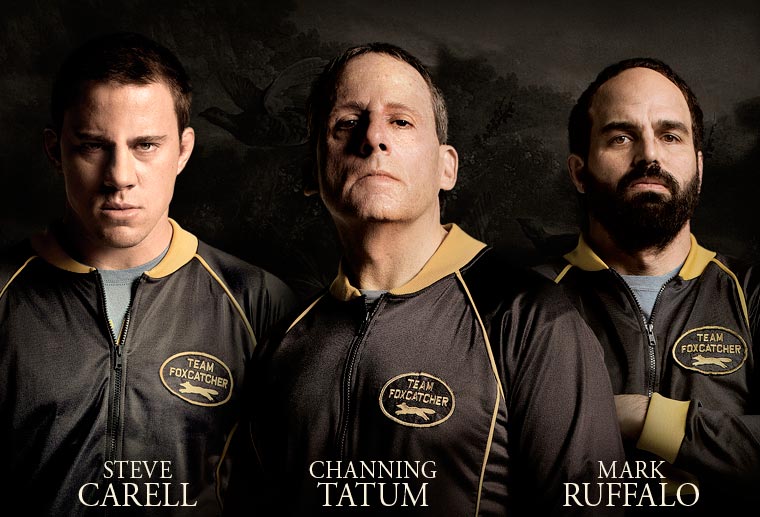
    We’re given a very clear indication of Mark Schultz’s (played by Channing Tatum) place in the world within the first five minutes of Foxcatcher. He’s an Olympic Gold medallist who has to take $20 cheques to give vague speeches to pre-teens about success in sport and is also overshadowed by his big brother, Dave (Mark Ruffalo).

    Mark’s life takes an apparent upswing however when a phone call on behalf of billionaire John E. Du Pont summons him to Foxcatcher Farm.

    Du Pont, played by the almost unrecognisable Steve Carell, is hugely interested in Schultz and how his preparation is going for the upcoming Wrestling World Championships. Du Pont wishes to coach Schultz and offers him the use of his vast facilities on Foxcatcher Farm.

    This movie is far from the stereotype model of a rich benefactor giving something back to society. Foxcatcher takes an entirely different turn as John Du Pont uses Mark as a claim to success that he has never had in his own life. Billionaire he may be, but it becomes quite clear from very early on that Du Pont is just an heir to a legacy that he has contributed little to.

    Steve Carell’s character is reminiscent of one he famously played on the smaller screen – Michael Scott of The Office. Du Pont has a similar yearning for adoration and the petulance of Scott but his mind is far darker. Where Michael Scott was funny, Du Pont is sinister.

    The movie itself is one-paced, punctuated with surreal moments such as when DuPont’s new tank (yes, a tank) arrives at his estate followed by the outburst he makes when he sees that it lacks the 50-calibre machine gun he requested. It is in these moments where we see a glimpse of who Du Pont is beneath the riches: a frustrated 50-year-old who never grew up, searching hopelessly to fulfil himself.

    The movie is hugely similar in tone and style to another of director Bennett Miller’s true story adaptations: Capote. Once again Miller only provides a window for his audience to peer through and he refuses to delve into his characters’ minds. Instead, he leaves it to the viewer to determine an underlying message in the film – if one even exists in the first place.

    In truth, Foxcatcher is a movie that stands on the quality of its cast rather than the designs of its director. Between Channing, Carell and Ruffalo, there’s much to enjoy, even if you will feel colder for the experience.

  • Kimmage chasing exposé on drugs in rugby

    Kimmage chasing exposé on drugs in rugby

    In February next year, it’ll be 25 years since Paul Kimmage took his first job in journalism. In that time, he’s written about several drug scandals and is now in the middle of investigating one in rugby. In this interview, he talks about that story and the reaction it’s been met with so far…

    On first viewing Paul Kimmage and Laurent Benezech would not seem to have much in common. One is a former professional cyclist who retired into sports journalism and the other a former French rugby player turned businessman . Yet when Kimmage met Benezech, the parallels between the two were apparent.

    “It was like looking at a mirror image of myself back in 1990,” explains Paul. “Eerie, except… well I never faced the threat of potentially; I think it was 270 grand he was looking at if he lost that case.”

    The case Kimmage refers to is the defamation suit that the French rugby player’s union, Provale, took against Benezech for comments he made in an interview with Le Monde about doping in rugby. That case finished in September with the decision going Benezech’s way.

    At the end of October, Benezech’s book, Rugby, Ou Sont tes Valeurs , was published. Paul wrote about the Frenchman in the Sunday Independent and described his book as a “brilliant expose on doping”.

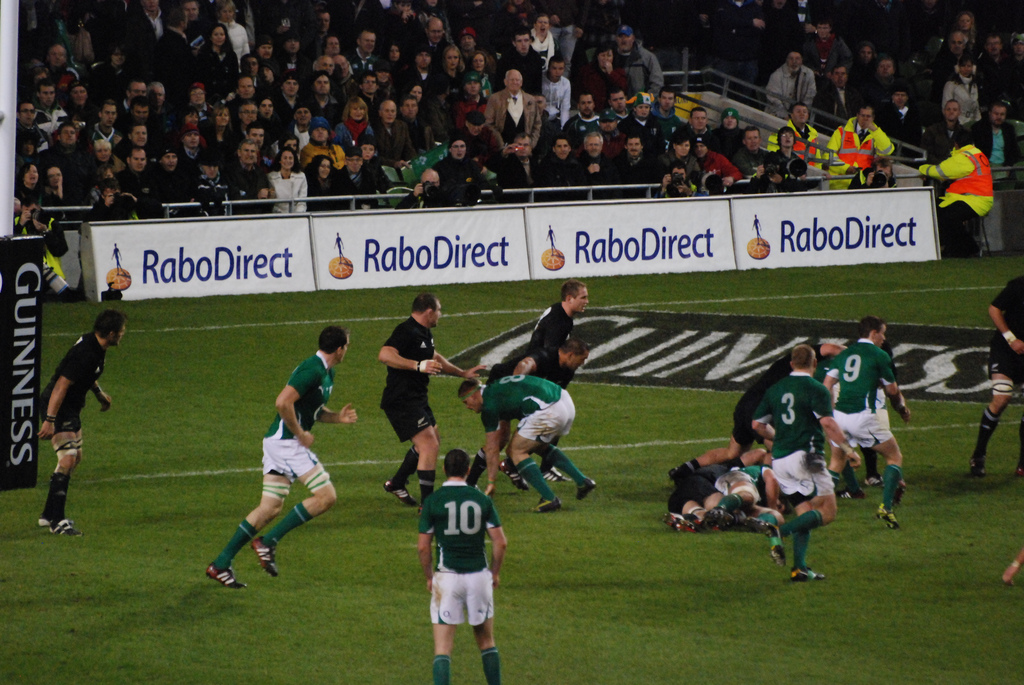
    In his book, Benezech charts the weights of french rugby players from year to year. Some players gained a phenomenal 20 kilos of muscle over the course of just one season; a feat he says that the human body simply cannot accomplish naturally.

    So, should we be worried about drugs in rugby the same way people should have been worried about it in cycling?

    “Absolutely. Oh, absolutely,” replies Paul. “It’s too dangerous. Some of the injuries are horrific. The big talking point now is concussion. And why is that? Because a guy weighing 150 kilos is running at you and he’s going to hit you hard. He’s going to hit you real hard.”

    Benezech and Paul have one disagreement over drugs in rugby. Where Paul says doping, Benezech would say medical assistance.

    “I said, ‘for me that’s doping’,” explains Paul. “(Benezech) said yes you can argue that but once you make the case that they’re doping, they’ve got the perfect response. ‘Okay, if we’re doping, where are the positive tests?’

    “And there are no tests because the IRB, the governing body aren’t interested in this, the same way cycling wasn’t interested and that’s why (Benezech) makes a very interesting parallel between rugby being now in the position that cycling was before the ‘Festina Affair’.”

    In the hour that I spent with Paul, the Benezech story kept cropping up throughout. The implications of it are huge for rugby but it’s the immediate reaction to Paul’s piece in the Sunday Independent that he feels shows the true mentality surrounding the sport.

    As of the following Tuesday evening, he had yet to be contacted by anyone in the world of rugby about his piece or Benezech’s book. He mentions an argument he had with a friend the night before we met and how it left him wondering about his own attitude to drugs in sport.

    “I went to bed last night and I thought, ‘what is wrong with me? Why can’t I just ignore this and move on?’” he says. “But I can’t. It just… it winds me up. It’s the parallels between when I wrote about cycling in the 80s to the response to that then and the response to that now. I mean it’s absolutely the same. ‘Ah yeah, it’s not Kelly and Roche, it’s these foreigners that are doing it, not our lads.’ Same thing.”

    But it must leave him disillusioned when people would rather ignore the problem?

    “I got disillusioned with it last night,” says Paul and for a brief moment he almost despairs. “But it’s a fleeting disillusionment because I find myself getting up the next day saying, ‘Right. Where are we going? We’ll go for it again.’ I just won’t back down.”

    “So it’s almost like I’m constantly going around,” he explains as he leans to ground to pull something out of the air. “It’s like I’m going around constantly getting fella’s heads and pulling them out of the fucking ground and saying, ‘Look right now. Look! This is what is in front of you. Look at it now. And then putting my hand back down again, putting their heads back in the sand.

    “I don’t give a fuck what you make of what you see but I want you to fucking see it and acknowledge that it’s there. After that I don’t care.”

    And what about other sports journalists? Who has picked up on the Benezech story since Paul’s article was published?

    “There’s a lot of guys that I would have said were very good, young journalist coming through the ranks now at the moment here. And they’re in radio shows and they’ve got TV shows and you would have thought, ‘well these guys will be on it straight away’.

    “Have I had one call from any of these people [regarding Benezech’s book]? Not one. Have I had one call from any of the rugby correspndents? Not one.

    “We want to be fucking cheerleaders. That’s the default position of the sports writer. He wants to be a cheerleader. And there are very, very few who won’t do that. And that’s kind of depressing isn’t it?”

    So what’s the point? Sportsmen have their heads in the sand and sports writers are cheering them on. Why continue with the story?

    “You see as much as I’ve highlighted the silence that’s appeared, that’s actually the bit that’s interested me,” he says. “That’s actually the bit that’s driving me to work at it again.

    “That silence tells me, ‘he’s right, this is the truth we’re getting here folks’ and the silence for me is the adrenaline to go again.”

    What does he think is going on in the minds of the top officials in rugby here in Ireland who have seen his feature on Benezech?

    “I think that anybody involved in the sport at that level would have opened that paper, read that piece, closed it and said, ‘Oh fuck’.

    “This is coming. Definitely.”

  • Too Good: Eluid wins Dublin Marathon

    It was a Kenyan double at Monday’s Dublin Marathon as Eliud Too and Esther Macharia won the men’s and women’s events respectively.

    Too finished the race in 2:14:47, a comfortable nine seconds clear of his nearest rival and fellow Kenyan, Paul Koech Kimutai.

    Russia’s Dmitriy Safronov finished third in the men’s event having led the way for 20 miles of the race.

    In the women’s event, Esther Macharia edged out former Irish Olympian and last year’s winner, Maria McCambridge, to claim first place. McCambridge ran an impressive race and finished just four seconds behind Macharia.

    In the wheelchair race, Patrick Monahan smashed the course record by five minutes on his way to first place with a time of 1:52:43.

    The Dublin Marathon saw over 14,500 runners compete this year. Over 4,000 of those came from overseas to compete. It was the fifth year in a row that the marathon has seen a record attendance.

    Last year’s winner and national champion Sean Hehir did not compete. His winning time of 2:18:19 was comfortably beaten by Too. However, the course record of 2:08:33, set by Geoffrey Ndungu in 2011, was never in danger of being broken.

    A cool, overcast morning greeted all those who came to the event, conditions that were perfect for runner and spectator alike.

    This year, the 35th edition of the event took on a Viking theme as inspired by Ireland’s commemoration of 1,000 years since the battle of Clontarf.

    The course had also been changed this year due to ongoing works on the LUAS lines in the city centre. The race finished at Merrion Square instead of Nassau Street and College Green as was the case in previous years.

    The 42km route for race was mostly flat and took the runners in a counter-clockwise loop that took in Stephen’s Green and Phoenix Park before heading south around University College Dublin and back in towards town.

  • Social housing receives welcome boost in Budget 2015

    Social housing receives welcome boost in Budget 2015

    The Government will invest in housing for the first time since 2009. Photo: Raymond Norris
    The Government will invest in housing for the first time since 2009. Photo: Raymond Norris

    Minister for Public Expenditure and Reform Brendan Howlin announced that the Government plans to build 10,000 social housing units over the next four years.

    The €2.2 billion sum will be the first major investment in housing by the Government since 2009.

    “The Government is determined to meet the scale of investment commensurate with the challenge,” said Minister Howlin in his Budget speech on Tuesday.

    Dublin is in the midst of a serious housing crisis with property prices shooting up by almost 33 per cent in the capital over the past year. Rent prices have also shot up as supply continues to fail to meet demand.

    Irish social housing charity, Threshold, believes the investment is a good start to solving the current housing crisis.

    “The commitments in today’s Budget announcement will not, unfortunately, be enough to fully address the current housing crisis,” said Bob Jordan, the Chief Executive of Threshold. “However, they are a significant first step. As the economy improves, we hope to see further evidence that the Government is truly committed to investing in social housing.”

    However The Simon Communities, an organisation that supports homeless people, were concerned that the government’s social housing proposals do not go far enough to solving the crisis.

    “While there is an increase in the budget for social housing investment this will yield 7,500 new homes next year which is only 8.3 percent of the 90,000 households currently on the social housing waiting list,” said Niamh Randall, the national spokesperson for the Simon Communities. “We are deeply concerned about the chronic shortage of housing.”

    Landlords also received a boost as the home renovation scheme was extended to rented property.

    Senator Aideen Hayden who is the Chairperson of Threshold praised the decision to include rental properties under the Home Renovation Incentive Scheme.

    “The extension of the Home Renovation Incentive scheme now gives added impetus to those who own rental properties that are in need of up-grading and repair, and we hope to see landlords availing of this scheme to improve standards in private rented accommodation,” Senator Hayden said.

    There was good news for first-time buyers in the Budget also, as people saving up for a mortgage deposit will get a DIRT exemption of up to 20 per cent of the value of a house.

    In other news concerning property, €66 million will be spent in support services for people who are struggling to pay the water charges. There will also be a tax relief of around €100 for Irish households on their water bill.