

As The Beatles’ iconic Sgt. Pepper’s Lonely Hearts Club Band celebrates its 50th anniversary, Sarah Harford looks at the album’s influence and legacy.
Author: Sarah Harford
-
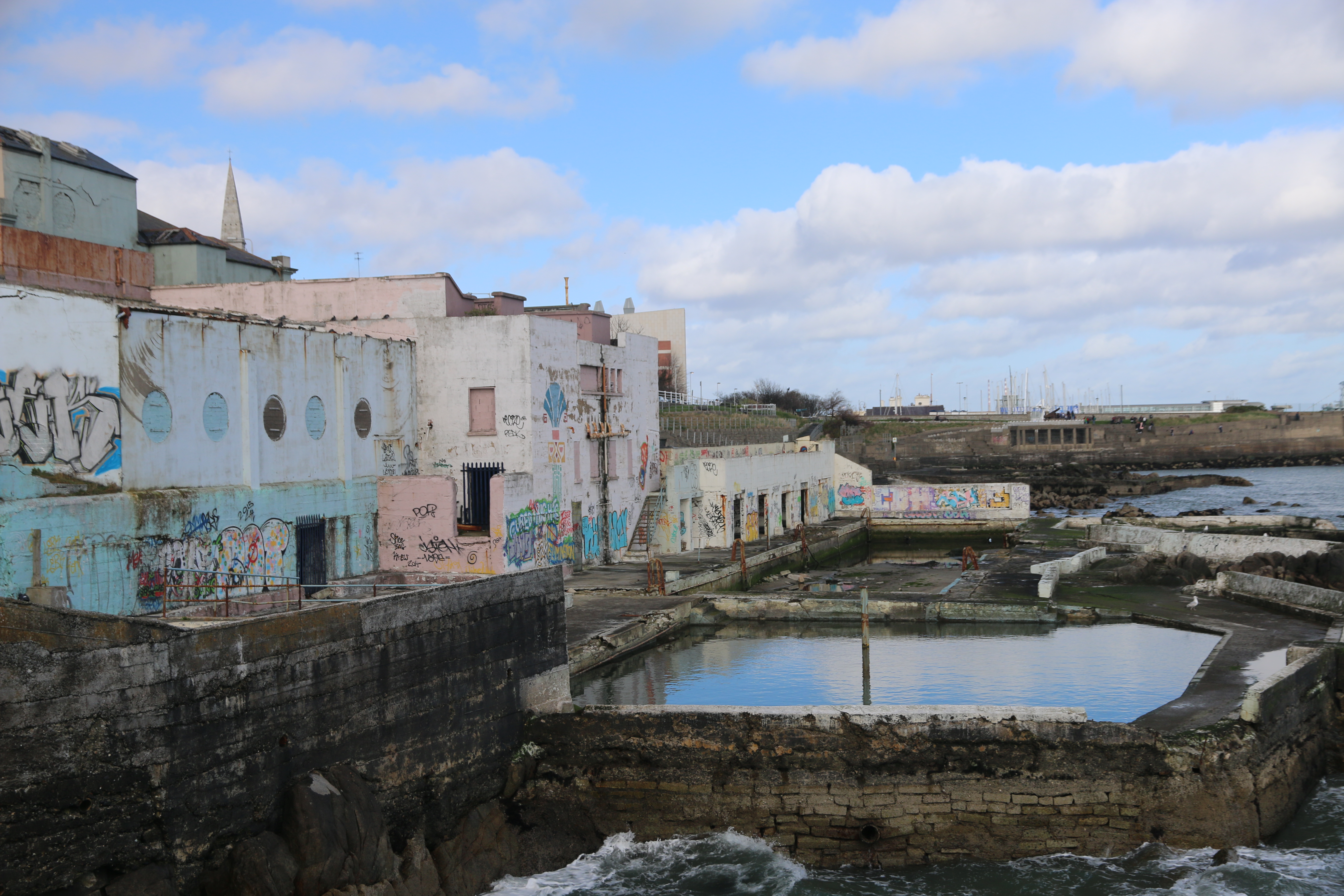
Work due to begin on the Dun Laoghaire Baths
Sarah Harford visits the historic site and asks what the redevelopment may mean for the local area.
-
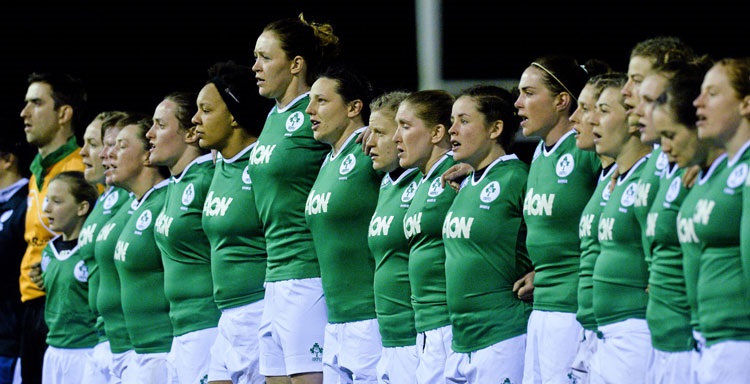
Ireland fall but women’s rugby continues to rise
Ireland’s women may not have won this year’s Six Nations championship, but they proved themselves as a force to be reckoned with. Sarah Harford went to their last match to find out more about this team, and the perception surrounding women’s sports.
-
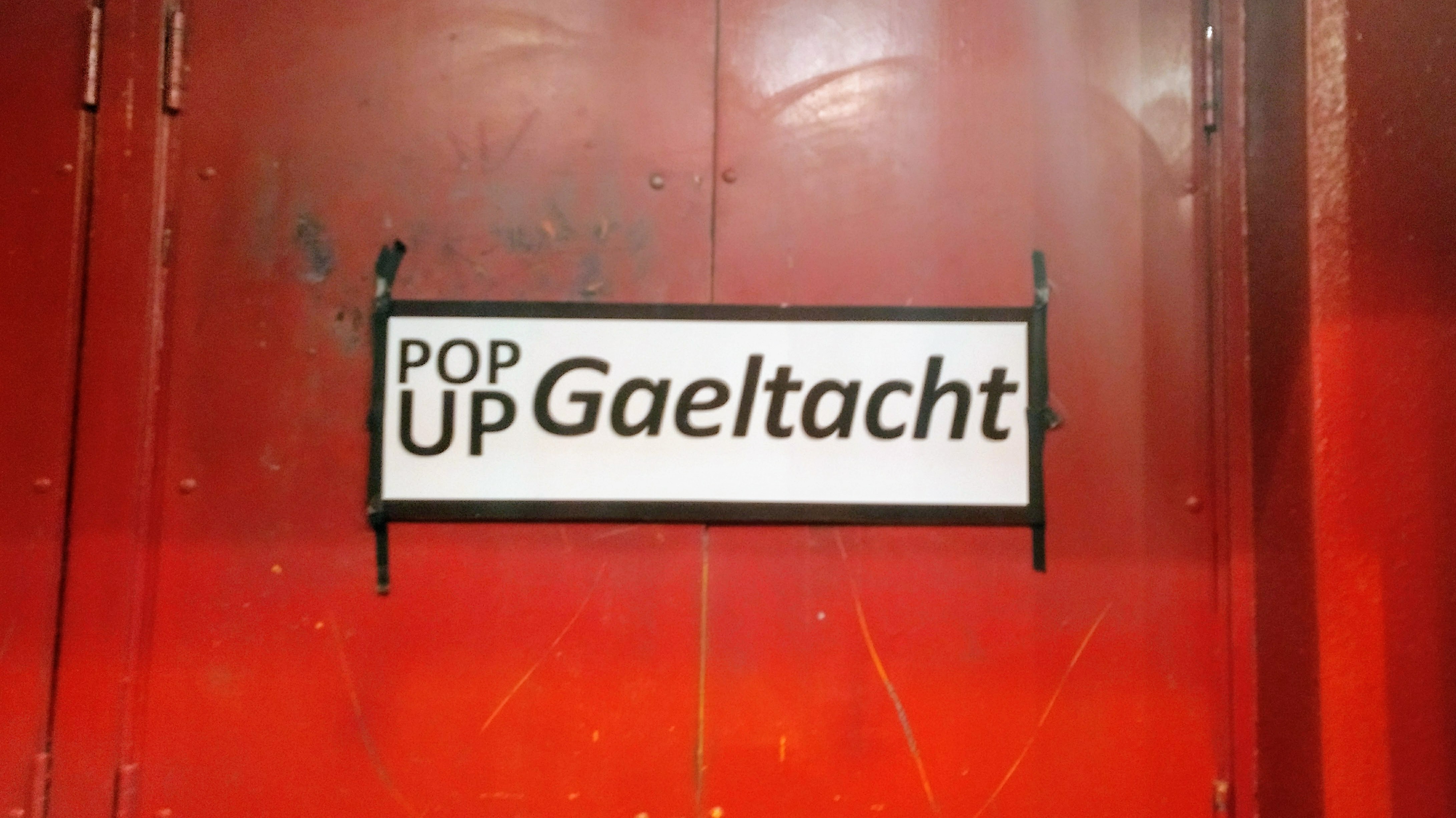
Tír gan teanga, tír gan craic
As Seachtain na Gaeilge draws to a close for another year, Sarah Harford pays a visit to Dublin’s Pop Up Gaeltacht.
A cold March evening in Dublin. The streets are bustling. It’s the night before St Patrick’s Day, and the city is filled with revellers wearing green leprechaun hats and shamrock-adorned clothing.
Turning the corner onto Dame Lane, I hear laughter and exclamations of “conas atá” and “oh mo dhia”. The well-known stretch of pubs between the Bankers and Dame Tavern is packed full of people doing something slightly out of the ordinary – speaking in Irish.
‘Bat signal’
“We wanted to prove that the language was alive and well so we decided to send up a ‘Bat Signal’ to ask Irish speakers to get together in one place,” said Peadar Ó Caomhánaigh – one of the organisers of Pop Up Gaeltacht.
“Bhíomar ag iarraidh cruthú gur teanga bheo í an Ghaeilge, agus mar sin bheartaíomar sórt ‘Bat Signal’ a chur in airde chun lucht labhartha na teanga a mhealladh le teacht le chéile.”
Ó Caomhánaigh, along with Osgur Ó Ciardha, put this event together as a reaction to the current perception of the Irish language.
“Both of us noticed a lot of negative coverage of the Irish language in the media late last year, saying it was a dead, worthless language, and that no one in the city was speaking Irish,” says Peadar.
A group playing traditional Irish music entertained crowds outside the Mercantile pub. Video by Sarah Harford
Speaking to The City, as Gaeilge of course (his answers have been translated into English), he explained that the idea behind this event was very simple.
“Pop Up Gaeltacht is a social event for Irish speakers. We get together just to be together, and to speak Irish in places the language wouldn’t normally be heard.”
“All sorts of people go along. Young and old, fluent and the ‘cúpla focal’. We’d recommend, if you have any worries about your own level of Irish, to bring along a friend and just try to use whatever Irish you have.”
“Bíonn gach chineál duine ann, idir óg agus aosta, idir lucht na líofachta agus dream an chúpla focal.”
Pop Up Gaeltacht started small, with an event in Bar Rua on Clarendon Street back in November 2016. Since then they’ve held monthly gatherings which have grown in size as the word has spread. But for Seachtain na Gaeilge, Peadar and Osgur decided to be more ambitious.
“Up until now we’ve packed out bar after bar in Dublin. As part of Seachtain na Gaeilge and the St Patrick’s Festival, we decided to choose a whole district of the city. We want to fill the whole of Dame Lane with Irish on the night of the 16th,” said Peadar.

“Talk, kiss, laugh, travel, dance, fly, eat, drink, listen”, sign outside Bar Rua, Dublin. Photo by Sarah Harford Caint agus craic
Personally, I was a little nervous entering this guerilla-style Gaeltacht. Although I’d spent 14 years learning the language at school, like most other people on this island, my Irish is a little rusty.
I thought that everyone in attendance would be hardcore Gaeilgóirs, spouting words and phrases that sounded only vaguely familiar to me. But, just like riding a bicycle, these things return to you pretty quickly.
The atmosphere was welcoming, the Irish was flowing, and there was even spontaneous traditional music and céilí dancing.
From the crowds of people I encountered there, it is clear that Pop Up Gaeltacht has really caught on. It may be a simple concept, but it’s an effective way of bringing people together to speak the language in a casual setting. Mostly, however, it’s just a good bit of craic.

Crowds gather outside the Stag’s Head, Dame Lane. Image by Sarah Harford The organisers are making no money from the event, using it only as a way to spread the Irish language. They hope that this will encourage more people to get involved.
“Pop Up Gaeltacht is an open source, so anyone in the world can organise one. There have been Pop Up Gaeltachtaí in Cork, Derry, Belfast, Limerick, New York, Washington DC, Perth…The list goes on,” said Peadar.
https://twitter.com/_thebradyman/status/842675699345489920
https://twitter.com/RdeBuitlear/status/842524093274624000
Speaking in tongues
It seems strange that Pop Up Gaeltacht should be such a novelty when Irish is still the official language of the country.
According to the 2011 census, 1.77 million people in Ireland, approximately 40% of the population, said that they could speak Irish. However, only 82,000 people claimed to speak the language on a daily basis outside of the education system.
This makes it only the third most spoken language in the country after English and Polish, but it certainly does not imply that Irish is in decline. Long-term census data shows an increase in the number of people speaking the language in recent years.
St Patrick’s weekend saw a deluge of tourists descending on Dublin and so the city was awash with languages from all over the world, plus the ubiquitous American accents. However, it was great to hear Irish also being spoken so widely in the middle of the festivities.
With an impressive turnout and an enthusiastic response, Pop Up Gaeltacht seems to have confirmed that the Irish language is still alive and well.

Featured image by Sarah Harford
-

Thousands take to the streets of Dublin to Strike 4 Repeal
As Dublin city was brought to a standstill, Sarah Harford caught up with the strike action as protesters marched through the capital.
-

Spoiled for Choice
Sarah Harford takes a listen to the nominees for this year’s Choice Music Prize, and discovers that there’s much more to Ireland’s music scene than what we’re hearing on the radio.
Like our very own version of the prestigious Mercury award, the Choice Music Prize has been recognising the best in Irish talent since it was established in 2005. Previous winners have included Jape, Two Door Cinema Club, and Villagers.
Choice Music Prize – Album of the Year 2016
- All Tvvins – IIVV
- Bantum – Move
- Wallis Bird – Home
- The Divine Comedy – Foreverland
- Lisa Hannigan – At Swim
- Katie Kim – Salt
- James Vincent McMorrow – We Move
- Overhead The Albatross – Learning to Growl
- Rusangano Family – Let The Dead Bury The Dead
- We Cut Corners – The Cadences Of Others
This year sees a fantastic, diverse selection of artists nominated which truly represent the wide range of music emerging from the country right now. From the instrumental atmospheric rock of Overhead The Albatross, to Limerick hip-hop group Rusangano Family, and everything in between – this list definitely has the zeitgeist covered.
While some familiar names appear here, such as The Divine Comedy and Lisa Hannigan, many of these artists are perhaps less well known but have been gaining momentum on the Irish live music scene in the last few years.
All of these acts, with the exception of James Vincent McMorrow who is on tour in Australia, will be performing at the award ceremony on Thursday 9 March at Vicar Street. Choice co-founder David Reid describes the night not just as an award show, but a live music event, highlighting the best new developments in Ireland.
“The Choice Music Prize is an attempt to put a spotlight on Irish music for two and half months,” Reid told The Irish Times. “There is one winner but it is about ten Irish acts.”
It seems clear that the Choice prize aims to do more than just put on a good show. It creates a dialogue about contemporary Irish music, and a real buzz around the acts involved. Many of these musicians and groups have been appearing more in newspapers, magazines, and on the airwaves since the shortlist was announced back in January.
The winner takes it all
While the awards may be beneficial to the industry and to those nominated, there can only be one winner who will take home the €10,000 prize money.
The Choice Music Prize differs from other ceremonies in that it has a history of choosing unexpected winners. The competition is generally judged on music alone rather than airplay figures or record sales. This means that there have been many surprises over the years, with chart-topping figures such as Bell X1, The Script, and Hozier losing to less-established acts.
The judging panel is typically composed of some of the most authoritative names in music criticism in Ireland, from print, radio, and online media. This year’s judges include RTÉ 2fm’s Dan Hegarty, Colm O’Regan from Hot Press, and Paddy McKenna of Joe.ie.
So who will they choose? It’s impossible to predict, but the short list is packed full of great contenders.
Lisa Hannigan and James Vincent McMorrow have both had a great year, creatively and commercially. At Swim and We Move are both fantastically cohesive sonic departures for these artists, and are the only two albums nominated that reached number one in the Irish charts in 2016. Both musicians have been nominated for the prize before, but neither have been successful.
But the others cannot be discounted or underestimated. Bantum, Overhead The Albatross, and Rusangano Family are all nominated for interesting and diverse self-released albums, brimming with fresh ideas and musical fusion.
Innovative singer-songwriters Wallis Bird and Katie Kim are also potential contenders, along with alt-rock groups All Tvvins and We Cut Corners.
The only act on the list who has won previously is The Divine Comedy who scooped up the prize back in 2006. Now the band from Northern Ireland are nominated for their eleventh album.
Overall there’s a rich selection of textures and ideas across these ten albums. The high calibre of talent is shown by the fact that many big names did not make it onto the short list, such as Bell X1, Lisa O’Neill, and previous winners The Gloaming.
Popular demand
While the main Choice Music Prize may be an unpredictable affair, the Song of the Year category is based on a public vote. The 2016 shortlist has many familiar names, but still provides a great mix of both new and established acts.
Song of the Year 2016
- The Coronas – ‘What a Love’
- Hare Squead – ‘If I Ask’
- Heroes in Hiding – ‘Hospital’
- Niall Horan – ‘This Town’
- James Vincent McMorrow – ‘Rising Water’
- Picture This – ‘Take My Hand’
- Raglans – ‘Who Knows’
- Saint Sister – ‘Tin Man’
- Soulé – ‘Love No More’
- Walking on Cars – ‘Ship Goes Down’
The Song of the Year list leans more to the mainstream in comparison to the principal Choice award, with tracks from Walking on Cars, The Coronas, and the mediocre effort from a post-One Direction Niall Horan. There are still some inspired picks thrown into the mix, however, such as the rising folk-duo Saint Sister, and the electronic soul beats of Soulé.
With one award chosen by the critics, and another by the public, will there be a stark difference between the two winners? Is there a dichotomy between what is good and what is popular?
Personally, I feel that this is an engaging aspect of the competition, which highlights what is both important and relevant in contemporary music in this country.
On the radio
This year the Choice Music Prize is being sponsored by RTÉ 2fm. On 1 February the station had an ‘All Irish Music All Day’ event to celebrate the announcement of the award nominations. Since then, there has also been increased airplay for these Irish acts that generally don’t get a look in among the big UK and US artists that dominate the popular airwaves.
However, is this enough? Data from Radiomonitor, published in The Irish Times, reveals that less than 20 percent of the music played on our radio stations in 2016 was Irish.
Interestingly, last year’s Choice Music award winner, Soak, was played only nine times on 2fm in the nine months after she scooped up the trophy.
Other countries such as France and Canada have national quotas in place to ensure that indigenous music is being played and heard. Last December, Labour TD Willie Penrose proposed a similar bill to introduce a 40 percent quota for radio stations in Ireland.
Such concerns are regularly raised to the Dáil, but it doesn’t seem likely that legislation will be passed on this matter any time soon. For a change to occur there needs to be more of an interest and a demand from the general public.
Listening to the nominees for Choice Music Prize 2016, it seems clear that we should be paying more attention to the wealth of music coming from this small island. Don’t believe me? Tune in this Thursday night.
Listen to the nominees here

Featured image: James Vincent McMorrow by arianta via Flickr
-

Oscar Wild: it’s a man’s world and we’re just acting in it
Ahead of this week’s Oscars ceremony, Sarah Harford looks at the contenders for Best Actress, and asks why this is one of the few categories where women are being recognised.
This was a great year for women in film. Looking at the competition for Best Actress at the 2017 Academy Awards, we encounter a selection of complex, nuanced characters. None of these women are reduced to mere love interests or caretakers – they are all implicit in creating their own destiny.

Image by Sarah Harford Yet these are only some of the female performances of note this year. Jessica Chastain could have easily received a nomination for Miss Sloane, meanwhile Amy Adams missed out on recognition for her strong performances in both Arrival and Nocturnal Animals.
Likewise, the Best Supporting Actress category is equally stacked with heavy hitters, including the favourites Viola Davis and Michelle Williams. However, it should be noted that Hidden Figures has a strong, largely female ensemble cast but received only one actress nomination for Octavia Spencer.
This shows the extent of the competitive race for Oscar glory this year, but who will take home the coveted Best Actress statuette on Sunday? In recent years the Golden Globes, Screen Actors’ Guild (SAG), and BAFTA awards have always been a good indicator for the potential Best Actress winner.
This award season, Emma Stone has taken home the Golden Globe for musical or comedy plus the SAG and BAFTA award, putting her as the frontrunner. However, Isabelle Huppert beat both Ruth Negga and Natalie Portman in the Golden Globes drama category, which shows that she should not be discounted just yet.
But this is the Oscars and anything can happen.
The contenders
La La Land seems to be the film to beat across all categories, nominated for a record-tying 14 awards. If La La Land is the champion, however, then Emma Stone is its star player. Her sincere, heartfelt portrayal of aspiring actress Mia carries this modern musical. It is easily Stone’s finest performance to date, and she outshines her sombre male counterpart, Ryan Gosling.
Hollywood loves a film about Hollywood, and part of La La Land’s charm is that it is reminiscent of classics such as Singin’ in the Rain. Stone’s singing and dancing are certainly no match for Debbie Reynolds, but that’s what makes the film genuine and endearing. However, is that enough to secure her victory in a category full of strong dramatic roles?
Historical biopics always do well at the Academy Awards ‒ in recent years there’s been Meryl Streep for The Iron Lady, Helen Mirren for The Queen, and Reese Witherspoon for Walk The Line. Now, Natalie Portman is nominated for her portrayal of a former First Lady Kennedy in Jackie.
If the Oscars are known to love a transformative performance, then this polished portrayal of grief should get some attention. It is a powerful turn from Portman on several layers, depicting a woman who is putting on a desperate performance ‒ as a wife dealing with a personal tragedy and as a First Lady under the scrutiny of the media.
This role is far more complex and haunting than Portman’s performance in Black Swan which earned her the Best Actress award in 2011. Although she masters Kennedy’s distinctive accent and mannerisms, this is more than just an impersonation. It is a thoughtful and controlled portrayal, and there is no scene where Portman is not the focus, meaning that this is truly her film.
The dark horse of this race has to be French actress Isabelle Huppert, who has earned her first Oscar nomination for Elle. The psychological thriller from Paul Verhoeven (director of Basic Instinct) may be dividing audiences, but Huppert has won acclaim for her strong performance as rape victim Michèle.
Although Huppert is less well-known in Hollywood, and Elle was perhaps rarely seen outside of art-house cinemas, her surprise win at the Golden Globes has created buzz about a potential Oscar victory. It would not be the first time that a French language film had earned the Best Actress trophy ‒ Marion Cotillard won for La Vie en Rose in 2007.
Irish eyes, however, will be firmly fixed on Limerick lass Ruth Negga, whose performance in Loving is a subtle triumph. It is a simple, intimate portrayal of a woman who wishes to lead a simple and intimate life. Negga’s eyes speak volumes, of despair and of hope.
Loving has not received a lot of attention at this year’s Oscars, perhaps due to its understated nature, but its lead actress is definitely deserving of recognition. In a film that shies away from overly dramatic, “you can’t handle the truth” courtroom moments, Negga’s performance quietly but powerfully drives the narrative.
Finally, Meryl Streep has earned her record-breaking 20th Oscar nomination this year, for her role as the eponymous eccentric New York socialite in Florence Foster Jenkins. Streep is fantastic in this charming film, and it wouldn’t be awards season without her presence, but she seems least likely to win in this highly competitive category.
Bookies currently have Streep as a long shot, with Emma Stone as firm favourite. Personally, I would choose Natalie Portman as the stand-out performance, but all five women are potential winners, and surprises are not uncommon at the Oscars.

Previous Best Actress winners, image by Sarah Harford “If you can see it, you can be it”
While there’s been much discussion of diversity in Hollywood, and the underrepresentation of minorities at the Academy Awards last year, women are often forgotten about. This year, only 20 percent of all non-acting nominees are female across 19 categories ‒ a two percent drop from last year.
“We have a saying, ‘if you can see it, you can be it,’” wrote Julie Burton, president of the Women’s Media Center, in a statement released after the Oscar nominations were announced.
“Clearly, women cannot get through the door and if they cannot get through the door, they cannot be recognized ‒ and rewarded ‒ for their excellence and impact.”
No female directors were nominated this year, except for Ava DuVernay in the documentary category for 13th, and no women have ever been nominated for Best Cinematography. In fact, the only category where women dominate, outside of the acting awards where gender is specified, is Best Costume Design.
“Clearly, women cannot get through the door and if they cannot get through the door, they cannot be recognized ‒ and rewarded ‒ for their excellence and impact.”
However, this year also sees great achievements. Mica Levi is first woman to be nominated for Best Original Score in 16 years ‒ her tortured, agonising, score for Jackie is fantastically discomforting, and sets the tone for the film. Elsewhere, Joi McMillon has become the first black woman to ever be nominated for Best Film Editing for her work on Moonlight.
The Best Actress category shows us that significant roles are being created for the high calibre of women working in the film industry. But roles need to be available to women behind the camera too.
In a year of fine female performances it is certain that, whoever wins on 26 February, the Oscar statuette will be taken home by a deserving actress. Nevertheless, it is clear that more still needs to be done for women in the industry as a whole.
Featured image by lincolnblues via Flickr
-
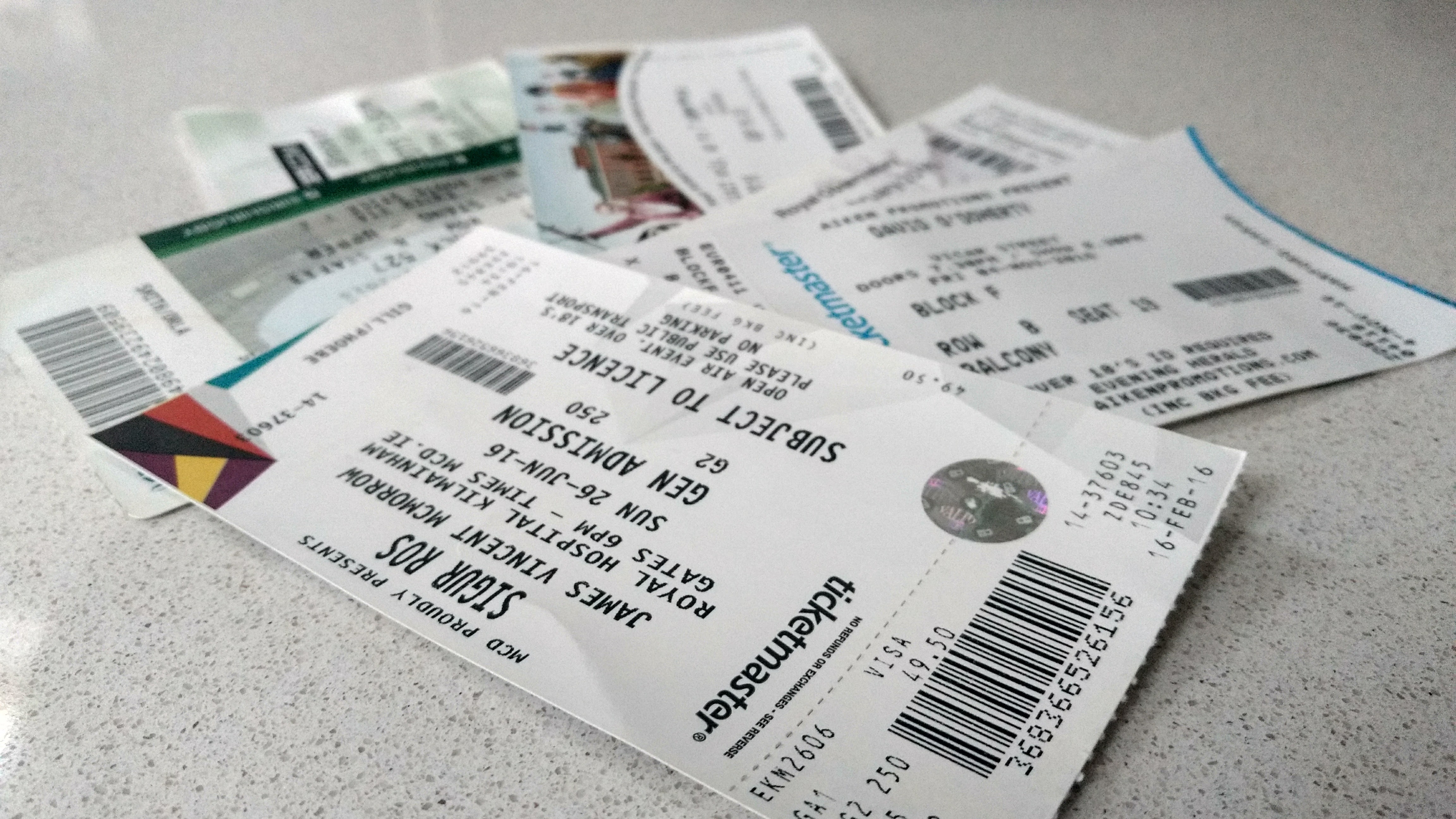
The business of ticket touting
As the Government is being called on to introduce laws which would prohibit above-cost ticket selling, Sarah Harford looks into the complexities surrounding this practice.
This summer sees some of the biggest acts in the music industry performing in Dublin. Radiohead, Ed Sheeran, and U2 all have sold-out concerts coming up, but the dark cloud of ticket touting has loomed over these events, with thousands of fans being unable to secure tickets.
Call it reselling, scalping or touting – it’s not a new phenomenon. The problem has always been there, but the nature of the act is changing and is now becoming an increasing problem.
Technology has made it easier for people to profit at the expense of desperate fans. A more advanced generation of scalpers, often professionals, use special software to get around security restrictions and snap up large amounts of tickets before anyone else can.
Major events are sold out in minutes, but immediately tickets are being advertised on secondary sites at highly inflated prices.
https://twitter.com/_abbturner/status/827102336732524544?ref_src=twsrc%5Etfw
Rock ‘n’ roll
Noel Rock, TD for Dublin North-West, and Radio Nova started a petition to outlaw the practice of ticket touting. Amid the outcry over U2 tickets, the online campaign received almost 5,000 signatures within two weeks.
Now, Rock is proposing firm legislation on the matter. He delivered the ‘Prohibition of Above-Cost Ticket Touting Bill’ to the Dáil on 31 January, alongside TD Stephen Donnelly.
In the past there have been other attempts to propose similar legislation in Ireland, but none have succeeded. Will the strong public response help to initiate change this time?
https://twitter.com/NoelRock/status/826418842591191045
Solutions?
Major names in the music industry are starting to speak out on the matter. At one of her concerts in London last year, Adele remarked on how the situation has gotten out of control: “You’ve got all those terrible people selling tickets for £25,000 a pair. I hope no one paid that much. If you did I’ll pay you back.”
Changes to ticketing policies are being introduced in an effort to prevent this, such as printing the buyer’s name on tickets and then checking ID at the venue. However, both Radiohead and U2 implemented this system for their upcoming Dublin concerts, and the two events still sold out within minutes.
A quick look on secondary ticket sites at the time of writing showed that tickets for U2’s July concert in Croke Park are now on sale at highly inflated prices. In spite of an initial cost of between €39 and €186, there are now many being advertised for well over €1,000.

Image by Sarah Harford The Broadway musical Hamilton, which comes to London at the end of the year, is taking things a step further. The show will have no paper tickets; buyers must show up on the day with their confirmation email, the credit card they used to make the purchase, and photo ID.
Hamilton creator and star, Lin Manuel Miranda, has been very vocal about how ticket reselling is killing the industry.
“Tickets are taken out of circulation, punishing people who can’t afford to pay more than face value. The extra money doesn’t provide a better concert or show experience for you, the fan. Instead, it goes straight to the broker’s bottom line”, Miranda wrote in an op-ed for The New York Times.
Supply and demand
There are four main secondary ticketing websites – GetMeIn and Seatwave (both owned by Ticketmaster), StubHub (eBay), and Swiss-based Viagogo.
A conflict of interest is clear in the case of market leader Ticketmaster, who now benefits from both the selling and reselling of tickets. The company has said, however, that this is to prevent customers, some of which have genuine reasons for selling their tickets, from using less well-regulated sites.
But it has now become commonplace to see tickets advertised on these sites at exorbitant prices, sometimes even before general tickets go on sale. While some of these may have come from pre-sale booking events, it is likely that professional touts are engaging in the economic principle of speculative short-selling – selling stock you don’t yet own, hoping to purchase it later at a cheaper price.
The crux of the resale market, however, is based on a more fundamental area of economics – supply and demand. The simple way to render ticket scalping unsuccessful would be to increase supply or increase market value. But this is not always feasible. There are usually restrictions on the number of people who can fit into a venue, and the number of nights an artist can perform for.
So the other option would be to raise prices, at a time when concert tickets are already an expense for the average consumer. The music industry depends on revenue from concerts, and reaching a wide audience, but this will be difficult if many fans are priced out of the market.
Significance
The live entertainment industry is worth almost €2 billion euro in Ireland, according to a report released this week by Let’s Celebrate 2017.
Using data from Ticketmaster, the report showed that over four million people attended a live event or concert between March 2015 and February 2016, generating significant revenue for the country.
It also outlined wider economic benefits to sectors such as employment, accommodation, and tourism, highlighting that this is an industry that needs protection.

Data courtesy of Let’s Celebrate 2017 
Image by Sarah Harford What next?
In December 2016, President Obama signed the Better Online Ticket Sales Act, outlawing the use of bots to purchase tickets in the US. This may be a step in the right direction, but it still places no burden on primary ticket sites or the organisers of events.
If similar changes are made to Irish legislation as a result of Noel Rock’s bill, will this put an end to the ticket touting culture?
A report published by the Department of Jobs, Trade, and Enterprise last month suggested that ‘action to address the issue may have a greater prospect of success if it involves a range of measures by all of the parties with a stake in the organisation of entertainment and sporting events and the provision of ticketing services for them.’
Furthermore, on 26 January, the Competition and Consumer Protection Commission announced that they have commenced an investigation into the issue, focusing on ‘potentially anti-competitive conduct by operators, including those involved in providing tickets and ticketing services, promoters and venues.’
New regulations are being established in the UK and US, but Ireland is still behind. It seems to be clear, however, that multiple measures will need to be taken in order to put an end to the complex matter of ticket touting.

-

Will the women of Ireland Strike 4 Repeal?
A campaign has been launched urging the public to strike if the Government does not hold a referendum on abortion. Sarah Harford looks at the plans and the historical precedent.
You must be logged in to post a comment.