Tag: Afghanistan

  • ‘Women’s rights were sidelined throughout the process’ – Afghan women and minorities fear consequences of US-Taliban peace deal

    ‘Women’s rights were sidelined throughout the process’ – Afghan women and minorities fear consequences of US-Taliban peace deal

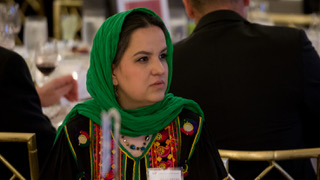
    Najia Nasim is the Executive Director of Women for Afghan Women – an organization that has been cited as having some of the “bravest women in the world” by Amnesty International.

    As the Trump administration scrambles to end US military involvement in Afghanistan ahead of November’s Presidential Election, The City’s Cameron Weymes examines the consequences of largely excluding women and ethnic minorities from the recent ‘peace deal’ between the Taliban and the US.

    On February 29 the United States and the Taliban signed a ‘comprehensive peace agreement’ in relation to Afghanistan.

    According to the agreement, all US military forces will be withdrawn from the country within 14 months in exchange for a guarantee that the Taliban will “prevent any group or individual from using the soil of Afghanistan to threaten the security of the United States and its allies.”

    If the agreement is put into effect, it will bring an end to the United States’ longest ever war after almost 20 years.

    The Afghan government – which was largely ignored throughout the process – has rejected aspects of the agreement, such as the requirement to release 5,000 Taliban prisoners.

    For many Afghan women, the memory of Taliban rule before 2001 brings significant apprehension towards the deal.

    Afghans enjoying their weekend at Qargha Dam, near Kabul, August 2017. Photo: Cameron Weymes

    “Throughout the Taliban’s reign, women and girls suffered a brutal loss of agency and were denied their fundamental rights and freedoms, such as education, the opportunity to work, access to healthcare, and movement,” said Najia Nasim, the Executive Director of Women for Afghan Women, in an interview with TheCity.ie.

    “Taliban rule essentially imprisoned women and girls in their homes and eviscerated their basic rights and ability to participate in any facet of personal, political, or societal decision-making,” she added.

    “The gender inequality, domestic violence, and discrimination that rose dramatically during the reign of the Taliban led Afghanistan to be consistently ranked as one of the worst places in the world to be a woman,” said Najia.

    There was a notable lack of female involvement in the peace talks held in Doha, Qatar.

    “To date, women and civil society have been largely excluded from the negotiations. Women’s omission inhibits their ability to convey their unique experiences, grievances, priorities, and hopes for Afghanistan’s future, and to shape post-conflict institutions and broader society,” said Najia.

    The aftermath of a suicide bombing by the Taliban on a Kabul bank where five government employees were killed while collecting their salaries. August 29 2017 Photo: Cameron Weymes

    “Alarmingly, women’s rights were sidelined throughout the process that gave rise to the US-Taliban deal, heightening concerns that a withdrawal of US forces and an intra-Afghan dialogue will create a power-sharing arrangement that will facilitate a reversion to brutal Taliban rule,” she added.

    Minorities fearful

    Minorities such as the Hazaras, a predominantly Shia ethnic group, also have considerable grounds to fear a return of the Taliban to power.

    In the late 1990s the Taliban committed many atrocities against Hazaras as they took control of 90% of the country, including the massacre of 2,000 Hazaras in the northern city of Mazar-i-Sharif.

    In recent times the Taliban and Islamic State have targeted Hazaras in suicide bombings and other attacks.

    In 1997, the Taliban governor of Mazar-i-Sharif, Mullah Niazi, delivered a series of speeches about Hazaras.

    Dasht-e-Barchi, a Hazara majority area in western Kabul that has been targeted by the Taliban and Islamic State with suicide and gun attacks. Photo: Cameron Weymes

    “Hazaras are not Muslim, they are Shi’a. They are kaffir (infidels). The Hazaras killed our force here, and now we have to kill Hazaras,” he said.

    “If you do not show your loyalty, we will burn your houses, and we will kill you. You either accept to be Muslims or leave Afghanistan,” he added.

    Although Niazi was subsequently killed in a US drone strike, fear persists that the current Taliban leadership will be similarly hostile to Hazaras.

    “The Taliban have proven before that minorities have no place in the country. They have no respect for different religions or tribes,” said Raziya Masumi, an Afghan lawyer and women’s rights activist, in an interview with the TheCity.ie.

    “Shia groups were forced to say prayers as the Taliban did, and were lashed or even imprisoned for making mistakes during prayers.”

    On Friday 6 March 2019, Islamic State gunmen attacked an official event in Kabul dedicated to Hazara leader Abdul Ali Mazari, killing 27 and wounding 55 others.
    _____________________________________________________

    “Recently, more suicide attacks have happened in the west of Kabul where the majority are Shia. They attacked mosques and schools in these areas. The Taliban only accept their own beliefs and religious thoughts,” she added.

    For Atiq Lotan, a Hazara from Ghazni province, the peace deal is nothing short of a disaster.

    “In the Jaghori district of Ghazni, where I am from, the Taliban enforced Sharia law and carried out public executions. They also actively sought methods to forcefully convert Hazaras to their denomination of Islam,” he told TheCity.ie.

    “The recent legitimacy the United States has afforded the Taliban will result in a new era of persecution and political exclusion for Hazaras.”

    “In addition, the return of the Taliban to power means their crimes against us will be forgotten.”

  • ‘Instead of focusing on war, there’s now something fun for our youngsters to think of’ – the rise of Afghan cricket against the odds

    ‘Instead of focusing on war, there’s now something fun for our youngsters to think of’ – the rise of Afghan cricket against the odds

    Afghan reporter Diva Patang poses for a photo at the 2019 Cricket World Cup. Photo: Diva Patang

    By Cameron Weymes

    Despite enduring over 40 years of conflict, Afghanistan is currently ranked seventh in the world in T20 cricket.

    Cricket has only become popular in Afghanistan since the 1990s, when Afghan refugees played the sport while living in Pakistan.

    The Afghan team qualified for their first Cricket World Cup in 2015 and beat Ireland to qualify for the 2019 tournament.

    The team has also beaten established cricketing nations such as Bangladesh, Sri Lanka and the West Indies in one-day internationals.

    The effect of the team’s success on people back home has been massive.

    Cricket in one of Kabul’s parks. Photo: Cameron Weymes

    “Instead of focusing on the problems in the country such as war there’s now something fun for our youngsters to think of,” said Diva Patang, a reporter for the Afghan news station RTA.

    “Children now have role models that are examples for themselves. When you ask youngsters in Afghanistan who they want to be when they grow up, most will say one of the international players such as Rashid Khan or Mujeeb Ur Rahman,” she added.

    The Afghan constitution states that the country is home to 14 ethnic groups, the main ones being Pashtun, Tajik, Hazara and Uzbek.

    According to Diva, when the cricket team is playing the whole country is behind them, regardless of ethnicity.

    “Everyone supports them. President Ashraf Ghani even cites the cricket team as an example of Afghans being able to work together.”

    “All over the country you’ll find children playing cricket at school and on the streets,” she said.

    Street cricket in Kabul. Photo: Cameron Weymes

    The recent Afghan presidential election saw a turnout of less than 25% and took five months to declare a winner. 

    In addition, the Afghan government has been sidelined from the peace talks between the US and the Taliban, which resulted in agreement in late February.

    For the Afghan people, fatigued by war and politics, cricket is a welcome break.

    “If you tweet something about Afghan politics and something about Afghan cricket, you will see the difference in interest levels among the people,” said Diva.

    “For Afghans cricket means a lot. If there is something wrong with the cricket, they take it personally. There will be anger and demonstrations.”

    “There’s interest in other sports in Afghanistan, but cricket is number one,” she added. 

    Irish rivalry

    Afghanistan will play Ireland in India in a three-part T20 international starting on March 6, 2020 at the Greater Noida Sports Complex Ground, India.

    The teams are very familiar with one another having played 26 times at one-day internationals, winning 13 each. 

    However, it has been more one-sided at T20, with Afghanistan winning 12 of 15 encounters between the two.

    “Lately Afghanistan has been very successful against Ireland. The Afghan team has become very familiar with the Irish team and their tactics so I think Afghanistan is in a good position,” said Diva.

    “Our team has spent a lot of time in India and familiarised themselves with the hot weather. Speaking to the players myself, they say they are very keen and I think it will be a good match to watch,” she concluded.

    Flying kites during Newroz celebrations in Kabul. Photo: Cameron Weymes
  • Who deserves a Nobel Peace Prize?

    Who deserves a Nobel Peace Prize?

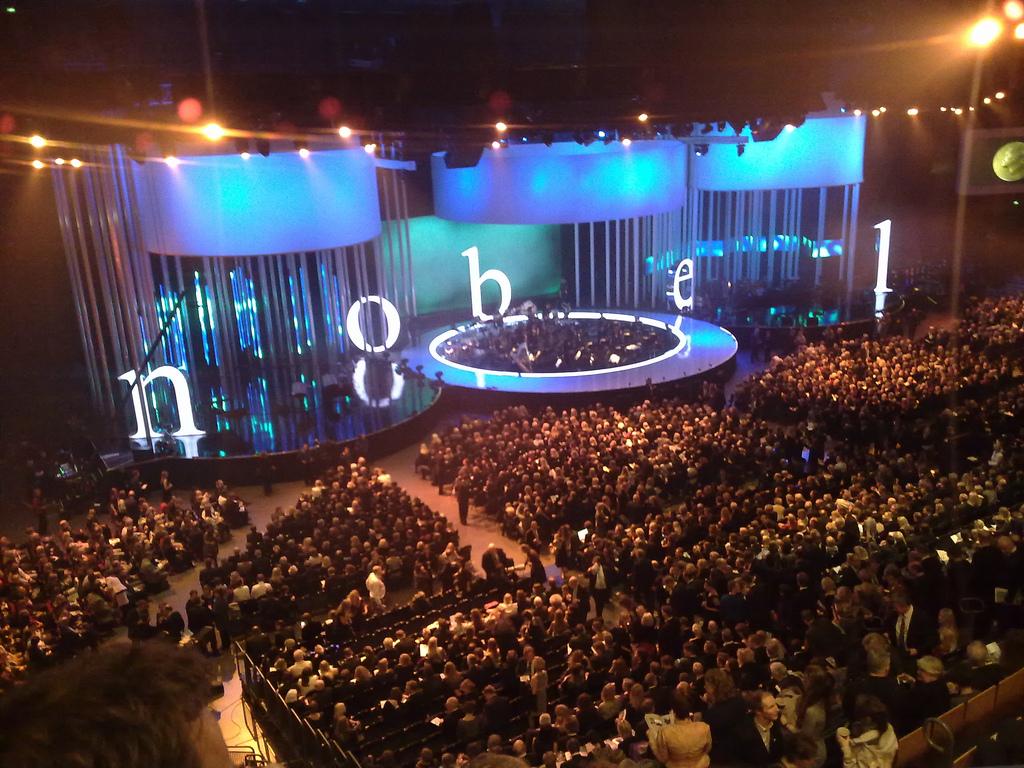
    The 2013 Peace Prize has been sparking debate all over the global. Photo by: Vegard Iglebaek
    The 2013 Peace Prize has been sparking debate all over the global. Photo by: Vegard Iglebaek

    Due to the vast controversy surrounding the nomination of Vladimir Putin for the 2013 Nobel Peace Prize, the question of “who deserves a Nobel Peace Prize?” was put to the general public.

    The vast majority of people all had differing opinions on who would make a deserving winner. Only Malala Yousafzai received more than one public nomination.

    James Franklin said, “the girl who was shot by the Talaban. She is a modern version of Martin Luther King Jr. She is a role model for women’s rights in a backwards country.” Gary Kinsella was short and sweet in his nomination, saying “Malala, for being shot for wanting to learn!”.

    Theology student Jason Doran also voted for Malala Yousafzai saying, “I think she showed great courage and bravery in the face of extreme adversity. She could bridge the gap between real people of that part of the world and Europe. Not every muslim is a terrorist.”

    The New Pope got in on the action too. Jason Shaw said “Pope Francis. All the other world leaders have alot of blood on their hands but he seems to be doing alot more for world peace then the rest by his constant calls for acceptance of all people – and that is coming from someone who would not consider themselves religious by any means.”

    There were two nominations for people from Ireland.

    Tessa Fleming and Derek Goulding said that they would like to see Michael D. Higgins and Ian Paisley win awards, respectively. Tessa felt that Higgins deserved the award “because of his work for equality, culture, and ethics”, while Derek said despite being a controversial choice Paisley “was one of the cornerstones in ensuring that peace was at least a possibility in the North.”

    There was a lot of discontent towards the prize and what many deemed it has come to resemble presently.

    “Does anyone deserve to win it?, said Joseph Reid. “Peace is only temporary at best, there will always be war, it’s human nature.”

    Kieran O’Driscoll summed up the apthay towards the Nobel Peace Prize claiming, “they support the war on terror”.

    He explained, “in recent years, the prize has been awarded to Obama, while he was in the midst of escalating military presence in Afghanistan, and the E.U., soon after a number of European countries had intervened with force in Libya. This seems to me to go against the idea of peace-making and could be seen as approving of military action/force, while ignoring those who may be working on the opposite side of a conflict, attempting to work towards peace in these scenarios.”

    “At the moment, I hope the prize is awarded to someone for humanitarian work, someone who embodies the ‘champions of peace’ that the award strives to be bestowed upon.”