
Tag: africa

  • A match made in TUD: When flowers are no longer enough

    A match made in TUD: When flowers are no longer enough

    Technological University Dublin’s African society Valentine’s event represents love beyond just romance and serves as a medium for promoting cultural integration.

    By Samuel Adeleke

    Photo credit: Samuel Adeleke

     With Valentine’s Day around the corner, a time often seen as a period to show and express love, TUD African Society brought the celebration early by organizing a Valentine’s event on 10th of February, at Bst259 Bolton Street.

    For Sharon Ojuade, President of the TUD African society, the theme of ‘A match made in TUD’ was not chosen for love and romance alone.

    “With this event, we aimed to create a relaxed and comfortable environment where people from the same background, different backgrounds, and experiences gather in one room, enjoying the atmosphere,” said Ojuade.

    In organising the event, the committee also sought the support of student entrepreneurs who offered services or provided freebies to participants in an African style.

    This included DJs, photographers, MCs, and the types of foods to be served.

    “Events like this give people a sense of belonging and serve as an avenue to promote student entrepreneurs from Africa and allow them to thrive,” said Ojuade.

    “Before the world loves you, your community must also love,” she added.

    The committee has experienced a record number of ticket sales for the event. For the president, it is inspiring to see that they live in a country with a strong sense of community.

    “Just because we live here doesn’t mean we shouldn’t have fun moments; people should still pursue what they need to pursue outside the community,” said Ojuade.

    Although it is an African society gathering, the event is open to other nationalities. “The first person to get a ticket for the event is an Asian. He reached and said he wanted to be part of it.” said Ojuade.

    According to Divine Nebo, the social director of the society, “the event is not just about finding love, it is about finding people who are like you to bond with on a different level.”

    And by extension, the theme of the event, ‘A match made in TUD’, is to show that love can be found anywhere, not just in school, but in environments like this, outside of social media.

    With students outside the African community feeling the pull of the event, Divine said, “the event is not only about Africa, but expressing the depth of African culture to non-Africans to see what African culture is about, beyond what social media portrays.”

    John Ologunlola, the event manager, also collaborated and highlighted the potential of the event to serve as a platform for non-Africans to experience African culture.

    “Even though they might not fully understand the African culture in its entirety, it is a valuable learning process,” said Ologunlola.

     Ologunlola mentioned that, as a Nigerian, he is learning more about the African culture and finding expression in the community alongside other African nationals, including Ghanaians and Congolese.

    With students like River Rogers, who is half Irish and half Polish, the intentions of the TU African society executive came to light.

    “It is my first time being in an African event,” Rogers said. “I am not African, but I can still attend and make some new friends,” he added.

    Not only did Rivers find the Afrobeat songs being played amusing, but he also left with the intention of trying an African dish. “I definitely need to try the African jollof rice,” he said.

    Mark Ologunlola, a former executive of the society, commended the event as a brilliant way of promoting cultural pride.

     “Events like this help people develop real relationships, and give people a picture of what love is,” he said.

     Ologunlola expressed excitement at seeing other people at the event, “no matter what part of Africa or the world you come from, we are all one body.”

    While the event promotes communal love, in a friendly society that helps people socialise, Nicole Okerikre, an African national from Nigeria, who participated in the event as a contestant, said, “This is a period of love, but people should find love in themselves first.”

    Denoting that self-love is non-negotiable.

    For Jaeson Jang, an Asian, ‘A match made in TUD was not just a Valentine’s event, but an opportunity to find expression among people of other cultures.

    “The African culture is amazing, I feel like family, I feel welcome. Everyone is enjoying themselves; no one feels lonely,” Jang said.

    Jang’s experience underscored the aims of the TU African Society to promote an atmosphere where joy, laughter, and love are shared without identity being a barrier.

    “Everyone can integrate into every culture; you only have to do it respectfully,” said Jang.

    By the end of the night, a match was indeed made in TUD as the event ended with Jaeson Jang from Asia and Nicole Odunsin from Africa emerging as winners.

    It was a reminder that love in its most powerful form goes beyond just being African or giving flowers; it is in identifying with people from other nationalities and embracing a sense of community.
     

  • From a Motorbike to Medical School – Rashid Omondi’s Remarkable Journey

    From a Motorbike to Medical School – Rashid Omondi’s Remarkable Journey

    By Dearbhla Kiarie

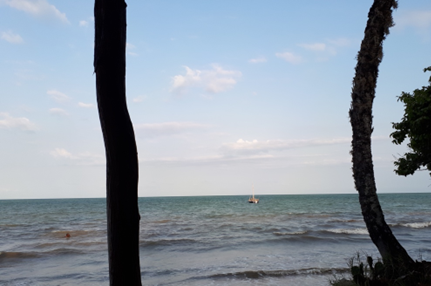
    At just 19 years old, Rashid Omondi is on the brink of fulfilling a lifelong dream—studying medicine at an Irish University, University College Cork (UCC). Hailing from the coastal town of Pangani, Tanzania, Omondi details the inspiring story of not only his personal ambition, but the unwavering support of his community. 

    Omondi’s passion for medicine began at just seven years old, when he witnessed local doctors helping his sister after she suffered a stroke. The young man describes this as “the moment he knew he needed to pursue higher education”. 

    Together with his parents and teachers, Omondi soon discovered that Ireland was the place to be when it came to medical education.  

    “I didn’t know where to start but my teachers told me it would not be easy, especially for someone from my situation,” said Omondi.  

    In fact, the financial burden of moving to Ireland nearly forced Omondi to abandon his dream, but he was met with support from his family.  

    “My father told everyone about our situation and immediately my wonderful community started to help,” Omondi said. 

    Omondi’s family bike. Photo: Rashid Omondi 

    To fund his dream, Omondi made a heart-wrenching decision: he sold his family’s only mode of transport, a beloved motorbike. 

     “It was a tough choice, but my parents knew it was necessary for my future,” he said.  

    For the next two years, his community rallied around him. Friends and family organised fundraisers, offering rides to tourists who were visiting the coastal town, as well as selling handmade jewellery and carved wooden animals. 

    Handcrafted items for sale in Omondi’s town. Photo: Rashid Omondi 

    “The support was and still is incredible,” Omondi says.  As the funds began to accumulate, Omondi worked tirelessly on his studies and became the top-performing student in his region.  

    “When I applied for UCC, I had no idea how it would go,” he said. “I was told not to get my hopes up because there are thousands of smart kids out there. But I believe God was guiding me through.” 

    Omondi explains how he was not accepted into any Irish universities the first 

    time around, but that did not discourage him from applying again: “If anything, it was a relief to know I had some more time to learn about life in Ireland and to raise as much money as possible.” 

    The following year, Omondi’s dream became a reality when he was officially accepted into UCC. 

    The decision to uproot his life was one that took some time and reflection, leading the young student to defer his studies for a year. Until he begins his medical degree in Cork next September, Omondi plans to learn as much about Irish culture as possible.  

    “I felt nervous at first but now I have heard from many of the tourists here that the Irish are very welcoming,” he said. 

    Omondi continues by expressing his gratitude to his friends and family for making his lifelong dream a possibility. “Every class I attend, I will think of them,” he said. “I want to make them proud. My success is their success.” 

    Looking ahead, Omondi envisions a future where he can return to Tanzania, equipped with knowledge and skills to improve healthcare in his community.  

    Rashid Omondi’s story is a powerful reminder of the impact of community, illustrating that with determination and support, anything is achievable.

  • Western black rhino is no more

    Western black rhino is no more

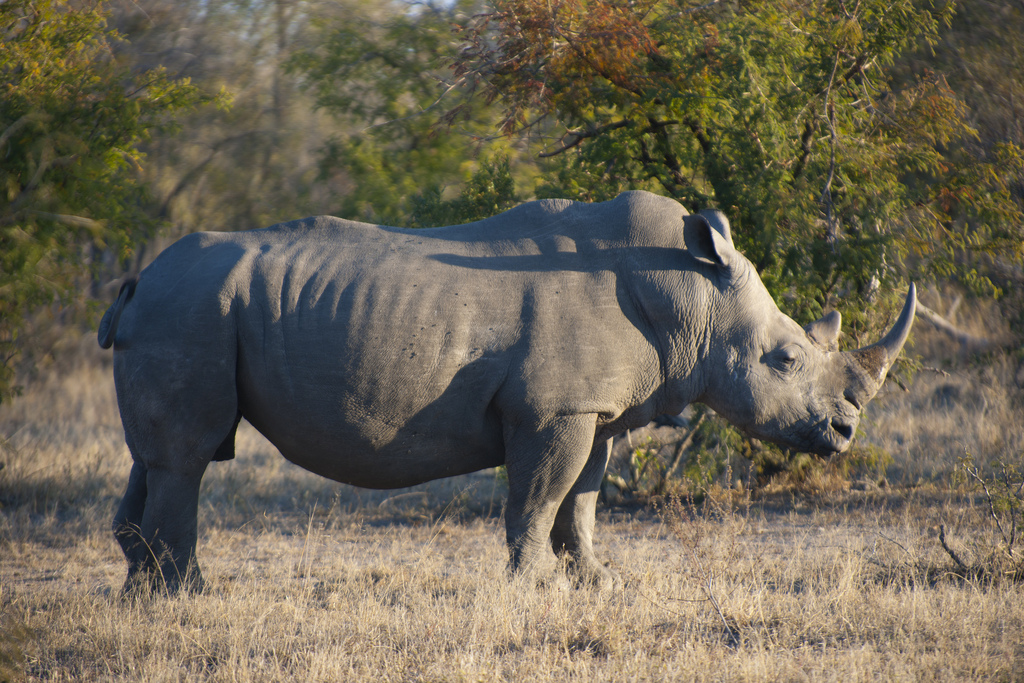
    Last week, the western black rhinoceros was officially declared extinct by the International Union for the Conservation of Nature.

    The organisation, which is the world’s largest conservation network, maintains a “red list” of animals which are in danger of becoming extinct. The western black rhino is a subspecies of the black rhino, which is currently listed as “critically endangered”.

    The official declaration of extinction of the western black rhino comes just weeks after a Texas hunting group announced its intention to auction off a permit to hunt a black rhino, drawing harsh criticism from conservation groups.

    The western black rhino was last seen in 2006 in western Africa. It is estimated that there are as few as 4,000 black rhinos alive today. Reasons for the extinction of the species have been cited as poaching and a lack of conservation.

    The horn of a rhino is fabled to hold a range of mystic properties, from fertility to having the ability cure cancer. As such, the species is extremely popular with poachers and hunters.

    A picture of 2 rhino horns, taken by the uk home office
    A picture of 2 rhino horns, taken by the uk home office

    A favourite pastime of the wealthy and power elite, safari hunting is a cruel and violent practice which has contributed to the endangerment and indeed extinction of hundreds of different types of animals.

    Last week, a bizarre case involving rhinos which has its roots in Ireland came before the courts in New York. Irishman Michael Slattery pled guilty to charges he used forged documents to sell horns from endangered black rhinos to a New York collector for more than €35,000.

    Rhino horns are sought after for their alleged medicinal properties, as trophies, and are even used to make dagger handles in Yemen. The demand for Rhino horns has only increased as the size of the species has dwindled.

    It’s a sad but true fact that animals are needlessly killed every day for the amusement or gratification of “hunters”. The extinction of the Western black rhino is not surprising, but it is a tragedy nonetheless.