Digital agriculture is at a turning point and the expanding market for technological and organisational aspects is constantly growing. Although the digitisation of the agricultural sector has many advantages, there are still obstacles to the development of its full potential in Europe. Abderrahmen Ben Chouchane explores these technological changes by looking at Italian agriculture.
Picture from Pixabay.
Digital technologies can help European farmers provide sustainable and quality food. Not only do they help farmers produce more food with less, but they can also help fight climate change.
Giovanni Nardecchia is a young Italian agricultural entrepreneur who studied Agricultural Sciences and Technologies and decided to invest his talent in the family business.
“The land is about 8 hectares and we mainly cultivate olive trees” said Mr. Nardecchia,
“Given the area we are in and the numerous European laws, we try to do our best. My father worked here for many years and it took me a long time to convince him of how important change is.”
Mr Nardecchia explains the first steps:
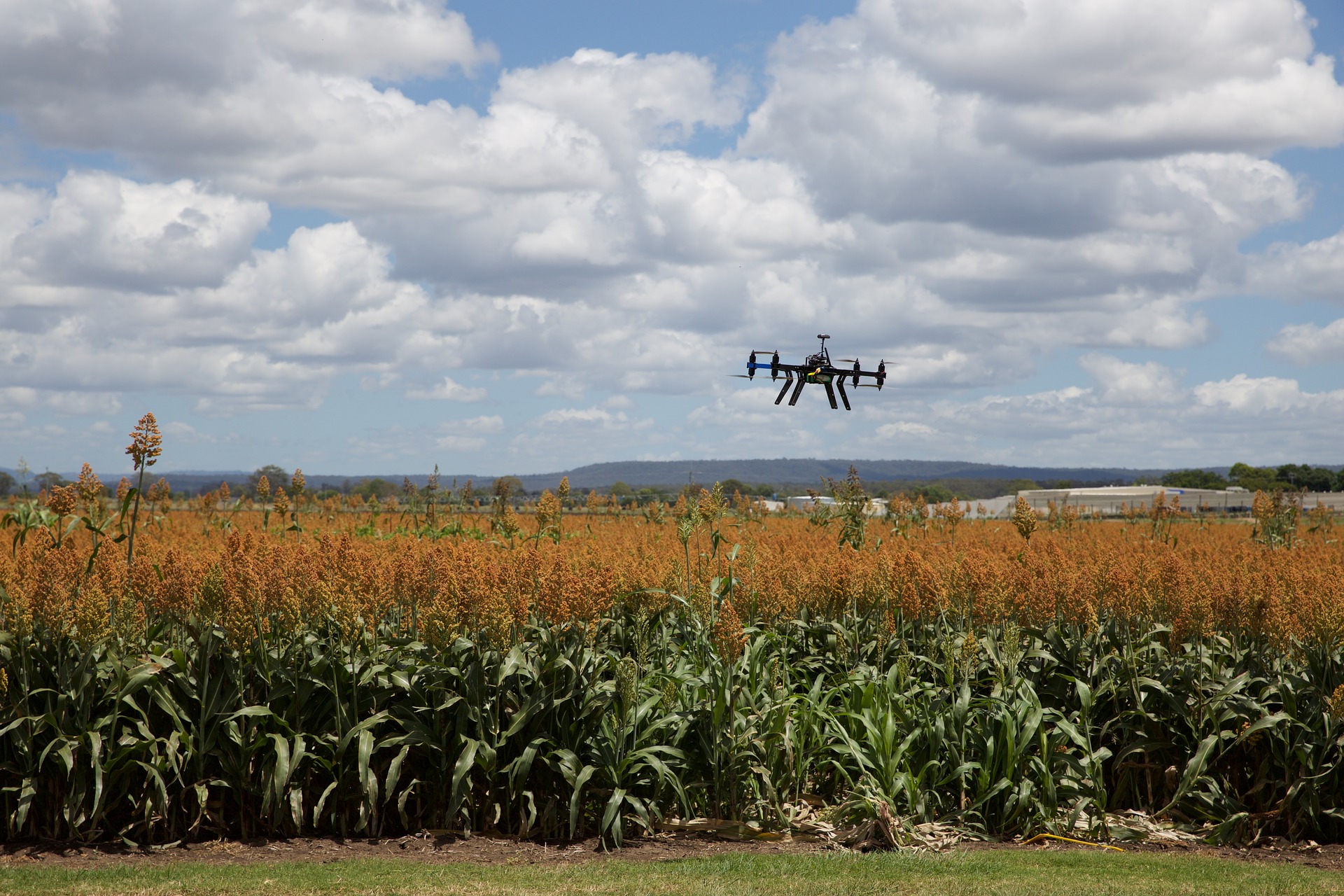
“The use of drones allows a considerable saving of time, resources and energy, given that they can do tasks that would otherwise be for one or more people. Despite this, the olive tree must avoid being subject to an excessive lack of water at the beginning of the vegetative season (spring) and in the summer months. A good solution is micro-irrigation, which allows the plant to receive the right amount of water, avoiding damage deriving from excessive humidity.”
Technologies of this kind are developed, for example, by Carbon Bee, which proposes a measuring instrument (mountable on drones, robots, and tractors) capable of collecting detailed data on plant diseases.
“CarbonBee is also really good because drones are also excellent tools that help determine the health of crops from area to area. This allows the farmer to intervene in the most appropriate way, possibly redistributing the quantities of fertilizer, water, and pesticides,” Mr Nardecchia said.
In the past two years, thanks to Airbnb, he has been able to transform the abandoned house into a small agritourism, increasing the family income.
This dream model created by the Nardecchia family does not represent the Italian majority, in fact, the statistics show it. The adoption of new technologies remains far below expectations and varies from region to region.
The European Commission has been monitoring the digital progress of the Member States since 2014. For the 2020 edition, Italy ranks 25th among the 28 EU Member States.
According to the EU average, Italy has very low levels of basic and advanced digital skills. The number of specialists and graduates in the sector is also far below the EU average. Although the country ranks relatively high in the supply of digital public services, their use remains low.
Francesco D’Angelo lives in the province of Dogliola in a renovated farm, surrounded by 3.6 hectares of land which has 150 olive trees and a grove with a wonderful view of the sea.
Mr D’Angelo said: “It sounds good but after working for 50 years in these lands you understand that it is hard to change and what they don’t tell you is that you need money to buy all the new stuff (technologies) they talk about and then they should give us courses to learn how to use them. However, for some of us it takes at least another 50 years to adapt.”
Under pressure, D’Angelo had to adapt and began selling vegetables online using the MangioaKm0 app which is used to sell local vegetables and fruits online.
“It certainly helps me to make some more money than usual but unfortunately I compete against large companies that are much more technological and much more effective than mine. This gap must be addressed so that everyone, including small and medium-sized farmers, can access and benefit from the technology,” he said.
The Green Party is set to hold a teleconference to evaluate their official response to Fianna Fail and Fine Gael’s letter, which answers the 17 questions posed by the Greens regarding policy promises. TheCity.ie’s Kate Brayden speaks to County Clare Green Party councillor Roisin Garvey and Futureproof Clare about the vital Shannon LNG concession, and the 7% emissions target urged by the United Nations.
In a letter published this week inviting the Greens into further governmental talks, FF and FG wrote that they “welcome the desire of the Green Party to be involved in recovering, rebuilding and renewing Ireland in the aftermath of the COVID-19 Emergency” and respect the “strong policy platform” outlined by the Greens, led by Eamon Ryan.
Crucially, the two parties stopped short of promising a 7% emissions reduction target by 2030 – despite the fact that the EU have said the minimum reduction needed is 8% to remain outside of the 1.5C temperature increase. The target is based on the 2019 “Emissions Gap” Report from the UN Environment Programme.
In the document, it was written that FF and FG “would like to understand and tease out with you through talks, the specific actions that would have to be taken to achieve” the 7% reduction.
“We all need to understand the impact it would have on employment, poverty, agricultural practice, public transport, regional development and on the different sections of society.
“Considerable work will have to be done to outline where and when further carbon reductions could or should come from given that we will have to significantly reboot and revive the economy,” they wrote.
Chair of the State’s Climate Advisory Council, Professor John FitzGerald recently commented that achieving a 7 per cent reduction in annual emissions would be extremely difficult but said: “If you do the groundwork…you could get to it in the second half of the decade.”
The Greens emphasised the need for a just transition in their 17 point plan, which advocated for a Universal Basic Income, retrofitted public housing, affordable public transport and a significantly improved healthcare system, among others. Major changes in agriculture, public transport and energy would provide the means for the reduction in emissions.
Despite the estimated €30 billion cost of the Covid-19 pandemic, the chair of the National Advisory Council on Climate Change has affirmed that Ireland needs to prioritise investment in climate action going forward. New research undertaken by University College Cork’s MaREI Centre for Energy, Climate and Marine states that the party’s 7% emissions reduction goal would require “transformative changes” and huge costs, but is a feasible challenge.
‘Is the new Green Party emissions reduction target feasible and what would it mean for the energy system?’, written by Hannah Daly, James Glynn & Brian Ó Gallachóir, asserts that the changes could bring significant health, wellbeing, economic and employment benefits to society.
“While there are real costs associated with greening Irish economy, these ignore fact that we already pay massive subsidies to some of our dirtiest industries”
The Fianna Fáil and Fine Gael leaders committed to enacting climate legislation within 100 days of forming a government, but this legislation could fail to be implemented. The Greens are seeking concrete answers for their detailed questions on exactly how their policies would be enacted should they enter into Government with FF and FG.
“If they want the Greens in power, they’re going to have to do a lot more than greenwashing us – there’s going to have to be proper commitment,” said Roisín Garvey, Green Party councillor in County Clare.
“We’re not tied to five years: Fine Fael and Fianna Fail really need us, because they know that if there’s an election now, they’d be crucified. Now is time to try and get policies we want, not just the promises that we want,” Garvey added.
“I think Fianna Fail and Fine Gael know that, and they also know that there’s going to be huge fines from Europe if we don’t meet our targets. So I think now is a very good time for us to be in negotiations. We have a much better chance now than when we went in with Fianna Fail in 2008, when there were only six TDs. The climate crisis wasn’t being taken seriously by anybody.
“The fact that we have 12 TDs now since the General Election shows that it is an issue – that’s an unprecedented amount. However, FF and FG are just agreeing things in principle to get us into negotiations. But Eamon Ryan’s been around the block before, he’s not naive about it. Those 12 TDs have been in politics for a long time: they’re definitely going to be committed to getting proper timelines.”
It’s important to note that in 2007, six Green TDs entered Government as the junior party in coalition with Fianna Fail. The party were later decimated four years later, suffering a wipeout in the General Election and losing all six of its seats. The party returned to the Dail in 2016, receiving just over one percent of the vote in local election.
"If an Irish party ever wants to truly dethrone the two royal families who've presided over us since birth, it needs to aim for more than simply mitigating their worst decisions" https://t.co/LR3rYKdr5T
Today’s Green Party are heavily split over whether to prop up a FF/FG Government, which younger voters categorically don’t want. Younger members and outliers believe that the radical change needed simply cannot happen with FF and FG. The dramatic 2020 General Election, which saw Sinn Féin emerge with 33% of the overall vote, proved that real change is desired following years of homelessness, housing and rent crises and a deeply worrying healthcare system. The Greens are now between a rock and a hard place, facing strife for entering a FF/FG coalition and political backlash if they refuse to. What they choose now could decide the future of the party by turning their youth vote away (possibly to Sinn Féin) – but the climate is on a timer. Could they pass climate action policies with two parties who are notorious for their abysmal apathy on climate justice.
Shannon LNG: concrete concessionor vague promise?
Stating that both parties are “committed to a pathway to phase out all fossil fuel exploration licenses”, FG and FF also claim to be open to introducing a moratorium on exploration licences for offshore gas exploration. Referring to the controversial Shannon LNG project, which would import dangerous fracked gas from Pennsylvania, the letter states:
“Both of our parties accept that as we move towards carbon neutrality, it does not make sense to build new large-scale fossil fuel infrastructure such as liquid natural gas import terminals.”
FF and FG mention that economic activity must be stimulated in the areas which were expecting local development plans, and exploring how strategic investment in the Shannon estuary and port infrastructure could support renewable energy.
William Hederman of Futureproof Clare, speaking to TheCity.ie, mentioned that zero room for loopholes must be allowed by the Green Party if they want to ensure that no LNG terminals or fracked gas imports will go ahead in future:
“A crucial first step is for the new government to tell the European Commission that Ireland wants Shannon LNG taken off the EU’s projects of common interest (PCI) list.
“For Fine Gael and Fianna Fáil to accept that it does not make sense to build LNG import terminals is a huge milestone. It is the result of years of grassroots campaigning, particularly in Kerry, and also here in Clare, that has grown into an international coalition against Shannon LNG,” Hederman continued.
“However, the language used by Leo Varadkar and Micheál Martin is vague and looks like they are trying to leave wriggle room. We must keep pressure on them to translate this statement into a firm commitment. Building new infrastructure such as this would lock Ireland and the EU into fossil fuels for decades, when we need to be rapidly transitioning to renewables in order to avoid catastrophic climate breakdown.”
Fianna Fail and Fine Gael wrote that they “would need to have a shared understanding of what is meant by new fossil fuel infrastructure, what type scale does this relate to, and whether this proposed ban would apply to State infrastructure or to private sector infrastructure as well.”
Stating that they would need a “clear understanding” of the State’s powers in this area and the limitations of European law, as well as international treaties, but removing Shannon LNG from the EU’s Projects of Common Interest list is very much possible.
Extinction Rebellion poster during the 2020 General Election (Photo: Instagram)
Speaking on the list, Roisín Garvey chastised the two parties on their unwillingness to face the realistic possibilities of climate action policies.
“Fianna Fail and Fine Gael act like we can’t do that – but sure we all know that’s not true. They shouldn’t play us as fools. FF/FG need us more than ever, because we can bring back jobs, we can save people money in how they run their houses through retrofitting, we can put money into transport instead of cars; this is now a really good time for them to hear us out.
“We’ve seen it happen in other countries. There have been hugely successful policies in Denmark and Scandinavia and Germany – lots of places have figured out their education, their housing, their transport: we don’t have to come out with these ideas all by ourselves. They’ve been around for years, that’s why the Greens exist, because we’ve all seen it done.”
The 12 Green Party TDs and two Green Senators will hold a second teleconference meeting this week to evaluate their response to the joint Fianna Fáil and Fine Gael letter inviting the party into formal talks.


You must be logged in to post a comment.