
Tag: ambulance

  • Response time targets not being hit by emergency services

    Response time targets not being hit by emergency services

    By David O’Farrell and Amy Connaughton

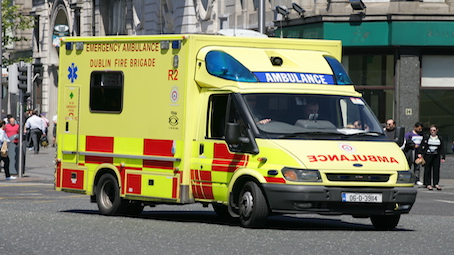
    The average response time for National Ambulance Services is under 19 minutes, according to figures released under the Freedom of Information Act.

    The calls are split into two separate categories, echo and delta. Echo calls are in response to patients suffering from a life-threatening emergency such as uncontrolled bleeding or finding it difficult to breath. Delta calls are calls from patients suffering from other non-life-threatening emergencies such as a pulled muscle or a minor cut.

    The response times are split into the four quarters of the year and can be seen in the graph below .

    The best response time on echo calls was recorded in quarter two, from April to June, where North Leinster had an 85.7% on time response. The outliers were the Western Area with 75.3% and the South with 74.3% response times. Meanwhile, the best response time on delta calls was recorded in quarter three, from July to September, where North Leinster once again came out on top at 64%, while the Southern area at 56.1% and the Western area at 61.6% performed the worst.

    On the other hand, the worst response time to echo calls occurred in the first quarter of the year, from January to March, where North Leinster performed best with an 82.4% on time response.

    The Western area at 58% was the outlier. The poorest response times to delta calls also happened in the first quarter with the Western Area and Southern Area performing poorly with a 53.8% on time response, while North Leinster performed best yet again with a 57.8% on time response.

    The average response time to life threatening calls in Dublin is 12 minutes and 41 seconds.

    TheCity.ie spoke to Clare O’Byrne, Media and Stakeholder Relations Manager for the Health Information and Quality Authority (HIQA), regarding the response times: “HIQA has conducted two comprehensive reviews of pre-hospital emergency care over the past number of years, one in 2014 and another follow-up review in 2017.

    “As part of these reviews, a number of recommendations were made to improve services, including measures to improve efficiency within the service to improve response times.”

    She went on to talk about how response times could be improved: “It should be noted that response times are not the only measure of service quality and safety, and HIQA also recommended that the service act to better define and measure other parameters to assure itself around the quality of care provided.

    “Furthermore, parallel to this work by HIQA, the HSE commissioned a review of capacity needs, which identified deficits in ambulance resourcing levels. HIQA is aware that some, but not all, necessary resources have been provided to the ambulance service to address these deficits”.

    It was interesting to compare ambulance response times in Ireland to those abroad. For example, Reuters found out that in America, responders arrived on the scene of emergencies 7.9 minutes after the call was placed on average. In England, the National Health Service set out new timeframes for emergency services to arrive on the scene after a call is placed; their calls are split into four categories.

    Category one calls are life-threatening calls; services expect to be on the scene in seven minutes on average and respond to 90% of category one calls within 15 minutes. Category two calls are emergency calls that require immediate assistance and/or transportation. They are expected to respond to these calls in 18 minutes on average and 90% of category two calls within 40 minutes.

    Category three calls are described as urgent calls and are usually when people need pain relief. They are expected to respond to 90% of these calls within two hours. Finally, there are category four calls which are non-urgent situations but require assessment and potentially transportation. They are expected to respond to 90% of those within three hours.

    Amanda Kenny, Press Officer for the Health Service Executive (HSE) also noted that ambulance response times, while helpful for performance measurement, do not provide a comprehensive picture of modern ambulance service performance if solely relied upon. 

    “It’s not uncommon to wait over an hour with a patient when we could be back out answering calls”

    She said: “Response time performance is being globally reviewed in terms of whether it is the only appropriate measure of patient care. While rapid deployment and timely arrival are accepted, patient outcome indicators are being viewed as a more appropriate measure of patient care and experience.”

    Regarding improving response times, she said: “The National Ambulance Service has recently established a clinical hub to implement the Hear and Treat alternative care pathway for low acuity calls that don’t require the dispatch of an emergency ambulance.”

    A Dublin paramedic, who wishes to remain anonymous, has said that to improve response times there should be less time spent waiting in emergency departments to hand over the care of a patient. He said: “Lack of capacity and staffing in emergency departments results in ambulance crews waiting to handover a patient. This means that it’s not uncommon to wait over an hour with a patient when we could be back out answering calls.”

    This paramedic also suggested that there should be less time spent on non-emergency calls and with patients that can be cared for at home: “A greater number of GP’s are required, particularly in rural areas, who could commence care of a patient at home where appropriate. This would avoid further hospital overcrowding and ambulance callouts. 

    “This also requires a greater number of community nurses to continue the prescribed care plan and assess progress. There is a community paramedic programme in motion that is aimed at filling this void.”
  • EMTs – there when they are needed most

    EMTs – there when they are needed most

    Everyday EMTs work with people in medical emergencies and ensure their safe delivery to the hospital.

    Sinead Ní Shuilleabhain has always had the passion for helping people and an interest in pre-hospital emergency care. She wanted to be an EMT after leaving school in 2008 but there wasn’t a formal course at the time.

    Then in 2017, she finally bit the bullet and attended an emergency medical technician course with the Irish Ambulance Training Institute and graduated with a qualification in Emergency Medical Technology (NQ- EMT).

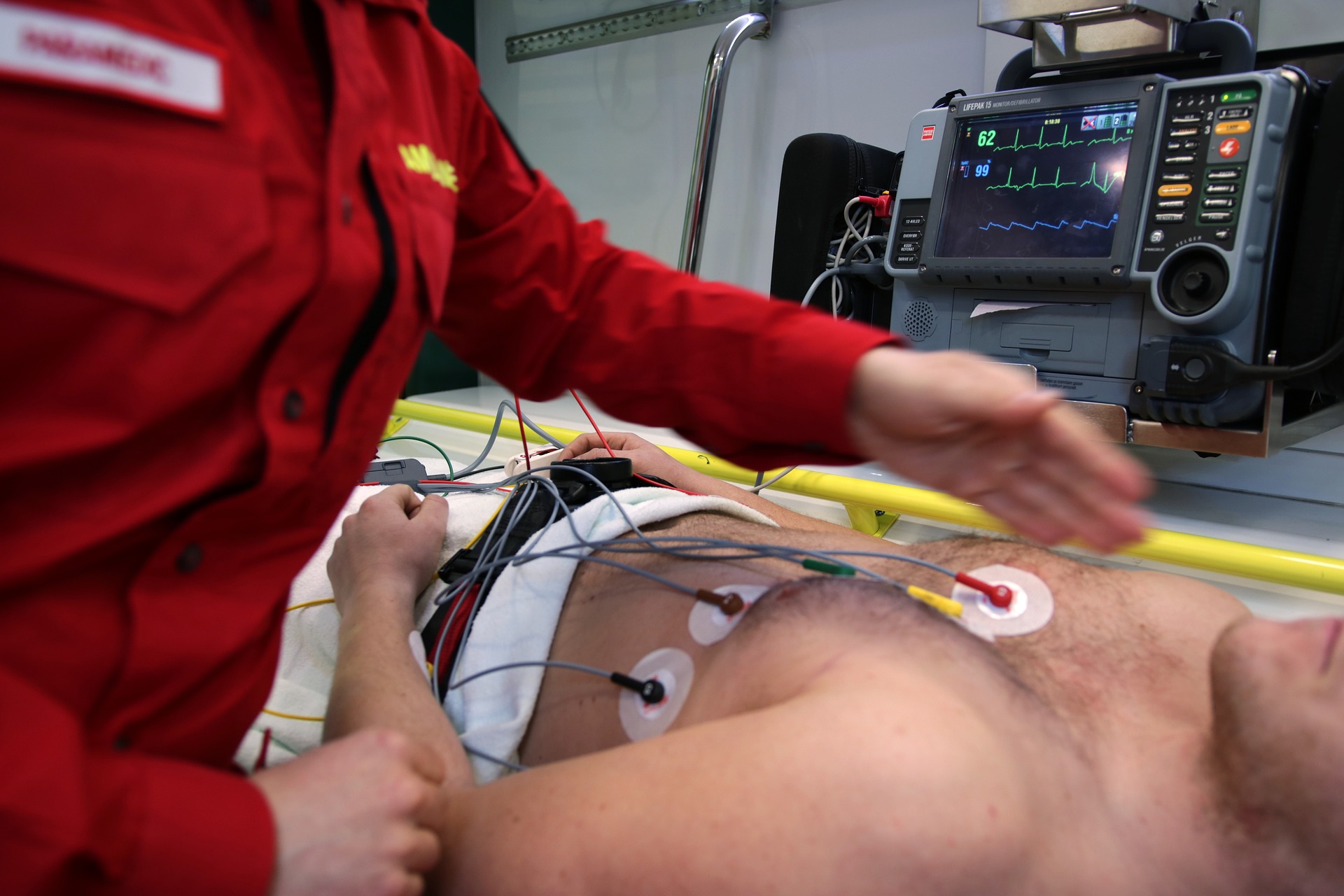
    “It was an intensive course. It used to be a year long but now it’s only four weeks. I did it full time, a week on, a week off. We started off learning cardiac first response at an advanced level. So, if someone was to go into cardiac arrest, I am able to administer drugs and use advanced life-saving techniques in an effort to save them.

    “From that, we moved onto spinal care, the full body anatomy, respiratory arrest. All the major issues you’d encounter out on the road or in trauma incident. For example, if someone’s in a car accident this training informs you on how to help someone based on their signs and symptoms. After that, we had to do forty weeks of clinical placement on an ambulance that was followed by two state exams.”

    Every EMT student has to pass the Objective Structured Clinical Examination (OSCE). The OSCE is used to assess health care professionals in a clinical setting. However, unlike other clinical exams, the OCSE expose the trainees’ communication skills and the ability to handle unpredictable patient behaviour which is vital for emergency work.

    IMG-1410
    After years of contemplation, Ms Ní Shuilleabhain began studying as an emergency medical technician // Megan Kavanagh

    “The exams are tough. The first one is a multiple choice questionnaire and the second one is an observed structured clinical exam. In this, you’re just given a scenario where you have to go down a mental checklist from A to Z and make sure you hit all the boxes. It’s hard, you’ve only eight minutes to do it.”

    The stress that comes with this training is no doubt high with exams and the constant pressure to perform but her advice for people getting ready to sit the OSCE is practice makes perfect.

    “Practice. Keep practising. Ask your family member to help out. Take their blood pressure, take basic vitals. Keep practising procedure and doing it over and over in your head until you know it start to finish and then do it some more. The OSCE is so important and if you miss something you have to be able to identify it and then come back to it at the end. You need to know that you’ve looked after your patient from start to finish and that their care is 100% complete,” she said.

    Being an EMT can be physically and emotionally draining and they often deal with situations that increase their stress levels and have an impact on their emotional state. Caroline Elton’s book “Also Human” dives into research on what it is like to be a junior doctor but focuses on emotion in medicine. The book has caused a lot of debate around whether emotions should be removed from medicine.

    Sinead said: “No, I don’t think emotion should be removed from what I do. I think that if you say you’re not going to be emotional and you’re not going to take on your patient’s emotions then you’re not in the right job. You need to be able to balance both aspects of emotional care and professional. Someone might have gotten the worst news of their life in a hospital room and then you have to sit with them for the next two hours. In this situation you’ll find that you’re more than an EMT but also a spiritual guide. Some people might not have a family, we can’t lie to our patients. Understanding patients emotions and what they need during this time is crucial.

    “I’ve dealt with a lot of patients that are going for end of life care and then when I’m working up in the control room you might find out that, that person has actually passed away.

    “You’re one of the final people that they meet on their journey to [the] hospice and that can mean the world to someone and to that person’s family.

    “You have to take on the emotional side of it but remember that you have people and family at home that can support you. Sometimes, it takes a lot out of you and I know it sounds cheesy and that everyone says it but knowing that you’ve looked after someone to the best of your ability is the most rewarding feeling,” she continued.

    Ms Ní Shuilleabhain’s week consists of two rotating jobs between an on the road EMT and as a Duty Controller in the control room scheduling and managing the chaos.

    It was recently revealed that the HSE has no plans to provide paramedics with body cameras even though they are at risk of violence and aggression every day they do there job. EMTs aren’t allowed to restrain patients.

    “Because I work with a private ambulance service, I wouldn’t really see much of that (violence) but it does happen that patients are aggressive [sometimes]. So you need to pick up the signs and warnings before getting them into the ambulance. If you’re not comfortable transporting them, you can request security to travel with you or refuse to bring the patient.”

    She said a co-worker had been assaulted at one stage. “There’s very little you can do during incidents like those because we’re not allowed to restrain patients. It does happen, which is why during January we will be learning defence techniques called release hold. It’s a method used to push people off you without actually laying your hands on another person.”