When the Irish first came to New York, they brought more than just hope of finding a better life – away from famine, rebellion and civil war. They brought with them their religion, their industriousness, their warmth – remnants of home that made their way across the Atlantic. Walking through New York City today, their presence can still be felt – in the foundations of buildings and bridges, in the stained glass of cathedrals, in the green glow of Irish pubs. This is a journey through the streets of New York, tracing the echoes of Ireland that can still be heardin this sprawling metropolis.
Photo by Luke Flanagan
The Statue of Liberty – The first sight of ‘The Land of Opportunity’ for many immigrants arriving in New York for the first time, including millions of Irish. A beacon signalling the beginning of their new life in America.
Photo by Luke Flanagan
St. Patrick’s Cathedral – The Irish in New York played a major role in the building of St. Patrick’s Cathedral, found among the chaos of Fifth Avenue. It was Archbishop John Hughes, an Irish immigrant himself from County Tyrone, who decided that the growing Archdiocese of New York needed a large cathedral. Much of the labour force that built the cathedral were also Irish immigrants.
Photo by Luke Flanagan
Photo by Luke Flanagan
The Empire State Building and Chrysler Building – Irish immigrants made up a significant portion of the workforce that built the Chrysler Building, which was the tallest building in the world when it was completed in 1930. Only a year later it was overtaken by the Empire State Building – the construction of which also included many Irish immigrants – which was the tallest in the world until 1970.
Photo by Luke Flanagan
Photo by Luke Flanagan
Photo by Luke Flanagan
Gibney’s, Connolly’s and O’Donoghue’s Irish Pubs – Like walking through a portal back to Ireland, hearing familiar accents and music. You won’t walk for 5 minutes in New York without seeing at least one Irish pub. Sanctuaries set up by the Irish miles and miles away that make them feel like they never left home.
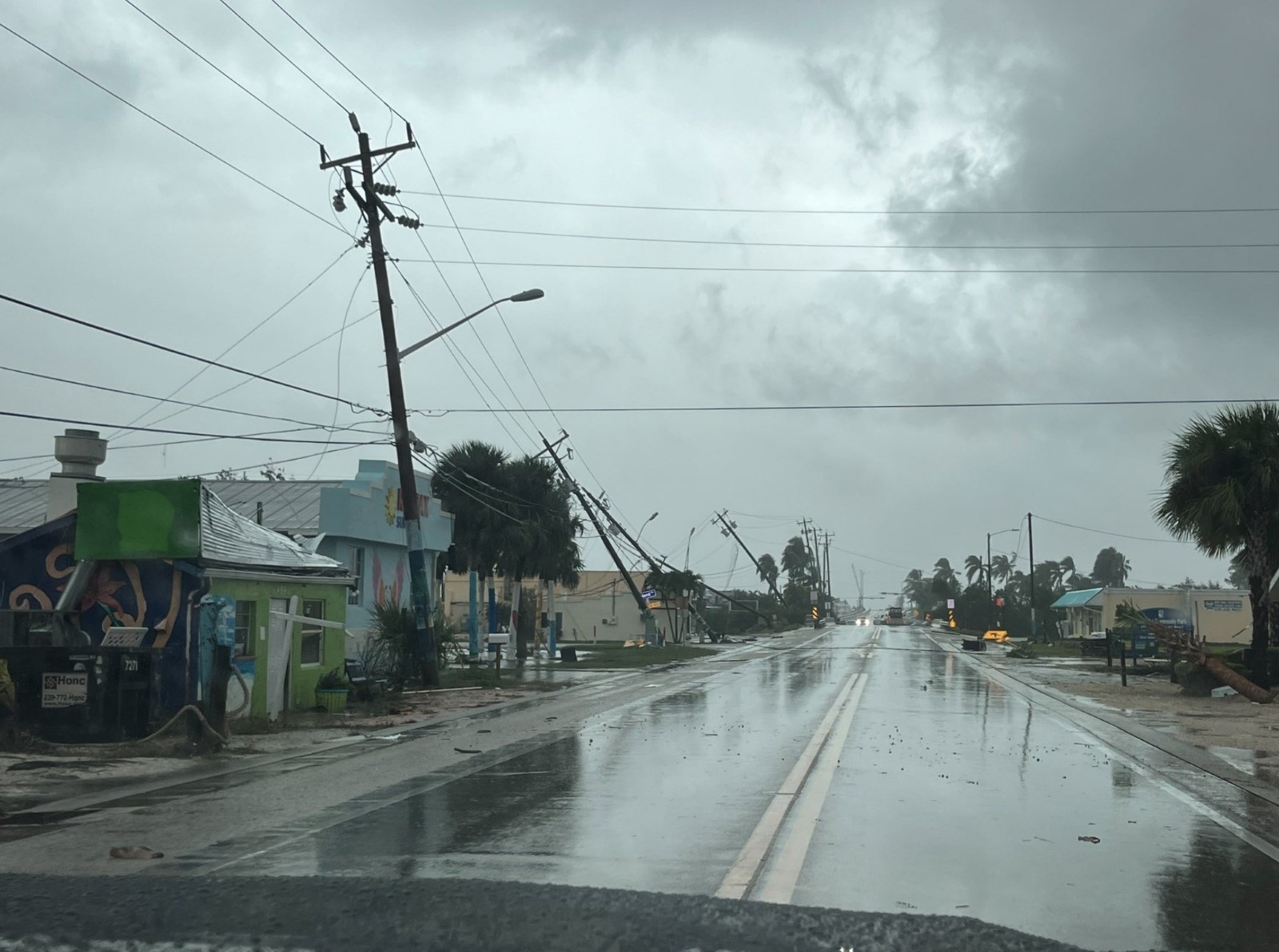
Hurricane Milton made landfall in Florida as a Category 3 storm on the night of Wednesday October 9th. The hurricane made its way across the coast of Florida- downing trees and power lines, flattening homes and flooding roads.
This hurricane comes just days after Hurricane Helene devastated the southeastern coast of America and claimed the lives of 230 people, the largest loss of life in the US from a natural disaster since Hurricane Katrina.
The death toll for Hurricane Milton has increased to 16 people, with the number climbing as more bodies are recovered.
Evacuation orders were in place for over one million people living in the coastal areas of the state of Florida and 3 million people are currently still without power.
The hurricane caused so much rain to fall in the Tampa Bay region of Florida, it is being considered a once in a thousand-year rainfall event.
Radar map of Hurricane Milton. Source WMTV News
Mayor of Tampa Jane Castor issued a stark warning to Floridians in mandatory evacuation zones who chose to stay put in their homes; “I can say this without any dramatisation whatsoever: If you choose to stay in one of those evacuation areas, you are going to die.”
Despite this warning, some residents chose to stay in their homes- many of whom had nowhere else to go.
Images spread on social media of people writing their names and date of birth on themselves and their children’s arms in permanent marker in order to be identified if they were killed as a result of the hurricane.
A mother writes on her child’s hand with identification details. Source Ashten Lee on Tiktok
Sinéad Gleeson, an Irish woman living in Florida told the City about her experience staying in her home during the hurricane.
“I had no choice but to stay in my house, I was not in a mandatory evacuation zone, but it was strongly encouraged by the mayor. I had nowhere else to, I didn’t have the money to fly somewhere…I just had to stay put and hope for the best.”
“Thankfully, it was not as bad as it was thought it would be but there was still a lot of damage done, we just hope this is the last hurricane of the year,” said Sinéad.
Damage caused by Hurricane Milton in Lee County, Florida. Source: Lee County Sheriff’s Office.
Despite warnings from President Biden and meteorologists alike, Hurricane Milton was not as severe as feared.
Although the hurricane spared much of the western coast of Florida, airports in the region including Tampa and Palm Beach have remained closed.
According to analysis by the National Hurricane Center, the storm surge spiked to 5 to 10 feet above ground level in some areas. However, it was initially estimated that the surge would reach 15 feet.
So far this year there have already been 13 named Atlantic storms. With more than six weeks left of Hurricane season there are fears that another severe weather event will occur.
The first US Covid-19 fatality was reported in Seattle on the 28 February 2020 – one year later and the deaths have now risen to half a million.
In that time the US has been a mainstay in worldwide news and media for a multitude of social and political issues ranging from the strange to the shocking.
Throughout the last year, the American people have become increasingly polarised – the brutal killing of George Floyd and the resulting protests revealed systemic issues of racism in the US which were brought to the fore in worldwide media, on top of that, then-president Donald Trump’s approach to handling the pandemic was controversial, and did nothing to quell the tense atmosphere in the US.
Trump’s devil-may-care attitude to the virus and his peddling of conspiracy theories did not help this fragile system, and the magnitude of lives lost is a sad reflection of this.
Through this historic period, Cillian Dunne, 24, a recent college graduate, published author, and budding Hollywood screenwriterhas lived on both the east and west coasts of the United States.
First in Boston, where he has been living for the past five years while completing his college degree, then, upon graduating, he drove cross-country to settle in Santa Monica, where unfortunately he has been mostly confined to his apartment since October.
“Since we got here we’ve been under the strictest lockdown in America”
Cillian Dunne
While things are starting to reopen as more than one million people in LA have been vaccinated, thousands of cases per day keep thelocals wary.
“ICU wards are getting within their threshold. I’m sure we’ll get put into another lockdown,” says Dunne.
A quick vaccine rollout has lead to an increase in optimism. Some reputable sources are backing ‘herd immunity’ and speculate that a herd immunity threshold can be achieved as early as late-spring or at worst, the end of summer.
This theory has its complications however, and arguments have been made against it. While a quick vaccine rollout seems the perfect solution that we all have been searching for, the danger of increasing variant strains of the coronavirus complicates the situation – we may vaccinate against the current strains but a new variant could come along tomorrow and make that work null and void.
The only way to tackle this problem is to learn to live with Covid-19 while work on vaccines and studies of the virus improve – and in the US, the new president’s policies are putting this into action.
Biden has focused on personal protective equipment (PPE) and improving access to it. Increases have been made to testing capacity, travel restrictions, and mandates requiring Americans to wear masks have been introduced. There has also been a focus on returning to schools and workplaces safely.
If the US can maintain their current vaccine trajectory, the country could reach herd immunity as early as July, however it is also projected that in that time an additional one million people could die – and that is without interference by new variants.
The more important strategy could prove to be in the policies the new administration are implementing rather than in the questionable herd immunity plan.
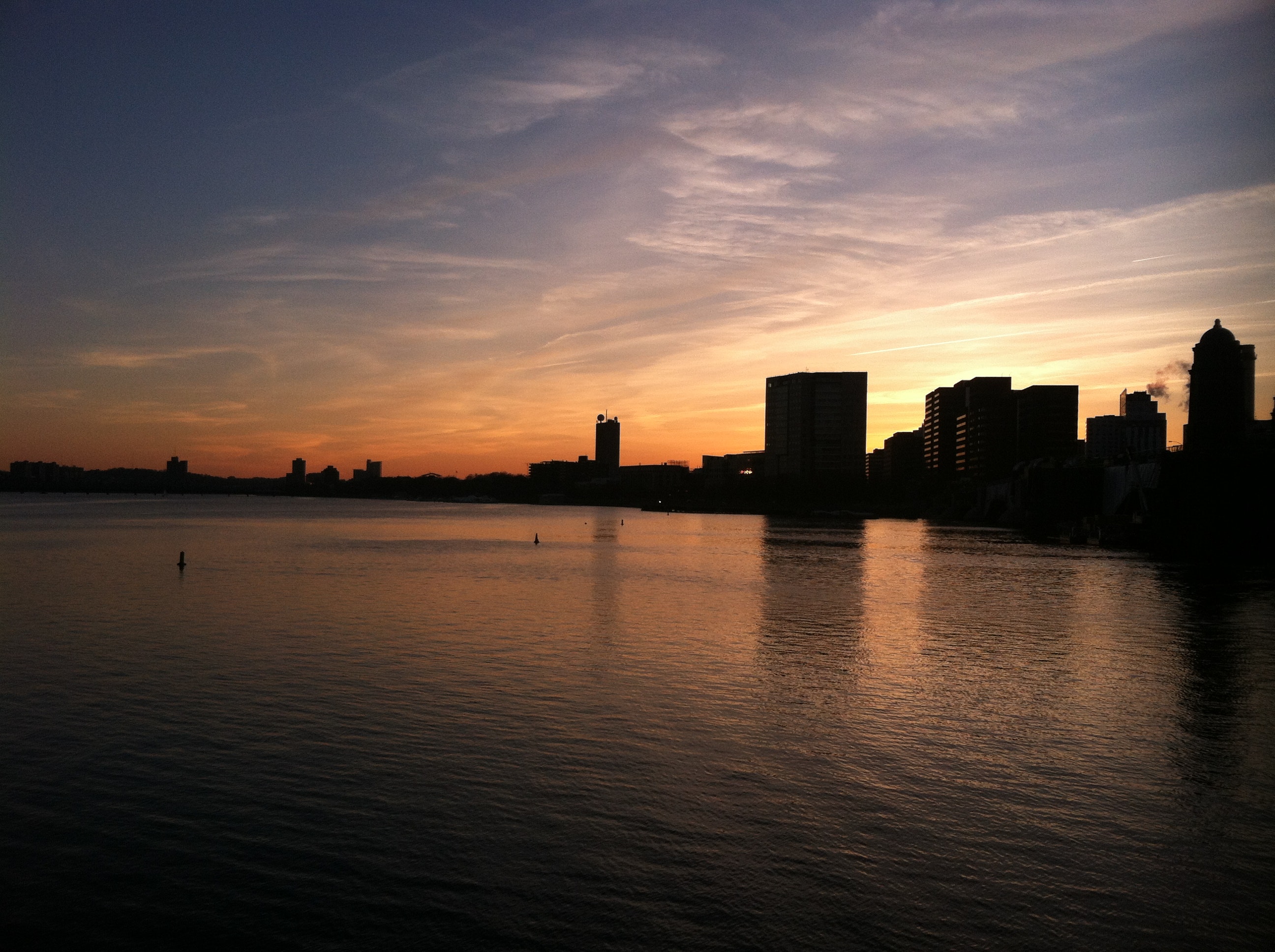
Sunset in Boston, Photo by Kristin Vogt via Pexels.com
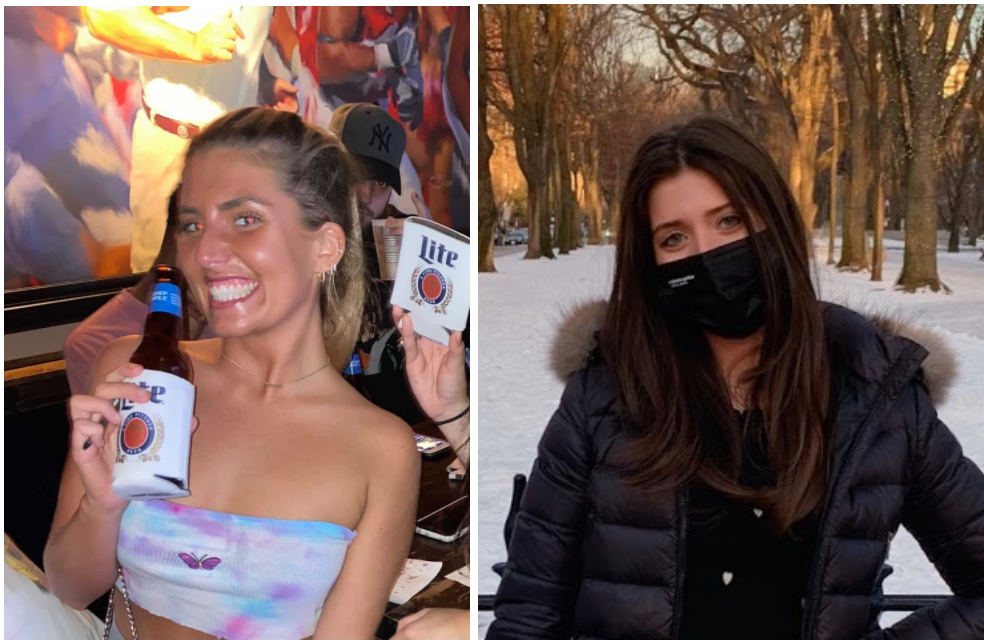
Beaming Tara Wiekert (left) enjoys a brew indoors at a bar in Tuscaloosa, while Julia Hadley (right) is smiling through her state-mandated mask outdoors in Boston. Photos courtesy of Tara Wiekert and Julia Hadley
In North America, each state decides on its own Covid-19 regulations. Different states can have radically different restrictions – changing the experience of the pandemic for their residents.
A part of Biden’s 2020 presidential campaign was the requirement of masks to be worn throughout the US as he stated it could “save 100,000 lives” if masks were made mandatory to wear in every state.
Less than a month into his inauguration, President Biden has already pushed nationwide mandates, requiring masks to be worn by all Federal employees and by those who use public travel throughout the US.
However, social distancing regulations are very different depending on the state.
Answering the same set of questions, two students who reside in different states share their lifestyle and opinions with Jessica Viola on the Covid-19 pandemic.
Tara Wiekert lives in Tuscaloosa, Alabama, and studies advertising with a minor in German at the University of Alabama.
Julia Hadley is a health science major at Boston University in Boston, Massachusetts. These responses are based on the student’s opinions as well as on their state’s individual regulations.
What is your opinion on Covid-19 now, in 2021?
Tara Wiekert: “I think it’s serious and something everyone needs to be made aware of. I know it affects older people more severely, which is why I think a lot of people at school don’t take it that seriously, since we are in a college town surrounded by people who are all mainly around the age of 20-25.”
Julia Hadley: “My opinion on Covid-19 has remained the same over the past months. It is a very scary time for so many individuals and has affected far too many people. While the vaccination is bringing so much hope for the future, it’s still imperative people take precautions.”
“While the vaccination is bringing so much hope for the future, it’s still imperative people take precautions”
Julia Hadley
What measures are being taken to prevent the spread of Covid-19 in your college?
TW: “The school requires students to be tested for Covid-19 randomly. I try to wash my hands as often as possible, but since life here feels so normal, I do not take immense measures to prevent the spread of Covid-19. I still go out, eat out, and hang out with all my friends the same way as we did before.”
JH: “At BU, students who attend classes on-campus or live on-campus must take a Covid-19 test every three days. When taking a class in-person, students must provide proof of their negative Covid-19 test. Throughout campus, students must wear masks at all times.”
Are you taking college classes in person now and are other work spaces open?
TW: “Alabama is probably one of the states with the least amount of Covid restrictions. We have some in-person classes and some online depending on what the professor prefers. Libraries and other study areas are open, however, you must wear a mask on campus at all times.”
JH: “All students and faculty are required to get a Covid-19 test every 3 days, allowing students to take classes in person, if permitted. Libraries and study areas are open, but space is limited. Students must wear a mask at all times, while also having a negative Covid-19 test result, in order to enter the space.”
“I still go out, eat out, and hang out with all my friends the same way as we did before”
Tara Wiekert
How has socialising been for you in 2021?
TW: “In all honesty, life in Alabama has been rather normal. Bars have been open for a while now. They only shut down at the beginning of last semester for about two weeks.
“All or most college organised events are happening here in Alabama. We just won the National Championship for (American) football.”
JH: “Boston does have indoor dining and restaurants utilise glass shields and place diners a safe distance away from one another. The state’s mandates include setting limits on gatherings, also mask and face-coverings must be worn indoors and outdoors with a capacity limit and there’s a curfew for restaurants as well as businesses.
“At this moment, no organized events are happening within my college campus and are highly discouraged within Massachusetts.”
University of Alabama students celebrating their American football victory in January 2021. Video courtesy of Tara Wiekert
What is your opinion on how your state is handling Covid-19 procedures now?
TW: “In my hometown of New Jersey, my life has changed a lot, and I am able to do a lot less, yet both states seem to be doing ‘fine’. I do think wearing a mask in public should be required for the safety of others and the elderly. However, in Alabama, my life seems rather normal and I often forget Covid-19 is even a ‘thing’. I am doing everything that I used to do even before Covid-19 hit.”
JH: “Just as everyone around the world, my life has changed since COVID-19. I have limited traveling, restricted seeing people outside of my immediate circle, among many other things. While adapting to our new ‘normal’ has had its challenges, it is a sacrifice I am willing to contribute to keep myself, family, and friends safe during the pandemic and, I am extremely fortunate for their good health thus far.”
“Adapting to the new ‘normal’ is a sacrifice I am willing to contribute to keep myself, family, and friends safe during the pandemic”
Julia Hadley
American universities have been a hot spot for the spread of Covid-19. Throughout the course of the pandemic, more than 85 colleges have had over 1,000 reported cases on campus. In a recent study, 70% of Covid-19 cases in the US have been spread by young aged 20-49 years old.
Although Massachusetts has almost over 2 million more residents in it than Alabama, they comparatively have a little over 72,000 more confirmed Covid-19 cases than this southern state. As it stands now, Massachusetts has 546,800 confirmed cases and Alabama has had 474,666 coronavirus cases since the beginning of the pandemic.
Masks, social distancing, and socialising remain hot-button issues – will Biden manage to unite his nation?
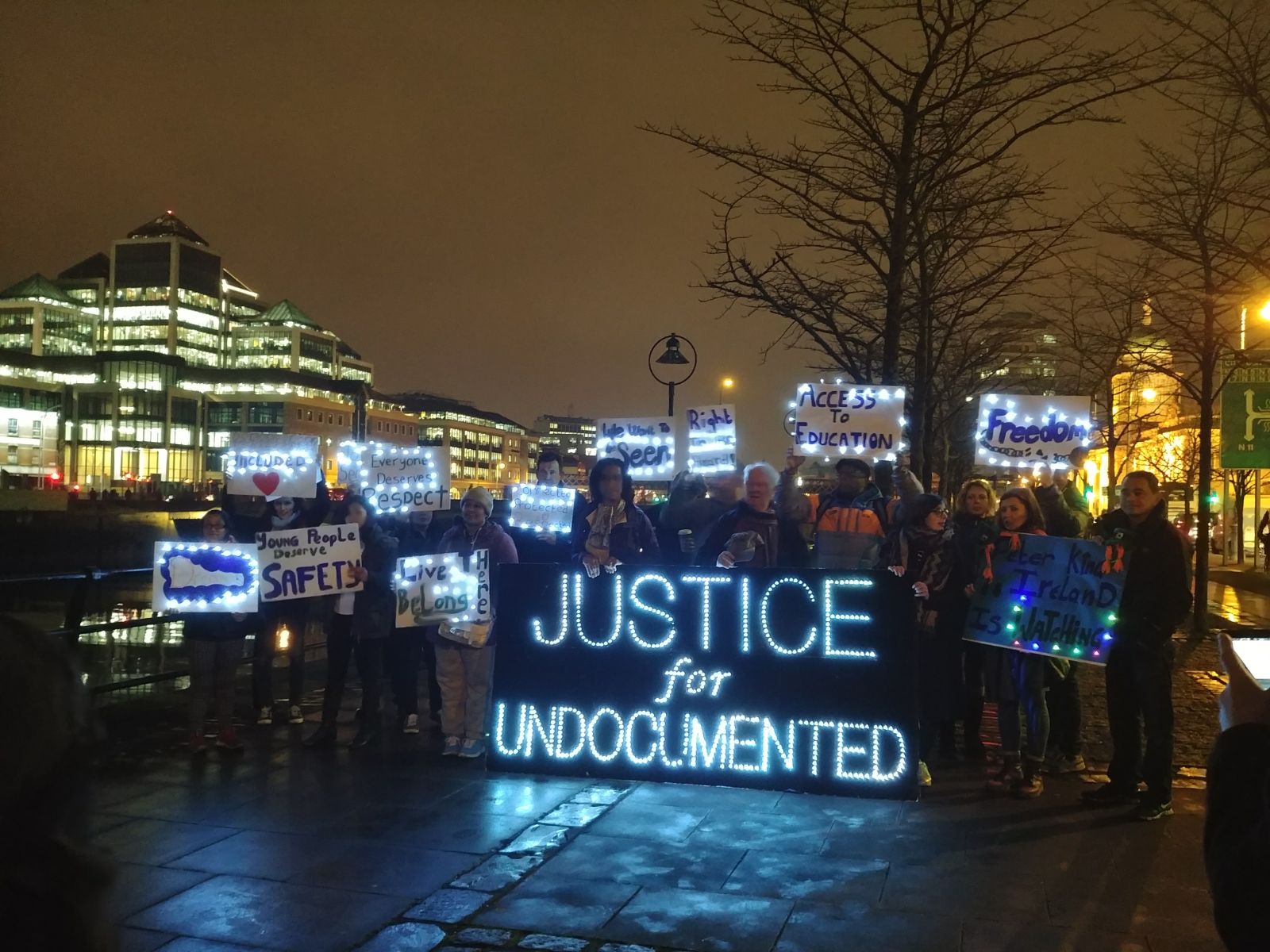
A rally was held in Dublin on Monday evening in support of the Deferred Action for Childhood Arrivals (DACA) programme in the United States.
The DACA programme was established by the Obama administration in 2012 to protect those who entered the US as minors from deportation. Donald Trump made the decision to end the programme in September this year.
Those protected under DACA are called the “Dreamers” and 787,580 were granted approval by the time Donald Trump announced his decision to rescind the programme.
On September 5th, the New York Times reported that US officials said “some of the 800,000 young adults brought into the United States illegally as children, and who qualify for the programme … will become eligible for deportation” as early as March.
The New York Times also reported that Mr. Trump had said in a statement that he was driven by a concern for “the millions of Americans victimised by this unfair system.” Jeff Sessions, US Attorney General, said the program had “denied jobs to hundreds of thousands of Americans by allowing those same illegal aliens to take those jobs.”
The rally in Dublin was organised by the Young, Paperless and Powerful (YPP), a group that focuses on the rights of undocumented youth in Ireland. The twin rally in New York was organised by ‘Make the Road New York’, an immigrant organisation based in the US.
The two organisations are appealing to Irish-American Republican congressman Peter King to “stand for the undocumented in the US” before the 6th of December, which is the deadline Congress was given to find a legislative alternative and to draft a bill that would allow Dreamers to permanently stay in the US.
Speaking to the crowd gathered at the Famine Memorial in Dublin, Sumayyah, a member of YPP said: “We believe that no young people should grow up undocumented in Ireland or anywhere. We’re a group of about 25 people, some of us are undocumented, some of us are not.
“But tonight is not about us. It’s about the undocumented young people in the US who really need our help,” she added.
Rally held in Dublin for undocumented in America. Photo by Hajar Akl
“Young people in the United States are in the fight of their lives [to protect DACA],” said Migrant Rights Centre Ireland (MRCI) community worker Kate O’Connell, addressing the crowd.
A letter written by a formerly undocumented student called Shiv was read out to the crowd. He spoke of his depression and fear of being “taken away” from his family during the seven years he was undocumented.
“Every single year since 2007 I would watch a Taoiseach go to the US and seek the legalisation of undocumented Irish and I thought, ‘what a hypocrite’. Ireland has always been a nation of immigrants who left many years ago for a better life.
The Irish diaspora in the UK, the US and the Australia, for example, are a testament of how much immigrants can contribute to a country.”
In the letter, he also said “undocumented people make a huge contribution to Ireland, but so often their potential is wasted. We are young and full of potential, we are products of the Irish education system who cannot go to university.”
People gather by the river Liffey in support of the undocumented in America. Photo by Hajar Akl
The MRCI estimates there are up to 26,000 undocumented people in Ireland and that between 3,000 and 5,000 of them are under the age of eighteen.
Cormac Murphy reports on the debate surrounding Dublin City Council’s controversial decision to award the Obamas Freedom of the City.
In a move surrounded by controversy, former US President Barack Obama and his wife Michelle are to be awarded the Freedom of the City of Dublin.
The Lord Mayor of Dublin, Brendan Carr put forward the contentious proposal to grant the Obamas the title on Monday, 6 February. The motion was passed by a majority of Dublin City councillors with 30 votes for the measure and 23 against.
The vote followed a heated exchange between those who opposed the motion and those who supported it. Members of the Anti-Austerity Alliance, People Before Profit, Sinn Fein and the Green Party were represented among the parties who opposed the decision.
Defending his position in a press release, the Lord Mayor stated “The award is often a political statement… at this juncture in world politics our city can make a clear statement about what example we would wish the paramount global political leader [the US President] to set… I believe Barack and Michelle Obama set the right direction for the US both domestically and in international relations.”
He elaborated that Obama’s presidency oversaw several important international developments such as the cessation of military activities in Afghanistan, the Iran nuclear deal and Obama’s normalisation of relations with Cuba. He also noted Michelle Obama had campaigned throughout her husband’s term in office for women’s rights around the globe as well as drawing attention to the plight of refugees.
Speaking to the Thecity.ie, Councillor Michael O’Brien of the Anti Austerity Alliance said, “Obama is guilty of heinous acts that should disqualify him from being bestowed the award”. He cited examples of drone strikes in the Middle East, Pakistan and Somalia as examples and claimed Ireland has a “blind spot about the nature of the Democratic Party”.
The decision also divided opinion online with several users taking to Twitter to vent their anger. One Twitter user called Obama the “drone king” and blasted his record in office.
Dublin City Council’s decision to grant the Obamas the prize means that Barack and Michelle Obama will become the 82nd and 83rd beneficiaries to receive the title.
The Freedom of the City of Dublin is the highest civil honour granted by the Dublin City Council. Irish Home Rule pioneer Isaac Butt was the first to receive the award in 1876.
Notable recipients include Nelson Mandela who received the title as a freeman of Dublin in 1988 and Aung San Suu Kyi, a leading advocate for democracy in her home country of Myanmar (formerly Burma). Other famous people include General Ulysses S Grant, President John F. Kennedy, Pope John Paul II and musicians such as Bob Geldof and Bono.
The award acknowledges the contribution to the life of the city or Ireland in general, which includes politicians, public servants, humanitarian activists, artists and entertainers. Honourees sign the roll of freemen at the City Hall or the Mansion House.
Freedom of the City is mostly ceremonial. The benefits offered to freemen include ancient privileges such as exemption from octroi, a duty once imposed on various goods entering the city, and pasturage of sheep on city commons such as College Green or St. Stephen’s Green. Bono attracted considerable media attention when he exercised the right to graze sheep in 2000.
It’s not the first time the award has sparked controversy. Distinguished Celtic scholar Kuno Meyer who received the award in 1911 for his role in the promotion of Irish culture, was removed from the roll of freemen in Dublin for his pro-German views during World War One. This decision was later retracted posthumously in 1920 when Sinn Fein won control of the city council.
The couple indicated to several contacts that they are happy to receive the award. A meeting with US embassy officials will reportedly be held within days and could result in an official visit by the end of the year.
Barack Obama and his wife Michelle visited Ireland back in May 2011. The former US President has ancestral links to the country through his mother Ann Dunham who has relatives from Moneygall in County Offaly.
With the Super Bowl only days away and American Football on the ascension, Gary Ibbotson takes a look at how America’s game has been embraced by us Irish.
In the third of a series of articles looking at the US Presidential Election, The City’s Cáitríona Murphy fills us in on the events that have unfolded over the past ten days, including the third and final debate, and the effect that it has had on the election.
As both candidates try to prove their worthiness, outside actors shed light on each candidate’s questionable past, and spectators watch as their reputations diminish. The question now is not who is the best candidate but who could the American people stomach to see in the Oval office?
Source: Wikipedia
Unsurprisingly, following the emergence of Trump’s 2005 ‘backstage at American idol’ video an array of women have come out of the woodwork accusing Mr Trump of inappropriate behaviour and sexual misconduct; including groping and making unwanted advancements.
In Thursday night’s debate, Trump told the mediator Chris Wallace that “those stories have been largely debunked” in response to the allegations from nine women. Trump insisted that the emergence of these women this week was either orchestrated by the Clinton’s campaign team or that these women just wanted their “10 minutes of fame”.
Although it is unlikely that Trump will actually be charged with sexual assault, these allegations have caused the – already divided – Republican party to split even further.
However, Clinton has not exactly had the best week either as the controversy surrounding her emails has once again blown up in her face after Wikileaks published around 20,000 pages of emails illegally stolen from John Podesta, her campaign chair.
The emails don’t really expose any new information about Clinton but rather shows us the inner workings of how Hillary Clinton works politically.
The emails have provided more details of the questionable relationship between the Clinton Foundation and its donors, her ties with big business in Wall Street and other wealthy campaign contributors.
Source: Wikileaks
The text on the left is parts of Hillary’s speeches that she was paid an exorbitant amount of money to make at Goldman Sachs events, and the highlighted text shows the close relationship that she has with high profile Wall Street companies. She discusses her military tactics with the Wall Street company. “My view was you intervene as covertly as is possible for Americans to intervene,” she said. And she exposes her true economic policies in terms of regulation, “People that know the industry better than anybody are the people who work in the industry.”
Clinton is a walking contradiction when it comes to Wall Street and regulation. Up until now, she has walked a fine line between what she says to the public and what she means. However, this is not news, she has been questioned and attacked about her ties to Wall Street and all Wikileaks has done is confirm her contradictions.
The email on the right (above) is an example of the ethical difficulties that face the Clinton Foundation. This email is discussing how representativesfrom Qatar were hoping to get “five minutes” with former President Bill Clinton while in New York to present him with a $1 million check for his foundation as a birthday gift.
Ethical issues arise from this as the ties that the foundation has to foreign governments and financiers are unhealthy, and it raises questions about whether or not these donations are being used to buy favours from Hillary Clinton, considering at the time that this email was sent, Ms Clinton was the country’s top diplomat
This is nothing that she can be sent to jail for, and these assumptions can not be confirmed, but it does shed a light on the inner workings of the Clinton’s political dealings in the past, the foundation and Clinton’s campaign.
For anyone reading the emails and speeches that were published by Wikileaks, it may make a voter uneasy but would not exactly inspire any Democrat to go out and vote for Trump, especially after hearing some of the allegations made by his accusers.
Before the final debate on Wednesday, nine women had come forward with stories of groping and unwanted advances from Mr Trump which he denied when questioned about; “I didn’t know any of these — I didn’t see these women,” he said.
Since the debate a tenth woman has come forward, Karena Virginia, a yoga instructor and life coach from the New York region. She said she was 27 at the time and was waiting for a car to take her home when Mr Trump grabbed her right arm and “then his hand touched the right inside of my breast,” Ms Virginia said.
Getting down to brass tacks: the real policy issues
Both candidates had a tough week but both candidates also performed well on the night of the debate and the mediator Chris Wallace managed to focus the debate on important policy issues far more successfully than the mediators did at the previous debates. After every issue, each candidate was given two minutes to speak and granted brief rebuttals if necessary making it overall a successful debate for the audience and candidates alike.
Source: Flickr
It was important for each candidate to get their final remarks on the topics that can make or break their campaign. What is most notable about any debate is where the candidates differ and in this case it was abortion, gun laws, immigration and the handling of the economy (specifically taxes).
In the case of abortion and gun laws, Trump assured the audience that he would appoint pro-life judges to the supreme court who “will have a conservative bent, and will be protecting the Second Amendment”, which is the amendment that gives the citizens of the US a right to bear arms.
Trump believes that the Constitution is sacred and should be interpreted how the founding fathers wanted it interpreted, whereas Clinton, along with most democrats, believes that the Constitution is a living document. She said in the debate on the issue of the Supreme Court that “it is important that we not reverse marriage equality, that we not reverse Roe v. Wade,” which was the landmark case that extended the right of privacy to a woman’s decision to have an abortion.
In terms of guns laws and the Second Amendment, in usual Hillary Clinton fashion, she tows the line and tries to stay to the centre as we saw in the debate. “I understand and respect the tradition of gun ownership. It goes back to the founding of our country. But I also believe that there can be, and must be, reasonable regulation,” she said. Whether she believes it or not, Clinton knows that she cannot afford to lose the vote of the gun owners in America.
One vote that Hillary Clinton can always rely on is that of the minority groups specifically the votes of the African-American, Latino and Hispanic communities, especially in this election. Trump has spouted particularly racist rhetoric since the beginning of his campaign and one can go as far as saying that one of the foundation policies of his campaign is his idea to build a wall between Mexico and the United States. Two weeks before the election is due to take place, nothing has changed as we heard in the debate; “Now I want to build a wall. We need the wall. The border patrol, ICE, they all want the wall. We stop the drugs, shore up the border,” he said.
Clinton’s political experience really shone through at this point in the debate as she took what Donald said and reinterpreted it for the audience, “Now, here’s what that means, it means you would have to have a massive law enforcement presence, where law enforcement officers would be going school to school, home to home, business to business, rounding up people who are undocumented, and we would then have to put them on trains, on buses, to get them out of our country.”
In this one sentence Clinton appeals to both Democrats and Republicans as she outlines how Trump’s plan would cost the country billions. As well as the cost of such an operation, this one sentence would send a chill down the spine of every conservative Republican who has nightmares about mass state intervention.
And finally probably the second biggest topic of the whole election was of course the economy and how each candidate plans to stimulate it and increase the historically low rate of GDP growth. And once again the ideological split is seen. Typical of a liberal Democratic candidate Clinton tells the audience that she wants to raise taxes and raise the minimum wage. She criticises Trump’s economic policies as she says he uses ‘trickle down’ economics that favour the wealthy and privileged whereas she “will not raise taxes on anyone making $250,000 or less,” she said.
In contrast but a stance typical of the Republican Party Trump says that, “We’re going to cut taxes massively. We’ll cut business taxes massively.” The point in doing this is to incentivise companies to stay in America, which will therefore create employment.
If voters were only to look at each candidate’s policies and political beliefs their job on the 8th of November may not be so difficult but when the voters begin to consider all of the outside and personal factors of Trump and Clinton the choice is not as clear cut. Clinton appears to be gaining ground at the moment but I truly believe the air of uncertainty that has developed over this election will remain until the last ballot is counted.
Rumours have been rife in the Irish media for a long time that RTÉ’s top crime drama “Love/Hate” is set to be remade by the US market.
Last week, the Irish Daily Star reported that if the series were to go ahead, Colin Farrell would be interested in taking on the role of Nidge.
Tom Vaughan Lawlor is the actor who currently plays Nidge. He recently won the IFTA for for Best TV Actor. Copyright: RTÉ 2013. Photography Credit: Bernard Walsh.
TheCity.ie took to the streets of the capital to see who fans of the hit show would like to see play the conniving crime boss.
“Well if we’re talking about Irish actors I actually think Farrell would be quite good. He was excellent in Intermission.”- John Ginnity, 45.
“It doesn’t really matter. America very rarely remakes a foreign show successfully; look at the likes of ‘Skins’ and ‘The Inbetweeners’. The humour won’t transcend properly and I think the humour is the reason the characters are so likeable.” -Marie Daly, 25.
“I suppose maybe an actor that the US audience is familiar with could be good. Obviously Colin Farrell would be one of these or maybe even Brendan Gleeson, I think he’d do a great job of it.” – Jill Watkins, 21.
“I wouldn’t mind seeing someone like Michael Fassbender take it on. He plays a great role in ‘X-men: First Class’ taking on the evil character.” – Glenn Dalton, 32
Farrell has proven he can play the role of a criminal in Martin McDonagh’s critically acclaimed films “In Bruges” and “Seven Psychopaths” as well as Bullseye in the 2003 superhero film “DareDevil”.
Several US remakes of hit British TV shows have been a regular occurrence in recent years. E4’s top shows “Skins” and “The Inbetweeners” were both given the US treatment by MTV. However, neither show was renewed for a second season by the broadcaster.
The Inbetweeners was a highly successful British Television show. However the US Remake was cancelled after just 12 episodes. Image by Magnus D on flickr
The racy nature of “Skins” lead to complaints from many viewers, and possible violations of federal pornography laws saw big name sponsors cease advertising during commercial breaks in the show.
While US audiences are fans of gritty crime dramas such as “The Wire”, “The Sopranos”, and “Breaking Bad”, it remains to be seen if “Love/Hate” will get the final go ahead to be remade Stateside.
Currently, online video streaming service Hulu, own the rights to broadcast “Love/Hate” in America.
Vox Pop carried out by Stephanie Quilligan and Graham Barry.
University College Cork’s recent study of emigration trends in Ireland last week revealed that nearly two thirds of emigrants had a third-level qualification. It also showed that half of those emigrating were doing so as a matter of choice, leaving a full-time job they had here in Ireland.
This provided some food for thought for experts and journalists who lamented the ‘brain drain’ as a tragic consequence of our crumbling economy. The claim that people are leaving unwillingly as a matter of necessity is now being called into question.
Perhaps the mass exodus has more to do with the quality of jobs available as opposed to the quantity. To put it simply, young Irish people don’t want to settle for what they see as menial jobs. But in this climate, the pressure is even greater to take what you’re given and be grateful. I went in search of answers from some final year college students.
Hilary Pidgeon, 22
“When I graduate I’m probably going to emigrate. Maybe not permanently, I’d probably move away for a couple of years. There’s so much more opportunities in other countries like America and Canada. Some of my friends are doing jobs that are widely available in Ireland, but if they want to go far in their career they’d have to emigrate. I think it’s really bad. You’ve got your family here and your friends here. You’re basically cutting off the life you’ve built up here for twenty something years”
Louise McLoughlin, 22
“I think I’m going to head straight to London after I finish. My boyfriend has already emigrated there, so that’s one reason but secondly I think there’s just a lot more opportunity especially for someone studying media. I think the majority of my friends are going to stay for the next few years at least but I think if something better is offered somewhere else they’re going to take it. People should do what’s best for them. It’s not our job to hold the country together. Why should be stick around just to stop a boat from sinking?”
Tessa Flemming, 23
“When I graduate I know I probably won’t get work in my area of study so I’m just going out with a completely open mind, to experience life rather than find a career straight away. I really wanted to learn Spanish this year, I was thinking of going to South America or Spain and just live in another country for a year. I see myself as a wanderer, so any opportunities that are presented to me I’ll definitely say yes. I think people don’t really want to leave, but they’re doing crappy jobs at the moment that don’t reflect their skills. I really don’t want to happen to me. ”
Barry Lennon, 21.
“Emigration isn’t really on my radar, but I wouldn’t mind moving abroad for a while to grow as person. I mean if push comes to shove and there is a better offer abroad perhaps, even just to get a different experience. I probably would like to return to Ireland depending on how things go. Maybe when I get my retirement and I can settle down with the wife. I’ll sell the house and buy a nice retirement home somewhere in west Cork. I think it’s bad though, the country is investing in these people only for them to go away.”
Sean Carroll, 21
“I’ll head to the west coast of America for a year, hopefully with friends. I’m getting a degree in marketing, and I don’t have any interest in working in Ireland right now with the recession strangling any chance I have! We pride ourselves here in Ireland for having such an educated workforce, but people are getting educated here and then they’re leaving. Obviously people don’t want to leave their family and friends behind but if you’ve studied for four or five years in a particular field, it seems like a waste to stay here. If you have a degree in engineering but you have to work full time in Centra you’re not going to stay around.”

















You must be logged in to post a comment.