Tag: animal cruelty

  • Animal testing statistics in Ireland unreleased for 2019

    Animal testing statistics in Ireland unreleased for 2019

    Animal testing statistics for 2019 have yet to be released by the Health Products Regulatory Authority (HPRA). Amber Baxter explores what this means.

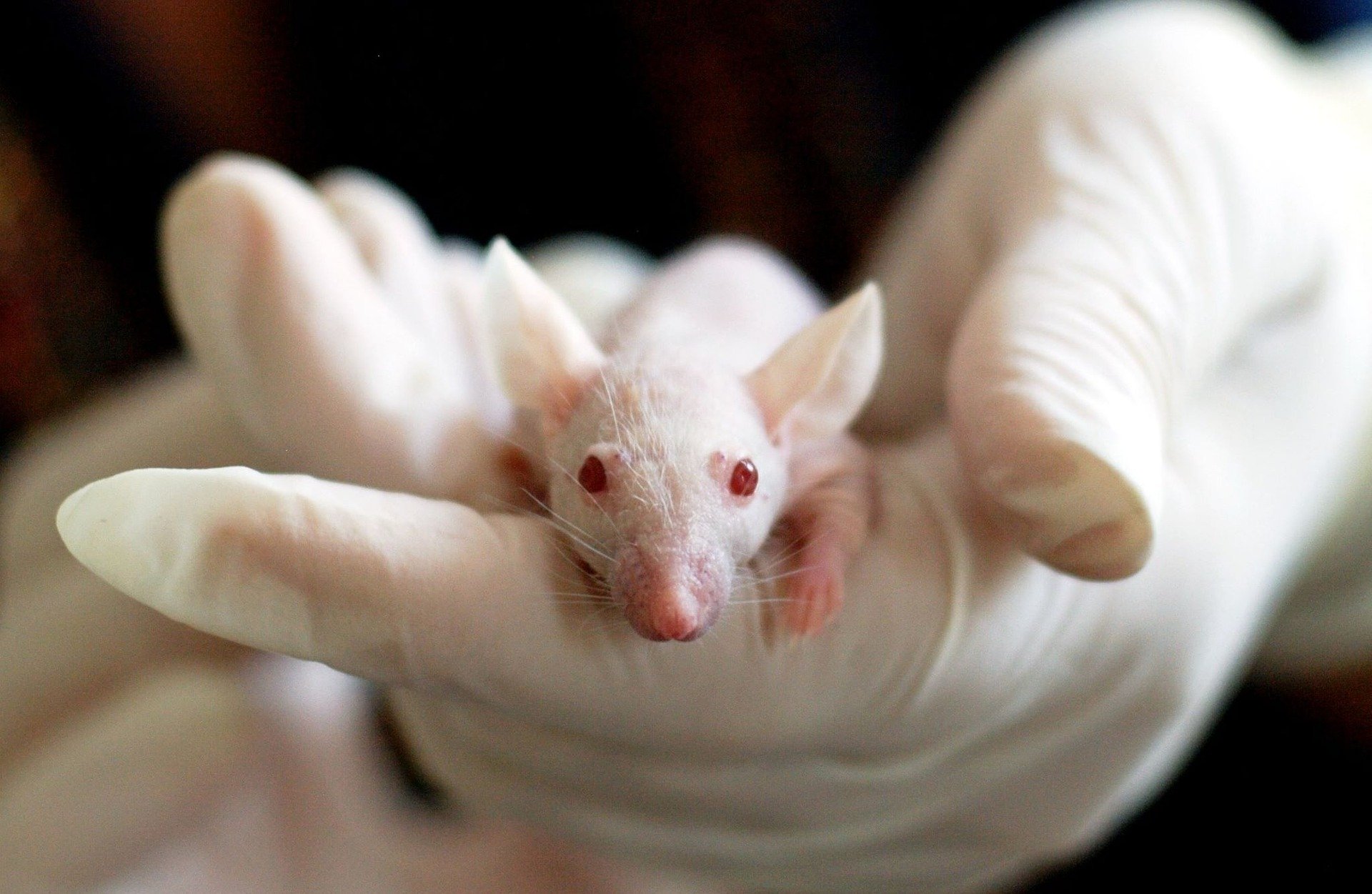
    Picture taken by Tibor Janosi Mozes courtesy of Pixabay

    The Health Products Regulatory Authority (HPRA) is the state agency responsible for regulating human and veterinary medicines, medical devices and other health products. From 1 January 2013, an EU Directive to protect animals used for scientific purposes came into effect in Ireland. In January 2013, the HPRA became the competent authority responsible for the Directive’s implementation. The HPRA has been publishing statistical data on animals used from 2013 onwards.

    The latest statistics released by the HPRA are for 2018 and previous years. It is unclear why the 2019 statistics have not yet been released, Dr Dan Lyons, CEO of Centre for Animals & Social Justice and public policy consultant for Irish Anti-Vivisection Society said “normally 2019 statistics should be out by now”.

    According to the HPRA statistics, in 2018, there were a total of 199,800 uses of animals for procedures, with reuse representing less than 1% of this number. Mice were the most commonly used animal with 75% of the total animal use.

    “This figure may well go up again for 2019 and 2020 because it just depends on how many botulinum toxin [Botox] producers there are in Ireland and how much they are producing each batch is tested on mice using a version of the Lethal Dose 50% test – one of the most severe,” said Lyons.

    One botox producer in Ireland is Allergan. Allergan operates out of Westport Co. Mayo which has been referred to as the ‘botox capital of the world’. Dr Lyons said, “They [Allergan] might be using less animals as they have developed a non-animal alternative for some of their testing. Ipsen is another one. There are probably others but the HPRA won’t say exactly who they are, but you can work it out from whichever companies are in this sector and producing in Ireland.” 

    Of the total number of uses of animals in procedures (199,800), 72% were used for regulatory purposes, which refers to legal requirements to test the safety, quality and potency of medicines for example biological medicines such as vaccines. Out of the total testing, 9,814 involved genetically altered animals, which represents 5% of all animal use.

    According to the HPRA the most common reported actual severity experienced by the animals during their uses in procedures was ‘mild’, at 55%, followed by ‘moderate’, at 27%.

    In 2017, there were a total of 242,302 uses of animals for procedures, with reuse representing less than 1% of that number. Mice were the most used animal this year with 85% of the total animal use.

    Of the total number of uses of animals in procedures (242,302), some 194,816 (80%) were used for biological purposes such as vaccines. Of the total number of uses of animals in procedures (242,302), 7,496 involved genetically altered animals, which represents 3% of all animal use.

    Between 2017 and 2018, there was a decrease of approximately 42,500 in the testing. This was “largely due to a reduction in regulatory testing (-approx 51000)”, said Lyons. These statistics refer largely to testing for ‘Botox’ or similar products, many of which are used for cosmetic purposes despite the ban on animal testing for cosmetic products. 

    “The Govt and HPRA don’t have any strategy or intention to achieve sustained reduction in animal testing and associated animal suffering – they are led by the nose by biotech industry. However, ‘Translational and applied research’ has increased by about 8500 experiments. Much of this is down to increases in the category of research called ‘animal welfare’. In reality this is more about research into farm animal productivity than animal welfare as such.”

    The HPRA works off the ‘Three R’s’: replacement, refinement, and reduction. Replacement involves the development and use of technologies that can be used to address important scientific questions without the use of animals. Reduction refers to methods that minimise the number of animals used per project. Refinement means that the animals used are provided with the best possible care and that suffering is reduced to an absolute minimum. 

     According to the HPRA they “aim to improve the welfare of animals used for scientific purposes and to promote the principles of the 3Rs. Every application received for a project involving animals is subject to a detailed evaluation process based on the 3Rs and requires scientific justification for the research techniques being applied. The likely impact on the animals must be minimised as far as possible by applying refinements and any harms experienced by the animals must be outweighed by the expected benefits of the work,

    “The HPRA considers whether alternative (non-animal) methods are available or appropriate, as alternatives to the use of live animals must be used where possible. In fulfilment of the HPRA’s mandate to promote the 3Rs, in 2018 the HPRA continued its efforts to enhance awareness and utilisation of non-animal alternatives as well as refinements in the conduct of scientific studies in animals through its work, including the regular dissemination of pertinent information to the regulated sector”.
  • Greyhound Racing: Are we Supporting a Blood Sport?

    Greyhound Racing: Are we Supporting a Blood Sport?

    Ellen Corrigan investigates Greyhound racing during their busy Christmas period and asks if the lucrative sport is ethical.

    “If you’re looking for something different for a great night out, you’ll find it at Shelbourne Park Greyhound Stadium. Nothing beats the excitement of greyhound racing, and some of the most prestigious greyhound fixtures of the year take place right here!”

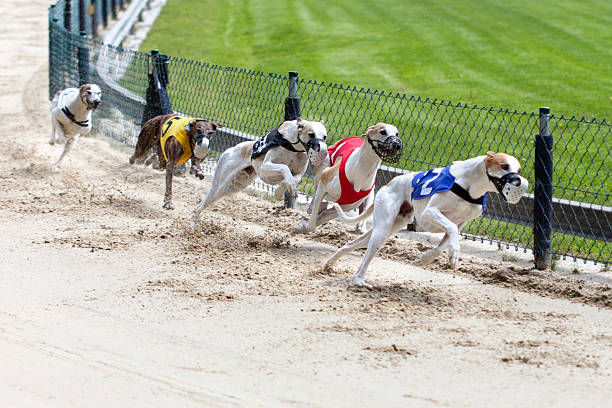
    This is the description that features on the Shelbourne Park Greyhound Stadium website. They, along with other greyhound racing stadiums such as Curaheen and Galway Racing Park, advertise their racing stadiums as an entertainment venue. They promote their venues as a place to drink with friends, enjoy a meal and even host a communion or confirmation party for children.

    Undoubtedly, many businesses will turn to these venues to host their annual Christmas party. However, behind the drinks and quick bets is a sport with an uncomfortable history.

    The Irish Greyhound Board (IGB) is a semi-state body established to regulate and promote greyhound racing. On their website, they also advocate greyhound racing events as “a fun filled night out”, promising to provide entertainment for the whole family.

    What each website fails to mention, however, is the fact that approximately 8,000 registered racing greyhounds disappear every year. The Greyhound Rescue Association of Ireland (GRAI) estimates that this figure could be closer to 10,000. They estimate that 3,000 greyhounds are submitted to pounds every year, the majority of which end up being euthanised.

    Worryingly, some reports suggest the fate of these missing dogs can be horrific. In May 2017, the Irish Times reported on comments made by Aideen Yourell of the Irish Council Against Bloodsports. She said: “They (greyhounds) can be killed in all sorts of fashions. We’ve had incidents of finding them shot, ears cut off and brutalised, drowned or sold on to live in appalling states.”

    In 2013, six greyhounds were found shot in the head and dumped in a quarry in Limerick. A newspaper report from the time explained how the dogs had failed to “show promise at racing trials”.

    This was one of many incidents reported in County Limerick, where cases of large graves containing bodies of greyhounds have been discovered. The GRAI have also described cases where members of the public have found dogs hanging from trees.

    They say it is common practice for owners of unwanted greyhounds to tie the animal to a short rope connected to a tree, with their paws barely touching the ground. The animal becomes distressed, and subsequently hangs itself in its struggle.

    With such distressing reports publicly surfacing, has it become an issue for the Irish government who fund and support the greyhound racing industry?

    Socialist Party TD Paul Murphy first voiced his concerns about the number of missing greyhounds in the Dáil in 2013. At the time, he said “Figures show that these dogs do not end up in rescues or re-homed. Many end up shot or beaten over the head, then thrown into a pit or quarry as has been shown in recent high profile cases.”

    Recently, he objected to the government’s allocation of €80 million for the Horse and Greyhound Racing Fund, saying “Another year, another €80 million for the horse and greyhound racing industries … how long can you continue to ignore the horrific conditions faced by greyhounds in this industry?”

    Despite the evidence of cruelty, greyhound racing is still promoted as an invaluable tourism asset. A study conducted by high-profile economist Jim Power in 2010 attempted to cast the Irish greyhound industry in a positive light, promoting its tourism value. The report, prepared for the Irish Greyhound Board, said: “The industry employs just over 10,300 people directly and indirectly. The gross wage bill generated by this employment is estimated at €207 million per annum and the tax contribution from this employment is estimated at €21 million.

    “The total cost to greyhound owners each year of keeping the ‘greyhound pipeline’ in operation is around €244 million. This is a significant amount of expenditure, and much of it is injected into local economies and supports thousands of local jobs. The IGB has delivered a very impressive financial performance in recent years, and the industry has been strongly supported,” the report also said.

    With the industry generating such revenue, the battle to bring an end to greyhound racing seems almost impossible. Dr. Andrew Kelly, C.E.O. of the ISPCA, acknowledges this struggle. When contacted, he said: “The reality is that there is no prospect of greyhound racing or hare coursing being banned in our generation – whilst protesting and calling for a ban (as some organisations do) has a place, we believe that the greatest improvements for greyhound welfare will be achieved by engaging with the industry and lobbying key decision makers and legislators for change.”