Many residents of East Wall took to the streets on Saturday night to protest the arrival of a busload of male asylum seekers into the old ESB building in East Wall the night before.
The news, which first broke via a video on Twitter, has sparked controversy both politically, and online.
Protesters are taking issue with the fact that no prior discussion took place and they were not made aware that they would be receiving a large number of male refugees.
However, many Twitter users have taken issue with the nature of these protests, condemning them as xenophobic attacks.
Panti Bliss, owner of thePantiBar on Capel Street and LGBTQ+ activist, said: “I live in an apartment building in ‘working class’ Dublin 1. Everyone who lives in my building is ‘unvetted’ including all the ‘single males’ and the ‘foreign’ ones. The protests in East Wall are racist.”
Dr Panti Bliss-Cabrera pantibliss@mastodon.ie
@PantiBliss
I live in an apartment building in “working class” Dublin 1. Everyone who lives in my building is “unvetted” including all the “single males” and the “foreign” ones. The protests in East Wall are racist.
The protests which have now been taking place for over 5 days have been growing in size due to the volume of social media attention that they have received.
There have been concerns from Twitter users that certain individuals may be using these protests to further their own agenda and what may have started as a peaceful protest is now being used as a Trojan horse for certain individuals to promote racism.
The General
@Garbhannn
People are right to protest in East Wall at the moment. However it is being hijacked by far right grifters who have never been to the area and are not locals, only individuals that are trying to force their agenda on a working class community.
Many politicians and TDs have spoken out against the protests. Sinn Fein’s Eoin O’Brion spoke to RTE News in an attempt to redirect the protestors’ anger, “If you’re angry with theGovernment… get out and protest against Government policy, not against other vulnerableindividuals”.
Many Twitter users seem to share this sentiment, that the issue lies with a lack of planning from the Government on immigration.
Twitter user @VinnyMourinho tweeted, ‘The piece you are missing here is the process. Your annoyance should be directed at the government’s lack of foresight on immigration. No plans- No
accommodation / poor facilities flimsy vetting – no transparency. Labelling people of East Wall as Racist is inconsiderate at best.”
Vincent Osborne
@VinnyMourinho
The piece you are missing here is the process. Your annoyance should be directed at the government’s lack of foresight on immigration. No plans- No accommodation / poor facilities, flimsy vetting – no transparency. Labelling people of East Wall as Racist is inconsiderate at best.
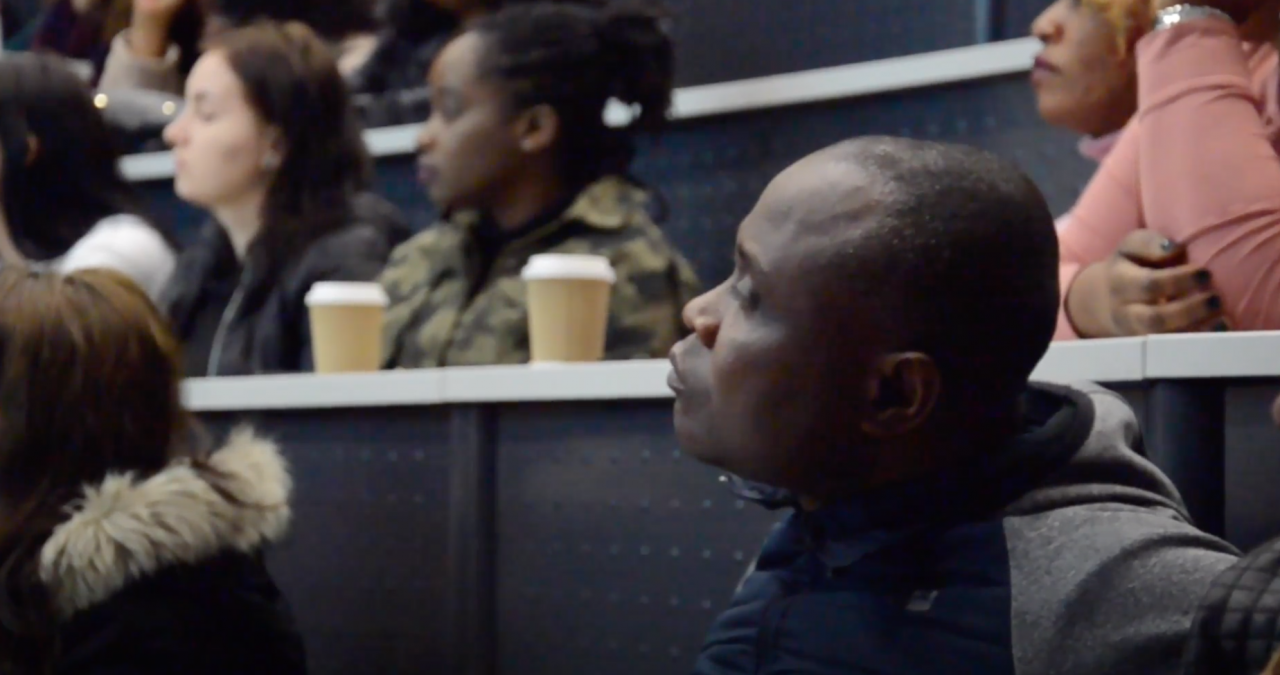
At the Asylum Seekers Feminist Conference, which took place prior to the Covid-19 lockdown, TheCity.ie spoke to Eoin from Abolish Direct Provision Ireland and conference attendees about the impact of Direct Provision on their wellbeing. By Kate Brayden, Cameron Weymes and Ayumi Miyano.
Many of those who came to the conference travelled to be there in order to hear guest speakers and panelists give talks on mental health and host art and yoga workshops. Sonia from Cameroon, Julie from Uganda — whose company ‘Julie’s Kitchen’ catered at the conference — and organiser Eoin generously spoke to us about their unique and personal experiences.
The controversial system of asylum has repeatedly hit the headlines over the mistreatment of those who must wait for their refugee status to be granted, or to be allowed to stay in Ireland. One of the State’s largest providers of accommodation to asylum seekers recorded a pretax profit of €2.36 million in 2018. That the Irish Government allows the system of asylum to be a for-profit service for multinational corporations such as Aramark has been a dominant point of frustrations. Those in the system receive just €38.80 as a weekly Daily Expenses Allowance, and are often moved to differing centres around Ireland before given time to settle in to the local community.
Many centres are located in isolated areas, far away from local villages, which harms the mental health of asylum seekers – who have few options for seeking out services and often face language barriers. For those who have survived war, famine, discrimination and sexual violence, their trauma cannot be addressed. Living conditions in certain regional centres have been a cause for complaint, as well as the troubling impact of the situation on children living in the system.
It’s worth noting that the Irish State’s response to Covid-19 in terms of testing those in Direct Provision has been heavily criticised by human rights groups, politicians, lawyers and health experts alike for effectively ignoring their concerns and putting them at risk. There are currently around 1,700 residents in centres around the country – 149 had tested positive for the coronavirus as of early May.
TheCity.ie’s latest series, ‘An Island of Refuge?’ tackles the immigration policies of seven political parties, highlighting their views on asylum seekers, the Direct Provision system, migrants, climate refugees and open borders. Editor Kate Brayden gives an overview of the findings.
While Ireland’s recent General Election was undeniably focused on issues based at home, we have turned our focus to the increasingly unstable global landscape and its influence on our nation’s attitude towards migration and foreign affairs.
Éire may be known as a welcoming place, but the strain of climate breakdown is impacting far-right rhetoric worldwide – examining whether our politicians are succumbing to this issue is a key concern.
In the aftermath of the election, the parties must now organise a government that will withstand the tests of the international stage. This includes policies relating to justice and climate breakdown.
Photo: Pixabay
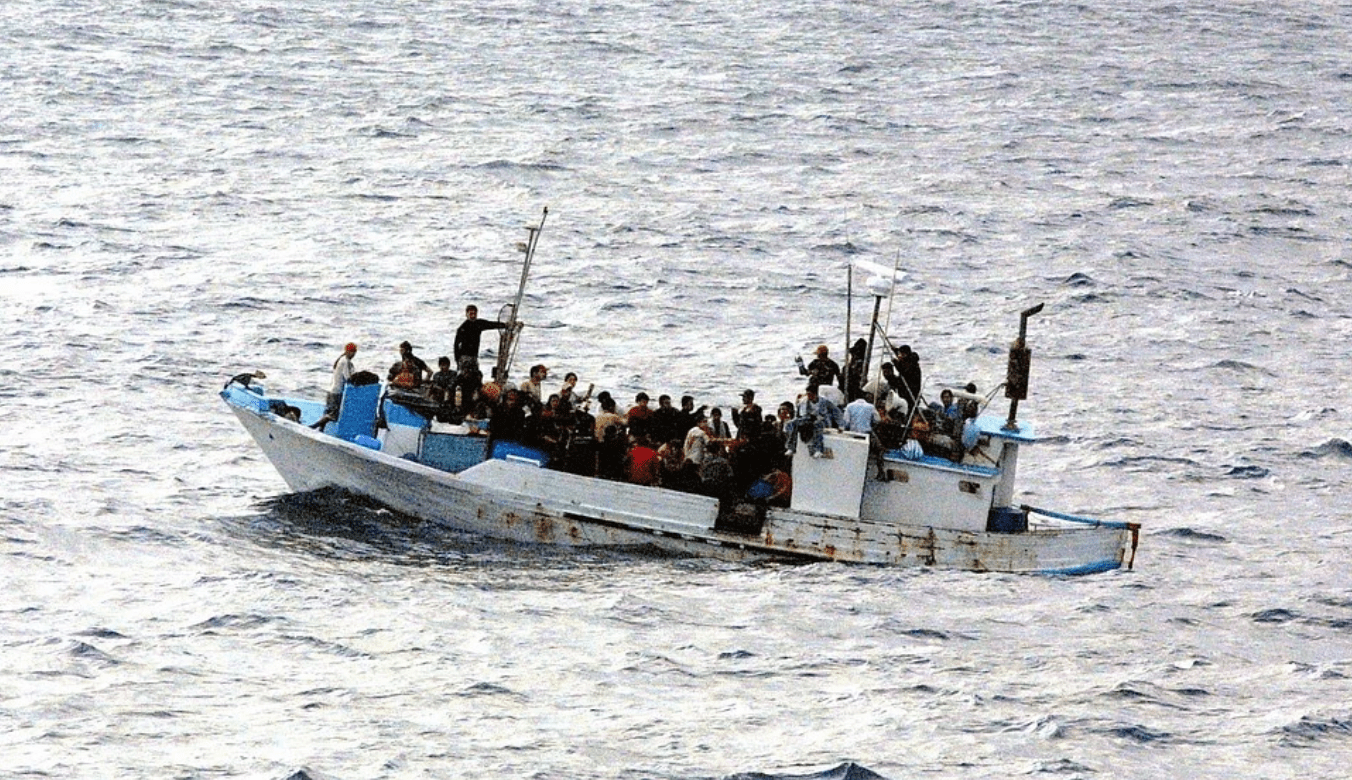
Refugees are a core part of this, with thousands risking their lives to cross the Mediterranean every year, and some losing their lives in the fight to escape war. The policies of ‘Fortress Europe’ aim to keep people from nations specifically outside of this continent out, the very people who are affected by the planet’s destruction despite having the lowest carbon footprint. How do Ireland’s political parties hope to treat them?
Sinn Féin, possibly writing the most intriguing manifesto in terms of economic promises, have claimed that they are against open borders, but also hope to end Direct Provision. What they would replace the system with, however, is a mystery. Should they find themselves in power, they intend to avoid a situation of mass climate-related migration – not solely for the difficulty it will pose to recipient nations, but because people deserve to live in their own nations and communities. Their stance certainly needs more explanation.
Mary Lou McDonald celebrates Sinn Féin victory. Photo: Instagram/africaworld_news
People Before Profit and the Green Party have socialist and left-wing policies embedded in their manifestos, with PBP acting as fierce critics of imperialism and of tyranny abroad. References are also made to the UN Security Council seat Ireland is hoping to win, as well as US military presence in Shannon Airport. The party condemn the murderous regime of Bashar al-Assad – someone largely responsible for the flight of Syrians towards Europe
The progressive stance of the Greens is reflected in their emphasis on freedom of movement, open borders and refugee housing, and they are highly aware of climate breakdown’s role in the displacement of innocent communities in developing countries.
Labour’s political director Nat O’Connor has taken an arguably weak stance, admitting that Ireland is not playing the part of a wealthy country, accepting a low number of refugees, but “we can’t promise to do something that we cannot do”. Housing and health are first on the priority list for the party, which are worryingly diminished following the election.
As the party competes for control of the Dáil, Fianna Fáil is proposing long overdue complete reform of the asylum system and to improve refugee accommodation. Their manifesto has figures and policies backed up by plans, which is a (welcome) change from some of the other vague manifestos. However, it could be all talk rather than action. Pledging to speed up the asylum process, they take a leaf out of the Greens book by promising an integration plan as well as allowing asylum seekers to access driving licences.
In 2015, the Fine Gael-led government pledged to take 4,000 programme refugees fleeing war-torn countries like Syria by the end of 2017. Even now, we’re still well short of that quota – having resettled only 3,206 such refugees. The government has faced fierce criticism over their handling of Direct Provision, with Fine Gael ministers exhibiting resistance to change. Former Minister for Justice Charlie Flanagan promised to improve the party’s numbers when it comes to refugee placements, but are they to be believed?
“The Irish of #Fingal have voted once again for their own extinction,” O’Doherty posted on Twitter following the result.
Interestingly, only 1 per cent of respondents cited immigration as a main voting concern of GE2020 in the Ipsos MRBI exit poll for The Irish Times/RTÉ/TG4/UCD. Within this umbrella topic, climate refugees, asylum seekers as well as migrants are all grouped.
Desolate refugee camps. Photo: Pixabay
There are important distinctions to be drawn between asylum seekers, migrants and refugees – but these terms often get mixed up in the course of public debate on what is a complex topic. The issue will only become more onerous as CO2 emissions cause further destruction in the Global South, South-East Asia, Australia, Canada and the US.
An asylum seeker is someone seeking refugee status – but whose application has not yet been approved. In the meantime, as long as they’ve made an application for asylum to the country they’ve landed up in – usually on the basis they were forced to flee their home country – they are entitled to remain in the destination country while their request is being processed. If it’s ultimately approved, then they have permission to remain. If it’s rejected, then they’ll be deported.
Though some, who fail to qualify as refugees, are granted subsidiary protection to remain. Migrants are not fleeing persecution; instead they choose to move country – often for economic reasons.
Those defined as refugees have been recognised as such under the 1951 Refugee Convention of the UN, while programme refugees have their claims formally assessed in refugee camps overseas – and are invited to the destination country under a resettlement programme.
“The free movement of persons is a fundamental right guaranteed to European Union (EU) citizens by the Treaties. It is realised through the area of freedom, security and justice without internal borders.” This EU legislation guarantees freedom for its citizens but for the same cannot be said for those outside the strict EU borders. Outside Fortress Europe, migrants endure extreme hardship, risking their lives to enter the EU.
In April around 900 Libyan migrants were drowned off the coast of Sicily in a desperate attempt to cross the EU border and escape the adversity they left behind. TheCity spoke to the journalist and PHD student, Roisin Boyd to discuss how such a tragedy occurred under EU legislation.
Please see below for definitions:
Asylum Seeker – Oxford Dictionary Definition – A person who has left their home country as a political refugee and is seeking asylum in another: ‘only asylum seekers who are granted refugee status are allowed to work in the country’
Refugee – Oxford Dictionary Definition – A person who has been forced to leave their country in order to escape war, persecution or natural disaster: ‘tens of thousands of refugees fled their homes’
Migrant – Oxford Dictionary Definition – A person who moves from one place to another in order to find work or better living conditions.
For more information on this topic please click below:
This nation’s ability to ignore longstanding and continuous violations of human rights has once again made headlines this week. Our Direct Provision system for accommodating asylum seekers has come under serious criticism after recent inspection reports have showed evidence of over-crowding, poor hygiene standards and poor fire safety standards across multiple asylum centres.
Under our current system, asylum seekers are provided with full board (food and accommodation), and a weekly allowance of €19.10 per adult and €9.60 per child. Asylum seekers are not entitled to work in this country or to apply for rent allowance to live outside of a Direct Provision centre. This system was designed to meet the basic needs of people for a temporary period while their application for refugee status is being processed.
However current inspection reports have revealed that the average time spent by asylum seekers in these hostel-style centres is three years and eight months. A backlog of thousands of applications has resulted in, in some centres, families of six being forced to share one bedroom. Parallels are being drawn between these conditions and those found in the Magdalene laundries.
Despite making headlines this week, this is not news. The Direct Provision system has been attracting harsh criticisms almost since its inception. Within the first year of the establishment of the Reception and Integration Agency (RIA), which was set up to provide Direct Provision, a report was published which addressed the extreme poverty and exclusion experienced by children in the system. ‘Beyond the Pale’, published in 2001, addresses the fact that Ireland was failing to conform to its obligations under the UN Convention on the Rights of the Child.
The report stated, “Asylum seekers in direct provision may experience extreme deprivation as a result of inadequate diet and inability to afford the purchase of sufficient and appropriate food from their incomes.” It also highlighted problems such as overcrowding, stress, depression, social exclusion, racism and malnutrition.
Not only does it seem that little has been done to change our system, Ireland is actively choosing not to improve its system by opting out of the laws which will form the Common European Asylum System (CEAS). This new system includes the Reception Conditions Directive, which requires a common standard for living conditions in asylum centres and requires member states to grant asylum seekers faster access to employment (or in our case, to grant them access in the first place). This decision puts Ireland even further out of line with the standards employed by EU member states.
So, the question remains; why is Ireland so unwilling to provide asylum seekers with basic human rights? The uncomfortable truth may well be that we as a nation continue to harbor closeted racist attitudes towards asylum seekers, and simply don’t care enough to campaign for better immigration policies.
Minister for Justice Alan Shatter
Dr. Liam Thornton of UCD addressed this on humanrights.ie, claiming that TDs who had campaigned for an end to Direct Provision had actually lost support, “not just a few votes here and there, but very noticeable support.”
The Minister for Justice and Equality, Alan Shatter (despite previously opposing the Direct Provisions system) has said that the system is the best we can provide given our current economic conditions. Most Irish citizens would probably agree with him. But like it or not, Ireland has an obligation under international law to ensure the basic human rights of asylum seekers are being met, and until Direct Provision is axed, we won’t be meeting that obligation.





You must be logged in to post a comment.