Gavin Dalton speaks with FAI women’s administrator Rachel Graham about the recent, first of it’s kind virtual Soccer Sisters hub for the October Mid-term break.
With Covid-19 preventing the usual week long camp style delivery of the popular Soccer Sisters programme, Aviva along with the FAI improvised to continue the coaching via a virtual delivery for participating girls to practice and hone their skills from the comfort of their own back garden. With video tutorials from Irish soccer stars Jessica Ziu and Isabeal Atkinson, the Soccer Sisters provided new skills and techniques for each day of the week for aspiring young women’s soccer players to replicate at home. Gavin Dalton spoke with one of the event’s organisers Shelbourne and the Republic of Ireland’s Rachel Graham about how the week went.
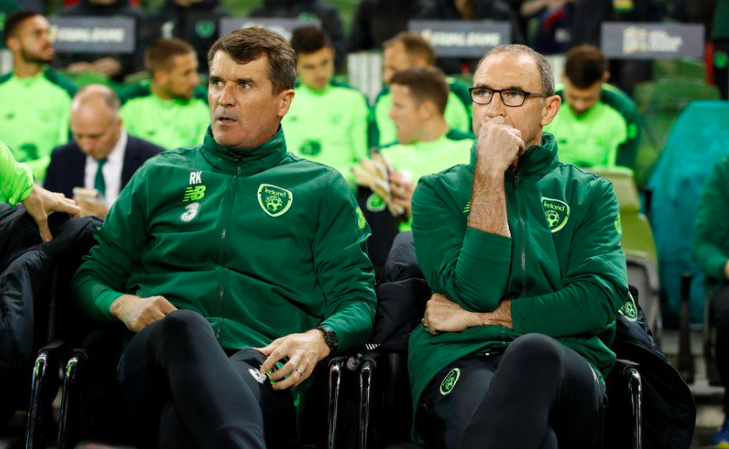
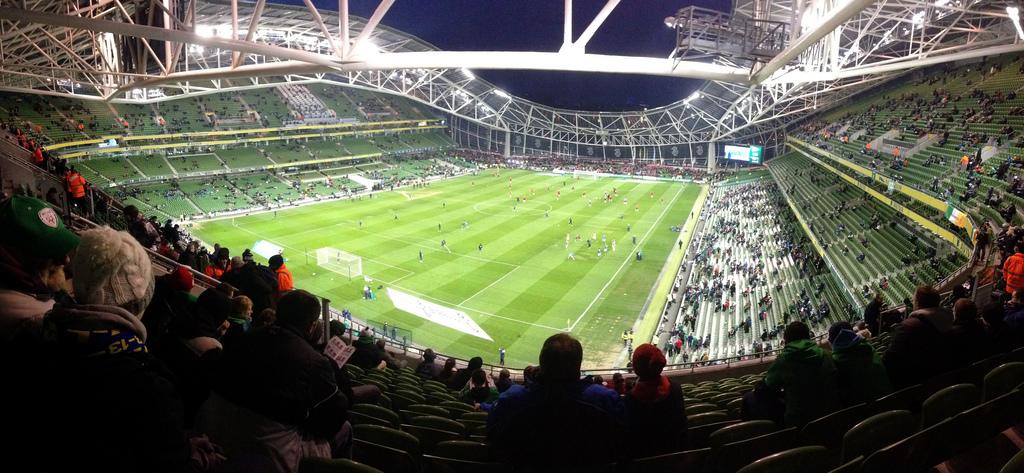
Apathy appears to be the main word to describe the attitude of Irish football fans towards the national team these days. This may have played a role in the decision taken by the FAI last Wednesday to part company with Martin O’Neill as Ireland manager. It had been a dreadful year for Martin O’Neill’s men, who ended 2018 without scoring a single goal in their last four games. The final goal scored by the Boys in Green in 2018 was a consolation effort by Shaun Williams in a 4-1 drubbing by Wales in Cardiff back in September (less than a year after Ireland had beaten the Welsh on the same ground to clinch a World Cup play-off). Ireland played out two goalless draws this international break, most recently away to Denmark last Monday night. However, it was the goalless draw against Northern Ireland last Thursday night – played out in front of a sparsely packed Aviva Stadium – which displayed the apparent apathy of the Irish fans for the national team for all to see. There was much talk about the empty seats on social media, with many blaming Martin O’Neill’s style of play for people not wanting to go to the game. Interestingly though, the last time Ireland played Northern Ireland in a friendly match at the Aviva Stadium back in 2011, there were only 15,092 people in attendance, compared to 31,221 fans at the Aviva last Thursday night. So were the empty seats at friendly internationals a product of Irish fans tiring of Martin O’Neill, or was this an ongoing issue spanning many years?
Ireland did not play a single friendly international in front of a sell-out crowd at the Aviva during Martin O’Neill’s five year reign. The closest friendly to being a sell-out was the 0-0 draw against England back in June 2015 which was attended by 43,486 people, followed by 2016’s 1-1 draw with the Netherlands ahead of Euro 2016 which was watched by 42,438 spectators. The fact that no friendly game has sold out at the Aviva Stadium since Ireland’s very first game at the ground back in 2010 against Argentina shows that problems with empty seats at friendly games have deeper roots. Although, it is fair to say that distaste for O’Neil’s regime could still be seen in attendance figures. Those friendly games mentioned earlier against England and the Netherlands had higher attendances than Ireland’s two home UEFA Nations’ League games against Denmark and Wales last month. The 0-0 draw against Denmark on 13th October was seen by 41,220, while the 0-1 defeat to Wales was attended by 38,321 fans. Ireland played both Denmark and Wales at the Aviva Stadium in 2017 also, with attendance falling by 10,000 in the respective games a year later.
Friendly games have mostly been treated with disregard by Irish fans ever since the Aviva Stadium opened back in 2010, even when Giovanni Trappatoni was in charge of Ireland. They are arguably not the best indication of the fans’ displeasure with the manager. The sharp drop in attendances for both the Danish and Welsh games in the space of a year would be more of an indication given they were competitive games. The next time Ireland will be in action will be in March when UEFA 2020 qualification begins. The draw for the qualification groups will take place in Dublin on December 2nd, where Ireland will find out who they will have to get past in order to qualify for their third consecutive European Championships. By the time Ireland line out again in March, there will be a new man in charge with former Irish boss Mick McCarthy taking the reigns. A big crowd will of course be expected for the new manager’s first game in charge, especially given it will be a competitive match. However, once Ireland take the field for their next friendly game at the Aviva, do not expect there to be a sell-out crowd.
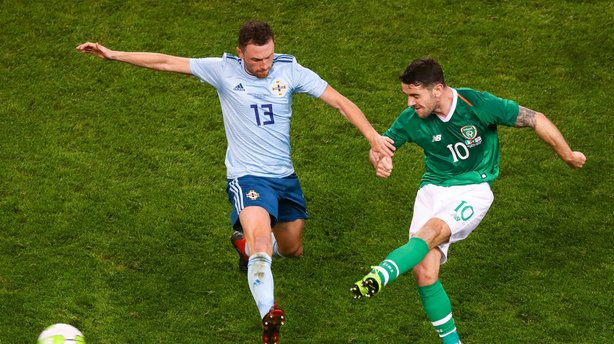
A man-of-the-match display from Middlesborough’s Darren Randolph rescued Ireland from defeat against neighbours Northern Ireland in front of 31,241 people at the Aviva Stadium.
Ireland welcomed the return of Robbie Brady ahead of next week’s match against Denmark after a year on the international side-line, along with returning Séamus Coleman who missed the game against Denmark.
Despite this boost, Martin O’Neill’s men failed to find any sustained periods of possession in the final third in a game that was crying out for a creative midfielder to link with the attack.
Randolph pulled off heroics in either half to deny Gavin Whyte and Jordan Jones from close range.
A laboured performance from Ireland marked what was likely to be Glenn Whelan’s final international appearance of an 85-cap career that has spanned over a decade. He was replaced by Aston Villa teammate Conor Hourihane before halftime.
Ireland featured six changes to their starting 11 and played with a 3-5-2 formation, with James McClean and Séamus Coleman flanking Jeff Hendrick, Robbie Brady and Whelan in the middle of the park.
Blackburn’s Darragh Lenihan marked his second international appearance with an assured performance alongside Shane Duffy and John Egan.
Michael Obafemi remained on the bench after declaring for Ireland amid speculation about his international future, while Seanie Maguire suffered yet more hamstring bother after he limped off just 13 minutes after being introduced as a substitute.
Ireland travel to the Parken Stadium on Monday to face Denmark in what is now a crunch clash after the goalless draw between the two in Dublin.
On the afternoon of November 24th, 2013, the Irish rugby team seemed for one brief moment of time as if they were on top of the world.
At the Aviva Stadium that winter afternoon, Ireland had breezed into a 19-0 lead against New Zealand inside 20 minutes of action. It was incredible stuff, being in such a commanding position against the most feared and dominant rugby nation on the planet.
However, New Zealand demonstrated why they are the world’s best by overhauling Ireland’s lead with a late try and conversion to snatch victory by two points.
Source: Wikimedia
The manner in which New Zealand actually came out victorious was one of the hardest things for Joe Schmidt’s weary charges to take.
The Television Match Official (TMO) had to be called in to confirm that Dane Coles’ pass to substitute Ryan Crotty was not forward. That decision tied the teams up but there would be more drama to follow.
Aaron Cruden’s conversion attempt went wide of the posts but Welsh referee Nigel Owens ordered it to be retaken as he deemed Ireland to have charged out from their goal too early.
Cruden found the target at the second attempt which left the home side stunned and still without a test victory over New Zealand. At that stage three years ago, we wondered what it would take for us to ever beat the world’s best team.
Two weeks ago, we discovered just that … the best way to beat New Zealand is to take the game to them and put them on the back foot. And that’s exactly what Schmidt’s determined band of warriors did at Soldier Field, Chicago in front of 62,300 spectators.
They stood up to the task even before kick-off. As the All Blacks performed their customary Haka war dance, the entire Irish match-day squad stood in a figure of eight in memory of the late Anthony Foley, the Munster and Irish stalwart who passed away in October.
Ireland were mentally and physically ready for the big occasion against a side that had eight survivors from their World Cup final triumph over Australia a year previously.
Tries from back row forwards Jordi Murphy and CJ Stander in addition to Conor Murray crossing the line meant that Ireland held a 25-8 lead at half-time. Winger Simon Zebo stretched Ireland’s lead with another try after the break before the inevitable New Zealand onslaught began.
The world champions displayed their strength in depth as tries from TJ Perenara, Scott Barrett and Ben Smith began to test the mental resolve of this Irish side.
Schmidt’s men regrouped and sealed the historic triumph in the ‘Windy City’ with a late try from Henshaw and a successful conversion from Joey Carbery.
The result ended New Zealand’s 18 game winning streak. It was also Ireland’s highest ever points total against the All Blacks. New Zealand don’t get beaten too often so when they do, it comes as a bitter pill to swallow.
Ireland will definitely be without the services of flanker Jordi Murphy when they renew acquaintances with the All Blacks this Saturday evening. The Leinster player suffered an injury to his left knee in the first half of the historic win in Chicago and it was later confirmed that he had suffered anterior cruciate ligament (ACL) damage, which will rule him out of action for between six and nine months.
Luckily enough, Ireland have two able replacements in Munster’s Peter O’Mahony and Leinster star Sean O’Brien, who both got game time in the facile 31 point victory over Canada last Saturday.
New Zealand were given a boost ahead of the trip to Dublin with Brodie Retallick’s second half appearance in the 68-10 rout of Italy last weekend leaving him poised for a return to the starting line-up.
Retallick could be joined in the second row by Sam Whitelock. The pair are well accustomed to each other as they were second row partners when New Zealand defeated Australia to reclaim the World Cup in October 2015.
If Ireland are to come out on top again against Steve Hansen’s world champions, they’ll need to stop winger Julian Savea. Savea scored 45 tries for New Zealand in the space of four years and the winger will aim to use his powerful presence to break down the Ireland defence.
It’s unlikely that this game will resemble the Chicago fixture in terms of such high-scoring and free-flowing rugby. New Zealand will want to reaffirm their status as the best international rugby team by whatever means necessary.
This is bound to be another physically demanding clash and it just appears that New Zealand have the greater strength in depth to emerge on top after a gruelling 80 minutes of action.
Guinness Series Ireland v New Zealand Aviva Stadium Saturday, 19th November
It is now common knowledge that the IRFU, as well as the governments of both the Republic and Northern Ireland are working on a plan to submit a bid to host the 2023 Rugby World Cup.
The two biggest sporting events ever to be hosted in Ireland are the 2003 Special Olympics and the 2006 Ryder Cup. Both these events were viewed as great successes. However, the Special Olympics only lasted eight days, while the Ryder Cup lasted for just under a week.
To host the Rugby World Cup, Ireland would have to take on a task, the likes of which it has never seen before. To give an example, the next RWC will be held in England in 2015. Visitors from 20 countries will be landing in 11 cities all across England and Wales, to witness an event lasting a month and a half. 13 state of the art stadia will be used throughout the tournament, ranging in capacity from 16,500 (Kingsholm Stadium, Gloucester) to 90,000 (Wembley Stadium, London).
The problem for the IRFU is that in order to host the tournament in 2023, solely in Ireland, with no games being played in a joint host country, would be to get full participation from the GAA.
Nine of the ten biggest stadia in Ireland are owned by the GAA. The only stadium in the top ten, is the Aviva Stadium, which is part owned by the IRFU. The only problem with these stadia, is that the majority of their capacity crowds, come from terraced stands. To host a successful international tournament, all stadiums would need to be fully seated.
The stadia which would be recommended in the bid, as well as the infrastructure surrounding them would need to be greatly improved.
It will not be an easy task by any stretch of the imagination, but with a lot of work put in over the next ten years, it is definitely a possibility.
When you look to Irish national teams for a source of pride, rugby comes to mind first. It is a great testament to this small nation that we compete with countries that have 10 times the population to work with.
So based on that, one would assume that any possible question regarding an amalgamation of the Republic and Northern Ireland soccer teams has to be answered with a yes. I however, disagree.
The Republic of Ireland national team has shown before that it has the quality in its arsenal to compete with the best in the world and to make the latter stages of major tournaments.
In the World Cup in 1990, 1994, and 2002, the Republic’s soccer team reached the quarter finals, and made it to the final 16 twice, respectively. During the same time period Northern Ireland failed to qualify on all occasions.
For the European Championship in 1988 and 2012 the Republic reached the group stages of the tournament. The upper quadrant of the island has never reached a European Championship.
Despite neither side succeeding in securing a trip to Brazil in 2014, the Republic still managed to maintain a somewhat respectable record in terms of wins and draws compared to Northern Ireland’s shambolic campaign in which the green of the North recorded a draw and a loss against both Luxembourg and Azerbaijan.
When you move the argument away from the pitch the sensible notion still points towards the Republic remaining a separate entity.
The Football Association of Ireland (FAI) have purpose built grounds in the Aviva Stadium which is the home of Irish soccer. Northern Ireland do not have that luxury. Instead, they have leased the rights from Linfield F.C. for the use of Windsor Park. In return for this lease, 15 per cent of all revenue of gate receipts and TV rights leaves the Irish Football Association‘s (IFA) pockets and lines Linfield’s.
The issue surrounding political and religious difference also needs to be considered. The Irish rugby team works as a combined entity because a) it has always been this way since its inception and b) the vast majority of rugby supporters would be of a higher social class and background. Not meaning to pigeonhole, but football supporters would have a greater tendency towards unruliness and hooliganism than their rugby counterparts.
The only foreseeable benefit gained for the Republic of Ireland by amalgamation is that the Republic of Ireland would not have to press players who are born in the six counties to declare for the Republic.
However, most Irish managers have a tendency to acquire players not only from Northern Ireland, but also Scotland, Wales, and England. Once they were born on the island or have a grandparent who was, they can declare for the Republic – therefore all of the Northern Ireland squad is fair game for the Republic of Irish team, they just need to be ahead of the curve in terms of recruiting them.
Another issue is that the League of Ireland, which is already on the fringes of the FAI’s agenda, would become even more so, as an amalgamation of both countries national teams would result in an inevitable combination of both football associations.
Northern Ireland’s only potential commodities are already available to the Republic and therefore the south will be offering up a much greater investment for what are limited dividends!





You must be logged in to post a comment.