Tag: Barack Obama

  • “It is here, and I don’t think it is going away any time soon” – an evening with President Barack Obama.

    “It is here, and I don’t think it is going away any time soon” – an evening with President Barack Obama.

    It’s my first time in the 3Arena since I went to a Billy Joel concert in 2013. Two trips for two extremely influential men. The seats are great (they would want to be for the €140 that they cost), and the atmosphere is buzzy. One would be forgiven for thinking that we were soon to be treated to a rock concert, not a discussion between one of Ireland’s top journalists and the 44th President of the United States. 

    A short montage of some of Obama’s career highs, as well as his visit to Dublin in 2011, set to the well-known bars of U2’s ‘City of Blinding Lights’, (a song used repeatedly by Obama throughout both of his presidential campaigns) plays out before Irish Times Journalist Fintan O’Toole takes the stage to greet the audience and introduce President Obama.

    Obama himself carries with him a level of aura many world leaders would envy. His security team blend in so well in front of the stage that you would be forgiven for not noticing them. His comfortable walk and wave onto the stage show a man who is well versed in these kinds of events.

    What follows in the next ninety minutes is twofold. First, reflections. Reflections on visits to Ireland, on facing issues with race, and identity. “Much of the history we do consume is fabricated,, he notes. Obama speaks of Donald Trump and refers to his censorship of media and the censorship and fallback on certain late night chat show hosts, without naming any names, an act of class that his successor would never take on

    .

    World War Two, The Cold War, Palestine, there were not many stones unturned. Naturally, these reflections turn to looking towards the future. The work of his foundation hopes for a resolution in conflicts and instilling a level of hope for the future.

    “Much of the history we do consume is fabricated,”, he said.

    Why is it that the Irish are so fond of Barack Obama? His Irish ties could be cited, but it is very common for the American people to have cousins over on our side of the pond. Negating all of that, a huge part of Obama’s appeal in this day and age is what he represents, what he reminds people of.

    The first African American President, with a wife who vulnerably put herself in the spotlight in more ways than one. Michelle Obama appeared on teen series such as iCarly, featured in a ‘Carpool Karaoke’ segment with James Corden, busting out Stevie Wonder and Beyoncé classics.

    The love for the Obamas stems from their being in touch with the everyday world and being seen as very human. This is not the general consensus when looking at the current administration and its first family members.

    As for what the former president is up to these days, he spoke contently of his work with the Obama Foundation, the non-profit organisation set up by Obama and his wife that aims to help and educate people internationally. He spoke specifically of Nika Kovǎc, founding director of the Institute of 8th of March Institute, (a movement-building organization that uses storytelling and advocacy to confront gender and economic inequalities across Slovenia, according to its website), and the work and advocacy that she did in her home country with the help of the foundation.

    Kovǎc successfully ran two referendums in her home country, after learning via the Obama Foundation how to appeal to people and voters. A big point on that was to reach out to people on their own level, to not talk down to anyone, especially when in a position of power and education.

    An inevitable wind down comes upon the stage as Obama says his final part. It is clearly important that the former president wants people to be looking forward and to be educating themselves on the goings on of the world. Though he is busy with his foundation and other ventures, we can be assured that Obama (who was awarded Freedom of the City shortly before the event) will be back to our country that he seems to have such a strong connection to.

  • Gone but not forgotten: Obamas’ Freedom of the City clouded by controversy

    Gone but not forgotten: Obamas’ Freedom of the City clouded by controversy

    Cormac Murphy reports on the debate surrounding Dublin City Council’s controversial decision to award the Obamas Freedom of the City.


    In a move surrounded by controversy, former US President Barack Obama and his wife Michelle are to be awarded the Freedom of the City of Dublin.

    The Lord Mayor of Dublin, Brendan Carr put forward the contentious proposal to grant the Obamas the title on Monday, 6 February. The motion was passed by a majority of Dublin City councillors with 30 votes for the measure and 23 against.

    The vote followed a heated exchange between those who opposed the motion and those who supported it. Members of the Anti-Austerity Alliance, People Before Profit, Sinn Fein and the Green Party were represented among the parties who opposed the decision. 

    Defending his position in a press release, the Lord Mayor stated “The award is often a political statement… at this juncture in world politics our city can make a clear statement about what example we would wish the paramount global political leader [the US President] to set… I believe Barack and Michelle Obama set the right direction for the US both domestically and in international relations.”  


    He elaborated that Obama’s presidency oversaw several important international developments such as the cessation of military activities in Afghanistan, the Iran nuclear deal and Obama’s normalisation of relations with Cuba. He also noted Michelle Obama had campaigned throughout her husband’s term in office for women’s rights around the globe as well as drawing attention to the plight of refugees.

    Speaking to the Thecity.ie, Councillor Michael O’Brien of the Anti Austerity Alliance said, “Obama is guilty of heinous acts that should disqualify him from being bestowed the award”. He cited examples of drone strikes in the Middle East, Pakistan and Somalia as examples and claimed Ireland has a “blind spot about the nature of the Democratic Party”.

    The decision also divided opinion online with several users taking to Twitter to vent their anger. One Twitter user called Obama the “drone king” and blasted his record in office.

    https://twitter.com/eamonnh96/status/828736030417240064


    Another Twitter user implied it was just a photo opportunity for the Labour Party which currently controls Dublin City Council.


    However, others welcomed the decision. One British expatriate stated the move was “lovely”.

    https://twitter.com/ukexpat19/status/828696382152253440


    Dublin City Council’s decision to grant the Obamas the prize means that Barack and Michelle Obama will become the 82nd and 83rd beneficiaries to receive the title.

    1024px-dublin_city_council_civic_offices
    Dublin City Council buildings At Wood Quay, Image by YvonneM via WikimediaCommons

    What is Freedom of the City of Dublin?

    The Freedom of the City of Dublin is the highest civil honour granted by the Dublin City Council. Irish Home Rule pioneer Isaac Butt was the first to receive the award in 1876.

    Notable recipients include Nelson Mandela who received the title as a freeman of Dublin in 1988 and Aung San Suu Kyi, a leading advocate for democracy in her home country of Myanmar (formerly Burma). Other famous people include General Ulysses S Grant, President John F. Kennedy, Pope John Paul II and musicians such as Bob Geldof and Bono.


    The award acknowledges the contribution to the life of the city or Ireland in general, which includes politicians, public servants, humanitarian activists, artists and entertainers. Honourees sign the roll of freemen at the City Hall or the Mansion House.

    Freedom of the City is mostly ceremonial. The benefits offered to freemen include ancient privileges such as exemption from octroi, a duty once imposed on various goods entering the city, and pasturage of sheep on city commons such as College Green or St. Stephen’s Green. Bono attracted considerable media attention when he exercised the right to graze sheep in 2000.

    It’s not the first time the award has sparked controversy. Distinguished Celtic scholar Kuno Meyer who received the award in 1911 for his role in the promotion of Irish culture, was removed from the roll of freemen in Dublin for his pro-German views during World War One. This decision was later retracted posthumously in 1920 when Sinn Fein won control of the city council.

    The couple indicated to several contacts that they are happy to receive the award.  A meeting with US embassy officials will reportedly be held within days and could result in an official visit by the end of the year.


    Barack Obama and his wife Michelle visited Ireland back in May 2011. The former US President has ancestral links to the country through his mother Ann Dunham who has relatives from Moneygall in County Offaly.


    Featured Image: Barack and Michelle Obama at the Lincoln Memorial in 2009 by Mark O’Donald via Wikimedia Commons


  • Is the Nobel Peace Prize still worth anything?

    Is the Nobel Peace Prize still worth anything?

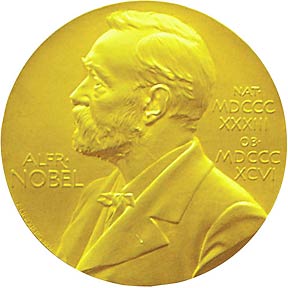
    Nobel_Prize_Medal

    The Nobel Peace Prize was awarded this morning and our two journalists, Craig Farrell And Greg Synnott decided to debate its merits. Craig Farrell believes it still holds value.

    Due to the uproar caused by the recent nomination of Vladimir Putin for a Nobel Peace Prize, the question has been asked; is the Nobel Peace Prize become insignificant, and the answer is absolutely not.

    The fact the nomination of Putin, who many condemn for the treatment of the gay community in Russia, has sparked such outrage shows how the Noble Peace Prize is still something that people see as having a purpose, and a social and global goal.

    It must be noted that the Nobel Foundation does not take part in any of the nomination process.

    Nomination for a Peace Prize is deemed acceptable if submitted by:

    • Members of national assemblies and governments of states.
    • Members of international courts
    • Previous Peace Prize Winners
    • Board members of organizations that have been awarded the Nobel Peace Prize
      Active and former members (and advisors) of the Norwegian Nobel Committee
    • University rectors; professors of social sciences, history, philosophy, law and theology; directors of peace research institutes and foreign policy institutes.

    A Russian advocacy group, The International Academy of Spiritual Unity and Cooperation of Peoples of the World, was the group behind the Putin nomination, and they also let it be public knowledge as all nominee lists remain secret for 50 years.

    Putin’s nomination was probably political peacocking on the Russian’s behalf, seeing how both Putin and Barack Obama both have Nobel Peace Prizes to their names. The Russian and US president had open letters printed by the New York Times recently in regards to the Syrian crisis, in which both leaders took shots at one another.

    Putting Russia’s treatment of the LGBT community aside – as hard it may be to overlook – Putin has still made some significant strive in creating peace. He played an integral part in preventing a Iraq-like invasion in Syria and had a helping hand in chemical weapons being handed over by the Syrian government.

    Russia has also held talks with Georgia regarding the differences between those countries.

    So in the grand scheme of things there is some validity to Putin’s nomination. I am not condoning his treatment of the gay community. In fact I would be abhorrently against it. However, Putin has facilitated peace in certain areas outside of Russia.

    The Nobel Peace Prize has the ideal of awarding someone who has made a major contribution towards peace in the world, and that is an ideal that can never be insignificant. The nomination process may be flawed – much like everything in life – but the goal it strives towards is the same when the likes of Martin Luther King (1964), Mother Teresa (1979) and Desmond Tutu (1984) received their awards.

    Greg Synnot shares his views:

    But is the Nobel Peace Prize Damp Dynamite?

    On October 11th, we’ll learn whether the Norwegian Nobel Committee is interested in reviving the Nobel Peace Prize to its former glory or whether it will be putting another nail in the coffin for a prize that many consider to have become more of a joke than noteworthy line on someones CV.

    Alfred Nobel’s vision for the prize was created in good will and not as an achievement to proponents of war as we’ve seen with former winners like Barack Obama and the European Union.

    The European Union receiving it is a blatant violation of Nobel’s will alone, not to mention the fact it defies Nobel’s will, it has been frequently criticized for supporting regime change in foreign countries with several member-states have supporting violent crackdowns on anti-government demonstrators.

    In Nobel’s own will it is stated that the prize is for “the person who shall have done the most or the best work for fraternity between nations, for the abolition or reduction of standing armies and for the holding and promotion of peace congresses.”

    The prize is not a lifetime award, but goes, along with the other Nobel prizes, “to those who, during the preceding year, shall have conferred the greatest benefit to mankind.”

    Disregarding the obviously laughable options among the 259 nominees, 50 of which are organisations, the favourites for this year barely qualify, if at all. This includes Malala Yousafzai and Denis Mukwege whose work for education and work to aid victims of sexual violent acts respectively should be honoured with an award, but not this one.

    It cannot be denied that the prize provides recipients with world exposure, sometimes bringing activists and their causes to international attention.

    But when an award can go to a president who took office 11 days before the final date of submission in 2009, it has to be asked, what is the criteria for such an award? Clearly Obama’s only noteworthy point at the time was not being George W. Bush, with that their were seven billion other possible nominations.

    The “Peace” Prize has gone through numerous controversial candidates in its long history. Let’s celebrate those who have surely contributed to human welfare and relegate subjective calls to the political spheres that are both their natural habitat and their rightful place: The Committee should disband and nominate no more recipients of the Peace Prize.