
Tag: Boston

  • Covid-19 abroad: The US and the impact of the pandemic from coast to coast

    Covid-19 abroad: The US and the impact of the pandemic from coast to coast

    Video by Liam Daly

    The first US Covid-19 fatality was reported in Seattle on the 28 February 2020 – one year later and the deaths have now risen to half a million.

    In that time the US has been a mainstay in worldwide news and media for a multitude of social and political issues ranging from the strange to the shocking.

    Throughout the last year, the American people have become increasingly polarised – the brutal killing of George Floyd and the resulting protests revealed systemic issues of racism in the US which were brought to the fore in worldwide media, on top of that, then-president Donald Trump’s approach to handling the pandemic was controversial, and did nothing to quell the tense atmosphere in the US.

    The US entered the pandemic with an already problematic healthcare system, which the Trump had inherited – a healthcare system which had been decreasing in funding every year since 2002.

    Trump’s devil-may-care attitude to the virus and his peddling of conspiracy theories did not help this fragile system, and the magnitude of lives lost is a sad reflection of this.

    Through this historic period, Cillian Dunne, 24, a recent college graduate, published author, and budding Hollywood screenwriter has lived on both the east and west coasts of the United States.

    First in Boston, where he has been living for the past five years while completing his college degree, then, upon graduating, he drove cross-country to settle in Santa Monica, where unfortunately he has been mostly confined to his apartment since October.

    “Since we got here we’ve been under the strictest lockdown in America”

    Cillian Dunne

    While things are starting to reopen as more than one million people in LA have been vaccinated, thousands of cases per day keep the locals wary.

    “ICU wards are getting within their threshold. I’m sure we’ll get put into another lockdown,” says Dunne.

    A quick vaccine rollout has lead to an increase in optimism. Some reputable sources are backing ‘herd immunity’ and speculate that a herd immunity threshold can be achieved as early as late-spring or at worst, the end of summer.

    This theory has its complications however, and arguments have been made against it. While a quick vaccine rollout seems the perfect solution that we all have been searching for, the danger of increasing variant strains of the coronavirus complicates the situation – we may vaccinate against the current strains but a new variant could come along tomorrow and make that work null and void.

    The only way to tackle this problem is to learn to live with Covid-19 while work on vaccines and studies of the virus improve – and in the US, the new president’s policies are putting this into action.

    President Biden’s approach to the pandemic has been significantly different to Trump’s.

    Biden has focused on personal protective equipment (PPE) and improving access to it. Increases have been made to testing capacity, travel restrictions, and mandates requiring Americans to wear masks have been introduced. There has also been a focus on returning to schools and workplaces safely.

    If the US can maintain their current vaccine trajectory, the country could reach herd immunity as early as July, however it is also projected that in that time an additional one million people could die – and that is without interference by new variants.

    The more important strategy could prove to be in the policies the new administration are implementing rather than in the questionable herd immunity plan.

    Sunset in Boston, Photo by Kristin Vogt via Pexels.com
  • 11 Top sports stories of 2013

    11 Top sports stories of 2013

    Following 2012 was always going to be tough to match with regards sporting moments, but 2013 certainly left us with some memorable sporting events. The City took a look back at some of the most unforgettable sports stories of 2013.

    Lance Armstrong admits to doping: In January 2013, Lance Armstrong shocked the world by admitting to doping during all seven of his consecutive Tour de France titles. Despite the fact that most people suspected it, it was still fascinating to hear the former record holder admit to the doping after so many years of denial.

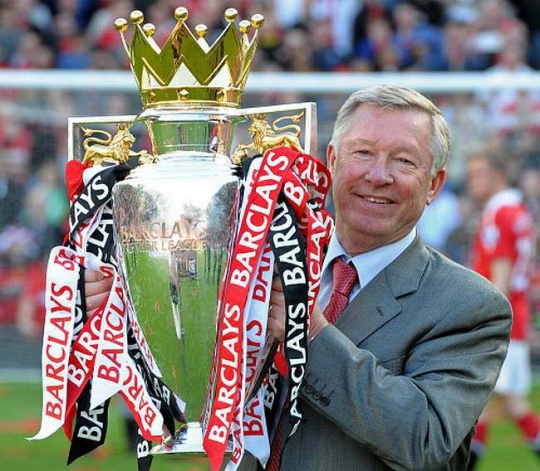
    Ferguson Retires: The premier league said goodbye to one of its longest serving and most successful managers when Sir Alex Ferguson announced his retirement as manager of Manchester United in May this year. The 26 year stint at the club saw him win 13 Premier League titles, 5 FA Cups, 4 League Cups and the Champions League twice. He ended his final season at the club in great fashion leading United to their 13th Premier League title and 20th English title overall.

    Oscar Pistorius murder charges: On February 15th,  the world was shook by the news that famous Paralympian Oscar Pistorius may have murdered his girlfriend, Reeva Steenkamp. Pistorius has yet to stand trial for the case in which his 29 year old girlfriend was shot dead at his luxury home in South Africa.

    Andy Murray wins Wimbledon: It was the moment the British public had waited so long for, and the pressure was higher than ever for the young Scottish man, but Andy Murray held his nerve to win his first Wimbledon title in July this year. The 26-year-old Scot became the first British player to win the Wimbledon men’s singles title in 77 years with his victory over Novak Djokovic.

    4000th winner for McCoy: Northern Irish jockey Tony McCoy made history in November when he won his 4000th career win over jumps. McCoy, who had made no secret about his desire for a 4000th win, reached the milestone during a second of two races at Towcester Racecourse, Northamptonshire.

    Irish Ladies bring home the grand slam: The Irish ladies Rugby team made history in March winning their first ever Grand Slam after a muddy battle against Italy in Parabiago. Irelands captain Fiona Coghlan led the side to a 6-3 win as they secured their fifth win of the 2013 six nations campaign.

    Boston Marathon bombings: On April 15, the world watched in horror as bombs went off near the finish line of the Boston Marathon. The horrendous and cowardly act killed 3 people and left 264 gruesomely injured.

    Heffernan takes gold: Irish Walker Robert Heffernan won gold  after triumphing in the 50km walk at the World Championships in Moscow earlier his year. After narrowly missing out on a medal on four occasions at the championships, the Cork native took a clear lead after 44km to secure his victory. He became only the third Irish athlete to win a Gold medal at the World athletics championships, following on from Sonia O’Sullivan and Eamonn Coughlin.

    The Lions Tour 2013: The British and Irish Lions tour took place during the summer and saw the team take a 2-1 victory over Australia in a three test series. The win was perhaps overshadowed from an Irish person’s perspective by the controversial dropping of Brian O’Driscoll by Coach Warren Gatland before the final game.

    Clare Hurlers win All-Ireland: Clare won the All-Ireland hurling title for the first time since 1997 in September. They overcame a strong Cork side to win 5-16 to 3-16 in Croke Park. Hero of the day, Clare hurler Shane O’Donnell scored three goals in the opening 19 minutes of the game to help his county to victory.

    Ireland narrowly defeated by the All Blacks: Hearts shattered throughout the country as New Zealand made a remarkable come back to bring the sides level in the last seconds of Ireland’s test match against the All-Blacks at the Aviva Stadium in November. A conversion was all the separated Ireland from the biggest win in its rugby history. As the ball soared between the posts Ireland’s almost brilliant victory turned into one of the country’s most heart-breaking defeats.

  • DEBATE: Redskins should change their name

    DEBATE: Redskins should change their name

    The name of the Washington football team has been an issue of contention for the past number of years. Image by: Keith Allison
    The name of the Washington football team has been an issue of contention for the past number of years. Image by: Keith Allison

    Racism is something that, as a society, we like to imagine has been eradicated, but the simple fact is that it has not. It is still rampant, and there is no clearer indication of this than the Washington Redskins.

    The most frequently used word to justify the use of the term “redskin” as the team’s moniker is ‘tradition’ – so let’s discuss the Redskin tradition.

    The Redskins were founded by George Preston Marshall – a well renowned racist, who petitioned the league to excluded black players from its ranks. After the league failed to back the proposal, he ensured that his team remained ‘white-only’ for as long as possible.

    He famously quipped that “We’ll [the Redskins] start signing Negroes when the Harlem Globetrotters start signing whites.”

    Marshall bought the football team when they were a Boston outfit called the Braves. He moved them to Washington and claimed that he didn’t want the association with the previous team so renamed his team the more highly obvious Redskins.

    Is that really a tradition that the Washington team and its current owner Dan Synder really want to preserve, or worth preserving for that matter?

    Dan Synder recently wrote in a letter defending the team’s name that a recent poll showed that 90 per cent of Native Americans claimed they were not offended by the team’s name. But the fact remains, ten per cent are.

    To paraphrase the current NFL commissioner, Rodger Goodell, if one person is offended, let alone one in every ten, then change must be seriously considered.

    Many black people, especially those in the music industry, have attempted to claim the n-word as their own. To remove it from a word of hate and instill within it a sense of respect.

    Despite the modern-day dilution of the historical racial connotations attached to the n-word, the idea of it being used as a sports name is inconceivable.

    Never will a day come that the Baltimore Blacks or the New York Negroes line out in the NFL, so why should it be deemed acceptable by the team’s owners, the league’s upper echelon, or the general public, to have a name derived from hate grace the sport.

    Dan Synder, and anyone else who who roots for the name to remain, will argue that the nickname is honorary.

    However, this could not be further from the case.

    Honorary monikers are those in which celebrate tribes names such as the Braves, the Blackhawks, the Chiefs. The Redskins does not fall into that category.

    The term Redskin evolves from the practice of scalping Native Americans to collect a bounty in precolonial America.

    The term describes a period in which Native Americans endured horrific and barbaric treatment at the hands of imperialists, in the pursuit of profit. And the exploitation of the Native Americans for profit is still ripe today.

    Forbes currently value the Washington Redskins trademark at $1.1 billion – the 8th richest sports franchise trademark in the world.

    The only colour that the owners of the Redskins are concerned about is green.