Irish boxing superstar Katie Taylor is due to fight Amanda Serrano in their highly anticipated rematch on tomorrow night, November 15.
The duo first met in Madison Square Garden in 2022, where the Bray native secured a split decision win in what’s been deemed the biggest ever fight in women’s boxing.
However, this time the pair will meet in Dallas, Texas, in the 80,000-seater home stadium of the Dallas Cowboys, on the undercard of Jake Paul and Mike Tyson.
Taylor’s influence in the boxing scene overall has been huge, but in particular, her impact in women’s boxing has seen the number of female fighters grow in ways no one could have predicted.
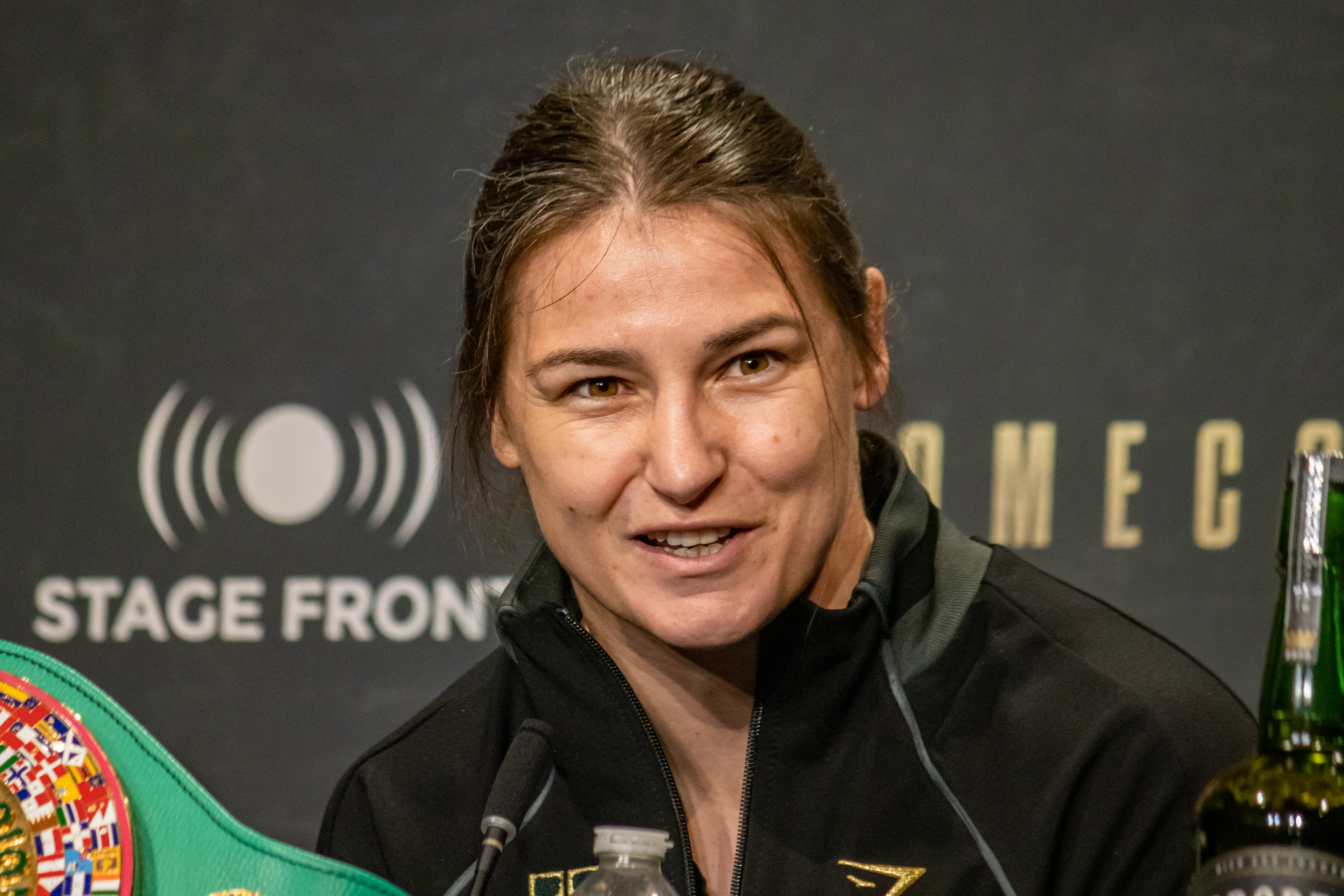
Katie Taylor speaking at the weigh in ahead of her fight against Chantelle Cameron in May 2023 – Photo: Liam Murphy
“Katie is my hero, my idol, and my inspiration,” Ella Thompson, an amateur boxer from Meath, said. “She has kicked down doors and paved a pathway for up and coming and present champions and has inspired young female amateurs like me”.
Ella Thompson, or Joyful as she goes by, was named as the All-Ireland Champion in 2022, fought in the 3Arena back in September, aims to get to the Los Angeles Olympics in 2028, and has trained with Taylor in the past.
“She is an idol and hero to me inside the ring, but more importantly outside the ring.
Ella Thompson
“It was amazing to share the ring with the greatest female boxer of all time,” Thompson said. “To look, learn, but most of all chat to Katie was amazing. I’m truly humbled and blessed.”
Big smiles from Katie Taylor in the ring at a public workout in Dundrum – Photo: Liam Murphy
It was only in 2012 that women’s boxing debuted at the Olympics. This moment was seen as the turning point, as Bray boxer Katie Taylor took home gold for Ireland in the lightweight division.
But it was also Katie Taylor that fought in the first ever women’s boxing fight in Ireland.
Despite voting to allow women’s boxing in 1997, the first women’s competitive bout took place four years later in Dublin’s National Stadium on October 31, 2001, between a 15-year-old Katie Taylor, who won on the night, and Belfast’s Alanna Audley.
Since then, Ireland’s become one of the Olympics’ strongest nations for women’s boxing contingents, with six of our 10 boxing hopefuls this year being female, with Dubliner Kellie Harrington taking home her second gold following a 4:1 split decision win against China’s Yang Wenlu in Paris, along with a successful run at the Tokyo games.
Acknowledging the success of a fellow pioneer, Katie Taylor tweeted following Kellie Harrington’s gold medal win, claiming she had sealed her place “as an icon of Irish sport and going down in history as a legend”
Kellie Harrington greets fans at her Portland Row homecoming following Ireland’s most successful Olympic games ever Photo: Liam Murphy
The history of women’s boxing is one of struggle; being rejected from clubs, fighting male opponents due to disparity within clubs, having to hide your long hair under a headguard and registering for fights under pseudonyms (Such as Taylor’s ‘K Taylor’ name when she was fighting male opponents), but it seems now the success has been worthwhile.
This week’s rematch bout, available to stream on Netflix, is set to be the biggest payday of Taylor’s career, with Boxing Kingdom reporting an estimated payday of $6.1million (€5.7m).
For those wanting to watch the fight, the Irish boxer is due to take to the ring at approximately 3am Irish time, followed by a main card bout of Jake Paul and Mike Tyson at 4am.
The Irish boxers going to the European Under-22 Championship were asked to sign a contract by the sport’s governing body stating that they would withdraw from a fight if they drew a Russian or Belarusian opponent.
The Irish Athletic Boxing Association (IABA) got this directive from the Irish government. They declined to comment but a representative said, “The IABA’s decision is in recognition of the fact that Ireland is a signatory to four successive Collective Statements on Russia’s war on Ukraine and international sport.”
Kian Hedderman was the first boxer to have to forfeit his fight on the opening day of the championship in Budva, Montenegro due to the policy.
“I was devastated to be honest. I felt like all my hard training and sacrifices just went towards nothing. It’s a personal dream to box in the Europeans even with taking time off work. If you’re not working, you’re not getting paid, so it was a loss all around, especially coming up to Christmas,” Hedderman said.
He stayed at the championship to show support despite his forced withdrawal.
“Going home wouldn’t make it any better. As I was team captain, I felt like I had to be there to support the others and one of my good mates was still in the tournament. I know in my heart that I’ll be there again, and the coaches were great to me there. They would do anything they could for you,” he added.
Hedderman had the choice to stay in Ireland and do the Irish Elite Championship instead, but he chose to go to the European Championship knowing the risk of what could happen.
“I don’t think I’d ever turn down the choice to put the Ireland vest on. My coach was keener on me doing the Irish Elites because he believed that I was gonna win it out, but it was too hard for me to turn down the Europeans.
“I have no regrets. I believe everything happens for a reason. I got to see how it runs, how it works and what’s the level that it takes to bring back a medal. This will put fuel in the fire for 2024 as my mental has changed for the better now. I can’t wait to perform in the squared circle and win again,” he added.
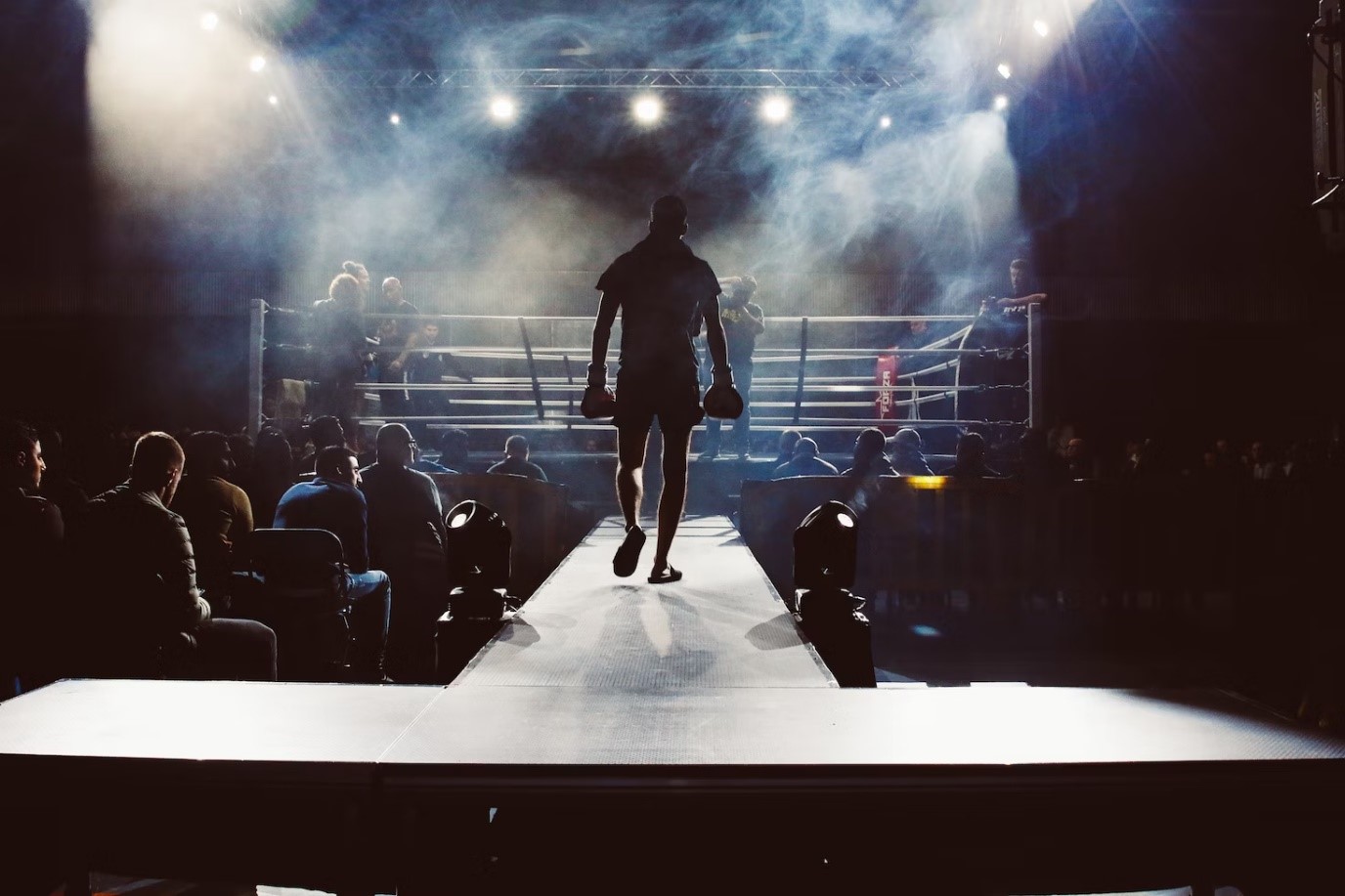
Image: Unsplash
Hedderman says that the new rules won’t stop him from pursuing his dreams. Players and coaches have accused the Irish government and IABA for bringing politics into the sport.
“Politics don’t belong in the sport. They don’t understand what us young boxers go through. Boxing was an escape for me, and it gave me a purpose. Decisions like this may end a career, but they don’t obviously see that. I’ll be back again and this time, even better and stronger,” he added.
Gavin Rafferty was the second Irish fighter who had to withdraw from the championship due to drawing a Belarusian opponent.
“I think it’s wrong. I think it’s a political situation that’s been brought into sport and I don’t think it’s right,” said Rafferty’s boxing coach, Philip Keogh.
“He’s a very good boxer. He’s been preparing for the last twelve weeks for the European Championships. It was a pity to see Gavin having to withdraw because he missed out on getting the medal. It would have been a lifelong memory to achieve a European medal in boxing,” added Keogh.
Rafferty’s boxing club risked sending him to the championship in the hopes that the circumstances would work out in their favour.
“We took the chance. We only found out Russia were going in the last few days, and we didn’t know if they were going to send a full team, so we just went with it. It wouldn’t have been right to pull out just a couple of days before. We hoped that they would’ve been knocked out of the tournament in the earlier rounds by other opponents,” added Keogh.
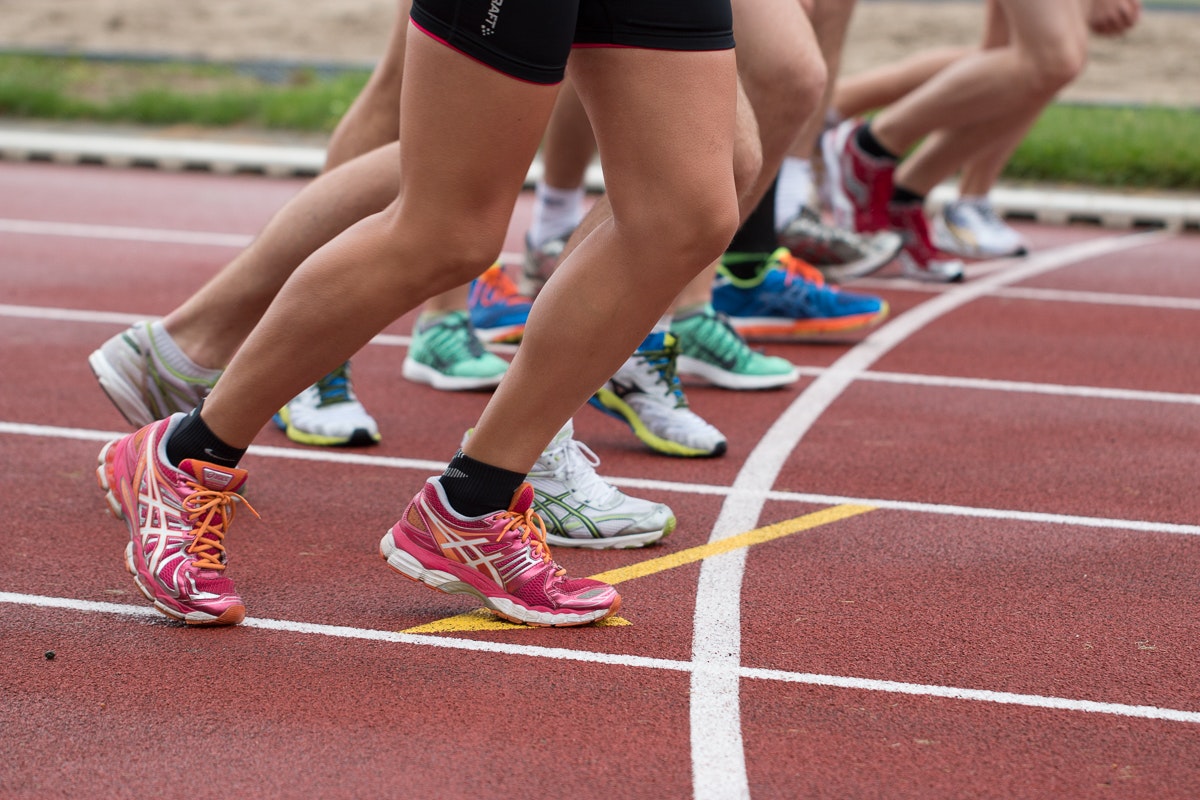
Image: Unsplash
Evelyn Igharo was the third Irish boxer to withdraw after she had already claimed the European bronze medal in the championship, which meant she could not continue competing for the silver.
“When I drew the Russian, I was heartbroken. All of us knew before we went over that there was a chance that we had to pull out. I thought it would be sooner on that I would meet my Russian,” Igharo said.
“We only brought three bronze medals back to Ireland, but I think it could have been a lot more because we weren’t really prepared for it. We were told we weren’t allowed to enter the Elites. I was the former Elite champion so now my title went to someone else because I couldn’t box and defend my title,” she added.
Igharo witnessed the implications that the rules had for Hedderman and her team.
“Kian had it really bad because he just went away for a little holiday. He came down and just got told that he wasn’t boxing, but they did arrange spars for him.
“I don’t think politics belong in sport because I don’t see how what a country is doing affects the athletes. We’re the only country to send out a team and spend money on transport and then at the end of the day still pull out. They shouldn’t send a team if they were going to do that, it doesn’t really make sense,” she added.
She is pessimistic about her future in the sport in Ireland.
“At the moment, I’m still going to be training but I don’t think there’s anything in Ireland for boxers. There are great fighters, but they’re not funding it properly. There isn’t any incentive to stay at the amateur game because the IABA isn’t really doing anything for the boxers,” she added.
Do veggies make you run faster? Image via Pexels.com
There’s no doubt that veganism has been rising in popularity in recent years – a lifestyle that was once obscure has now become common. Still, the words vegan and athlete don’t seem to go together.
When it comes to sports nutrition, we are told protein is key. This is often wrongly assumed to be something a plant based diet can ultimately lack – conjuring the image of one who follows the diet as a frail, weak, possibly malnourished person.
Thankfully it’s 2021 and that particular image is, slowly but surely, dying out.
“I was always interested in nutrition, especially for improving performance,” says Gerard Prendergast, a gym owner, personal trainer, triathlon coach and yoga instructor.
“I felt [veganism] would suit my training at the time which was endurance sports. I was blown away at how my body adapted to eating a wholefoods, plant-based diet. I had more energy, felt lighter, my stamina improved and even my mood and mental health seemed to improve.”
Prendergast began boxing and weightlifting at an early age and went on to play for the ROI VI International Futsal team at 28. At 32, he completed his first triathlon, which encouraged him to take on bigger and more challenging events.
Gerard Prendergast crosses the finish line at DecaUK – Image courtesy of Gerard Prendergast
“In 2017 I entered into DecaUK, 10 Ironman distance triathlons in 10 consecutive days. Every day for 10 days I was required to swim 3.8k, Cycle 180k, and run a full marathon – 42k. I won that event 4.5 hours ahead of the second place finisher.
“In 2018 I completed 52 Ironman distance triathlons in 52 weeks to raise money for Mental Health Ireland. I have completed other challenges such as 100 mile run on a 500m loop and cycling the height of Everest on an indoor trainer.”
Judging by Prendergast’s impressive lifestyle, it appears there’s no doubt a vegan diet can provide an athlete with the power they need to succeed.
“Athletes absolutely can thrive on a plant based diet,” he says. “It’s been proved all over the world over the past few years with athletes like Serena Williams, Novak Djockovic and Lewis Hamilton all seeing great benefits to their careers by eating plant-based. I myself can back that up, after struggling to finish a 5k run in 2012 to becoming a Deca Ironman champion.”
“Athletes absolutely can thrive on a plant-based diet and it’s been proved all over the world over the past few years.”
Gerard Prendergast
“I had always worked out and eaten well but I really wanted to go even further with knowing what is in my food,” says Dawn Butler, a 35-year-old athlete from Kildare.
An ex professional wrestler, Butler now trains in Brazilian jiu jitsu as well as partaking in weightlifting. On days spent away from the intensity of the gym and training, Butler enjoys long walks, hikes, and hill climbing.
After recovering from stage four Hodgkin’s Lymphoma, Butler turned to veganism as a way to repair and nourish her body.
Dawn Butler on a plant powered hike in the Connemara mountains. Image courtesy of Dawn Butler
“I took my time and looked into lots of research and eventually I just couldn’t stand dairy anymore. I was really put off when I saw where dairy comes from and I knew I couldn’t be a part of that world,” explains Butler.
“I knew with the level of training I do that I have to really pay attention to my nutrition. I always check in with how I’m feeling and I always get a good variety of foods. I notice that I have more energy being vegan.”
Despite her fitness level and rigorous training, Butler admits she is no stranger to ridicule from her gym buddies due to her diet choices.
“I train as hard as anyone I know – I have muscles and strength and I train with a lot of men. I definitely do not feel I am any weaker because of my diet. I get very frustrated when some people try to tell me about my protein intake when, in fact, they can’t tell me theirs. They assume because they eat meat they get more than me when in truth I probably get twice the amount of protein.
“If I am seen having a protein shake, it’s because my diet is ‘wrong’, but that does not apply to a meat eater who also uses protein shakes. I don’t use protein shakes because I am vegan. I use them as part of the diet and lifestyle that I have.
“People assume and don’t ask. If somebody asks me about it I’m happy to chat and educate but when someone assumes my protein intake it gets very disheartening. It feels like a throwaway ‘fact’ and a way to debunk veganism.”
As annoying as such remarks might be, Butler has no plans to ditch her plant based diet any time soon and has her sights set on pursuing Brazilian jiu jitsu, currently training to take part in a tournament later this year.
Veganism undoubtedly has the potential to enhance one’s athletic performance, but Butler has some advice for those starting out.
“I do believe it’s possible for athletes to thrive on a vegan diet. I do however think it is harder. There is less room for error and I think you need to keep on top of it. It’s very important to keep the range of foods wide and get sources of everything in there.”
TheCity.ie’s Kim O’Leary has been looking at how professional and amateur boxers are continuing their work-outs at home during the Covid-19 lockdown. Kim spoke to Ireland’s youngest female pro-boxer Katelynn Phelan and her father/trainer Paddy Phelan, who are hoping to be back in the ring sooner rather than later
The coronavirus has hit the sporting world hard over the last few weeks, with many contact sports like GAA, basketball, soccer and cricket seeing their seasons cancelled. It’s also been a major blow for the rising stars on the Irish boxing scene, with the Irish Athletic Boxing Association (IABA) postponing all championships, competitions, clubs shows and tournament due to take place this summer.
However, there may be some good news on the horizon, with recent talk about boxing returning in June in a series of behind closed doors shows that would be shown on live TV. It is understood that Ireland’s boxers are determined to prepare for the rescheduled Euros as well as the postponed Tokyo Olympics, which is expected to take place in the summer of 2021.
Speaking at the launch of the Government's new #InThisTogether campaign, Irish boxer Kellie Harrington said that training at home helped her through self-isolation. She said Irish athletes will be posting fitness tips online as part of the campaign. pic.twitter.com/pTpNr4ghcR
To find out how boxers and boxing clubs are preparing for a potential return to boxing later in the year, I spoke Ireland’s youngest female professional boxer, Katelynn Phelan from Kildare Town, and to her father Paddy Phelan, who is also a trainer at St Brigid’s Boxing Club in Kildare Town.
Katelynn comes from a family of highly respected boxers and her brother Allan Phelan is the current featherweight pro.
It’s been an impressive year for Katelynn as she recently won her first ever bout at the ‘Celtic Clash’ boxing tournament in February against Bulgaria’s Borislava Goranova, winning all four rounds in a decision at The Devenish Complex in Belfast.
Now with the lockdown measures still in place due to covid-19, Katelynn says that she is still training at home.
“I plan on getting myself an Irish title by the end of the year.”
After Michael Conlan’s first professional fight, James Carroll asks what the future might hold for the Irish boxer.
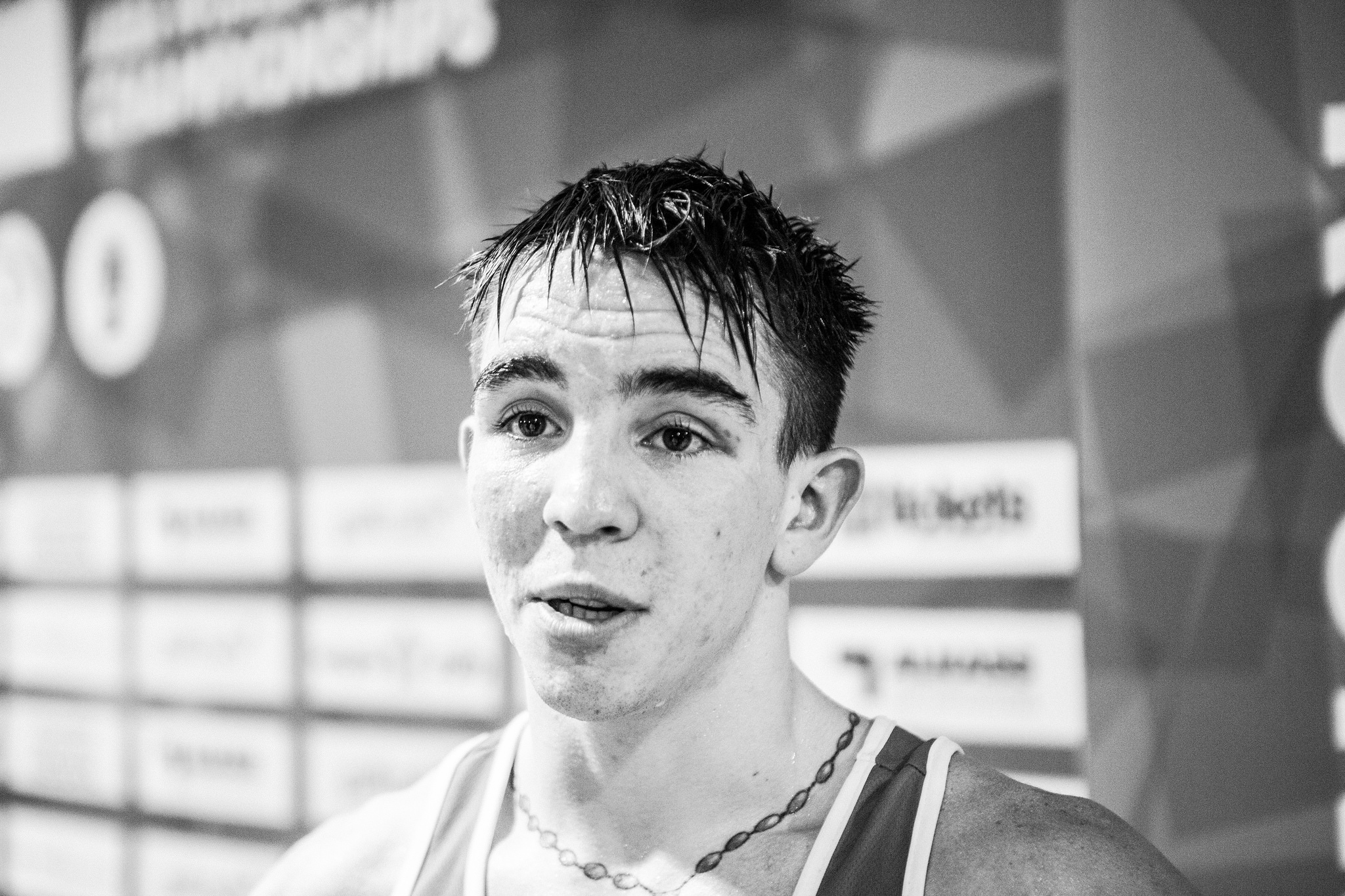
“I don’t think I will ever forget this night, this is a real special night for me and you know I am so proud and happy to fight here.” said Michael Conlan after his first professional victory.
He made light work of American Tim Ibarra in a junior featherweight contest at Madison Square Garden in New York on St Patrick’s Day.
Conlan headlined the fight card in front of a sold-out raucous crowd of 5,000. Irish dancers performed in the ring before the fight. And with legendary announcer Michael Buffer on the mic, this gave us a glimpse of Michael Conlan’s possible future in professional boxing.
The Belfast fighter won a bronze medal at the 2012 Olympic Games in London and was moving on from the bitter disappointment of failing to win a medal at last year’s Rio Games where he felt he had been cheated out of victory in the quarter finals.
Conlan dominated his American opponent from the first round until the stoppage came midway through the third round.
Although he may have been anxious about putting on a show and getting a quick knockout, there was many positives on display that would suggest he has a big future ahead of him.
He found his rhythm and range early in the first round where he used his jab and picked his shots. However, he was far from composed in the second round.
Although there was little resistance by Ibarra throughout fight, Conlan was attempting to get a big knockout, but kept swinging and missing his overhand right.
“I don’t think I performed too well but I still got the stoppage but I had a lot of nerves you know, it feels like I’m fighting for a world title and it is only my professional debut.”
Michael Conlon
In round three, he went back to basics with the jab. Before long, Conlan had Ibarra on the ropes. Then he unleashed a flurry of combinations to the body, and the referee called a halt to proceedings.
“I don’t think I performed too well but I still got the stoppage but I had a lot of nerves you know, it feels like I’m fighting for a world title and it is only my professional debut,” Conlan said after the bout.
UFC star Conor McGregor walked out with Conlan to his first professional fight. McGregor also offered encouragement to the boxer throughout the match
“It was special. You know, who gets the biggest star in their country, and possibly the world, to carry the flag out with me. We are a small country, we stick together, we have Niall Horan here from One Direction, we’ve got big support,” said Conlon.
Conlan’s future
Conlan is now based in Los Angeles near Venice Beach with his fiancee, Shauna Olali, and their two-year-old daughter, Luisne.
He signed a contract in September 2016 with Top Rank, the biggest boxing promoter in the world.
“Top Rank are expecting massive things from him, they’ve invested a lot of money into him and that adds a little bit of pressure as well and he has to go out and perform now,”
Kenneth Egan
Bob Arum, Top Rank’s CEO, has been in the business for 51 years and has promoted everybody from Muhammad Ali to Sugar Ray Leonard. He has said he sees potential in Conlan’s professional career.
“Like everybody else we watched the Olympics. We saw that this extraordinarily talented young Irish lad got screwed by the politics in amateur boxing and felt that when he turned pro, we would love to handle his career because he could be a major international boxing star,” Arum said to NewsTalk FM.
Former amateur boxer and Olympic silver medalist Kenneth Egan spoke to The City about what the future might hold for Conlan.
“Top Rank are expecting massive things from him. They’ve invested a lot of money into him and that adds a little bit of pressure as well and he has to go out and perform now,” he said.
Egan says that moving to LA was absolutely the correct decision for Conlon.
“The first thing he did was find a good home out there, so he is in the right place… [away from] the hassle and stress that he would have had if he was flying from Belfast to LA every few weeks,” said Egan.
Conlan will fight six times a year under his current deal. He is scheduled to fight again in May.
“I’d like to see a few more fights soon. He didn’t get the knockout on Saturday but he needs the knockout soon because that’s why the fans tune in,” said Egan.
“His punch variety is very good but we don’t know what his punching power is yet in the pro- game. I think Michael has always had a fantastic work rate, throws an awful lot of punches and he is super fit.”
Some worry that not having his extended family around could affect Conlan’s performance, but Egan does not subscribe to that. “He can’t learn a lot more, he already knows the shots all too well, he is well educated in that sense.”
Will there be anything that his new coach Manny Robles can teach him?
“The new trainer might fine tune him, train him for 12 rounds and show him the tricks of the trade of the pro-game,” Egan said.
Top Rank will patiently build his profile, so the fans should not be expecting a world title fight in 2017, but Egan expects him to be competing for a world title in three years.
Friday’s bout was unlikely to ever be a contest but Conlan showed his skill set – a good jab, nimble footwork, and solid head movement. However, he is far from the finished article yet.
A massive part of training will be gradually building up fitness for 12 rounds and being more patient and cleaner with his shots. His skills will develop with more fights and allow him to show his punching power.
Top Rank have booked Madison Square Garden on St Patrick’s Day for the next five years. This suggests that they want a fantastic atmosphere and competitive fights in the famous venue.
Conlan has all the right supports to succeed – a leading promoter, a world class coach and, more importantly, his family.
Although there will be greater tests ahead for the Belfast fighter, the only thing that could slow his progress is the chaos that surrounds boxing: the fame, the media and the politics.
Conlan’s own statements suggest he has no fear of those pitfalls: “I do believe I’ll be Ireland’s greatest ever fighter and three-weight world champion and you know what, this is the start of something great.”
Video: Jennifer McDonald, Conor McMahon and Orla Stafford
Boxing and beauty are not two words we usually link together, but European champion and female boxer Clare Grace sheds a new light on the contrast between femininity and the physical demands of the sport on the female body.
Clare Grace, end of front row, right hand side.
Clare Grace is 20 year old student and boxing champion from Kilkenny. She’s in her third year of sports science and nutrition in DCU. Clare boxes for the Irish team and has ambitions of competing at Olympic level in the near future.
It all started quite early for Clare when her father suggested she try out boxing. “My family has always been passionate about sport and when I was nine my dad brought me to my local boxing club just to try it out and I’ve never looked back,” says the European champion.
It wasn’t long before Clare showed great potential and began to compete. “I was about 12 or 13 years old when I first entered the ring, it was overwhelming because I suddenly realised that my opponent was going to try and hit me in the face but after a while I got used to it and that’s the sport I suppose,” says Clare.
Clare is now ranked 1oth in the World
Following Katie Taylor’s success at the Olympics in 2012, female boxing has become more recognised and discussed, but when Clare started boxing a little over a decade ago she recalls how it was very unusual for girls to be involved in boxing. “When I started it was all boys but now in my college club there are two senior girls including myself which is a lot even though it sounds otherwise, there are lots of girls signed up to the club but only the dedicated few turn up for training sessions,” says Clare.
Clare never feels intimidated in the male dominated sport
Boxing has long been associated with men, but Clare says that she doesn’t feel out of place because of that. “I never feel discriminated against because of my gender, in my boxing clubs you are a boxer, you are not categorised as a male or female, just as a boxer,” she explains.
Opening up about her perception of femininity, Clare says, “Yeah I have muscles but I think things are changing, I think it’s okay for women to be strong and have muscle, of course there is still a stigma attached to how women should look and the perception of femininity but I do feel this is changing”.
Clare explains how as a woman it is hard when you have bruising on your face. “It is often hard to explain to people that the reason you have a black eye is the fact that you are a boxer, people often look at me like ‘what happened to that poor girl?’,” laughs Clare.
Clare says she has had to make many sacrifices to compete at this level
For a lot of women the idea of going into a male dominated sector would be intimidating but Clare never feels that way and she never feels like she has to impress anyone with anything other than her boxing abilities.
“I never get dolled up to go training, you’re just going to sweat it off anyway so it’s a waste of make-up and make-up is expensive” laughs Clare. “It’s not really why I go training anyway.”
Having a spot on your face as a young woman can often feel like a nightmare but for Clare even bruising on her face “is no longer the end of the world”.
“When I was younger and in secondary school I was more self-conscious and I would try cover them up with make-up”, says Clare. She recalls one moment that a teacher held her back after class and asked if she was okay and what had happened to her face. “This was the first time someone actually noticed it enough to be concerned, in a way it made me even more self-conscious and I started to notice people giving me a few funny looks, but now I’m older it doesn’t bother me like it used to,” she explains.
Clare focusing on a sparing session
Like any girl her age, Clare likes to go out and have fun and she says how sometimes it’s hard when all her friends are getting ready and she’s “trying to cover up a black eye”.
“But that’s the kind of things you have to deal with if you want to compete at this level,” she says.
“I do have to prep myself up before entering the ring”
“Humans are judging machines, and of course I get labelled”, says Clare. “I often get called the girl who boxes rather than by my name.
“My close friends know me as Clare, a girl, but I’d be wrong if I said I didn’t get labelled.”
Clare recently won bronze for Ireland in Europe
And what about the sacrifices she has to make?
“I’d be lying if I said I didn’t have to make sacrifices for boxing,” Clare explains. “Like when my friends are all going to the student bar and I have to go to training, or when all my friends are in relationships and I don’t have time to be, but I love the sport and for me that comes first.”
In a country gripped by medals success in Olympic boxing and the UFC’s pay-per-view extravaganza, it is perhaps difficult to uncover the strong Muay Thai presence in Ireland.
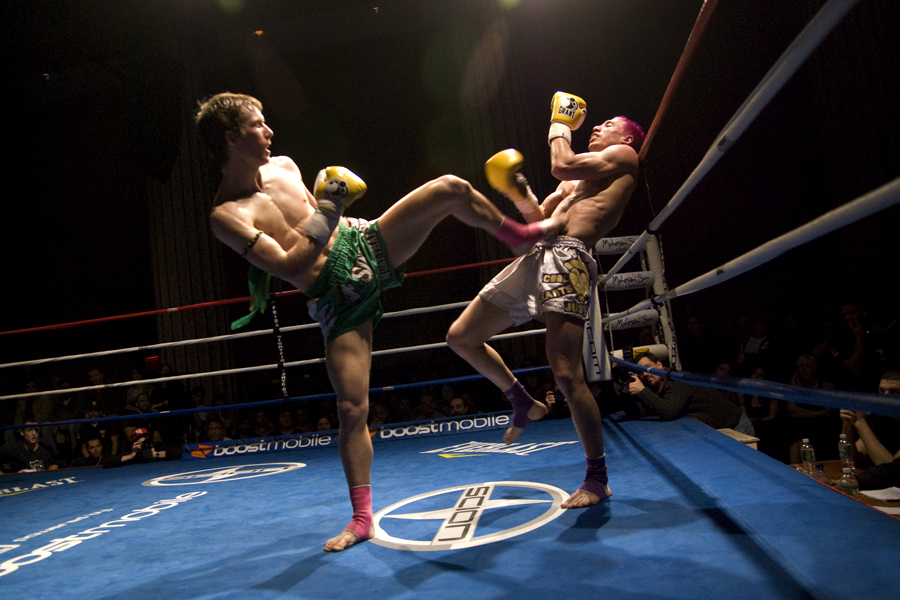
Muay Thai, occasionally known as Thaiboxing, is a combat sport that utilises all parts of the body for striking, kicking and clinching. A match consists of five three minute rounds with scores being kept by judges.
There are approximately 30 Muay Thai gyms in Ireland where potential champion fighters learn and study the art. In recent years, the Irish Muay Thai scene has been boosted by the talented Dubliner Jono Bracken and the booking of a fight featuring the legendary Saenchai which was held in Cork earlier this year.
Wishing to learn about the sport, The City spoke to Daniel O’Reilly, a Muay Thai student and fighter from Dublin. He has been balancing his passion with work commitments since 2009.
“I had always been fascinated with the sport due to the film Kickboxer, which was my favourite film throughout my childhood,” he said.
Daniel has experienced several venue changes during his time with the Warriors Thai Boxing Dublin Gym, but has stayed true to the art. “They were first located in Loughlinstown Leisure Centre but then moved to Bray, where I started my training under Mike Dockery,” he explained.
“Then in late 2009 the club moved to a permanent specialised location in Monkstown. Also now there is a head trainer, Cian Cowley. He is also a multiple title holder in Muay Thai and also K-1.”
Photo credit: MartialArtsNomad.com on Flickr
Daniel also described the similarities between Muay Thai and the likes of MMA and boxing, both in advertising and style. “Yes [Muay Thai and MMA share techniques in common], although most MMA fighters have a hybrid style of stand up fighting. It wouldn’t be possible to fight with a true Thai stance due to takedowns so the techniques are slightly altered,” he said.
He continued, “there are many shows, promoted just like MMA and boxing cards. Fighters are flown in from all over Europe and some even from Thailand. Just last month, Siam Warriors gym in Cork held a super show with two elite Thai fighters, Pornsae and Rungravee.”
Luckily for Daniel’s Warriors gym, they have an event of their own to look forward to this month.
It is relatively inexpensive to buy the necessary gear for Muay Thai, according to Daniel. Items used by Thaiboxing fighters include gloves, shin pads, shorts, a protective cup and gumguard and wrist wraps. Gyms provide certain pieces of equipment until a student wishes to commit to training.
Muay Thai is primarily taught to adolescents and adult students, but younger students can be catered for. “In Thailand they start from a very young age. Over here it’s limited due to the intensity of the sport. Junior classes are held but they’d be heavily padded and only really learn the techniques of the style,” he said.
Her first Home Bout since Bringing Back Olympic Gold, Olympic gold medallist boxer Katie Taylor will not have too far to travel for her next fight.
Katie captured the hearts of the nation after defeating Sofya Ochigava 10-8 The London 2012 Olympic Games.
The 27-year-old amateur boxer will be on her home turf on November 30, where she will face Finland’s Mira Potkonen, whom she has already beaten in the EU semi-finals. Taylor’s decision to stick with her amateur status has been met with a warm response from the Irish public and this bout against Potkonen is all part of her preparations for Brazil in 2016. This is a journey she is hoping will end with a second gold medal. This will be Katie’s first fight since her sell out event in March at the Bord Gais Theatre. Taylor is excited to get back in the ring and to be able to do so in her home town. Having secured a fifth successive European Union title by defeating France’s Estelle Mossely at the European Championships earlier this year, Katie says she is happy the local fans who have been so dedicated now have a chance to support her on a more personal level. Though the Bray native’s year has been relatively quiet, this bout is sure to end 2013 on a high note for her. Katie also launched her new website this week, www.katietaylor.ie. Now fans can stay interactive with Katie as blogs, videos and updates will be posted on the boxer’s training and fights. Tickets for Katie’s ‘Homecoming’ are priced from €40 go on sale from www.afterdark.ie on 1st November at 9am.












You must be logged in to post a comment.