Tag: Brazil

  • Covid-19 abroad: Brazil setting the wrong kind of records amid deadly second wave

    Covid-19 abroad: Brazil setting the wrong kind of records amid deadly second wave

    Photo by Matheus Bertelli via Pexels.com

    Brazil is in the grip of a devastating second wave of the coronavirus, that claimed around 66,500 lives in March. 

    Watch Colm McGuirk talk to Maria Lombardini about Covid-19 in Brazil

    With the native, more transmissible P1 strain pervasive, Brazil’s health system is at breaking point, with many intensive care units across the country unable to cope with patient numbers.

    Brazil, the sixth-most-populated country in the world with around 211 million people, is now second only to the USA in total Covid-19 fatalities.

    Brazilian president Jair Bolsonaro’s response to the pandemic has come under much fire. The ex-army captain, who has reminisced fondly about Brazil’s violently oppressive military dictatorship of 1964-85, was elected in 2018 on a promise of law and order in a country dogged by crime – in spite of a catalogue of misogynistic, racist and homophobic public utterances.

    Bolsonaro has left it to state and city governments in Brazil to implement lockdowns, and refused to do so at a national level. Instead, he has downplayed the severity of the virus, attended large gatherings, and promoted and purchased unproven treatments for Covid-19. 

    The president won support last year after signing off on generous cash handouts that left many of Brazil’s most impoverished better off than before the pandemic, but the trauma of this second wave has seen his approval rating sink to an all-time low in recent weeks.

    In keeping with global patterns, a recently published study by The Lancet concluded that “existing socioeconomic inequalities [in Brazil], rather than age, health status, and other risk factors for COVID-19, have affected the course of the epidemic, with a disproportionate adverse burden on states and municipalities with high socioeconomic vulnerability.”

    As mutating variants continue to ravage and vaccination programmes falter, Brazil’s crisis looks set to rage on.

  • “At least in Ireland I have a better life”

    “At least in Ireland I have a better life”

    By Ana Novais

    Dublin will ensure you’ll discover amazing homemade scones, caffeine shots in hidden cafés and the perfect vintage clothes in a second-hand shop. To a historic landmark with an inspiring back story or a chance to chat with a Dublin character, this city is layered, unique and full of treasures waiting to be found.

    However, it is not only the welcome that brings people into this country. Some people come to look for a better life, and it’s here where they think that their dreams will come true.

    Like many Brazilian people living in Ireland, Luz Mauricio followed her dreams to Dublin where she came to learn English

    Luz Mauricio Photo Credit: Ana Novais

     “I came to Ireland in 2016 and have now attained a proficient level of English which is excellent,” said Luz.

    But for Luz, one of her biggest struggles was finding somewhere to live

    “When I arrived, I ended up living in a house in Dublin 1, with eight other people and for seven long months, I shared a room with one other girl and two guys,” she continued.

    “I got depressed,” said Luz, “but I kept going because my goal was to find a job and to learn a new language.”

    Living in overcrowded places is the norm for many Brazilians and other international students living in Dublin and people are regularly evicted with short or no notice.

    “Eventually, I found a less crowded place to live, but I never got my deposit back from the previous landlord,” she added. “But, everything I have been through was worth it and at least in Ireland, I have a better life.”

    “Coming to Ireland has been a great experience, but it is so tough to find a suitable place to live,” said Luz.

    According to the Immigration in Ireland Statistics 2018, Ireland granted permission to 22,414 Brazilians to remain in the State last year.

    “Ireland granted permission to 22,414 Brazilians to remain in the State last year”

    Colm Daly, Executive Officer at the Department of Justice and Equality.

    “There were 12,618 Brazilians with a permission to remain on Study grounds (Stamp 2 and 2a) in 2018,” said Colm Daly, Executive Officer at the Department of Justice and Equality.

    The biggest motivation among all these people is the desire to be in contact with different cultures and the chance to learn a new language.

  • Violence against women in Brazil: a heinous crime

    Photo by Concha García Hernández
    Photo by Concha García Hernández

    Domestic violence, particularly against women and children, kills more than war.  A study carried out last year found that aggression against women costs the world economy more than $8 trillion per year.  This study urged the United Nations (UN) to pay more attention to domestic abuse, which receives less attention than armed conflicts such as Syria and Ukraine.

    In Brazil, violence against women is a common practice. For every 100,000 women, four of them are murdered every year. This places Brazil seventh in the world for this type of crime. Many Brazilians suffer more violence at home than in public spaces, and they do not feel safe living with their own husbands.

    Last week, The House of Representatives proposed a bill that increases the penalty for men who commit these crimes against women.  This bill had already been approved by the Senate and now it is waiting for Presidential approval. Its text considers domestic violence as contempt and discrimination against womanhood.  Once this proposal is approved, this crime will be included in the Penal Code and it will be considered as a heinous crime.  Mrs Maria do Rosário, Former Minister for Human Rights, said, “It [bill] will penalize women’s deaths due to violence.”

    Many Brazilians are waiting for their reality to change with this bill and hoping that the perpetrators will now be duly punished.

    By Maira De Gois

  • Katie’s Road to Rio

    Katie’s Road to Rio

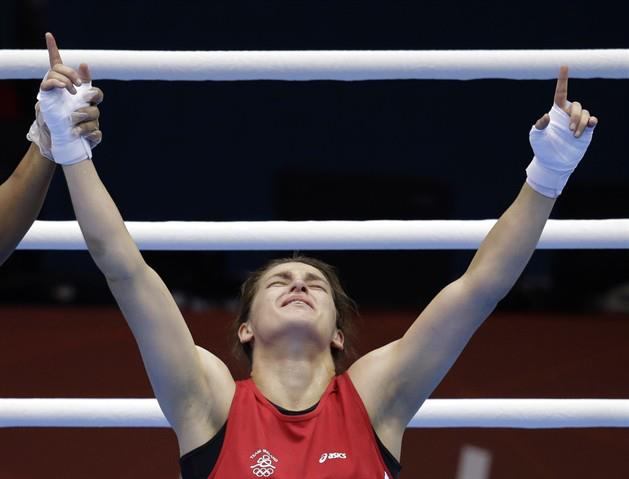
    Her first Home Bout since Bringing Back Olympic Gold, Olympic gold medallist boxer Katie Taylor will not have too far to travel for her next fight.

    Katie captured the hearts of the nation after defeating Sofya Ochigava 10-8 The London 2012 Olympic Games.
    Katie captured the hearts of the nation after defeating Sofya Ochigava 10-8 The London 2012 Olympic Games.

    The 27-year-old amateur boxer will be on her home turf on November 30, where she will face Finland’s Mira Potkonen, whom she has already beaten in the EU semi-finals. Taylor’s decision to stick with her amateur status has been met with a warm response from the Irish public and this bout against Potkonen is all part of her preparations for Brazil in 2016. This is a journey she is hoping will end with a second gold medal. This will be Katie’s first fight since her sell out event in March at the Bord Gais Theatre. Taylor is excited to get back in the ring and to be able to do so in her home town. Having secured a fifth successive European Union title by defeating France’s Estelle Mossely at the European Championships earlier this year, Katie says she is happy the local fans who have been so dedicated now have a chance to support her on a more personal level. Though the Bray native’s year has been relatively quiet, this bout is sure to end 2013 on a high note for her. Katie also launched her new website this week, www.katietaylor.ie. Now fans can stay interactive with Katie as blogs, videos and updates will be posted on the boxer’s training and fights. Tickets for Katie’s ‘Homecoming’ are priced from €40 go on sale from www.afterdark.ie on 1st November at 9am.

  • World Cup Qualifing round Up

    World Cup Qualifing round Up

    Sopain are still the team to beat. credit telegraph.co.uk
    Sopain are still the team to beat. credit telegraph.co.uk

    As the dust settles on another world cup qualifying campaign, nine of Europe’s 13 teams are getting their bags ready for Brazil 2014.

    Belgium, Germany, Italy, Spain, England, Bosnia-Herzegovina, Russia, Switzerland and the Netherlands will all be jetting off next may for the biggest world cup ever.

    Despite drawing at home to Wales, in their final game, the Belgians won their group quite easily and with Kompany at the back Hazard, Lakaku and Benteke they look like a real force for the Brazilian world cup.

    The Germans beat Ireland 9-1 over the two games and have so many options all over the park.  Neuer in goal is as good as there is, Boetang and Dante are solid at the back, Lahm, Muller, Gotze, Kroos, Ozil and Gomez can all make 90 minutes seem like an eternity.

    The Italians will be hoping to collect their fifth Jules Rimet trophy. The Azzuri are always a threat and having reached the final of Euro 2012 are not to be discarded.  Buffon, De rossi, Pirlo, Marchisio and Ballotelli will all take looking after.

    The Jules Rimet trophy
    The Jules Rimet trophy. credit the liberty.ie

    The defending European and world champions took a spanking from Brazil at the confederations cup in June and with Puyol, Xavi and Iniesta all aging Spain might not be favourite to retain the prize they collected in Johannesburg in 2010.

    England under Hodgson looks more like a team than individuals.  Hart, Baines, Carrick, Gerrard and Wilshire all lay a great foundation for the attacking threats of Townend, Rooney, Sturidge and Wellbeck.  Don’t forget Walcott and the Ox either.

    Bosnia, Russia and Switzerland will all come to the table as first seeds but can’t really expect much more than a last 16 appearance.

    And finally the Dutch, My personal tip for International footballs greatest honour.  If they click at even 15% of what their capable of they could cruise to victory but if their pre-tournament antics continue they might not even score a goal.