
Tag: Budget

  • Child Benefit Boost Delayed: Charities Warn of Growing Poverty Crisis

    Child Benefit Boost Delayed: Charities Warn of Growing Poverty Crisis

    Children’s charities, and members of the Social Democrats have strongly criticised the Government, following the decision to delay the introduction of a second tier child benefit paymemt.

    The proposed top up, which would have provided families in need an extra €145 per month on top of existing monthly child benefit payments will not be included in the 2026 budget, despite talks of its introduction.

    Social Democrat’s children’s spokesperson Adrian Farrelly stated “this government’s failure to plan for two tier child benefit in Budget 2026 shows a serious disconnection from the growing child poverty crisis.”

    The disappointment with The Government’s decision follows a nationwide survey by the Irish Human Rights and Equality Commission (IHREC), which found a striking 84% of participants say they are worried about the cost of living.

    Photo: Towfiqu Barbhuya – Unsplash

    The Children’s Rights Alliance emphasised the scale of the issue, noting that “one in seven children were living in households dependant on incomes 60 per cent below the median. One in five children (21.2) were living in enforced deprivation.”

    In its Pre Budget Submission, SVP also highlighted the severity of child poverty, describing figures as “deeply concerning” stating that “consistent poverty has increased from 4.8% in 2023, to 8.5% in 2024. That’s over 45,000 more children now living in consistent poverty.”

    Further emphasising the inadequacy of current supports within the country, SVP’s National President, Rose McGowan, added that current supports are insufficient and “currently meet only 64% of a teenagers needs.”

    Photo: Luke Pennystan – Unsplash

    Barnardos CEO, Suzanne Connolly also highlighted the urgent need for targeted financial support, stating “Every day across our services we see immediate and long term difference that early intervention can make to help a child thrive.”

    The charity also pointed to the ongoing struggles faced by children, noting that “we witness too many children across the country going without daily necessities and access to vital services.”

    Both Barnardos and SVP have made clear calls for increases to existing child payments, arguing that current modest payments are insufficient to meet basic living costs.

    SVP has recommended increasing current child income supports by €15 per week for children aged 12 and over, highlighting that “current payments meet just 64% of their essential needs” along with an increase of €6 per week for those under 12.

    Barnardos similarly urges targeted top ups of the same figures to ensure that children in low income families have access to essential needs and vital services.

    From the Government side, Minister for Social Protection Dara Calleary has defended the delay, citing the need for careful planning while emphasising that extra payments remain a priority.

    “A second tier of child payment is something that we are looking at within the department, and my officials are doing a lot of work on it. The proposals around it, though, would involve a complete rejig of existing payments” said the Minister.

  • Is It Time to Say Goodbye to Vapes?

    Is It Time to Say Goodbye to Vapes?

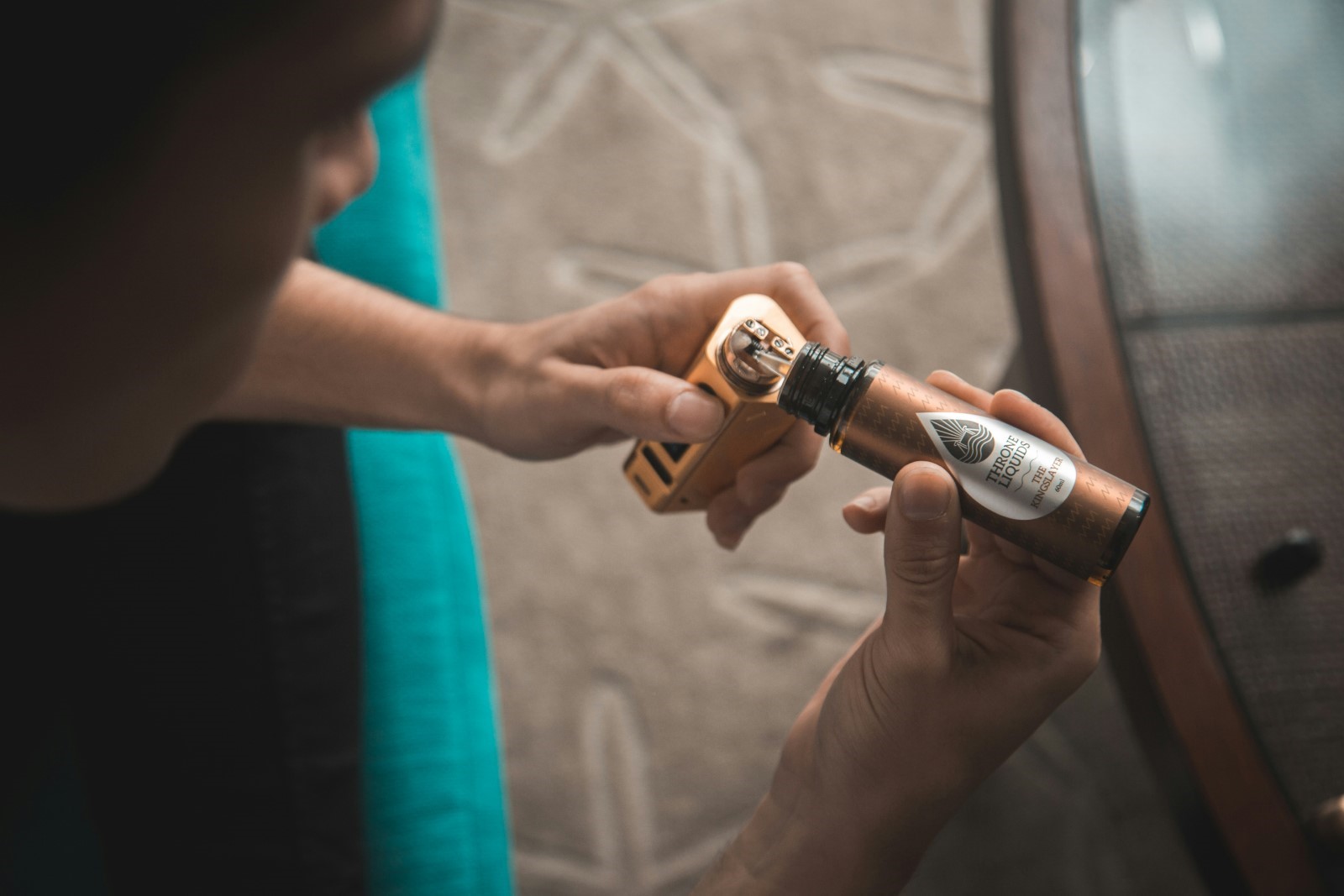
    The Government announced during Budget 2025 that e-cigarettes will increase in purchasing due to new taxes being introduced. 

    The tax will apply to all e-liquids at a rate of 50c per ml of e-liquid. A typical disposable vape contains 2ml of e-liquid and costs in the region of €8.  

    This new tax will bring the price of such a product to €9.23 including VAT. 

    The tax will come into effect in the middle of next year. 

    It is not a surprise that vapes are seeing this new tax being implemented as it can be seen as a way to discourage young people in Ireland from using vapes. 

    Minister for Finance Jack Chambers told the Dáil he was introducing the tax “on public health grounds as there has been a significant rise in their use”. 

    The Government believes the tax on vapes is a step in the right direction.  

    The Government is also working on legislation to ban the sale of disposable vapes on environmental and public health grounds. 

    If that is achieved there could potentially be a big decline in the smoking industry and shopkeepers that primarily sell vapes could be at risk.  

    The City.ie was able to sit down with Mohammed, a store owner at Moore Street who sells various items in his store like Prime, keychains, and vapes. 

    “See my friend, I don’t mind the new tax coming to my store, I will still get my customers why? Because the vapes sell very well, I just do not want the ban of disposable vapes many people come and buy it here and if it is no longer available, I will lose business”. 

    Vape/Cigarette store on Moore Street, Dublin Photo credit: Mene Agbofodoh 

    Occupational Therapist Adora Maxell spoke to the City.ie about some of the health risks associated with vaping amongst young people. 

    “One of the most common effects of vapes is that they are highly addictive due to their nicotine content and with the youth there are multiple flavourings that create this feel of a different taste with each vape”. 

    “During my internship, I saw cases of EVALI (E-cigarettes Vaping-Associated Lung Injury). This condition has been linked to vaping especially vapes that contain THC, it can cause serious lung damage, with symptoms like difficulty breathing, coughing, chest pain, and even hospitalization or and it more severe cases in death fortunately I have not experience to that level. 

    “The chemicals within vapes are possibly the worst things about them, they contain very harsh substances like formaldehyde, acrolein, and diacetyl which are damaging to the body when inhaled. Some of the substances can be responsible for what is commonly known as ‘popcorn lungs’ which is another way of saying bronchiolitis,” said Maxell. 

    The City.ie also took to the streets of Dublin to ask the general public how they felt about the new taxes being put in place on the vapes. 

    “Honestly, I think it is a good incentive going forward, it helps younger and older people alike the question of whether they should be spending their money on vapes right now or use it for something beneficial for themselves”. said Lee Mullen from O’Connell Street. 

     Jane,19 from Cork, also spoke to The City.ie on the issues of vapes. 

    “As a young person who buys the occasional vape on a night out or whenever I need to calm myself down it feels unfair going forward, I’ll have to spend even more to do now”. 

    “I feel the Government should focus more on helping younger people in other areas like education and housing instead of stuff like this honestly, at least the tax isn’t coming into effect until next year, so I’ll probably stock up or something I don’t know”. 

  • The Budget 2024 – Dublin reacts

    By Ruben McCarthy

    The Irish Government unveils the 2024 Budget which includes: childcare fee cuts, landlord tax breaks, energy credits, and a €1.40 boost to the minimum wage. Dubliners weigh in amid the housing crisis and soaring living costs. Are these measures enough?

    Video by Ruben McCarthy 
  • Budget 2020: what does it mean for the climate?

    Budget 2020: what does it mean for the climate?

    By Padraic Daly

    Minister for Finance Paschal Donohoe has announced new measures in the 2020 Budget to reduce Ireland’s contribution to the current climate crisis.

    In the Dáil on Tuesday morning, Minister for Finance Paschal Donohoe delivered his speech on the package, describing climate change as being “without doubt our defining challenge.”

    The Minister announced a €6 increase on the carbon tax, applicable to fuels including petrol and diesel. These changes were implemented from midnight on Tuesday, but the increase to other fuels will follow in May of next year, after the winter heating season. The Government ultimately intends for the tax on carbon to rise from €20 in 2019 to €80 in 2030.

    Minister for Finance, Paschal Donohoe
    Photo Credit: Wikimedia Commons

    The Minister said this will raise €90 million, which will be ring-fenced for the funding of “new climate action measures”.

    A portion of the revenue gained from the carbon tax will go towards funding a package targeted at the midlands. The Minister said, “€20 Million will be dedicated to the creation of a new energy efficiency scheme targeted initially at the social housing stock in the region. This aims to create new, sustainable employment in the region.”

    The €6 million will go towards the Just Transition Fund, targeted at The Midlands to re-skill workers and assist local communities and businesses in The Midlands. €5 million will also be dedicated to restoring bogs to their natural habitat. The bogs will become “carbon sinks”, which will be able to absorb carbon.

    Another €5 million will go towards the reduction of greenhouse gas emissions and enhanced biodiversity.

    The earnings from the carbon tax increase will also include €11m for electric vehicle grants and charging networks – which will double the number of electric car charging outlets currently available to the public, as well as €9m for greenways.

    “little more than a government cash-grab dressed up as a green initiative”

    AA Roadwatch has warned that the carbon tax increase will do very little to reduce Ireland’s over-reliance on the private car, criticising the move as “little more than a government cash-grab dressed up as a green initiative.”

    Director of Consumer Affairs for the AA, Conor Faughan stated: “Investing in public transport infrastructure, LUAS-like systems across our main cities, quality cycle lanes, all these measures would do far more to get people out of the car than a tax increase ever will.”

    The 1% diesel surcharge has been replaced with a nitrogen oxide emissions charge. This will apply to new cars registered from January 1st of next year. The charge will apply on a euro per milligram/kilometre basis with the rate increasing in line with the level of nitrogen oxide emitted. The first 60mg per kilometre of nitrogen oxide emissions will be charged at €5 per milligram. Above 60mg per kilometre, the charge will amount to €15 per milligram. Above 80mg, it will be €25.

    This means a new diesel car with emissions of 43mg per kilometre will have a charge of €215 added. A new petrol car with emissions of 23mg per kilometre will have a charge of €115.

    “The Government ultimately intends for the tax on carbon to rise from €20 in 2019 to €80 in 2030”

    The Government is aiming this charge at older, more polluting cars, which could cost some owners several hundred euros. This charge will not affect electric vehicles, as they do not directly emit nitrogen oxide. €8 million has been reserved for grants awarded to consumers who purchase fully electric cars.

    Contrary to this, the Government is scrapping the grant scheme for businesses who purchase electric vehicles.

    Richard Bruton, Minister for Communications, Climate Action & Environment said in a statement, “the generous benefit-in-kind tax relief that is available for these vehicles is considered adequate incentive to drive growth in this sector.”

  • DIT’s maintenance bill triples in last three years

    DIT’s maintenance bill triples in last three years

    Dublin Institute of Technology’s (DIT) maintenance bill has inflated to over three times that of what it was three years ago, The City has learned.

    DIT’s maintenance bill has been steadily rising year after year over the last ten years, for the most part. With the 2015 bill at €1 million, followed by €2 million in 2016, then up to €2.3 million in 2017, the maintenance bill finally reached upwards of €3.3 million in 2018.

    “The 2018 [maintenance] budget includes a provision for refurbishments relating to the relocation from Rathmines Road to the 5th Floor, Park House (circa €1,000,000)” said Lisa Saputo, a spokesperson for DIT.


    Screen Shot 2018-11-30 at 21.37.57.png
    DIT’s budget for cleaning and maintenance over the last ten years

    Despite the rising costs of upkeep in the college, the cleaning bill has been going down with €2.4 million spent in 2008 and €1.9 million in 2018. There have been fluctuations on the cleaning bill from year to year but overall it has been declining.

    DIT say the reduction of the cost of cleaning is down to the centralisation of their budget in 2010. DIT spokesperson Lisa Saputo said: “Centralisation, combined with an improved tendering process, reduced cleaning costs in DIT by 10% without a reduction of service levels in the ten-year period from 2008 to 2018. To facilitate the transition to the fully centralised model, a small specific budget allocation was provided to some campuses.”

    Bolton Street campus had a costly year in 2008, with €590,000 spent on cleaning and €389,000 spent on maintenance, amounting to a bill of €980,000.

    Grangegorman’s maintenance costs have gone up considerably in the last few years despite being a new campus. In 2015, DIT spent €24,000 on maintenance, in 2016 it was €57,000, in 2017 it was over €111,000 and then €168,000 in 2018.

    There was considerable fluctuation in the overall budget of maintenance in the years from 2013 to 2018. The 2013 bill was €1.1 million which went up to €2.3 million in 2014, then back down to €1 million in 2015 and up to €2 million in 2016. It subsequently rose again to €2.3 million in 2017, and finally up to a whopping €3.3 million in 2018.


  • Ireland’s relationship with tobacco – the stats

    Ireland’s relationship with tobacco – the stats

    An estimated 80,000 fewer people are now smoking in Ireland according to the annual Healthy Ireland Survey that was published in October.

    This means the percentage of smokers has gone from 23 percent in 2015 to 20 percent in 2018.

    The survey, launched by Minister of State for Health Promotion Catherine Byrne TD and conducted by Ipsos MRBI, also shows figures for how the recently introduced plain packaging on cigarettes and graphic health warnings affects the motivation of smokers to quit, as well as how many smokers have attempted to quit in the previous year.

    According to the Irish Cancer Society, the fifth most common cancer in the country is lung cancer, with an estimated annual diagnosis rate between the years 2015 and 2017 of 2,566.

    Lung cancer is also the fourth most common cancer in both men and women, with an estimated nine out of ten instances of lung cancer being either a direct result of, or partially caused by smoking.

    In addition to this, only one out of ten lung cancer patients will live for five years or more following diagnoses, as opposed to other types of cancers i.e. prostate cancer where nine out of ten patients will live for five years or more following their diagnosis.

    Up to 5,200 people die annually from smoking-related diseases throughout the country, which is approximately 100 deaths per week according to the Health Service Executive (HSE).

    There are many reasons why the percentage of smokers has changed, not only due to new packaging regulations but also rising prices with each budget.

    Roll your own cigarettes, according to the HSE, have risen in usage from just 3.5 percent of smokers using roll your own in 2003 to 24.6 percent in 2014.

    This latest figure has also risen significantly since then, with an estimated 30.3 percent of smokers using roll your own cigarettes and 6.2 percent of the overall population using e-cigarettes according to the HSE’s mid-year report for 2018.

    Another reason for the change in numbers can be attributed to the prohibitions put in place as well as the ‘old reliable’ for budget increases each year.

    Without fail since 2011 the price of cigarettes has risen every year in Ireland, the average price of a pack of twenty cigarettes in 2010 being between €7.50 and €7.75.

    At the time, Irish legislation mandating a minimum pricing on cigarettes was deemed to be an infringement of European Union competition laws, yet this has not stopped the almost continual increase on prices and tariffs.

    It was not until 2015 that the price of twenty cigarettes rose to over €10, with the average price nowadays being approximately €12.50.

    These spikes in prices have no doubt contributed to the lower numbers of people smoking today, although advertising campaigns and other similar efforts have also contributed.

    The rise in roll-your-own cigarettes has also had an impact in other areas of tobacco consumption, as they tend to represent better value for money than cigarettes. These two have seen drastic price increases, however, in addition to the removal of smaller, 12.5 gram boxes from the market.

    The government has plans to reduce the percentage of the population that is smoking and by extension the number of deaths related to it.

    The Departments of Health and Welfare, and by extension the current government, has plans to reduce smoking in Ireland to just three percent, or to below five percent, which would allow for the title of “tobacco-free” by 2025.

    While this may or may not happen, it gives good incentive and allows for quite an optimistic projection of where the country may become 2025 and beyond in the numbers of people who succumb to smoking-related diseases.

    If it is assumed that the population is 4,800,000 in 2018, that leaves 960,000 smokers today.

    If the projections are met, and around three percent of the population is smoking in 2025, and we allow for an increase in population every year of approximately one percent (total estimations of yearly change, just for simplicity, with numbers rounded to the nearest whole number and estimating by average yearly percentage increase), the approximate population of Ireland in 2025 would be in the region of 5,197,712 (give or take quite a few in either direction).

    Three percent of this would be just 155,931, markedly lower than current numbers.

    While there will be people who unfortunately die as a result of smoking during and after 2025, if we assume that 5,200 people out of 960,000 die every year, a rough estimate of the change in deaths come 2025 would be something closer to 845 (5,200 being roughly 0.54% of 960,000, 845 being roughly 0.54% of 156,000).

    This, remarkably, means that if the Department of Health and the government are successful in creating a ‘tobacco-free’ Ireland, around 4,355 fewer people would die each year of tobacco-related diseases.

    (Data sources: CSO, HSE, Irish Cancer Society, Ipsos MRBI)

  • Budget 2018 Roundup

    Budget 2018 Roundup

    The 2018 budget has reduced taxes for earners right across the board as Paschal Donohoe, Minister for Finance, has delivered the first Fine Gael budget under the regime of Leo Varadkar.

    Budget 2018 sees the two Universal Social Charge (USC) rates decrease.  The 2.5% rate of USC will decrease to 2%, with the ceiling for this level raised from €18,772 to €19,372.  The higher 5% rate will decrease to 4.75%.

    The rate at which taxpayers pay the higher rate of income tax of 40% will rise from €33,800 to €34,500.

    Self-employed people will also reap tax benefits as the Earned Income Credit will increase by €200 to €1,150 a year.

    During his campaign to become Taoiseach, Leo Varadkar vowed to transform Fine Gael into a party for “people who get up early in the morning”.  While these changes to tax will favour low income earners and the so-called “squeezed middle”, there are other changes announced in Budget 2018 which will benefit those receiving social welfare.

    All social welfare payments are set to increase €5 a month from the end of March.

    The One Parent Family Payment and Job Seekers Transitional Scheme will both increase by €20 per week.

    People receiving social welfare long term will also receive an 85% Christmas bonus again this year.

    Housing

    In an effort to combat the housing crisis, Minister Paschal Donohoe has allocated €1.83 billion to housing in Budget 2018.  This should, the Minister says, lead to an extra 3,800 social housing units being built by local authorities and approved housing bodies next year.

    The Housing Assistance Payment (HAP) Scheme was increased by €149 million.  It is estimated this will help an additional 17,000 families next year.

    Funding for the homeless services will increase to €166 million, up €18 million from last year.

    Health

    Minister Donohoe is increasing the budget for the Department of Health to €15.3 billion for next year, a change of €685 million.

    Medical card holders over 70 will now pay just €2 for prescriptions, down from €2.50.  The monthly cap on prescriptions will decrease from €25 to €20.   

    There will also be an additional 1,800 staff hired in the health sector.  These roles will be created in services across mental health, disability, primary care, and community care sectors.

    Recruitment

    The Department of Education is set to recruit 1,300 teachers next year.  This will mean there will be 1 teacher per 26 children in every classroom.

    1,000 Special Needs Assistants positions are to be created before September 2018 as €1.7 billion will be invested in Special Needs Education.

    An additional 800 Gardaí will also be recruited.

    Budget 2018 is not, however, all give and no take.

    A new “sugar tax” will be introduced from April 2018.  A tax of 30c will be applied to drinks with eight grams of sugar or more per 100 millilitres.   There are for instance 10.6 grams of sugar per 100 millilitres of Coca-Cola.

    An added tax of 20c will be added to mineral drinks with between five and eight grams of sugar per 100 millilitres.

    Cigarette prices are set to rise by 50c from midnight on Wednesday 11th October, making the main brands like John Player, Marlboro and Silk Cut €12 a packet.

    Smokers on the streets of Bray were not impressed with the hike in prices.

    “I’ve been smoking for thirty odd years now and I remember when you could get 10 [cigarettes] for about €2 or €3,” says Vicky Byrne, 52.

    “I think it’s mental now that you’ll be paying almost €16 for a pack of 28 John Player Blue. It will probably make a lot of people consider those electric cigarettes. I don’t think many people around will last paying those prices.”

    “I think it’s ridiculous at this stage,” vents Shane Petrassi, 42 from Greystones.  “They’ve hiked up the cost of smokes every year for as long as I can remember.”

    Taoiseach Leo Varadkar described the budget as a “good budget” with “no fireworks, no big bonanza”.  It was also announced in Budget 2018 that Varadkar’s “Strategic Communications Unit” will cost €5 million in 2018.  The unit was set up when Varadkar succeeded Enda Kenny as Taoiseach and aims to communicate government messages to the general public.  The unit has been labelled a “spin machine” by many opposition TDs, including the Fianna Fáil spokesperson for housing, Barry Cowen.


    By Louise Burne and Andrew Barnes

  • Budget 2016: A student’s view

    Budget 2016: A student’s view

    With this week’s Budget still fresh in the minds of many across the country, how are the measures announced going to affect the third level students of Ireland?

    Cian Gaffney is a final year Religion, History and Teaching student in Mater Dei who had this to say about the Budget as a whole: “I do think the budget was technically fair, in that its pros slightly outweighed its cons. I think this is a carefully crafted budget that finely walks the balance between being safe for the parties involved, while giving the illusion of being more progressive than it probably is. Put simply, it’s just politics.”

    Students like Cian Gaffney could breathe a sigh of relief when they discovered the Student Maintenance Grant would remain at the same amount as the previous year. However, with rent prices in Dublin continuing to increase the Wexford native felt it was “unfair” not to increase the monthly grant, given the current cost of living.

    “Given the ever-increasing exorbitant rent in cities around the country, [particularly] Dublin from personal experience, I think the grant remaining the same is absolutely unfair. The grant should be relative to the average cost conditions of the student body, and this is simply not the case. A balance needed to be struck, and it wasn’t,” he said.

    “Whether by incorporating more into the existing student grant, or creating another measure entirely, something should have been done to tackle this directly. The exclusion of such is all the more obvious in this budget given the progressive strides in other areas.”

    Those who like Mr Gaffney will be entering the workforce in less than a year also had to pay attention to tax measures being addressed in the Budget. With the hugely unpopular Universal Social Charge (USC) remaining in place but being decreased it was clear the Government was out to win some votes before the general election next year.

    “In terms of the USC, taking into account the field my studies would naturally enter me into, I shouldn’t realistically be affected too much either way. However, any adjustment to an unpopular levy in the general populace’s favour will naturally be seen as a positive one,” Mr Gaffney said.

    By Matthew Colfer (@_Gogery)

  • Social housing receives welcome boost in Budget 2015

    Social housing receives welcome boost in Budget 2015

    The Government will invest in housing for the first time since 2009. Photo: Raymond Norris
    The Government will invest in housing for the first time since 2009. Photo: Raymond Norris

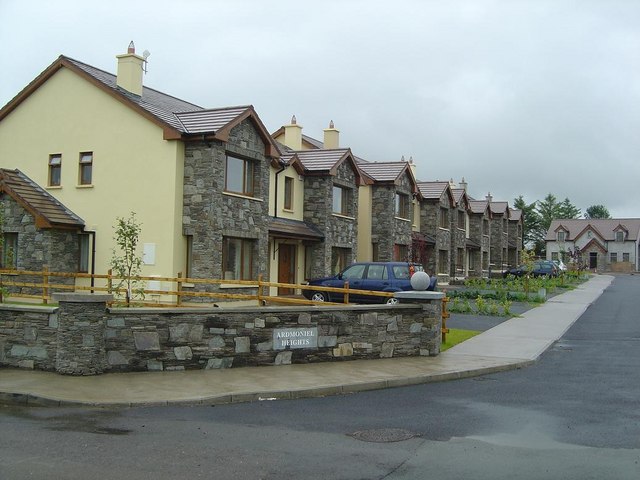
    Minister for Public Expenditure and Reform Brendan Howlin announced that the Government plans to build 10,000 social housing units over the next four years.

    The €2.2 billion sum will be the first major investment in housing by the Government since 2009.

    “The Government is determined to meet the scale of investment commensurate with the challenge,” said Minister Howlin in his Budget speech on Tuesday.

    Dublin is in the midst of a serious housing crisis with property prices shooting up by almost 33 per cent in the capital over the past year. Rent prices have also shot up as supply continues to fail to meet demand.

    Irish social housing charity, Threshold, believes the investment is a good start to solving the current housing crisis.

    “The commitments in today’s Budget announcement will not, unfortunately, be enough to fully address the current housing crisis,” said Bob Jordan, the Chief Executive of Threshold. “However, they are a significant first step. As the economy improves, we hope to see further evidence that the Government is truly committed to investing in social housing.”

    However The Simon Communities, an organisation that supports homeless people, were concerned that the government’s social housing proposals do not go far enough to solving the crisis.

    “While there is an increase in the budget for social housing investment this will yield 7,500 new homes next year which is only 8.3 percent of the 90,000 households currently on the social housing waiting list,” said Niamh Randall, the national spokesperson for the Simon Communities. “We are deeply concerned about the chronic shortage of housing.”

    Landlords also received a boost as the home renovation scheme was extended to rented property.

    Senator Aideen Hayden who is the Chairperson of Threshold praised the decision to include rental properties under the Home Renovation Incentive Scheme.

    “The extension of the Home Renovation Incentive scheme now gives added impetus to those who own rental properties that are in need of up-grading and repair, and we hope to see landlords availing of this scheme to improve standards in private rented accommodation,” Senator Hayden said.

    There was good news for first-time buyers in the Budget also, as people saving up for a mortgage deposit will get a DIRT exemption of up to 20 per cent of the value of a house.

    In other news concerning property, €66 million will be spent in support services for people who are struggling to pay the water charges. There will also be a tax relief of around €100 for Irish households on their water bill.

  • Budget Day met with lacklustre protest

    Budget Day met with lacklustre protest

    By Greg Synnott, Michael Coleman and Saoirse Ivory

    A series of tax adjustments and cuts were announced by Minister Michael Noonan in yesterday’s budget. The City were outside government buildings when the announcement was made.

    The €2.5 billion plan included €900 million in additional revenue and €1.6 billion in cuts.

    Some of the measures announced by Minister Noonan and Minister Brendan Howlin include:

    • A reduction in jobseekers allowance to €100 per week for under 25s
    • An increase to the price of beers, spirits and cigarettes of 10 cent, and an increase to the price of wine of 50 cent
    • Funding to third level institutions will be cut by €25 million
    • The abolishment of the phone allowance for pensioners
    • The banking sector will now pay €150 million to the  exchequer annually
    • Free GP care will be provided for all children under five
    • Additional jobs will be added in hospitals, schools and An Garda Síochána starting next year, but overall pay will be reduced by €500 million
    • Prescription charges on individual items is to increase to €2.50
    • Tax relief for single parents (who could previously both claim the credit) will be changed to a Single Person Child Carer credit, which only the primary carer will claim
    • A new unified DIRT rate of 42% was introduced
    • Tax relief for medical insurance will be capped at €500 for children and €1000 for adults

    Minister Noonan concluded his speech by saying that Ireland is still facing some tough times, but is on the road to recovery.

    Meanwhile, outside the Dáil, a surprisingly small number of protesters turned out despite an enormous Garda presence.

    Many protesters, who felt the government were targeting the weakest in society, were disappointed by the turnout.

    Protester Pamela Hackett gives her view on the Budget
    Protester Pamela Hackett gives her view on the Budget

    “I’m very disappointed,” said Pamela Hackett, “I thought there’d be a load of people out here.”

    Photos: Michael Coleman

    Video and Editing: Greg Synnott

    Report: Saoirse Ivory