Tag: Bus

  • A tight squeeze: Public transport in Dublin severely congested at peak times and on popular routes 

    A tight squeeze: Public transport in Dublin severely congested at peak times and on popular routes 

    By Gary Petrov

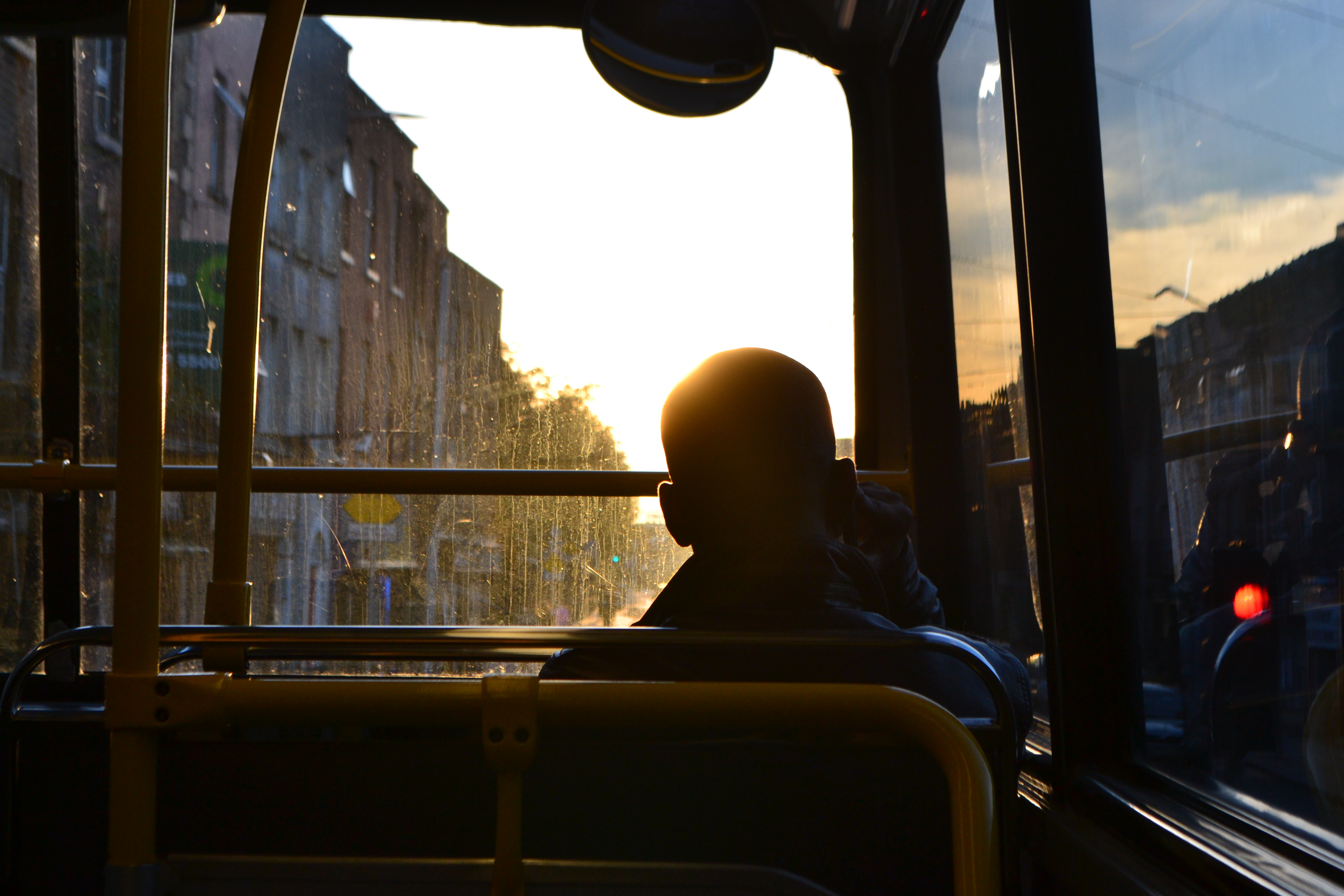
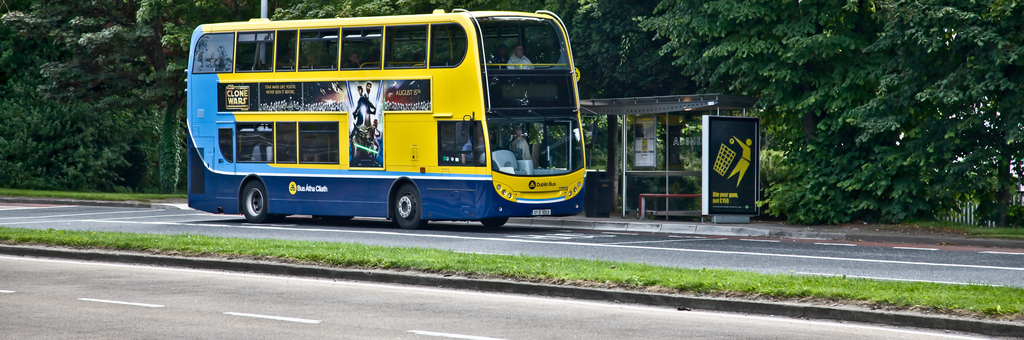
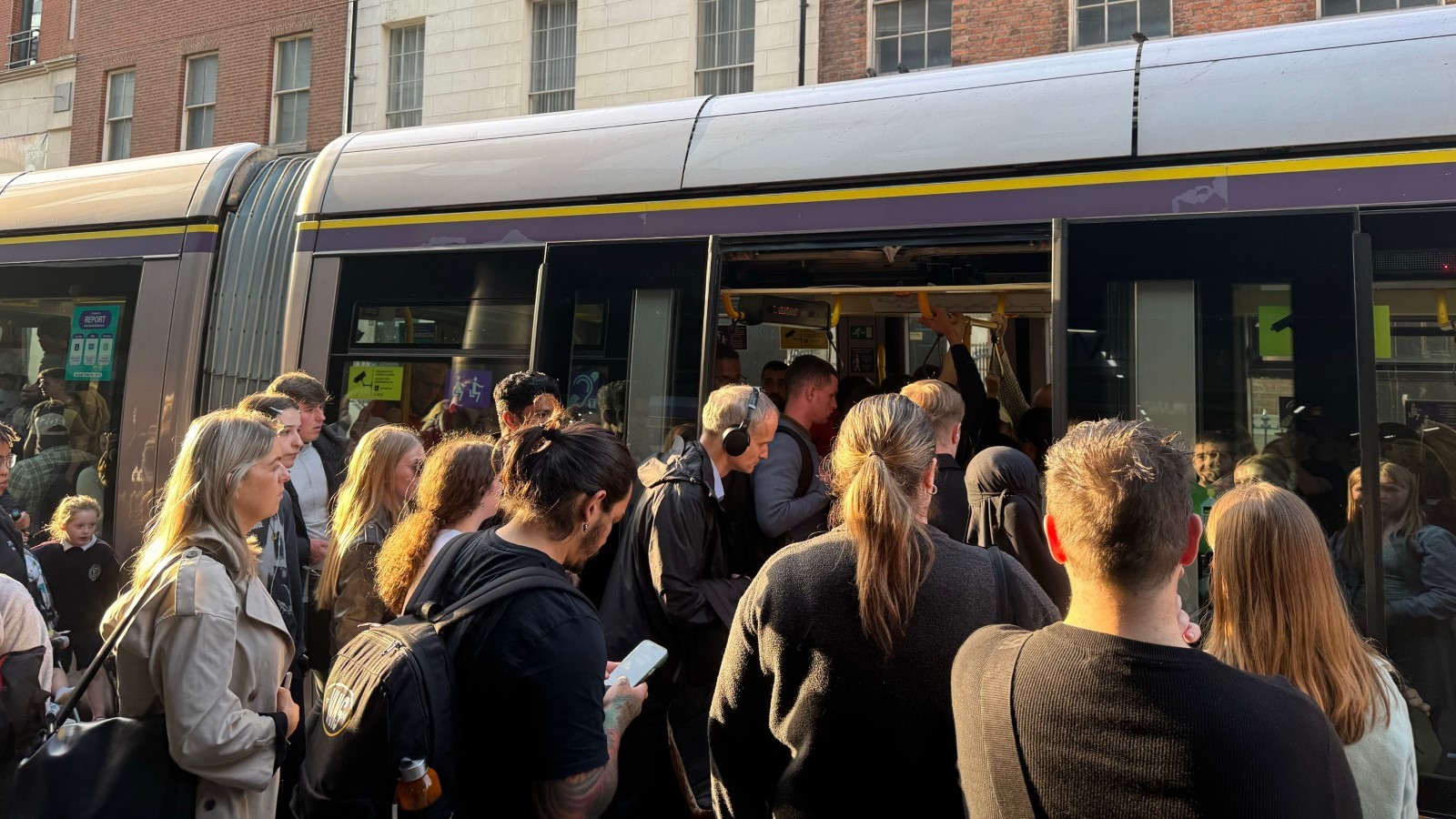
    A display of photos from the point of view of a commuter using public transport in Dublin. Examples of overcrowding can be seen here on Dublin Bus, Luas and Irish Rail services in densely populated or heavily visited areas in Ireland’s capital – in which the photos below were taken during peak times of travel, on-board and at stops and stations. 

    Nevertheless, the photos pose the question: Do Dublin commuters need more frequent services of existing public transport, or do they need more modes of public transport? Or both

    Whether the answer is a swift underground metro system, or more frequency on existing services – or both, the population is growing and commuting access in and around Dublin is becoming more of an issue and needs urgent attention. 

    All photos present the same problem – Dublin’s public transport system is overwhelmed. 

    The photos also present how this overcrowding issue can prove difficult for accessibility on public transport for wheelchair users, mobility aid users and parents with children. Even in busy times, not everyone can just squeeze on and stand. People are inevitably being left behind – hoping that the next bus, train or tram will have room. 

    Commuters joining a lengthy queue for Blanchardstown Shopping Centre’s busiest bus route to Dublin City Centre, the 39a – hoping to get on as it fills very fast. 
    The standard sight at this shopping centre bus stop at peak morning and evening times, as commuters fight for a spot on the 39a service. 
    The 39a route journeys down the Navan Road, in which sections of the journey lack bus corridors in both directions, leaving passengers stuck in traffic at peak times. 
    Meanwhile at the Jervis Luas stop in Dublin City Centre, peak times result in commuters pushing themselves on-board to very packed carriages, with just about enough room to stand, for the few at the busy stop that manage to squeeze on. 
    Finished work and want to hop on the Luas Red Line home? You’re not the only one – and that’s not even including commuters already on-board. 
    A Luas has arrived, and the carriages are evidently full. With some commuters possibly disembarking, maybe there will be room for some intending to board. 
    “Oh my God, let us get off first,” said a young woman as commuters tried to get off while commuters on the platform scurry towards the doors for a spot on the mostly full Luas carriages. 
    “Oh, there’s another one coming in three minutes, maybe we’ll get on that one,” said one woman as disgruntled commuters accepted not being able to get on-board – but hopeful they remained, as another Luas was due in a few short minutes. 
    The next Luas has arrived at the Jervis Luas stop and like the previous one, it’s almost full and the next round of commuters on the platform attempt to get a spot on-board.  
    Three Luas trams later and the platform begins to clear as the Luas carriages begin to have more space than the previous trams – but was there space for commuters who have accessibility issues? How many trams must pass for there to be room for a person in a wheelchair or with a mobility aid, or a person with a baby pram to board comfortably and safely? 

    Getting on a train at peak times is no different. Commuters at Broombridge Station queue at every door, wondering if they will fit on-board as the train arrives full from the city centre – in which it will remain like that until it reaches the outskirts of Dublin. 

    If a commuter manages to squeeze on-board, there is only room to stand, and it gets quite uncomfortable. Like the Luas, accessibility issues are present here. 
    Dublin’s only service that has flow is Irish Rail, due to no road traffic, but commuters experience peak times with traffic by foot – if you stay on-board until disembarking in a Dublin suburb. 
    Traffic standstill mayhem: The need for more efficient modes of public transport is hiding in plain sight here. Modes of transport that aren’t subjected to peak time road traffic. Commuters using an underground metro system around Dublin would go from A to B in an instant, in comparison to this.
    A bus stop and rain: Commuters already report it to be a struggle to get on-board popular routes, but adding bad weather to the equation does not make for a comfortable experience – when all a person wants to do is start their day commuting with ease or commute home swiftly, after a long day. 

    _____________________________________________________

    Everyone understands that peak times will always be busy for public transport users, that’s why it’s referred to as ‘peak times’ – but that doesn’t mean it’s acceptable for Ireland’s capital city and its surrounding areas’ public transport network to be severely overwhelmed, at a constant. 

    In a day and age where people are being encouraged to use public transport instead of private transport, as a means of reducing carbon emissions through minimising their individual carbon footprint – it’s worth noting that the correct infrastructure is vital for that to be sustainable, otherwise, people who can won’t use public transport, if it becomes more and more overcrowded, uncomfortable and unreliable. 

    A popular route having frequency in its service isn’t good enough, as it can be seen in the photos above that the demand is too high at peak times for ‘frequency’ to be enough. Ireland’s capital needs an expansion of public transport services across the board, not statements to brush the issues under the mat. 

    Dublin’s public transport congestion is clearly failing people with accessibility issues, despite the designated accessible areas on-board services – as abled people are filling up the designated areas at peak times. 

    Dublin needs more efficient public transport that facilitates everyone, and these photos are prime examples why improvement is needed – the only question now is, when will anything be done? 
  • Local communities remain worried over the impact of BusConnects

    Local communities remain worried over the impact of BusConnects

    By Aidan Coyle

    The National Transport Authority’s (NTA) BusConnects proposal recently finished its latest round of public consultations. However, many people are still concerned about the impact it will have on local communities.

    BusConnects is a plan to redesign bus routes, which was announced last year. Following a series of public consultations, the proposed bus network was redesigned. The NTA will now analyse the submissions made at the most recent set of consultations.

    The current plan would see a series of new bus corridors throughout the city, many of which would be running through communities. It will require roads to be widened in order to facilitate extra bus and cycle lanes. Some residents and business owners have expressed concern that areas will be unable to cope with wider roads and increased traffic as a result of these corridors.

    TheCity.ie spoke to NTA representative Con Kehely about the impact that BusConnects may have on local communities. He said: “As part of the design process for the schemes, a comprehensive environmental impact assessment report is currently being prepared outlining the baseline of current conditions on a diverse range of environmental factors along each route.

    Areas which will be examined by the report will be issues of employment, human health, the environment, water and air quality and the impact on amenities, according to Kehely.

    An example of how the new bus corridors aim to speed up journeys.
    Credit: BusConnects, Rathfarnham to City Centre presentation

    The plan aims to create eight major routes that lead into the city centre called spines, which will aim to increase the frequency of buses running. The NTA also hopes that bus journeys will be reduced significantly. 

    One of the spine routes proposed is Tallaght to Terenure. David Wynne, owner of The Dublin School of Music in Terenure, is worried about the impact it could have on the area. He said: “I think the way they’ve designed the plan makes no sense. To propose ‘super highways’ through villages and to basically try and artificially force cars off the road where the two can probably run in tandem even with a connected fare system.”

    Residents and business owners in Rathgar, Terenure, Rathfarnham, Templeogue and Harold’s Cross launched the Community Not Corridor campaign earlier this year to highlight their concerns and oppose the plans.

    “I think they’re ticking a box by having public consultations. I also believe there are very serious concerns for child safety as well as pedestrian safety”

    Deirdre O’Connor is a co-owner of Dress Circle which has been in Terenure for over 40 years. She has expressed her worry about the potential impact of BusConnects: “It will be disastrous for the area. The impact will be very negative for businesses in Terenure Village because it will mean access in and out will just be non-existent.

    “Apart from everything else, there is no room. Even if they take away half of the footpaths, there is still not room for what they intend.”

    The NTA are yet to finalise their plans and will continue to release documents and engage with the public over the next few months. Mr Kehely said: “Prior to the publication of the Environmental Impact Assessment Report, it is intended to publish an Environmental Scoping Report in the coming months outlining how the NTA and their design team intend measuring the baseline for these environmental factors.

     The Community Not Corridor campaign is active in Rathgar. Credit: Aidan Coyle

    “It will outline how the impacts will be quantified in the final environmental impact assessment report. This Scoping Report will be published as part of the new public consultation scheduled in the coming months.”

    David Wynne is worried that the NTA are not addressing the concerns made at consultations. He said: “I think they’re ticking a box by having public consultations. I also believe there are very serious concerns for child safety as well as pedestrian safety in the areas that they’re proposing highways.”

    Rathgar is another area that will be heavily impacted by the current proposals. One possibility the NTA are exploring is to change Rathgar Road into a one-way system leading into town. Bernie Carolan from Thomas Collins Hair Studio on Rathgar Road is opposed to this idea and described how it might damage businesses.

    She said: “If they go with the one-way system, then anybody that’s coming from the opposite direction is adding I don’t know how much time to their journey to come up through Ranelagh. You wouldn’t even bother coming up.

    “People crossing, it’s already bad. It could take me 10 minutes to get out onto Rathgar Road. I don’t know how that’s going to fare if you’re coming across two bus lanes and two bicycle lanes.

    “It’s going to be impossible to cross the road and impossible to even drive to get here. So unless people are walking and walking on the right side of the road for us it’s going to be long-term damage,” she added.

  • Can’t We All Just Get Along?

    Can’t We All Just Get Along?

    This is the rant of an old man, I know this, but I can’t let it go. I feel very strongly about this. Why is everyone so bloody grumpy and anti-social on the bus in Dublin?

    Every morning hundreds of thousands of grumpy, moody, little worker ants head to work, college or wherever they’re going and speak to nobody. They just sit there or stand there with there headphones in and ignore all outside influences. I have never known such an anti-social or introverted group of people in my life.

    When did the Irish become so anti-social? Are we not the nation that others look to for the “craic” and social events? Did we not win over the planet with niceness? What the hell happened?

    Should we look to how we spend our time these days? We go to work/college and then go home. Many of us will be too tired to do anything social in the evenings due the pressure today to perform at work and keep our jobs.

    A lot of people will just sit at home and watch TV or play video games. I am one of these people. I love watching TV and playing video games.

    However, contrary to popular belief, these activities are not exclusively anti-social. Yes you can play games on your own or online (which, I feel, is still kind of on your own) or you can have a few mates around and play them together. This is far more enjoyable, in my opinion. Mainly because it adds a new type of competition to the activity as well as a form of camaraderie if you are trying to achieve the same goals.

    This is not a piece about gaming though, that will come soon. This is a piece about a distinct lack of social etiquette in society today.

    Even on a night out these days it’s sometimes hard to spark up a conversation with strangers. People are wary of one another and seem to think that everyone is a threat. If you try to talk to a stranger you get looked at like you’re a freak… Well I do anyway…

    Why do we just sit there on the bus or the LUAS and ignore one another? Why not have a chat to pass the time before we get to work?

    Honestly, if I hadn’t spoken to strangers I would never have met some of my best friends. I also would never have had my jaw broken, but you take the good with the bad.

    Talking to strangers is not a dangerous activity, especially on the bus. It’s just a chat. Make small-talk. Seriously.

    I’ve been trying to have a conversation every morning on the 13 bus from my apartment for the past two weeks and not one person had reciprocated. They look at me like I’m some kind of leper or freak. I’ll admit it’s not the social norm and I probably do look like a weirdo trying to steal their brainwaves to communicate with the lizard people who live under the city, but why is that?

    Is it so bad to try and have a fecking conversation in the morning? I don’t want to steal your phone, I don’t want to get off with you, I don’t want to start a fight, I don’t want to or mean to hassle you, and I certainly don’t want to steal your brainwaves to speak with my lizardy friends (mine work fine, thanks). I just want some social activity. A chat. Small-talk. A conversation.

    I don’t care if its about Xfactor, football, bra sizes, or the recent referendum relating to the Seanad and how the Government were upset with the public’s decision and are telling us (yet again) to “try one more time, and get it right this time”. We did get it right! We voted! Get on with it!

    I don’t care what the talk is about just talk to me,  or the person next to you. At the very least say good morning.

    Don’t be so fecking rude people. It’s not nice.

  • What not to do on Dublin Bus

    What not to do on Dublin Bus

    As someone who takes the bus into the city every day I have grown to adopt certain habits and mannerisms.  I also notice the habits of other people.  I felt it was the right time to compile a list on what not to do when travelling on Dublin Bus.

    1- Don’t play music out loud.

    If you are going to listen to music, make sure to use these. Image by Khairil Zhafri on flickr
    If you are going to listen to music, make sure to use these. Image by Khairil Zhafri on flickr

    If I wanted to listen to music on the bus, I would have brought my own earphones.  A quiet bus is not an open invitation for you to take out your phone or iPod and start playing your music for the whole bus to hear.  Also, just because you are wearing earphones, doesn’t mean you can listen to your music as loud as you want.  If I can hear your music, through your headphones, and even worse, through my headphones, it’s a sign you need to turn it down.

    2- Don’t be obnoxiously loud on the phone.  

    Is it really necessary to be that loud? Image by Martha Soukup on flickr
    Is it really necessary to be that loud? Image by Martha Soukup on flickr

    By all means, have a conversation or phone-call.  No one will have a problem with that.  The problem arises when everyone else can hear every single word you say in this conversation, no matter where they are sitting.  It’s a bus; not O’Connell Street, you don’t need to project your voice.

    3- Don’t take up a full seat during peak times.

    Image by Mark Hillary on flickr
    Image by Mark Hillary on flickr

    During peak times, passengers are usually heading to or from work or college.  Either way, they are probably tired and not looking for hassle.  The majority just want to find a seat and trudge along quietly.  Don’t be the person with your feet up or with your bag beside you on your seat.  The floor is a perfectly fine place to put them.

    4- If it’s cold out, don’t open a window.

    This is not a sign that the window needs to be opened. Image by Susan Sermoneta on flickr
    This is not a sign that the window needs to be opened. Image by Susan Sermoneta on flickr

    It’s a well-known fact that opening the window on a bus does absolutely nothing to cool you down.  However, the passengers in the rows behind you will know all about it. Sitting on a bus with Baltic winds blowing in your face can turn the most upbeat positive people into cynical grouches.  If it is cold outside, or even worse, raining, leave the windows closed.

    5- Don’t light up a smoke.  

    Everyone is trying to get somewhere. Don't be the one who delays them.  Image by DragonLord878 on flickr
    Everyone is trying to get somewhere. Don’t be the one who delays them. Image by DragonLord878 on flickr

    The other passengers don’t care how badly you need it.  Also, don’t try concealing it either.  Firstly, the smell of smoke will give you up straight away, and then, more than likely, the driver will stop the bus until you put it out.  If it’s one thing passengers hate more than sitting in traffic, it’s being delayed by someone on the bus itself.

    6- Try to avoid eating.

    Fight the temptation.   Image by _BuBBy_ on flickr
    Fight the temptation.
    Image by _BuBBy_ on flickr

    I know sometimes it can be hard, but for the sake of the other people on the bus, please don’t eat something.  Now, some foods are acceptable, like sandwiches or rolls, but try not to eat something with a strong aroma (we’re looking directly at you Subway lovers).  The smell just fills the bus and makes everyone else jealous, or angry at you.

    7. Observe personal space. 

    Observe the boundaries at all times. Image by Raúl Santos de la Cámara on flickr.
    Observe the boundaries at all times. Image by Raúl Santos de la Cámara on flickr.

    If you sit down beside someone, remember, you’re sitting beside them.  You’re not sitting on their lap. It is a shared seat, a 50:50 split, not 60:40.