

Tag: canada

  • Covid-19 abroad: Canada’s response to the coronavirus pandemic

    Covid-19 abroad: Canada’s response to the coronavirus pandemic

    Watch Katy Brennan and Nicole Kidd discuss how Covid-19 has been handled in Vancouver, British Columbia

    As Canada begin to ease its restrictions , Katy Brennan speaks to Nicole Kidd, who gives an account of the country’s dealings with the Covid-19 pandemic over the past year

    The first community transmitted case of coronavirus in Canada occurred on 5 March 2020. Cases grew rapidly, and by mid-March, all provinces had declared a state of emergency.

    In response to the growing number of cases, Canada severely restricted its borders, banning all non-essential travellers and forcing any exceptions to self-isolate for 14 days.

    Each province implemented varying degrees of restrictions and has continued to do so as case numbers rise and fall.

    Some provinces, such as Ontario and Quebec, introduced heavy restrictions like school closures, shutting down non essential retail, and curfews. Other areas, like British Columbia, have taken a lighter approach.

    Nicole Kidd left Ireland for Vancouver, British Columbia, three years ago.

    We feel really spoiled over here because we have never not been able to go eat food, or go out for lunch, and our bars are open

    Nicole Kidd

    She explains that social gatherings are banned and most people work from home, but stores, cafes and bars have remained open throughout – offering people some sense of normality.

    People are expected to socialise exclusively with people from their own household, but exceptions are made for those who live alone, who are permitted to have a ‘bubble’ of two other people.

    A shot overlooking Vancouver. Photo by Adi Kavazovic on Pexels

    Kidd is grateful to have maintained a decent social life – something she thinks is important for mental health and hard for those back home in Ireland. 

    “We feel really spoiled over here because we have never not been able to go eat food, or go out for lunch, and our bars are open,” she says.

    Kidd is a qualified yoga teacher and while she is eager to get the vaccine and return to normal life, she is happy the pandemic has allowed her to devote more time to her yoga.

    Canada’s vaccine rollout began on 14 December, and since then the country has vaccinated 1.1 million people. The rollout consists of three stages, working its way down from most vulnerable to least vulnerable.
  • Living life one city at a time

    Living life one city at a time

    Images by Dalene and Peter Heck via hecktictravels.com

    1380657_592981190760915_1762064918_n

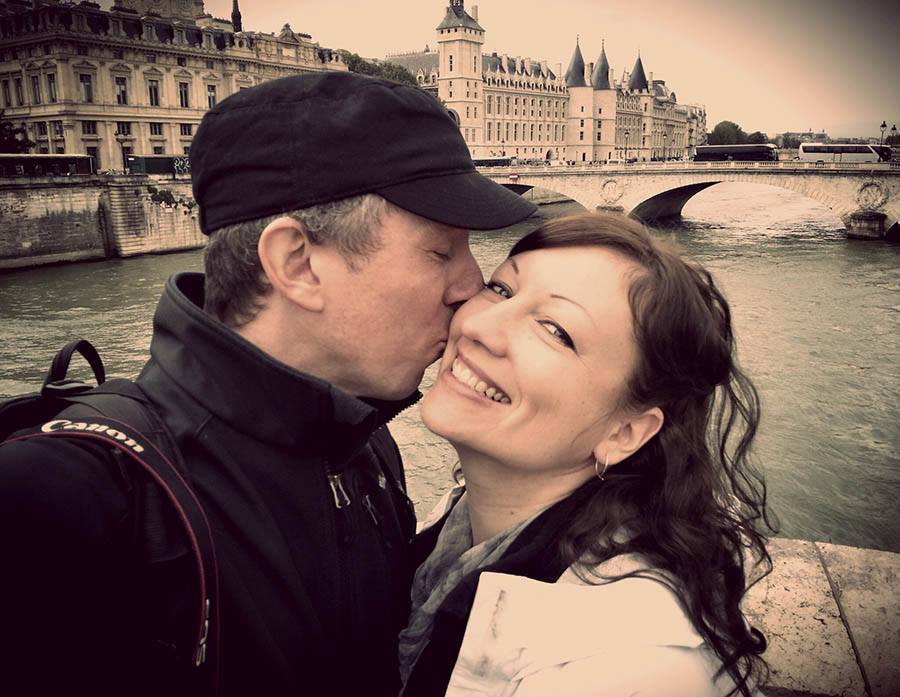
    In 2009, having overcome personal tragedies, Canadian couple Dalene and Peter Heck did what many dream of doing – they quit their jobs, sold their house and set out to explore the world.

    Since then, the couple have traveled to over 40 countries: Morocco, Peru, Croatia, Malta, Finland, Guatemala, Jordan and Turkey, to name but a few, and have no intentions of stopping.

    So how do they afford it? The pair have been house-sitting their way around the world for four years. This has allowed them to greatly reduce their costs. Aside from this, Dalene and Peter run a blog called “hecktictravels.com”. They have also published a book about house-sitting entitled “How to Become a House-Sitter and See the World”.

    In an interview with Dalene Heck she spoke of one of their most recent escapades: “Our venture to Greenland was our most adventurous and “off the beaten path” destination to date. We completed an eight day kayaking/camping excursion up the east coast, covering over 96 kilometers. It was one of the most rewarding travel experiences we’ve ever had,” said Dalene.

    The two self-proclaimed nomads recently stopped off in Ireland: “We were just in Ireland for a conference on travel blogging, and also to spend some more time in a country that we love. We last visited for the summer of 2010, taking care of a house for a friend in County Meath. We saw a lot of the country during those two months, and we knew we had to come back.”

    “Just a few hours in the country reminded us exactly why we wanted to return – because of the incredibly friendly people. We always feel well taken care of and this visit was no different. We loved every minute of it,” said Dalene.

    Shooting Heaven's Gates

    Don’t be fooled, this lifestyle is not easy. “Most of us nomadic-types work very hard at a number of different things in order to make this lifestyle sustainable.”

    Between them, the couple share a host of skills that they utilize to “put food on the table”. Dalene is a writer, event planner, social media consultant, teacher and videographer. Peter is a professional photographer and teacher.

    “This has all been a long time in the works, and anyone who thinks they can start a blog and simply travel the world for free is sadly mistaken,” they write on their blog.

    Like everything in life travelling has its ups and downs, fatigue and frustration can creep in at times says Dalene. However, those moments “are few in comparison to how much we absolutely love our lifestyle”.

    Whether you’ve got wanderlust in your blood or you simply wish to get away from it all, there has never been a better time.

    “I do think that people should just travel more. There is so much to be learned by visiting a new corner of the world – not just about how others live, but to learn more about ourselves.”

  • Abandon Ship! Students on emigration

    Abandon Ship! Students on emigration

    University College Cork’s recent study of emigration trends in Ireland last week revealed that nearly two thirds of emigrants had a third-level qualification. It also showed that half of those emigrating were doing so as a matter of choice, leaving a full-time job they had here in Ireland.

    This provided some food for thought for experts and journalists who lamented the ‘brain drain’ as a tragic consequence of our crumbling economy. The claim that people are leaving unwillingly as a matter of necessity is now being called into question.

    Perhaps the mass exodus has more to do with the quality of jobs available as opposed to the quantity. To put it simply, young Irish people don’t want to settle for what they see as menial jobs. But in this climate, the pressure is even greater to take what you’re given and be grateful. I went in search of answers from some final year college students.

    ImageHilary Pidgeon, 22

    “When I graduate I’m probably going to emigrate. Maybe not permanently, I’d probably move away for a couple of years. There’s so much more opportunities in other countries like America and Canada. Some of my friends are doing jobs that are widely available in Ireland, but if they want to go far in their career they’d have to emigrate. I think it’s really bad. You’ve got your family here and your friends here. You’re basically cutting off the life you’ve built up here for twenty something years”

    ImageLouise McLoughlin, 22

    “I think I’m going to head straight to London after I finish. My boyfriend has already emigrated there, so that’s one reason but secondly I think there’s just a lot more opportunity especially for someone studying media. I think the majority of my friends are going to stay for the next few years at least but I think if something better is offered somewhere else they’re going to take it. People should do what’s best for them. It’s not our job to hold the country together. Why should be stick around just to stop a boat from sinking?”

    ImageTessa Flemming, 23

     “When I graduate I know I probably won’t get work in my area of study so I’m just going out with a completely open mind, to experience life rather  than find a career straight away. I really wanted to learn Spanish this year, I was thinking of going to South America or Spain and just live in another country for a year. I see myself as a wanderer, so any opportunities that are presented to me I’ll definitely say yes. I think people don’t really want to leave, but they’re doing crappy jobs at the moment that don’t reflect their skills. I really don’t want to happen to me. ”

    ImageBarry Lennon, 21.

    “Emigration isn’t really on my radar, but I wouldn’t mind moving abroad for a while to grow as person.  I mean if push comes to shove and there is a better offer abroad perhaps, even just to get a different experience. I probably would like to return to Ireland depending on how things go. Maybe when I get my retirement and I can settle down with the wife. I’ll sell the house and buy a nice retirement home somewhere in west Cork. I think it’s bad though, the country is investing in these people only for them to go away.”

    ImageSean Carroll, 21

    “I’ll  head to the west coast of America for a year, hopefully with friends. I’m  getting a degree in marketing, and I don’t have any interest in working in Ireland right now with the recession strangling any chance I have!  We pride ourselves here in Ireland for having such an educated workforce, but people are getting educated here and then they’re leaving. Obviously people don’t want to leave their family and friends behind but if you’ve studied for four or five years in a particular field, it seems like a waste to stay here. If you have a degree in engineering but you have to work full time in Centra you’re not going to stay around.”