

Tag: carbon emissions

  • Is driving dead in Dublin?

    Is driving dead in Dublin?

    Will we go back to pre-pandemic bumper-to-bumper traffic jams? Image courtesy of Life of Pix via Pexels.com

    Over the last year, Dublin’s city centre has gone through periods of being like a ghost town, with shops, restaurants, and retail outlets shut down, causing reduced traffic and nearly barren streets due to restrictions.

    Drivers, businesses, cyclists, and pedestrians are all competing for space in the city, and with the pandemic’s demand for outdoor spaces the competition for space is more prevalent than ever.

    The Covid-19 mobility plan has introduced new cycle lanes citywide, leading to movements like the Cycle Lane Action Group sprouting up to oppose road space being handed over to cyclists.

    Reducing the number of cars in the city isn’t anything new – before the pandemic, the installation of Luas tracks meant fewer streets in the city could be driven through. Dublin County Council’s city development plan has, since 2016, been working to make Dublin into a pedestrian and cyclist friendly city.

    If you do choose to venture into the city by car, the parking prices are often sky-high, with spaces ranging from 60 cent to a whopping €3.20 an hour.

    Is Dublin’s city centre destined to become pedestrianised, with public transport walking, and cycling being the only way to venture into the heart of the city? And is that such a bad thing?

    I asked the people of Dublin for their thoughts on the matter.

    “At 30km you’re barely moving. I understand safety but I don’t think it’s fair”

    Brian

    Earlier this month, the Love 30 campaign backed by Lord Mayor of Dublin Hazel Chu, sought to bring the speed limit of the city down to a blanket 30km/h in an effort to improve safety and reduce road accidents.

    However, while the campaign garnered some support it was also met with backlash from certain members of the public and some county councillors.

    The campaigners are now attempting to bring in a 40km/h, which will apply to roads like Dorset Street and the Clontarf Road.

    “At 30km you’re barely moving. I understand [it for] safety, but I don’t think it’s fair. The guy in the car now, the motorist, is being penalised for every single thing. People are paying high car tax and insurance, and I think they have a right to bring their car [into Dublin city] and pay exorbitant prices in car parks,” says Brian, a Dublin native.

    These streets belong to the pedestrian! Image courtesy of Jeshoots.com via Pexels.com

    This frustration is understandable for those working by car or van in and around the city. Changes in infrastructure over the last few years has already meant changing routes and a reduced speed limit, which can lead to further disruption of services and cause motorists frustration and stress.

    “The government and the councils have tried to get rid of cars and traffic from the city centre for long enough, some of us live areas not too far from the city who do not have an adequate public transport system”

    Brída

    What about those sharing the road with motorists, the people whose safety this campaign is trying to protect – would a lower speed limit make the city safer?

    “Absolutely, especially for cyclists as well. I know there’s a lot of talk ‘oh you know they’re not paying road tax’ but a lot of cyclists are motorists as well, and they cycle in the city. I’ve cycled on the ‘Tunnel of Death’ on Westmoreland street and it’s tricky enough, especially for cyclists but pedestrians as well,” says Jo, an avid cyclist who I met on Grafton Street.

    While there are some clear benefits to this proposal, it’s unclear if the Love 30 campaign will be robust enough to stave off its critics, and that plan may already be dead in the water.

    However, this campaign isn’t the only plan to change the city’s infrastructure.

    Minister for Transport Eamon Ryan and the department of transport have released a paper proposing that congestion charges should be implemented in Dublin and Cork city.

    This is in an effort to reduce carbon emissions by discouraging motorists from driving in the city – reducing traffic and air pollution.

    “Today is my first time in the city for god knows how long and I’ve just found it so easy to cross the road”

    Stephen

    “A lot of people already leave their cars in train stations and travel in by train,” says Graham from Dublin, who agrees with the idea of congestion charges.

    For pedestrians, less traffic around Dublin city is a nice prospect – especially when they’ve become accustomed to it after a year of lockdown.

    “Today is my first time in the city for god knows how long and I’ve just found it so easy to cross the road. There’s buses but there’s not so many cars, which I was surprised by because I thought people were genuinely back at work, and I’ve really enjoyed that, but then again I’m a bit of an introvert,” says Stephen.

    Apart from pleasing the pedestrians, the environmental benefits of congestion charges are clear, and can be seen by the success of cities like Stockholm.

    But, is the city ready for a change like this?

    “The government and the councils have tried to get rid of cars and traffic from the city centre for long enough. Some of us live areas not too far from the city that do not have an adequate public transport system. We’re not near the Luas, not near the proposed underground and we have an appalling bus system,” says Brída, a Rathfarnham native who feels strongly that the government should focus on improving public services before ridding the city of cars.

    It’s clear that something needs to change, and it needs to provide adequate services to the public while considering the environmental impact.

    If we are to tackle emissions in a meaningful way traffic needs to be reduced, but if the intention is to pedestrianise the city further, the public transport system may need a closer look.
  • Building greener pastures

    Building greener pastures

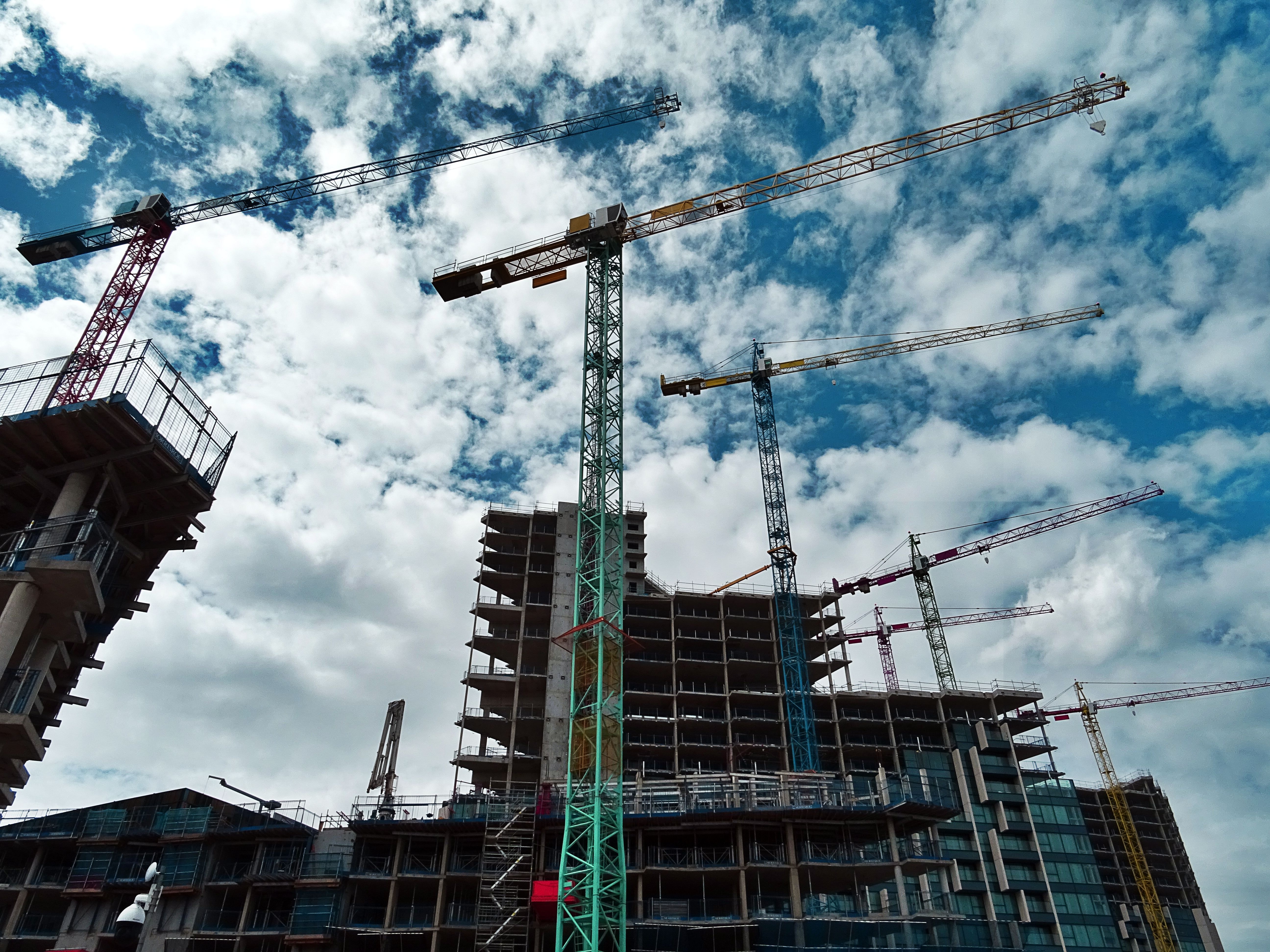
    Can we build the green future we need? Image courtesy of SevenStorm via Pexels.com

    Construction and buildings account for 36% of the world’s energy use, 39% of energy related carbon dioxide (CO2) emissions, and 33% of global water use and waste.

    The ever-looming climate crisis means something’s gotta give – Ireland’s construction industry has to change, and it has to make that change affordable to the average person.

    According to Francis Duffy, Green Party TD and spokesperson for housing, most of the homes now built in Ireland are highly-insulated and airtight ‘passive houses’, designed to use external elements like sunshine and shade to maintain a cosy climate and smaller carbon footprint.

    Unfortunately, there is more to truly green construction –  the materials used have carbon footprints all of their own, and that’s where our attention needs to be.

    “The big elephant in the room now is embodied carbon,” says Duffy.

    “When you dig a hole in the ground and take material out of it, whether that’s steel, iron, or cement, it gets transported, processed, manufactured, and transported again to site.

    “Then it lives a life on a site or in a building. It may be replaced or maintained, but at the end of its life, it’s transported again, disposed of, recycled, or upcycled.

    “There’s energy and carbon involved in all of that, which means that a bit of material gains embodied carbon,” Duffy explains.

    “We’re hitting around 900 kilograms per square meter of embodied carbon in our buildings, and an A-rated building is 300 kilograms per square meter,” he tells me.  

    As an architect, Duffy is working on a private project in Dublin with the Irish Green Building Council. The aim is to use materials with low levels of embodied carbon.

    “The big elephant in the room now is embodied carbon”

    Francis Duffy

    The frame of the building will be made from timber which “absorbs CO2 as opposed to spewing it out, which makes it CO2 negative”, says Duffy, who has extensively studied the use of timber as a sustainable material in construction.

    “We’re using recycled bricks and lime mortar to hold them together. That makes the bricks easy to separate at the end of the building’s life, which means they can be used again,” he explains.

    Duffy believes this is the future of building.

    “You’re looking at 80% of a building being designed and constructed with the idea that at the end of its lifespan you can take it apart and re-use a lot of it in another project,” he explains.  

    Globally, efforts are being made to reduce the waste produced by building.

    Cobod (construction of buildings on demand) are a construction technology company in Copenhagen, Denmark, who are pioneering 3D printed housing in Europe.

    “We generate less waste [by 3D printing], because we have more precise numbers on how much material is needed for the building in advance,” says Vytautas Naslenas, a sales and marketing coordinator for Cobod.

    However, Cobod print with concrete which Naslenas admits is not particularly sustainable.

    “There are new solutions and companies are investigating how to make a mixture with a smaller CO2 footprint, but of course that is yet to come,” he says.

    Affordability, speed, and how little waste is produced are the major draws to this method – by automating the process you make it quicker and reduce labour costs.

    “I believe that in 15 years this will be the norm. Looking at how quickly things are moving from our side, it could be even sooner,” says Naslenas.

    The cost of sustainable building is a huge issue – if construction emissions are so significant, as many people as possible need to be able to embrace sustainable construction methods.

    “The housing regulations have improved significantly over the last number of years but they have made building really expensive,” says Michael Canney, chair of the board of Sustainable Projects Ireland.

    “There’s a need to facilitate a more low-cost build without compromising on quality and energy efficiency,” Canney says.

    Canney lives in the Cloughjordan Ecovillage, and Sustainable Projects Ireland work closely with the ecovillage.

    An eco paradise: an aerial view of Cloughjordan Ecovillage. Photograph courtesy of Eoin Campbell JustMultimedia.com

    The ecovillage is 67 acres in total and divided into three parts: high-performance green homes, a community farm, and biodiverse woodlands.

    The houses in the ecovillage are built “using local labour, local materials, recyclable and reclaimed materials” as much as possible, says Canney.

    Cloughjordan is working hard to attract young people who are potentially earning less to their community.

    “We’re in negotiations with a couple of housing associations to take a number of sites and develop them using an affordability model,” Canney explains. “And we’d be offering those at rates that acknowledge the need for affordable housing rather than the maximum yield we could get for them.”

    “We are also looking at co-housing models where a number of people can come together and build a house cooperatively,” he says, explaining that people would choose DIY construction methods that allowed them to build themselves without the cost of employing skilled labour.

    “There’s a need to facilitate a more low-cost build without compromising on quality and energy efficiency”

    Michael Canney

    Canney feels there’s a bigger issue lurking in the shadows here.

    “So many people are really confused about these ideas of embodied carbon, recyclability, and what’s recyclable in real terms,” says Canney.

    “I think people could do with some really clear guidance on this, because we are bombarded with greenwashing from manufacturers.

    “There’s a real obligation on state and semi-state bodies to really inform the public in a very non-biased way about this, so people can really make informed decisions.”