Tag: cars

  • Number of new electric vehicles up 81% from last year.

    Number of new electric vehicles up 81% from last year.

    By David Seagrave

    The number of vehicles registered in Ireland for the first time has decreased from the same period last year, new figures from the Central Statistics Office show.

    Conversely, the number of cars using electric-based engines has gone up, with Plug-in Hybrid Electric Vehicles (PHEV) the only type of electric-based vehicle to be registered less than last year. 

    Electric vehicles and hybrids both saw an increase in the number of registrations, with petrol and diesel both showing a decrease in new registrations. 

    The number of used petrol vehicles has reduced by less than 2%, while new diesel vehicles have reduced by 59%. The drop in diesel vehicles could also be attributed to the NOx levy and the introduction of VAT from cars imported from the UK, excluding Northern Ireland.

    Diesel vehicles have also reduced due to the impact of the cost of living crisis, as diesel prices have soared to more than €2 per litre. 

    Electric vehicles and PHEVs showed a drop in used registrations, while hybrid vehicles showed an increase of 17.5%.  

    The number of new cars registered in Ireland from January – September has dropped by just 1%, while the number of second-hand cars imported has dropped by a significant 35%. 

    The most popular brand of new private cars registered was Volkswagen, accounting for 17% of all new cars on the road. Kia, Hyundai, Skoda and Tesla also make up the top five respectively, accounting for just under half of all new car sales in Ireland. 

    Lower emissions vehicles make up the bulk of new cars registered in Ireland, with 82,929 of all cars falling into emission bands A1 – B2, meaning they have less than 140 grams of carbon per kilometre (g/km).

    Goods vehicles have also seen a decrease of 20% in new registrations, and another 29% in used registrations, following protests last December, and a second round of protests in April over spiralling fuel prices.

    Band G, which is anything above 226g/km, only registered 108 new cars, with 105 of those coming from petrol and diesel engines.


  • Commuter Volumes remained high in November

    Commuter Volumes remained high in November

    Landscape Photography of Cars

    Image:Pexels

    Damien Dunne reports on November’s commuter numbers, after the government requested people to work from home.

    Transport Infrastructure Ireland (TII) released figures earlier this month that showed the amount of vehicles on Irish roads was within a percent of pre-pandemic numbers. 

    The figures show that the number of commuter traffic barely reduced, even after the Government asked people to return to working from home in mid-November.

    Speaking on RTÉ’s Morning Ireland, TII Communications Manager Sean O’Neill said “there has been a shift in traffic movements. In the full cycle of a day we are only down about 1% on the national network

    “Right across the country there is a minor decrease in the percentage range of about 2-3%, but we still have a lot of traffic out there right now. We don’t see a massive decrease. If you look at the time of travel, between 7am and 10am, those are the peak times in the morning and those are the times when, more than likely, people are going to work”

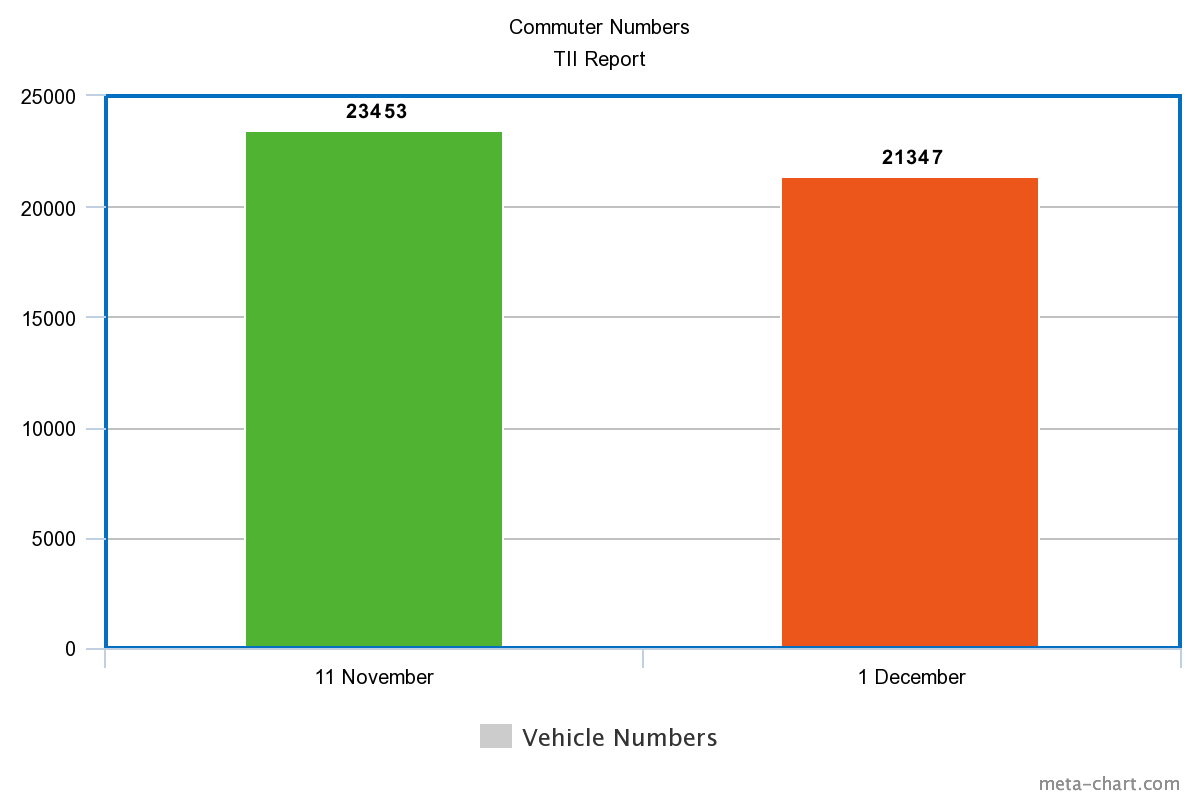
    On the 1 December, the TII’s National Road Traffic Report Showed there were 21,347 cars on junctions 6 and 7 of the M50, compared to 23,453 on the 11 November.

    Chart, bar chart

Description automatically generated

    Graph shows a marginal dip in road users on the M50 junctions 6 & 7 on above dates

    Near Dublin Airport, on junctions 1 and 2 of the M50, 18,848 cars were recorded on December 1 compared to a figure of 20,266 on the 11 November.

    The National Transport Authority (NTA) also published figures that showed a marginal fall in passengers when comparing the 11 November (655,000) to the 25 November (637,000).

    Iarnród Eireann saw a dip of 10% in passenger numbers between the 11 and 25 of November, with Dublin Bus passenger numbers falling from 331,000 to 314,000 on the same dates.

    The run up to Christmas will likely see these figures increase, as people travel over the festive period.

  • Formula E: The fast and the eco-friendly

    Formula E: The fast and the eco-friendly

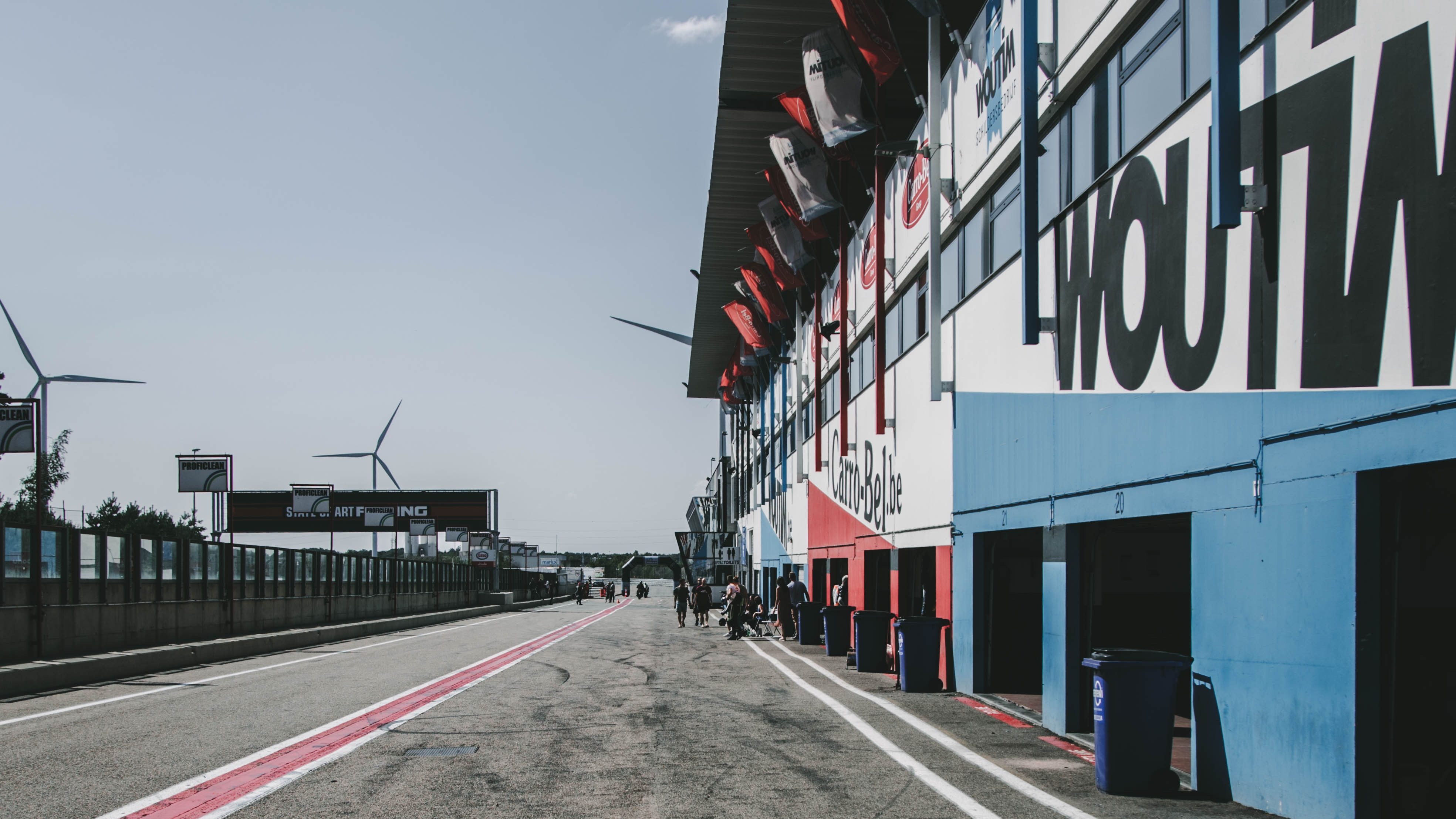
    High speed, low emissions. Is there a better answer than Formula E to a sustainable future for motorsports? Photo by Tom Verdoot via Pexels.com

    The idea of Formula E was conceived in 2011 in Paris when Spanish businessman, Formula E chairman Alejandro Agag and fédération internationale de l’automobile (FIA) president Jean Todt met in Paris to discuss the possibility of an all-electric international single-seater championship.

    Now in its eighth season, it shows no sign of it slowing down with new teams like Jaguar, Nissan, Porsche and Audi joining the championship in recent years and with new locations being added all the time.

    The official Formula E website proudly states that the founding mission of the sport was to “race through the streets of the most iconic cities in the world – with a grid full of the best racing drivers and teams around – to show just what sustainable mobility was capable of”.

    The cars used in Formula E are similar to those used in Formula One, the body style of the car is ostensibly the same, the key difference is, of course, the use of batteries rather than an engine. 

    Although the cars are slower, with a top speed of 280 km/h as opposed to 360km/h in Formula One, this can be seen as a small price to pay for an eco-friendlier motorsport. With constant improvements being made, Formula E could close the speed gap sooner rather than later.

    Back in 2017, Dublin made a bid to host an E-Prix with former Fine Gael TD Noel Rock advocating for Dublin’s inclusion in the racing calendar. 

    “Dublin would perfectly fit the bill for such a race, and it would make for exciting viewing,” said Rock.

    “I fully support Fáilte Ireland and Dublin City Council exploring the possibility of acting as a host city and I would expect that the Government would support such a bid if one was to be made in the future,” he continued.

    The benefits of Dublin hosting a Formula E event would have seen a boost in economic growth and tourism, along with the possibility of Ireland becoming a permanent location for the Formula E racing season. 

    Unfortunately, Dublin was overlooked for the race. Instead Marrakesh, Hong Kong, Rome, Paris, Berlin and many more reaped the benefits of the popular motorsport.

    The Formula E Ireland Fan Site gave some insight into the future of Formula E in Ireland “I kind of feel like we might have missed our chance with it. There was a thing a few years back about potentially holding a race here when the series was still finding its place.

    “After Battersea cancelled their contract, we could have had a chance to slip in and be the English-speaking race location on this side of the Atlantic, but the series has grown so much now and has cities all around the world looking into hosting and bringing FE to big, exciting locations.”

    So, as the motor sport continues to grow what will the future look like for Ireland with regards to the possibility of hosting an E-Prix? The Formula E Fan Site holds onto the hope that someday Ireland will host a race “honestly, I’d absolutely love it if I were proved wrong.”

    Currently, only one driver who hails from the island of Ireland has taken part in the Formula E championship – Portadown native Adam Carroll. 

    Carroll took part in the 2016-17 championship driving for team Jaguar and coming 21st in his solitary season in the motorsport.

    With the success of Formula E, Alejandro Agag has also gone on to create Extreme E which is a climate-conscious electric rally series. 

    This form of E-Motorsport could fit perfectly into Ireland as there is already an established rally scene across the country. However, time will tell as to whether Ireland will capitalise on the ever-growing world of electrical motorsports.

  • Imports Overtake New Buys in Irish Car Market

    Imports Overtake New Buys in Irish Car Market

    Fewer motorists are licensing new vehicles this year, with Irish road users turning increasingly towards the second-hand and import market in 2018, according to figures released by the Central Statistics Office.

    A total of 5,086 new vehicles were licensed in October, a decrease of 4.8 percent from October 2017. Altogether, 2,874 new private cars were licensed last month compared to 3,255 in October 2017, a decrease of 11.7 percent. However, there were more new goods vehicles licensed this October, with a 10.4 percent increase from 1,466 last year to 1,619 in 2018. The licensing of both new tractors and motorcycles has increased from October of this year to last, up 14 and 28 percent respectively. Vehicles in Ireland are licensed when a valid motor tax disc is issued for the first time.

    Figures for January to October of 2017 and 2018 show an overall decrease in the total number of new vehicles licensed in the country this year – down 2.7 percent from 157,285 to 153,001, a decrease of over 4,000 vehicles. Overall from January to October the licensing of new cars is down 4.9 percent this year to last, while an additional 1,327 new goods vehicles licensed in 2018 brought an increase of 5.9 percent on corresponding figures for 2017.


    While less new cars are being licensed this year, 2018 has seen an increase in the number of licensed used private cars, the majority of which are imported from abroad. From January to October of this year 84,502 used private cars were licensed, an increase of 8.7 percent on the 77,734 licensed in 2017.

    Figures for the licensing of used goods vehicles have also risen in 2018 – up 6.2 percent on 11,781 to 12,509. In total from January to October this year 106,874 used vehicles were licensed compared to 99,285 in 2017, showing an increase of 7.6 percent with the licensing of an additional 7,589 used vehicles.

    Of the 118,732 new private cars licensed from January to October of 2018, the majority were diesel engines, followed by petrol engines and electric cars, while just one single diesel & electric hybrid was licensed.


    The CSO defines a private car as a privately licensed vehicle, including hire, fleet vehicles and some commercial vehicles.  ‘New vehicles’ refers to vehicles which are licensed for use in a public place, in this country, for the first time, while ‘used vehicles’ refers to vehicles which are licensed for use in a public place, in this country, for the first time, mainly imports. In the first ten months of 2018, 1.3 percent of imported private cars licensed were less than one year old, while 4,045 (4.8 percent) were ten years or older.

    Certain vehicles fall under an ‘exempt’ status, meaning that these vehicles are licensed for the first time in this country but are exempt from paying road tax. Exempt vehicles are divided into four categories – state-owned, diplomatic, fire services and disabled drivers.

    A total of 203,234 new and used private cars were licensed for the first time in 2018 – with Volkswagen proving the most popular manufacturer. Overall, 23,873 new Volkswagens were licensed between January and October of this year, followed by 20,519 Fords and 17,089 Toyotas. Over 500 less BMWs have been licensed this year compared to last, while Hyundai has also seen a decrease in popularity of 13 percent on 2017 figures. At the other end of the scale, 257 Subarus were licensed, while 86 licenses being issued saw Ssangyong bringing up the rear as the manufacturer with the least number of vehicles licensed.