A very special event is set to take place on the 28th of October in House on Leeson Street.
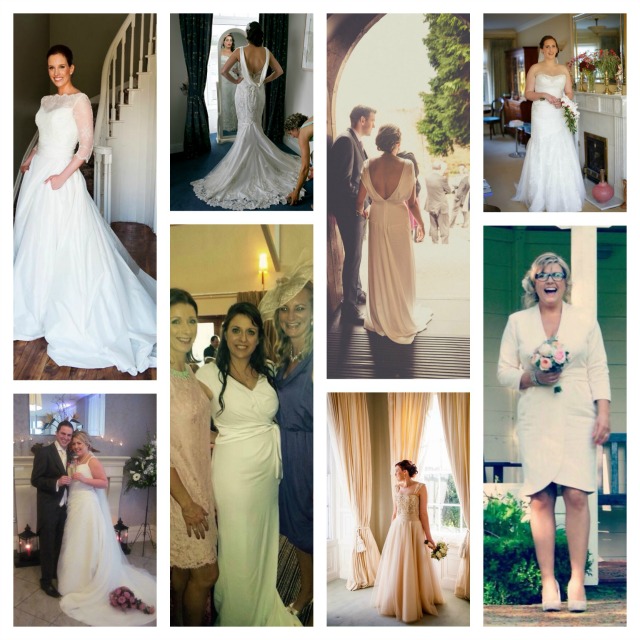
“I Do, for Syria” is an auction of pre-loved wedding attire in order to raise much needed funds for the Irish Red Cross, who are currently working with Syrian Refugees.
Roisin Kelly, the event organiser, is encouraging women to give away their wedding gowns for the good cause.
Roisin told The City: “I don’t have a huge amount of money to donate, but what I did have was one very expensive, worn once, beautiful wedding dress. The images of Aylan Kurdi’s body washed up on a beach really made me sit up. It broke my heart. I’ve always wanted to help the refugees and now was the time to do it.
“So far, we have received about 40 dresses from past brides and bridesmaids. Even bridal stores including Sharon Hoey, Myrtle, Ivory to name just a few have donated. I can’t begin to describe the response. Not one person or store has said no to getting involved and for the most part we’ve hardly had to ask.”
Parting with her dress wasn’t an easy decision for Roisin. She said: “It was hard but I’ve made my peace with it. Seeing what this has become makes me prouder than the dress ever could. It’s a beautiful dress and hopefully it will go to a good home and money raised will help aid the refugees.”
On the night before the auction, there’ll be a fashion show held showcasing the dresses .
“What we are doing is the tiny tip of a very big iceberg. Hopefully the auction makes tons of money for The Irish Red Cross,” she said.
Brides who would like to donate are asked to get in contact via www.facebook.com/IDoForSyria for further information.
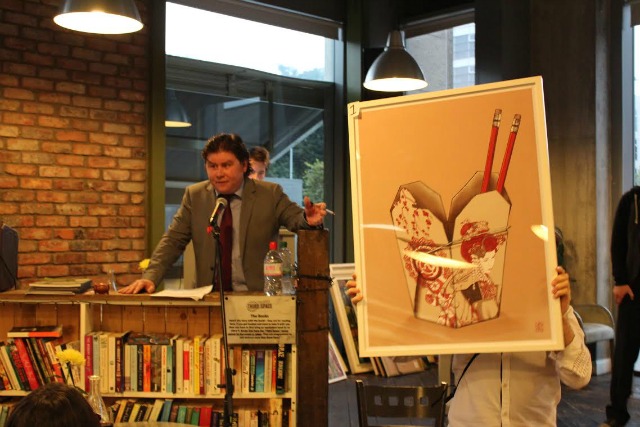
The Third Space Café in Smithfield was transformed into an art auction house as the Supporting Children Out Of Poverty (SCOOP) Foundation held its annual art auction on Wednesday night.
The auction was held to raise money for SCOOP towards building a new school in Cambodia, which is the third school they have built.
The auction saw 95 pieces of artwork go under the hammer from artists nationwide and even a few pieces from abroad were available as well.
The artists who provided pieces for the auction ranged from full-time artists to graduates from the National College of Art and Design (NCAD) in Thomas Street.
Also available for sale on the night was the ‘SCOOP Art Cook Book’ which was a book containing paintings from artists with the central theme of food. Paintings that featured in the book were also under the hammer at the auction.
The chief organiser of the event, Andrew Sweeney, was delighted with how the night played out. He said: “I was overwhelmed. It was an absolute success. It looks like we hit €20,000 under the hammer. I think there was about 100 people in the room, there was a really good energy around the place. Good things are going to happen from now on.”
On a side note, Sweeney announced that he was doing his final fundraiser with the organisation, having established it in 2011 so he felt that this one was important for him as well as the organisation.
“This is definitely one of the best for the publicity we got and the money we raised. This is my last one so I feel I’ve gone out with a bang,” he added.
There is hope also that there will be a dinner organised by the SCOOP Foundation before Christmas which will run along a similar theme to the cookbook project that was a major part of this auction.
To find out more about the organisation and to buy the ‘SCOOP Art Cook Book’, you can visit their website scoopfoundation.com or else find them on both Facebook and Twitter.
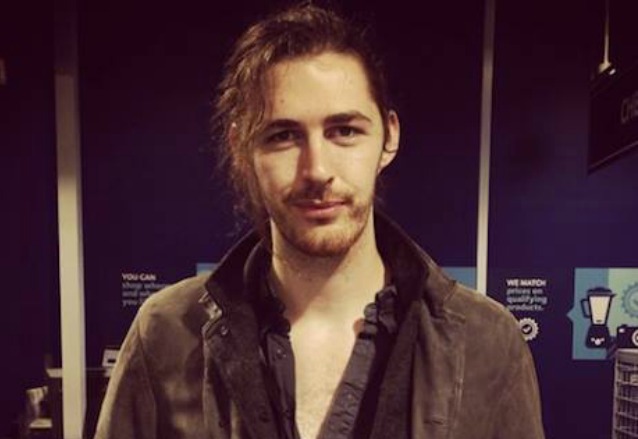
Hozier, Noel Gallagher and Florence Welsh, have weighed in to raise much needed funds for breast cancer research.
Irish DJ Greg McQuaid who works on a popular morning radio show KFOG FM, in San Francisco, came up with the idea of a charity single with his co-host Mike Nelson.
The project began last January when Mike’s son wrote parts of a song regarding his mother’s ongoing battle with cancer.
Mike and Greg jumped on board the project and asked everyone who came through the studio to lend their voice and musical talents to the track to bring the young boy’s idea to life.
“The idea was that the show would ask all musical guests that visited the station in 2015 to help get the lyrics out of the kid’s head and make a proper song,” McQuaid told The City.
“Most of the people were at the radio station anyway to perform or promote something so all that was needed was the guts to actually ask them to sing a song about boobs,” he added.
Even though some of these acts were extremely busy, once Greg and Mike went to them directly they were happy to lend their voices to the project.
Wicklow native Hozier didn’t have time to go to their studio, but recorded his part of the song in the Masonic music venue in California while he was touring in the States.
“We went to a venue Hozier was playing at. He learned his part listening to an MP3 of the song we’d sent to his record label. It took about 10 minutes to record,” said McQuaid.
The two radio hosts have been posting clips of the recording process online, and already have over nine thousand views online.
The finished single and accompanying video have been officially released today to coincide with October being Breast Cancer Awareness month, and can be downloaded through iTunes.
Any money raised from the single will go directly towards the Breast Cancer Research Foundation.
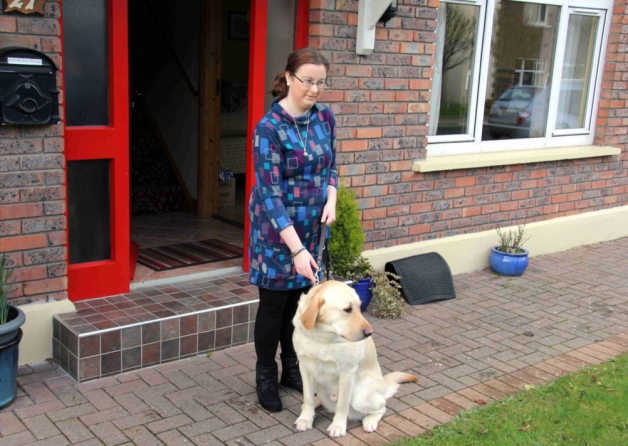
Growing up blind was, for the most part, a positive experience for one young Irish woman. 21-year-old Noreen McInerney from Portlaoise has been severely visually impaired since birth. At times, however, she has found it ‘pretty stressful’ to do the normal things, like getting around by herself or having a social life. The City’s Áine Hennessy spoke to Noreen about what it is like to be blind, and how her life has changed for the better since she received the gift of her guide dog Huw.
“Before I got Huw (pronounced “Hugh”), it was pretty stressful, and I hadn’t much of a social life. I had to use a long cane the whole time to get around and it was a lot harder to do things. People weren’t as obliging and friendly, because they didn’t understand I suppose. But now they see Huw and they know.”
The Irish Guide Dogs Association provided their services to a record number of 197 people in 2013, all of which are free of charge. Noreen McInerney was one of them.
Huw, who is a cross between a labrador and a retriever, was trained for two years in the Irish Guide Dogs Training Centre in Cork. Noreen also received three weeks of free training at the centre last August, where she learned how to use and care for Huw. As a guide dog, Huw adapts very well to new environments, and Noreen commands him using different words and actions.
Huw has brought a sense of normality to Noreen’s life. She’s says she is more independent now and has made many new friends.
“The reaction I’ve been getting from people is a lot more positive and friendly, and I’m treated more like a normal person now. He’s changed my life, I’ve so many new friends now because of him. I can go out for food, to the cinema, the hairdressers, the beauticians, everywhere!” she said.
Like any dog, Huw is quite playful and attention-seeking, and very clever. Noreen likes to bring him for long country walks.
“I have to be careful because he goes mental if you bring him near ducks.
One day I was walking down a narrow path, and he kept pushing me in with his paw. My mother was laughing, she said ‘He’s not going to let you walk down this path’. He’s very protective over me.
Although Huw’s training was fully funded by the Irish Guide Dogs Association, the expenses don’t end there. All expenses after training are paid for by the dog owner. The lifetime cost of a guide dog, including training, is €38,000.
“Once I got him I had to pay for everything. I buy a 20kg bag of food for him for €50 and that lasts about six weeks. Then he has his visits to the vet, for checkups and vaccinations. And I had to get him insured too,” she said.
More than 80 per cent of Irish Guide Dogs’ income comes through voluntary donations, and it costs more than €4.8 million annually to run the organisation and meet the demand for services. Noreen wants to give something back to the Irish Guide Dogs Association, for providing such an excellent service, and changing her life.
“I got involved in fundraising for the Irish Guide Dogs Association as soon as I got Huw. The both of us sit outside various different places, like Dunnes Stores, collecting now. I really want to give something back,” she said.
The Irish Guide Dogs Association was delighted to announce that, while working in a difficult financial climate, it managed to raise more money through fundraising in 2013 compared with 2012. CEO Padraig Mallon said that the charity exceeded expectations.
“This is a great achievement in challenging times and it is reassuring that the public continue to value our work and trust us to deliver much-needed services for people who are vision impaired. With the public’s support and the hard work of our team we aim to train 240 people in 2014 and looking further ahead we have a target of training 266 people in 2016. The targets are not just a number. What is really important is 266 lives we will change for the better,” said Mr Mallon.
While there is a long waiting list of people who desperately need a guide dog, Mr Mallon said that all of the dogs must be trained to very exacting standards so that they can be a life-changing resource for the recipient.
“Training is a lengthy process and every single dog that goes through the programme is trained to the highest possible standards. The fact that all of our services and supports are offered free of charge means that anybody who needs our services can get them without having to worry about whether they can afford it,” he said.
With her new-found independence, Noreen hopes that she can finally pursue a career in sports massage therapy.
“I’m hoping to start a level 7 Fetac course in sport massage soon, and it’s for two years. I’m really interested in massage and alternative therapies and medicines, and I love helping people.
“I cannot emphasise enough how much Huw has changed my life. He plays such an important role in being my guide, and I wouldn’t be able to achieve all of this without him.”
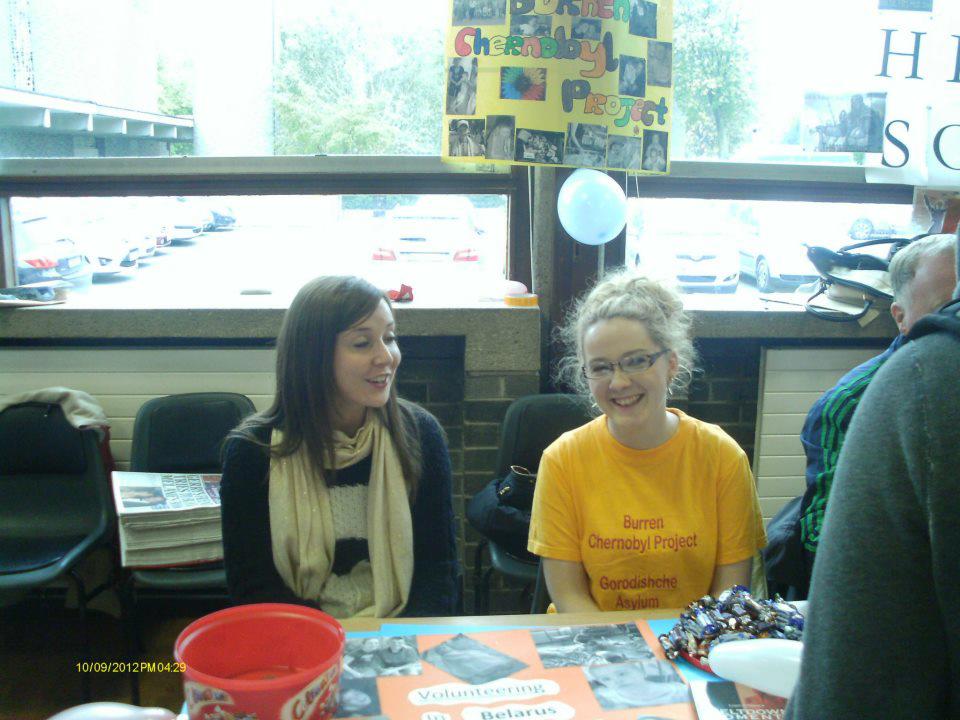
Charity volunteering is one of those things that people talk of doing but never get round to it, and it becomes even more topical around Christmas time. TheCity’s Patrice Brady caught up with Chernobyl volunteer, Searlait McCann from Dublin and asked her about the experience of Volunteering in Belarus with the Burren Chernobyl Project and why she took the plunge into volunteering.
Credit; Searlait McCann
“Well, I’ve kind of always been involved in different kinds of fundraising because my father had a double transplant so we were very involved with the Irish Kidney Association. However, I had wanted to work with children and travelling to volunteer abroad always appealed to me,” explained Searlait
“When I decided to finally take the plunge and actually go away I had initially planned to go to somewhere like India but one of my college friends travelled to Belarus with the Burren Chernobyl Project and as soon as she started talking about it I knew that it was what I wanted to do.”
The Burren Chernobyl Project is a relatively small organisation based in Ennistymon Co. Clare. It was established in 1993 to help with the child victims of the fallout from the Chernobyl reactor explosion, However their work has now extended to looking after children and adults. Many projects have been carried out to assist the children and their families who are enduring the effects of exposure to radiation and the other social and economic problems facing them in Belarus.
Credit: Searlait McCann
“It’s really hard to put into words the experience of travelling to Belarus to work in some pretty upsetting settings with some truly incredible people. No matter how much you hear about it and try to prepare for it, it’s completely different than what you expect once you get there, and different things stand out to different volunteers.
“We arrived in Gorodishche Asylum late at night after a long day of travelling. Gorodishche is home to 220 children and adults, officially aged between 4 and 25, however due to the physical and mental abilities of some of the residents they have stayed in Gorodishche past their 25th birthdays as moving them to an adult asylum would be too upsetting and disorientating. On the first day we met Iryna, head ‘Mama’ (nurse) in the Asylum who was to be our translator and ‘minder’ for the next 10 days, but she turned out to be so much more,” said Searlait.
“An absolutely incredible woman, who really has become something of a mother figure to all of the residents at Gorodishche. We then threw a party for one of the residents who was moving on to one of the adult homes. We were excited about this as it felt like we would be easing ourselves into the whole process. It was a great day, yet it was extremely sad to see how heartbroken his friends- who had become brothers to him- were to say goodbye, as they weren’t likely to ever see him again.”
Belarus Care Centre. Credit: Searlait McCann
“The next few days we spent in the asylum helping out with the various groups, of which there are 7. We would get up at about 9 and would stay in the asylum until lunchtime and then again until around 7pm when we could get dinner. In the evenings we would go back outside and spend time with some of the older residents playing football, playing on the swings and going for walks.
“Group one and two are made up mostly of teenagers with medium-severe mental disabilities. We spent time taking this group for walks, painting their nails and feeding yoghurts to those who cannot feed themselves.
“Group three is perhaps one of the most upsetting groups for some volunteers. This is the group of the most physically disabled residents who are all bedbound. It is separated into two parts, each referred to simply as ‘Big 3’ and ‘Small 3’. Because of the lack of funding for Gorodishche from the Belarusian Government and the high costs of disposable nappies in Belarus the residents are limited to one disposable nappy per day, meaning they spend the rest of the day in stiff, makeshift nappies made from bedsheets.
Credit: Searlait McCann
“This results in a smell that cannot be described but one you will never forget! One of the most upsetting thing about this group for me, and the other first time volunteers there, (apart from the smell) was the stunted growth of so many of the residents due to a lifetime confined to a crib. There were residents who looked like toddlers but who were actually 18 and 19 years old. This is something that is extremely hard to believe and accept even after seeing that it is reality. We fed group three their lunch and dinner, this was very difficult and upsetting at first as we had to feed them lying down which felt extremely inhumane,” explained Searlait.
“Group four is the group that was most unsettling for me. I found it most upsetting as it seemed to me that the majority of the children in this group would be able to live relatively normal lives if they were receiving adequate medical attention or if they lived in a country that was ‘up to date’. Some of the illnesses of this group include epilepsy, autism and Cerebral Palsy, which has only recently been recognised as an illness in Belarus. We didn’t spend as much time with this group as we did with others, I’m not really sure why but the Mamas were extremely protective and were reluctant to allow us to photograph this room.”
Credit: Searlait McCann
Searlait spoke of a lot of the children with emotion especially when she explained some of the children’s backgrounds. A lot of the background stories are extremely sad and often hard to take. Such as one little girl in this group who has down syndrome whose mother is a dentist in the local village but has never come to visit her daughter. Another example is Alosha in ‘Big 3’ who is epileptic. Alosha is the resident who had the biggest affect on me personally. He is the same age as my sister, 24. Alosha’s mother is a doctor, who unable or unwilling to cope with her son’s seizures and left him in bed until she eventually left him in Gorodishche. Alosha has become completely emaciated and is unable to hold down much food.
“What struck me so strongly about him is that although he doesn’t talk, he has the saddest eyes I have ever seen and it struck me so strongly that he seemed to be the only resident of Gorodishche aware of how unfair his situation is.
“Group 6 is made up of the older, most able bodied boys. These are the most independent of all the groups as they spend their days working on the Asylum’s farm. They also have their own little sitting room with a TV. It was mainly with this group that we spent our evenings.
“Group seven is quite similar to groups one and two however they are generally more physically able. We did a lot of the same things with this group as we did with G1 and G2 however some of them took part in our games of football, we’d paint their nails and do their hair and they’d do the same for us.
“I think it would be impossible to travel to Gorodishche and not remain involved with Burren Chernobyl Project. It is definitely something I want to do again in the future.”
Having grown up with the internet at my fingertips, perhaps I have developed a cynical eye – a digitally fuelled distrust, when it comes to the marriage of wealth and poverty.
Last week, news of Kate Perry’s appointment as the newest Goodwill Ambassador for UNICEF got me thinking about this paradigm which so many charities are now employing to draw attention to their cause.
The pop mega-star recently forked over $11.2m (€8.2m) for two L.A properties; and with song titles like “Ur So Gay” and “If You Can Afford Me”, one would wonder why people like Perry are picked to serve as role models for children in need.
UNICEF for one, sees celebrities as a “vital and unique” part of their organisation, and has been doing so since 1953.UNICEF’s star-studded line-up includes Audrey Hepburn, Liam Neeson, Sarah Jessica Parker, Selena Gomez and Dustin the Turkey, to mention but a few.
But what do these famous faces do?
In an interview with Claire McKeever Communications Manager for UNICEF Ireland, she stated that Goodwill Ambassadors: “can make direct representations to those with the power to effect change and they can use their talents and fame to fundraise and advocate for children”.
“Can” is a key word here. Participation is solely up to the individual. In fact, UNICEF ambassadors have been seen to do quite little in the way of active participation – usually one trip a year.
According to Simon Scriver, Director of Total Fundraising, it really depends on the celebrity ambassador and if they themselves wish to act.
“I think simply having a big name associated with your charity will not increase fundraising or necessarily further the cause. It may even leave you exposed as you’re somewhat reliant on their reputation,” said Scriver.
Indeed Celebrity Ambassadors could almost be viewed as double-edged swords. The sexual abuse scandal involving Jimmy Savile last year has resulted in the closing of two separate charities which were affiliated with the British DJ and BBC television presenter.
McKeever insists that UNICEF’s ambassadors are chosen based on certain criteria so as to minimize such risks : “A UNICEF Goodwill Ambassador will have demonstrated a commitment to improving the lives of children worldwide before they are appointed.”
For many other charities though, these are risks they must take. The fact of the matter is, people are more likely to listen to a celebrity then they are to a charity spokesperson. Celebrities are the sugar coating on an otherwise bitter pill.
Anne Stewart writing for thecity.ie travelled to Blarney, Co. Cork, where she met Jennifer Dowler, CEO of Irish Dogs for the Disabled.
Everyone knows dogs are man’s best friend, but some dogs are much more than that. Irish Dogs for the Disabled places trained dogs with adults and children with disabilities.
Irish Dogs for the Disabled, Blarney, Co. Cork – Image by Anne Stewart
As we pulled in, Jennifer Dowler and Fleur opened the door to us and we began to chat over tea in a large country kitchen. Fleur, an 18-month old golden retriever, is full of fun and mischievous to boot; she could easily be mistaken for a normal dog, and she is, but with special skills.
Jennifer has more than 20 years experience training dogs for the disabled. She breeds all her own bitches, stud dogs and puppies, and stresses how important it is for the dogs to be healthy and to come from a perfect blood line.
“We don’t have health problems with our dogs and we don’t touch anything unless they are in perfect health. If you have one puppy in a litter with cancer, then it will keep coming [back] in the lines. We are very strict about what we will or will not breed,” said Jennifer.
She explained it was a two-year process to make sure the dog has perfect shoulders, perfect skin, perfect temperament, everything perfect. “We spend thousands on our breeding stock and we don’t get any support from the government. We raise all the money ourselves.”
I asked Jennifer to explain how a new-born puppy becomes an assistance dog. “From 0-12 weeks is the most critical time in a pup’s life and from birth we start socialising them, de-sensitising them and handling them.
“When the pups are 8 or 9 weeks old, we place them with volunteer families for about 18 months and they rear the dog and continue with the socialisation process. The dogs then come back to Irish Dogs for the Disabled, where they are assessed on their personality type and matched up with a person on our waiting list.”
Jennifer Dowler, CEO of Irish Dogs for the Disabled with Fleur, an 18-month old golden retriever with special skills – Image by Anne Stewart
Fleur is the next dog out – she is going to Luke, an 8-year old boy with profound cerebral palsy; Fleur and Luke have already met and according to Luke’s mother, “Fleur is cheeky, playful, bright and loveable, and you could just as easily be describing Luke”.
“Fleur has been clicker-trained to engage with Luke’s physiotherapy”, said Jennifer. “We train her to touch him in different parts of his body and then he has to move that part of his body. Fleur will crawl and roll over and this will encourage Luke to imitate her and crawl alongside her.”
Fleur is into playing and she is loving and gentle. She will curl right into Luke, as he can’t curl into her or hug her. Each dog has their own strengths and weaknesses.
“The final step is to train Luke to interact with Fleur and to encourage him to practise physiotherapy himself in a practical and fun way. If you ask a child to do something, they are more likely to do it with a dog, as it is often painful, uncomfortable and stressful”, said Jennifer.
Dogs for the Disabled is accredited by Assistance Dogs International. Golden retrievers are best for children and more work-orientated dogs, such as labradors, for adults. Labradoodles are ideal for children with a tracheostomy, as they don’t shed hair.
Jennifer places 85% of her assistance dogs with children aged 6-12 years old. She trains 20 dogs every year at a cost of €15,000 per dog. There is a 5-year waiting list for these dogs.
Dogs trained for adults are taught to push alarm buttons, open doors, send for help, retrieve a phone and fetch a blanket. Physical disabilities include spina bifida, cerebral palsy, duchenne and muscular dystrophy.








You must be logged in to post a comment.