Tag: Children

  • The over 40 baby boom

    The over 40 baby boom

    By Paula Bowden

    The over 40 Baby Boom

    The geriatric mother. It’s a title that most women would take offence to, but it’s one that’s being applied to more and more Irish mothers as we see an increase in the number of Irish women having babies in their 40s. A baby boom of a very different kind.

    The latest vital statistics report from the Central Statistics Office (CSO) captures the changing age profile of Irish mothers as we see a decline of 52.8% in the number of women under 20 having babies between 2006 and 2016 and an increase of 5.1% in the average age of mothers in Ireland for the same time period. The average age of first time mothers in Ireland now stands at 32.7 years-old.

    But perhaps most shocking of all, is a doubling in the number of women over 40 having children. In 2006, 2,824 babies were born to mothers over the age of 40, and in 2016, this number rose to 4,379. That’s an increase of 55.1% over a single decade. Traditionally, older mothers were far from ‘the norm’ in Ireland, but the latest information from the CSO suggests a change in attitude towards child bearing among Irish women.

    Credit: Paula Bowden

    In 1993, there was an important shift in the age structure of fertility. Prior to this, the age-specific fertility rate was highest among women aged 25-29 (the age-specific fertility rate refers to the number of births per woman within a certain age range). In 1993, for the first time, the highest fertility rate was among women aged 30-34 and in 2016, the highest fertility rate remains in this age bracket. So what has happened to cause such a shift in this particular demographic?

    “The introduction of reliable oral contraceptives in the early 1960s transformed fertility behaviour among women”

    Dr Siobhan MacDermott, Lecturer in the School of Nursing & Human Science at Dublin City University (DCU), spoke to Thecity.ie.

    “A woman’s age at childbirth has risen gradually since the early 1960s,” said Dr MacDermott. “In Ireland, we see that the average age of mothers has risen to 32.7 years, that’s an increase of 5.1 years from 2006, but a similar trend of late fertility can be seen across most of the developed world.

    “The introduction of reliable oral contraceptives in the early 1960s transformed fertility behaviour among women in many modern societies. It facilitated women remaining in education longer and pursuing longer term careers.

    “Many studies have linked women’s increased education, such as University degrees, to a significant shift in later ages of childbearing. And a lot of this is attributed to the difficult balance between student and maternal roles.

    “Those with higher education are generally pursuing careers with greater authority so they may postpone having kids until they are more established on their career path,” said Dr MacDermott.

    “Much of the evidence suggests that a woman’s fertility begins to decline significantly at 32 years”

    “Lifestyles have also changed significantly over the past decade in the developed world and women are enjoying their freedom and independence and so naturally, we’re seeing a postponing of having children.”

    Credit: Pa

    “Much of the evidence suggests that a woman’s fertility begins to decline significantly at 32 years and further declines at 37 years. Ireland has a higher than average proportion of women in their 40s giving birth for the first time (3.4% versus the EU average of 2.8%) and with this, comes an increased risk of pregnancy and childbirth complications.

    “Issues such as age related increase in infertility, longer than expected waiting times to get pregnant. Interestingly, age and male fertility is an under researched area. However, studies do show an increase in the rate of miscarriages and more incidences of new-born disorders related to older fathers.”

    “You can’t get away from the fact that age and maturity tends to bring about an emotional stability and a psychological strength”

    The general recommendation for women is that having children earlier helps to avoid health complications and makes for an easier pregnancy. But are there psychological benefits to having an older parent?

    “Several studies in recent years have examined the impact of late parenting on child behavior and some studies have reported that children of older mothers tend to have fewer behavioral, social and emotional difficulties,” said Dr MacDermott.

    “This kind of follows the premise that issues such as quality of home environment, social support, and readiness for pregnancy and parenthood may contribute to better behavioural outcomes for children. Older mothers are also considered less likely to adopt punitive measures with their children and so their children may have fewer behavioural, social or emotional difficulties.”

    “You can’t get away from the fact that age and maturity tends to bring about an emotional stability and a psychological strength, not to mention financial security,” said Dr MacDermott.

    “Overall, while studies show that late parenthood and parenting style of older parents appears to contribute to better behavioural outcomes for children, there is undeniable increased risk for infertility and obstetric complications.”

  • Lack of diversity found in children’s books

    Lack of diversity found in children’s books

    Diversity in children’s books has become a more and more popular topic over the last few years, with the majority of people in agreement that there is room for more stories about women and a wider variety of ethnicities in the genre.

    The issue was recently brought back into the spotlight by teenage American activist Marley Dias who was tired of reading about “white boys and their dogs” and started the campaign ‘1000 Black Girl Books’. This movement is needed as only nine percent of children’s books published in the U.S. in 2017 featured an African or African-American character, according to data from the Cooperative Children’s Book Centre.

    A quick look inside popular Irish bookshops will show you that there’s also a serious issue here in terms of what books are on offer to children in Ireland.

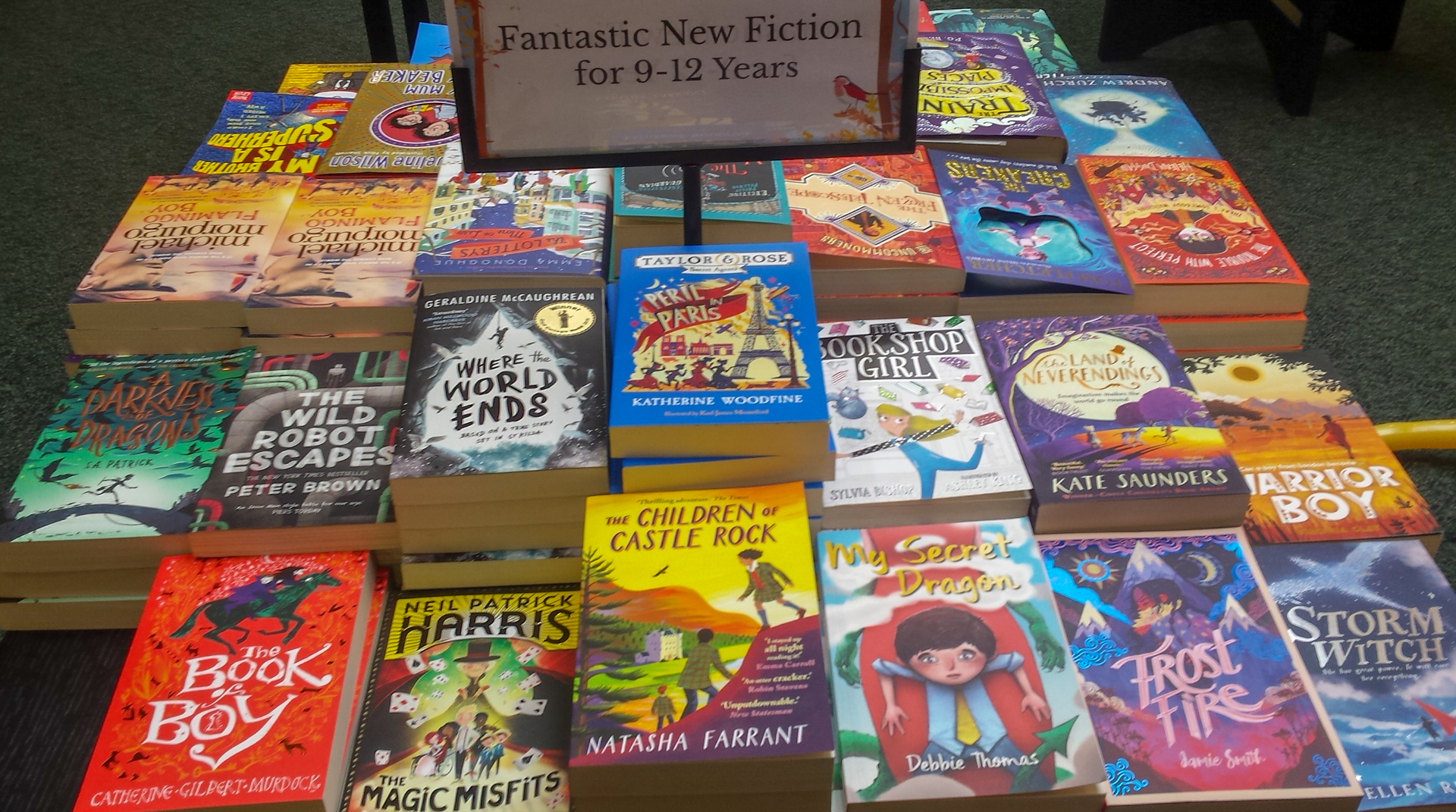
    The research was carried out in three major bookstores, Eason’s in St. Stephen’s Green shopping centre, Dubray Books on Grafton St. and Hodges Figgis on Dawson St. Of the selection of children’s books looked at in these three bookshops 48.8 percent had male protagonists, 22.6 percent were about animals and 28.6 percent featured a female main character.

    There was a similar imbalance in terms of the author’s gender with 54.8 percent of the books in the selection written by men, 31 percent by women and 14.2 percent by a collaboration of male and female authors.

    When it came to individual bookshops, the selection in Eason’s had a lower level of diversity with 72 percent of the books sampled featuring male leading characters and 76 per cent written by men.

    By comparison, 35.5 percent of the books in Dubray Books had male central characters with 45.2 percent of them written by men. In Hodges Figgis, 42.9 percent of the books in the sample featured male leads with the same percentage of 42.9 percent written by male authors.

    Of course, this is only a small, random sample that could have been influenced by a multitude of factors such as the way in which employees are told to stack shelves, be it by genre or by author name.

    In saying that, there was nothing intentionally biased in the selection methods as it was a randomised sample. This meant the first children’s bookshelf spotted out of one specific section such as the character or fiction for 9-12-year-olds in each shop.   

    To learn more about diversity in Ireland’s publications, Jenny Murray, Publications Manager at Children’s Books Ireland (CBI), spoke to The City. She said that diversity in books needs to be “wholeheartedly supported and encouraged” especially in children’s books. CBI is the national children’s books organisation of Ireland. Their aim is to make books central to children’s lives in Ireland through developing audiences for children’s books, and supporting and celebrating excellent authors and illustrators.

    Children's book stand in Dubray Books, Grafton St
    A children’s book stand in Dubray Books, Grafton Street // Ethan McDonagh

    “You only have to walk into any school in Ireland, especially in Dublin, to encounter the most diverse age-group population in Ireland currently. It is an extraordinary time to be a child in Ireland, the sheer cultural range of language, religion, ethnicity and tradition in an average classroom in Ireland is so diverse.

    “But while the environment is enriching it is also challenging to ensure everyone is represented. With regard to books, if children and young people cannot see themselves and their own experiences represented within the pages of books then their interest will wane, they will think that books are not for them. At CBI we think it is fundamental to all literature, but most especially within books for children and young people and especially when you are dealing with visual texts,” she said.

    Recent figures released in the UK this year with regard to BAME (Black, Asian, Minority, Ethnic) representation within children’s books, show that of the 9,115 titles published for children and young people, only 4 percent featured BAME characters. The Centre for Literacy in Primary Education (CLPE) who carried out the study, found that only one per cent of British children’s books feature a main character who is black or minority ethnic. This compares to the 32.1 percent of schoolchildren of minority ethnic origins in England identified by the Department of Education last year

    “We [CBI] do not as yet have comparable statistics for Ireland, but the UK and Irish markets are comparable so the statistics are relevant to us. The shockwave that the findings sent out across publishing was gigantic, with the majority of publishers swiftly responding and putting the publishing of representative titles to the very top of their to-do lists. Publishing, in general, is a reactive industry and is led by trends. While I don’t want to label this as a ‘trend’ per se it will essentially and hopefully have the same industry-wide effect, and in late 2019 we should see more titles hitting shelves that have BAME representation,” she explained.

    Our research contained a sample from three bookstores and according to Ms Murray, although the results showed a majority of male characters compared to female, she’d have to disagree.

    “If you take something like Children’s Books Ireland’s annual publication the Inis Reading Guide as a representative sample, this is an independent review of the best titles for children and young people aged 0-18. This year’s guide features 342 titles reviewed across age groups and including a poetry and non-fiction section. Within those 342 titles – 196 men were either author/illustrator/translator against 295 women. Almost 100 more women! I think female representation within books is lower, however,” she maintained.  

    “According to a survey published recently in the Observer, girls and female characters, in general, tend to be underrepresented in books for very young readers, where they account for only about 40 percent of the main protagonists found in the hundred bestselling picture books of 2017. They are almost never baddies or criminal masterminds and are more likely to have a non-speaking part. Girls, in short, are often limited to the role of sidekick, when they appear at all. Unless, of course, they are mothers or grannies; parent characters are overwhelmingly female and dads are alarmingly absent.”

    Despite our finding showing the majority of characters and authors being male, Jenny believes that  2018 was the Year of the Girl.

    Children's Classic Section, Hodges Figgis, Dawson St
    The Children’s classics section in Hodges Figges, Dawson Street // Ethan McDonagh

    “As I mentioned earlier, representation of strong female characters and role-models with children’s and young adult fiction was low in previous year’s. But publishers listened to campaigns and adapted, leading to an industry-wide change. It did help that 2018 was the centenary of suffrage in the UK and Ireland, but there was barely one children’s publisher in 2018 without at least one title that fitted these criteria, the majority had numerous titles and almost all had at least one non-fiction title highlighting extraordinary women throughout the ages. Some of these were women we all know very well but more often than not they were women history has forgotten and even more welcome, there were titles focusing on current inspiring women, which is almost even more important.

    “We [CBI] ran our own Bold Girls campaign around this subject matter and gained huge media and public acclaim. There is a definite push for books celebrating women’s achievements in science, sport, the arts and history in general. This is all to be welcomed and celebrated, but there is still a lot of work to be done around the casual, invisible sexism that pervades books that are not specifically about restoring the imbalance. In those books, more males should be seen cooking, cleaning and caring, more females working and wrestling and wondering. It doesn’t have to be the main point of the book; it would be all the more powerful for it,” she continued.  

  • Number of children in foster care falls by almost 200

    Number of children in foster care falls by almost 200

    An amendment to the Adoption Act 2017 now recognises foster children, who were born to married parents, as eligible for adoption.

    The new legislation, which was implemented in mid-October, opens a new door for children in foster care to be adopted. Before this, they were not permitted to be adopted, even if they had spent a significant amount of time living with one foster family.

    According to figures provided by TUSLA, the Child and Family Agency, under the FOI Act, the number of children in the Irish foster care system has been decreasing since 2013.

    In 2013, the overall number of children in foster care, whether based with a foster family, or living with relatives, was at 6,009. This was the highest it’s been in the past five years.

    The newest report show that as of 31st December 2016, 5,817 children were in the foster care system, a decrease of 192 since 2013, but still higher than in years previous to that.

    Foster Care NEW

    Under this new act, unmarried couples who have been living together for more than three years will also benefit from this change, as they will be able to adopt a child together. Gay couples who are in a civil partnership can also now adopt.

    This is one of the most significant changes in family law since the Children and Family Relationships Act 2015. The act addressed anomalies in family law and gave a new meaning to the word ‘family’. It gave rights to grandparents, step-parents and gave other relatives new avenues in which they could seek custody and guardianship of a child.

    However, domestic adoption figures have dropped significantly in the past decade or so, from 253 adoptions in 2005 to just 95 in 2016.

    Overall, adoption numbers had been in decline generally over the past number of decades, mainly due to a wide variety of social and cultural factors and changes in attitudes, and this has continued through the changeover,” said Mark Kirwan of the Adoption Authority of Ireland (AAI).

    The largest decrease in domestic adoptions between the years 2005 and 2016 was between 2010 and 2011. Figures dropped from 189 in 2010 to 39 in 2011.

    Domestic Adoption NEW

    The main reason for this was because the Adoption Act 2010 commenced in November of that year. The enactment of the Adoption Act 2010 made it a requirement that all applicants wishing to adopt in Ireland must be in possession of a valid Declaration of Eligibility and Suitability before an adoption order can be made.

    It necessitated major changes in the assessment procedure, leading to a drop in orders granted immediately afterwards as new responsibilities were assumed by Tusla.

    In 2016, a total of 95 Adoption orders were granted. The majority of these, 65, were made in step family adoptions.

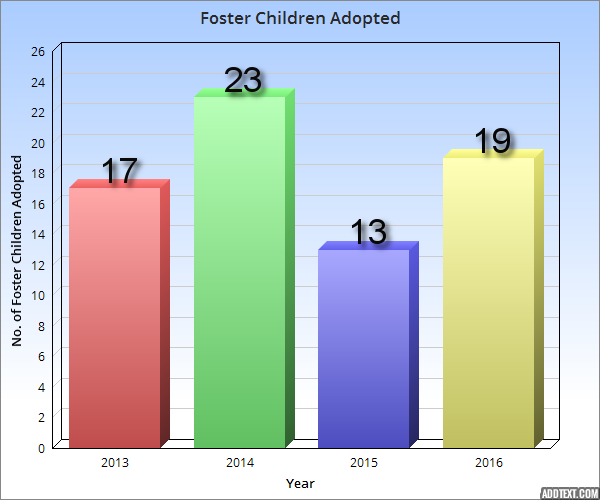
    While the majority of these were step family adoptions, nineteen adoptions were made in respect of children who had been in long term foster care. This was an increase of three since 2015 where there were sixteen foster care adoptions made.

    2014 still had the highest number of foster care adoptions in the past five years, with 23, an increase of six from 2013.

    It is expected that these numbers will rise over the coming years because of the modified Adoption Act.

    Foster Children Adopted NEW

    By Megan Walsh and Keeva Tyrrell