Tag: childrens

  • Take the Plunge… Volunteering

    Take the Plunge… Volunteering

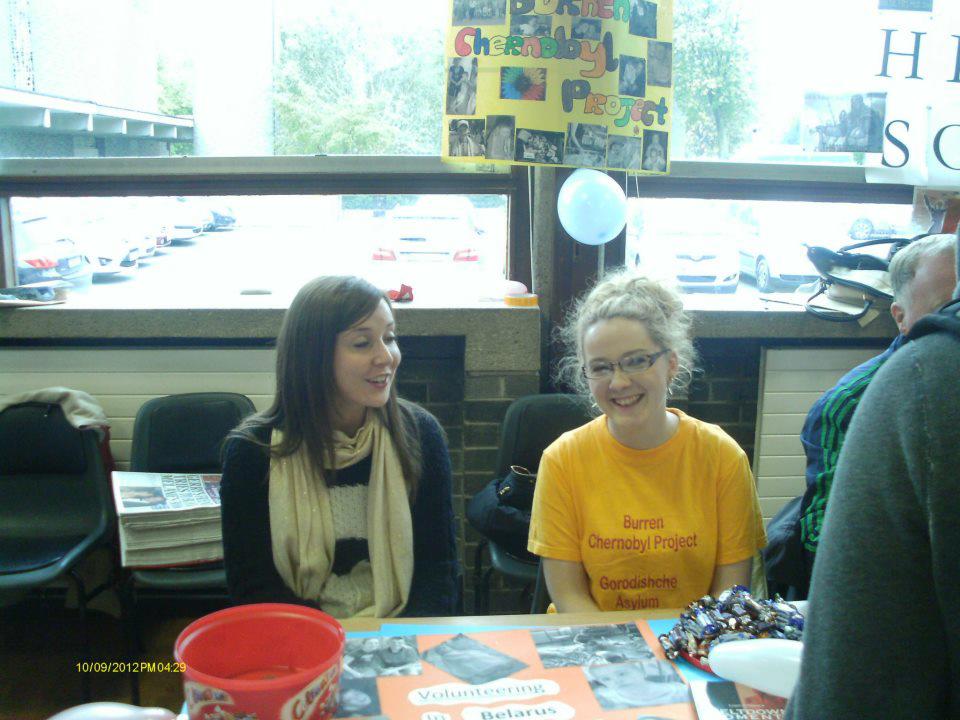
    Charity volunteering is one of those things that people talk of doing but never get round to it, and it becomes even more topical around Christmas time. TheCity’s Patrice Brady caught up with Chernobyl volunteer, Searlait McCann  from Dublin and asked her about the experience of Volunteering in Belarus with the Burren Chernobyl Project and why she took the plunge into volunteering.

    Credit; Searlait McCann
    Credit; Searlait McCann

    “Well, I’ve kind of always been involved in different kinds of fundraising because my father had a double transplant so we were very involved with the Irish Kidney Association. However, I had wanted to work with children and travelling to volunteer abroad always appealed to me,” explained Searlait

    “When I decided to finally take the plunge and actually go away I had initially planned to go to somewhere like India but one of my college friends travelled to Belarus with the Burren Chernobyl Project and as soon as she started talking about it I knew that it was what I wanted to do.”

    The Burren Chernobyl Project  is a relatively small organisation based in Ennistymon Co. Clare. It was  established in 1993 to help with the child victims of the fallout from the Chernobyl reactor explosion, However their work has now extended to looking after children and adults. Many projects have been carried out to assist the children and their families who are enduring the effects of exposure to radiation and the other social and economic problems facing them in Belarus.

    Credit: Searlait McCann
    Credit: Searlait McCann

    “It’s really hard to put into words the experience of travelling to Belarus to work in some pretty upsetting settings with some truly incredible people. No matter how much you hear about it and try to prepare for it, it’s completely different than what you expect once you get there, and different things stand out to different volunteers.

    “We arrived in Gorodishche Asylum late at night after a long day of travelling. Gorodishche is home to 220 children and adults, officially aged between 4 and 25, however due to the physical and mental abilities of some of the residents they have stayed in Gorodishche past their 25th birthdays as moving them to an adult asylum would be too upsetting and disorientating. On the first day we met Iryna, head ‘Mama’ (nurse) in the Asylum who was to be our translator and ‘minder’ for the next 10 days, but she turned out to be so much more,” said Searlait.

    “An absolutely incredible woman, who really has become something of a mother figure to all of the residents at Gorodishche. We then threw a party for one of the residents who was moving on to one of the adult homes. We were excited about this as it felt like we would be easing ourselves into the whole process. It was a great day, yet it was extremely sad to see how heartbroken his friends- who had become brothers to him- were to say goodbye, as they weren’t likely to ever see him again.”

    Belarus Care Centr. Credit: Searlait McCann
    Belarus Care Centre. Credit: Searlait McCann

    “The next few days we spent in the asylum helping out with the various groups, of which there are 7. We would get up at about 9 and would stay in the asylum until lunchtime and then again until around 7pm when we could get dinner. In the evenings we would go back outside and spend time with some of the older residents playing football, playing on the swings and going for walks.

    “Group one and two are made up mostly of teenagers with medium-severe mental disabilities. We spent time taking this group for walks, painting their nails and feeding yoghurts to those who cannot feed themselves.

    “Group three is perhaps one of the most upsetting groups for some volunteers. This is the group of the most physically disabled residents who are all bedbound. It is separated into two parts, each referred to simply as ‘Big 3’ and ‘Small 3’. Because of the lack of funding for Gorodishche from the Belarusian Government and the high costs of disposable nappies in Belarus the residents are limited to one disposable nappy per day, meaning they spend the rest of the day in stiff, makeshift nappies made from bedsheets.

    Credit: Searlait McCann
    Credit: Searlait McCann

    “This results in a smell that cannot be described but one you will never forget! One of the most upsetting thing about this group for me, and the other first time volunteers there, (apart from the smell) was the stunted growth of so many of the residents due to a lifetime confined to a crib. There were residents who looked like toddlers but who were actually 18 and 19 years old. This is something that is extremely hard to believe and accept even after seeing that it is reality. We fed group three their lunch and dinner, this was very difficult and upsetting at first as we had to feed them lying down which felt extremely inhumane,” explained Searlait.

    “Group four is the group that was most unsettling for me. I found it most upsetting as it seemed to me that the majority of the children in this group would be able to live relatively normal lives if they were receiving adequate medical attention or if they lived in a country that was ‘up to date’. Some of the illnesses of this group include epilepsy, autism and Cerebral Palsy, which has only recently been recognised as an illness in Belarus. We didn’t spend as much time with this group as we did with others, I’m not really sure why but the Mamas were extremely protective and were reluctant to allow us to photograph this room.”

    Credit: Searlait McCann
    Credit: Searlait McCann

    Searlait spoke of a lot of the children with emotion especially when she explained some of the children’s backgrounds. A lot of the background stories are extremely sad and often hard to take. Such as one little girl in this group who has down syndrome whose mother is a dentist in the local village but has never come to visit her daughter. Another example is Alosha in ‘Big 3’ who is epileptic. Alosha is the resident who had the biggest affect on me personally. He is the same age as my sister, 24. Alosha’s mother is a doctor, who unable or unwilling to cope with her son’s seizures and left him in bed until she eventually left him in Gorodishche. Alosha has become completely emaciated and is unable to hold down much food.

    “What struck me so strongly about him is that although he doesn’t talk, he has the saddest eyes I have ever seen and it struck me so strongly that he seemed to be the only resident of Gorodishche aware of how unfair his situation is.

    “Group 6 is made up of the older, most able bodied boys. These are the most independent of all the groups as they spend their days working on the Asylum’s farm. They also have their own little sitting room with a TV. It was mainly with this group that we spent our evenings.

    “Group seven is quite similar to groups one and two however they are generally more physically able. We did a lot of the same things with this group as we did with G1 and G2 however some of them took part in our games of football, we’d paint their nails and do their hair and they’d do the same for us.

    “I think it would be impossible to travel to Gorodishche and not remain involved with Burren Chernobyl Project. It is definitely something I want to do again in the future.”

    862986_4408571619204_1259930424_n

  • Dublin reacts to the Children’s Rights Referendum and campaign posters

    Dublin reacts to the Children’s Rights Referendum and campaign posters

    Labour’s campaign poster

    By Sarah Reilly

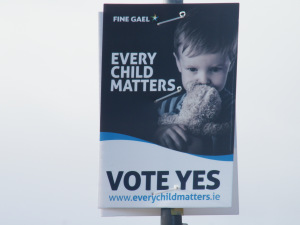
    Dublin people have expressed mixed views about whether or not Children’s Rights Referendum campaign posters have influenced their voting decisions. Some voters described the poster-campaigns as “disinterested attempts at persuasion” and confirmed that the posters have not influenced their decision in any way. Others described the posters as ‘cheap’, ‘exploitative’ marketing techniques being employed by parties and advocacy groups to sell yes-votes. Either way, it seems the posters have not achieved what they set out to achieve.

    John Meaghan (65) plans on voting yes on Saturday. When asked what he thinks of the  referendum posters, he says, “I think the commercial use of children in the case of these posters is manipulative but I am going to vote yes, so they haven’t really had any impact on me.”

    John Meaghan (60) from Dublin

    Mr. Meaghan was not the only person to hold a sceptical view in relation to the posters. Many voters interviewed for this article stated that the political employment of the children featured in the campaign-posters is questionable, due to the very nature of the referendum.

    “I don’t agree with children’s faces being put up on referendum posters. These kids are being completely disrespected and are being used for marketing purposes. The use of these pictures is ironic due to the nature of the referendum, and I for one am voting no”, says Kay Ward (50).

    Kay Ward (50) from Dublin

    Anne Murray (77) said she hasn’t been influenced at all by the posters. “They’re fine and the children are little dotes but I will be voting no. The state will not protect children.”

    Another voter unmoved by the posters is Deborah Waters (44). “I haven’t been influenced by the posters but for those unfamiliar with the referendum, I suppose images of children do clarify that the referendum is about kids. I am fostering a child so I am voting yes.”

    Bobby Borwick (50) said, “I haven’t taken any heed to the images on posters and I can see both sides of the debate. I was planning to vote no, but with organisations like Barnardos on the yes-side, I have changed my mind and I am now voting yes.”

    Bobby Borwick (50) from Dublin

    Brigid Byrne (58) is planning to vote no and said she has carried out a lot of research over the last number of weeks. She said the no-side do not need any fancy posters to back up their campaign because their arguments are obvious and rational. “The images of children used in those yes-posters illustrate how the government are already taking advantage of the very beings they are promising to protect.  The use of these images is total exploitation of children”, she said.

    Another voter on no-side is Keith Nolan (33). “I have seen the yes-posters but they haven’t influenced me in any way and I will be voting no. The use of the children’s images in posters is cunning and it’s very obvious that the yes-campaigners are trying to buy votes by melting people’s hearts. This cunning move is in itself taking advantage of the children photographed, by undermining what’s in their best interest.”

    Keith Nolan (33) from Dublin

    Meanwhile, Sinn Féin North West Councillor Anthony Connaghan said that while he is supporting his party in their yes-campaign, many of the yes-campaign posters are ‘exploitative’.

    Sinn Féin Councillor Anthony Connaghan

    “Sinn Féin are calling for a yes-vote. Caoimhghín Ó Caoláin and a few other Sinn Féin representatives in Leinster House have done work on this over the last while. They are happy that this is a step forward for the rights of children in the country. Sinn Féin lead from the proclamation, which does say that we should cherish all the children of the nation equally. This hasn’t happened over the last number of years. State care has been appalling and Sinn Féin believe that this referendum is a step forward in tackling that care. I do have faith and trust in all members of the party, that they are working for the benefit of the country. Hopefully backing this referendum is the right decision.”

    On the topic of campaign-posters, Mr. Connaghan said, “I think most of the yes-posters are guilting people into voting yes by using images of sad faces.  It’s as if they are telling you that a vote against this referendum is a vote against children, which is very unfair. I also think these posters are exploiting kids.”

    Advocacy group campaign-poster

    Sinn Féin produced a campaign-poster which features the face of a two year old smiling child. Mr. Connaghan defended the poster saying, “Our campaign-poster is not as bad as the real guilt-inducing ones”.

    COUNCILLOR CONNAGHAN ON NO-CAMPAIGNERS

    In relation to the no-campaigners, Mr. Connaghan said:

    “I’m not 100 percent convinced that the power is not already there for state intervention where appropriate. Party campaigners for the yes-side have said that the passing of this referendum would stop cases such as the Roscommon case ever happening again. The truth is that the social services had the power to intervene in that case but they did not act on it.”

    He continued, “It has been said by no-debaters that this referendum is purely down to adoption, but again I do have to say that Sinn Féin are trustworthy and we would not be encouraging a yes-vote if we didn’t feel that it was the right thing to do.”

    UNDERLYING GOVERNMENT MOTIVES

    Mr. Connaghan critiqued underlying government motives in encouraging the passing of the referendum.

    “It’s like they are trying to say ‘look at us, look what we have done. We have taken action on something that has taken other governments 20 years to discuss.’ This is ironic considering they have been in government themselves within those 20 years. This behavior by the government is also taking citizen’s eyes off upcoming budget austerity.”

    RECENT DEBATES

    In relation recent televised referendum debates, Mr. Connaghan said, “I feel that no- siders, John Waters and Kathy Sinnott are winning debates. It’s as if the yes-side are reading from notes and I don’t think Francis Fitzgerald is very effective at all.”

    The councillor also commented on Minister Leo Varadkar’s public criticism of  the no-side. “The likes of Leo Varadkar really makes me laugh. He has addressed the no-side as scare-mongrels, yet Fine Gael’s use of scare-tactics before a budget is undeniable. They throw out a load of kites, in which they release budgetary details to suit their own agenda. It’s like the child-benefit. They’ll probably say they are cutting that from €140 to €100. In the end it will probably be cut to €120 and people will feel grateful that they weren’t cut down to €100. People need to understand those tactics. “