Tag: church

  • “I saw myself and my church friends as completely cut off from the rest of world”: The growth of Evangelical churches in Ireland 

    “I saw myself and my church friends as completely cut off from the rest of world”: The growth of Evangelical churches in Ireland 

    by Diana Lazar

    For centuries, Catholicism has been the leading religion in Ireland. While it still leads by far, no one can deny the steady decline of Catholic identification and church attendance numbers in the past few decades.

    According to the Census 2022, there has been a 10% decrease from 79% to 69% of the population who identify as Catholic since the previous Census six years ago.

    Evangelical churches such as the Pentecostal and Presbyterian churches have been noticeably growing due to inward migration, particularly from Africa, Asia, South America, and certain eastern European countries. They tend to be more conservative in their theology and social beliefs than other branches of Christianity.

    Maria Pop grew up in the Pentecostal church community, “I attended church regularly every Sunday, and occasionally on other days of the week,” she said. “Parents in the church are told that since the first few years of a child’s life are the main formative years and the framework for the rest of the child’s life, it is imperative to expose the child as much as possible to the church.”

    She took part in many of the church activities as a child.

    “My main experiences as a young child in the church are mostly positive. I would attend Sunday school with other children my age. We’d read books and comics, watch movies, play games, and occasionally prepare songs to sing in front of the rest of the church.

    “Of course, all these activities were Christianity presented in a child-friendly manner. That is until you reach ‘older child’ status and suddenly the Sunday school teachers are talking about alcohol, sins, lust, purity, Satan, spiritual warfare, and the rapture. At this point, my church attendance had trailed off. I tried to push away some of the ideas they were putting on us,” Pop said.

    After her attendance started to drop, things were not the same for her anymore.

    “When I did attend, it was nice to catch up with my church friends, but the heavy, seemingly philosophical topics covered in Sunday school were always a source of unease. It felt like anytime someone would mention the evil world, they would be referring to people like me, who weren’t completely engrossed in the church,” she said.

    For Pop, being a part of a community did come with positive aspects.

    The church has been a consistent source of community my whole life. They were alwaysthere, and they continue to always be there. We were taught how to play instruments, we’d go on trips locally, and abroad. We’d go Christmas carolling with our families. It was a positive experience to grow up with the sight of the church adults carrying out charity events and travelling to areas of poverty to support people in need. The church raises money and transports necessities to impoverished areas every Christmas,” she said.

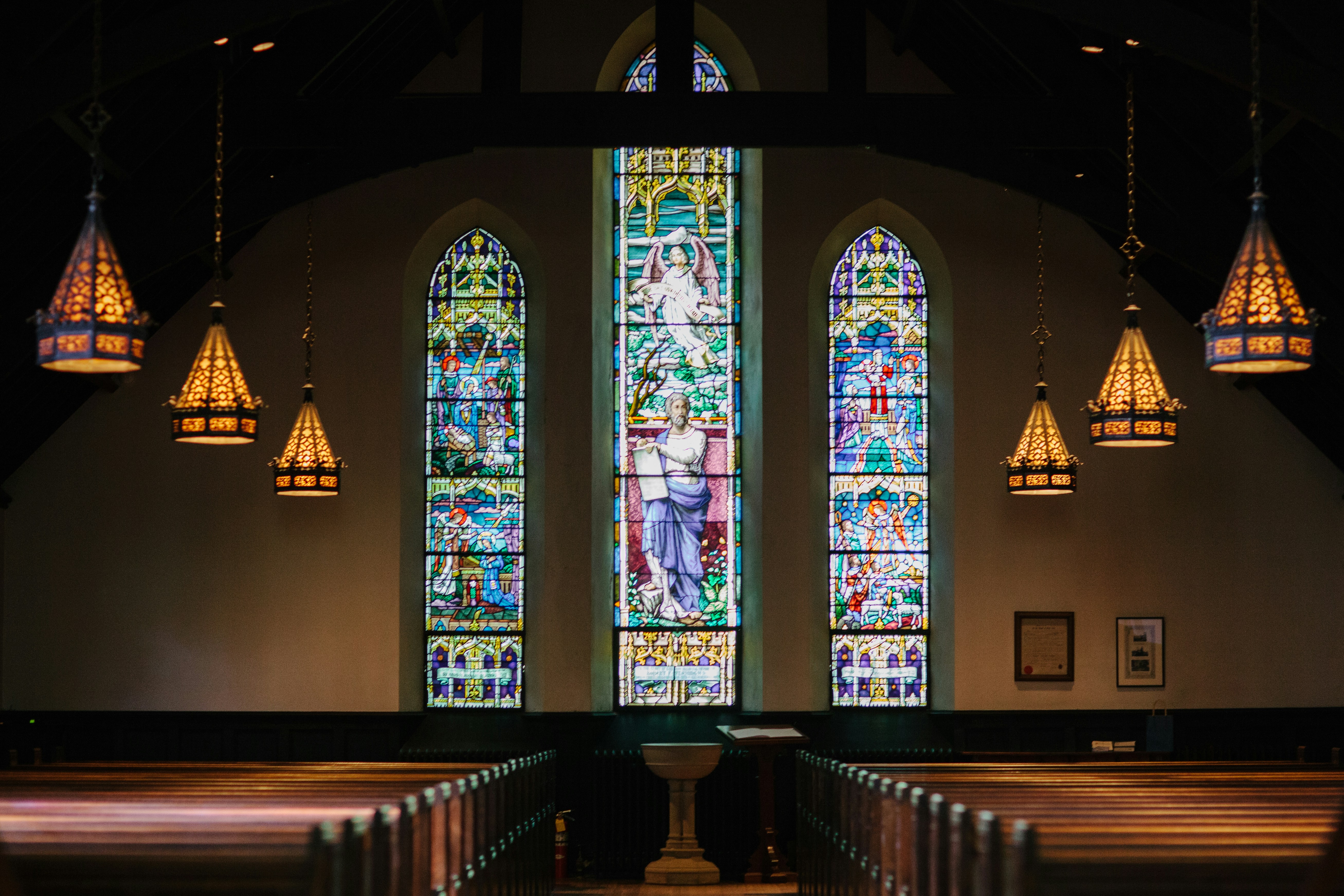
    Image: Unsplash

    Pop does not agree with some of the ideologies shared in the church, however.

    “Most of the churchgoers are simple, humble people with good intentions, but they’ve just been raised to see the world as this horrifying monster that wants to break apart their families and corrupt their kids. Some of the ideas that have been passed down through the generations are damaging, and they continue to be passed down, despite the progressive century we are in.

    “Not unexpectedly, most of the churchgoers, including women themselves, are prejudiced against women. Frequently during church services, the pastor, or the men in leadership will preach about women’s faults. How women lead men to perversion by wearing skirts that are too short, or too tight. How women of today need to learn how to listen to men, because God made men rational, but women emotional. Often, they will list things that women in the church are not allowed to do like paint their nails, get Botox, wear jewellery or heavy makeup,” she added.

    Judgement fell upon her from her community as she grew older.

    “Throughout my adolescent years, my church friends, and other church adults found my posture, my humour, my lack of style, and my aspiring career goals distasteful. It is a commonly accepted idea that women need to be meek and kind, always dress nicely, and they must always assume a mature motherly persona, even from a young age. Yet, the men in the church are allowed to make crude jokes, be loud, attend Sunday service in jeans, lack basic manners, and most of all, have dreams bigger than just a wife and children,” she said.

    The women are expected to start a family as soon as possible.

    “If a woman is unmarried in her mid-twenties, people begin to wonder what is wrong with her. But if a man is thirty and unmarried, nobody bats an eyelid. There isn’t much of a concept of a woman wanting anything other than a husband and as many children as the Lord gives her. College is just something we’re supposed to do while we wait to get married. Once we’re married, we’ll forget about everything that we’ve learnt, and start giving our husband children.

    “The concept of submission is taken very seriously in the church, and the nineteen-year-old girls who get married are expected to fully submit to their husband’s wishes and wait on them hand and foot. This submission can be from something as minor as permission for a new hairdo, to something as major as their career choice or number of children to have,” Pop added.

    Image: Unsplash

    The church places a great deal of focus on the Biblical Book of Revelation’s ‘End Times’ which is an ideology about the rapture coming to Earth soon. The belief is that all repented Christians will get brought to heaven, while everyone else gets left behind to suffer.

    “In my personal experience, it was a great way to introduce an abundance of anxiety into a nine-year-old child. I would constantly ask my parents for reassurance that I was good enough to be saved. Innocuous thunderstorms, flight turbulence, news of wars and environmental disasters, all seemed, to my fragile mind, as signs that the end was possibly occurring, or just about to occur,” she said.

    The idea of some people not being saved in the apocalypse created a division between Pop and others.

    “Mentally, I saw myself and my church friends as completely cut off from the world. We were different, and we were going to go to Heaven. All the other kids were sinners and would go to hell. Many churchgoers, even as adults, have adopted this divide between themselves and the ‘unholy’ world. Their interactions are superficial with people of different beliefs, including other denominations.

    “Being raised in the church gave me a sense of superiority as a child, but as I became a teenager and distanced myself from the church, I realised how alienating it is to think that way. All humans are brought onto the same earth, we all have the same fundamental needs, and we are much more similar than we are different, even down to a genetic level,” she said.

    Her drift from religious belief strained her relationship with her family.

    “This is a common occurrence for anyone who slightly strays away from the church. It is baffling how families that would express excitement for the birth of their child, and that nothing else matters except that their baby is healthy, are the same families who are willing to cut off their grown-up child, all because they no longer share the same beliefs.

    “Many are under the illusion that having a child means that the child will only ever be an extension of themselves, rather than a person with independent beliefs and wishes. So, they do not accept when the child deviates away from the good Christian soldier-for-Christ script. It is easier for them to reject their child and lose their emotional connection to them because if they are unbelievers, they are going to eternally suffer in Hell, and that reality would be too difficult to bear,” she added.
  • Mass cutbacks threaten future of rural communities

    Mass cutbacks threaten future of rural communities

    By Aoife Kearns

    It’s a Saturday evening. Sitting at the kitchen table, my laptop is open and aside from the regular distractions that most 22-year-olds give into, such as WhatsApp notifications, or opening the Facebook tab to name a few. At ten-past-seven every week, there is another distraction in my house. In the kitchen, there’s a scramble for car keys, upstairs a fight over the shower and in the sitting room my 89-year-old Grandmother sits, immaculately dressed, handbag on her shoulder, waiting for the 10 minutes of madness to end so she can be on time.

    I was once a part of this madness. Five years ago, I would have been pacing the landing with a reading in my hand, recounting a story that St. Paul told the Corinthians. Admittedly, I was focusing more on the delivery, but I was always happy to be given the opportunity to read and, in my own way, help the community. I was never a natural reader, to be honest the fact it didn’t come easy was one of the reasons I put myself forward in the first place. The nerves that I felt were always lessened by the knowledge, that everyone who was sitting in the church was a neighbour, a friend or acquaintance, or a part of my family that dutifully attended mass every week.

    Nowadays, this scene is very much the same, but the location has somewhat changed. From this month onwards, St. Killogue’s Church Kilnaspic in the parish of Mooncoin, Co. Kilkenny, is one of the many Catholic churches in the diocese of Ossory, (whose parishes include parts of Kilkenny, Laois and Offaly), that will no longer hold weekly mass. Instead ceremonies will now be held once a fortnight. As I sat at the table with my laptop on that December evening, the difference was that my family weren’t going to meet their neighbours outside the church-gate for a chat, or visit the grave, as this change had already come into effect.

    In his Winter Pastoral letter, Bishop of Ossory, Dermot Farrell addressed these changes outlining what it will mean for the churches impacted. He said: “Beginning on the First Sunday of Advent there will be changes in the number of masses in our parishes.

    “These changes reflect the changing character of our parishes and communities; not only the effect of fewer clergy, but also the need for greater collaboration between parishes.”

    In relation to what this might mean for the future, Bishop Farrell said:

    “This is an exciting time in our Diocese, new shoots are emerging, new supports are being given, and new structures are developing. It is ordinary, and yet always extraordinary, to see our community, all of its members; discussing, responding, growing, and continuing today what the Lord began with the Apostles long ago.”

    These “exciting” times that the Bishop refers to, are certainly not the sentiments reflected by everyone who has been impacted by the change. As someone who grew up with Kilnaspic Church on my doorstep, to me, it is one of the remaining things that brings the people within the surrounding areas together. Although the church is located within the parish of Mooncoin, the people of Kilnaspic have had their own identity throughout history. Be it the short-lived Clogga hurling team of the 1940s, or Aylward’s shop that ceased operation in the early 1980s, this small pocket of the village was once a smaller remote village with its own amenities, and innate sense of community.

    One major fact that I have left out of this idyllic image of the Church and area, is that the number of people attending mass in Kilnaspic and other small churches and parishes nationwide, has decreased significantly. I am one among others in my generation that were raised Catholic, but don’t attend weekly mass. For some people it might be a case of clashing schedule in our increasingly busy lives; for others it might come down to a lack of interest, or disillusionment with the current practices and past failings within the larger organisation.

    This falling number has been in reflected national polls conducted by the likes of the ESRI and Amárach Research, which saw church attendance drop from 56% to 35% in a ten-year period alone. In Dublin, The Irish Times reported that in 2016 weekly mass was as low as 2-3% in some parishes. This national downward trend was one of the reasons for the decision, to cut back on weekly masses throughout Ossory, and the verdict was made following a headcount as Mooncoin Parish Priest, Fr Martin Tobin explained.

    He said: “The Bishop asked us to have a look at the schedule of masses that were in each and every parish, and as a result of that he took a look at the number of churches that were in each parish.

    “He then took a survey of how many people were attending mass, which was conducted over three weekends in November of 2018, and if my memory serves me correctly that came in at about 24%. From this figure it became clear that there were far too many churches and masses for the population.”

    In terms of the knock-on effect that the cut-back will have on rural communities, Fr Tobin acknowledges that there will be a danger in these places losing an important meeting point.

    He said: “I would be one of the few that would have felt rather uncomfortable about taking the masses out of the smaller communities as the churches are in one sense, their source of identity.

    “How do we survive these changes and remain a kind of entity? While equally acknowledging the reality of the situation, at the moment we do not have enough priests to cover the present structure considering male celibates are the only people allowed do all of this.”

    Kilnaspic is one example of the once bustling townlands of rural Ireland, that now have little to no amenities left aside from the church. With masses being cut in these areas, there is a sense of foreboding fear felt among locals that religion aside, their sense of self could be under threat. The development has already been rolled out in this part of the country, but is inevitably going to happen in other parts of Ireland in the near future.

  • National Maternity Hospital saga continues

    National Maternity Hospital saga continues

    With the plans for the new National Maternity Hospital swaddled in controversy, Hannah Lemass examines the reasons behind the row


    Plans for the new National Maternity Hospital (NMH) may be in jeopardy as the board of St Vincent’s Hospital will review the project amid ongoing criticism.

    The plans have faced controversy since it was announced that the St. Vincent’s Hospital Group (SVHG) would have ownership of the new NMH.

    The Sisters of Charity are the largest shareholder in the SVHG and will, therefore, be the owners of the new €300 million building.


    The planned site for the new National Maternity Hospital, St. Vincent’s University Campus, image Hannah Lemass

    Protest

    Demonstrations took place outside of maternity hospitals nationwide last weekend.

    The first protest occurred on Thursday 20 April.

    The crowd which included representatives from Parents for Choice and Midwives for Choice gathered outside the Department of Health headquarters on Poolbeg street in Dublin’s city centre.

    The lunchtime demonstration was organised by Workers’ Party Councillor Éilis Ryan.

    She criticised Minister for Health Simon Harris for tweeting on the issue of the new NMH rather than actively engaging in negotiations.

    “We would prefer if you actually got involved in the negotiations and didn’t  leave it up to the doctors to have to come out and make public statements about what kind of healthcare we should be having in this country.

    It’s a minister’s responsibility to take back control of healthcare from the church, put it into medical hands and make sure they are the ones making the decisions”.

    IMG_20170420_125827369
    “It’s a slap in the face to the women of Ireland” -Robyn, a protester at the Department of Health, image by Hannah Lemass


    Religious institution or independent hospital

    “As technology allows us to provide better and better medical care we’re going to have more and more procedures and treatments that the church rejects… the delay that I don’t want is when some form of new stem cell treatment is introduced, the board of the new NMH will have to have months-long negotiations about whether or not they approve it,” Councillor Ryan said. 

    Critics are fearful that having a religious order as owners will impede patient access to medical procedures that the church does not approve of, such as abortion and fertility treatments.

    Former master of the NMH Dr Peter Boylan has been very vocal in his criticism of the plan for the new hospital’s ownership

    “Hospitals on land owned by the Catholic Church are obliged to follow Catholic teaching and Canon Law on medical practices and procedures,” he said on Newstalk’s Pat Kenny Show.

    “To believe the new National Maternity Hospital will be the only hospital in the world owned by a Catholic congregation to permit serialisation, IVF, abortion, gender reassignment surgery and any other procedures prohibited by the Church is naive and delusional,” he added.


    He was concerned when Sister Agnes Reynolds of the Sisters of Charity  and sitting member of the SVHG board – did not directly comment on the influence the congregation will have at the new NMH.

    When asked by The Irish Times what influence the Sisters of Charity would have she said that she “can’t make a judgment on that.”

    “What she probably means is that we can’t make a judgment on that now, but wait until the hospital is built and then we will make a judgement call,” Dr Boylan said on Morning Ireland.

    Acting Deputy Chairman Nicholas Kearns requested that Dr Boylan resign due to his “public intervention to criticise and oppose the overwhelming majority decision of the Board.”


    Initially, Dr Boylan said he would not resign. However, on Newstalk’s Pat Kenny Show, he revealed that he had in fact submitted a letter of resignation.

    “I can no longer remain the member of a board which is so blind to the consequences of its decision to transfer sole ownership of the hospital to the religious Sisters of Charity and so deaf to the disquiet of the public which it serves,” he wrote in his letter of resignation.

    Minister Harris’s tweeted that the state will hold a golden share in the ownership of the hospital that will prevent the church from having any power to deny treatment.


    IMG_20170424_170946260
    Former Magdalene Laundry run by the Sisters of Charity in Donnybrook Dublin, image by Hannah Lemass


    On RTÉ’s Today With Sean O’Rourke, current Master of Holles Street Hospital Dr Rhona Mahony said that any suggestion the new hospital will be run by nuns or under a Catholic ethos is not true.

    She said that when the NMH moves, it will be an independent hospital with its own independent board “dedicated solely to the provision of gynaecological, maternity and neonatal service.”

    The agreement between SVHG and the NMH over the operation of the New Maternity Hospital, as mediated by Kieran Mulvey, was made public on 25 April.

    The 25-page document submitted to Simon Harris outlined that the hospital will be operated as a new company officially named The National Maternity Hospital at Elm Park DAC and the SVHG will be the sole owner.


    The first of several nationwide demonstrations was held on 20 April outside the Department of Health, image by Hannah Lemass


    The report also states that “the parties [the SVHG and the NMH] are agreed that the creation of a special golden share in the DAC is the best mechanism to provide legal protection to the inviolability of the “Reserved Powers” arrangement.”

    These “Reserved Powers” include:

    “a) Clinical and operational independence in the provision of maternity, gynaecology, obstetrics and neonatal services (without religious, ethnic or other distinction) in the hospital at Elm Park, Dublin…

    b)Control, utilise and protect all financial and budgetary matters as they relate to The National Maternity Hospital at Elm Park DAC (limited by shares)”.


    The Board

    The board of directors at the new NMH will be made up four directors nominated by the SVHG, four nominated by the current NMH, and one independent international expert in Obstetrics and Gynaecology.

    Deputy Chairman of Holles Street Nicholas Kearns wrote in The Irish Times on 26 April that the new hospital “will operate in accordance with the law of the land, not canon law – just as it does now. It will have no religious ethos”.

    He also explained that the hospital, which will take about five years to build, will have a ministerial lien which will prevent the Sisters of Charity from being able to borrow against or sell the property.

    The City report on the National Maternity Hospital, video by Hannah Lemass

    He also said that here is no alternative for the new NMH and that “women will benefit greatly from closer proximity to an acute adult site.”

    They have been looking for a new NMH since 1998. He described the current Holles Street location as “dilapidated, antiquated building that is not fit for purpose”


    Petition

    An online petition started by UCD postgraduate student Denise Kiernan has over 100,000 signatures.

    The petition calls for the prevention of the Sisters of Charity from becoming ‘sole owners’ of the hospital, for a formal apology from Sisters of Charity and that they pay their share of the redress scheme.

    Screen Shot 2017-05-01 at 21.41.56
    National Maternity Hospital petition (screen shot, May 1st, 2017), by Hannah Lemass

    Denise, who is currently taking part in a work placement at Welcome to Justice for Magdalenes, told The City that “we need to stand in solidarity with those who have faced abuse at the hands of religious institutions”.

    With no end in sight for this saga, it seems that we will have to wait a bit longer for the already overdue state of the art maternity services that the country requires.


    hannah-lemass-twitter-handle

    Featured image by Hannah Lemass