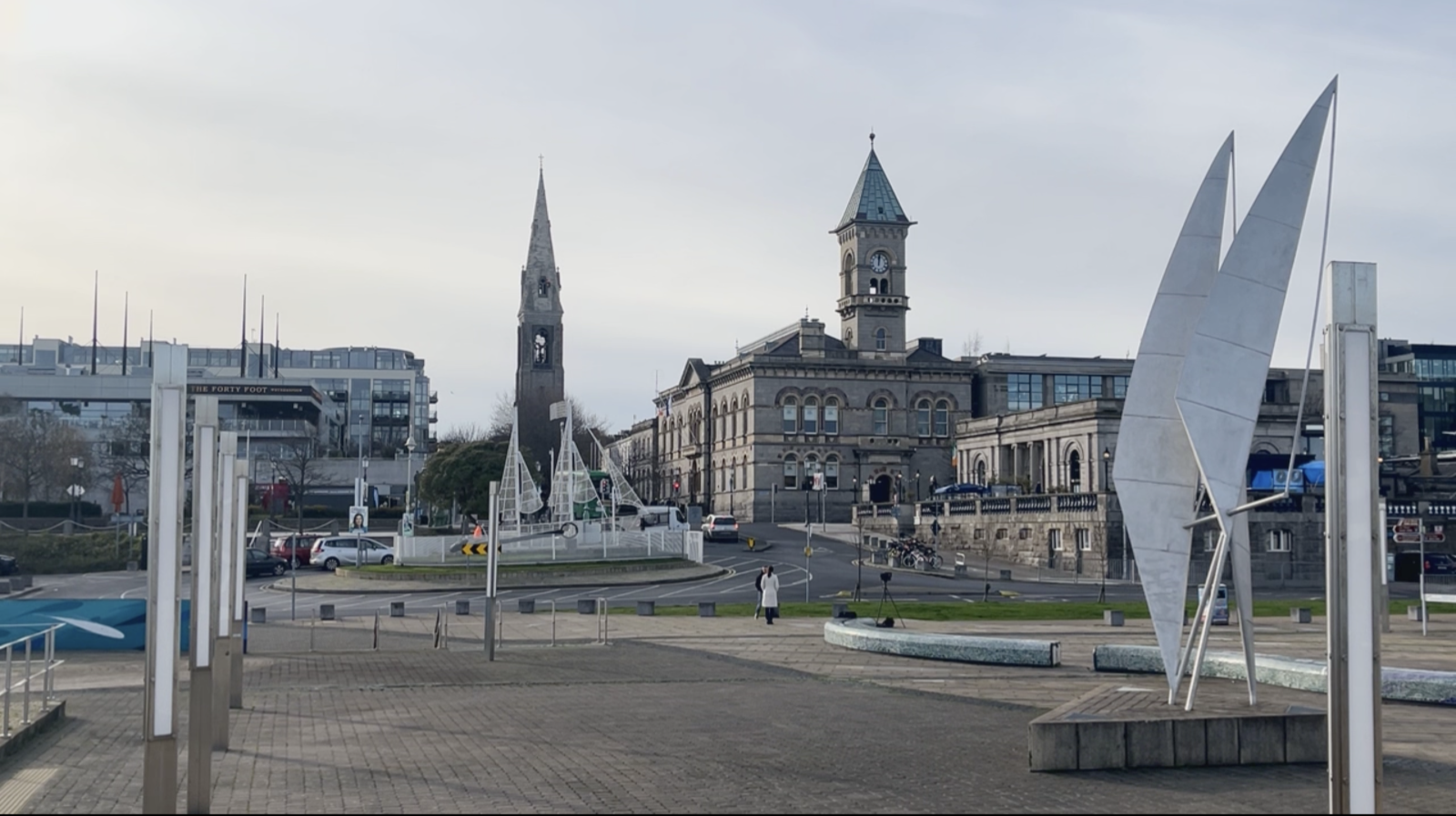
Located on the south coast of Dublin Bay, Dún Laoghaire gained popularity in the Victorian era as a popular tourist destination due to attractions like the East Pier and Ireland’s first passenger railway.
However, in recent years, locals have become increasingly dissatisfied about the lack of shopping and social amenities in the area.
Some buildings in the town, such as the unused Dunne’s Stores-owned building on Upper Georges Street, have been vacant for 20 years.
The City took to the streets of Dún Laoghaire to hear from locals and get their thoughts on their town.
In recent months the violence in Dublin City Centre has been top of the news agenda and it seems that violence has reached the university TU Dublin’s campus.
TU Dublin president, Professor David Fitzpatrick, wrote directly to the minister for justice Helen McEntee, appealing for more security around the campus for the safety of all students and staff.
In the letter earlier this year to then minister for justice Simon Harris, Fitzpatrick wrote to report about the anti-social behaviour and the lack of safety for students, “we have received reports that the response is slow and are also constrained by the fact that the University’s Estates and Security team cannot respond to off-campus incidents.”
The incidents have not been one-off attacks but have been regularly happening at the Broadstone Luas stop just outside campus.
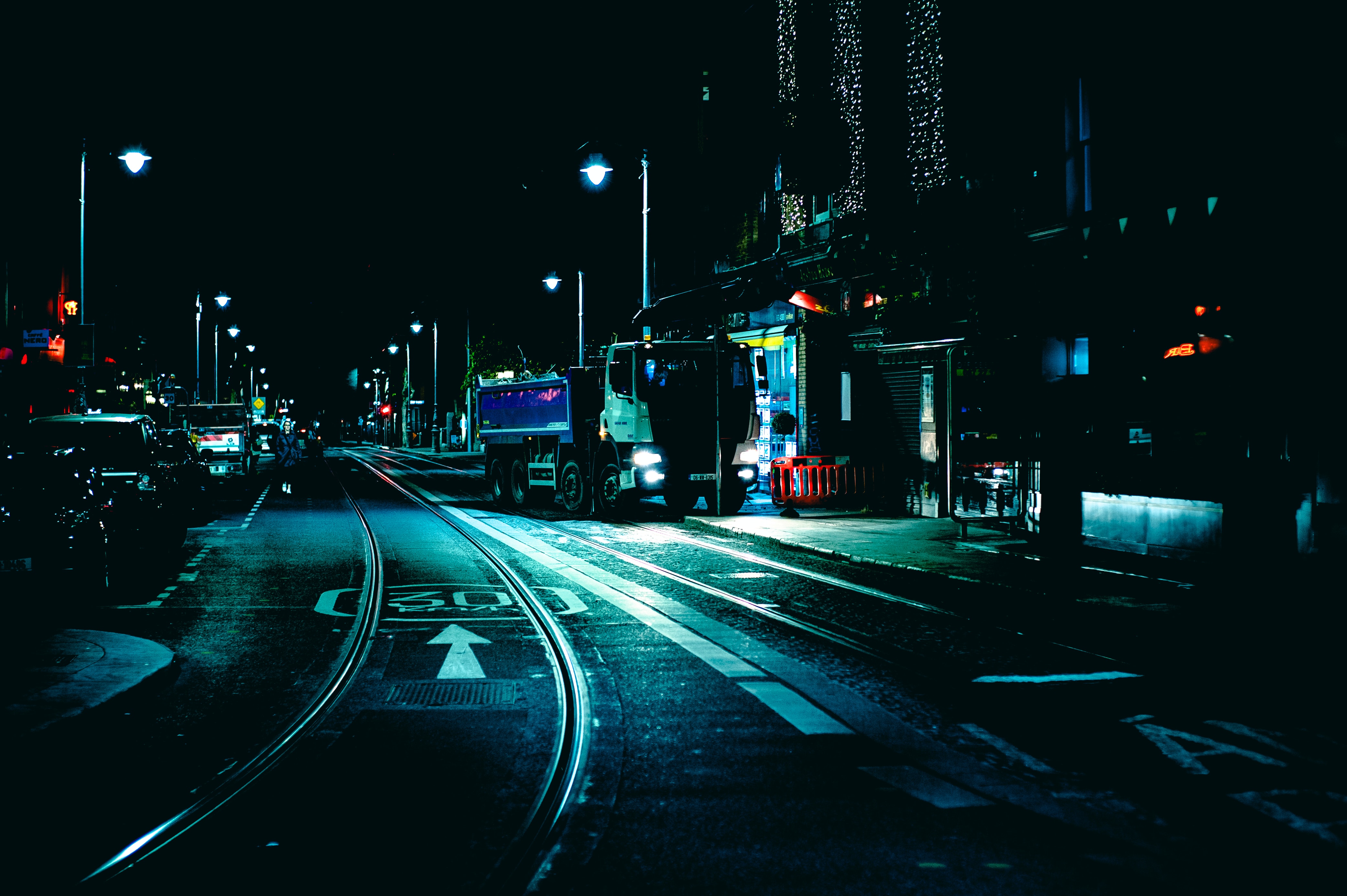
Luas tram in Dublin City Centre. Image: Louis Hansel/Unsplash.com
“The Union has received increasing reports of anti-social behaviour in the Broadstone Plaza, right beside the Broadstone Luas stop, as well as the ‘main entrance’ to our Grangegorman Campus. Students do not feel safe entering and leaving the campus, particularly in the evening time,” said Brian Jordan, president of TU Dublin Students’ Union.
The attacks have also appeared to not be random students from the college as there has been a racial element. While it appears that ‘nobody is safe’, there appears to be a distinct racial element to many of the incidents. It’s also very possible from what I’ve heard and seen that these students are targeted specifically because of their race and/or ethnicity. Several victims of attacks here have reported that racial slurs were thrown at them during the incidents for example,” Jordan added.
With this still going on and no sign of any measures being taken by the college itself, the TU Dublin Students’ Union took matters into their own hands and held a demonstration at the Luas stop.
TU Dublin Student Union members held a demonstration to send a message to the Government. Source: @tudublinsu
The union said the reason they held the demonstration was to ‘show solidarity with the students who consistently feel let down by the government’ and the second reason was to apply more pressure on the government and McEntee to coordinate a far better response between the Gardaí, Transport for Ireland (TFI), and TU Dublin.’
“There were several speakers, including myself on behalf of the SU, Nekesa who is our VP for Welfare & Equality, who also happened to be a mature and international student in TU Dublin, several local ‘opposition’ politicians, as well as current students within the University who felt more needs to be done.
We received very little communication from the University about steps being taken (an unfortunately common trend). However, after a particularly ‘viral’ incident last semester, media reported that the President of TU Dublin wrote to the then-Justice Minister requesting more policing in the area,” said Jordan.
The previous attacks saw some students getting pelted with eggs and racially abused and another getting her hair pulled. This all happened at busy times in the evening when students were waiting at the Luas stop. Witnesses described the offenders as all boys aged around 15 years.
When asked what the desired outcome Jordan said, “We want Justice Minister McEntee to provide adequate governmental support to improve the safety of the Broadstone Plaza. This means improving resourcing to policing in that area like more of a garda presence, as well as a collective response from TFI and TU Dublin. It should not be the role of the Union to constantly try to coordinate these stakeholders when we have an incredibly well-paid Government whose role that is.”
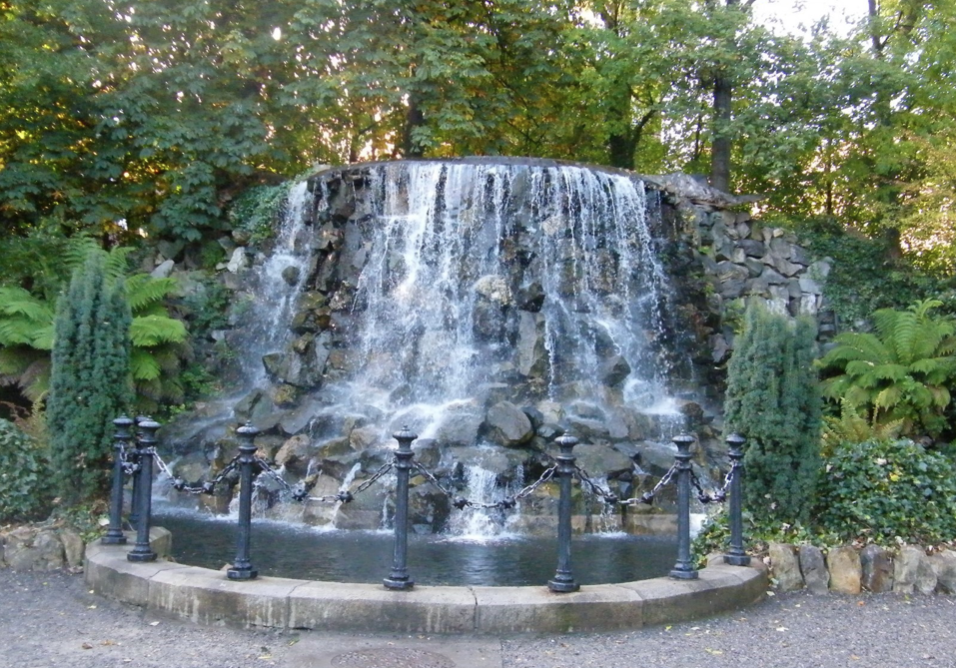
Irish comedians and musicians are speaking out at the prospect of commercial events at the Iveagh Gardens being shut down.
According to event organisers and locals in Dublin, a small group of people are campaigning against events being held in The Iveagh Gardens, which is already having a negative effect on the use of this space. There were no clear reasons as to why they were campaigning against them.
The Office for Public Works (OPW) is running a consultation into these events happening and will run until Friday, 6 October, having been extended from its original date of 29 September.
In the deadline set by the OPW, words of support must be sent to them by this date.
Source: Office for Public Works
Stuart Clark is the Deputy Editor of Hot Press, and he took to X, formerly Twitter, to voice his opinion.
The gigs in the Iveagh Gardens are under threat. If this perturbs you as much as it does me, we have up until Friday to forcibly tell the Office of Public Works how we feel. Hit them up at EventsIveaghGardens@opw.ie Don't let them take another bit of cultural Dublin from us!!!!
Sharon Mannion is a comedian, actor and improviser and she echoed the same sentiments.
“We will definitely miss the events at this venue. It would be such a shame if one of Dublin’s best gigs were to go. The festival here is a highlight for the community and a highlight for comedy.”
“It would be a loss for the comedy scene in Ireland if gigs stopped here and what would that mean for us?” she concluded.
“I will miss coming here if the gigs are cancelled, especially with how easy it is to get to.”
Nellie O’Neill, Social care worker
The OPW are trying to stop music and comedy events happening in the Iveagh Gardens next Summer, I think this would be a great loss to the city, please email EventsIveaghGardens@opw.ie before Friday so we can save our cultural events! pic.twitter.com/AZ1fXJXuSt
Nellie O’Neill is a social care worker and has attended events at the Iveagh Gardens at least once a year over the last decade.
He said, “The gigs have become part of my summer with a lovely venue in the city centre of Dublin. There is great public transport with great access to the heart of the city.”
“The thoughts of that venue not being allowed to run just because some small group of people had other ideas of what this park should be used for, worries me. Stephen’s Green is just over the road and there are no problems there!”
“I will miss coming here if the gigs are cancelled especially with how easy it is to get to,” he added.
In a statement, the Office for Public Works (OPW) said:
“A public consultation about how the Iveagh Gardens accommodates all visitors is taking place. This consultation has been extended to Friday, 6 October.”
“This consultation is inviting all visitors to share their experiences of the gardens and their views on how the gardens are used. We are seeking to gather a wide range of views on how visitors enjoy the Iveagh Gardens to balance the needs of all visitors.”
“This is to ensure that all visitors can share their views on our events. The views received will help inform the role this wonderful historic garden plays in Dublin in the coming years,” the statement concluded.
The word vintage can cause a serious debate nowadays, all depending on your company. To some it’s the idea of couture and nothing less, whereas for others it’s a unique find while bargain hunting off the beaten track.
However vintage branding to a lot of people is a fancy adjective to pawn off second hand goods, which is unfortunately the case in some shops. But Dublin itself has a buzzing vintage scene, that attracts not only hipsters but a range of individuals from brides looking for bargain couture gowns to people going that extra mile for a more alternative look.
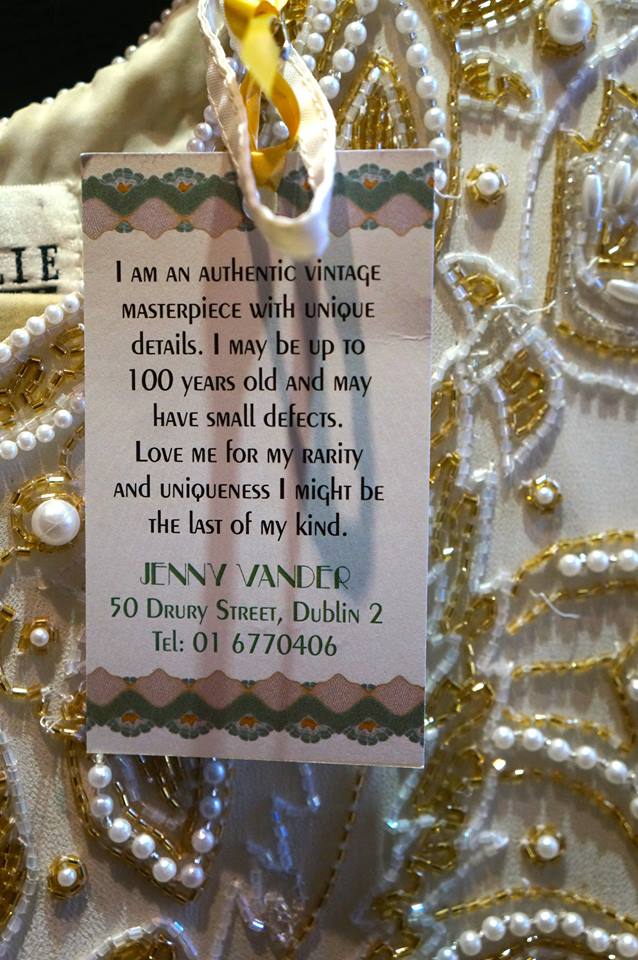
Jenny Vander is the original vintage shop and is a treasure trove of unique handmade clothes from different eras. The clothes themselves have their own history. How often is it possible to say you own a dress that’s older that your parents, and is still in immaculate condition?
Marion Sullivan from Jenny Vander explains what she would class as vintage and her opinion of how vintage is a new buzz word.
“Vintage is normally 1950’s or older, really anything over 100 years is antique, but anything younger than the 1950’s is at it’s very best retro, so even very cool 70’s, 80’s and even 60’s is retro, more recent stuff is second hand.
“Vintage is a buzz words in the last few years, a lot of places are throwing it around and the thing is that people don’t know what is vintage and their not informed. People think that’s 80s era is vintage because it says it in the books but it’s not.”
For anyone who hasn’t been inside Jenny Vander go even if it’s only to stare at the amazing selection of clothes – each era is represented. The shop itself had me in awe of the clothes, it was like a treasure chest of forgotten icons.
“It’s beautiful to be able to wear a piece of history which has been cherished and is unique to you, no one will have anything like the piece that you have; it’s got the history and beautiful craftsmanship. What you’re buying is handmade couture,” said Marion.
“If I’m being honest my favourite era is the 1920’s, the dresses were so beautiful and original, also the Victorian era, as nearly all the clothes are handmade and the materials were the best money could buy. The Victorian clothes here would have come from aristocrat or wealthy families. Back then it wasn’t like now where we can all afford nice things even though we would be considered the working class. The Victorian clothes are similar to the early style of Downton Abbey, all original and completely handmade with silk, it’s really unbelievable couture.”
However the revival of vintage into everyday wear means that younger generations are putting their own spin on these historical pieces.
“Young girls are still doing their own thing going out by themselves putting their look together with whatever they want that’s in fashion at the moment but there still putting the more unusual pieces with it and I think that’s the way to got with fashion,” said Marion.
“Vintage is being brought into the modern era and funked up a bit. My advice for vintage style would be to walk the walk in your own shoes and don’t follow the crowd.”
The revival of vintage clothing comes with a sense of individuality especially in Dublin fashion at the moment. However is it possible that the uniqueness of clothing item is vintage itself?
“ I think that vintage is open to interpretation, in my own philosophy it’s clothing from a different era or a somewhat special piece,” said Fiona Smith from The Harlequin.
The Harlequin is another of the original vintage shops in Dublin, just off Drury street, both floors of the shopped are filled with not only different era pieces, but vintage designers pieces that inspired former seasonal trends.
“We’re selling one off pieces , not only stuff from different eras but more unique clothing. I think it is trendy at the moment to wear vintage and a lot of people are wearing it, but it comes in waves. We’ve been in it so long, but it’s a matter of taste. Some people have never worn vintage and never will. It’s a different case for different customers and a lot of people who wore it for years will always wear it,” explained Fiona.
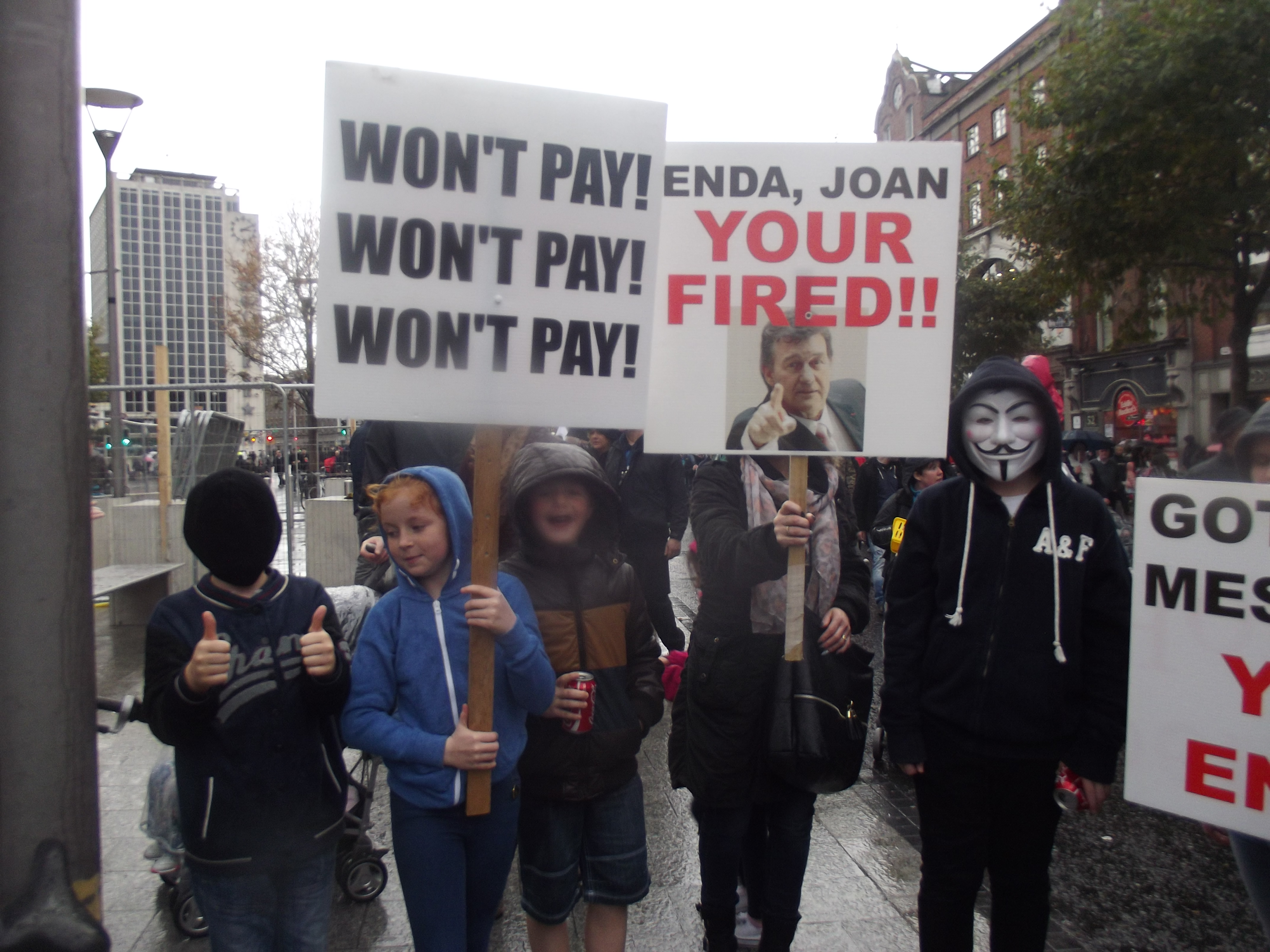
Saturday November 1 saw a nationwide day of protest against the proposed introduction of water charges.
Marches were organised in all the major cities and towns across the country, with the largest gathering taking place in Dublin. Smaller local marches took place throughout the greater Dublin region in the morning, with protesters then coming together in the city for the main event at 2pm.
There were two starting points: one at Connolly Station, the other at Heuston. The two groups marched on their respective sides of the Quays before joining and converging at the GPO in O’Connell Street.
As with last month’s march the atmosphere was good, with no reports of arrests. At the same time, however, a palpable feeling of anger against the Government and Irish Water pervaded. The message which the people were sending out was “enough is enough”, and that after years of austerity they were not prepared to be squeezed any more.
Unlike many parts of the country the rain held off for most of the day, but by late afternoon the bad weather had set in and many people did not stay for the end of the speeches. Nonetheless, the organisers once again claimed a higher turnout than expected, pointing out that the sheer volume of protesters sent a clear message to the Government.
Speaking at the Fine Gael presidential dinner in Dublin that evening, Taoiseach Enda Kenny said that the Government would not be scrapping water charges. He admitted, however, that mistakes had been made in their introduction, and that the setting up of Irish Water had been badly handled.
He went on to point out that the alternative to water charges would be an increase of 4% on the higher bracket of income tax, an option which he was not prepared to consider.
Meanwhile, the latest opinion poll for the Sunday Independent shows a further slip in Government popularity.
Dissatisfaction with the Taoiseach has grown to 67%, up 9% since September; Joan Burton’s popularity has also slipped by 8% in the same period.
The poll also asked voters who they would vote for if a general election was called tomorrow. Results suggest that Sinn Féin, at 26%, is now the most popular political party in the country, ahead of Fine Gael at 22% and Fianna Fail at 20%.
Further water protests are planned for the end of this month.
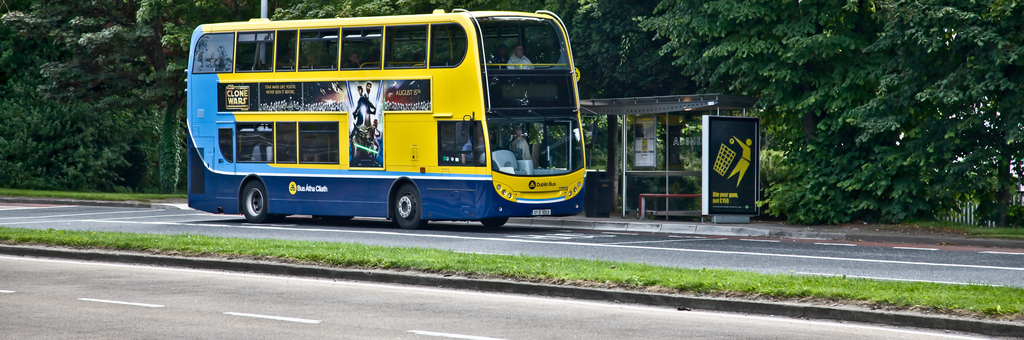
As someone who takes the bus into the city every day I have grown to adopt certain habits and mannerisms. I also notice the habits of other people. I felt it was the right time to compile a list on what not to do when travelling on Dublin Bus.
1- Don’t play music out loud.
If you are going to listen to music, make sure to use these. Image by Khairil Zhafri on flickr
If I wanted to listen to music on the bus, I would have brought my own earphones. A quiet bus is not an open invitation for you to take out your phone or iPod and start playing your music for the whole bus to hear. Also, just because you are wearing earphones, doesn’t mean you can listen to your music as loud as you want. If I can hear your music, through your headphones, and even worse, through my headphones, it’s a sign you need to turn it down.
2- Don’t be obnoxiously loud on the phone.
Is it really necessary to be that loud? Image by Martha Soukup on flickr
By all means, have a conversation or phone-call. No one will have a problem with that. The problem arises when everyone else can hear every single word you say in this conversation, no matter where they are sitting. It’s a bus; not O’Connell Street, you don’t need to project your voice.
3- Don’t take up a full seat during peak times.
Image by Mark Hillary on flickr
During peak times, passengers are usually heading to or from work or college. Either way, they are probably tired and not looking for hassle. The majority just want to find a seat and trudge along quietly. Don’t be the person with your feet up or with your bag beside you on your seat. The floor is a perfectly fine place to put them.
4- If it’s cold out, don’t open a window.
This is not a sign that the window needs to be opened. Image by Susan Sermoneta on flickr
It’s a well-known fact that opening the window on a bus does absolutely nothing to cool you down. However, the passengers in the rows behind you will know all about it. Sitting on a bus with Baltic winds blowing in your face can turn the most upbeat positive people into cynical grouches. If it is cold outside, or even worse, raining, leave the windows closed.
5- Don’t light up a smoke.
Everyone is trying to get somewhere. Don’t be the one who delays them. Image by DragonLord878 on flickr
The other passengers don’t care how badly you need it. Also, don’t try concealing it either. Firstly, the smell of smoke will give you up straight away, and then, more than likely, the driver will stop the bus until you put it out. If it’s one thing passengers hate more than sitting in traffic, it’s being delayed by someone on the bus itself.
6- Try to avoid eating.
Fight the temptation. Image by _BuBBy_ on flickr
I know sometimes it can be hard, but for the sake of the other people on the bus, please don’t eat something. Now, some foods are acceptable, like sandwiches or rolls, but try not to eat something with a strong aroma (we’re looking directly at you Subway lovers). The smell just fills the bus and makes everyone else jealous, or angry at you.
7. Observe personal space.
Observe the boundaries at all times. Image by Raúl Santos de la Cámara on flickr.
If you sit down beside someone, remember, you’re sitting beside them. You’re not sitting on their lap. It is a shared seat, a 50:50 split, not 60:40.
From the leaf filled paths of St Stephen’s Green to the hazy streets of the inner city – here is a collection of photographs showcasing Dublin in Autumn.








You must be logged in to post a comment.