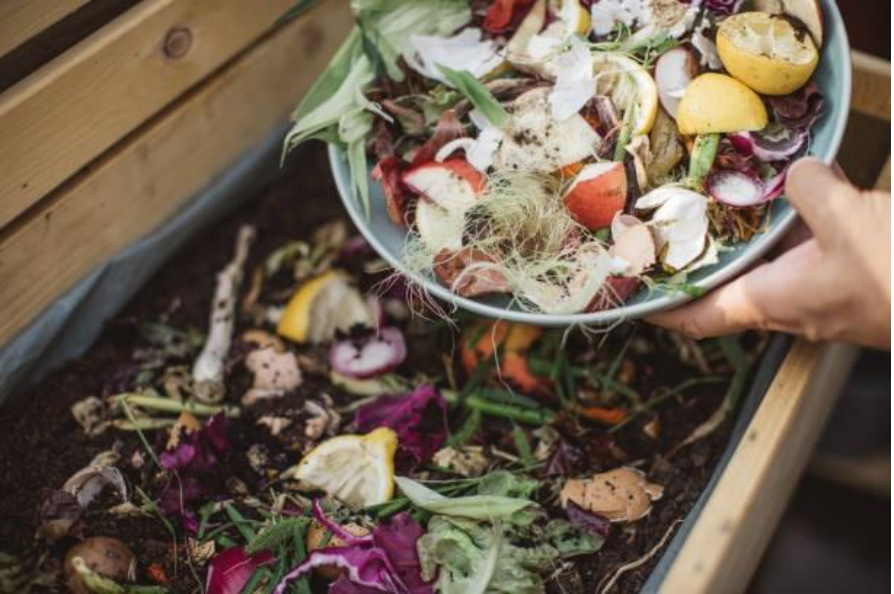
Food waste is something that isn’t mentioned as often when speaking about the climate crisis, as it is only accounting for 10% of the total percentage with the climate crisis.
The main issue with food waste is the significant resource waste it uses to bring your food from fork to plate, but also the carbon monoxide emissions. Deforestation is another major consequence for the ever-growing demand on the agriculture sector.
On a global scale, the average number of hectares of forests lost is 10 million each year. This happens everywhere but is most apparent in tropical forests in Brazil, Indonesia and the Democratic Republic of the Congo.
Climate activist Arielle Calajate, who is involved in multiple eco-friendly initiatives said, “People don’t realise how truly important the trees are to the climate, and responsible for a lot of what food we can eat. They give us fruits, nuts, healthy soil for food, a water cycle regulation, and pollination. So many important things are given to us by trees.”
Ireland’s deforestation rate is historically low for 2024, with only 670 hectares of trees lost. From 2001 to 2023, Ireland wasn’t as lucky and lost a total of 161,000 hectares of trees. For the small isle of Ireland, it meant we had lost 19 per cent of our national tree coverage from 2000 onwards.
According to Calajate,“by cutting down trees to provide us with more food, we are effectively hurting the one thing that is helping to keep everything okay. This is something the earth has been doing for centuries, long before we started abusing it.”
Statistics released by the Environmental Protection Agency (EPA) show that Ireland has wasted over 835,000 tonnes of food waste in 2023. This means that the average weight of food waste for a person in Ireland is 162kg. Ireland’s food wastage is higher than the European average, which is 132kg per person.
Statistics released by The Central Statistics Office (CSO) stated that food and non-alcoholic drinks increased in waste from 4.7% in the beginning of 2025. It is now at 5.0% in September 2025.
When you keep food in a highly acidic environment of vinegar or brine, it can add to the shelf life of that food for months, when they are properly preserved and sealed. This way of preserving food helps to prevent spoiling by preventing bacteria from growing.
Statistics by the Environmental Protection Agency mention that global food waste accounts for 8-10% of the total greenhouse gas emissions. When food is disposed of in landfills, it releases methane gas, which is a potent gas with a climate warming potential that is 84 times higher than carbon dioxide over a 20-year period.
There is no problem with the usage of agricultural land to produce food for the growing population, the problem lies in large percentages of these patches of land are used to grow food which is not consumed and wastes valuable resources.
Research done by the World Bank Organisation found that around 70% of the world’s water usage is used for food. This makes food a significant waste of freshwater and groundwater resources. Another resource used is the energy consumption, as 38% of the total energy used globally for food, is for food that is never eaten.
Your own impact on food waste can be a big help to stop the growing problem of food waste and its depletion of natural resources, and most are decisions that can be made at home. Buy in smaller quantities, if possible, from your local markets.
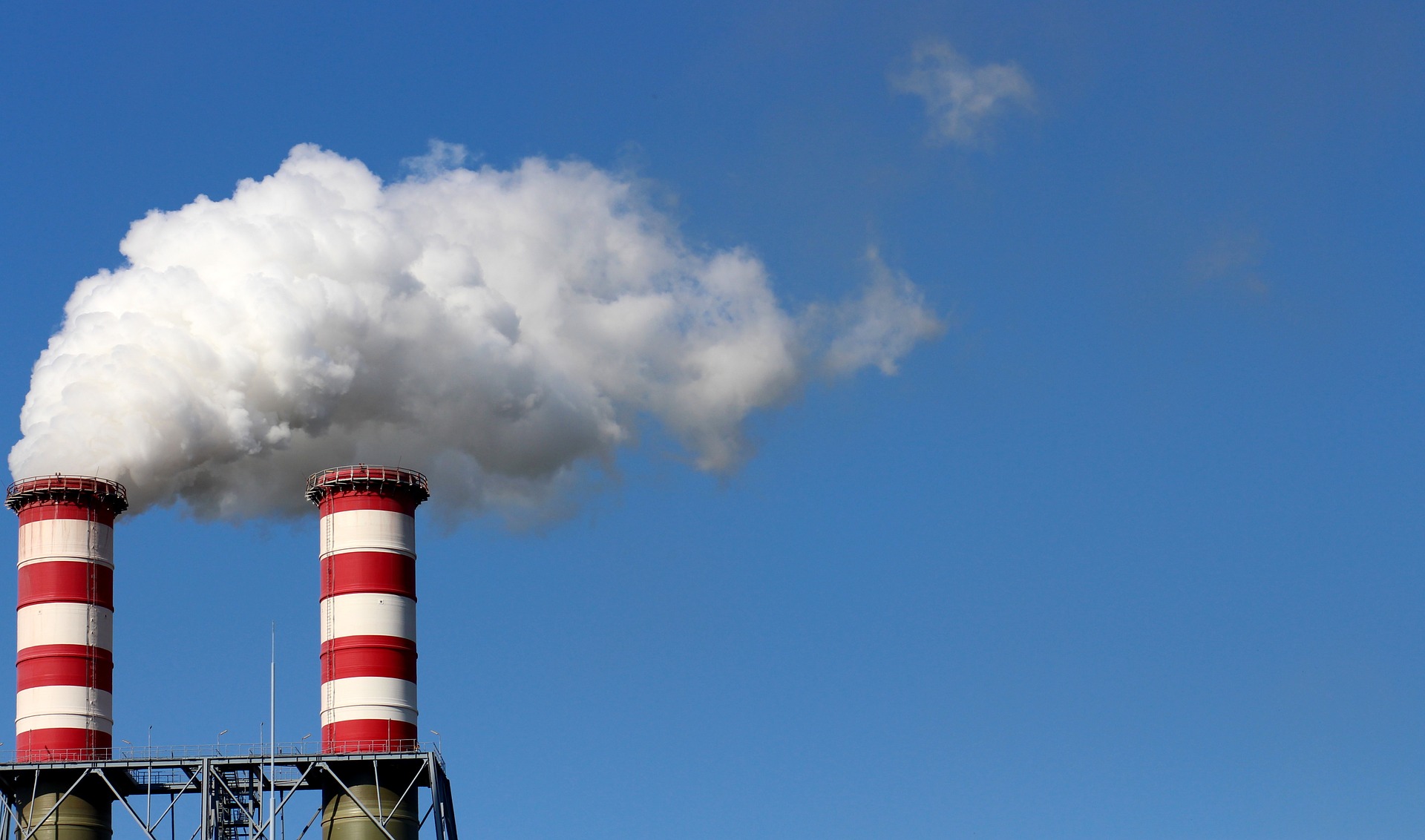
Smoking up the atmosphere: just 100 companies are responsible for 71% of the world’s emissions. Photo via Wikimedia Commons
As a child during the late 1990s, I was surrounded by reminders of my personal duty of care to our planet.
My boyhood hero Barney the Dinosaur relentlessly implored me to never let the water run, just as Captain Planet had for my older brother.
Although I was somewhat unsure of what a compost bin was, I made sure to lecture my parents as to the virtues it would bring to our household.
Despite constant assurance that my lifestyle habits could change the world, I always felt that underlying sense of futility common amongst those born around Fukuyama’s end of history.
This ambient dread was perhaps exacerbated by a sense of contradiction – the Celtic Tiger culture of my formative years celebrated reckless excess and unfettered corporate growth while we were personally made hyper-aware of our individual responsibilities to the earth.
While it is undeniably important to remember that our individual actions can make a change, I was immediately struck by the dissonance of how little attention had been given to the perspective that climate change is primarily driven by corporations.
“On an international level, fossil fuel companies seem to be particularly assiduous greenwashers”
Caroline Whyte
This perspective had been kept out of my consciousness, in part, through the corporate strategy of greenwashing – the marketing ploy through which the companies who are disproportionately responsible for burning up our planet attempt to present themselves as saviors of mother nature.
“I’d say there are two kinds of corporate greenwashers, intentional and unintentional,” says Caroline Whyte of the Foundation for the Economics of Sustainability, or Feasta.
“Intentional greenwashers aim to make money off naive consumers who are concerned about the environment and are befuddled by clever marketing. These greenwashers seem not to believe that there’s an environmental crisis at all – or if there is, that it somehow won’t affect them and so they can just make a few superficial gestures to placate the public and then continue on as before,” says Whyte.
“The unintentional greenwashers are different because they genuinely wish to improve their businesses’ environmental impact. The problem is that they believe that ‘green’ GDP growth is possible in the aggregate, so they don’t see any need for systemic change, either within their own organisations or in the wider economy,” she continues.
Whyte believes that the motivation for companies to greenwash stems from a mandate to maximise profits for shareholders, as well as financial constraints which make it impossible for corporations to truly put the environment first.
“Corporations have more of an impact than individuals for sure, because of their formidable political lobbying power, their ownership of the mainstream media and their ability to hire expensive lawyers to fight legal challenges to the damage they do,” Whyte says.
Here in Ireland, many of us were made aware of greenwashing after Ryanair declared themselves “Europe’s lowest fares, lowest carbon emissions airline” just five months after their inclusion on the EU top 10 carbon emitters list – and they are far from the only Irish company to employ misleading marketing campaigns.
Ryanair is just one of many companies using Greenwashing tactics. Photo from Ryanair’s Media Centre
“The Origin Green programme in Ireland is a clear example. It’s run by Bord Bia, but many Irish agricultural companies are participants,” says Whyte.
“Bord Bia has a conflict of interest because it’s simultaneously generating metrics to try and show how sustainable Irish agriculture is, and also acting as a marketer for Irish products abroad.
“Bord Bia publishes figures showing that the amount of emissions generated per litre of milk produced in Ireland has gone down – while failing to mention that overall production of milk has increased dramatically over the past decade, so that aggregate emissions are growing relentlessly.
Bord Bia has been contacted for comment on this but The City is yet to receive a response.
“On an international level, fossil fuel companies seem to be particularly assiduous greenwashers,” says Whyte.
“Intentional greenwashers aim to make money off naive consumers who are concerned about the environment and are befuddled by clever marketing”
Whyte
In Whyte’s view, the corporate orientation towards shareholder profit as well as the greenwashing campaigns which justify these environmentally harmful business models need to be ended if we are to move towards a sustainable future.
“To end greenwashing there needs to be a reorientation of international trade law and corporate law in favour of stability and resilience rather than aggregate productivity growth, along with a massive recalibration of debts, the setting of hard limits on the supply of raw materials whose use breaches planetary boundaries, such as fossil fuels, and a shift in the overall focus of the economy away from increasing consumption and towards well-being.
“Companies can of course also set internal targets for becoming more sustainable in. But that doesn’t have as much effect on broader economic dynamics or on their own general orientation, and so it’s the weakest action of the three – although it gets the most attention right now.”
The European Parliament have taken steps to address greenwashing through the introduction of the EU taxonomy for sustainable activities in order to define and categorise which economic activities can genuinely be categorised as sustainable.
The full list of sustainable activities is set to be completed in December of this year.
We’re living the digital technological revolution and every day we experience the impact of it but there is still so much more potential to create change with technology. Megan O’Brien explains how the food and agriculture industry is at the forefront of this change.
Picture courtesy of “Radical Growth Solutions”.
There is major innovation happening around the technology in this industry with a number of start-ups bringing ideas to the market that can help to combat our climate crisis, implement food crises solutions and teach us how to use our scarce resources in a more efficient and sustainable way.
There are roughly 70 million people in the small growth farming community in Pakistan and the average income for a typical family of 6 is $350 per year. Water is considered a scarce resource and these farmers cannot afford to waste it, that’s where Radical Growth Solutions (RGS) comes in; an ag-tech start-up that have built a smart irrigation system to enable these farmers to understand exactly how much water they need for each plant in their crop in order to utilise their resources more efficiently.
RGS is a start-up founded by Nabeel Yousuf. Originally from Jordan with a background in film and entertainment, Yousuf moved to Pakistan 10 years ago on a mission to create a movie to showcase Pakistan in the positive light that it is so often denied by the media. However, his dream took a turn down a different path when he connected with nature on an island in Thailand and decided to go back to Pakistan to grow vegetables. He loves this work, explaining: “We work on the land every day; it’s a very personal relationship and it teaches you give and take. You take care of the soil; it will give you food.”
However, it was while working as a farmer Nabeel encountered the problems that RGS is now working to solve: “The electricity was expensive, fertiliser was messy and all that so I thought there has to be a way of fixing this,” Yousuf said. “I looked at the models available online and they were very expensive so I started talking to engineers locally and I realised that we have the local resources to make this equipment and there is a massive market, why shouldn’t we try it?”
Explaining how the system works, Yousuf said, “For 11 thousand years, farmers have watered crops the same way.
“He gets up every morning and waters his soil. What we’re doing is we’re going a level below, we’re monitoring root conditions, we are not watering land, we’re watering plants. We collect real time data from the field using multiple sensors below and above ground and based on that information we determine exactly how much water each plant requires, not the land.
“It’s a completely automated system, we use soil sensors and weather sensors, so we don’t only just look at how much moisture there is and what is the temperature of the soil, we also look at weather conditions and how much humidity is available in the air. What side is the wind coming from and its speed? These things determine if the rain is going to come. We have predictive algorithms and models that determine when precisely it will rain and how much there will be, and it waters each plant accordingly. So, the main concept we’re working on is trying to optimise irrigation cycles.”
The system uses Internet of Things (IoT) and Long Range (LoRa) technology and will also focus on the collection and analysis of data using simple Artificial Intelligence algorithms. “If everything works out fine in the next 10 years, I’m going to have enough data using the sensors to literally be able to tell you how much water it requires to grow a watermelon for example,” Yousuf said. “Once we have those numbers, then I can try to make sure that people use that information to help each other.”
The impact of this is huge, it won’t just conserve water; a large amount of fertiliser gets lost as the crop gets watered through evaporation or seepage into the soil. Smarter irrigation will conserve fertiliser and pesticides too, pumps will be turned on less and so electricity will also be conserved meaning the farmer will save money. And finally, as the system is automated it will conserve manpower. “We don’t want to eliminate the human resource, but you would drastically enhance their livelihood with so much more time to do other things.”
By “other things”, Yousuf is referring to education and the sharing of experiences. Education is just as important in RGS as the product itself: “the first step is always to educate the farmer.”
Tik Tok, Facebook and YouTube are extremely popular apps and a lot of people in the farming community use them for entertainment, but Yousuf believes we should think about the potential for education through them. “Imagine in a country where you have about 70 million farmers and you have a small YouTube channel with locals from this community that have time now to talk about their methods, their success and the value of Agri-tech,” Yousuf said. “Imagine the potential to educate through that.
“With less time taken up with physical farming, they have more time to share experiences, it’s a massive ripple effect.”
Talking about how big the market could be for this innovative system, Yousuf isn’t concerned with dominating it, he actually welcomes the spotlight on his competitors as it means the world is becoming educated on the idea.
As the UN turns 75 this year, we’re talking about the impact of technology, impact comes from widespread dissemination, not coveting and Yousuf expresses a belief that reflects that. “It’s too big, there’s 7 billion people on the planet, I can’t serve everybody, and I don’t want to.
“In a competition, one person has to lose; in collaboration, everybody wins, and that’s always been my model. The best part of sharing is when you share knowledge. If I just learn things and keep them to myself, what’s the point, It’s all about sharing.”
The Green Party is set to hold a teleconference to evaluate their official response to Fianna Fail and Fine Gael’s letter, which answers the 17 questions posed by the Greens regarding policy promises. TheCity.ie’s Kate Brayden speaks to County Clare Green Party councillor Roisin Garvey and Futureproof Clare about the vital Shannon LNG concession, and the 7% emissions target urged by the United Nations.
In a letter published this week inviting the Greens into further governmental talks, FF and FG wrote that they “welcome the desire of the Green Party to be involved in recovering, rebuilding and renewing Ireland in the aftermath of the COVID-19 Emergency” and respect the “strong policy platform” outlined by the Greens, led by Eamon Ryan.
Crucially, the two parties stopped short of promising a 7% emissions reduction target by 2030 – despite the fact that the EU have said the minimum reduction needed is 8% to remain outside of the 1.5C temperature increase. The target is based on the 2019 “Emissions Gap” Report from the UN Environment Programme.
In the document, it was written that FF and FG “would like to understand and tease out with you through talks, the specific actions that would have to be taken to achieve” the 7% reduction.
“We all need to understand the impact it would have on employment, poverty, agricultural practice, public transport, regional development and on the different sections of society.
“Considerable work will have to be done to outline where and when further carbon reductions could or should come from given that we will have to significantly reboot and revive the economy,” they wrote.
Chair of the State’s Climate Advisory Council, Professor John FitzGerald recently commented that achieving a 7 per cent reduction in annual emissions would be extremely difficult but said: “If you do the groundwork…you could get to it in the second half of the decade.”
The Greens emphasised the need for a just transition in their 17 point plan, which advocated for a Universal Basic Income, retrofitted public housing, affordable public transport and a significantly improved healthcare system, among others. Major changes in agriculture, public transport and energy would provide the means for the reduction in emissions.
Despite the estimated €30 billion cost of the Covid-19 pandemic, the chair of the National Advisory Council on Climate Change has affirmed that Ireland needs to prioritise investment in climate action going forward. New research undertaken by University College Cork’s MaREI Centre for Energy, Climate and Marine states that the party’s 7% emissions reduction goal would require “transformative changes” and huge costs, but is a feasible challenge.
‘Is the new Green Party emissions reduction target feasible and what would it mean for the energy system?’, written by Hannah Daly, James Glynn & Brian Ó Gallachóir, asserts that the changes could bring significant health, wellbeing, economic and employment benefits to society.
“While there are real costs associated with greening Irish economy, these ignore fact that we already pay massive subsidies to some of our dirtiest industries”
The Fianna Fáil and Fine Gael leaders committed to enacting climate legislation within 100 days of forming a government, but this legislation could fail to be implemented. The Greens are seeking concrete answers for their detailed questions on exactly how their policies would be enacted should they enter into Government with FF and FG.
“If they want the Greens in power, they’re going to have to do a lot more than greenwashing us – there’s going to have to be proper commitment,” said Roisín Garvey, Green Party councillor in County Clare.
“We’re not tied to five years: Fine Fael and Fianna Fail really need us, because they know that if there’s an election now, they’d be crucified. Now is time to try and get policies we want, not just the promises that we want,” Garvey added.
“I think Fianna Fail and Fine Gael know that, and they also know that there’s going to be huge fines from Europe if we don’t meet our targets. So I think now is a very good time for us to be in negotiations. We have a much better chance now than when we went in with Fianna Fail in 2008, when there were only six TDs. The climate crisis wasn’t being taken seriously by anybody.
“The fact that we have 12 TDs now since the General Election shows that it is an issue – that’s an unprecedented amount. However, FF and FG are just agreeing things in principle to get us into negotiations. But Eamon Ryan’s been around the block before, he’s not naive about it. Those 12 TDs have been in politics for a long time: they’re definitely going to be committed to getting proper timelines.”
It’s important to note that in 2007, six Green TDs entered Government as the junior party in coalition with Fianna Fail. The party were later decimated four years later, suffering a wipeout in the General Election and losing all six of its seats. The party returned to the Dail in 2016, receiving just over one percent of the vote in local election.
"If an Irish party ever wants to truly dethrone the two royal families who've presided over us since birth, it needs to aim for more than simply mitigating their worst decisions" https://t.co/LR3rYKdr5T
Today’s Green Party are heavily split over whether to prop up a FF/FG Government, which younger voters categorically don’t want. Younger members and outliers believe that the radical change needed simply cannot happen with FF and FG. The dramatic 2020 General Election, which saw Sinn Féin emerge with 33% of the overall vote, proved that real change is desired following years of homelessness, housing and rent crises and a deeply worrying healthcare system. The Greens are now between a rock and a hard place, facing strife for entering a FF/FG coalition and political backlash if they refuse to. What they choose now could decide the future of the party by turning their youth vote away (possibly to Sinn Féin) – but the climate is on a timer. Could they pass climate action policies with two parties who are notorious for their abysmal apathy on climate justice.
Shannon LNG: concrete concessionor vague promise?
Stating that both parties are “committed to a pathway to phase out all fossil fuel exploration licenses”, FG and FF also claim to be open to introducing a moratorium on exploration licences for offshore gas exploration. Referring to the controversial Shannon LNG project, which would import dangerous fracked gas from Pennsylvania, the letter states:
“Both of our parties accept that as we move towards carbon neutrality, it does not make sense to build new large-scale fossil fuel infrastructure such as liquid natural gas import terminals.”
FF and FG mention that economic activity must be stimulated in the areas which were expecting local development plans, and exploring how strategic investment in the Shannon estuary and port infrastructure could support renewable energy.
William Hederman of Futureproof Clare, speaking to TheCity.ie, mentioned that zero room for loopholes must be allowed by the Green Party if they want to ensure that no LNG terminals or fracked gas imports will go ahead in future:
“A crucial first step is for the new government to tell the European Commission that Ireland wants Shannon LNG taken off the EU’s projects of common interest (PCI) list.
“For Fine Gael and Fianna Fáil to accept that it does not make sense to build LNG import terminals is a huge milestone. It is the result of years of grassroots campaigning, particularly in Kerry, and also here in Clare, that has grown into an international coalition against Shannon LNG,” Hederman continued.
“However, the language used by Leo Varadkar and Micheál Martin is vague and looks like they are trying to leave wriggle room. We must keep pressure on them to translate this statement into a firm commitment. Building new infrastructure such as this would lock Ireland and the EU into fossil fuels for decades, when we need to be rapidly transitioning to renewables in order to avoid catastrophic climate breakdown.”
Fianna Fail and Fine Gael wrote that they “would need to have a shared understanding of what is meant by new fossil fuel infrastructure, what type scale does this relate to, and whether this proposed ban would apply to State infrastructure or to private sector infrastructure as well.”
Stating that they would need a “clear understanding” of the State’s powers in this area and the limitations of European law, as well as international treaties, but removing Shannon LNG from the EU’s Projects of Common Interest list is very much possible.
Extinction Rebellion poster during the 2020 General Election (Photo: Instagram)
Speaking on the list, Roisín Garvey chastised the two parties on their unwillingness to face the realistic possibilities of climate action policies.
“Fianna Fail and Fine Gael act like we can’t do that – but sure we all know that’s not true. They shouldn’t play us as fools. FF/FG need us more than ever, because we can bring back jobs, we can save people money in how they run their houses through retrofitting, we can put money into transport instead of cars; this is now a really good time for them to hear us out.
“We’ve seen it happen in other countries. There have been hugely successful policies in Denmark and Scandinavia and Germany – lots of places have figured out their education, their housing, their transport: we don’t have to come out with these ideas all by ourselves. They’ve been around for years, that’s why the Greens exist, because we’ve all seen it done.”
The 12 Green Party TDs and two Green Senators will hold a second teleconference meeting this week to evaluate their response to the joint Fianna Fáil and Fine Gael letter inviting the party into formal talks.
“Our future, our lives, our right to
survive.” This was the chant coming from the crowd gathered outside Leinster
House on Tuesday evening, as Minister for Finance, Paschal Donohoe’s
environmental provisions for budget 2020 were met with a lukewarm reaction from
climate activists and members of Extinction Rebellion.
“Our future, our lives, our right to survive” Credit: Jade Carpenter
As part of #RebellionWeek, the so-called rebels took to the streets of Dublin to stage sit-ins and protests, calling for action on the climate crisis —but exactly what action are protestors calling for?
“Reducing
cars, reducing traffic, even more bins. We need more recycling bins,” said
protestor Sian Conway. “I live out in Kilbarrack and we had a bottle bank bin
for ages and now it’s just gone. It’s just not there anymore. I think the
government really need to be facilitating people to recycle with more
resources.”
Protesters Luke Byrne, Sian Conway and Brendan McGlynn Photo Credit: Paula Bowden
Photo Credit: Paula Bowden
Photo Credit: Paula Bowden
Protestor, Brendan McGlynn, believes the
government needs to think big to combat the crisis and halt climate change.
“I think there has to be a massive active
involvement to change the systematic problem that we have in place,” said
Brendan. “It has to be across the board a massive change that makes people feel
uncomfortable. You have to make people feel uneasy because everyone needs to
change, and change a lot.
Protester Laura Costello Photo Credit: Paula Bowden
Photo Credit: Paula Bowden
Photo Credit: Paula Bowden
“I think at the minute the government
aren’t really putting all their cards on the table and really going for it, but
they need to, because it is an emergency now and it isn’t enough to just push
recycling as an incentive we need a massive systematic change otherwise things
will just stay the same,” he added.
“The workers, united, will never be defeated” Credit: JadeCarpenter
Iryna, a member of Extinction Rebellion,
was manning a refreshment tent at Merrion Square providing drinks and snacks
for protestors. She told us about their aims for the protest and what action they
want to see.
“Extinction Rebellion’s main goals are; to
tell the truth, organise a citizen’s response, reduce fossil fuels and to
reduce our emissions completely by 2025,” Iryna said. “Every single person
we’ve seen at the sight so far has been so friendly and so supportive and I
think they really appreciate what we’re doing. I do believe we’re doing the
right thing.”
Photo Credit: Paula Bowden
Protester David Larkin Photo Credit: Paula Bowden
Photo Credit: Paula Bowden
Photo Credit: Paula Bowden
Photo Credit: Paula Bowden
Outside Leinster House the focus was very
much on a peaceful protest as activists held banners and sang songs late into
the evening, taking turns at the megaphone to explain their own reasons for
being there. As the Garda barrier around the entrance to government buildings
eventually dispersed, protestors cheered and clapped, serenading members of the
force with a chorus of “Gardai we love you, we’re doing this for your children
too.”
“Gardai we love you, we’re doing this for your children too” Credit: Jade Carpenter
Minister for Finance Paschal Donohoe has announced new measures in the 2020 Budget to reduce Ireland’s contribution to the current climate crisis.
In the Dáil on Tuesday morning, Minister for Finance Paschal Donohoe delivered his speech on the package, describing climate change as being “without doubt our defining challenge.”
The Minister announced a €6 increase on the carbon tax, applicable to fuels including petrol and diesel. These changes were implemented from midnight on Tuesday, but the increase to other fuels will follow in May of next year, after the winter heating season. The Government ultimately intends for the tax on carbon to rise from €20 in 2019 to €80 in 2030.
Minister for Finance, Paschal Donohoe Photo Credit: Wikimedia Commons
The Minister said this will raise €90 million, which will be ring-fenced for the funding of “new climate action measures”.
A portion of the revenue gained from the carbon tax will go towards funding a package targeted at the midlands. The Minister said, “€20 Million will be dedicated to the creation of a new energy efficiency scheme targeted initially at the social housing stock in the region. This aims to create new, sustainable employment in the region.”
The €6 million will go towards the Just Transition Fund, targeted at The Midlands to re-skill workers and assist local communities and businesses in The Midlands. €5 million will also be dedicated to restoring bogs to their natural habitat. The bogs will become “carbon sinks”, which will be able to absorb carbon.
Another €5 million will go towards the reduction of greenhouse gas emissions and enhanced biodiversity.
The earnings from the carbon tax increase will also include €11m for electric vehicle grants and charging networks – which will double the number of electric car charging outlets currently available to the public, as well as €9m for greenways.
“little more than a government cash-grab dressed up as a green initiative”
AA Roadwatch has warned that the carbon tax increase will do very little to reduce Ireland’s over-reliance on the private car, criticising the move as “little more than a government cash-grab dressed up as a green initiative.”
Director of Consumer Affairs for the AA, Conor Faughan stated: “Investing in public transport infrastructure, LUAS-like systems across our main cities, quality cycle lanes, all these measures would do far more to get people out of the car than a tax increase ever will.”
The 1% diesel surcharge has been replaced with a nitrogen oxide emissions charge. This will apply to new cars registered from January 1st of next year. The charge will apply on a euro per milligram/kilometre basis with the rate increasing in line with the level of nitrogen oxide emitted. The first 60mg per kilometre of nitrogen oxide emissions will be charged at €5 per milligram. Above 60mg per kilometre, the charge will amount to €15 per milligram. Above 80mg, it will be €25.
This means a new diesel car with emissions of 43mg per kilometre will have a charge of €215 added. A new petrol car with emissions of 23mg per kilometre will have a charge of €115.
“The Government ultimately intends for the tax on carbon to rise from €20 in 2019 to €80 in 2030”
The Government is aiming this charge at older, more polluting cars, which could cost some owners several hundred euros. This charge will not affect electric vehicles, as they do not directly emit nitrogen oxide. €8 million has been reserved for grants awarded to consumers who purchase fully electric cars.
Contrary to this, the Government is scrapping the grant scheme for businesses who purchase electric vehicles.
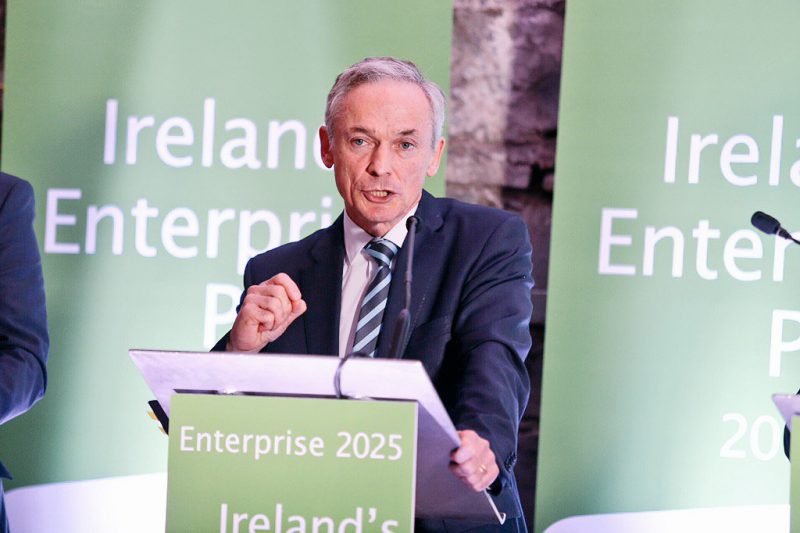
Richard Bruton, Minister for Communications, Climate Action & Environment said in a statement, “the generous benefit-in-kind tax relief that is available for these vehicles is considered adequate incentive to drive growth in this sector.”
The government is set to invest €4.5 million in tackling climate change after it was revealed that Ireland is the worst performing European country for climate action. The UN Climate Conference took place in Poland on Monday, where Ireland was ranked as the 48th out of 56 worldwide countries when it comes to addressing climate issues. In response to this revelation, Richard Bruton, Minister for Climate Action and Environment has announced significant funding to make Ireland a ‘leader’ in the battle to halt climate change. It is thought that the funding will go towards a number of projects, including the Green Climate Fund, and the Great Green Wall Initiative. The Great Green Wall project aims to reduce the impacts of climate change and will increase the resilience of a number of developing countries involved in the scheme. When completed, it is expected to improve food security, resilience to droughts, and will abate an estimated 250 million tonnes of CO2 annually. It will also generate an estimated ten million land-based green jobs across Burkina Faso, Cameroon, Chad, Djibouti, Eritrea, Ethiopia, Ghana, Mali, Mauritania, Niger, Nigeria, Senegal and Sudan. In a statement released to thecity.ie, Minister Bruton said: “Ireland is fully committed to the implementation of the Paris Agreement. “This conference is about making those commitments stick by agreeing a rule book among all countries so that we are all making progress in a consistent, transparent manner. “It is the foundation for moving on in the coming months to see how, acting in solidarity, we can stretch our ambitions beyond what we have committed to. We need to be honest with where we are at so that we get to where we need to be.”
The statement said: “Multilateral action is the only way to tackle the global challenge of climate change. This funding is crucial if we are all to meet our global ambition. “We must support developing countries to adapt and to mitigate against the costs associated with the effects of climate change.
“This funding is in addition to the supports provided by the other Government Departments involved in international climate action this year and represents a further scaling-up of climate finance provided by Ireland.”
Ireland is unlikely to reach the ambitious emissions targets set by the EU for 2020. Cormac Murphy explores the cost of the country’s environmental record.







You must be logged in to post a comment.