
Tag: colleges

  • Is bullying happening in Irish Universities?

    Is bullying happening in Irish Universities?

    By Megan Gorman

    Bullying is a behavioural problem that affects the lives of thousands of young adults and their families. The humiliation, fear, social isolation and loss of self esteem which young adults face when bullied can result in absenteeism from college, deteriorating work, personality changes, depression and even suicide.

    National and international research shows that bullying knows no boundaries. Bullying can cause a lifetime of pain to soemone, no matter how big or small. The question is, is bullying an issue on university campuses across Ireland?

    According to the Anti-Bullying Research Centre, 1st year students are most likely to experience bullying as they are making a move from school to college and taking on a lot more responsibility.

    The City.ie spoke to Lian McGuire who works with the Anti-Bullying Research Centre based in DCU on St Patrick’s Campus. Ms McGuire said that more in-depth study is needed: “I don’t think the colleges are doing enough because they are not aware of what is actaully happening or how serious it is.”

    Almost 400 third-level students took part in an online questionnaire, set up by the Anti-Bullying Research Centre and promoted through the Union of Students in Ireland website.

    The results indicated that, 14% of students said they were bullied while studying at college, 21% said they have witnessed bullying during their time in college and a quarter of students received unwanted sexual attention.

    “We are hoping to do a follow up with the college councillors to see if we can do more. We are trying to educate people about the extent of the bullying happening on our campuses across Ireland. I feel a lot of people don’t actaully think of bullying as happening in universities.”

    Lian feels that universities need to see more research before they are actually able to act on it: “I think what is out there is confusing and there are often no dedicated areas to help with bullying. The students often don’t know where or who to go to and that’s the problem and it causes the students to isolate themselves.”

    Almost two thirds of the students that took part in the study had no idea if their college had a policy on bullying, which Ms McGuire said highlighted that a poor job was done advertising such policies. Students were more likely to seek help from friends or parents or sometimes not speak about it until it becomes too much for them to handle.

    “The study showed that some students actually named academics or administrators as the ones doing the bullying and that makes it difficult,” said Lian. “Some colleges are open to try dealing with it and some don’t know the extent of it.”

    “In rarer cases, it could suit some people for it not to be dealt with as it will open up a can of worms”

    It’s fair to say that bullying is taking place in universities across Ireland and for the most part it is not getting the same treatment as schools and the workplace and that needs to change. Universities need to set up dedicated areas for students to feel comfortable talking about their experiences and make them feel safe.
  • No need for €1,000 student fee increase

    No need for €1,000 student fee increase

    Calls from the Department of Public Expenditure and Reform (PER) to increase third level fees by at least €1,000 appear unjustified when recent university figures are taken into account.

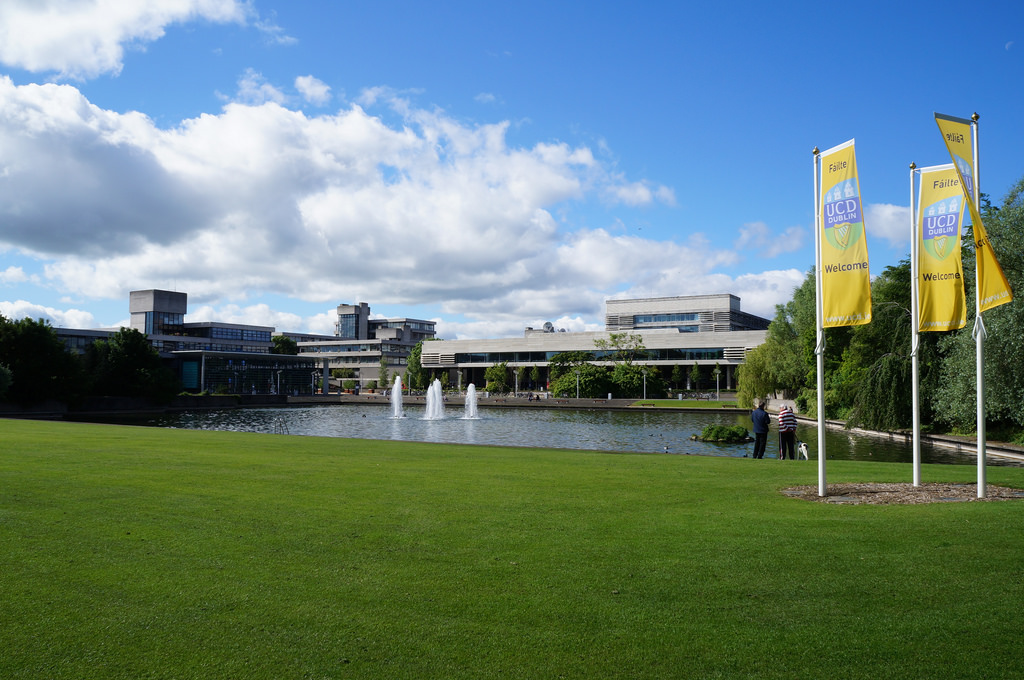
    University College Dublin (UCD), Ireland’s largest university, reported a surplus of over €20 million for the year ending September 2016, an increase of €2.3 million from 2015.

    Furthermore, UCD experienced a €13 million rise in academic fees paid over the course of the year, with the figure rising to €211 million, an increase of 6.5 percent.

    ucd

    What is telling, however, is the figure for state grants and funding. In 2006, that figure stood at over €120 million and was the college’s main source of income, eclipsing academic fees by some €15 million. Ten years on, however, that figure had dwindled to €60 million, less than half of what it was a decade ago.

    It is much the same story for DIT and DCU, two of Dublin’s largest colleges. Trinity college, on the other hand, has experienced budget deficits since the economic crash of 2008, but its finances have vastly improved over the past years.

    A deficit that stood at €22.5 million in 2013, now stands at €9.4 million. Trinity, like UCD, has experienced drastic cuts to state funding and has seen a 25 percent decrease since 2012 (€58 million to €44 million).

    Like UCD, Trinity College has also experienced a huge increase in academic fees, overseeing a 17.5 percent rise since 2012 (€113 million to €133 million).
    Both of the above changes are a direct result of the economic downturn; funding for universities was cut annually during the recession, while academic fees were controversially imposed across the board at €3,000.

    The Department of Public Expenditure’s newest proposals have been met with widespread resistance from the student body, with protests and demonstrations taking place at the beginning of this academic year and it is easy to see why.

    The department argues that there is a funding shortfall for third level education in Ireland, but there only is a shortfall in funding because of cuts implemented by various governments since the recession.

    Academic fees are not the issue. According to the Central Statistics Office (CSO), there are now 180,000 full time third level students in the country along with 39,000 part-time students, more than there ever has been. Colleges, therefore, have never taken in more money from academic fees than they do at present.

    The department estimates that 50 percent of students are either totally or somewhat exempt from paying college fees owing to family income levels. Even so, a €1,000 increase to academic fees would roughly yield an additional €110 million annually for Irish colleges.

    Government funding is badly needed, rather than an increase in student fees, and Budget 2018 saw the department pledge an extra €47.5 million to third level funding. An awful lot more is needed, UCD’s funding alone has been cut by more than that in the past decade, but it is a start at the very least.

    The Budget also pledged to increase funding by €310 million by 2021, but the government were criticised for an “absence of any specific direct funding to support third level education” by the Irish Federation of University Teachers.

    Members of the opposition, including Labour’s Aodhán O Ríordáin, have criticised the “precious little efforts” made by the government to address the funding problem in third level education.

    Fine Gael gleefully pointed out during the Rugby World Cup in 2015 that Ireland had the fastest growing economy of any of the nations competing in the tournament. Perhaps it is time they start acting like that is the case and giving back to the Irish taxpayer.

    By Shane O’Brien


  • A mature road to recovery

    A mature road to recovery

    It’s 6am on a brisk Saturday morning in November, and George Fitzgerald is about to embark on his weekly journey down to Cork from his home in Kinsealy, north county Dublin.

    “When I’ve an assignment due it usually takes up to three or four hours in coursework a night. That’s all on top of the day job, and it’s by no means a 9-5 job either. The hours tend to be very long” says George, as he wrenches open the door of his Audi A4 ahead of another monumental trek south to Cork IT’s Bishopstown campus.

    He’s one of a legion of middle-aged students across the country who are choosing to further their education by enrolling in third-level courses. According to latest Higher Education Authority (HEA) figures, full-time mature entrants now account for 14% of the student body in third-level institutions- nearly 10% more than in 1998.

    DSCF2157
    George attending to some of his college work

    “I could see the need to progress. I was with the same company for 23 years and I’d plenty of in-house training, but for me to progress outside of that I knew I had to get a degree” says George, a customer service manager at Network International Cargo.

    Having completed a diploma in Supervisory Management at Dublin’s IBAT college earlier this year, his workplace is now fully subsidising his current part-time Bachelor of Business in Supply Chain degree course in Cork.

    And he’s not alone.

    According to HEA statistics for the 2011/2012 academic year, 17% of all participants in college courses were classified as mature students (over the age of 23). Of that number, an increasing amount fit George’s description, a fact illustrated by the massive 20% increase in 35-44 year-olds engaged in higher education from 2000 to 2010.

    hea-logo_1

    The accompanying report states that increasing unemployment and vulnerability of employment during recent recessionary times has led to many people who may not fit the profile of a conventional college student to either return to or take up third-level education as a means of bettering their career prospects. That’s definitely how George sees it.

    “It definitely gives you an edge for your career prospects.

    “Not only that, but it’s the stuff you pick up on the course. A lecturer might say something and you can see how that might slot into your own business. Those you’re working for see that you’re not afraid of hard work and putting the extra effort in as well as it being for your own progression.”

    It’s a sentiment echoed by the employers union IBEC, whose recent survey found that 86% of employers involved are providing financial support to staff who are pursuing further education. This is a welcome development as Ireland looks to further solidify its position as a knowledge-based economy, according to Tony Donoghue, IBEC’s Head of Education and Innovation Policy.

    “The only way that Irish standards of living can be maintained into the future is through the development and production of higher quality and more innovative products and services,” said Mr. Donoghue.

    “By 2025, mature students are expected to account for a quarter of all students. The recent economic downturn has highlighted the importance of lifelong learning and workforce development. Jobs are becoming increasingly skill-intensive and this trend is certain to continue.”

    Latest estimates put Ireland 6% above the OECD average of 25-64 year-olds with 3rd level qualifications. HEA Chief Executive Tom Boland said in the organisation’s 2012 report that our colleges are adapting to reflect their changing student body, which George Fitzgerald is most certainly glad to be a part of.

    “I’d definitely recommend for others to do the same as me,” says George. “It’s very intense because I often have assignments due on successive weekends so it’s a difficult workload, but when you know you’re reaching a conclusion and seeing the light at the end of the tunnel, it’s definitely worth it. Just for a personal feeling of achievement if nothing else.”