Tag: cooking

  • Circa: Terenure restaurant awarded Michelin Bib Gourmand

    Circa: Terenure restaurant awarded Michelin Bib Gourmand

    By Aidan Coyle

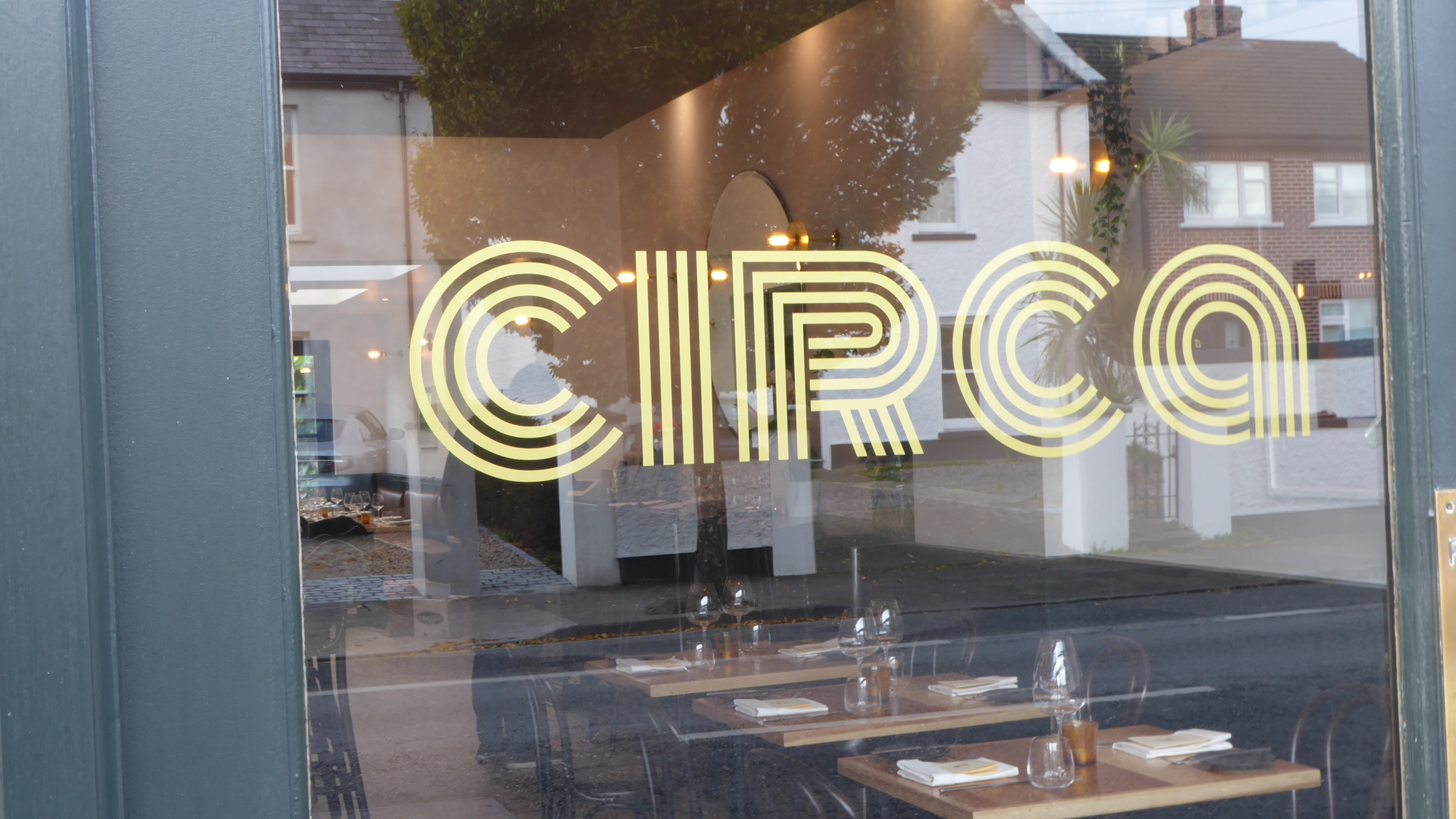
    Just over two weeks ago, the restaurant Circa in Terenure won a Michelin Bib Gourmand award recognising a high quality dining experience at an affordable price. The restaurant only opened its doors in March but while its rise has been rapid, the journey to get there has been far from straightforward.

    The restaurant is co-owned by head chef Gareth Naughton, general manager Ross Duffy and wholesale manager Emmet Murphy. The three friends have a wealth of experience working in pubs and restaurants and had always dreamed of setting up their own place.

    Ross said: “I met Gareth working in 3FE Coffee in Grand Canal Dock. Myself and Gareth just got on like a house on fire. We understood each other and how each other worked. I looked after the floor and he looked after the kitchen. Then we ended up living together and we always said if we got the chance we’d open up somewhere.”

    Gareth Naughton (left) and Ross Duffy (right) at Circa.
    Photo Credit: Aidan Coyle

    When Emmet Murphy agreed to join, the trio was complete. Ross said: “Emmet, our other co-owner, I’ve known since I was a kid. He worked in Celtic Whiskey Shop on Dawson Street as the accounts manager looking after all premium wines and spirits.

    “He took me for a little lunch and he was kind of like ‘Jeez I’d love to do something one day’ so I kind of looped him in on it. I said look you can do the back end stuff, all the wines and beer. I’ll look after the front, I’ll run it and then Gareth would run the kitchen.

    “We just kind of said look, if we ever got a chance, we’d chase it. I suppose the hardest part was just kind of getting the place,” said Ross.

    The men finally got the keys to their restaurant last November but there were problems right from the start.

    “Basically all of our money ran out cause of how long it took us. We painted the place ourselves. We couldn’t afford to get the professionals to do it. We probably should have,”said Gareth.

    “It would have taken a professional like three to four days. It took us 3 weeks. We just couldn’t do it. It looks like such an easy job but it wasn’t. Like corners inside there, you’d be surprised how long that takes to paint,” said Gareth.

     “I’m never doing it again,” Ross added.

    “I’d love to be able to say that’s grand, I’ll spend €5,000 on designer curtains. We have to think about everything we do. Our rent, our staff and our bills”

    Ross Duffy: Circa general manager and co-owner

    Money continues to be an issue for Circa but it’s an issue the owners are managing to navigate.

    “Financially, we’re not backed by money men. Financial constraints are still a major issue for us,” said Ross. “I’d love to be able to say that’s grand, I’ll spend €5,000 on designer curtains. We have to think about everything we do. Our rent, our staff and our bills. That’s always our worry. That’s the priority every week.”

    Gareth added: “We even have to discuss if we want to pay €50. That’s the biggest difference between us and a lot of places.”

    However, despite the pressures and financial constraints, Ross and Gareth always believed the effort they put in would pay off. Ross said: “We work very, very hard. Gareth is here all hours of the morning and all hours of the evening the same as myself and Emmet as well. When you’ve got a chef like Gareth in the kitchen and he’s delivering, then people kind of hear about it anyway.”

    Circa restaurant in Terenure offers a modern Irish menu
    Photo Credit: Aidan Coyle

    Head chef Gareth is relishing the freedom to design and control the menu. The menu is modern Irish and showcases local ingredients.

    He said: “I had a very clear vision on the food. I knew what I wanted in the sense of I didn’t want it to be pretentious and fussy. We wanted it to be casual enough but sophisticated as well. I didn’t expect Michelin level but we wanted it to be that standard but without the fuss really. That was important to me because I hate fussy restaurants.”

    The passion Ross and Gareth have for the restaurant is evident in everything they do. This is their dream job and they are loving every minute of it.

    Gareth said: “I view a restaurant as entertainment as in going to the cinema, going to the theatre or going to a gig. You’re parting with your money for the night so it has to be an experience at some level. That’s how I view it.

    “Want to come in and sit at the bar and have a glass of wine? Perfect. Want to come in and have ten courses and go home? Perfect”

    Gareth Naughton: Circa Head Chef

    “It’s important to give people some kind of experience to get them coming back. That’s the most important thing. We’re not in town. For someone to travel all the way over here, that could be quite out of their way. So give them a reason to travel. You know, nothing worse than them saying ‘that was mediocre, I’m not going back there’,” said Gareth.

    With the restaurant now bustling with business, both Gareth and Ross are in agreement about the importance of looking after everyone who comes in the door.

    “That was a big thing for me from day one,” said Gareth. “Want to come in and sit at the bar and have a glass of wine? Perfect. Want to come in and have ten courses and go home? Perfect. Whatever you want to do, we’re here to accommodate you. We want to be homely, we want to be welcoming.”

  • Why does the kitchen have a glass ceiling?

    Female culinary students are at a premium but where are all the female chefs?
    Female culinary students are at a premium but where are all the female chefs?

    Aoife Lawless looks at what is holding back women chefs in high-end restaurants…

    What’s happening to all our female chefs? When I enrolled in Culinary Arts six years ago my fellow female classmates were in the majority, and most of us wanted to be chefs. A recent study conducted a survey of 170 Irish head chefs: only 15% were female. So where have the women gone?

    “Cooking has traditionally always been female,” says Máirtín Mac Con Iomaire, veteran lecturer at DIT Cathal Brugha Street. Mac Con Iomaire doesn’t agree that the industry as a whole is male dominated, and says the issue of gender divide in the professional kitchen boils down to “positions of seniority rather than a question of male dominance”.

    There is, he admits, a historic division of labour. “Historically, the female ‘cooks’ veered into institutional cooking, such as in hospitals and schools, whereas their male counterparts sought out ‘status’ as leading chefs in renowned restaurants. Female cooks, male chefs!” Similar “glass ceilings”, he says, loom over other professions such as teaching and nursing.

    Mac Con Iomaire went on to give me at least twenty names of prominent female chefs in the present day, most at Michelin level, spanning Britain and Ireland. However, such a short list succeeding only in driving me back to my original question: Where are all the female chefs?

    “Female chefs are often pushed towards the pastry section,” says researcher Mary Farrell. “A female chef interning at Dublin’s prestigious Michelin starred restaurant, Chapter One, was directed towards pastry by her male mentor, advising her that‘that’s where you’ll make money’.” Farrell, a PhD student, is trying to answer, in rigorous academic terms, that same question as to the whereabouts of leading female chefs.

    “They’ll make excuses about unsociable hours, the desire to rear a family and the assumption that female chefs will want to veer into pastry at some stage of their careers”,says Farrell, who doesn’t buy these answers and instead believes that “the industry itself is to blame”, that the male chefs in positions of leadership are controlling the fate of their female subordinates.

    A successful business woman herself, Farrell graduated from Cathal Brugha Street in 1984, long before the Culinary Arts programme became a degree. She has owned multiple businesses in the hospitality industry; she was head chef at one of these, Café Fresh, a vegetarian restaurant in the Powerscourt centre.. At present she owns and runs a catering company accommodating for special dietary requirements  such as Coeliac disease, dairy intolerance and diabetes.

    She has in the past worked with a male head chef who was “aggressive and resistant to change”, she says, creating an awkward and hostile kitchen environment for all his colleagues. As a woman, she was treated as though she “didn’t know what she was talking about”, no matter what the issue, and his opinion was “absolute”. When he left her organisation he went on to work at a Michelin level restaurant and she was forced to take over the kitchen. “In his absence a change occurred in the kitchen – the tension was lifted and the staff were happy.” She doesn’t think male chefs can look far enough past their own ego to see a restaurant as a whole entity, as a business, not just a stage on which they play the lead.

    Tom Kerridge, head chef of the Hand and Flowers, a Michelin two-star gastro-pub in England, made some controversial statements regarding female chefs at the Cheltenham Literature Festival in October. “I like girls in the kitchen a lot: it brings down that testosterone level.” He continued to disparage female chefs, stating that women lack the “fire in the belly” to make it at Michelin level. “They are out there; it’s just whether it’s the industry for them. I’m not sure, at that level,” he added before further patronising remarks such as “girls in a kitchen make blokes feel happy at work” before covering himself with a last-minute save: “This doesn’t apply to just girls. We have loads of blokes who do a runner because the pressure and intensity of cooking at that level is so intense.”

    All this talk made me think about my own kitchen experiences and reflected on how I had been treated as a young female chef.

    On my first internship I was immediately referred to the pastry chef for training in a separate kitchen from the main one. The pastry chef was delighted to have company in his usually segregated kitchen and I was relieved to not be joining a much feared “boys’ club” environment. I meekly pointed out in my mid- apprenticeship review with my college supervisor and head chef that I had no interest in pastry and perhaps I could be involved in the workings of the main kitchen. I was then entrusted to the sous-chef, a pregnant Polish woman who was strict but kind and taught me more in one month than I’d learned in all of my first year in college. The chef directly under her, a male chef, barked orders at me daily and refused to give me measurements for recipes whilst scoffing at my inadequacies.

    In my third year I interned at Fallon & Byrne and it was here that I fell back in love with cooking; I had already begun plotting a career as a writer, but this place drew me toward a career as a chef. The hierarchy of the restaurant was equally divided between males and females. The head chef was only 30 and had risen to his position not only through years of experience, but also through education. He had returned to Cathal Brugha Street a couple of years after completing his chef training in order to study management and it was with his combined skills he achieved head-chef status. His sous-chef was a very pregnant and very capable woman of the same age. They had worked together at a hotel and when he graduated to the position of head chef at Fallon & Byrne he took her with him, along with two other female chef-de-parties. Below the head- and sous-chef, male chef-de-parties outnumbered females three to two, but the numbers were evened out with the addition of a pastry chef and occasional chef-de-partie. Another intern from Cathal Brugha Street was female and, lastly, the recently promoted kitchen porter was a male commis-chef. The female chefs were both feared and respected, though they rarely raised their voices. They made it clear they had standards and these were adhered to even when they were not present. I continued to work for them throughout my final year in college and was never put in a position where I felt uncomfortable or undervalued because of my gender and the kitchen environment maintained constant professionalism.

    My experiences in a professional kitchen highlighted many of the issues Mary Farrell raises about attitudes to female chefs. I was directed towards pastry. Male chefs did, sometimes, try to undermine and bully me and certainly did succeed in clouding my judgement for a time. Yet the main excuse, as was given to Mary, of females stepping back for family life was unfounded in my experiences, I had witnessed female chefs balancing family life and their careers whilst still providing positive role models.

    But I was never content to chop and peel for endless hours, or endure burns, cuts and scalds on a regular basis in the hope of eventually obtaining a senior role in a kitchen after spending four years completing my degree. Perhaps therein lies the answer: education creates aspirations beyond manual labour for minimal reward. Many male chefs rise through the ranks from porter to head chef. The male students who dropped out of Culinary Arts continued in the profession, some of them very successfully. Many of my female peers continued their education at Masters and PhD level in areas of product development and education, the latter now delivering the lectures they once attended.

    The glass ceiling of female seniority in the professional kitchen may remain unbroken, for now, simply because female chefs may have their eyes on a bigger prize.

    By Aoife Lawless

  • Turning up noses: Food Snobbery

    Turning up noses: Food Snobbery

    Make no mistake, I’m not the most health conscious person around when it comes to food. I eat what I like and tend to avoid what I don’t.

    But with obesity affecting more people than ever before, especially children, there are fewer and fewer reasons left to justify bad diets.

    Sadly, even the most prudent of food shoppers will struggle to feed themselves and others on a budget. It’s a well-known fact that junk food costs less because it’s cheaper to produce.

    Worse still, it’s that time of year where you have to pre-order a turkey just to avoid disappointment and selection boxes are stacked to high heavens.

    I did cookery as part of my Transition Year programme, which was a new but enjoyable experience. If I ever felt like picking it up again, I would certainly be wary of the ‘experts’.

    A traditional cookbook packed with recipes could consume a whole day if you weren’t careful, given the sheer size of some of them.

    Ready, Steady, Read! Cookbooks are a useful starter guide but may have more content than needed. Photo credit: natalie's new york on Flickr.
    Ready, Steady, Read! Cookbooks are a useful starter guide but may have more content than needed. Photo credit: ‘natalie’s new york’ on Flickr.

    I remember when Jamie Oliver awkwardly tried to trade a can of Coke with a schoolboy for a healthy food voucher – the same Jamie Oliver who paraded festive treats on behalf of Sainsburys.

    Gordon Ramsay’s foul-mouthed vision of culinary perfection could drive even the cold-blooded Vince McMahon character to tears.

    Rachel Allen’s signature range at O’Briens caught my attention at the time of its launch but I cannot for the life of me describe what a ‘Croque Monsieur Provencal’ sandwich is.

    The new kid on the block – Donal ‘Kitchen Hero’ Skehan could be the answer to my problems. However, just like the other celebrity chefs, he makes a living out of his talent and has made wise investments in cooking equipment and work stations. How can full-time college students like me possibly compete?

    Speaking of competing, the biggest culprit of food snobbery is without doubt, MasterChef. Normally, I would lap up a spot of competition, but it is most depressing and counter-productive to have a TV show put a plethora of hopeful cooks against each other and have their efforts judged one by one. You could easily have a World Cup of MasterChefs given how many versions there are.

    As mentioned before, I’m not the healthiest eater in the world, but I’m just grateful to have food at all. I don’t want to take the moral high ground per se, but when I bother to take up my fair share of cooking responsibilities, I aim to serve safe food and keep people happy. I wouldn’t be here if that wasn’t the case in my family.

    Featured image by epSos.de on Flickr

  • It’s Pumpkin Time

    It’s Pumpkin Time

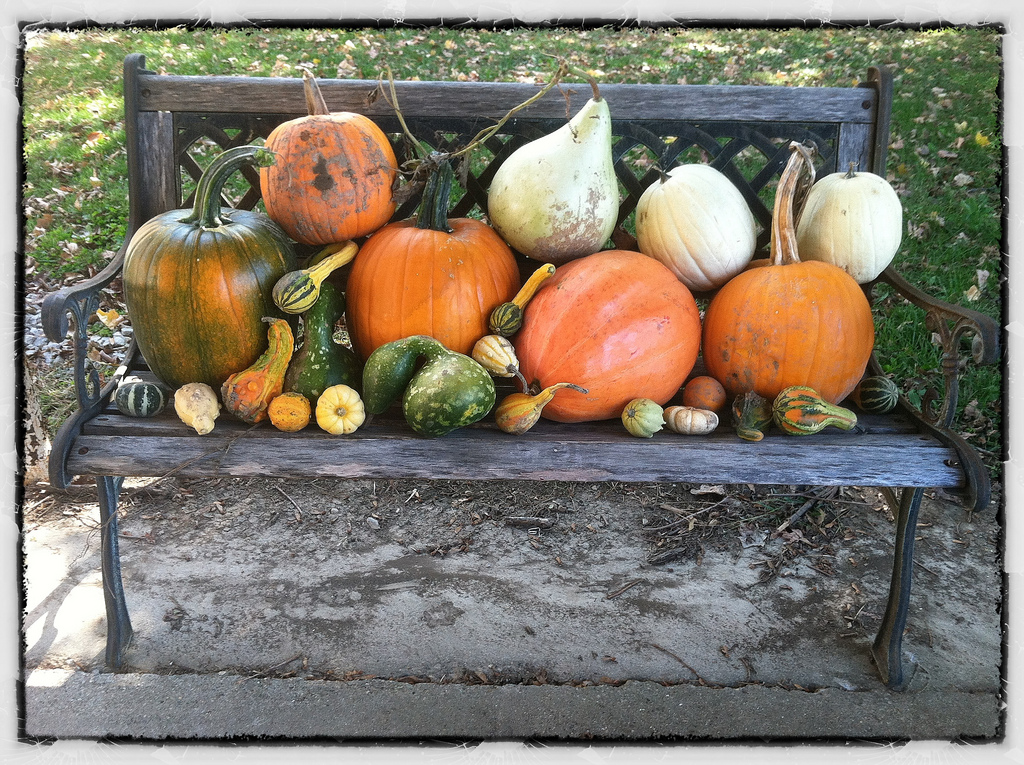
    As Halloween quickly approaches, pumpkins are once again popping up around the city. This versatile winter vegetable can be used in endless sweet or savoury dishes from pumpkin pie to pumpkin risotto. In order to celebrate the return of this orange squash, here is a guide on how to use every part of the mighty pumpkin.

     pumpkins

    Pumpkin soup

    1 Pumpkin or butternut squash

    1 onion

    2 carrots

    1 sweet pepper

    Half a red chilli

    1 garlic glove

    1 tbls Olive oil

    Vegetable stock

    Fresh parley

    Freshly ground black pepper

    Pinch salt


    1.      Halve or quarter the squash or pumpkin, remove the seeds and skin, then cut the flesh into chunks.

    2.      Heat the oil in a large saucepan and fry the onion, garlic and chilli for 3-4 minutes, stirring frequently.

    3.      Add the squash or pumpkin, and stir-fry for a few minutes.   Add the carrots, sweet pepper and seasoning.

    4.      Pour in the stock and stir well, cover, and simmer gently for about 20 minutes, stirring occasionally.

    Croutons

    1 tbls butter

    Selection finely shops fresh herbs

    Bread of any type

    Combine butter and herbs together, spread over the bread on one side. Instead of cutting the bread and frying it, try placing the slice of bread into the oven at 200C for 5 minutes or until golden brown. One cooled cut into small cubes.

    If looking to impress or having a Halloween dinner party, the best way to serve pumpkin soup is inside small cleaned out pumpkin or the bottom of a cleaned out butternut squash.


     Pumpkin seed pesto

    Pumpkin seed and spinach pesto

    ·         A large bunch of spinach

    ·         100g pumpkin seeds

    ·         1 garlic clove

    ·         150ml extra virgin olive oil

    ·         50g parmesan or any hard cheese

    ·         Juice of ½ a lemon

    ·         Pinch of sea salt

    ·         Freshly ground pepper

    Preparing the pumpkin seeds

    1.      After removing the seeds from the pumpkin, pick off any stringy bits, place in a colander and rinse with cold water.

    2.      Spread seeds onto a baking sheet and drizzle with extra virgin olive oil.

    3.      Roast seeds at 150° for 10 minutes.  They are ready when the shell is slightly golden, crispy and easy to bite through.


    Making the pesto

    1.      Place the spinach, pumpkin seeds and garlic into a food processor or blender and pulse into coarse grains.

    2.      Gradually add the extra virgin olive oil in a steady stream until a thick grainy paste has been created.

    3.      Scrape the mixture into a bowl.  Add the cheese and lemon and adjust the seasoning to taste.


    Social Media note

    Pumpkin season is back again and to celebrate The City had put together some recipes.