
Tag: cost of living

  • Cost of Living: the Student burden

    Cost of Living: the Student burden

    one major issue: the cost of living. 

     Students up and down the country have began college over the last few weeks a lot of whom share a common burden about the cost of everyday necessities like food and drink.

    Students that have to move away from home for college face further challenges paying the high accommodation costs.

    One question many are asking is, what is the Government doing to help students counteract this problem? 

    SUSI grants are available for those who may not have the means for one reason or another to pay the price in full. However, this can be a battle to get, as you must go through many different steps to avail of the grant, like family earnings. 

    In Ireland the average price for a home was between €198,000 to €682,334 last year, according to the latest CSO (Central Statistics Office) figures.  cso.ie 

    As RTE reported Taoiseach Micheal Martin has confirmed that the upcoming budget comes with an increase in tax credit for renting in Ireland which will make renting slightly easier for students. RTE.ie 

    Many students going through college only rely on their part-time income for expenses, with a minimum wage set at €14.94 an hour from 2027. Irish Independent 

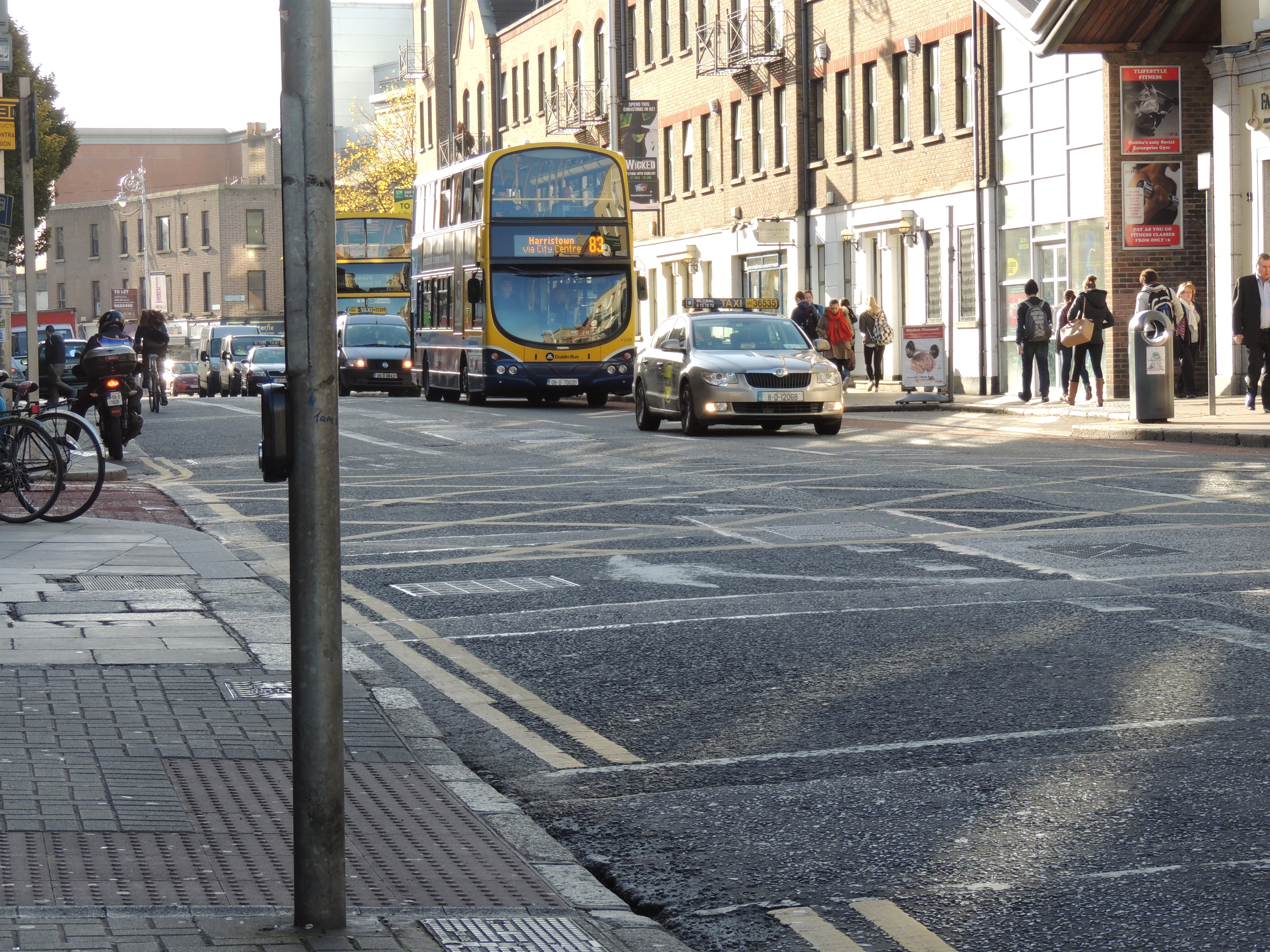
    Transport for ireland confirm an increase in Luas fares has also made commuting to and from college that bit more difficult. 

    A recent survey conducted by the National Youth Council of Ireland  NYCI recently stated that 7 in 10 young adults will be forced to move away from Dublin for more affordable living. This comes off the back of the recent increase in a range of prices for 2027.

    Dr Rory O’Farrell teaches at TUD in Grangegorman in the tourism and hospitality sector. He has previously worked in the science, technology and innovation directorate in OECD in Paris. (Tudublin.ie meet our lecturing staff, tourism and hospitality)

    Dr O’Farrell said the biggest problem now is rent for students as the range in prices for a college dorm is not feasible for a lot of families to keep up with rising costs. 

    What Dr O’Farrell believes is that “colleges need more funding so that they can build more accommodation for students so that it renting affordable places is not as scarce”. 

    The TUD lecturer did hint at plans to build more accommodation buildings near TUD, TUD were contacted to comment on the matter however they have declined in their right to reply to questions asked about the recent project surrounding student accommodation

    He fears that because the cost of living is rising “students grades will suffer because of them needing to work more, giving them less time for studying, which will affect their grades with some failing to progress”. 

    Even repeats, he said, would be a struggle financially, stating “the SUSI grant does not cover the cost of repeat exams or assignments”. 

    Regarding the emigration side of things, DR O’Farrell is not too worried about that as he went on to say that “emigration is part of what happens with young people, they go and explore, a lot of young people in Ireland move to Australia only to find that rent is just as high if not higher over there”. He also claims that people who are in temporary situations “tend not to put up a fuss if they can see an end to it”.  



  • Child Benefit Boost Delayed: Charities Warn of Growing Poverty Crisis

    Child Benefit Boost Delayed: Charities Warn of Growing Poverty Crisis

    Children’s charities, and members of the Social Democrats have strongly criticised the Government, following the decision to delay the introduction of a second tier child benefit paymemt.

    The proposed top up, which would have provided families in need an extra €145 per month on top of existing monthly child benefit payments will not be included in the 2026 budget, despite talks of its introduction.

    Social Democrat’s children’s spokesperson Adrian Farrelly stated “this government’s failure to plan for two tier child benefit in Budget 2026 shows a serious disconnection from the growing child poverty crisis.”

    The disappointment with The Government’s decision follows a nationwide survey by the Irish Human Rights and Equality Commission (IHREC), which found a striking 84% of participants say they are worried about the cost of living.

    Photo: Towfiqu Barbhuya – Unsplash

    The Children’s Rights Alliance emphasised the scale of the issue, noting that “one in seven children were living in households dependant on incomes 60 per cent below the median. One in five children (21.2) were living in enforced deprivation.”

    In its Pre Budget Submission, SVP also highlighted the severity of child poverty, describing figures as “deeply concerning” stating that “consistent poverty has increased from 4.8% in 2023, to 8.5% in 2024. That’s over 45,000 more children now living in consistent poverty.”

    Further emphasising the inadequacy of current supports within the country, SVP’s National President, Rose McGowan, added that current supports are insufficient and “currently meet only 64% of a teenagers needs.”

    Photo: Luke Pennystan – Unsplash

    Barnardos CEO, Suzanne Connolly also highlighted the urgent need for targeted financial support, stating “Every day across our services we see immediate and long term difference that early intervention can make to help a child thrive.”

    The charity also pointed to the ongoing struggles faced by children, noting that “we witness too many children across the country going without daily necessities and access to vital services.”

    Both Barnardos and SVP have made clear calls for increases to existing child payments, arguing that current modest payments are insufficient to meet basic living costs.

    SVP has recommended increasing current child income supports by €15 per week for children aged 12 and over, highlighting that “current payments meet just 64% of their essential needs” along with an increase of €6 per week for those under 12.

    Barnardos similarly urges targeted top ups of the same figures to ensure that children in low income families have access to essential needs and vital services.

    From the Government side, Minister for Social Protection Dara Calleary has defended the delay, citing the need for careful planning while emphasising that extra payments remain a priority.

    “A second tier of child payment is something that we are looking at within the department, and my officials are doing a lot of work on it. The proposals around it, though, would involve a complete rejig of existing payments” said the Minister.

  • Public Transport Fare Hike

    Public Transport Fare Hike

    Irish commuters will be digging deeper into their pockets with price hikes announced for public transport fares.

    The National Transport Authority (NTA) announced at the end of October that prices will soar on Dublin Bus, Bus Éireann, Iarnród Éireann, and Dublin’s Luas service, with changes expected to be implemented as soon as December 2014.

    According to the NTA, “Leap card fares continue to offer customers best value compared to cash”, with the company aiming to “increase Leap card use to simplify fare payments.”

    According to Gerry Murphy, CEO of the NTA, the Leap card has proved popular with “over 750,000 Leap cards now in circulation and almost €2 million per week used in travel credit.”

    From December 1, 2015 changes to cash fares, Leap card fares, monthly and prepaid tickets will come into force with the most radical changes affecting the adult 30 day rambler ticket.

    Commuters and public transport users will be expected to fork out an extra €10 as the fare will alter from €137.50 to €147.50 in the lead up to the Christmas season.

    Student tickets will also be hit with a damaging leap to €107.50 from €100 for the 30 day student rambler ticket, with less of an increase on the student 5 day rambler ticket, which is more expensive by €1.50, bringing the total cost to €21.50.

    This has not been the first time public transport users have been dealt a blow leading up to the Christmas period, with the NTA previously increasing fares during the months of November and December in 2013, with the same reasoning of ‘protecting service delivery.’

    The much relied on Nitelink service by Dublin Bus will now be €6.50 as opposed to €5, with the city centre fare also increasing to €7.50

    Dublin Bus will also enhance the €1.80 trip to €1.95, €2.35 to €2.55, €2.60 to €2.80 and €3.05 to €3.30.

    Bus Éireann is raising selected fares by as much as nine per cent.

    According to the NTA, “fare increases are necessary in order that a sufficient level of service can continue to be provided.”

    The NTA also added that “public transport fare increases have been deemed to be necessary in recent years as the operators have sought to compensate for reduced PSO payments.”

    The NTA have approved the increases after they received numerous submissions by each of the publicly owned companies, with the NTA commenting that “Dublin Bus has written to the Authority requesting fares increases that will yield extra revenue of €4.9m in 2015.”

    The NTA entered into Public Service Contracts with Dublin Bus, Bus Éireann and Iarnród Éireann in December 2009.

    Weekly commuter and apprentice Michael Doyle is unimpressed with the recent changes:, “There’s no incentive to use public transport as at times it’s pretty much cheaper to drive.”

    He also added that “it’s a pretty bad service to be paying through the teeth for. It’s late, and nine out of ten times it flies by packed. We should take a leaf out of Barcelona’s book and protest.”