
A new HIV drug that can prevent HIV has been rolled out in Ireland.
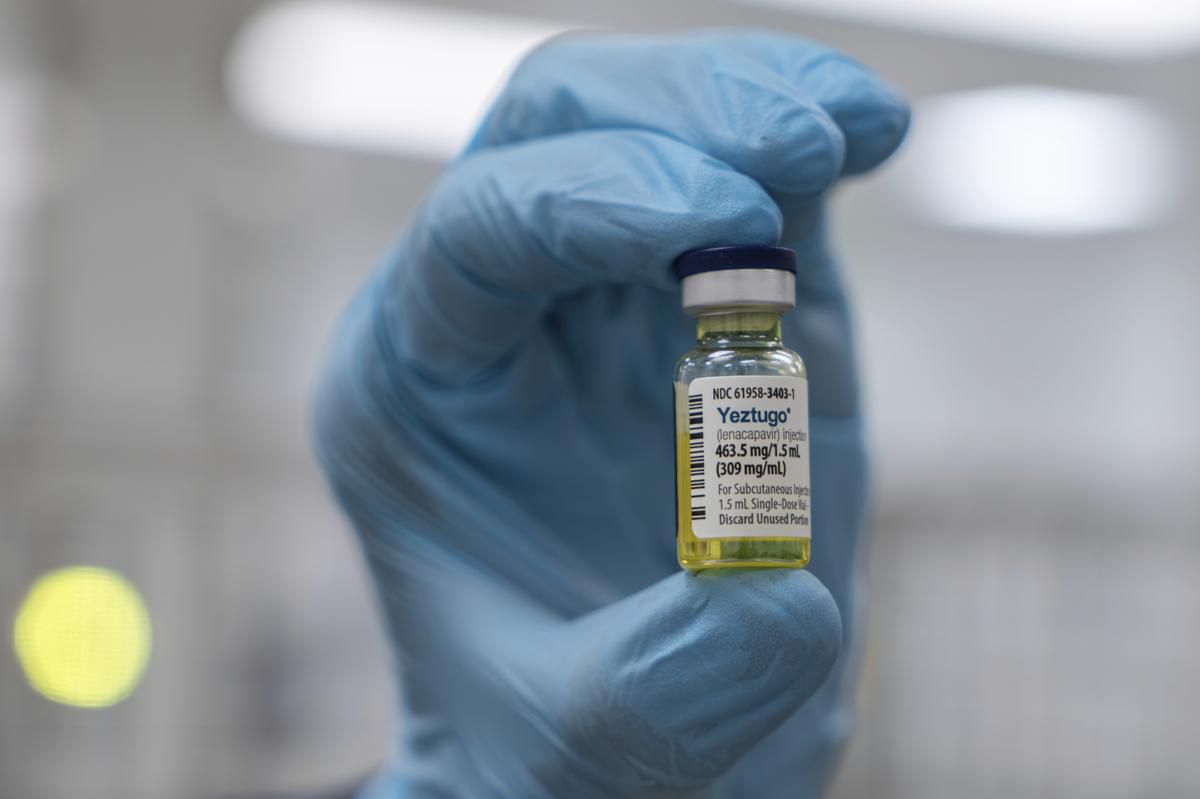
The newly-approved HIV PrEP (pre-exposure prophylaxis) medication, called Yeytuo, is now available across the EU and will soon be available worldwide.
Lenacapavir was developed by GILEAD sciences back in 2010 and was approved by the US Federal Drug Administration (FDA) in August 2022. Three years later, in August 2025, Yeytuo, the EU version of Lenacapavir, was approved for PrEP medication.
Yeytuo is in a class of HIV (Human Immunodeficiency Virus) medication called capsid inhibitors, which decreases the HIV in the blood.
Professor Jack Lambert, a consultant in infectious diseases at the Mater Hospital in Dublin said the medication represents a big leap forward in HIV treatment. “I think the practical thing is that it’s one of the first treatments that you can give twice a year and then on top of that, it’s injectable,” said Professor Lambert. “It’s an incredible benefit on the current PrEP regimes.”
It is also accompanied by two tablets the day after the injection, and the patient should practice safe sex.
Yeytuo has also had 99.9% success rates in clinical trials in preventing HIV in patients, and it provides patients with easy uptake because it only needs to be administered twice a year, compared to taking PrEP pills daily.
The drug itself can be used “by people who have HIV or those who are trying to prevent it,” Professor Lambert added.
Gilead logo with the ‘lenacapavir’ inscription displayed on a screen and illustrative syringes are seen in this illustration photo taken in Krakow, Poland on June 20, 2025. (Photo by Jakub Porzycki/NurPhoto via Getty Images)
One underlying problem of the new medication is its very high cost, priced at $28,000 per patient.
Speaking to TheCity.ie, Professor Lambert said that “…it has to be cost effective, the current cost the company wants to charge for PrEP for this particular agent is beyond, and the current PrEP drugs like Truvada cost €20 to €30 a month, so huge difference in cost.”
At the beginning of October Gilead Sciences announced that it would make generic versions of the medication to be made available to low-income countries.
They are partnering with different laboratories worldwide by sharing their medical patent of Lenacapavir to lessen the cost of the medication from $28,000 to $40 a year.
GILEAD sciences, together with UN AIDS, Dr. Reddy Laboratories and several medical groups worldwide wide aim to make the medication more accessible by the end of 2026.
Countries like India have begun marketing Lenacapavir and it is to be supplied by Dr. Reddy’s Laboratories.
Dr. Reddy’s Laboratories aims to make the drug more accessible to 120 low-income countries.
Meanwhile, here in Ireland, there is still no information about the cost of the new medication, and it remains the US price, which is equivalent to more than €24,000.
Aside from the cost, there are also side effects to be considered when using Yeytuo, such as “major or minor reactions at the injection site,” Professor Lambert said.
Side-effects/Reactions could include swelling, redness, bruising, warmth, pain or discomfort, itching, hardened skin, small mass or lump/bump.
Redness and swelling on arm Photo from: Shuttershock
“I think there are very few downsides to the injectable HIV medications, both for treatment and for PrEP,” Professor Lambert added.
Though the medication itself is considered a game-changer in the field of HIV, its success is yet to be determined globally.
“What you’re going to have to do is look at the new cases over the next number of years. For example, in Ireland, there are 400 new HIV cases a year. If they implement a new PrEP program, those numbers would drop to 200. It’s just indirect evidence that the medication has been successful,” Professor Jack Lambert said
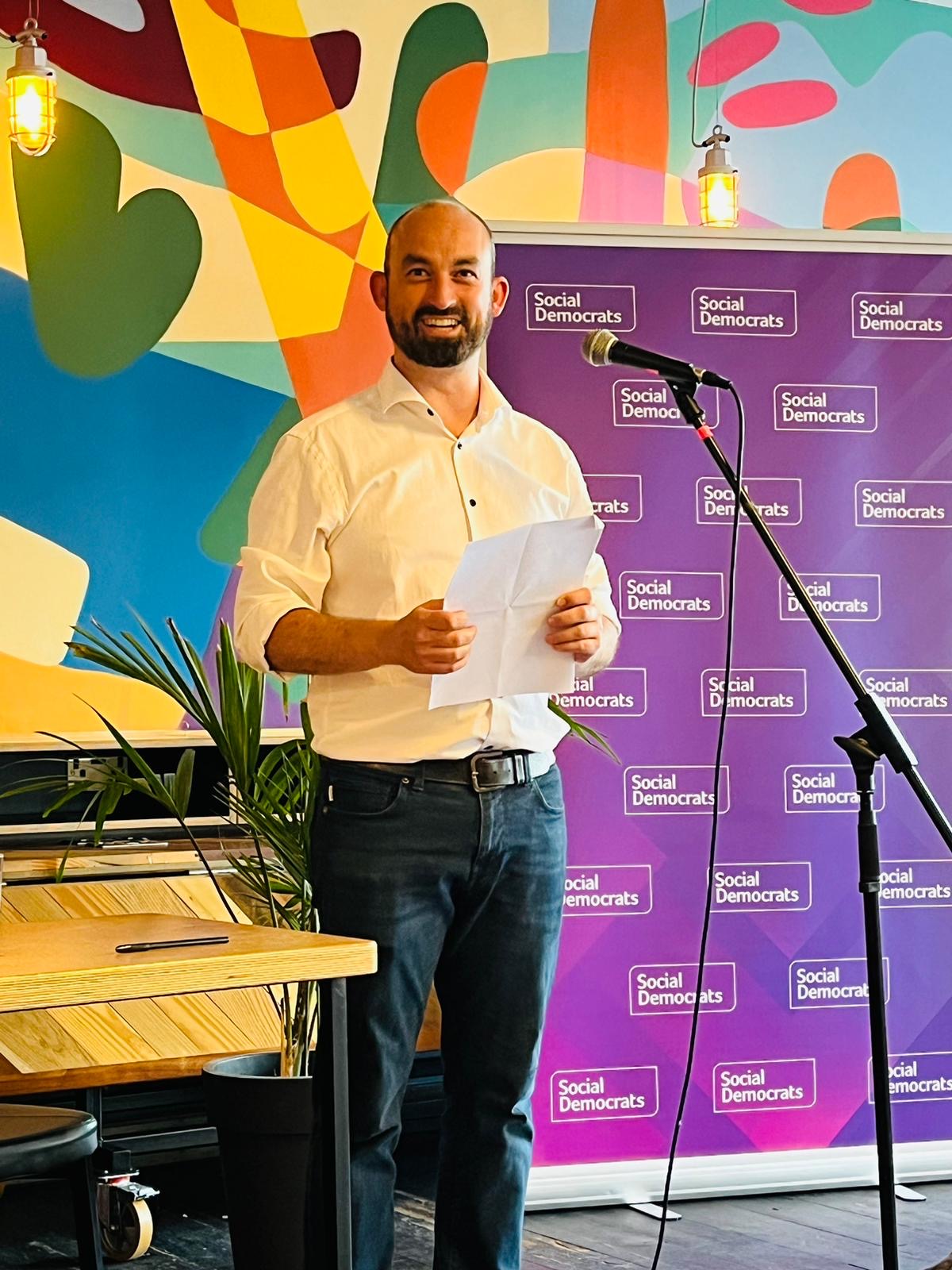
Social Democrats TD Eoin Hayes will remain a party member following the revelation of his use of blackface in 2009, party leader Holly Cairns announced on Sept. 16.
The controversy became public on the morning of Sept. 15 when the Dublin Bay South TD released a statement on X apologising for his actions after a news outlet contacted him the evening prior to confirm that they would be releasing pictures of the event.
“At a Halloween party 16 years ago, while President of the Student’ Union in University College Cork, I dressed up as someone I greatly admired at the time, US President Barack Obama — whose re-election campaign I went on to work for in 2012. As part of this costume, I wore brown makeup on my face and hands,” Hayes said in his statement.
Dressing in blackface is considered by many to be deeply offensive as it has historically been used to promote racist stereotypes.
“Blackface is part of a very, very long tradition of white performance which by and large ridicules blackness From around the 1830’s, across the 19th and well into the 20th century, white people have dressed up as black people to ridicule them, but also to mobilise different kinds of stereotypes,” Anna-Maria Mullaly, a member of both TU Dublin’s race equity group and the Social Democrats, said.
“For instance, black people would be displayed as stupid, as sexually aggressive [and] as lazy in these types of performances.”
Mullaly added.
Hayes’ stated that he “didn’t have an understanding of how hurtful [blackface] was at the time” and reiterated that he takes “full responsibility” for his actions and apologises to “any and all hurt” caused by what he did.
Mullaly, however, is sceptical of Hayes’s excuse that he did not understand the offensive nature of blackface.
“An argument has been made in some quarters that it was a different time, or that it was youthful student folly, I really don’t buy that,” Mullaly said.
“Tropic Thunder, the movie, came out the year before Eoin Hayes dressed up like this on his way to a party, and there was quite a bit of discussion about Tropic Thunder’s satirical take on blackface, so it was certainly in the news, and he would have been aware of those discussions,” she said.
Social Democrats Party leader, Holly Cairns, responded to Hayes’ statement in an interview with RTÉ on September 16th saying she was “hugely disappointed and annoyed about this situation.”
Cairns later confirmed that Hayes would not face any disciplinary action from the Social Democrat Party as the incident occurred before he joined the organisation.
“I want to be clear that it’s not an excuse, but the context of it being 16 years ago is something that I have to consider and I am taking it into consideration,” Cairns said.
Cairns also stated that Hayes “deserves an opportunity to work hard now and to try to regain people’s trust.”
This decision riled some members of the Social Democrat Party with the chairman of the party’s Dublin West branch and local election candidate, Luke Daly, citing the decision as one of the reasons that he and his secretary, Jack O’Reilly, would be leaving the party.
Mullaly seconded Cairns’ sentiment and said that Hayes “should be given the opportunity to follow through now and demonstrate, via action, his actual commitment to anti-racism.”
Children’s charities, and members of the Social Democrats have strongly criticised the Government, following the decision to delay the introduction of a second tier child benefit paymemt.
The proposed top up, which would have provided families in need an extra €145 per month on top of existing monthly child benefit payments will not be included in the 2026 budget, despite talks of its introduction.
Social Democrat’s children’s spokesperson Adrian Farrelly stated “this government’s failure to plan for two tier child benefit in Budget 2026 shows a serious disconnection from the growing child poverty crisis.”
The disappointment with The Government’s decision follows a nationwide survey by the Irish Human Rights and Equality Commission (IHREC), which found a striking 84% of participants say they are worried about the cost of living.
Photo: Towfiqu Barbhuya – Unsplash
The Children’s Rights Alliance emphasised the scale of the issue, noting that “one in seven children were living in households dependant on incomes 60 per cent below the median. One in five children (21.2) were living in enforced deprivation.”
In its Pre Budget Submission, SVP also highlighted the severity of child poverty, describing figures as “deeply concerning” stating that “consistent poverty has increased from 4.8% in 2023, to 8.5% in 2024. That’s over 45,000 more children now living in consistent poverty.”
Further emphasising the inadequacy of current supports within the country, SVP’s National President, Rose McGowan, added that current supports are insufficient and “currently meet only 64% of a teenagers needs.”
Photo: Luke Pennystan – Unsplash
Barnardos CEO, Suzanne Connolly also highlighted the urgent need for targeted financial support, stating “Every day across our services we see immediate and long term difference that early intervention can make to help a child thrive.”
The charity also pointed to the ongoing struggles faced by children, noting that “we witness too many children across the country going without daily necessities and access to vital services.”
Both Barnardos and SVP have made clear calls for increases to existing child payments, arguing that current modest payments are insufficient to meet basic living costs.
SVP has recommended increasing current child income supports by €15 per week for children aged 12 and over, highlighting that “current payments meet just 64% of their essential needs” along with an increase of €6 per week for those under 12.
Barnardos similarly urges targeted top ups of the same figures to ensure that children in low income families have access to essential needs and vital services.
From the Government side, Minister for Social Protection Dara Calleary has defended the delay, citing the need for careful planning while emphasising that extra payments remain a priority.
“A second tier of child payment is something that we are looking at within the department, and my officials are doing a lot of work on it. The proposals around it, though, would involve a complete rejig of existing payments” said the Minister.
Polycystic ovary syndrome (PCOS) can affect a woman’s health in more ways than one.
As more people are becoming aware of PCOS as a disorder women experience, there is more questions to answer as we discover female health continues to be more complex.
For instance, there are four categories of PCOS. Healthcare professionals try to avoid diagnosis until a person’s menstrual cycle has become regular or fully formed.
PCOS is characterised by irregular periods, high testosterone levels and ovarian cysts. The average age of diagnosis is around your late 20s.
However, there is not a long-lasting solution to help with PCOS. Different life occurrences can alter the symptoms of the syndrome, such as childbirth, excessive exercise and stress.
Shirley McQuaid, who works with Dublin Well Woman Centre as a medical director, spoke about PCOS in Ireland and attitudes to female health in Ireland.
“PCOS involves certain changes to the cycle,” she said. “If someone has very irregular periods, then it’s worth looking at whether or not that is due to polycystic ovary syndrome.”
Laoise Cruise, now 23 years old, spoke to The City.ie about her experience of getting diagnosed with PCOS at the age of 15, which is very unusual.
“It was like I had given birth because I had stitches, and I couldn’t stand up straight,” said Cruise.
In March 2016, Cruise thought she was getting her period for the first time. In reality, a cyst that was sitting and killing her ovary was causing her to bleed. After experiencing side effects such as extreme bloating, tiredness and intense cramps, Cruise went to her doctor and had to have surgery.
“It was basically the size of a melon is what I was told – they told me this is so strange for a 15-year-old.”
However, due to the size of the cyst, one of Cruise’s ovaries also had to be removed.
“It has affected my life completely – 50% of my chance of fertility gone,” she said.
Cruise also spoke about the lack of services provided during this time at 15 years old.
“I had my surgery in a general hospital, but it was under my insurance. Then I had to go privately for nearly a year after to go see the same surgeon that took out my ovary [in their private practice]”
“I wish it was more accessible; I’m hoping there will be more PCOS specialists in the future, who are more accessible for women who are younger.”
The process of getting diagnosed can be a stressful experience.
Katlyn Connolly, who is 22 years old, is currently on the journey of being diagnosed with PCOS.
“I started looking for help and advice on my female health around 14 months ago and since then I have been referred and sent to person after person,” said Connolly.
“I feel If I had backed myself up and was confident in my knowledge 14 months ago, I might be on a very different journey now. I am thankful that people are now talking about female health and fertility. It’s lovely to hear other people’s stories and tips and tricks regarding these issues.”
Female health issues continue to be a complex issue.
In terms of the long-standing ways of managing PCOS, McQuaid said there unfortunately isn’t one.
“There are a few things to manage PCOS but there isn’t a pill that they can take long term to deal with PCOS. It’s just as life events happen, we can help along the way with various things.”
Despite an enduring question over how serious female healthcare is taken within the Irish healthcare system, McQuaid said the introduction of the free conception has been a positive change.
“In the past a lot of women just were on the pill simply because that what was all available for them or they couldn’t afford to use coils and implants. But now they’ve got a huge choice,” she said.
Although there has been a positive progression for female healthcare in Ireland there is still a long way to go as many women continue to go undiagnosed.
“It’s not just four letters it’s your life,” said Cruise.
For centuries, Catholicism has been the leading religion in Ireland. While it still leads by far, no one can deny the steady decline of Catholic identification and church attendance numbers in the past few decades.
According to the Census 2022, there has been a 10% decrease from 79% to 69% of the population who identify as Catholic since the previous Census six years ago.
Evangelical churches such as the Pentecostal and Presbyterian churches have been noticeably growing due to inward migration, particularly from Africa, Asia, South America, and certain eastern European countries. They tend to be more conservative in their theology and social beliefs than other branches of Christianity.
Maria Pop grew up in the Pentecostal church community, “I attended church regularly every Sunday, and occasionally on other days of the week,” she said. “Parents in the church are told that since the first few years of a child’s life are the main formative years and the framework for the rest of the child’s life, it is imperative to expose the child as much as possible to the church.”
She took part in many of the church activities as a child.
“My main experiences as a young child in the church are mostly positive. I would attend Sunday school with other children my age. We’d read books and comics, watch movies, play games, and occasionally prepare songs to sing in front of the rest of the church.
“Of course, all these activities were Christianity presented in a child-friendly manner. That is until you reach ‘older child’ status and suddenly the Sunday school teachers are talking about alcohol, sins, lust, purity, Satan, spiritual warfare, and the rapture. At this point, my church attendance had trailed off. I tried to push away some of the ideas they were putting on us,” Pop said.
After her attendance started to drop, things were not the same for her anymore.
“When I did attend, it was nice to catch up with my church friends, but the heavy, seemingly philosophical topics covered in Sunday school were always a source of unease. It felt like anytime someone would mention the evil world, they would be referring to people like me, who weren’t completely engrossed in the church,” she said.
For Pop, being a part of a community did come with positive aspects.
“The church has been a consistent source of community my whole life. They were alwaysthere, and they continue to always be there. We were taught how to play instruments, we’d go on trips locally, and abroad. We’d go Christmas carolling with our families. It was a positive experience to grow up with the sight of the church adults carrying out charity events and travelling to areas of poverty to support people in need. The church raises money and transports necessities to impoverished areas every Christmas,” she said.
Image: Unsplash
Pop does not agree with some of the ideologies shared in the church, however.
“Most of the churchgoers are simple, humble people with good intentions, but they’ve just been raised to see the world as this horrifying monster that wants to break apart their families and corrupt their kids. Some of the ideas that have been passed down through the generations are damaging, and they continue to be passed down, despite the progressive century we are in.
“Not unexpectedly, most of the churchgoers, including women themselves, are prejudiced against women. Frequently during church services, the pastor, or the men in leadership will preach about women’s faults. How women lead men to perversion by wearing skirts that are too short, or too tight. How women of today need to learn how to listen to men, because God made men rational, but women emotional. Often, they will list things that women in the church are not allowed to do like paint their nails, get Botox, wear jewellery or heavy makeup,” she added.
Judgement fell upon her from her community as she grew older.
“Throughout my adolescent years, my church friends, and other church adults found my posture, my humour, my lack of style, and my aspiring career goals distasteful. It is a commonly accepted idea that women need to be meek and kind, always dress nicely, and they must always assume a mature motherly persona, even from a young age. Yet, the men in the church are allowed to make crude jokes, be loud, attend Sunday service in jeans, lack basic manners, and most of all, have dreams bigger than just a wife and children,” she said.
The women are expected to start a family as soon as possible.
“If a woman is unmarried in her mid-twenties, people begin to wonder what is wrong with her. But if a man is thirty and unmarried, nobody bats an eyelid. There isn’t much of a concept of a woman wanting anything other than a husband and as many children as the Lord gives her. College is just something we’re supposed to do while we wait to get married. Once we’re married, we’ll forget about everything that we’ve learnt, and start giving our husband children.
“The concept of submission is taken very seriously in the church, and the nineteen-year-old girls who get married are expected to fully submit to their husband’s wishes and wait on them hand and foot. This submission can be from something as minor as permission for a new hairdo, to something as major as their career choice or number of children to have,” Pop added.
Image: Unsplash
The church places a great deal of focus on the Biblical Book of Revelation’s ‘End Times’ which is an ideology about the rapture coming to Earth soon. The belief is that all repented Christians will get brought to heaven, while everyone else gets left behind to suffer.
“In my personal experience, it was a great way to introduce an abundance of anxiety into a nine-year-old child. I would constantly ask my parents for reassurance that I was good enough to be saved. Innocuous thunderstorms, flight turbulence, news of wars and environmental disasters, all seemed, to my fragile mind, as signs that the end was possibly occurring, or just about to occur,” she said.
The idea of some people not being saved in the apocalypse created a division between Pop and others.
“Mentally, I saw myself and my church friends as completely cut off from the world. We were different, and we were going to go to Heaven. All the other kids were sinners and would go to hell. Many churchgoers, even as adults, have adopted this divide between themselves and the ‘unholy’ world. Their interactions are superficial with people of different beliefs, including other denominations.
“Being raised in the church gave me a sense of superiority as a child, but as I became a teenager and distanced myself from the church, I realised how alienating it is to think that way. All humans are brought onto the same earth, we all have the same fundamental needs, and we are much more similar than we are different, even down to a genetic level,” she said.
Her drift from religious belief strained her relationship with her family.
“This is a common occurrence for anyone who slightly strays away from the church. It is baffling how families that would express excitement for the birth of their child, and that nothing else matters except that their baby is healthy, are the same families who are willing to cut off their grown-up child, all because they no longer share the same beliefs.
“Many are under the illusion that having a child means that the child will only ever be an extension of themselves, rather than a person with independent beliefs and wishes. So, they do not accept when the child deviates away from the good Christian soldier-for-Christ script. It is easier for them to reject their child and lose their emotional connection to them because if they are unbelievers, they are going to eternally suffer in Hell, and that reality would be too difficult to bear,” she added.
The Irish boxers going to the European Under-22 Championship were asked to sign a contract by the sport’s governing body stating that they would withdraw from a fight if they drew a Russian or Belarusian opponent.
The Irish Athletic Boxing Association (IABA) got this directive from the Irish government. They declined to comment but a representative said, “The IABA’s decision is in recognition of the fact that Ireland is a signatory to four successive Collective Statements on Russia’s war on Ukraine and international sport.”
Kian Hedderman was the first boxer to have to forfeit his fight on the opening day of the championship in Budva, Montenegro due to the policy.
“I was devastated to be honest. I felt like all my hard training and sacrifices just went towards nothing. It’s a personal dream to box in the Europeans even with taking time off work. If you’re not working, you’re not getting paid, so it was a loss all around, especially coming up to Christmas,” Hedderman said.
He stayed at the championship to show support despite his forced withdrawal.
“Going home wouldn’t make it any better. As I was team captain, I felt like I had to be there to support the others and one of my good mates was still in the tournament. I know in my heart that I’ll be there again, and the coaches were great to me there. They would do anything they could for you,” he added.
Hedderman had the choice to stay in Ireland and do the Irish Elite Championship instead, but he chose to go to the European Championship knowing the risk of what could happen.
“I don’t think I’d ever turn down the choice to put the Ireland vest on. My coach was keener on me doing the Irish Elites because he believed that I was gonna win it out, but it was too hard for me to turn down the Europeans.
“I have no regrets. I believe everything happens for a reason. I got to see how it runs, how it works and what’s the level that it takes to bring back a medal. This will put fuel in the fire for 2024 as my mental has changed for the better now. I can’t wait to perform in the squared circle and win again,” he added.
Image: Unsplash
Hedderman says that the new rules won’t stop him from pursuing his dreams. Players and coaches have accused the Irish government and IABA for bringing politics into the sport.
“Politics don’t belong in the sport. They don’t understand what us young boxers go through. Boxing was an escape for me, and it gave me a purpose. Decisions like this may end a career, but they don’t obviously see that. I’ll be back again and this time, even better and stronger,” he added.
Gavin Rafferty was the second Irish fighter who had to withdraw from the championship due to drawing a Belarusian opponent.
“I think it’s wrong. I think it’s a political situation that’s been brought into sport and I don’t think it’s right,” said Rafferty’s boxing coach, Philip Keogh.
“He’s a very good boxer. He’s been preparing for the last twelve weeks for the European Championships. It was a pity to see Gavin having to withdraw because he missed out on getting the medal. It would have been a lifelong memory to achieve a European medal in boxing,” added Keogh.
Rafferty’s boxing club risked sending him to the championship in the hopes that the circumstances would work out in their favour.
“We took the chance. We only found out Russia were going in the last few days, and we didn’t know if they were going to send a full team, so we just went with it. It wouldn’t have been right to pull out just a couple of days before. We hoped that they would’ve been knocked out of the tournament in the earlier rounds by other opponents,” added Keogh.
Image: Unsplash
Evelyn Igharo was the third Irish boxer to withdraw after she had already claimed the European bronze medal in the championship, which meant she could not continue competing for the silver.
“When I drew the Russian, I was heartbroken. All of us knew before we went over that there was a chance that we had to pull out. I thought it would be sooner on that I would meet my Russian,” Igharo said.
“We only brought three bronze medals back to Ireland, but I think it could have been a lot more because we weren’t really prepared for it. We were told we weren’t allowed to enter the Elites. I was the former Elite champion so now my title went to someone else because I couldn’t box and defend my title,” she added.
Igharo witnessed the implications that the rules had for Hedderman and her team.
“Kian had it really bad because he just went away for a little holiday. He came down and just got told that he wasn’t boxing, but they did arrange spars for him.
“I don’t think politics belong in sport because I don’t see how what a country is doing affects the athletes. We’re the only country to send out a team and spend money on transport and then at the end of the day still pull out. They shouldn’t send a team if they were going to do that, it doesn’t really make sense,” she added.
She is pessimistic about her future in the sport in Ireland.
“At the moment, I’m still going to be training but I don’t think there’s anything in Ireland for boxers. There are great fighters, but they’re not funding it properly. There isn’t any incentive to stay at the amateur game because the IABA isn’t really doing anything for the boxers,” she added.
You must be logged in to post a comment.