Tag: cuts

  • Listen to the People Enda

    Listen to the People Enda

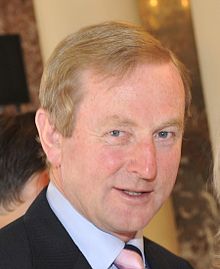
    “People shouldn’t be afraid of their government. Governments should be afraid of their people.”  So said the 2005 film V for Vendetta.  Right now Enda Kenny should be very afraid of his people.

    220px-EndaKenny
    Enda. Out of Touch

    When the Fine Gail/Labour coalition came to power they faced an onerous task.  The banks were bust, the economy was in ribbons and some tough decisions had to be made in order to clear up the mess left by the previous Fianna Fáil administration.  The electorate knew this and left them to get on with the job.

    To be fair, the Government made a pretty good job of it for a while. Yes, austerity hurt, but sacrifices had to be made and the people uncomplainingly acquiesced.  Wages were cut and taxes raised.  As a result things slowly seemed to be getting better.

    And then came Irish Water.

    Whatever any one person might think about the merits of water metering, the state of the infrastructure and the necessity of paying for its refurbishment, the roll-out of Irish Water was a farce on the grandest scale.  It provides the ultimate textbook working model on how not to go about setting up such an institution.

    The NAMA sale of Siteserve, a bankrupt company with debts of €100m, to Denis O’Brien, Ireland’s richest man, was the first of a long litany of controversies.  That €100m was immediately written off and the debt foisted on to the taxpayer.  A few months later Siteserve was awarded, by the Government, the very lucrative contract to install the new water meters.

    Shortly after this every household in the country was sent an ‘Information pack’ inviting them, with a deadline, to apply for metering.  This without any indication whatsoever at the time of how much they were agreeing to be charged for the service.

    PPS numbers were demanded, not just for the principal occupier, but for every man, woman and child in the house.  Bank details and email addresses were also requested.

    The arrogance of the Government and Irish Water was breathtaking.  What right had they to expect people to sign a legally binding contract for water without even being told how much it was going to cost?  And to then demand their personal details and PPS numbers to keep on file into the bargain?  Who in their right mind would ever agree to such a thing?

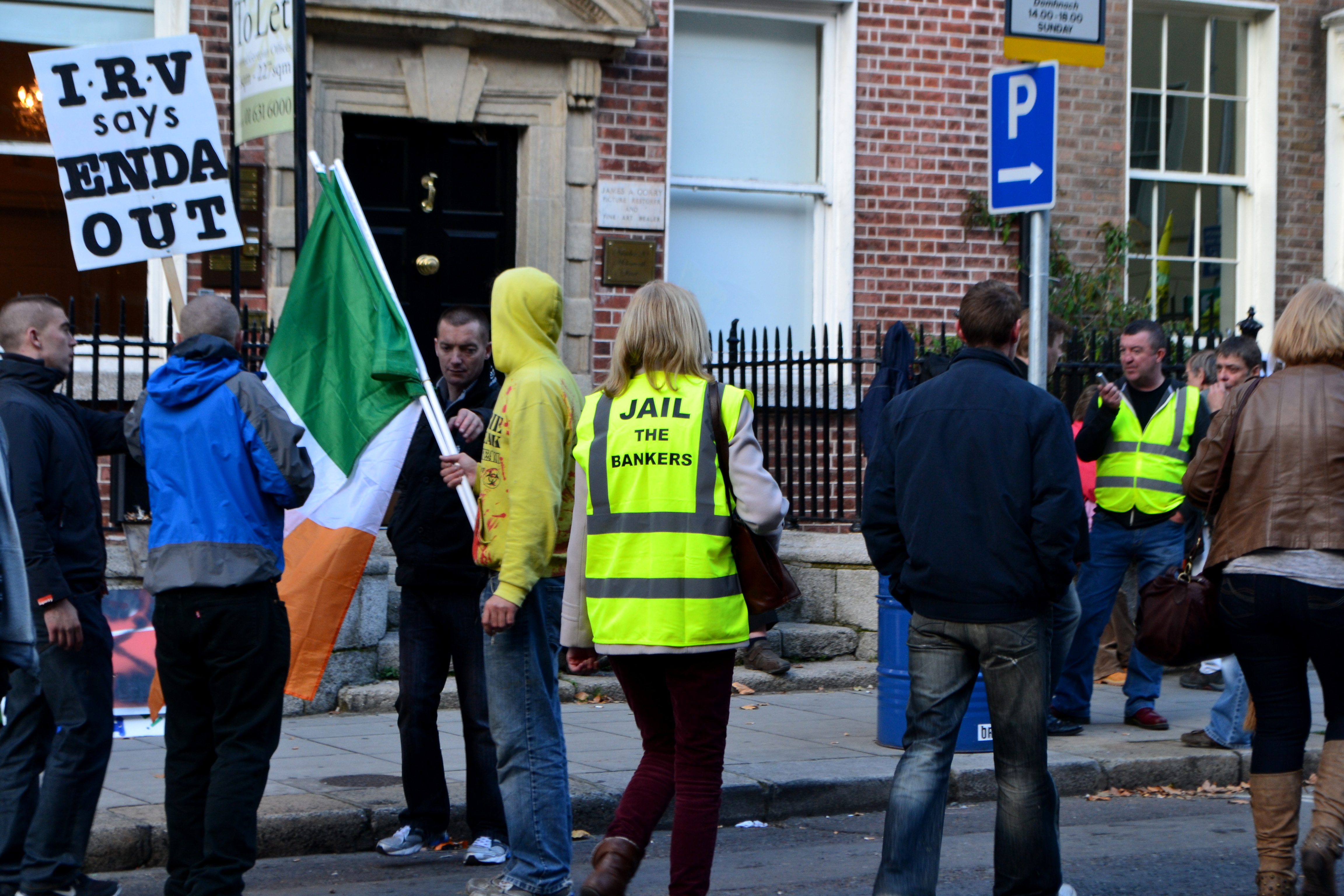
    Unsurprisingly the people were outraged and took to the streets in protest.  Some marched; others blocked the installation of the meters themselves.  Many filmed themselves doing so.

    Joan Burton, in a further show of Government arrogance, subsequently complained in the Dáil that if people could afford expensive mobile phones to film with then they could certainly afford water charges.  Who pays for your phone Joan?  Answer: the taxpayer.

    The people have continued to march and plan to march again.

    All of this means that the country is rapidly becoming ungovernable.  A government rules by the consent of the people and the people are withdrawing that consent.

    Enda Kenny says that the only alternative to water charges is to raise income tax on the upper four per cent.  What is so very wrong with that?

    The poor and lower income earners of Ireland have borne the brunt of austerity for years.  Cuts in incomes and Social Welfare have been mirrored by increased taxation.  A little trimmed off here, a little taken from there.  They have given up to the point where they have nothing left to give.  Meanwhile the rich have escaped and become progressively richer at their expense.

    If this Government is to survive it must win back the trust and confidence of its people.  To do this it must first admit it has made mistakes and then redress them.  An admission might be humiliating, but it will be telling no-one anything that they don’t already know.  It is their only course of action.

    And it is to be hoped that they succeed.

    Never in the history of the Irish State has the electorate been so divided. If an election were to be held tomorrow many Irish voters may decide not to vote at all or lend their support to non-party candidates.

    Voters have always had notoriously short political memories, but even they are not yet ready to forgive Fianna Fáil.  Labour has all but disappeared off the bottom of the opinion polls and the various socialist parties never seem able to pull together in a coherent way.  Green is gone; if anyone even remembers them.

    The rising star in the Irish political firmament is now Sinn Fein; despite all the controversy regarding alleged IRA killings and the moving of sex offenders south of the border.  Ordinarily it would be more than reasonable to expect these allegations to damage the party; but this does not seem to be the case now.  Could it be that the people are so desperate for a party to vote for that they are prepared to overlook these transgressions?

    In any case, for all its political posturing Sinn Fein has no experience of government at national level and experience is what is needed now.

    Much the same can be said about the only other option: Independents.  While there are many laudable and honourable such politicians out there, and I for one would be tempted to vote for some of them, a rainbow coalition of Independent TDs is not what a strong government is about.

    Ireland needs a strong government, now as much as ever. Fine Gael can still be that government but it is absolutely essential that it gets back on track and becomes a government for the people; not against the people.
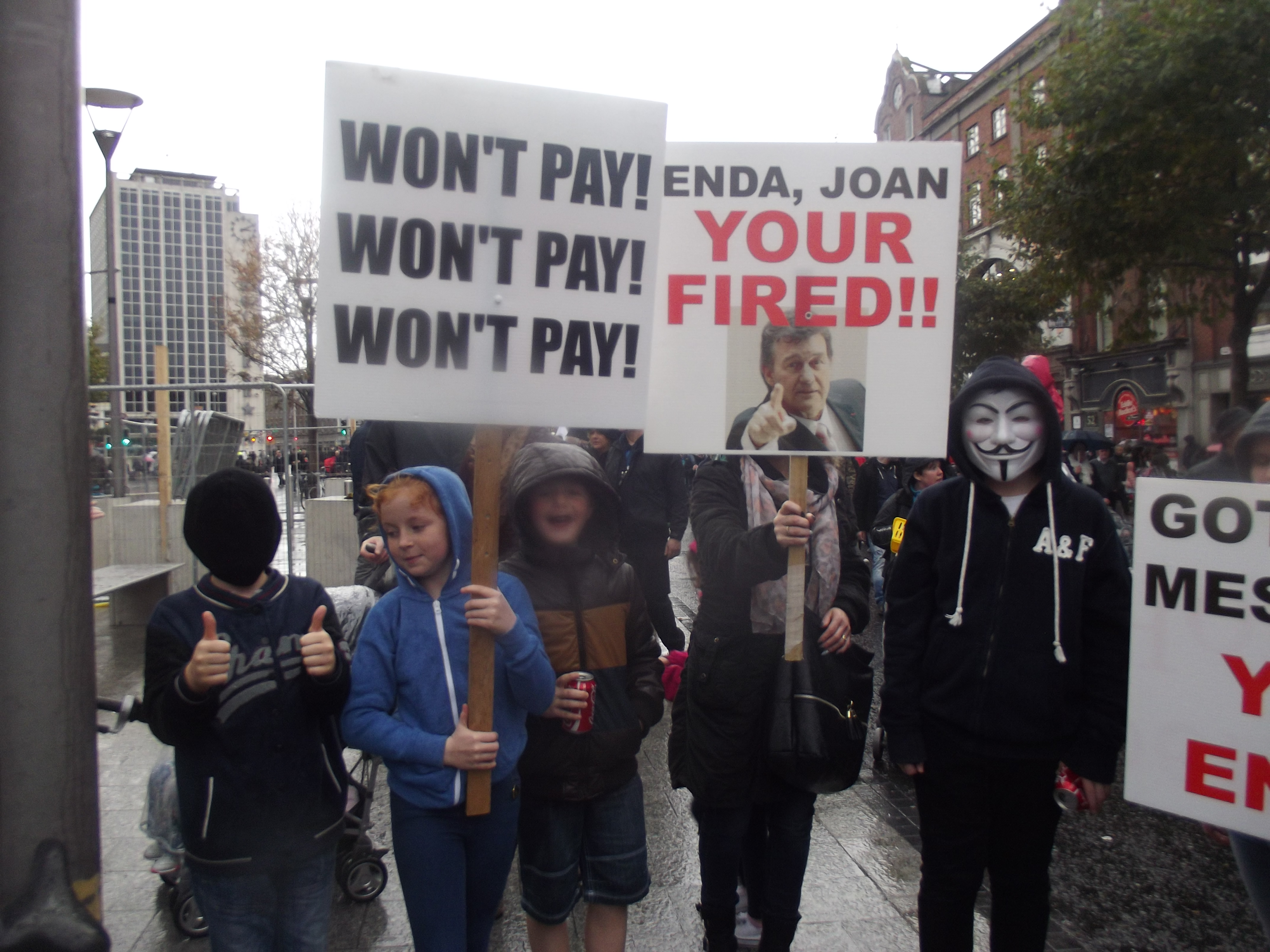
  • Dublin Protest Against Water Charges

    Dublin Protest Against Water Charges

    Saturday November 1 saw a nationwide day of protest against the proposed introduction of water charges.

    Marches were organised in all the major cities and towns across the country, with the largest gathering taking place in Dublin.  Smaller local marches took place throughout the greater Dublin region in the morning, with protesters then coming together in the city for the main event at 2pm.

    There were two starting points: one at Connolly Station, the other at Heuston.  The two groups marched on their respective sides of the Quays before joining and converging at the GPO in O’Connell Street.

    As with last month’s march the atmosphere was good, with no reports of arrests. At the same time, however, a palpable feeling of anger against the Government and Irish Water pervaded.  The message which the people were sending out was “enough is enough”, and that after years of austerity they were not prepared to be squeezed any more.

    Unlike many parts of the country the rain held off for most of the day, but by late afternoon the bad weather had set in and many people did not stay for the end of the speeches.  Nonetheless, the organisers once again claimed a higher turnout than expected, pointing out that the sheer volume of protesters sent a clear message to the Government.

    Speaking at the Fine Gael presidential dinner in Dublin that evening, Taoiseach Enda Kenny said that the Government would not be scrapping water charges. He admitted, however, that mistakes had been made in their introduction, and that the setting up of Irish Water had been badly handled.

    He went on to point out that the alternative to water charges would be an increase of 4% on the higher bracket of income tax, an option which he was not prepared to consider.

    Meanwhile, the latest opinion poll for the Sunday Independent shows a further slip in Government popularity.

    Dissatisfaction with the Taoiseach has grown to 67%, up 9% since September; Joan Burton’s popularity has also slipped by 8% in the same period.

    The poll also asked voters who they would vote for if a general election was called tomorrow.  Results suggest that Sinn Féin, at 26%, is now the most popular political party in the country, ahead of Fine Gael at 22% and Fianna Fail at 20%.

    Further water protests are planned for the end of this month.

  • Wallis Ltd Closing on Grafton St with 45% Cut in Redundancy

    It was a sad day on Grafton Street today as former employees of Wallis Retail (Ireland) Ltd picketed outside its doors in objection to the closure of the chain store.

    Tomorrow, 19th October, Wallis, which is a part of the Arcadia multiples Ireland Group, is closing its Grafton Street store and making its staff redundant as part of a deal to sub-let its store to another high street retailer.

    image (2)
    Long-term employees of the Arcadia Group store will now be left jobless from today.

    According to accounts filed by Wallis, the company recorded a €2.12 million pre-tax loss last year.

    The Mandate Trade Union have asked Wallis to adhere to a prior agreement of five weeks redundancy per year worked.

    “It’s absolutely disgraceful, what is happening here. Some of us have been here for ten years,” explains Melanie Rooney, a former loyal employee of Wallis on Grafton Street.

    “Some of the people here have kids and families to support and we were told last week the shop is closing tomorrow.”

    “All we want is for our disputes to be heard to be treated fairly with the respect we deserve.”

    Melanie Rooney and her collegue picketing outside Wallis in the rain on Grafton St yesterday.
    Melanie Rooney and her collegue picketing outside Wallis in the rain on Grafton St yesterday.

    The company have also refused an invitation from the State’s industrial body, the Labour Relations Commission, to attend a conciliation conference in an effort to resolve all of the issues in dispute.

    This closure is happening is happening despite the group paying a dividend of €92 million to their owners in 2012.

    It is to assign its sub-lease to another UK retail chain, Cath Kidston, which specialises in floral print handbags and homeware.

  • Budget Day met with lacklustre protest

    Budget Day met with lacklustre protest

    By Greg Synnott, Michael Coleman and Saoirse Ivory

    A series of tax adjustments and cuts were announced by Minister Michael Noonan in yesterday’s budget. The City were outside government buildings when the announcement was made.

    The €2.5 billion plan included €900 million in additional revenue and €1.6 billion in cuts.

    Some of the measures announced by Minister Noonan and Minister Brendan Howlin include:

    • A reduction in jobseekers allowance to €100 per week for under 25s
    • An increase to the price of beers, spirits and cigarettes of 10 cent, and an increase to the price of wine of 50 cent
    • Funding to third level institutions will be cut by €25 million
    • The abolishment of the phone allowance for pensioners
    • The banking sector will now pay €150 million to the  exchequer annually
    • Free GP care will be provided for all children under five
    • Additional jobs will be added in hospitals, schools and An Garda Síochána starting next year, but overall pay will be reduced by €500 million
    • Prescription charges on individual items is to increase to €2.50
    • Tax relief for single parents (who could previously both claim the credit) will be changed to a Single Person Child Carer credit, which only the primary carer will claim
    • A new unified DIRT rate of 42% was introduced
    • Tax relief for medical insurance will be capped at €500 for children and €1000 for adults

    Minister Noonan concluded his speech by saying that Ireland is still facing some tough times, but is on the road to recovery.

    Meanwhile, outside the Dáil, a surprisingly small number of protesters turned out despite an enormous Garda presence.

    Many protesters, who felt the government were targeting the weakest in society, were disappointed by the turnout.

    Protester Pamela Hackett gives her view on the Budget
    Protester Pamela Hackett gives her view on the Budget

    “I’m very disappointed,” said Pamela Hackett, “I thought there’d be a load of people out here.”

    Photos: Michael Coleman

    Video and Editing: Greg Synnott

    Report: Saoirse Ivory

  • Budget 2014 Illustrated: What does it mean for you?

    Budget 2014 Illustrated: What does it mean for you?

    There is no doubt that Budget 2014 will have implications for every person living in Ireland. However, students and jobseekers are bearing the brunt of these cuts. Dole payments for under-25s, hiked student fees, prescription charges and a 10 cent hike on cigarettes and alcohol are just some of the cutbacks facing young people.

    Alcohol

    Student Fees

    Dole Payment

    Cigarettes

  • City commuters reach deep into pockets to pay increased transport fares

    City commuters reach deep into pockets to pay increased transport fares

    By: Aidan Knowles

    Photo courtesy: Flickr/Steve A

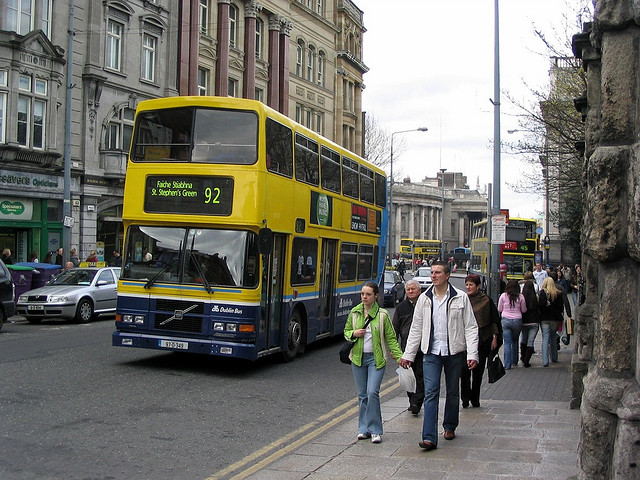
    AFTER SATURDAY, 1st December 2012 – cash and leap card fares for Dublin Bus, Luas, Iarnród Éireann and Bus Éireann services will increase.

    Prepaid tickets prices will also increase, but this change will not come into affect until early 2013.
    The move, approved by the National Transport Authority, was made due to Ireland’s “difficult economic circumstances” and increasing fuel costs – despite cost cutting measures in the industry.

    For Dublin Bus, the last fare increases were introduced in January 2012.

    What does this mean for the city’s commuters?

    Cash paying commuters are the worst affected by the increase. While those using Leap Card and prepaid tickets will still suffer price increases, these options still offer better value over cash fares.

    On Dublin bus – the new price adjustment will see cash fares increase by an average of 11%. Meanwhile, leap card fares will be increased by an average of 7%.

    For example, a cash paying adult travelling 8 to 13 stages on Dublin Bus previously had to pay €2.15. After December 1st 2012, this same journey will now cost €2.40.

    Dubliners availing of the Dublin Bus’  ‘City Fare’ to get around the capital are also affected – with their cash paying fare increasing from €0.60 to €0.65 cent.

    How do these new fares compare with nearby European capitals?

    Across the pond – London’s bus service charges passengers a flat cash fee of £2.30, or at a discounted fare of £1.35 if using the Oyster Card (similar to Dublin’s Leap Card).

    Meanwhile in Paris, the French pay a flat fee of €1.70 per bus journey.

    Further South, commuters in Madrid pay a flat cash fare of €1.50 per bus journey.

    What adult passengers paid Dublin Bus before the fare increase
    What adult passengers are paying Dublin Bus after the fare increase
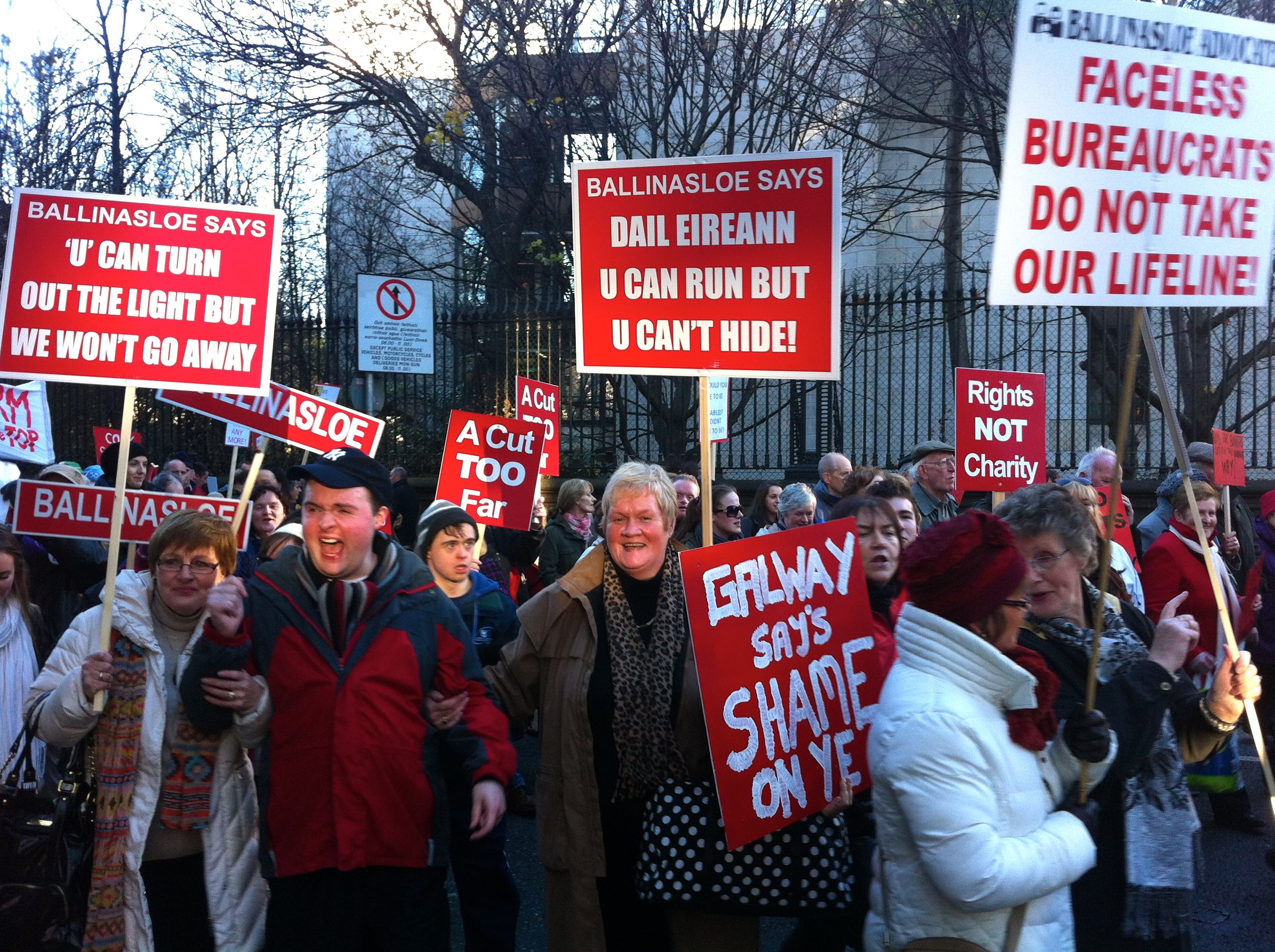
  • ‘Some Cuts Never Heal’

    ‘Some Cuts Never Heal’

    By Gillian Stedman

    Last Wednesday thousands took to the streets of Dublin to protest proposed cuts to disability payments. The crowds marched to Leinster House where they chanted in unison “No ifs, no buts, no disability cuts.”

    The march was held to urge the Government to fully implement the promises made in the 2011 Programme for Government. The programme published in March 2011 contained the Government’s key promises to people with disabilities including, “tackling Ireland’s economic crisis in a way that is fair, balanced, and which recognises the need for social solidarity”.

    Other promises included the maintenance of social welfare rates and the introduction of independent inspection of disability services.

    The protest was organised by the Disability Rights Coalition Ireland (DRCI).  Speaking to the crowds on Wednesday, DRCI spokeswoman Suzy Byrne said, “We should not be relying on rattling buckets to provide us with our human rights.”  Protestors who attended on the day were asked by the DRC not to bring political banners in order to make the protest as inclusive as possible.