
Tag: Cyclists

  • Is driving dead in Dublin?

    Is driving dead in Dublin?

    Will we go back to pre-pandemic bumper-to-bumper traffic jams? Image courtesy of Life of Pix via Pexels.com

    Over the last year, Dublin’s city centre has gone through periods of being like a ghost town, with shops, restaurants, and retail outlets shut down, causing reduced traffic and nearly barren streets due to restrictions.

    Drivers, businesses, cyclists, and pedestrians are all competing for space in the city, and with the pandemic’s demand for outdoor spaces the competition for space is more prevalent than ever.

    The Covid-19 mobility plan has introduced new cycle lanes citywide, leading to movements like the Cycle Lane Action Group sprouting up to oppose road space being handed over to cyclists.

    Reducing the number of cars in the city isn’t anything new – before the pandemic, the installation of Luas tracks meant fewer streets in the city could be driven through. Dublin County Council’s city development plan has, since 2016, been working to make Dublin into a pedestrian and cyclist friendly city.

    If you do choose to venture into the city by car, the parking prices are often sky-high, with spaces ranging from 60 cent to a whopping €3.20 an hour.

    Is Dublin’s city centre destined to become pedestrianised, with public transport walking, and cycling being the only way to venture into the heart of the city? And is that such a bad thing?

    I asked the people of Dublin for their thoughts on the matter.

    “At 30km you’re barely moving. I understand safety but I don’t think it’s fair”

    Brian

    Earlier this month, the Love 30 campaign backed by Lord Mayor of Dublin Hazel Chu, sought to bring the speed limit of the city down to a blanket 30km/h in an effort to improve safety and reduce road accidents.

    However, while the campaign garnered some support it was also met with backlash from certain members of the public and some county councillors.

    The campaigners are now attempting to bring in a 40km/h, which will apply to roads like Dorset Street and the Clontarf Road.

    “At 30km you’re barely moving. I understand [it for] safety, but I don’t think it’s fair. The guy in the car now, the motorist, is being penalised for every single thing. People are paying high car tax and insurance, and I think they have a right to bring their car [into Dublin city] and pay exorbitant prices in car parks,” says Brian, a Dublin native.

    These streets belong to the pedestrian! Image courtesy of Jeshoots.com via Pexels.com

    This frustration is understandable for those working by car or van in and around the city. Changes in infrastructure over the last few years has already meant changing routes and a reduced speed limit, which can lead to further disruption of services and cause motorists frustration and stress.

    “The government and the councils have tried to get rid of cars and traffic from the city centre for long enough, some of us live areas not too far from the city who do not have an adequate public transport system”

    Brída

    What about those sharing the road with motorists, the people whose safety this campaign is trying to protect – would a lower speed limit make the city safer?

    “Absolutely, especially for cyclists as well. I know there’s a lot of talk ‘oh you know they’re not paying road tax’ but a lot of cyclists are motorists as well, and they cycle in the city. I’ve cycled on the ‘Tunnel of Death’ on Westmoreland street and it’s tricky enough, especially for cyclists but pedestrians as well,” says Jo, an avid cyclist who I met on Grafton Street.

    While there are some clear benefits to this proposal, it’s unclear if the Love 30 campaign will be robust enough to stave off its critics, and that plan may already be dead in the water.

    However, this campaign isn’t the only plan to change the city’s infrastructure.

    Minister for Transport Eamon Ryan and the department of transport have released a paper proposing that congestion charges should be implemented in Dublin and Cork city.

    This is in an effort to reduce carbon emissions by discouraging motorists from driving in the city – reducing traffic and air pollution.

    “Today is my first time in the city for god knows how long and I’ve just found it so easy to cross the road”

    Stephen

    “A lot of people already leave their cars in train stations and travel in by train,” says Graham from Dublin, who agrees with the idea of congestion charges.

    For pedestrians, less traffic around Dublin city is a nice prospect – especially when they’ve become accustomed to it after a year of lockdown.

    “Today is my first time in the city for god knows how long and I’ve just found it so easy to cross the road. There’s buses but there’s not so many cars, which I was surprised by because I thought people were genuinely back at work, and I’ve really enjoyed that, but then again I’m a bit of an introvert,” says Stephen.

    Apart from pleasing the pedestrians, the environmental benefits of congestion charges are clear, and can be seen by the success of cities like Stockholm.

    But, is the city ready for a change like this?

    “The government and the councils have tried to get rid of cars and traffic from the city centre for long enough. Some of us live areas not too far from the city that do not have an adequate public transport system. We’re not near the Luas, not near the proposed underground and we have an appalling bus system,” says Brída, a Rathfarnham native who feels strongly that the government should focus on improving public services before ridding the city of cars.

    It’s clear that something needs to change, and it needs to provide adequate services to the public while considering the environmental impact.

    If we are to tackle emissions in a meaningful way traffic needs to be reduced, but if the intention is to pedestrianise the city further, the public transport system may need a closer look.
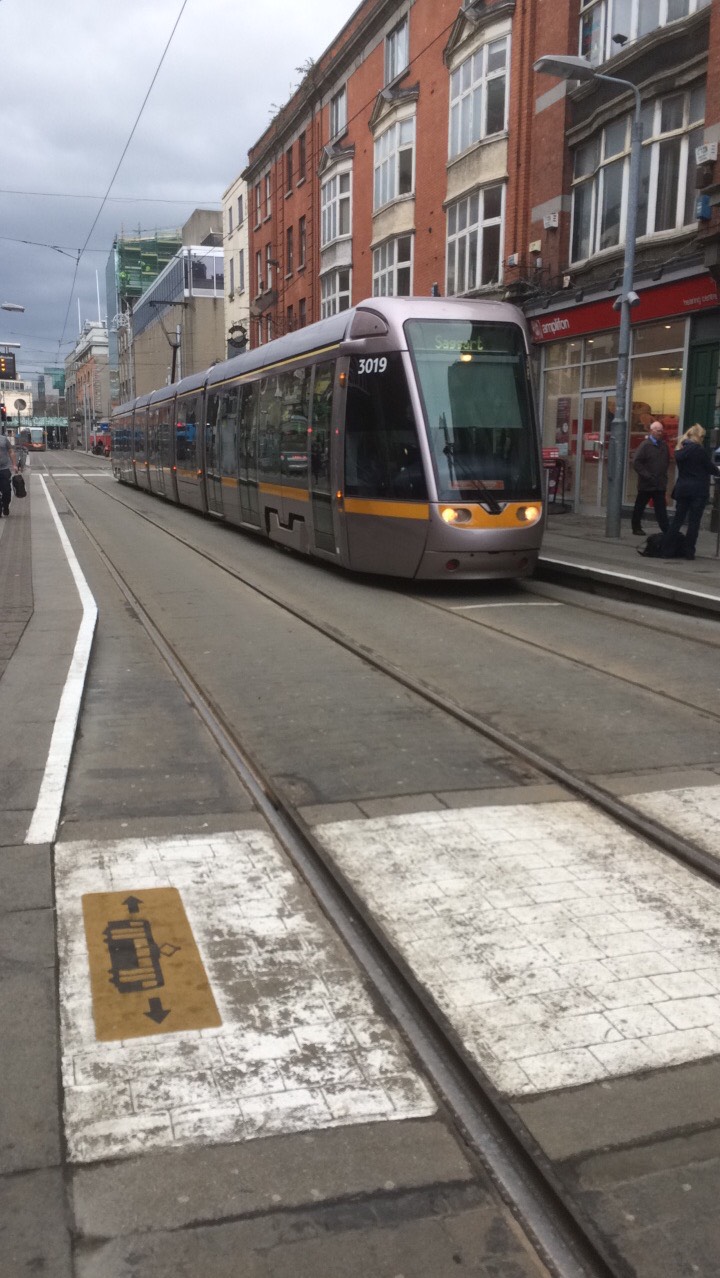
  • Cyclist safety uncertain as Luas Cross City prepares to launch

    Cyclist safety uncertain as Luas Cross City prepares to launch

    With the Luas Cross City project almost launched, Lee Shields explores the dangers to the city’s cyclists as Luas tracks have been extended across the city.

    The new Luas Cross City line is due for it’s official start of service on Saturday at 2pm.  The service is an extension of the Green Line through the City Centre to Broombridge.

    The project was started back in June 2013 and has produced an additional 5.9km of track through countless hours of costly construction to deliver a more efficient travel for cross city commuters.

    This new line, although a welcomed change to a somewhat primitive city in public transport as compared to our European counterparts, has come with some backlash.  That being the safety of cyclists, where problems arose even during the construction of the tracks.

    Areas which have proved problematic are those which are heavily congested with traffic, with luas tracks on the road and it’s difficult to manoeuvre with cars tailgating.  The affected areas include Dawson Street, Nassau Street, Lower Grafton Street and College Street on the south side and Parnell Square, Dominick Street and Marlborough Street on the north side.

    These areas were included in a report by the National Transport Association (NTA).  The report called ‘Assessment of cycling feasibility on the Luas Cross City route’, was published in mid-October. However, Colm Ryder, the chairperson from the Dublin Cycling Campaign (DCC), stated that although the report issued a variety of warnings on safety for cyclists at these locations, “There has been a deal of confusion over this report and its recommendations.”

    Mr. Ryder informed me that over the past year DCC had been engaging with Transport Infrastructure Ireland (TII), the agency responsible for cyclists’ safety.  However, although discussions were progressing they have ceased, and he said, “no developments have taken place since early this year, which, to say the least, is very disappointing and we could even say negligent on the part of TII.”

    One safety precautioned that had been discussed was a rubber infill along the tracks that would be mostly dangerous towards cyclists.  These rubber infills deemed to be quite expensive, ranging to €800,000 per kilometre.  However, the engineering consultants, Jacobs, deemed that it would only be necessary in high risk areas.  But, the trams would end up tearing the rubber, and would need replacing regularly.

    IMG_3174
    Image: Lee Shields


    Colm Ryder stated, “Rubberised track inserts have been discussed, and initially recommended in the 2012 Jacobs Report.  But, TII state that the replacement cost of these is too prohibitive.  Dublin Cycling Campaign say that not enough investigation has been done in terms of their efficacy, but also how many locations would they be required in? We have been told that they would have to be replaced regularly, but that should not be the issue. If they have to be replaced so be it, if they improve safety.”

    I got in contact with TII and the LuasPR returned somewhat contradictory statements.  They said, “Regarding the rubber infill, it is deemed better practice to not have infill in the track areas once trams are running to schedule which has been the case now for 3 months.”

    As regards to their concern about cyclist safety, they said that a final review has been carried out on the design of traffic arrangements at busy junctions such as College Green.  They state that signage will be erected in these areas advising cyclists to dismount before entering the area and remount when it is safe to do so.  However, Colm Ryder added to this point saying, “to be clear cyclists are not banned from using any part of the on-street LUAS lines on the new route.”

    In addition to the signage, LuasPR said, “In parallel with the erection of the new signage NTA are also working with Dublin City Council to provide a two-way cycle lane through College Green (on the Bank of Ireland side) which will link College Street to Dame Street (for westbound cyclists) and link Dame Street to Westmoreland Street (for northbound cyclists). This cycle-way does not form part of the Luas Cross City project.”  Obviously new specific cycle lanes would increase safety, but how long this will take remains unclear.

    As regards to complaints put forward on this matter they said, “There have been a relatively small number of complaints during the project which have been dealt with on an individual basis by our team.”  Colm Ryder contradicts this claim however saying that, “In relation to cyclists’ complaints, we in Dublin Cycling Campaign have received numerous stories and reports of cycling accidents/incidents over the past months, some of them quite serious.”

    “We recommend that cyclists proceed with the greatest caution when riding parallel to the tracks, and ideally keep their speed at a safe level, to ensure that they can make any required manoeuvres easily and safely.  But in the case of the Dublin track layout, an awful lot is being asked of the cyclist, in terms of trying to stay safe!”