Tag: design

  • Weaving in the years: Meeting Ireland’s fresh face in the fashion industry

    Weaving in the years: Meeting Ireland’s fresh face in the fashion industry

    Woven pieces by Sarah Flynn Textiles and designer Sarah Flynn. Images courtesy of Sarah Flynn

    Celebrating a prestigious award ceremony in your living room is a strange dichotomy. 

    That’s how up-and-coming fashion designer Sarah Flynn, of Sarah Flynn Textiles, describes the experience of winning the 2020 Institute of Designers in Ireland Graduate Awards for the Fashion and Textiles category. Nonetheless, the champagne was popped. 

    The project she won it for, entitled Colourfully Conscious, was almost never completed. 

    Weeks before Flynn finished her final year in the National College of Art and Design, universities closed up shop due to Ireland’s first Covid-19 lockdown – leaving many students stranded with unfinished work.

    “We were at home with no equipment and no machinery. It was so hard to work out of a box room with absolutely nothing. We had no access to weaver looms. I discovered my love for hand-knitting during lockdown and based a lot of my collection on hand-knitting and weaving,” Flynn tells me.

    “Thankfully, Ncad got us back in for Makers Month and that’s when we had three weeks to make our full collection.”

    The project

    Colourfully Conscious is a collection of luxurious woven, hand-knit and digital-print fabrics for women’s wear spring summer collection 2020-21. 

    Una Curran modelling a scarlet red knitted piece in the Colourfully Conscious series. Image courtesy of Sarah Flynn

    Inspired by Moroccan tile patterns and fabric materials, Flynn combined traditional textile techniques with the geometric patterns most often seen in Marrakesh. At its core, the collection promoted slow fashion. 

    “I sourced natural materials such as cotton, wool, silks and seaweed yarns. The seaweed yarns I got from a supplier in Belgium,” Flynn says. “As well as that, I sourced dead-stock waste yarns from a local Irish mill, which would have gone to landfill otherwise. So it was nice to up-cycle these materials – they’re natural and still high-quality as well.”

    Una Curran wearing sapphire inspired top from the Colourfully Conscious collection. Image courtesy of Sarah Flynn

    “I think people need to investigate and realise why fast fashion is so cheap. Because the reality is if you’re not paying for the cost, someone else is”

    Sarah Flynn

    Ethical and sustainable production were the driving factors behind this collection. 

    By documenting these sustainable practices, Colourfully Conscious tries to demonstrate alternative practices that can be adopted by the textile industry as a whole. 

    For example, Flynn’s project incorporates natural dyes in an effort to combat the fact that the fashion industry is responsible for one-fifth of the world’s water waste and textile dying is the world’s second largest polluter of water globally

    “Dye is so potent and toxic,” explains Flynn. “It seeps into rivers and oceans and pollutes everything. I thought it was good to focus on that and how you can incorporate a more natural approach and stop using toxic chemicals in the process.”

    Flynn continues: “In Morocco, they concentrated on using natural dyes in their yarns and wools and then weave them into textiles such as rugs and fabrics – turmeric used as a dye is a big one. Paprika is another spice they use and there are loads of flowers too. But obviously, they can’t be grown in Ireland.” 

    While turmeric and paprika may not be readily grown in Ireland, there are sustainable methods being practiced for making natural dyes. For instance, the Apple Oak Fibre Works project in county Clare, who make dye from composted onion skins. 

    Getting down to business

    Woven Frames patterns. Image courtesy of Sarah Flynn

    With the leftover materials from her graduate project, Flynn decided to keep the sustainable cycle going and start up her own business – Sarah Flynn Textiles.

    “Instead of throwing it out, I was like ‘what will I do with this?’ So I decided to make these woven frames and basically use this zero-waste method and turn it into art. Each piece takes about two hours to put together.” explains Flynn.

    Flynn’s pieces don’t shy away from colour. Each squared frame has its own unique design, fixating you into a portal of otherworldliness. 

    I ask Flynn about growing her brand and getting her business up and running. 

    “It’s definitely a learning process. I love being creative so I’m always looking for ways to improve. I think it’s key to recognise that you don’t know everything. So it’s good to be open to new ideas and approaches,” she says. 

    Still in its early days, Flynn wants to stick to her guns and keep her fashion sustainable – a conflict she feels many brands face once they get off the ground. 

    “My brand’s mission is to get customers to see the impact you can curate through strong design processes. And to see the value of hand-made products. Instead of something that’s made a hundred times from plastic or clothes made en masse from cheap materials.” says Flynn. 

    Fast fashion is a problem facing the world over, and with online consumption increasing during the pandemic, lots more garments will find themselves in landfill.

    “I think people need to investigate and realise why fast fashion is so cheap. Because the reality is if you’re not paying for the cost, someone else is.” 
  • From burritos to design: three Dubliners make their mark on the Irish urban design scene

    From burritos to design: three Dubliners make their mark on the Irish urban design scene

    Design is a key component to what keeps Dublin ticking and as the year of Irish Design continues The City met with a group of designers who seem to be doing everything right.

    Extra Meat Apparel demonstrate that, like much of life, a career in design is about taking the initial leap.

    Lucas_Cassidys_image4 resized

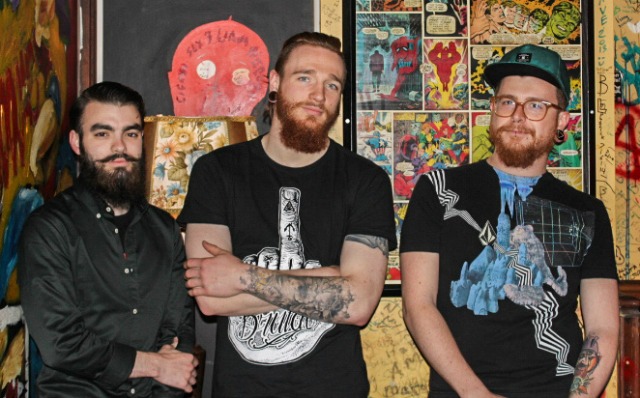
    Conor, Jake, and Lucas are three hardworking graduates who have successfully created their first capsule collection – Extra Meat Apparel – by harnessing their love of design with their natural flare for creativity, art, urban living and food.

    Jake is a multimedia graduate from DCU, Lucas is a Brazilian native and qualified history teacher, while Conor is a chef. The trio met while working part-time in a popular Burrito eatery and they realised they had the ability to create something that was sustainable, profitable and of good quality.

    Established in 2014, Extra Meat Apparel is a new venture in terms of street style – a hugely evolving subculture here – and Jake, the youngest of the team, emphasised the importance of supporting young Irish design.

    “It’s important to encourage and promote young creatives. We were able to achieve this without financial stability, but I think many young people with the same creative ambition and goals as Extra Meat Apparel feel restricted because of money. I believe that entrepreneurship is blossoming once more throughout Ireland, but younger people still need that extra support,” he said.

    There are many programmes and scholarships available for those interested in entrepreneurship and design such as Enterprise Ireland’s ‘New Frontiers Entrepreneur Development Programme’, which offers financial and executive support for young start-ups.

    Jake pointed out that if you have a passion for it, then it’s always achievable.

    “Design is design – it doesn’t matter if it’s on a phone, a tablet, a 20 foot billboard, food, or clothes,” he said.

    tshirts resizedtshirt 2 resized

    Both Conor and Jake believe that it is their designer Lucas who is the secret ingredient that separates them from other emerging brands in Dublin. The Brazilian native specialises in intricate illustrations and uses mediums in ways they are not typically used creating unique and eye-catching designs for Extra Meat. Lucas left Brazil four years ago to pursue his passion for art and urban culture.

    Upon meeting the trio it was obvious that they are very different individuals – an eclectic mix of body modification, eccentric clothing, and facial hair – but their mutual love of urban life and creativity has driven them forward. Conor explained that everything they design and work at ultimately originates from the things they collectively like doing whether it’s skating, cycling, surfing or eating.

    “We are a unisex brand aimed towards people who enjoy the things we enjoy,” he said.

    Quality over quantity

    Once they got talking about their brand, it was clear that their emphasis lies in the quality of their product, as opposed to quantity or profit.

    “Quality has been at the forefront of what we are doing from the start. We’re not skimping on quality in terms of design and fabric. It took us months to nail down designs, and took even longer to find a fabric supplier that could do the job at a high standard,” said Jake. He continued by showing his support to local business; finally setting with a reliable and local firm on the North Strand.

    “We print only on high-quality printable t-shirts. We use pre-shrunk cotton that is ideal for printing, and retains its shape and fit even after washing. We are trying to be a transient as possible and not be stuck by a certain gender or size. Quality over quantity,” he said.

    Creativity knows no bounds, but realising goals and bringing creativity to fruition is often restrictive financially. Extra Meat Apparel would like to see more support across all aspects of the industry either from shops, investors, grants or bursaries.

    Conor, Jake, and Lucas are currently working on their next collection which can be bought via their social media platforms.

    Find Extra Meat Apparel on Facebook or on Twitter.