
Tag: direct provision

  • An end in sight? Government promises to end Direct Provision as residents go on hunger strike

    An end in sight? Government promises to end Direct Provision as residents go on hunger strike

    Lucky Khambule, MASI co-founder and anti-direct provision activist. Photo taken from MASI Instagram page (@masi_movement_asylum_seekers) with permission

    The recent acknowledgement of the horror women and children were subjected to in the Mother and Baby homes across the country for the best part of the century shed light on both the ability of Irish institutions to treat the vulnerable incredibly inhumanly, and our society’s ability to ignore, or even to cooperate with it.

    If it were not so depressing, it would almost seem ironic to watch taoiseach Micheál Martin apologise to the victims of the Church and State’s inequity, when it is reasonable to imagine a future taoiseach standing in his place apologising for the cruelty inflicted under the watch of the current government – direct provision.

    Direct provision has become an increasingly contentious issue over the last decade, and while this week the long-awaited White Paper announcement promised an end to direct provision in the foreseeable future, elsewhere in the country, asylum seekers went on hunger strike in protest of substandard meals.

    I spoke to Lucky Khambule, who lived in direct provision for three years before going on to co-found MASI, the Movement of Asylum Seekers in Ireland, where he is the current coordinator.

    We discussed the impact of the pandemic on direct provision, the ongoing hunger strike, and the important moment we are at in deciding the fate of asylum seekers in the future.

    The Pandemic

    The events of the last year have impacted all our lives, not excluding those who live in direct provision.

    Social distancing and access to online education are things beyond imagination within the facilities operating currently.

    “The main thing was to keep people quiet”

    Lucky Khambule

    There have been outbreaks in direct provision centres nationwide, like the controversial Skellig Star Hotel, which has since been closed. However, its residents have been relocated to other centres, some experiencing outbreaks in multiple centres.  

    “[People] are scared and anxious,” Khambule said. The centres are unequipped to face quarantining while still maintaining operations for those who have not been infected.

    In the Killarney centre, 25 people had to be moved to a separate isolation facility while they endured the disease.

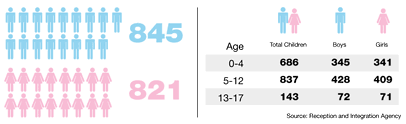
    In terms of education, 1700 children currently live in direct provision, and they are suffering more than most.

    Online learning has exposed inequality countrywide, with many Irish students unable to keep up with classmates due to a lack of resources.

    Within direct provision, parents unable to work and receiving less than €40 a week are unable to provide children with the laptops, phones or tablets needed to learn online.

    “We campaign for the right to education, especially with the tentative education [in place]” Khambule said.

    He was critical of the education provided to children in direct provision which he stated could use drastic improvements even before the pandemic.

    Lucky Khambule and other activists supporting the closure of the Skellig Star Hotel. Image taken from MASI Instagram account with permission

    Hunger Strike

    Almost simultaneous to the announcement of the White Paper, the story broke that people in a direct provision centre in Cork were refusing their meals on the grounds of substandard nutrition, especially for their children.

    The residents are complaining that food is being thrown away anyway, due to lack of quality and meals even being served burnt.

    “I am dealing with two centres [on hunger strike].” Khambule said.

    “They have tried communicating with the management, and the management is not listening to them. And they have decided now to take control. They do not want to be there, they’re tired of that, they want their own space where they can be able to cook their own meals.”

    While this campaigning across the country has brought some relief, with a number of centres gaining their own cooking facilities – the sad fact remains that this has not been adopted nationwide.

    Most of the residents are using their allowance to purchase different food to cook for children and those with medical conditions, as the meals provided are inadequate.

    “Substandard food, they are tired of eating rice and potatoes.” Khambule stated. “Why must cooking their own food be taken away from them? Why must it take a hunger strike to be listened to?”

    The residents have compiled a letter of complaint which has been sent to the Department of Children and the International Protection Accommodation Service (IPAS).

    “The department takes complaints from residents very seriously.” A spokesperson for the department confirmed to The Irish Times.

    Khambule disputes this claim: “When they complain about the food, they are saying that people are complaining too much. You’re sitting in that centre for three years, eating the same food, you are hearing some centres are being able to cook for themselves and you are afraid you are being left behind.”

    This has been amplified by the abnormally long waiting times for asylum seekers to be processed in Ireland – something which the United Nations High Commissioner for Refugees (UNCHR) expressed concern about in 2019 and has not seemed to improve since.

    There are widespread stories of sharing rooms for 18 months, and longer, before even getting an initial interview.

    Something that we have all learned over the course of the lockdowns is how hard it is to keep yourself occupied.

    As well as improving the nutritional value of your meals, cooking can also be a welcome activity for someone who has limited options.

    “It would be nice for them to cook in the kitchen, it’s something to do,” Khambule said.

    “The oppression, and the fear, and the intimidation, the living conditions were horrendous”

    Khambule

    It seems something basic that could be provided by the centres, and under the State’s national standards for accommodation centres, released last month, it is legally binding.

    These centres are way behind this standard, but this is not uncommon, and many complaints have been made to the Department of Justice and Equality.

    The department originally called for individual contractors, who profit from these centres, to provide evidence that these allegations were false.

    Following 33 inspections carried out last year, the Department of Children confirmed the presence of cockroaches found in a direct provision centre in Monaghan, but did not confirm other allegations of mould, rodents and multiple cases of skin disease.

    These inspections have ceased since Ireland entered level 5 restrictions in October – with the government reducing the number of inspections for every centre from three times a year to once a year, as a result of the pandemic.

    White Papers

    On Tuesday, Minister for Integration Roderic O’Gorman announced that the new IPAS system would completely replace Direct Provision advancing “integration and inclusion”.

    This is included as a part of the White Paper on ending direct provision which was due to be released at the end of 2020 but is now to be published next week.

    The minister has stated that the paper will inform on the intention to abolish the system and replace it with a new model.

    Khambule finds it difficult to accept: “In my opinion, these are empty promises.”

    “Okay, yeah they have been backing the White Paper. The government is far apart from the people. They want to make the Irish people believe they are doing a good job. Doing good for asylum seekers and refugees, but they don’t tell you our complaints. The complaints we have every day, it is important we keep on talking about it. When the government makes promises [for change] but we don’t find that they have started.”

    The Future

    Although it is difficult to see a bright future for refugees and asylum seekers, this is not hindering the optimism of the activists striving toward change.

    “We will wait, we will see what the White Paper says, it is very important, because our strategy will be based around it.”

    The main thing to take from the White Paper is the hope that it will remove private contractors from being able to profit from the centres.

    “We need to find a way to remove the people who benefit from the misery. The people who claim to provide service, remove them and let the people breathe, so they can have room to shape their own lives,” Khambule stated.

    “Our cry is the way we are treated as we are waiting for our applications, to highlight the issues affecting us as people that seek asylum, for the government to make policies that would seem to make us human,” says Khambule.

    As of 2021 there are more than 7000 people living in direct provision across 38 centres, with 30% of them being children. It can only be hoped that this system comes to an end soon and this cycle of repeated history can end with it.

  • Students in direct provision struggle with access to education

    Students in direct provision struggle with access to education

    For students in direct provision, a lack of access to digital technology hinders their ability to pursue an education. Niamh Talbot spoke with Roos Demol, one of the women behind a campaign raising money to provide these students with laptops.

    2020 marks the 20th anniversary since the introduction of the direct provision system in Ireland. 

    Direct Provision is intended to provide for the basic needs of people who are awaiting decisions on their applications for international protection. The system was designed as a short-term measure, However, the 2015 McMahon report found that 55% of asylum seekers had been there for five years or more. This average has now been reduced to 15 months, however many are still waiting years to hear their application results. The lengthy stays are associated with declining physical and mental health, self-esteem, and skills.

    Currently, there are about 4,300 people in 34 direct provision centres across 17 counties. 38% of these are under the age of 18. 

    The system restricts these people from seeking employment and engaging effectively in education.  Residents are not entitled to Social Welfare payments. Instead, they receive an allowance of €21.60 per adult and €10.40 per child, per week. For students, this environment, where their parents are not allowed to work and may be struggling with mental health difficulties, can have a very negative impact on their capacity to learn.

    Many find it difficult to study or to finish their homework in environments that are often noisy and over-crowded, or indeed, in some cases, frightening and unsafe. Students in direct provision face huge barriers in continuing their education to third level. The additional costs of third level are prohibitive for students and families on a meagre weekly allowance. This means that many high-achieving students who qualify for a third level course cannot progress on to college.

    Digital technology has come to play a huge role in how students are accessing education during the Covid-19 pandemic. Whilst some universities in Ireland are open for a limited number of lectures, most are delivered online.

    A report from the National Forum for the Enhancement of Teaching and Learning in 2019, showed that just 76% of students had access to reliable WiFi at home and only 25% had access to recorded lectures.

    Remote learning has presented unprecedented obstacles for many students. Poor broadband connection, strained family relationships, flailing motivation, and concentration levels. 

    But for students living in direct provision, the challenges increase tenfold. Many of these students relied on campus computers in order to complete their assignments. The move to online education has left many people who are unable to access computers without the means to take part in lectures and coursework. 

    Windows4Opportunity is a fundraising campaign started by Recruit Refugees Ireland aiming to provide laptop computers to 900 applicants currently enrolled in third-level education courses in Ireland who are in need of computers. The weekly allowance for adult International Protection applicants living in Direct Provision, means it is not possible for most people to purchase a laptop for coursework. Windows4Opportunity aims to provide people seeking protection in Ireland with the means to secure their own futures.

    The campaign is raising money through their GoFundMe page but also encourages others to raise money through their own fundraising efforts.

    Roos Demol, one of the women behind the campaign, spoke to The City about its importance. “Without access to technology, your chances of an education and your chances of securing employment are nil,” Demol said. “Sadly, for many students enrolled in courses that have since moved online, their ability to continue their studies is not possible. 

    “Having access to technology will not just allow people access to education and job opportunities, it will instil a sense of hope for their future.”

    As of the 26th November, the campaigns GoFundMe has currently raised €6,525 euro of their €35,000 goal. Demol encourages people to give what they can: “Even sharing the campaign on social media can give it a huge boost,” she said.

    “The students in Direct Provision need our help.”

    In a report by Edmunds Rice School Trust, students spoke of the difficulties they face in accessing education. One saying, “Being a student in Direct Provision can be socially isolating. There is no appropriate study space in the centre. The best time for me to study is very early in the morning at 4am when it is quiet. My one desire is to become a doctor! But if I am successful in obtaining a place on the course there is huge uncertainty as to whether I will actually be able to accept it.”

  • Direct Provision must end by 2023, the report states

    Direct Provision must end by 2023, the report states

    A report published by the Experts Group on Provision and Support has stated that direct provision in Ireland should end by mid-2023. Laura Matjusaityte talked with a member of the Experts Group to outline the main aspects brought up in the report.

    Protesters urging to end Direct Provision. Photo by Laura Matjusaityte

    A report published by the Experts Group on Provision and Support has stated that direct provision in Ireland should end by mid-2023. The group led by Catherine Day, a former secretary general of the European Commission, was tasked with examining the current state of direct provision and making recommendations on necessary improvements. 

    More than one hundred pages long, the report examined the conditions of people living in direct provision centres and came up with a step by step plan aiming to create a new and better system of acceptance and inclusion of asylum seekers by mid-2023. 

    The current direct provision system has been used in Ireland over the last 20 years. The system was set up to accommodate people seeking international protection while their applications were being processed. As of the end of July there were over 7,000 applicants living in direct provision.   

    Fiona Finn, a member of the Experts Group and CEO of Nasc, an NGO supporting refugee and migrant rights, expressed criticism over the current system, saying that direct provision is “not fit for purpose and should end”. 

    In the current system all the residents are being provided with accommodations, usually set in shared settings, such as former hotels, hostels or guesthouses, prepared meals, or ingredients for meals and a weekly allowance of €38.80 per adult and €29.80 per child. 

    The report stressed that in some cases families and single adults were being housed in the same settings and some accommodations were lacking basic facilities, such as kitchens to cook their own meals. 

    The Experts Group outlined two main issues within the current system, the length of the time people spend in the system and the type of accommodations and support they receive while in it. 

    The main recommendations included a faster system to assess applications for the asylum seekers and humane reception conditions, such as appropriate housing.

    “Reducing the length of time that people spend in the international protection process has always been a key priority for Nasc,” Finn said. 

    “It is inherently unfair for people to spend years living in limbo waiting for a decision on their status determination.”

    Recommendations aim to shorten the process of applications to up to six months, while under the current system it can take up to ten months to reach the first interview stage. The shorter process would ensure that almost all cases would conclude within a year. 

    “Generally no one should be waiting for longer than 6 months for a ruling on their first instance decision or a further 6 months (12 months in total) on their final decision,” Finn added. 

    Finn said that if the guidelines in the report would be followed this could speed up the applications process and “provide accommodations for about 3,500 people per year”.

    Other suggestions include changing the current housing system into own-door accommodations, in which applicants would be given opportunity to rent accommodation within communities and would receive housing allowance similar to the current Homeless Housing Assistance Payment. 

    A state-owned reception centre would also exist. These reception centres would be used for new applicants within the first three months of their arrival. 

    The need for an active accommodation allocation service to find housing for asylum seekers will be crucial in ending the system of direct provision. 

    It is suggested that the current weekly allowance (€29.80 per child and €38.80 per adult per week) should be changed to give access to social welfare, and asylum seekers should be given a right to work immediately while they are awaiting for their application process to be finished. Under the current system applicants don’t have a right to work until they have been in the application process for nine months. 

    “The recommendations of this report reach beyond accommodation and the legal process and will have an enormous impact on the daily lives of applicants for international protection,” Finn said. 

    The experts group outlined the need to start reforming the system as soon as possible and gave a list of recommendations which could be implemented quickly. It includes increasing weekly allowance for people in direct provision, a right to work while waiting for a decision, ability to apply for driving test and license and access to mainstream schools in the communities for applicants aged five to 18 as well as access to higher education. 

    “It has taken two decades to get to the point where the government has committed to ending direct provision. However the work to make sure that the system it is replaced with is fair and equitable is only beginning,” said Finn, urging people to help in ending direct provision by contacting their TDs to show their support for the report. 

  • Watch: The mental health impacts of Direct Provision – Asylum seekers speak to TheCity.ie

    Watch: The mental health impacts of Direct Provision – Asylum seekers speak to TheCity.ie

    At the Asylum Seekers Feminist Conference, which took place prior to the Covid-19 lockdown, TheCity.ie spoke to Eoin from Abolish Direct Provision Ireland and conference attendees about the impact of Direct Provision on their wellbeing. By Kate Brayden, Cameron Weymes and Ayumi Miyano.

    Many of those who came to the conference travelled to be there in order to hear guest speakers and panelists give talks on mental health and host art and yoga workshops. Sonia from Cameroon, Julie from Uganda — whose company ‘Julie’s Kitchen’ catered at the conference — and organiser Eoin generously spoke to us about their unique and personal experiences.

    The controversial system of asylum has repeatedly hit the headlines over the mistreatment of those who must wait for their refugee status to be granted, or to be allowed to stay in Ireland. One of the State’s largest providers of accommodation to asylum seekers recorded a pretax profit of €2.36 million in 2018. That the Irish Government allows the system of asylum to be a for-profit service for multinational corporations such as Aramark has been a dominant point of frustrations. Those in the system receive just €38.80 as a weekly Daily Expenses Allowance, and are often moved to differing centres around Ireland before given time to settle in to the local community.

    Many centres are located in isolated areas, far away from local villages, which harms the mental health of asylum seekers – who have few options for seeking out services and often face language barriers. For those who have survived war, famine, discrimination and sexual violence, their trauma cannot be addressed. Living conditions in certain regional centres have been a cause for complaint, as well as the troubling impact of the situation on children living in the system.

    It’s worth noting that the Irish State’s response to Covid-19 in terms of testing those in Direct Provision has been heavily criticised by human rights groups, politicians, lawyers and health experts alike for effectively ignoring their concerns and putting them at risk. There are currently around 1,700 residents in centres around the country – 149 had tested positive for the coronavirus as of early May.

  • An island of refuge? Ireland’s political parties and ‘Fortress Europe’

    An island of refuge? Ireland’s political parties and ‘Fortress Europe’

    Photo: Pixabay

    TheCity.ie’s latest series, ‘An Island of Refuge?’ tackles the immigration policies of seven political parties, highlighting their views on asylum seekers, the Direct Provision system, migrants, climate refugees and open borders. Editor Kate Brayden gives an overview of the findings.

    While Ireland’s recent General Election was undeniably focused on issues based at home, we have turned our focus to the increasingly unstable global landscape and its influence on our nation’s attitude towards migration and foreign affairs.

    Éire may be known as a welcoming place, but the strain of climate breakdown is impacting far-right rhetoric worldwide – examining whether our politicians are succumbing to this issue is a key concern.

    TheCity.ie’s team of journalists interviewed TD candidates and councillors from Sinn Féin, People Before Profit, The Green Party, Labour, Fine Gael and Fianna Fáil after dissecting each party’s manifesto statements on immigration and foreign policy to garner our coverage.

    In the aftermath of the election, the parties must now organise a government that will withstand the tests of the international stage. This includes policies relating to justice and climate breakdown. 

    Photo: Pixabay

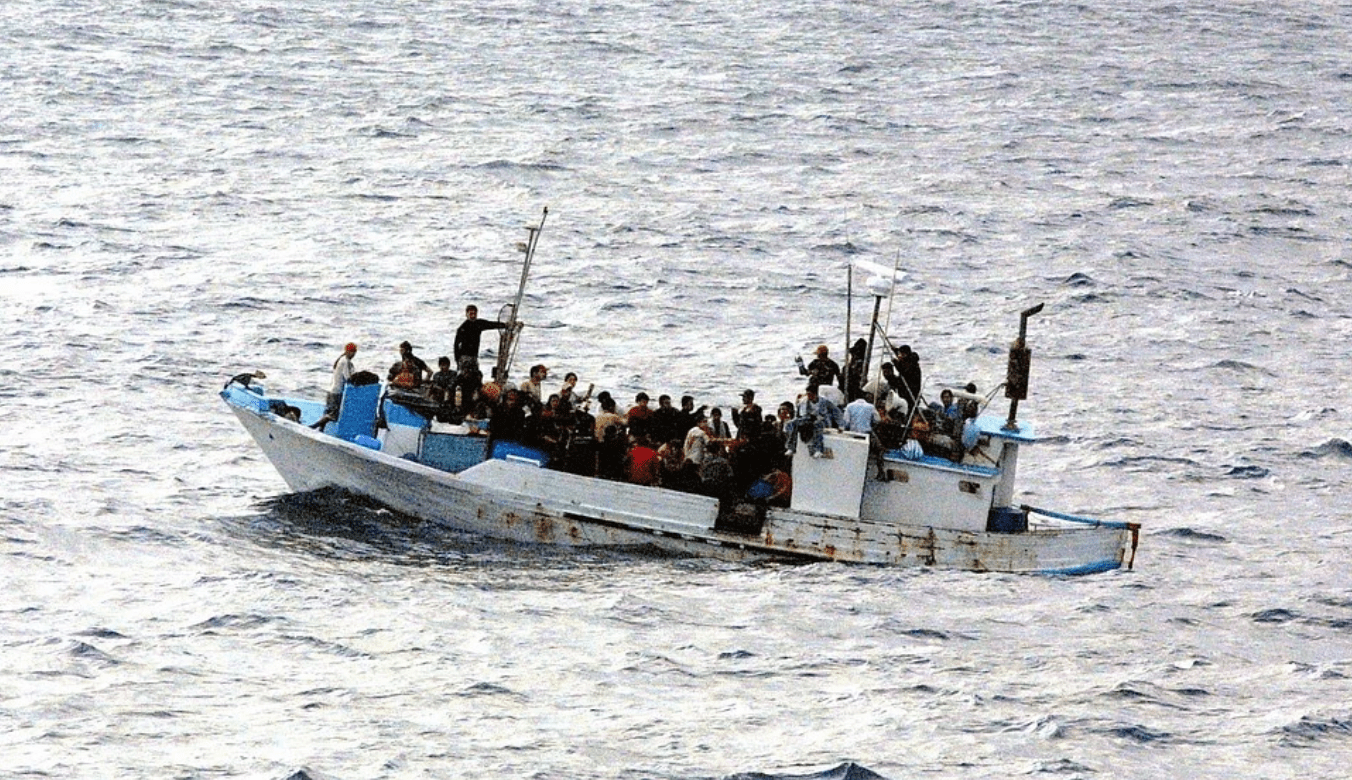
    Refugees are a core part of this, with thousands risking their lives to cross the Mediterranean every year, and some losing their lives in the fight to escape war. The policies of ‘Fortress Europe’ aim to keep people from nations specifically outside of this continent out, the very people who are affected by the planet’s destruction despite having the lowest carbon footprint. How do Ireland’s political parties hope to treat them?

    Sinn Féin, possibly writing the most intriguing manifesto in terms of economic promises, have claimed that they are against open borders, but also hope to end Direct Provision. What they would replace the system with, however, is a mystery. Should they find themselves in power, they intend to avoid a situation of mass climate-related migration – not solely for the difficulty it will pose to recipient nations, but because people deserve to live in their own nations and communities. Their stance certainly needs more explanation. 

    Mary Lou McDonald celebrates Sinn Féin victory. Photo: Instagram/africaworld_news

    People Before Profit and the Green Party have socialist and left-wing policies embedded in their manifestos, with PBP acting as fierce critics of imperialism and of tyranny abroad. References are also made to the UN Security Council seat Ireland is hoping to win, as well as US military presence in Shannon Airport. The party condemn the murderous regime of Bashar al-Assad – someone largely responsible for the flight of Syrians towards Europe

     The progressive stance of the Greens is reflected in their emphasis on freedom of movement, open borders and refugee housing, and they are highly aware of climate breakdown’s role in the displacement of innocent communities in developing countries.

    Labour’s political director Nat O’Connor has taken an arguably weak stance, admitting that Ireland is not playing the part of a wealthy country, accepting a low number of refugees, but “we can’t promise to do something that we cannot do”. Housing and health are first on the priority list for the party, which are worryingly diminished following the election.

    As the party competes for control of the Dáil, Fianna Fáil is proposing long overdue complete reform of the asylum system and to improve refugee accommodation. Their manifesto has figures and policies backed up by plans, which is a (welcome) change from some of the other vague manifestos. However, it could be all talk rather than action. Pledging to speed up the asylum process, they take a leaf out of the Greens book by promising an integration plan as well as allowing asylum seekers to access driving licences. 

    In 2015, the Fine Gael-led government pledged to take 4,000 programme refugees fleeing war-torn countries like Syria by the end of 2017. Even now, we’re still well short of that quota – having resettled only 3,206 such refugees. The government has faced fierce criticism over their handling of Direct Provision, with Fine Gael ministers exhibiting resistance to change. Former Minister for Justice Charlie Flanagan promised to improve the party’s numbers when it comes to refugee placements, but are they to be believed?

    Irish communities held protests last year nationwide, rejecting the possibility of new Direct Provision centres opening in their area. Migrants rights groups such as the Movement of Asylum Seekers of Ireland insisted that these protests were not to support asylum seekers, but were rooted in racial undertones “dressed up in human rights language”.

    “The Irish of #Fingal have voted once again for their own extinction,” O’Doherty posted on Twitter following the result.

    Interestingly, only 1 per cent of respondents cited immigration as a main voting concern of GE2020 in the Ipsos MRBI exit poll for The Irish Times/RTÉ/TG4/UCD. Within this umbrella topic, climate refugees, asylum seekers  as well as migrants are all grouped. 

    Desolate refugee camps. Photo: Pixabay

    There are important distinctions to be drawn between asylum seekers, migrants and refugees – but these terms often get mixed up in the course of public debate on what is a complex topic. The issue will only become more onerous as CO2 emissions cause further destruction in the Global South, South-East Asia, Australia, Canada and the US. 

    The movement of people has already led to dangerous, inhumane situations in the refugee camps of Libya and Greece, with the European Union recently rejecting a voting to ask members to step up search-and-rescue missions in the Mediterranean.

    An asylum seeker is someone seeking refugee status – but whose application has not yet been approved. In the meantime, as long as they’ve made an application for asylum to the country they’ve landed up in – usually on the basis they were forced to flee their home country – they are entitled to remain in the destination country while their request is being processed. If it’s ultimately approved, then they have permission to remain. If it’s rejected, then they’ll be deported. 

    Though some, who fail to qualify as refugees, are granted subsidiary protection to remain.  Migrants are not fleeing persecution; instead they choose to move country – often for economic reasons.  

    Those defined as refugees have been recognised as such under the 1951 Refugee Convention of the UN, while programme refugees have their claims formally assessed in refugee camps overseas – and are invited to the destination country under a resettlement programme.   

  • ‘Long past its sell by date and must be changed’; Fianna Fáil reveals radical plan to overhaul Direct Provision and make Ireland ‘more welcoming’ for refugees

    ‘Long past its sell by date and must be changed’; Fianna Fáil reveals radical plan to overhaul Direct Provision and make Ireland ‘more welcoming’ for refugees

    “It’s simply not on”, says FF Dáil hopeful.

    By Kim O’Leary

    Fianna Fáil is pledging to finally reform direct provision and create a “more welcoming Ireland” for refugees and asylum seekers. 

    And speaking to TheCity.ie, FF Dáil candidate Fiona O’Loughlin branded the current direct provision system ‘long past its sell by date”.

    In a radical pre-election policy promise as the party competes for control of the Dáil, FF is proposing long overdue complete reform of the asylum system and to improve refugee accommodation.

    Twitter/@unicefireland

    With just days until the voting public decides General Election 2020, FF is vowing in its manifesto to:

    • Provide €7million of increased resources for the hearing of asylum applicants and refugees to ensure the asylum process is speeded up.
    • Review the ‘National Standards for Accommodation’ every five years. 
    • Extend the remit of the Ombudsman so that he’ll have power to assess possible delays in processing applications for asylum.
    • Broaden the right of asylum seekers to work by reducing the waiting period from nine to six months.
    • Put in place a  €5million integration fund to help refugees and asylum seekers integrate themselves into local communities.
    • Enable asylum seekers to access driving licences.
    • Prioritise the use of Community Sponsorship Programmes as a way of housing and integrating refugees.

    In her interview with TheCity.ie, election hopeful Fiona O’Loughlin, who’s standing in South Kildare, said: “The need for change is paramount. 

    “Direct provision is an unnatural setting for refugees fleeing conflict and natural disasters. 

    “Living in direct provision significantly interferes with the right to have one’s private family life protected.”

    O’Loughlin has repeatedly raised her concerns over the current system in place for people living in direct provision centres around the country. 

    Twitter/@fionamackey

    She told us: “We must be innovative in the way we integrate people in direct provision into Irish society. 

    “We must be educating society on the reasons for direct provision centres and the reasons people are fleeing for a better life.”

    O’Loughlin went on: “The current system of direct provision centres was established 20 years ago on a temporary basis. 

    “It is now long past its sell by date and it must be changed to reflect the country we live in today.”

    The Dáil hopeful said asylum seekers in emergency accommodation – hundreds of which are children – are moved around “like cattle”.

    She said: “We are talking about men, women, boys and girls. 

    “There are children who need and want to live their lives with dignity and respect, to be able to dream and to have a far better quality of life than they currently have.

    “They reside in hotels and bed and breakfast accommodation where they can be shipped like cattle to alternative accommodation to make way for various events being held in the hotels. 

    “They grow up in bed and breakfast accommodation and hotels where they must adhere to curfews.

    “It’s simply not on.”

    O’Loughlin revealed she had visited two Co. Kildare centres, The Eyre Powell and the Hazel Hotel, to meet with residents. 

    “Most of them are frustrated – their drive deteriorates the longer they are in these centres,” she told TheCity.ie.

    She insisted that Fianna Fáil can bring about the changes needed. 

    “We have plans in place to help refugees and asylum seekers integrate and to apply for things like a driving licence. 

    “We hope that Ireland will become more appealing and equal to all,” O’Loughlin said.

    Her party’s manifesto states: “Our asylum system must reflect our values and our obligations to maintain the integrity of our borders.

    “The current direct provision system fails to do that and is alienating communities across the island.”

    In recent months, the Irish Refugee and Migrant Coalition – which represents 23 organisations – warned the State that 1.4 million people will need to be resettled globally in 2020.

    The organisation added that a “significantly enhanced and adequately resourced” programme was needed in Ireland. 

    It also said the Irish Navy has rescued 18,000 people in eleven missions in the past year, according to Nasc, which defends the rights of refugees and migrants.

    Fiona Finn, chief executive of Nasc, wants the political parties who form the next government to “follow through on their promises urgently” on refugees and asylum seekers. 

    She told TheCity.ie: “These people have been through hardship and they should not have to experience additional hardship in finding accommodation and jobs if they should wish.

    “The political parties who next form a government must follow through on their promises urgently. 

    “Over 900 people have drowned attempting to cross the Mediterranean this year alone. 

    “Ireland needs to step up and help.”