Tag: disability

  • Every Voice Counts – Disability and Democracy

    Every Voice Counts – Disability and Democracy

    Despite clear laws protecting their right to vote, citizens with intellectual disabilities still face real issues at the ballot box. 

    From confusing, and non-publicised information, to inaccessible polling places, it’s a quiet form of exclusion that is rarely spoken about. 

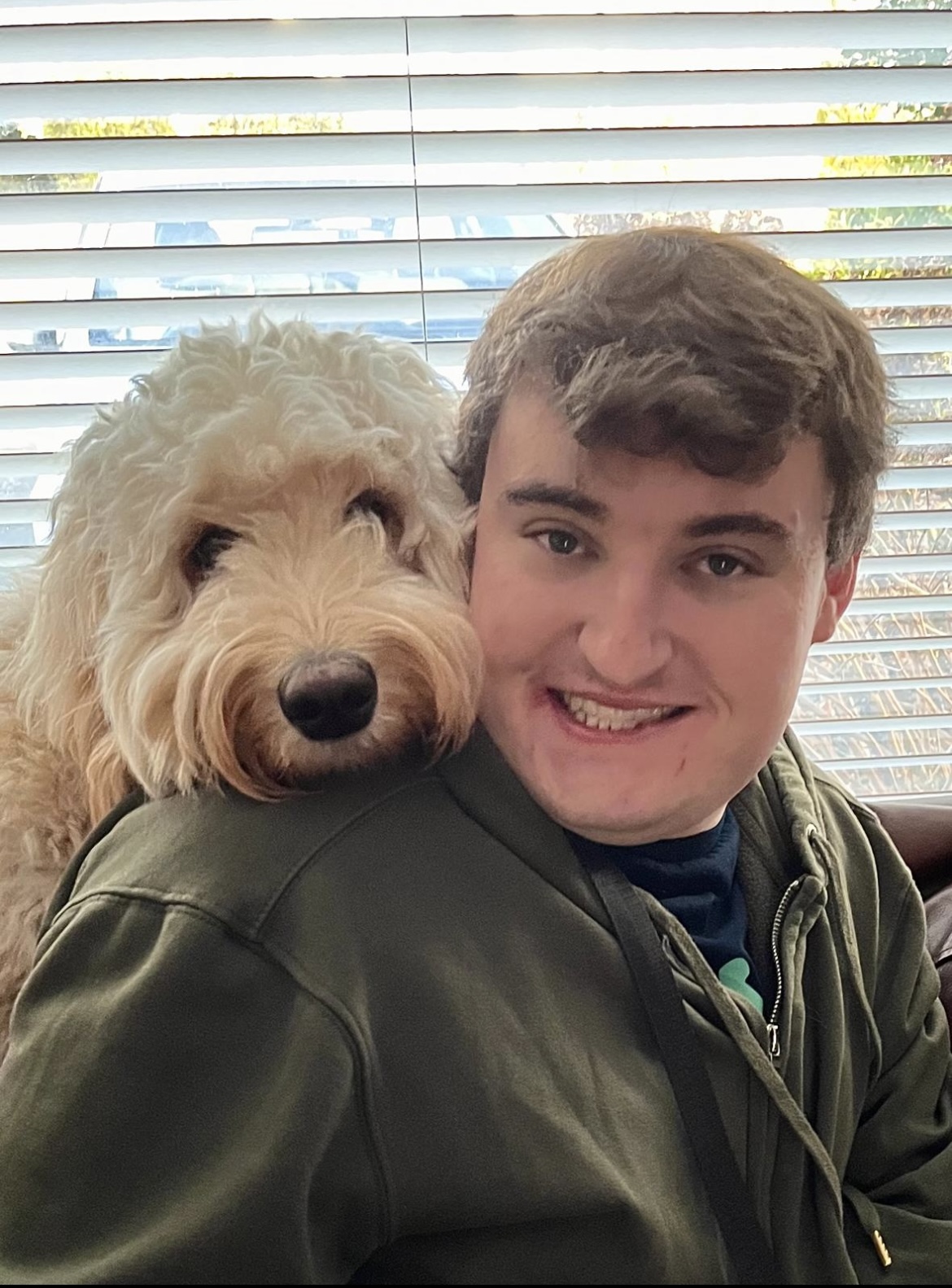
    Conor Barrett, from Leixlip, has a rare syndrome called ‘MYT1L’, which is a neurodevelopmental disorder.

    He voted for his first time in the local elections last year and is excited to cast his vote for the presidential election on Friday October 24th

    For most of us, marking an X on a ballot paper is a given and could be taken for granted. 

    But for Conor, who has an intellectual disability, it’s a moment that represents visibility, independence, and equality. 

    Conor with his beloved goldendoodle, Sally. Photo courtesy of Una Barrett. 

    The 27-year-old attends a day service called Stewarts and loves it, partaking in swimming there. 

    He recently was chosen for swimming in the Irish Special Olympics next year and won an award for volunteering at the Arts Club in Leixlip. 

    Conor thinks it is extremely important to vote and has said, “I’m voting for Catherine Connolly because I love her, I’ve watched her talking on TV.” 

    With a love for following all current affairs, watching and listening to the news, keeping updated via Instagram and having his mother, Una, read him their local newspaper, ‘The Liffey Champion’, weekly, why wouldn’t he be able to vote? 

    Conor after winning an award in Leixlip Arts Club. Photo courtesy of Una Barrett. 

    Conor’s mum, Una Barrett, has shared, “It’s absolutely his right as a citizen to vote, he has the capacity to also. When people with special needs vote, I feel it shows they have a voice, and it gives them confidence.” 

    Una has also said how she never knew Conor could vote until just last year, despite him being eligible since he was 18 years of age. Una expressed how it was never said or told to their family and is calling for it to be publicised more. 

    Another mother from Kildare, who wishes to remain anonymous, has a son with a severe to profound intellectual disability also did not know that her son had the right to vote and he missed his first referendum. 

    No matter what disability, physical or intellectual, mild or profound, every single citizen of Ireland over the age of 18 has the right for their voice to be heard through their vote. 

    This right isn’t just an idea, it is protected by the law. 

    In 2018, Ireland signed the United Nations Convention on the Rights of Persons with Disabilities (UNCRPD).  

    By signing it, the State promised to make sure that people with disabilities can “vote and be elected on an equal basis with others.” 

    The Oireachtas Joint Committee on Disability Matters has made it clear that “Ireland legally upholds the right to vote for all persons with disabilities, without restrictions.” 

    This means that if someone can’t get to a polling station because of a disability, such as those living in residential care or nursing homes, can apply for a postal or special vote.  

    If they need help marking their ballot, they can ask a companion or a carer to enable them to vote. 

    The Electoral Commission also says polling stations must be accessible, and extra supports are available to make sure everyone can cast their vote. 

    Disability should never stand in the way of democracy, the challenge now is to make sure that these rights work in reality, as well as on paper. 

    Parents and carers in Ireland are demanding for this information to be publicly known, so their family members don’t miss out on a single election or referendum from the day they turn 18. 

  • A different challenge: how people with disabilities cope with the pandemic

    A different challenge: how people with disabilities cope with the pandemic

    People living with disabilities face challenges on a daily basis and with the current global pandemic they have been tested once more as we all adapt to a new way of living. Last Thursday marked International Day of Persons with Disabilities and Ciaron Noble spoke with Enable Ireland service users about some of the new ways the service has provided support to them.

    Picture from Pixabay.

    Enable Ireland is considered to be an essential service, but a lot of their day centre supports and activities have had to be moved online. These support systems are vital to the service users as they create a safe and happy environment for the users to take part in fun activities such as fun games, Yoga, Zumba and Bingo along with many other exciting and fun activities, all while socialising online with their friends.  Their routine wasn’t disrupted, as the new online service got up and running, proving to be a great success. 

    The virtual service has connected people from all the different Enable Ireland branches around the country from Dublin as far as Kerry and Cork. “Through the virtual service, we’re meeting people, we’ve never met before, making new friends and staying in contact with our other friends at the same time,” said Padhraic Dormer, an enthusiastic virtual participant.

    For many the virtual sessions have been really positive for what has been some very difficult times for everyone. By all accounts it seems like the online service has been a great success and a new way forward for the future. Jason O’Reilly and Sean Hall both work within the organisation, helping facilitate this online service, but they both wanted to emphasise the collective effort made by their staff and service users throughout the whole process. Sharon Byrne, who attends the virtual service, was given a special mention. “She’s been leading activities, creating activities and being our IT expert and helping people with some of their technical difficulties,” they said, highlighting the supportive network that has been created for all. 

    There’s often a stigma about people with disabilities about what they should and shouldn’t do, however for people with disabilities it’s more about the adaptations they need to make, to enable them in doing what they want. The Enable Ireland centres are there to provide a platform to help people do what they want, in a safe environment and to have a support system in place to help them achieve their goals, without making them feel any different. “You don’t feel like you have a disability when you’re with Enable, there’s no them and us, we’re all one,” emphasised Laura Dempsey, a service user and music lover.

    Dormer, Byrne and Dempsey have not let their disability stop them from following their passions. Pre-Covid, Dormer was jumping out of planes, living for adventure with his dare-devil nature. Byrne was central to her local boxing club, setting up the ropes, setting up the pads and helping run the whole show every Tuesday and Thursday night. Dempsey has been very proactive during lockdown, writing a book and focusing on her music with plans of getting her songs on Spotify in the near future. There’s no doubt that all three are very passionate and living life to the full is their complete intention.

    The trio are a confident bunch who have also become great ambassadors both for Enable Ireland and people with disabilities. This was evident throughout last week as they participated in many virtual events, promoting awareness for International Day of Persons with Disabilities, they spoke at a couple of conventions including one half way across the world in Qatar, in front of more than 150 people throughout the week. As a group this demonstrates one of their many talents as it’s a real skill to have the ability and confidence to present to that many people. “We’re used to doing it and it doesn’t faze us,” said Dormer.

    Dormer is always happy, outgoing and reliable, Byrne is hard-working and Dempsey has a love and talent for music, these are all human qualities that anybody can have. People with disabilities often don’t see themselves as different to anybody else, they just see their difficulties as different to the ones able-bodied people might face. Everybody goes through struggles throughout their life whether they’re big, small, physical or mental, our struggles and strengths are all different, but when Demspey was describing the relationship between the staff and the service users, she said: “there’s no such thing as them and us, we’re just one” and that’s something we should all think in life. 

  • How technology has kept Enable Ireland going during the Covid-19 pandemic

    How technology has kept Enable Ireland going during the Covid-19 pandemic

    The City’s Ciaron Noble spoke with Enable Ireland representative Donal Kitt about the role technology has played in helping them keep the services up and running for their service users during the pandemic.

  • Watch: Sport and COVID-19 – Disability activist Oisin Putt on life without wheelchair basketball and the influence of his coach

    Watch: Sport and COVID-19 – Disability activist Oisin Putt on life without wheelchair basketball and the influence of his coach

    With the coronavirus pandemic still ongoing, Ireland is still trying to find a way of coping with the lockdown restrictions as well as harnessing anxieties about our loved ones. The absence of sport and leisure in our lives has not gone unnoticed, but missing out on group physical activity can be especially hard for those with disabilities in the country.

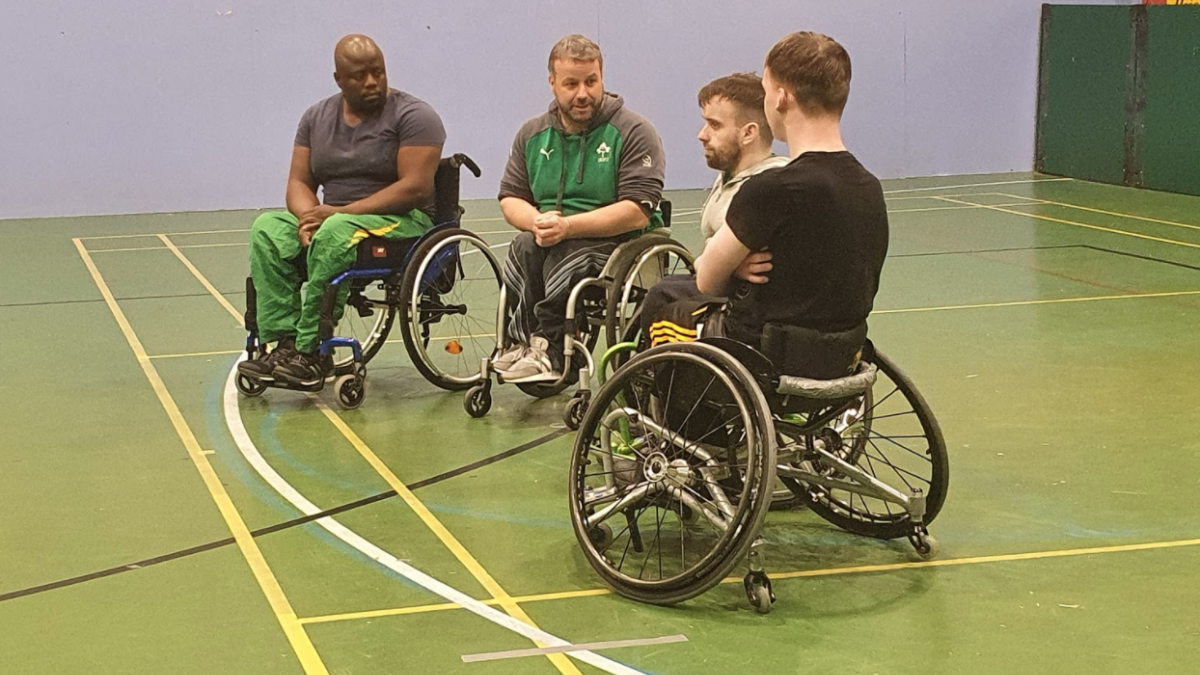
    We decided to spend some time with the Ballybrack Bulls – Loughlinstown’s wheelchair basketball club, with the Irish Wheelchair Association‘s experienced Mark Barry as their coach. The Bulls are full of competitive spirit, and the emphasis is most certainly on doing their local community proud – with Barry’s help.

    After participating in the 1992 Barcelona Paralympics, the coach has more than enough skill to help the teams progress through the Irish Wheelchair Basketball League, but his input is about more than just winning games and scoring baskets. For the players, the social aspect, the independence and the positive boost on mental health are an imperative part of the sport.

    Oisin Putt, the 17-year-old wheelchair athlete and disability rights advocate, speaks to Kate Brayden about how he has coped without wheelchair basketball in his life as a result of COVID-19, which has halted all gym and sporting activities. With the Paralympics as his ultimate goal, Putt hopes to return to training as soon as possible. Putt and Barry go back years, with the coach inspiring the teenager to pursue his sport with passion.

    “He’s a stellar basketball player – I wouldn’t want any other coach.”

  • Parking in disabled spaces: 361 cars clamped in Dublin

    Parking in disabled spaces: 361 cars clamped in Dublin

    By Ana Novais

    In 2018, there was a rise in the fixed charge for drivers who park in a disabled zone without a licence, from €80 to €150. However, that still hasn’t stopped people from using these spaces illegally.

    The number of vehicles that were clamped for not displaying a disability badge while parked in disabled parking bays during the period January to November 2019 is 361, according to information obtained from Dublin City Council under the Freedom of Information Act.

     Bernard Mulvany and Seán O’Kelly.
    Photo Credit: Ana Novais

    Speaking to TheCity.ie, Mick Keegan, Chair ofLabour Disability Ireland said: “It’s great that they are clamping cars for parking in disabled space. People with disabilities need those spaces.”

    Wheelchair user and disability activist Sean O’Kelly (26) from Dalkey, said: “I feel there should be strict regulations regarding the misuse of parked cars in disabled spaces.”

    “To all of you reading this, put yourself in my shoes. Think again before parking in a disabled space either in private or public grounds”

    However, clamping vehicles doesn’t solve this ongoing issue for Sean, as he finds it causes more problems for those with legitimate blue badges who are genuinely looking for a disabled parking space.

    “To all of you reading this, put yourself in my shoes. Think again before parking in a disabled space either in private or public grounds,” he said.

    The parking card scheme is run by the Irish Wheelchair Association and the Disabled Drivers Association. Cards are issued to those who meet the medical eligibility criteria.

    Elaine J Richardson, volunteer at Spinal Injuries Ireland said: “The only people who should park in disabled parking spaces are those who hold a blue badge. Disabilities are different – no two people have the same disability.

    She continued that people who use the spaces to “pop into the shop or post office” need to be publicly shamed: “It’s gone too far with just a fine or some points on their licence. Enough is enough.”

  • Disability services remain an issue

    Disability services remain an issue

    Trinity College has records of two complaints made in relation to disability access during 2017 while other colleges and Dublin County Council said they had no records of any complaints made.

    Under the Freedom of Information Act 2014, records with “information pertaining to the amount of complaints (including the nature of the complaint) about disability access across the city/campus for the years of 2017 to present,” were requested from Trinity College Dublin, DCU, UCD, Dublin Institute of Technology, IT Tallaght and Dublin County Council (DCC).

    However, only Trinity held any records of complaints in relation to the FOI request. The rest invoked section 15 (1) of the FOI act: “The record concerned does not exist or cannot be found after all reasonable steps to ascertain its whereabouts have been taken.”

    Wheelchair users experience trouble across Dublin where some buildings are listed, and therefore have not been modernised to include a ramp or elevator.

    “That’s the excuse I’ve been given before, oh we can’t make it accessible because it’s a listed building in terms of making it accessible by lift or anything like that,” said James Cawley, a wheelchair user and the policy officer at the Independent Living Movement Ireland.

    2017 saw the launch of the National Disability Strategy Inclusion Plan where the government will focus on:

    • Equality and Choice 
    • Joined up policies and public services 
    • Education 
    • Employment 
    • Health and Well-being 
    • Person centred disability services 
    • Living in the Community; and 
    • Transport and access 

    In a recent report, published by the Irish Human Rights and Equality Commission (IHREC) and the Economic and Social Research Institute (ESRI) it was found that people with disability face the most amount of discrimination and inequality in terms of housing.

    Some of the findings show that people with a disability can experience higher housing and environmental deprivation and are more likely to live in over-crowded conditions. They are also more than twice as likely to report discrimination in relation to access to housing and more likely to live in an area with environmental problems.

    #HackAccessDublin was set up in partnership with Google to try and raise awareness of disability access problems across the city of Dublin and to help modernise buildings that are difficult to access.

    The initiative sees professionals from the communities of service design, engineering, technology and design working alongside professionals from disability community organisations like the National Disability Authority and The Rehab Group to try and come up with modern and effective solutions.

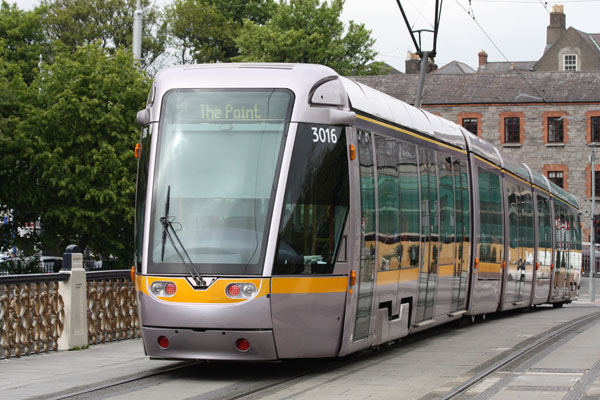
    TheCity.ie also revealed this year that elevators at Luas stops were out of use for the equivalent of 82 days over the past two years, leaving wheelchair users and others with disabilities unable to easily access the stops. Dundrum has been out of use for the combined time of 1,966 hours since 2016.

    When making a complaint about disability access, the Ombudsman is the best place to start, making sure to refer to the Disability Act 2005.

    “What I’ve found is that when I went to do it in the right form, through emails, where there is a paper trail,” Mr Cawley said.

    He recently had an incident at a hotel where he was soaked through trying to reach the hand drier that was placed above the hand basin. According to Mr Cawley, after he emailed, complaining, they offered him a complimentary night’s stay and changed the layout of the bathroom.  

    However, Mr Cawley said this level of attention isn’t the normal response to complaints.

  • Luas platforms left inaccessible for disabled commuters for more than a 1,000 hours

    Luas platforms left inaccessible for disabled commuters for more than a 1,000 hours

    Luas elevators have been out of order for the equivalent of up to 82 days in the last two years.  Lifts at the Dundrum stop have been out of service for a combined time of 1,966 hours since 2016, according to data obtained through the Freedom of Information Act.

    Three out of the eight stops were out of order for the equivalent of a month or more from 2016 to 2018.

    The Phibsborough stop which opened last December as part of the new Cross City service has been broken down for the equivalent of 17 days.

    Dervla Brophy, a spokesperson for the Luas, said: “All the lifts on the system are checked daily … regrettably lifts do break down and one of the main reasons is vandalism … there is currently a case before the court in relation to vandalism.”

    In cases when an elevator is out of service the Luas will recommend that members of the public who require the lifts use the next accessible stop. In the most extreme circumstances this could lead to individuals having to travel 2.1 kilometres between Cabra and Broombridge and vice versa.

    James Cawley, the policy officer for the Independent Living Movement Ireland (ILMI) understands personally the setbacks out of order lifts can have on people with disabilities.

    “When elevators are out of service this makes the transport system inaccessible immediately [for people with disabilities],” Mr Cawley said. “In instances where this occurs over a long period of time it can contribute to social isolation within the disabled community,” he continued.

    Cawley voiced ILMI’s concern on the measurements being taken by the Luas transport system to maintain a reliable service for those dependent on the lifts. “It is important that we just don’t focus on the repairing of these elevators but what could be done to prevent [vandalism] happening on a regular basis?”

    According to the ILMI, disabled people are significantly more likely to be at high risk of social isolation. The research, carried out by the National Disability Authority, found that 32% of disabled people are at risk of being socially isolated.

  • Dublin Climbing Centre: scaling high and setting the bar in the launch of accessibility week.

    Dublin Climbing Centre: scaling high and setting the bar in the launch of accessibility week.

    Rock-climbing and mountain scaling are hobbies most people find themselves intimidated by, even as an indoor sport. So few of us actively take an interest in pursuing such an activity that it’s all the more encouraging to see children and adults with intellectual and physical disabilities take full participation in these ostensibly daunting pursuits.

    This is what Dublin Climbing Centre in Tallaght sets out to accomplish as part of accessibility week. Opening their doors to fully facilitate those with special needs, the staff of the climbing centre displayed their attentive nature to all who entered, strapping each attendee in for their first taste of indoor climbing as they scale the intimidating heights.

    Centre Manager Conor O’Connor explained how the centre had just celebrated its first birthday. “We’re open a year as of the 26th of November, for the kids there was a celebration, a kid’s competition which they really enjoyed, it was a bouldering competition whereby they each got three attempts on each route where they’d score based upon their success.”

    The climbing centre has had huge interest among children since its opening and this has certainly shone through during its launch in accessibility week. Each member of staff is highly experienced in mountaineering and as a result are very patient and accommodating to all the families and school groups that enter, something Conor says has been very rewarding.

    As for those with special needs, the staff have made sure to have their own strategies of assisting with each need as it arises, including the blind, and hard of hearing. “A good example is for the hard of hearing, where we’d do a demonstration first and then give our instructions out which would then be translated by the accompanying interpreter,” said Mr O’Connor.

    “Demonstrations are always important, particularly on the way down a wall. That’s the difficult part because a lot of people would be uncomfortable with that, once they understand everything, getting to the top is just a matter of their own confidence and that grows as they attempt it.”

    Mr O’Connor spoke enthusiastically about the performance of the groups that had entered the centre throughout the day, noting their persistence was key to their success in scaling the routes.

    “We were delighted to take part in accessibility week, we have the staff trained in all aspects of climbing skills. Last February, we had Paul Kelliher from Mountaineering Ireland who is the abilities trainer who trained up the staff on all the rope skills that you see today.

    “It was great for us, we get a lot out of it. The thing about climbing is that [it is] as difficult for everybody on their first route as it is for a climber to climb the next level up on their own technical ability. Admiration for all climbers at every level is needed to be always there.”

    With several groups coming in and out throughout the day, the two children that had made the biggest impressions were Jacob Keenan and Daphne Mancosu. Jacob, aged 8, needs to use a frame when walking on his own, however, he soon found himself free of this restriction when strapped into his harness and free to scale the walls accompanied by a member of staff.

    Daphne, 14, who had been diagnosed with a degenerative condition, is wheelchair bound and has minimum use of her arms and legs. Her love for climbing however, has kept her coming back to Dublin Climbing Centre. Like Jacob, there is little that can stop Daphne from reaching the top of not just one, but several of the walls given the time and assistance.

    “When we first met Daphne, she was with a party of kids, and she was basically the child who hadn’t come in to climb as you could say. We had done classes where we had upskilled to help those of all abilities and so myself and Josie told her, ‘come on, we’ll take you climbing!’

    “She wanted to go, she’d seen everyone else, had a go and finished her route. Afterwards, she’d had a break because she was tired but seeing the other kids continue, she said ‘I’d like to try another route’ and she went this time for the hard route that the kids had climbed, and she got to the top. She’s determined and loved it, as we say here it’s for everyone. She does the work in the end, we don’t do any of the work!”

    By the end of the day, both Jacob and Daphne were hoisted up into a seat designed to keep any individual secure. One at a time each of the children was hoisted up along the archway and swung back and forth much to the delight of both children and their parents, visibly delighted as their kids were being given the same chance to enjoy the centre’s facilities as much as every other adult and child.

    Mr O’Connor mentioned another girl with a similar condition to Daphne’s. He said: “We had one girl named Shirley earlier today who was much the same as Daphne except she only had minor strength in her legs. She was about 20 minutes and she got up the route, and fair play to her she stuck at it. We had her climb on a fixed colour of the climbing rocks, once she’d had the colour in mind it was easier for her to go on the colour and work her own way up to the top.”

    Conor is brightly optimistic for the future of Dublin Climbing Centre, assuring that it also has relaxing effects for people who may suffer from stress and negative environment in their daily lives.  “We’d like to see more families come in and we’re successful there, we’ve got parents coming in with their kids all the time. It’s quite a social interaction, sometimes you have people, both adults and children whose environment might be unfair to them, they could be angry people, but when they come in here it’s a completely level playing field.

    “They relax, they’re complimented by their peers and they realise that the only person they’re competing against is themselves. And they challenge themselves beyond their comfort zones. There’s a balancing effect to rock-climbing that I think is very helpful for a lot of people.”

    By Henry Phipps