Tag: Dog

  • Ireland Implements first stage of XL Bully ban: Key changes starting from October 1st

    Ireland Implements first stage of XL Bully ban: Key changes starting from October 1st

    Ireland has officially implemented a ban on XL Bully dogs, which came into effect on October 1st, 2024. The ban was introduced by Minister for Rural and Community Development Heather Humphreys in response to a series of high-profile attacks involving the breed. 

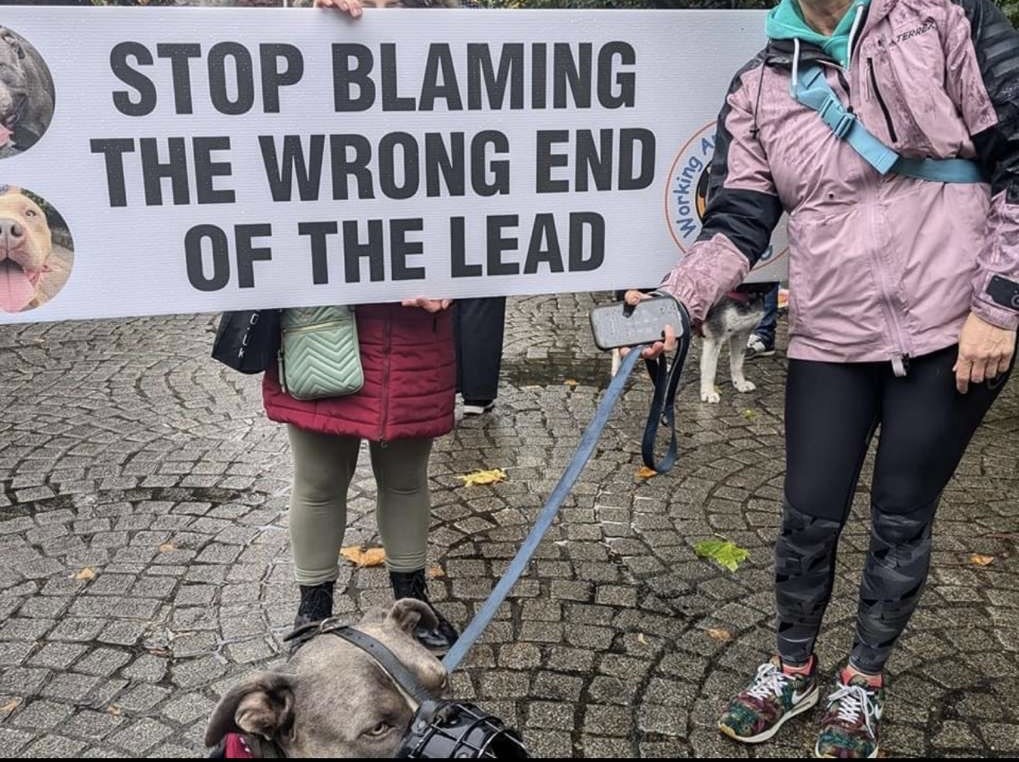
      Banners at XL Bully ban protest. Photo by Sandra Dudkiewicz 

    The ban will be enforced in two phases. As of October 1, 2024, it is illegal to import, breed, sell, or rehome XL Bully dogs. From February 1, 2025, it will also become illegal to own an XL Bully unless the owner has obtained a ‘Certificate of Exemption’. 

    This certificate will allow owners to keep their current XL Bully dogs, provided they meet certain criteria such as licensing, neutering, and microchipping the animal. 

    A deadline of February 2025 has been set for animal welfare groups and shelters to rehome or export XL Bullies already in their care. 

    The decision has generated debate, with some supporting the move as a necessary measure for public safety, while others, including animal rights groups, express concerns about the future of these dogs and the impact on shelters 

    A joint statement published by Dogs Trust Ireland, Irish Blue Cross, MADRA, and the ISPCA states that they will continue to urge the government to prioritize enforcing and adequately funding existing laws that address the root causes of dog aggression across all breeds and types of dogs. 

    This includes cracking down on unscrupulous breeders who prioritize profit over dog welfare and public safety, penalizing irresponsible owners of dangerously out-of-control dogs, and educating and empowering responsible dog owners. 

    “While we are disappointed with the approach the government is taking, we remain committed to continuing our work to advocate and ensure that the welfare of all dogs is protected,” the statement said. 

    Sister of Nicole Morey who was tragically killed by an XL Bully earlier in June this year spoke to RTE news and expressed that the ban is not enough and fears that there will be more accidents linked to the breed. 

    “I think there should be a stricter law brought in. They’re dangerous dogs. They’re not small little puppies. They’re not dogs that you could just mess around with. They can just switch in two seconds,” she said. 

    Earlier in September almost 200 people attended a protest at Stephans Green in Dublin following the news of the new regulations related to the breed. 

    XL Bully owner and attendee Wiktoria Kumorek spoke to The City. “It truly breaks my heart it is unfair that these dogs are being judged solely on their appearance. My dog is gentle, and affectionate and with proper training and care, they are no more dangerous than any other large dogs.” 

    “The problem is not the breed, it is irresponsible ownership just like with any other dog or animal,” she added. 

    XL Bully ban protests in September in Trinty Point. Photo by Sandra Dudkiewicz 

  • Dogs for the Disabled

    Dogs for the Disabled

    Anne Stewart writing for thecity.ie travelled to Blarney, Co. Cork, where she met Jennifer Dowler, CEO of Irish Dogs for the Disabled.

    Everyone knows dogs are man’s best friend, but some dogs are much more than that. Irish Dogs for the Disabled places trained dogs with adults and children with disabilities.

    Irish Dogs for the Disabled, Blarney, Co. Cork - Image by Anne Stewart
    Irish Dogs for the Disabled, Blarney, Co. Cork – Image by Anne Stewart

    As we pulled in, Jennifer Dowler and Fleur opened the door to us and we began to chat over tea in a large country kitchen. Fleur, an 18-month old golden retriever, is full of fun and mischievous to boot; she could easily be mistaken for a normal dog, and she is, but with special skills.

    Jennifer has more than 20 years experience training dogs for the disabled. She breeds all her own bitches, stud dogs and puppies, and stresses how important it is for the dogs to be healthy and to come from a perfect blood line.

    “We don’t have health problems with our dogs and we don’t touch anything unless they are in perfect health. If you have one puppy in a litter with cancer, then it will keep coming [back] in the lines. We are very strict about what we will or will not breed,” said Jennifer.

    She explained it was a two-year process to make sure the dog has perfect shoulders, perfect skin, perfect temperament, everything perfect. “We spend thousands on our breeding stock and we don’t get any support from the government. We raise all the money ourselves.”

    I asked Jennifer to explain how a new-born puppy becomes an assistance dog. “From 0-12 weeks is the most critical time in a pup’s life and from birth we start socialising them, de-sensitising them and handling them.

    “When the pups are 8 or 9 weeks old, we place them with volunteer families for about 18 months and they rear the dog and continue with the socialisation process. The dogs then come back to Irish Dogs for the Disabled, where they are assessed on their personality type and matched up with a person on our waiting list.”

    Jennifer Dowler, CEO of Irish Dogs for the Disabled with Fleur, an 18-month old golden retriever with special skills - Image by Anne Stewart
    Jennifer Dowler, CEO of Irish Dogs for the Disabled with Fleur, an 18-month old golden retriever with special skills – Image by Anne Stewart

    Fleur is the next dog out – she is going to Luke, an 8-year old boy with profound cerebral palsy; Fleur and Luke have already met and according to Luke’s mother, “Fleur is cheeky, playful, bright and loveable, and you could just as easily be describing Luke”.

    “Fleur has been clicker-trained to engage with Luke’s physiotherapy”, said Jennifer. “We train her to touch him in different parts of his body and then he has to move that part of his body. Fleur will crawl and roll over and this will encourage Luke to imitate her and crawl alongside her.”

    Fleur is into playing and she is loving and gentle. She will curl right into Luke, as he can’t curl into her or hug her. Each dog has their own strengths and weaknesses.

    “The final step is to train Luke to interact with Fleur and to encourage him to practise physiotherapy himself in a practical and fun way. If you ask a child to do something, they are more likely to do it with a dog, as it is often painful, uncomfortable and stressful”, said Jennifer.

    Dogs for the Disabled is accredited by Assistance Dogs International. Golden retrievers are best for children and more work-orientated dogs, such as labradors, for adults. Labradoodles are ideal for children with a tracheostomy, as they don’t shed hair.

    Jennifer places 85% of her assistance dogs with children aged 6-12 years old. She trains 20 dogs every year at a cost of €15,000 per dog. There is a 5-year waiting list for these dogs.

    Dogs trained for adults are taught to push alarm buttons, open doors, send for help, retrieve a phone and fetch a blanket. Physical disabilities include spina bifida, cerebral palsy, duchenne and muscular dystrophy.