
Tag: Donegal

  • ID service users and workers continue to  compromise, awaiting clarity on re-opening

    ID service users and workers continue to compromise, awaiting clarity on re-opening

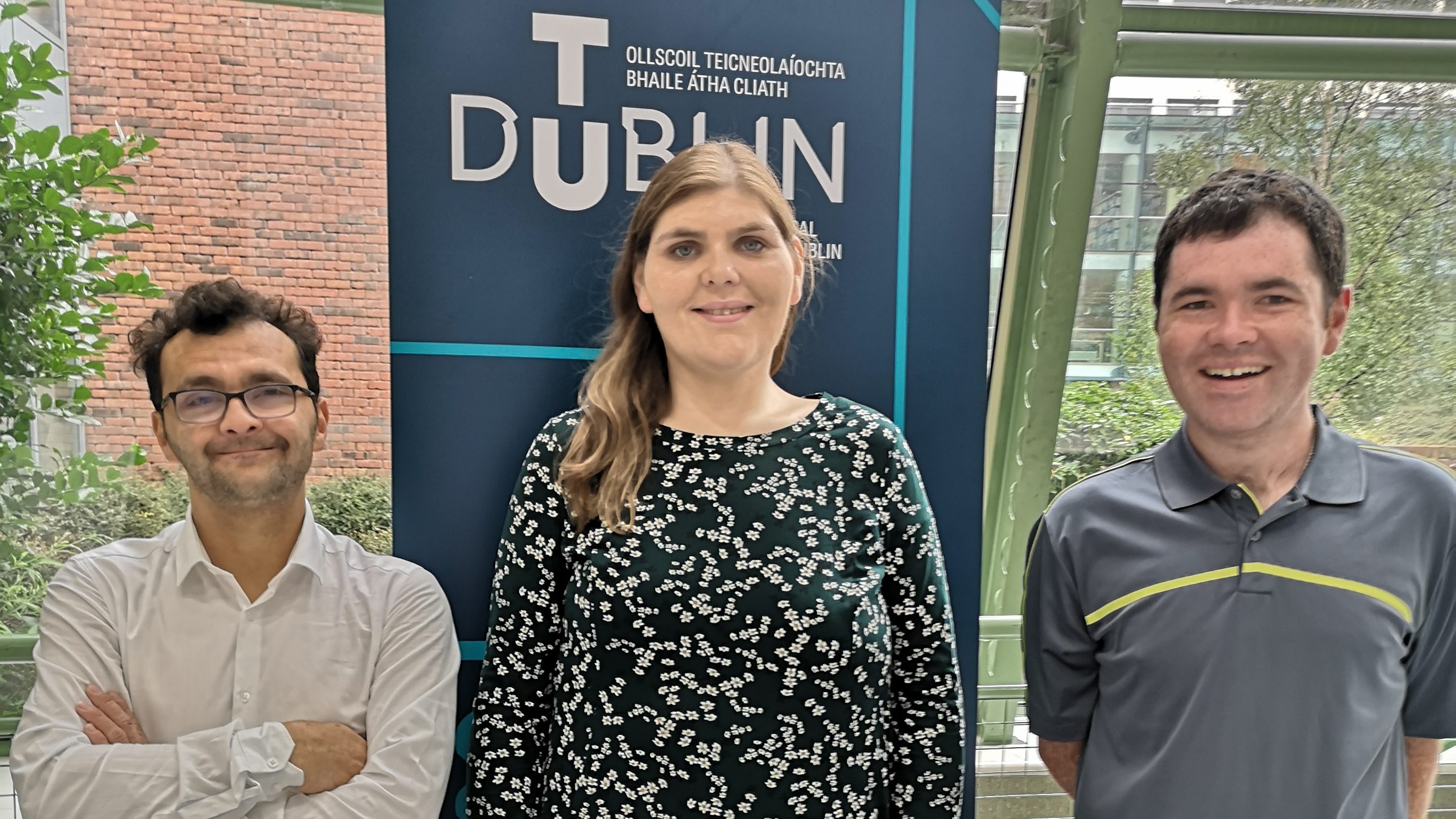
    Tomás Murphy, Margaret Turley, and Chris Byrne spoke to several adults with intellectual disabilities to research the impact of Covid-19 on their lives. Photo courtesy of Harry Browne

    As special schools across the country begin to reopen, many people are still calling for clarification on the status of respite and adult day centres. 

    This comes just a week after 18 new cases were reported in centres for people with disabilities.

    The HSE funds almost 1,000 locations across Ireland, catering to around 19,000 adults with disabilities. 

    Organisations such as CI Dawn in Co Donegal provide day services to adults with mild to moderate intellectual disabilities, and aid young adults in the transition from school to day centres. Service users can choose from up to 30 modules provided by the centre, ranging from art and music to travel training. 

    Dean Larkin from the CI Dawn says that the focus is on community inclusion:  “That’s what we’re here for. We’re out and about a lot, we’ve got work experience. A few of the service users go out on work experience so some of them are maybe in shops, or one person works in a garage. It’s really about providing opportunities for everyone.”

    After initially closing at the beginning of the pandemic, day services throughout Ireland eventually resumed in August 2020, operating at approximately 38% capacity. 

    On 11 November 2020, Minister of State at the Department of Health, Deputy Anne Rabbitte, stated that the objective was to have day services operating at a minimum of 50% capacity.

    At the CI Dawn, there are just two service users out of eight attending the centre at the moment.

    “You’re still keeping in contact with the families and the service users just so they know you’re still there if they need anything”

    Dean Larkin

    A survey conducted by Inclusion Ireland found that only 20% of adults with intellectual disabilities reported feeling happy to stay at home, and many mentioned missing the support from staff at the centres.

    One of the main difficulties, says Larkin, is the closure of many other services in the community:

    “Normally on a Tuesday we would have gone to the gym, Wednesday would have been the swimming pool, on a Thursday we’re doing Discover Donegal. So you’re out and about a lot. But obviously everywhere is closed at the minute, and you don’t want to be in contact with other people, so if service users are in, you’re just limited with what’s happening.”

    A report on the experiences of adults with intellectual disabilities during the pandemic – which was conducted and written by people with intellectual disabilities – highlighted some of the difficulties faced:

    “It was mayhem. We couldn’t get back at all with this Covid-19. I was very panicky, annoyed, upset, anxious – can’t see staff, can’t see friends. It’s lonely, and scary, and worried. I miss my friends, I miss my family, I miss my loved ones.” Said Gary McCabe, a participant in the report.

    There was a general consensus among the participants that the boredom and social isolation was one of the worst aspects of lockdown, and most were eager to return to work or day service.

    “It’s kind of sad not having a reason to get up in the morning, waiting for the bus to come and take us to day service.” Said Peggy McDonnell, another participant.

    Report on the impact of Covid-19 on people with intellectual disabilities in Ireland by TU Dublin

    For people with intellectual disabilities, the uncertainty of lockdown can be quite challenging, and the survey by Inclusion Ireland found that loneliness was a “significant issue” for 56% of respondents.

    To help combat this, many centres are reaching out to service users over the phone and online.

    “We provide an outreach programme. So for service users at home, we send out a pack every two weeks. You’re still keeping in contact with the families and the service users just so they know you’re still there if they need anything. We also call every week to chat to the service users if they want to talk,” says Larkin.

    The centre has also been utilising Facebook, going live and posting interactive videos such as quizzes, live music and even classes like yoga and gymnastics.

    “There’s been no respite at all. Day centres can do bits and pieces online but it’s still not the same”

    Paul Kelly

    Larkin says that the response to the online presence has been positive and one benefit is that the videos are saved to the page so people can watch them in their own time.

    However, for many people with intellectual disabilities, online communication and learning on its own is not a viable long-term solution, and for these people it is important that they are able to access the services they require safely and regularly. 

    Drumboe Respite House in Co Donegal allows people to stay over and go for trips to the cinema, shops, and restaurants. 

    Due to the nature of the service they provide, they are not able to work online and have been closed since the pandemic began, says Paul Kelly, a nurse at the respite house.

    “There’s been no respite at all. Day centres can do bits and pieces online but it’s still not the same. They’re just on a screen all day and when they’ve been doing it for years, they have a routine of getting the bus in. Maybe meeting the busman and going to the shops and meeting other people. Now they’re just at home on a screen and they might find it hard to understand that,” says Kelly.

    With the Covid-19 vaccine being administered to more and more people, disability workers are hopeful that this will speed up the safe reopening of disability services.

    “We’re hoping that both the staff and service users will be vaccinated soon and then it’s just totally up to the service users and their families when they want to come back in. There’s no pressure because their spot is always going to be here,” says Dean Larkin.
  • Beanantees: The apparel brand empowering Wild Irish Women

    Beanantees: The apparel brand empowering Wild Irish Women

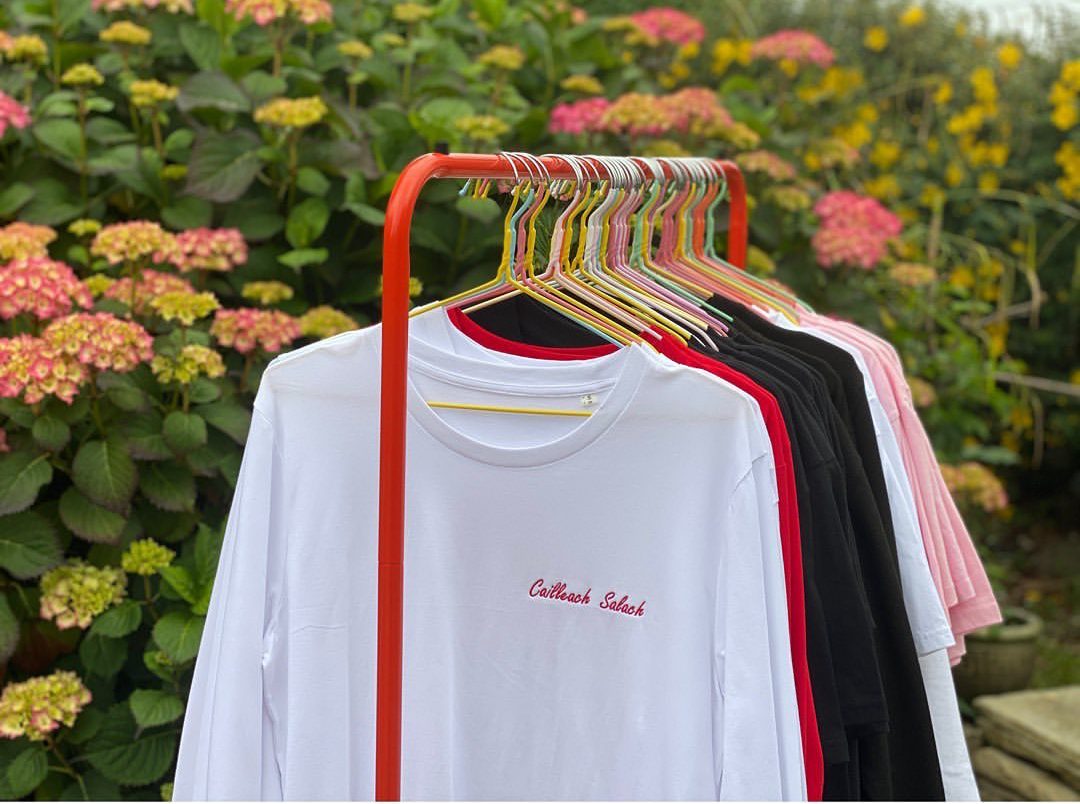
    Beanantees was created by two gals from the hills of Donegal,  Lana McGhee and Ciara Gallagher. McGhee had experience in marketing and Gallagher’s creativity stemmed from her background in fashion and design. Roise Collins chatted with the women about their brand and how it came about.

    Image source: Beanantees

    They sell a wide range of tees, jumpers and bags all embroidered with slogans as Gaeilge. All are influenced by music, feminism, culture and clever word play. 

    McGhee explained how it had all begun as a bit of craic. “Ciara had been embroidering her own clothes with funny sayings as Gaeilge for a while and I thought it was a great idea and spotted a gap in the market,” she said.

    The pair started with a pop up shop in the Bernard Shaw in late December and launched the website on the same day. Not quite in time for a proper Christmas launch, but they took a few snaps and posted them on Instagram. 

    They were ecstatic when they made a sale within the first hour.  She said, “We couldn’t believe it wasn’t from a friend of ours?!  We completely sold out in a couple of days and had to start taking preorders for the New Year.”

    The brand kept growing within the first few weeks. They started getting coverage on platforms like Lovin’ and Stellar and hit 1000 followers.  “That is when we realised there was actually something there,” McGhee said.

    “We came up with some new designs to celebrate things like International Women’s Day and ‘Galentine’s Day’ and the ideas just kept flowing.”

    Branding through Gaeilge was really important from day one, as Gallagher is from the Gaeltacht and grew up speaking Irish in school and at home. McGhee grew up in Glasgow and attended an equivalent of a Gaelscoil, where she learned Scots Gaidhlig which is fairly similar. 

    “So, we both had a grá for it, although neither of us are the most confident speakers. But that’s the whole idea. It’s adding a cúpla focail in places they aren’t normally found. As we’ve gone on we’ve mixed it up with some English on ones like ‘GRMA, next’.”

    “It’s adding a cúpla focail in places they aren’t normally found. As we’ve gone on we’ve mixed it up with some English on ones like ‘GRMA, next’.”

    She said, “We want them to be worn by everyone and not just for Gaeilgeoirs, so that works in our favour.”

    McGhee’s marketing background came into play when establishing an online presence. She said, “Social media has been a key driver for us. We have zero marketing budget in terms of paid ads. Partnering from charities has helped our profile in the nicest way possible.” 

    Since day one, Beanantees have donated 10% of their main collection to the Rape Crisis Network Ireland and the Dublin Rape Crisis Centre. For their ‘Is Cailín Doire Mé’ range, they partnered with Alliance for Choice who advocate for free, safe and legal abortion care in the North and recieved 20% of all profits from that range. 

    They also support the Russian LGBT Network and Galway Pride on their LGBTQ+ ranges. 

    “We don’t reach out to influencers in the way others do, but if we feel there is someone connected to one of our items, for example, we might send them one,” she said.

    McGhee continued, “For example, when we launched our ‘Is Cailín Doire Mé’ range, the actress who played Sister Michael from Derry Girls, Siobhan McSweeny, kindly shared it. We reached out to her and asked if she would like one. We prefer to do it like that than figure out who is the current Insta star.”

    “We also like to champion other cool gals in music, fashion and art. We’ll share what they are doing and they share what we’re doing. It’s a lovely part of what we do. That kind of relationship building has led us to opportunities like working with the Irish Women in Harmony,” she said. 

    Irish Women in Harmony was a charity single released by 40 Irish female artists who collaborated to perform ‘Dreams’ by the Cranberries. The collaboration was organised to raise funds and awareness for Safe Ireland, an organisation that provides support for women and children who are experiencing domestic violence and abuse.

    McGhee said, “They asked if we would like to be involved and we jumped at the chance. We brought them a few ideas and we settled on ‘Don’t mess with Mna’. 

    Image source: Beanantees

    “Once we had that sorted, we sent them to a few of the gals involved and again social media really carried the campaign for us. We’ve now done three rounds of 100 t-shirts and they’ve all sold out in less than 15 minutes. It’s just been brilliant to be able to donate such a huge amount to Safe Ireland and it’s obviously been lovely to see so many familiar faces in our little Beanantees!” she said.

    For many local or new businesses, the pandemic has been extremely challenging. But thankfully McGhee and Gallagher have been kept on their toes. “We have been so blessed to be kept super busy throughout the pandemic.

    “Even in the past couple of days since the Level 5 restrictions have been reintroduced we’ve had so many lovely shoutouts and features like the Irish Times Christmas Gift Guide.” 

    In these challenging times it is now more important than ever to support local businesses. 

    McGhee said,  “I think people are more interested in investing in Irish made gifts and with the high street closed they are going to have to shop online anyway so they may as well shop Irish. And we feel exactly the same. I’ve tried to shop Irish as much as I can the past few Christmas’ and plan to do the same this year!”

    If you would like to keep up to date with the Wild Women from Donegal, you can follow their Instagram @beanantees or to bag an empowering sweatshirt or tee for a Banrion on your Christmas list go to their website https://beanantees.com 

  • Why save Andy Merrigan?

    Why save Andy Merrigan?

    Every year after the dust settles and the All-Ireland has been won, the attention quickly turns to the Club game.  Local pride, playing with family and friends, the parish team are all at the core of club football, but unfortunately our game’s biggest prize is flawed.

    There are lots of reasons, out of the GAA’s control, that don’t allow the club model to function as well as the county one.  I will look into some of the main reasons why the Andy Merrigan cup is over shadowed by Sam MaGuire.

    Karl Lacey played every single game for club and county in 2012 but only played once in 2013 due to injury .ie
    Karl Lacey played every single game for club and county in 2012 but only played once in 2013 due to injury credit gaa.ie

    1. Staggered championships

    The County Championships are all staggered, depending on when your county exits the race for Sam.  The Louth championship could start in early June whilst the Dublin equivalent won’t begin until late September.  With no fixed start date but a fixed final date it can lead to too many games in short spaces.  When Donegal won the 2012 All-Ireland their club championship was ran off in five weeks, champions St. Eunan’s played eight games in that period.  ‘‘I remember going to games on Tuesday’s and Wednesday’s in the middle of November’’ said Mark Boyle of Ardra.

    2. Bad Conditions

    The club championships are usually played over the winter months, especially the provincial series’.  By playing these games on soft pitches and in desperately cold conditions players don’t get to express themselves as they would do over the summer.  Due to the conditions games are much slower and more players get injured. Leg injuries are ripe in the Provincial Club Championships.

    3. External Commitments

    Should you be lucky enough to prevail in your county and have county players or students on your team, it is nearly a burden.  County players are wrecked after a tough seven months, at least, and both the colleges and schools are just beginning their campaigns.  Also, the selection to play with your province and country are problems as both the Railway cup and the Cormac McAnallen cup squads are being finalised.

    The distraction of playing for your country is hurting the club game. [image: zimbio.com]
    The distraction of playing for your country is hurting the club game. [image: zimbio.com]
    4. Burnout

    A professional Rugby player and/or a professional soccer player gets six weeks off at the end of a season, this time is used to recover and allow the body to relax after a tough season.  The most a club player gets due to one commitment or another is, at the very most, three weeks.  Training for county and clubs starts the first Tuesday in January.  Harry Dawson of Skerries Harps says that he feels mentally and physically wrecked all the time ‘’I find it hard to go training and all I want to do is sleep’’.

    I don’t know whether its a coincidence or a fact,  but if you look at the counties and provinces winning the All-Ireland’s you’ll very quickly see that the club football in those counties is struggling and vice versa.

    The All-Ireland club championship is the pinnacle of every single player’s career but due to the above reasons we are endangering of ruining our game.  The GAA need to reform their fixtures and get a more coherent agenda put in place.

    I have taken the first step by giving GAA president nominee Aogan Farrell a copy of this article.