Tag: drugs

  • HSE Safer Nightlife Programme Promotes Safe Festival Culture at District X 

    HSE Safer Nightlife Programme Promotes Safe Festival Culture at District X 

    By Sadie Murray 

    The highly anticipated debut of District X Festival took place last weekend in Kildare, with HSE teams making headway amongst the crowd. 

    The festival is the result of a collaboration between popular venues District 8 and Index and is the first of its kind in Ireland. The organisers had a strong emphasis on harm reduction measures, working closely with the HSE to create a safer festival environment.  

    There were spaces throughout the festival provided by the HSE for harm reduction outreach teams and ‘back of house’ drug checking as part of their Safer Nightlife Programme.  

    The Safer Nightlife programme was launched by the HSE in 2022 in response to the evolving drug landscape in Ireland. This campaign involved the development of tailored resources, media awareness and an outreach drug service to support people at events, including four festivals over the summer of 2024.  

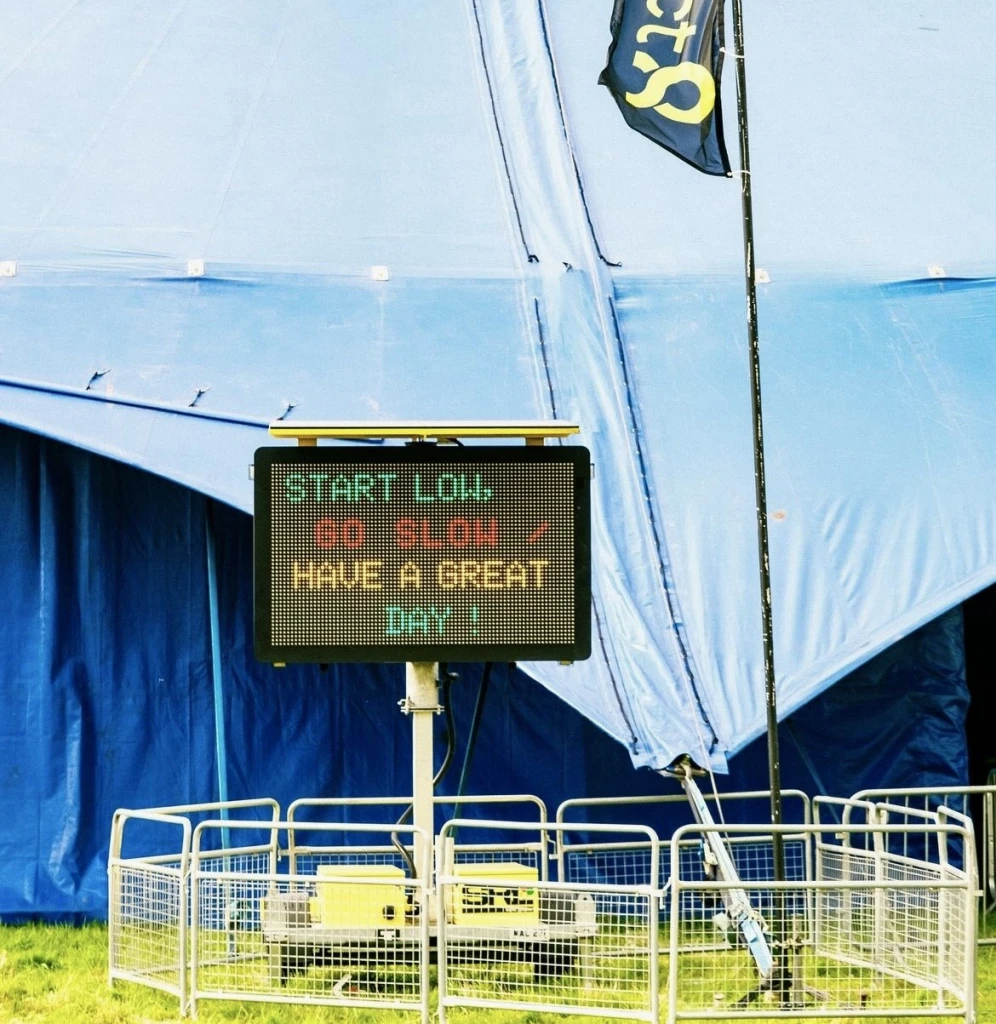
    The initiative has been successful in reaching festival goers. Karen O’Grady, from the HSE said, “Based on discussions at events this summer, we feel our message is reaching people, more and more people are reporting that they are aware of trends and are applying harm reduction measures like “start low, go slow.” 

    Photo Credits: http://www.drugs.ie/festivals  

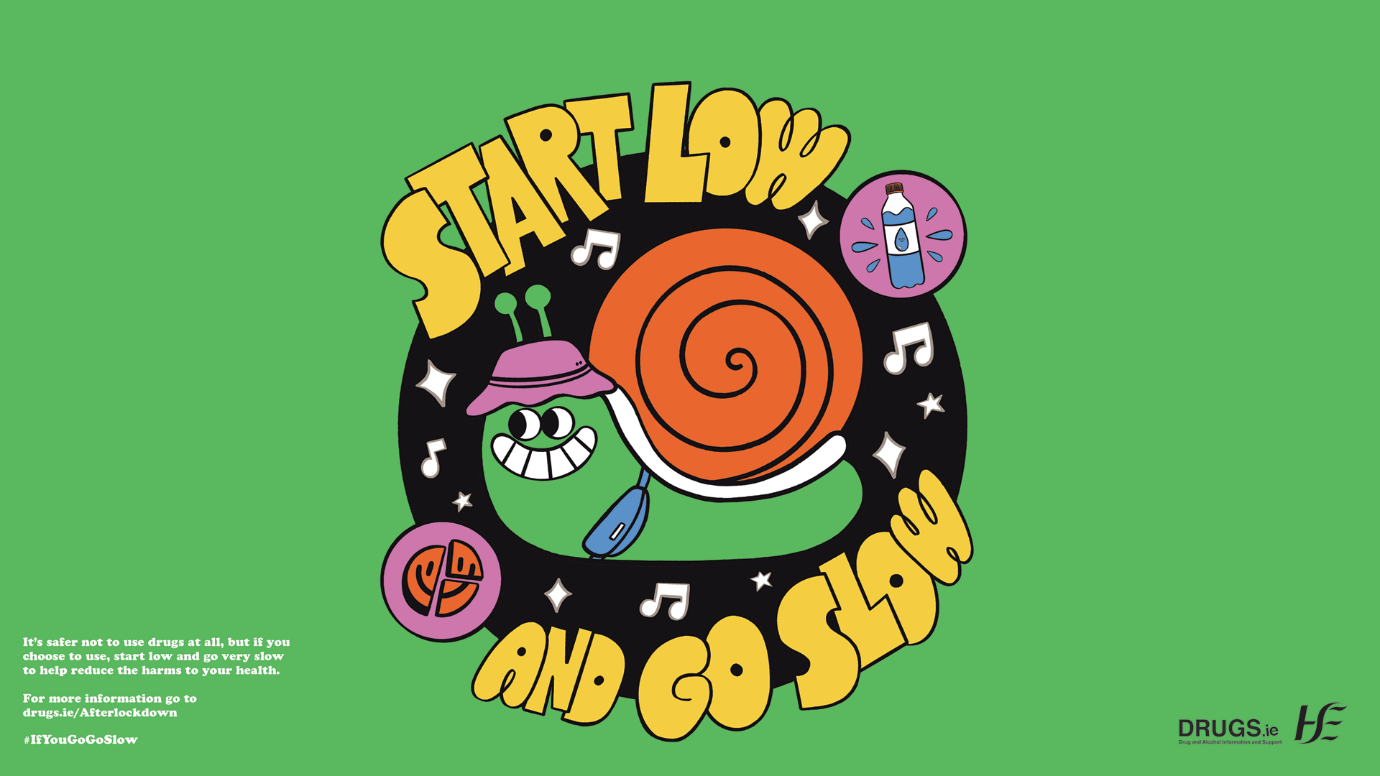
    This is a key message from the HSE, to start low and go slow, meaning that if someone chooses to take drugs they should start with a small dose and pace themselves.  

    When the HSE’s festival campaign first began, there was a fear of Garda interference with the spaces. Karen O’Grady said:, “There is less fear of engaging with us now, people who come to the service see that it is not monitored and feel safe discussing use and surrendering drugs with us. 

    “We will continue to create awareness of drug trends and try to engage with more people to build trust,” said O’Grady.  

    Surrender bins were provided throughout the festival for people to submit drugs for analysis. The service relies on people surrendering drugs for harm reduction purposes- the more drug samples people provide, the more the HSE will know about what is in circulation. This process helps the HSE to issue alerts and spread awareness around particularly risky substances.  

    The ‘back of house’ approach means that the sample is destroyed upon analysis and the person will not be contacted directly with the results. If anything noteworthy is found, this information is broadcast on social media and on screens at events. 

    This HSE initiative was introduced following recommendations from the Government Emerging Drug Trends and Drug Checking Working Group, which examined nightlife environments including festivals.  

    The review identified these as risk-taking settings that can provide the HSE with more opportunity to engage with groups not typically presenting to traditional addiction services. 

    Photo by Sadie Murray 

    Karen O’Grady said:, “The overall aim of the programme is to engage with and support festival attendees in a non-judgemental way on the topic of substance use and related health issues that emerge in nightlife spaces. The programme is based on a harm reduction ethos to inform and support people to amend behaviours to help minimise harms caused by substance use.” 

    The development of a drug safety culture within festivals is crucial with an increasingly volatile drug market and substance abuse epidemic. 

    A recent report from The European Drug Report 2024 found that Ireland had the highest instance of drug deaths in the EU, with more than four times the average number of fatalities. The report showed that Ireland had 322 drug-related deaths in 2020 — 97 deaths per million people, compared to the EU average of 22.5. 

    The HSE’s core message is that it is safer not to use at all and that the drug market is currently very volatile. For those who do choose to use, it is advised that they stay up to date with drug trends and alerts on the HSE site and to follow harm reduction messages. 

    Photo from HSE’s Drugs.ie campaign 

  • Decriminalisation of cannabis: increase in countries opting for drug legislation

    Decriminalisation of cannabis: increase in countries opting for drug legislation

    With the increase of use what is Ireland’s stand point on the drug?

    By Leah Kilby

    In recent years, Ireland has seen a significant increase in cannabis use, with studies showing that over the past decade usage of cannabis has been slowly increasing. A study done by the Health Research Board estimated that over 1.5% of the population over +15 are dependent on the drug. The question remains on what will Ireland’s next approach be?

    Discussions of legalisation/ decriminalisation have been appearing in recent years as more research is made on the subject. A survey done by the Journal.ie found that over 40% surveyed were in favour of legalisation for recreational use and 90% in favour of medicinal use. The Department of Health stated in July 2021 that there would be improvements to the medical cannabis access program, in hopes the program continues to grow to benefit those who need it. Medicinal use of cannabis was legalised in Ireland in 2016.

    Currently in Germany, the future government aims to legalise recreational use of cannabis. This would be a significant step to take as one of the EUs most influential countries. The only places where the drug is currently decriminalized is the Netherlands, Copenhagen (Denmark), Barcelona (Spain) and Prague (Czech Republic). However, if Germany were to legalise it, there are possibilities that more countries would consider doing the same. 

    A study done by Emerald Insight, where they interviewed policymakers, indicated that many of the policymakers were supportive of decriminalization of cannabis, although there have been very few talk among government officials to confirm this.

    While the future of Ireland’s stance on cannabis is still up in the air, there have been many studies done to suggest that decriminalization could have a negative impact on the country. An article by the Irish Times suggested that cannabis use ‘could be one of the gravest threats to young people’s mental health’.

    “Mental health issues associated with cannabis use include psychosis, depression, anxiety disorders and suicidal behaviour. These have been exacerbated by rising levels of THC, the psychoactive part of the drug, in cannabis in recent years.” (Source: Paul Cullen, Irish Times)

    In the UK, there have been plans put in action to try to stop the use of drugs. New sanctions could be put in place where any one caught using middle-class drugs could lose their passport and driver’s licence, essentially making it so they would have nowhere to go. While this approach may not include the use of cannabis there is a possibility that Ireland could implement similar sanctions considering the increase of drug use in the country.

    While many countries have found success in legalisation/decriminalization of cannabis through taxation and maintaining distribution, there are still many negative impacts recreational drug use can have. Currently, Ireland has no plans to change legislation on the drug, but with public opinion becoming softer and increase of usage despite legality, it’s not impossible that we could see more discussion on the topic in the coming years.

  • HSE launches new ‘If You Go, Go Slow’ drug campaign

    HSE launches new ‘If You Go, Go Slow’ drug campaign

    By Shay Galon

    A picture containing text

Description automatically generated
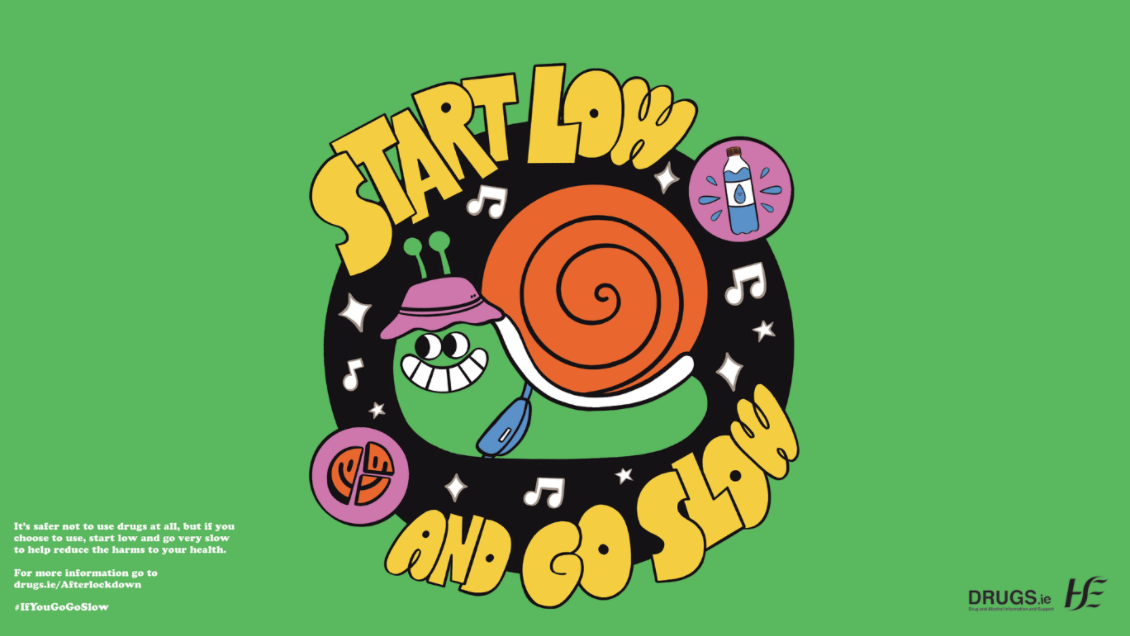
    Image from drugs.ie

    As the concerns for the escalating club drug use in Ireland increased, Shay Galon reports on the HSE’s new campaign urging people who choose to take drugs to do it safely.

    While the HSE says that it is safer not to use drugs at all, it launched a new campaign in attempt to remind those who choose to use drugs to be fully aware of its risks and ‘if you go, go slow’.

    The new campaign was introduced when nightclubs were reopening in the country, despite the mandated midnight closing times. After nearly two years of restrictions, some of which are still ongoing with new variants emerging, people are excited to celebrate with their friends and to return to pre-pandemic normality. Although not everyone uses drugs, the HSE aims to remind people who do to do it slowly and safely.

    “Not everyone who socialises in nightlife venues uses substances, but we are aware of increasing levels of stimulant use among young people in Ireland,” said Dr Eamon Keenan, HSE National Clinical Lead-Addiction Services.

     “We are also seeing use occurring in extra risky ways with people taking multiple substances at a time.”

    The campaign also aims to alert the public that drugs such as MDMA and cocaine that are used in clubs are increasing in strength in Europe, boosting the risk of overdosing. Nowadays, new substances can also appear in pills, powders crystals and cannabis products.

    With the nightclubs open, ‘If You Go, Go Slow’ intends to remind first time drug users to thoroughly think about their actions as people react differently under the influence, especially in new settings and around new people, while considering the effects on mental health.

    According to the Emerging Drug Trends and Drug Checking Report 2021, the HSE recognises that there is an emerging stimulant and poly drug culture among new user groups and there is currently a huge issue of concern across Europe and Ireland.

    “While it’s safer not to use drugs at all, we ask people to consider the steps they can take with an aim to minimise the harms to their health.”

    The HSE’s objectives include to start a conversation on nightlife risks around stimulant culture in nightlife venues and to raise awareness that drugs.ie is the place to visit for drug safety information. This website by the HSE informs people on how to reduce the harms from stimulants, educate people that drugs may be of higher potency and strength and their tolerance might be lower.

    “Based on the reopening of nightlife in the UK earlier this year, we have a number of concerns in relation to overdose and fatalities happening at this time. We are aware that the current drug market trends may lead to the increased likelihood of overdose and people may be at greater risk due to time off from using drugs. Tolerance levels may have changed.”

    To initiate new safer nightlife projects, the HSE has launched a new video series ‘View from the Booth’ to showcase Irish artist’s views on the current drug landscape from their position as DJs. Nightlife representatives play an important role in discussing the topic of drug use and health in a way that appeals to their community. The videos feature Aidan Thompson, Robbie Kitt and Kasey Keating Brady who touch on the topic of nightlife returning, reduced drug tolerance, mental health, peer influence and mixing drugs

    Frank Feighan, Minister of State with responsibility for Public Health, Well Being and National Drugs Strategy, added: “A key objective of the National Drugs Strategy aims to develop harm reduction interventions targeting at risk groups, and it is crucial we make these interventions available in all settings, including the night-time economy.”

    “It is imperative that when people go out to enjoy themselves that they can do so in a safe environment and the provision of these harm reduction messages and services will ensure that.”

    Some people may feel they have to ‘make up’ for lost time which could lead to using substances in extra risky ways. Remember to mind yourself and look out for your friends. If you go, go slow.

  • The drugs don’t work: Substance misuse during the pandemic

    The drugs don’t work: Substance misuse during the pandemic

    Smoking in solitude. Image by Free-Photos from Pixabay

    Substance misuse has been at the forefront of the social issues in Ireland for decades and it is a problem that seems to continue to grow due to the widespread availability of both cheap alcohol and illicit drugs.

    Now, as we face the Covid-19 pandemic, people find themselves isolated at home with their own thoughts – a breeding ground for anxiety that can make it difficult to cope with drug and alcohol addiction. With counselling services stretch thin often these people are left without the help they need.

    A report released in January 2021 on behalf of the drugs policy and social inclusion unit found that 23% of respondents reported using more illicit drugs, and 15% reported using the same amount, citing anxiety and boredom as the driving factor behind their usage.

    pexels-photo-208512.jpeg
    Photo by Pixabay on Pexels.com

    The most commonly used substance was cannabis, followed by cocaine or crack cocaine and ecstasy (MDMA).

    However, cocaine or crack cocaine and ecstasy have seen a reduction in use since the pandemic with fewer opportunities to use and reduced availability of drugs cited as the main reasons for the reduction in their use.

    “We’ve had about a 100% increase of people seeking help”

    Elizabeth Sweeney 

    The report also found that support services were hit hard by Covid-19.

    Counselling sessions were forced to take place over the phone or through video calls, rather than face-to-face meetings.

    “We’ve had about a 100% increase [in 2020] of people seeking help, and the drugs would have been probably 70% of the increase and the alcohol would have been the rest,” says Elizabeth Sweeney, member of the Finglas Addiction Support Team (Fast).

    With regards to how the counselling takes place, Fast has had to adapt. 

    “The initial assessment is by phone,” Sweeney says, “we have to cut down on the footfall in the building, because we have to go by the HSE regulations.

    “And then when it comes to the one-to-one, we would have to schedule them for an hour, but it’s for 45 minutes with key workers allowed 15 minutes to tidy up.

    “We would have a reduced amount than we’d usually have,” she continues. “If we had eight in a day now, we could have had 14 or 15. That means we have a waiting list, and our books are full all the time and we’re constantly playing catch-up.”

    Image by Holger Detje from Pixabay

    With services for those seeking help stretched to their limits due to reduced time available and capacity, many people who struggle with substance misuse are battling their problems alone.

    “As the months went on, the amounts I smoke went up and I became more and more anxious”

    Anonymous

    “When Covid first hit last year I thought it would be for two or so weeks, but that has turned into over a year. At first nothing really changed, but as everything shut down and we were told to stay home I had nothing to do – boredom took over,” explains a man who wishes to remain anonymous.

    “First I started smoking more weed. When I couldn’t find that I’d turn to drink.

    “As the months went on,” he continues, “the amounts I [would] smoke went up and I became more and more anxious with no end of the lockdown in sight. The lack of routine, not seeing people and boredom, I’d say, are the main reasons for my change in habits. I suppose this isn’t the best for my mental health either.”

    When asked if he would seek counselling the man said, “I would but I don’t know where to look. Like, I feel when this eventually comes to an end and things start going back to normal, hopefully my habits will go back to normal.”

    With the end of lockdown in sight and the rollout of vaccines advancing, there are hopes that society will return to some sort of normality soon, allowing those who need help to get it and resume the lives they lived prior to the pandemic.

    If you or anyone you know is struggling with the issues mentioned in this article, text Mental Health Ireland’s drug line at 50808 or contact Alcoholics Anonymous Ireland.

  • Tensions running high in the campaign for medical cannabis

    Tensions running high in the campaign for medical cannabis

    As Vera Twomey’s highly publicised fight for medical cannabis continues, Hannah Lemass explains the differences between cannabis medications

    (more…)

  • A helping hand or a cleanup act?

    A helping hand or a cleanup act?

     As the government publishes the Misuse of Drugs (Supervised Injection Facilities) Bill 2017, Louise Carroll hears both sides of debate over whether Ireland should welcome its first injecting facility.

    (more…)

  • Behind the kitchen door: the realities of working in the food industry

    Behind the kitchen door: the realities of working in the food industry

    The restaurant trade in Ireland has been booming in recent times, but as Gary Ibbotson explores, it’s not as glamorous for the workers making it happen.

    (more…)

  • Dublin residents talk about problems with drugs in the city

    Dublin residents talk about problems with drugs in the city

    Last week, Labour TD Aodhán Ó Ríordáin’s walk through the streets of the city highlighted a major drug problem. This is something that many of us experience on a daily basis when walking around the centre of Dublin.

    We asked some of the city’s residents about their experiences with drugs in our capital.

    By Aidan Kelly and Matthew Colfer

  • Recreational drug use in professional football continues

    Recreational drug use in professional football continues

    Following Hull City footballer Jake Livermore’s failing of a drug test earlier this year, the issue of recreational drug use in football has come under the microscope once again.

    The one time England international tested positive for cocaine use after a random drug test which followed his side’s 2-0 victory over Crystal Palace in April.

    Livermore, who was provisionally suspended by the Football Association and his club, had recently experienced the death of his newborn daughter and, on these grounds, his suspension was lifted by the FA in September.

    Hull City manager, Steve Bruce, attributed Livermore’s use of the class A drug to the sadness the player felt after his daughter’s untimely passing.

    Closer to home, there have been a number of instances whereby League of Ireland players have been cited by the Football Association of Ireland following positive drug tests.

    Most recently, the Professional Footballers’ Association of Ireland (PFAI) announced on October 21st that a League of Ireland player had failed a drug test for a banned substance, which the Irish Independent said was ‘believed to be cocaine’.

    The player, who remains unnamed, waived his right to have a B sample tested according to the PFAI who confirmed that ‘the drug in question was of a recreational nature’.

    The PFAI’s statement noted that the player involved had a right to anonymity and, further, requested that those using social media and other outlets refrain from gossip or speculation until the matter had been resolved.

    Positive drug tests have remained however, highly unusual in Irish soccer.

    The last, and only, time that a League of Ireland player tested positive for cocaine was in 2003 when, then Shamrock Rovers goalkeeper, Barry Ryan, failed a random test and received a 15 month ban from the FAI. This ban was reduced to 9 months after an appeal and Ryan moved on to the now defunct club, Dublin City FC.

    In 2012, Dundalk F.C. midfielder Shane Grimes, then of rivals Drogheda United, tested positive for the stimulant methylhexaneamine, otherwise known as MHA, and was subject to an 8 month playing ban.

    Grimes’ situation was an interesting one as the panel judging the case acknowledged that the player most likely used the substance unknowingly – it is an ingredient in the widely used pre-workout supplement ‘JACK3D’ – although the player’s carelessness in this regard was also noted.

    A statement by the US Anti-Doping Agency (USADA) a year before Grimes’ positive test was titled ‘Beware – Your Supplement Could Cause a Positive Test’. The statement warned athletes to exercise caution when using products like ‘JACK3D’ or other products that may have in fact been ‘designer steroids’.

    For more stories from Conor Murphy, you can visit his Twitter at @conormurphylfc.

  • Falling out of Love/Hate

    Falling out of Love/Hate

    When it ended just before Christmas last year, Love/Hate season three had provided Irish viewers with some of the best television ever produced by the national broadcaster.

    Stuart Carolan had struck gold with his gritty crime drama set on the streets of Dublin.  Drawing in viewers in the hundreds of thousands each week, Love/Hate had the perfect formula.

    Carolan and his team of writers showed no loyalty to characters and were willing to wield the proverbial axe over any star on the show.

    This past Sunday saw the conclusion of season four in the hit drama, and viewers across the country are feeling more than slightly disappointed.

    After the colossal conclusion to season three, fans were expecting another major bombshell this time around.  Unfortunately, this bombshell never came.

    The final episode, as well as the season as whole, is best described as a let-down.  The fourth season followed crime boss Nidge, portrayed brilliantly by Tom Vaughan-Lawlor, as he tries to import a major drug shipment through Dublin port.

    Throughout the six episodes, audiences watched as the Garda drug squad monitored Nidge and his crew.  The stage was set in the final episode for either a major drugs bust which would see Nidge and his “associates” arrested.  When the moment came though, the Gardai, lead by Detective Mick Moynihan (Brian F O’Byrne) made their move to early, and could not pin anything to Nidge.

    Much of the series is based around the importing of drugs through Dublin Port. Image by William Murphy on flickr
    Much of the series is based around the importing of drugs through Dublin Port. Image by William Murphy on flickr

    Many characters throughout the season, who had major roles in the previous season, were brought back simply to play bit parts culminating in them being killed off.  I’m speaking of course of Dano, played by Jason Barry, and Debbie, played by Susan Loughnane.

    In sporting terms, the writers behind season four of Love/Hate bottled it.  They had the potential to create something fantastic, but the series went so slowly, and in such an elongated manner, it suggests that it was written just to set up season five.

    While Carolan and his writers failed to kill off any major characters, the season finale saw two minor characters meet their maker.  Young gun for hire Wayne Cardiff was gunned down by a former friend, while dentist Andrew played by Peter O’Meara was suffocated by Fran (Peter Coonan).

    The deaths of these characters almost make much of the season’s events pointless.  Wayne (Barry Keoghan) spent the majority of the series attempting to hunt down Nidge in order to kill him. However, almost miraculously, all was forgiven and forgotten between the two after a minor run in with the Gardaí.

    O’Meara also had the potential to play a massive role in the outcome of the series, after he agreed to help Moynihan and his drugs squad before being killed by Fran, without the latter even knowing of the dentist’s involvement with Gardaí.

    While the final episode did help to increase the mounting tension between Fran and Nidge, the series never reached the anticipated heights it was believed to be capable of.