Tag: DSPCA

  • Dogs dumped for Christmas: animal rescue lists grow as owners surrender their pets

    Dogs dumped for Christmas: animal rescue lists grow as owners surrender their pets

    By Sian Long and Ana Novais

    In the run-up to Christmas, animal rescues’ phones are ringing off the hook. A lot of the time, the calls answered are not from people inquiring about adopting, but from those who want to surrender their dog. If a puppy is on your own Christmas list, or you’ve been planning on adopting or buying one for a loved one, you need to ask yourself: have I thought about the long- term commitment this animal requires?

    A fluffy, cuddly little puppy can be an appealing choice for a Christmas gift for under the tree and while your choice may be well-meaning, not considering the responsibility of a new pet can have devastating effects on the pet and in some cases, a lack of research and commitment can be fatal.

    As the Christmas period approaches, Gillian Bird from the DSPCA said their rescue team are receiving 20 to 30 calls per day from people who want to relinquish their pets: “The bulk of our phone calls from October on, are from people who don’t want their pets anymore,” she said.

    Following a high number of surrender requests, this year Dogs Trust launched their A dog is for life campaign to make people aware that a dog is not just for Christmas. According to the charity, from January to October 2019, more than 1,900 people across Ireland approached them in order to give up their dog. For someone who wants to surrender their dog, the most common reason they provide is not having enough time to look after them.

    Dogs in Distress (DID) are a rescue charity whose aim is to keep dogs out of the pound system and rehome them by fostering and adoption. Marie from DID says: “There are a large number of dogs dumped for Christmas and people have several excuses. My aunt is coming for Christmas and she’s allergic. We got a new pup and the older dog is not accepting it, we’re going away, the dog chewed the Christmas tree.” According to Marie, the dogs surrendered are nearly always older.

    Many animal rescues just cannot cope with the sheer number of animals given to them over the Christmas period which means that many unwanted dogs end up in the pound. The Irish pound system is in desperate need of reform to ensure that it prioritises the care and comfort of the animals.

    Before you buy a dog, consider the following

    Your new furry friend will require training. You may have to teach her to walk on a lead, to sit and stay and you might have to house and crate train them too.

    Can you afford a vet check-up every three to six months? Can you budget for a trip to the groomers every 12 to 14 weeks? If your dog becomes ill or is injured, can you pay for costly treatments?

    Do you have time to walk your dog at least once a day?

    Credit: Sian Long

    All dogs, young and old, need mental and physical stimulation. Can you find time in your day to play fetch or tug?

    Do you have a backup plan for when you’re out of the house for long periods of time? Who will mind your dog when you go abroad?

    Are you prepared to dig proof you’re home and maintain it as such?

    Will you be able to afford healthy food, toys, chews and treats for the rest of your dog’s life?

    A dog that is never properly trained does not know that peeing on your rug is bad. Almost all behavioural issues in dogs are rooted within a human issue.

    What happens to pound dogs?

    This Christmas, many dogs will be left in cold and lonely pound facilities. Animal rescue charities just won’t cope with the sheer number of dogs being relinquished.

    The real reason that the number of dogs put to sleep is down is because of the great work the private rescues do on very little money.

    The number of dogs euthanized in our pounds is totally unnecessary and is as a result of poor funding and education.

    A pound can be a stressful and scary place for a dog, and, even in well-managed facilities, dogs can encounter stress triggers such as noise, loss of control and unfamiliar people and surroundings.

    When dogs are in fear, they usually respond in the only way they  know how – barking, guarding and defending. Due to a lack of funding and indeed, adequate use of funding, pound dogs do not have much human contact during their time there and rely on members of the public to volunteer to walk and play with them.

    Dogs have feelings and emotions too. If you want to adopt a dog, especially if they’ve gone through a traumatic experience, you need to be patient with them. Being gentle, patient and calm while maintaining a safe space that your dog can retreat to is a fantastic start and will help to build trust with your new pet.

    A dog’s love is forever. So, if you’re adopting or buying a pet this festive season, be sure that you can give your love forever too.
  • Exotic animals on the rise in Ireland, says DSPCA

    Exotic animals on the rise in Ireland, says DSPCA

    The Dublin Society for Prevention of Cruelty to Animals (DSPCA) has recorded an increase in the number of exotic or dangerous animals rescued in Dublin over recent years.

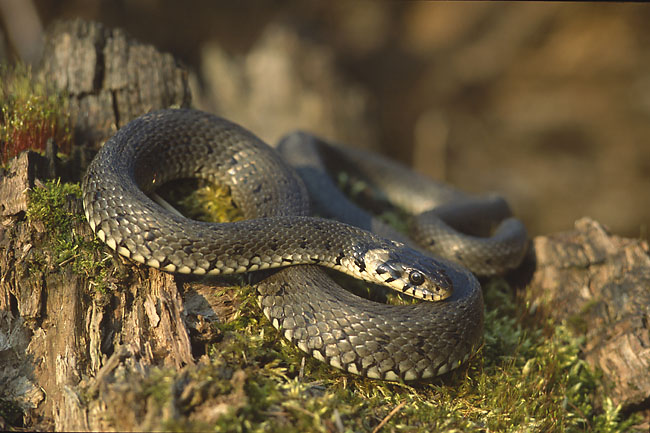
    Micro pigs, pygmy goats, scorpions and snakes are but some of the non-native animals recovered by the DSPCA who then must care for the animals until they can be re-located. Some can be adopted by new owners while others are housed in sanctuaries like the National Exotic Animal Sanctuary (NEAS) in Co Meath.

    In the Irish media there have been some high profile cases of exotic animal rescue, such as the rescue of a scorpion from a building site last month, which has raised the question of whether there is adequate legislation and regulation governing exotic animal ownership. While the scorpion likely came into the country on a foreign shipment of building materials, most of the exotic animals cared for by the DSPCA and NEAS are handed in by owners who feel they can longer care for the creatures.

    The current legislation governing Irish wildlife trade is the Wildlife Act of 1976/2000 and the EU’s CITES [Convention on International Trade in Endangered Species] legislation. This legislation offers very few restrictions on the breeding and importation of exotic wildlife.

    For example, it is perfectly legal to own a tiger in Ireland. There is no license required and no registry is kept of the animal or its owner. While it may be difficult to import the animal, if it is bred within the EU, no paperwork is required to be kept about its existence. It is almost impossible to trace the origin of an animal once it is handed in or rescued, although it is believed that many may be bred in Ireland.

    There are many risks posed by these undocumented animals in Ireland, apart from immediate public health concerns, like the possibility they are carrying diseases and the danger they pose to indigenous species. Gillian Bird, press officer at the DSPCA, said many of the animals identified thus far are not invasive and there is little threat to native animals but only at the moment. She also said that tackling the issue of exotic animals in Ireland needs education. Most owners are unaware of the degree of care many of these animals need as well as the extra costs which will inevitably arise during the course of their care.

    Today, exotic animals in Ireland are still considered uncommon and a niche interest, but the problem is growing and without proper guidelines and legislation in place, rules cannot be enforced and the problem and risk to Irish animals and people will only continue to grow.

    By Chris Kelly

  • Don’t bark up the wrong tree this Christmas

    Don’t bark up the wrong tree this Christmas

    At the age of five, sprinting down the stairs at six o’clock Christmas morning is one of the best feelings a child will ever have. However, opening the sitting room door to see a puppy is a thousand times better – at least that is from the child’s perspective.

    Owning a pet is one of life’s most rewarding experiences. However, pets are more than just a seasonal gift – they’re a long term commitment.

    As the countdown to Christmas is truly upon us, people are searching the city trying to find the best presents for their loved ones. Many households are planning for a furry arrival come the 25th of December.

    Across Dublin at the moment it is almost guaranteed that there are children persuading their parents that this Christmas is the perfect time to get a pet.

    Trying to impress their children, parents get carried away and ignore the fact that a dog will usually live for between ten and fifteen years.

    Dogs Trust and The Dublin Society for Prevention of Cruelty to Animals (DSPCA) are urging people to think long and hard about the decision and are reminding us that, ‘A dog is for life, not just for Christmas’.

    After Christmas, Dogs Trust receive more than 1,000 abandoned and unwanted dogs arriving through the doors of their Rehoming Centre.

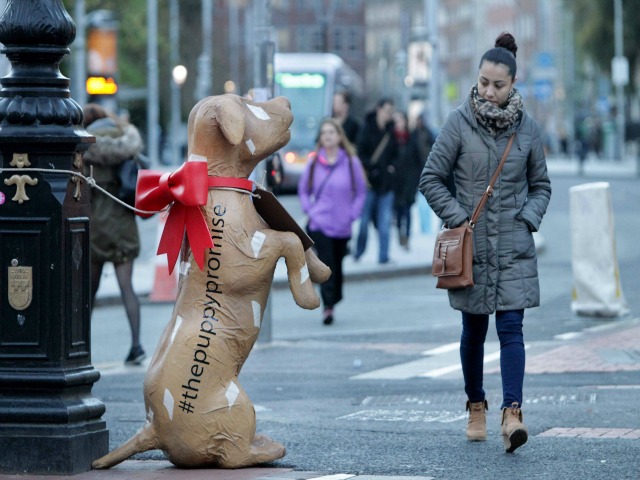
    Back in November, the charity’s, ‘A dog is for life, not just for Christmas’ campaign launched, asking the public to pledge and promise not to buy a puppy this Christmas.

    The campaign also saw large four-foot wrapped model dogs displaying messages like “I was too old” and “They drove off and left me” scattered across key locations in the city centre.

    Mark Beazley, executive director at Dogs Trust, spoke about the importance of the campaign. He said that the model dogs were “abandoned in an aim to provoke awareness and discussion around buying a puppy as a gift this Christmas”.

    “We wanted to try something a little different for our Christmas campaign this year in order to attract the public’s attention and hopefully spread our charity’s message of ‘A dog is for life, not just for Christmas’,” he said.

    He continued: “For us, as Ireland’s leading dog welfare charity, this campaign is very much about encouraging people to stop and think really carefully about the commitment you are taking on when you consider buying that puppy at Christmas. Can you be certain that once the celebrations are over you will still feel the same way about the puppy and your decision?

    “We are at the front line of the sad reality of abandoned and unwanted dogs every day. We really would encourage anyone who is set on getting a dog this Christmas to wait until the busy festive period is over and to consider adopting from your local rescue centre, pound or Dogs Trust.”

    Emma O’Neill, a volunteer with Dogs Trust, said, “We advise people not to get a dog for Christmas because it’s such a busy time with people coming and going they can’t settle. It’s the wrong time of year.”

    She continued: “When you get a puppy for the first year or so it’s bound to be crazy. They’re just like babies in the sense they’re not trained and they teethe. At first thought it can be a great idea, but eventually the excitement fades out and the dogs are being rehoused. It affects the dogs in so many ways. Although we give them the best care we can, sometimes they need more.”

    The charity is asking the public to support and share this important animal welfare message at Christmas by joining the cause and pledging to take #ThePuppyPromise online at www.thepuppypromise.com.