Tag: Dublin City

  • Dublin After Dark: The cost of belonging in Ireland’s ‘social living room’ 

    Dublin After Dark: The cost of belonging in Ireland’s ‘social living room’ 

    A look inside Dublin’s after-hours culture, where connection, caution, and community shape every night out. 

    By Peace Okolo

    As evening settles over Dublin’s city center, the city begins to transition into a livelier, merry atmosphere.  

    Office lights switch off, and the glow of pub signs and streetlamps takes over, casting a warm glow that makes the city even more beautiful. 

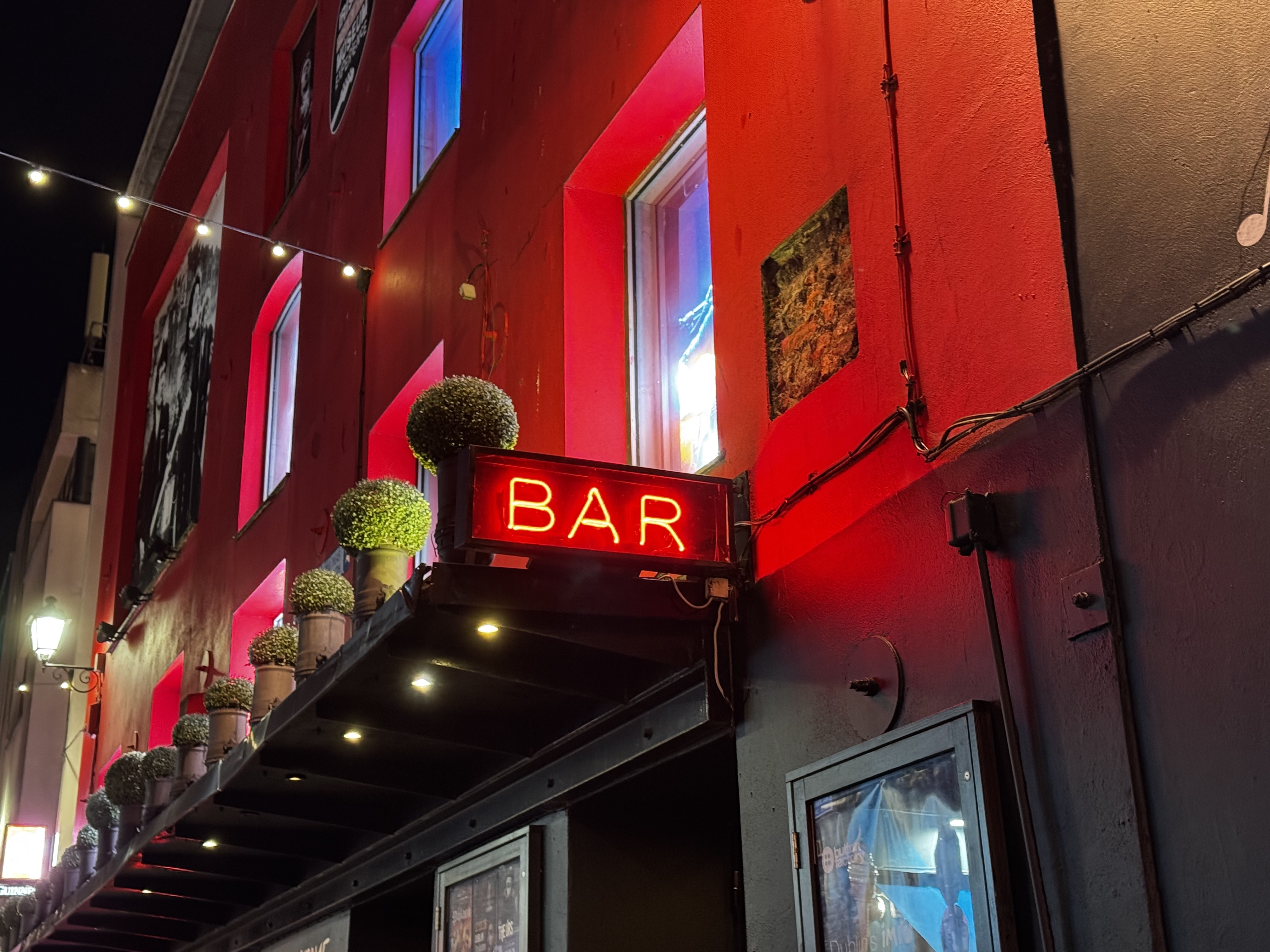
    The bright neon windows outside The George pub shine colorfully against damp, rainy city streets, drawing in clusters of friends seeking music, warmth, a safe space, and something harder to define: a sense of belonging.  

    “I think it’s so fun,” said Yuri Sousa, a Brazilian healthcare worker, standing just off the dancefloor.

    “The weather is really different, but the mood is similar to Brazil. I feel very welcome here.”  

    In Dublin, nightlife functions as a social glue – a space where people connect after long workdays, where migrants find familiarity, and where LGBTQ+ communities find visibility.  

    “You get somewhere, and there’s just a sense of community,” said Eva Tighe from Bray, Co. Wicklow.

    “Everyone is there for the same reason. No judgement. No prejudice. You feel like you belong.” 

    In Ireland, pubs have long been viewed as communal spaces, places where strangers become acquaintances and acquaintances develop into friends. 

    Pub manager Connor O’Rourke, who has worked in the hospitality industry for over a decade, believes this tradition still defines Irish nightlife. 

    “The pub has always been Ireland’s social living room,” he explained. “People don’t just come here to drink. They come here to talk, celebrate, and decompress after work. That hasn’t really changed.” 

    Temple Bar at night. Photo credit: Peace Okolo

    While Dublin’s pubs remain a central part of Irish nightlife, the experience of a night out is changing.  

    For many, the traditional ‘social living room’ is now being shaped by three practical challenges: rising prices, safety concerns, and the ongoing effort to make the city feel inclusive for everyone. 

    Hospitality worker Maeve Farragher is a proud Dub; from Dún Laoghaire, but even with a lifetime of local knowledge, she says being a woman in the city at night requires vigilance. 

    “I feel safe sometimes because I know Dublin,” said Farragher. “There’s a familiarity there. But I’m also very aware of my position as a woman.”  

    Walking through the city center, even in busy areas, she describes moments of being shouted at, stared at, and sometimes worried about the thought of being followed. 

    “You start asking yourself, is he following me? Is he not?” she said. “I’ve had to ring my boyfriend or my dad before. And I hate that. I hate that I have to rely on a male presence to feel safer, or to be treated with more respect.” 

    For many in the queer community, safety is also a concern.  

    “When I’m with my friends, in a group, in a gay club or a pub, I feel safe,” said the Brazilian healthcare worker. “But alone on the street, not always,” he added. 

    Hospitality workers have also recognised their role in maintaining safe nightlife environments.  

    Bartender Tariq Young says venues have become more conscious of customer wellbeing. 

    “There’s definitely more awareness around safety now,” he said.

    “Staff are trained to watch for situations where someone might be uncomfortable or vulnerable. People expect venues to look out for them, not just serve drinks.” 

    Affordability, however, remains a barrier. 

    “No, absolutely not,” Maeve exclaimed when asked if a good night out in Dublin is affordable. 

    “I work in a pub. I see people spend fifty, sixty, seventy euros in one night, regularly.” 

    But for many, nightlife remains deeply tied to Irish culture, not only as entertainment but as a reflection of community and belonging. 

    Bethany Higgins from Ballybrack captures the pull that keeps people returning.  

    “You just want to let loose,” she said. “It’s great connecting with friends. It makes you feel like you belong somewhere.”  

    Despite its challenges, the feeling of belonging is the quiet heartbeat of Dublin’s nightlife. 

    It is why people endure the cost, the planning, and the vigilance. It is why they step back into the city after dark, again and again. 

    The pleasure of experiencing Dublin at night is not just about drinking or dancing. It is about finding connections in a city that can feel both intimate and intimidating. 

    It is about creating spaces where people feel seen, even if the walk back home still requires caution.  

  • Bleeper – the business behind the bunkers

    Bleeper – the business behind the bunkers

    Cycling is taking over Dublin – everywhere you look there’s commuters whizzing through the streets, young people on rented bike shares, and parents cycling with more children than you could ever have imagined fitting on one bike. Bike share companies have become increasingly popular in recent years, and in Ireland especially, small independent companies dominate the market. Even with the surge in popularity of cycle, it’s harder than ever for small companies to stay afloat. So that begs the question – how do you make yourself stand out?  

    One bike share company is using vibrant marketing and really tapping into the joy of cycling to promote the sustainable lifestyle. And even Dublin City Council has noticed. 

     On Oct 16, the council launched the BikeBunkers scheme, a scheme to install secure bunkers so Dublin City residents can safely store their bikes – making cycling more accessible to people living in apartments or with limited space. The BikeBunkers are being run with the bike share company Bleeper Bikes.  

    Bleeper’s BikeBunker promotional image – drawing by Emma Dutton

    Bleeper’s bikes – the white bikes with the purple Payzone logo on the side – operate in Dublin City, Fingal County and Dun Laoghaire Rathdown. They were the first bike share company to hit the Irish market – the independent company was set up 2017 and the first bikes were available to rent in 2018.  

    Kiernan Ryan, Bleeper’s head of marketing said “Hugh Cooney, our founder and current CEO, he had been living and working in China for a few years in the 2010s and he saw how popular stationless bikes were in China and saw that they were coming.” 

    After returning to Dublin, Cooney was inspired to take introduce stationless bike sharing to the Irish market. He began setting up company. The business plan was simple – they place their bikes all around the city and using the app customers can unlock their electronic locks and pay to rent the bike for a short period of time.  

    Since the bikes hit the streets in 2018, they’ve expanded their business model. “From a business perspective, we also do bike leasing now. It’s kind of a subscription e bike service. So, you sign up for your own e-bike, depending on what model it is, it’s between 20 and 40 euro per week. And then included in that subscription fee is any maintenance or repairs, replacements for that bike. So, if anything happens to your bike, you can just come back to showroom, swap out the bike, or our technicians will fix it,” said Ryan.  

    In the past year, they’ve heavily leaned on their unique marketing to drive business. “Recently we’re really tapping into the fact that cycling is one of the most purely joyful things you can do in your day-to-day life. Everyone knows there are difficulties with cycling, whether it’s infrastructure theft or danger from cars. But fundamentally being able to hop on a bike and cycle around the city, there’s a basic joy to that, and that’s something that we’re emphasising through our brand,” said Ryan. 

    Bleeper has been relying on colourful hand illustrations in their marketing, kicking against grey drab stock images and generative AI. “It is going against the grain, because outside stock imagery, there’s also this rise in generative AI imagery, and we don’t really see that as part of our identity, particularly given the environmental and emissions concerns around AI,” said Ryan.  

    “Our whole business model is about reducing emissions through cycling, and you know how much energy a single AI image can create so it doesn’t make sense for us,” said Ryan. 

    As a small company with only X employees, they are shaped by their employees’ talents. “We have skills within our workforce, and we’re really happy to use them. So we have a great employee who is very good at illustrations and hand drawings, and we’re supporting that,” said Ryan.  

    Bleeper’s promotional images – drawings by Emma Dutton

  • Hugh Lane Gallery closes for 3-year refurbishment 

    Hugh Lane Gallery closes for 3-year refurbishment 

    By Aidan O’Boyle 

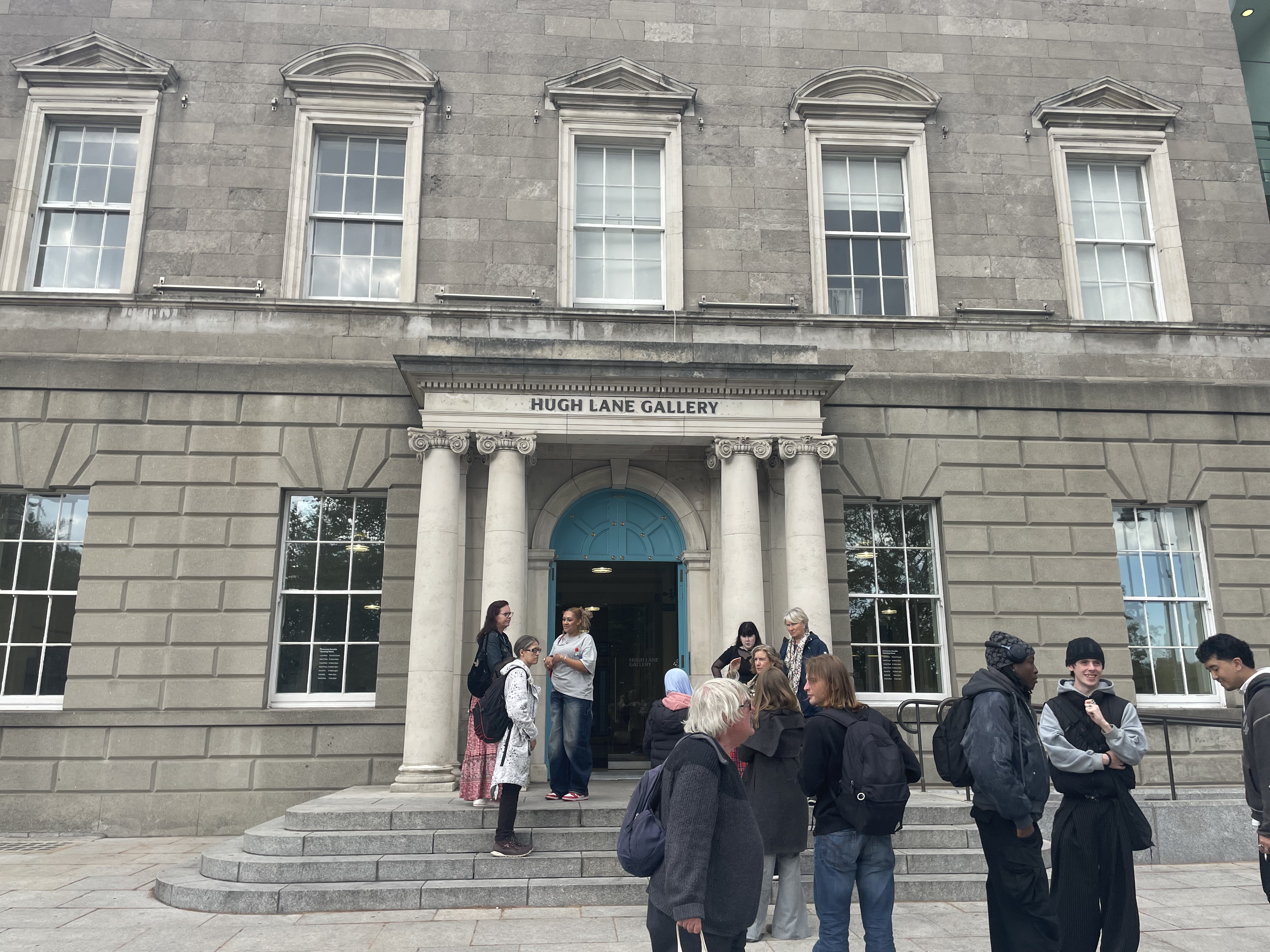
    Hugh Lane Gallery closed its doors last Sunday at 5pm and won’t reopen to the public for another three years. 

    At the end of July, Dublin City Council announced that the beloved art museum would be closing to facilitate the renovation and safe removal of the gallery’s collection. 

    In the statement released by Dublin City Council it said that “the refurbishment will upgrade the gallery’s original 1930s wing to 21st century museum standards of security and environmental controls.”. 

    The statement continued saying that the renovations would “ensure the preservation of the collection for future generations and enhance the gallery’s ability to secure significant international loans.” 

    The cost of the refurbishment is unknown as of now, as the statement read: “The cost of the project will be determined when tender submissions have been reviewed and the contract awarded. It’s expected the tender will be issued in the coming months.” 

    The popular Boghanna Báistí Beaga will reopen when the refurbishment works are completed. Credit: Aidan O’Boyle 

    The refurbishment will also include a direct link between the gallery and the new Dublin City library that is due to be completed in 2029. This is promised to create a unique experience for tourists and locals alike.  

    The library will be popular once opened and Dublin City Council released a statement highlighting what the project will include: “The Dublin City Library Project (Phase 1) will deliver a new 5,500 sqm City Library at Parnell Square North. The project will include a multi-purpose conference centre, spaces to meet, read and study, a café and exhibition areas.” 

    All the paintings and sculptures will have to find new homes for the time being. “A number of important works will be on loan to the National Gallery of Ireland. The Hugh Lane Gallery already has works on loan to the Office of Public Works in Dublin Castle, Farmleigh House and Kilmainham Gaol Museum. The remaining collection will be stored safely in museum standard offsite facilities.” 

    Some of the exhibitions Hugh Lane gallery has had over the years. Credit: Aidan O’Boyle. 

    Most of the artwork will remain in Ireland apart from “the shared paintings from the Sir Hugh Lane Bequest in the National Gallery London. This partnership was signed in 2021 between The National Gallery London, and Hugh Lane Gallery regarding the 39 paintings in the Sir Hugh Lane Bequest, allowing the public in both the UK and Ireland to enjoy these works on a regular basis.” 

    The gallery’s conservation team is now “working hard to safely pack and transport the gallery’s renowned collection to museum standard storage facilities.” 

    Failte le Gra cafe which is situated on the ground floor inside the gallery will also close for the foreseeable future. A notice outside the entrance read “Dear guest, due to the closure of the gallery our last trading day will be the 27th of September. Thank you for all your support over the years and we hope to see you all when the gallery re-opens”. 

    A notice outside the entrance of Failte le Gra cafe. Credit: Aidan O’Boyle 

    Before the gallery closed there was 40 permanent staff members employed. Dublin City Council confirmed that all staff will retain their posts when it reopens.  

    They added that “A certain number of employees will remain operating core aspects of gallery functions including managing the care and conservation of the collection in offsite locations, monitoring environmental controls and daily 24hr security, organising offsite education and community projects and working on future collaborations and exhibitions.” 

    The remaining employees will be redeployed in other jobs throughout Dublin City Council. 

  • Is driving dead in Dublin?

    Is driving dead in Dublin?

    Will we go back to pre-pandemic bumper-to-bumper traffic jams? Image courtesy of Life of Pix via Pexels.com

    Over the last year, Dublin’s city centre has gone through periods of being like a ghost town, with shops, restaurants, and retail outlets shut down, causing reduced traffic and nearly barren streets due to restrictions.

    Drivers, businesses, cyclists, and pedestrians are all competing for space in the city, and with the pandemic’s demand for outdoor spaces the competition for space is more prevalent than ever.

    The Covid-19 mobility plan has introduced new cycle lanes citywide, leading to movements like the Cycle Lane Action Group sprouting up to oppose road space being handed over to cyclists.

    Reducing the number of cars in the city isn’t anything new – before the pandemic, the installation of Luas tracks meant fewer streets in the city could be driven through. Dublin County Council’s city development plan has, since 2016, been working to make Dublin into a pedestrian and cyclist friendly city.

    If you do choose to venture into the city by car, the parking prices are often sky-high, with spaces ranging from 60 cent to a whopping €3.20 an hour.

    Is Dublin’s city centre destined to become pedestrianised, with public transport walking, and cycling being the only way to venture into the heart of the city? And is that such a bad thing?

    I asked the people of Dublin for their thoughts on the matter.

    “At 30km you’re barely moving. I understand safety but I don’t think it’s fair”

    Brian

    Earlier this month, the Love 30 campaign backed by Lord Mayor of Dublin Hazel Chu, sought to bring the speed limit of the city down to a blanket 30km/h in an effort to improve safety and reduce road accidents.

    However, while the campaign garnered some support it was also met with backlash from certain members of the public and some county councillors.

    The campaigners are now attempting to bring in a 40km/h, which will apply to roads like Dorset Street and the Clontarf Road.

    “At 30km you’re barely moving. I understand [it for] safety, but I don’t think it’s fair. The guy in the car now, the motorist, is being penalised for every single thing. People are paying high car tax and insurance, and I think they have a right to bring their car [into Dublin city] and pay exorbitant prices in car parks,” says Brian, a Dublin native.

    These streets belong to the pedestrian! Image courtesy of Jeshoots.com via Pexels.com

    This frustration is understandable for those working by car or van in and around the city. Changes in infrastructure over the last few years has already meant changing routes and a reduced speed limit, which can lead to further disruption of services and cause motorists frustration and stress.

    “The government and the councils have tried to get rid of cars and traffic from the city centre for long enough, some of us live areas not too far from the city who do not have an adequate public transport system”

    Brída

    What about those sharing the road with motorists, the people whose safety this campaign is trying to protect – would a lower speed limit make the city safer?

    “Absolutely, especially for cyclists as well. I know there’s a lot of talk ‘oh you know they’re not paying road tax’ but a lot of cyclists are motorists as well, and they cycle in the city. I’ve cycled on the ‘Tunnel of Death’ on Westmoreland street and it’s tricky enough, especially for cyclists but pedestrians as well,” says Jo, an avid cyclist who I met on Grafton Street.

    While there are some clear benefits to this proposal, it’s unclear if the Love 30 campaign will be robust enough to stave off its critics, and that plan may already be dead in the water.

    However, this campaign isn’t the only plan to change the city’s infrastructure.

    Minister for Transport Eamon Ryan and the department of transport have released a paper proposing that congestion charges should be implemented in Dublin and Cork city.

    This is in an effort to reduce carbon emissions by discouraging motorists from driving in the city – reducing traffic and air pollution.
    “Today is my first time in the city for god knows how long and I’ve just found it so easy to cross the road”

    Stephen

    “A lot of people already leave their cars in train stations and travel in by train,” says Graham from Dublin, who agrees with the idea of congestion charges.

    For pedestrians, less traffic around Dublin city is a nice prospect – especially when they’ve become accustomed to it after a year of lockdown.

    “Today is my first time in the city for god knows how long and I’ve just found it so easy to cross the road. There’s buses but there’s not so many cars, which I was surprised by because I thought people were genuinely back at work, and I’ve really enjoyed that, but then again I’m a bit of an introvert,” says Stephen.

    Apart from pleasing the pedestrians, the environmental benefits of congestion charges are clear, and can be seen by the success of cities like Stockholm.

    But, is the city ready for a change like this?

    “The government and the councils have tried to get rid of cars and traffic from the city centre for long enough. Some of us live areas not too far from the city that do not have an adequate public transport system. We’re not near the Luas, not near the proposed underground and we have an appalling bus system,” says Brída, a Rathfarnham native who feels strongly that the government should focus on improving public services before ridding the city of cars.

    It’s clear that something needs to change, and it needs to provide adequate services to the public while considering the environmental impact.

    If we are to tackle emissions in a meaningful way traffic needs to be reduced, but if the intention is to pedestrianise the city further, the public transport system may need a closer look.

  • Podcast: The puzzling disappearance of Dublin’s cultural landscape

    Podcast: The puzzling disappearance of Dublin’s cultural landscape

    The disenfranchisement of Dublin’s artistic community is no small issue. Photo from Jigsaw’s toilets courtesy of Jen O’Leary
    Listen to Jake Hurley investigate the disappearance of Dublin’s cultural spaces

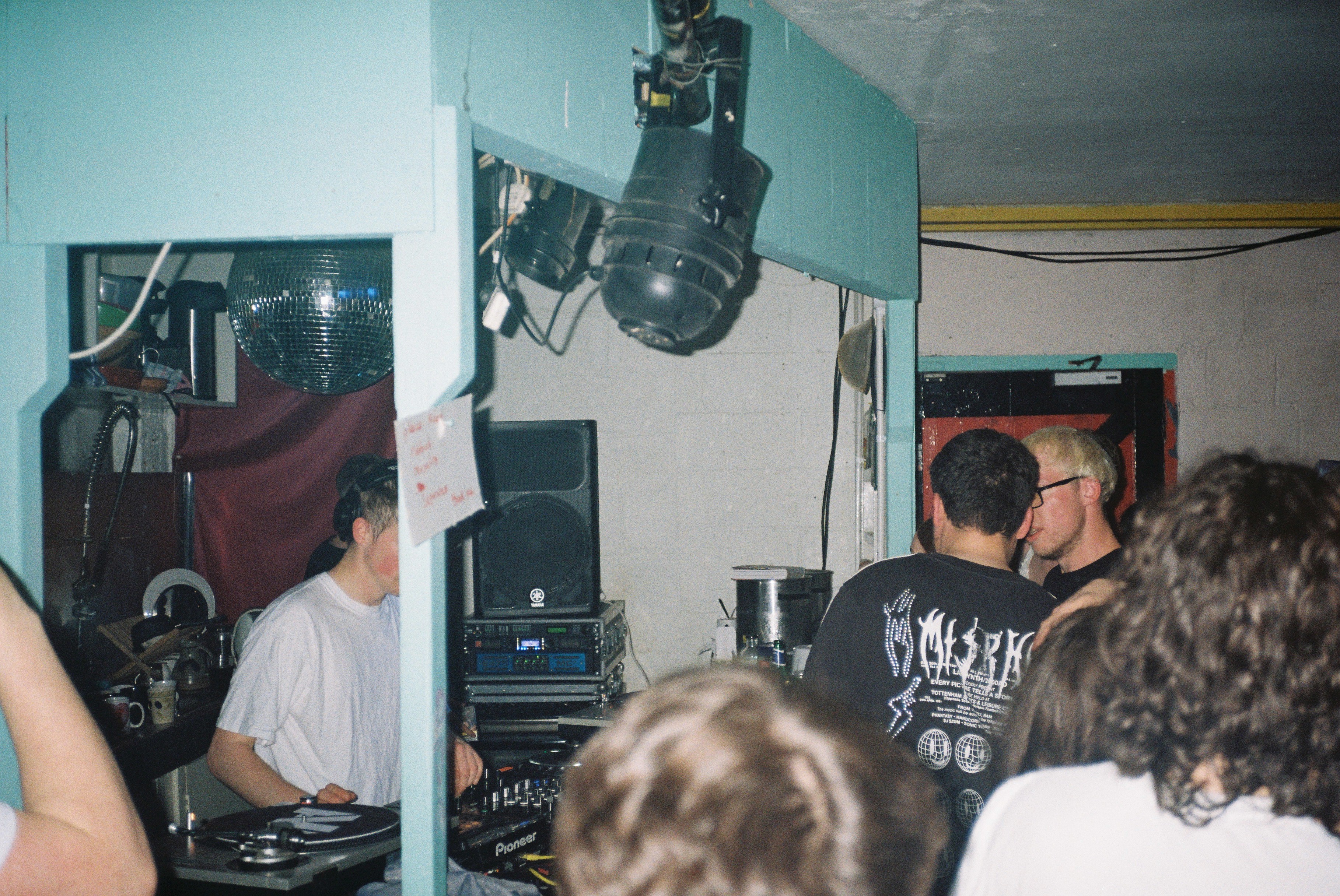
    Since its first incarnation as the anti-capitalist social centre Seomra Spraoi, Jigsaw has served as a focal point for creativity in Dublin City – countless collectives of musicians, artists and activists called it home and it served as the base for the left-field programming of Dublin Digital Radio (DDR) for many years. 

    The announcement of its closure last week has reignited the ongoing conversation around the rapidly diminishing cultural infrastructure in Dublin. The growing sentiment amongst artists is that the policies of successive neoliberal governments have been at best indifferent and at worst hostile to creative expression in the capital. 

    To get a better sense of the discontent brewing Dublin’s creative quarters, DDR DJ Jack Hevey, who makes music under the Boyfren moniker and wrote a thesis on the cultural landscape of Dublin while studying at the University of Amsterdam, spoke to The City to give his perspective. 

    Hurley also consulted former Jigsaw and DDR regulars sohotsospicy, a DJ and producer who recently released her debut EP, and the up and coming Irish electronic producer Rory Sweeney who recently shared the track Freak as part of the City Imp Records compilation Chancers.

  • Roll out the carpet: Dublin city’s cycle lanes get a scale and polish

    Roll out the carpet: Dublin city’s cycle lanes get a scale and polish

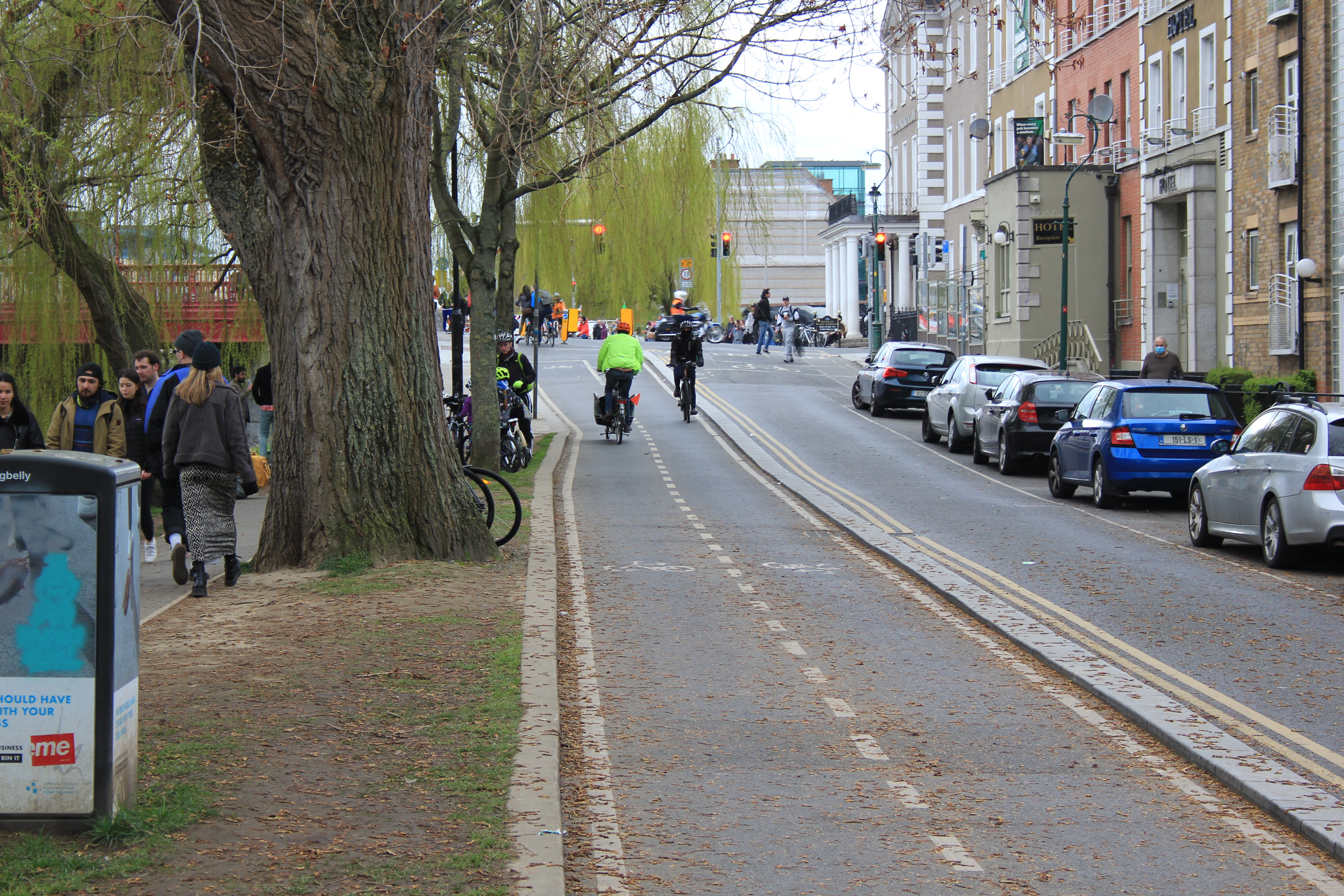
    Double cycle lane along the Grand Canal, photo by Mario Bowden

    Dublin city centre sits still and quiet these days. Traffic is noticeably tamer, with less gridlock traffic at rush-hour. For cyclists, this means less jostling and narrow manoeuvring through buses and cars. A bit of breathing space.

    Certainly there are fewer people cycling in to work too – as people shift to working from home. But the bike is still in-motion. For some it’s a mode of work – takeaway drivers and couriers are still zipping around. For others it’s a form of escapism: people getting out and about in the sunshine, others doing ‘wheelies’.

    Some are opting for the bike in order to avoid public transport too. Indeed, this trend is not unique to the current health crisis – people were encouraged during the 1918 Spanish Flu to get peddling.

    New Cycle Lanes

    With the lack of footfall in the city centre since the first lockdown, space became time. There was time for Dublin City Council (DCC) to implement various new and distinctly designated cycle routes across the city.  

    “I don’t think anyone would say cycling has been well provided for on Dublin city streets”

    Ali Grehan

    Some of the new cycle lanes across the city include the implementation of the the Liffey Cycle Route along the North Quays, contraflow lanes on Nassau Street, and the more recent route up O’Connell Street Upper and North Frederick Street. All of these are provided with bollards and black and white ‘orcas’ to segregate cyclist traffic from cars, buses and trams.

    “The new cycling lanes are still a work in progress,” says Ali Grehan, Dublin City Architect at DCC.

    Grehan continues: “They are much needed. I don’t think anyone would say cycling has been well provided for on Dublin city streets, particularly heavily trafficked ones – so in that sense they are successful in that they’re making necessary improvements.”

    While the quick thinking of DCC has been a positive for the city, it is not without its pitfalls. For instance, the Nassau Street contraflow lane suddenly stops at Dawson Street, forcing cyclists to merge with traffic suddenly – not to mention Luas tracks – at one’s peril, with any false move.

    The implementation of cycle lanes is not exclusive to the city centre either. Griffith Avenue on Dublin’s Northside has seen a fully segregated lane being rolled out across parts of its 4km stretch from Glasnevin to Marino. In May 2020 the Phoenix Park closed off sections of its roads to cars for the summer months – creating more space for people to mill about on their bikes.   

    On the Continent  

    European cities have always been miles ahead of Dublin when it comes to cycling infrastructure. But, we are not alone in terms of cities that took the current opportunity to shift the emphasis to cycling – Paris being the most prominent.

    It’s estimated that Paris’s cycling population grew by 65% in 2020 – significantly decreasing the CO2 emissions normally emitted from traffic.  Paris authorities responded to this increase by constructing more cycle routes, and further expansion of its bike scheme.

    “The problem is, while you can look at Copenhagen or Amsterdam – [which have] great cycling infrastructure – it’s difficult to transpose one city’s approach to another,” Grehan says.

    “Dublin has its own particular physical and cultural context and any initiative has to understand and respect this. It’s a complex issue. An example is Dublinbikes. There was a general expectation among commentators that the system would be vandalised. People were surprised when there was virtually no vandalism and Dublinbikes became very successful, very quickly.”

    The full extent of the success of Dublin’s cycle lanes remains inconclusive as the city remains less active than in normal times, Grehan concedes. But with smarter innovation and progressive steps made by campaign teams and authorities, a change to Dublin’s road culture is being paved.

  • What a waste – A rubbish situation on Dublin streets

    What a waste – A rubbish situation on Dublin streets

    By Mark Donlon

    Dublin City Council have 3,200 bins in operation within its jurisdiction.  Of these bins, there are none which cater for waste other than solid rubbish.

    The figure of 3,200 bins is an approximation based on the number of bins Dublin City Council (DCC) say tend to be in operation at any one time. Of that total number, there is an estimated 1,170 bins situated in either Dublin 1 or Dublin 2, the postal codes which represent Dublin’s North and South inner city respectively.

    According to Simon Brock of DCC’s Waste Management Services, there is no segregated litter bin system in place in these areas.

    Photo Credit: Geograph.ie

    “The number of City Centre facilities for waste disposal other than solid rubbish is around the 100 mark,” explained Brock. “Of those facilities, the vast majority would be bring centres and bottle banks at civic amenity sites.

    “Segregated bins for rubbish disposal of all types were trialed a number of years ago with no success and then last year another trial was carried out with segregated bins placed in locations on Wolfe Tone Square and South King Street, but again it didn’t work.”

    The most damning culprit for the trial system was one which has been running the gauntlet in recent years. “In the case of 2018, coffee cups were the biggest contaminant,” said Brock.

    Photo Credit: Wikimedia Commons

    Despite the unsuccessful attempts to combat inadequate city waste disposal, Dublin City Council plans to make another attempt at solving this problem come 2020. They also plan to tackle the amount of waste from the city going to landfill.

    “Roughly 10% of all waste collected in the City Centre ends up in landfill,” said Brock. “That’s a figure we always want to decrease.”

    So what is the message from Dublin City Council?

    While the council must devise a more simplistic improvement which makes correct waste disposal easier for the urban population, the urban population also must react accordingly and make proper use of improved facilities.

  • Video: Dublin’s First Traditional Christmas Market

    Video: Dublin’s First Traditional Christmas Market

    Dublin’s first city centre traditional Christmas market opened on 13th November outside the St Stephen’s Green Park. The market offers a selection of Irish crafts, including hand-made accessories, wood-crafts, jams, cookies and knitted jumpers. A large selection of food and drinks are also available, with crepes, hot-dogs, burgers, hot chocolates, mulled wine and lots more. The market is open to the public every day from 12pm to 8pm and is planned to run until the 23rd of December. Last week, TheCity.ie spoke to the people outside St Stephen’s Green to see what they think about the market.

  • Clerys re-opens on O’Connell Street

    Clerys re-opens on O’Connell Street

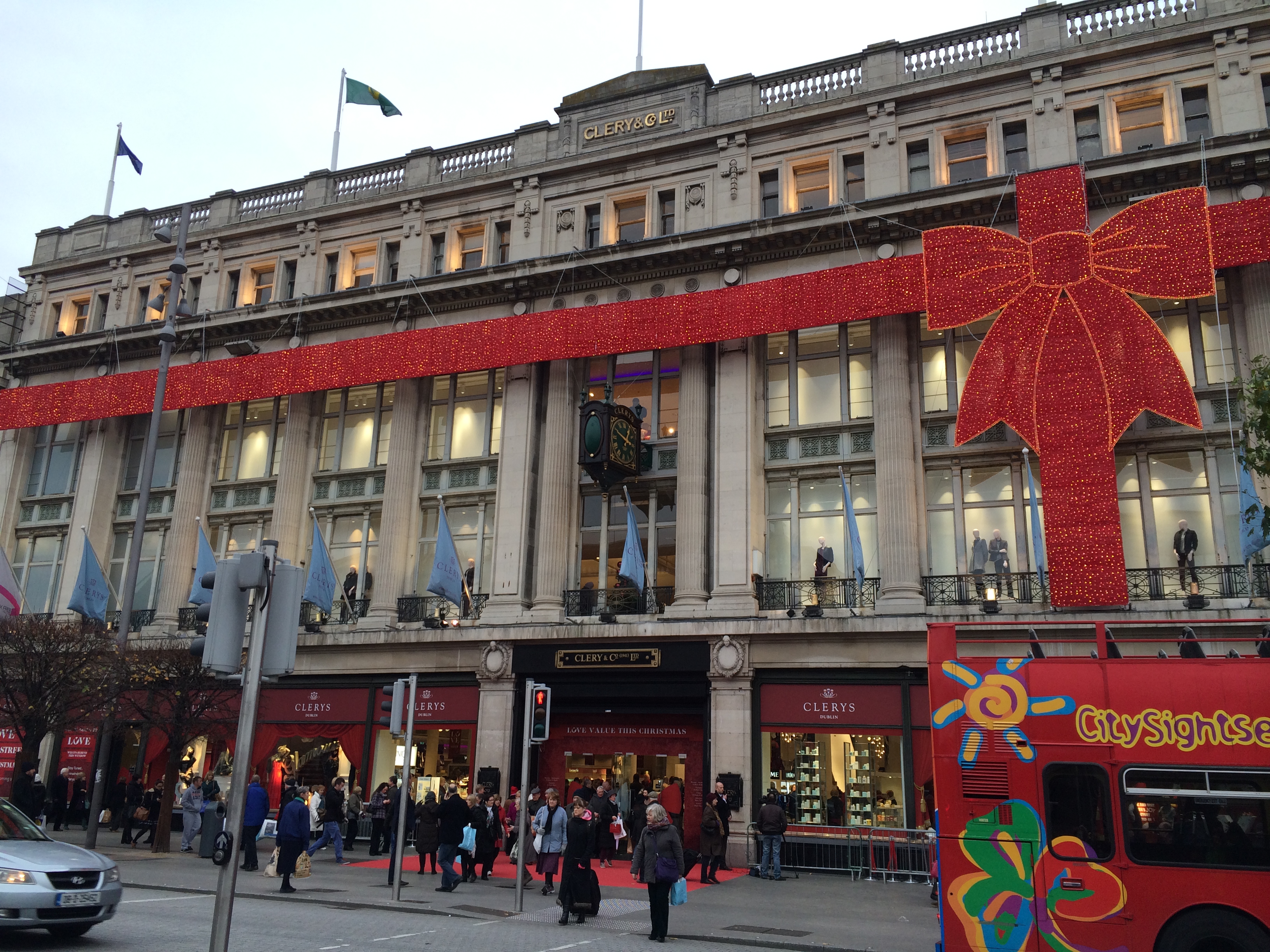
    Hundreds of happy customers turned out in the freezing cold this morning to see the re-opening of Clerys on Dublin’s O’Connell Street.

    The department store, which is one of the oldest of its kind in Europe, closed suddenly last July when flash flooding caused millions of euro in damage.

    Minister for Arts, Heritage and the Gaeltacht Jimmy Deenihan re-opened the 160-year old retail emporium to a large crowd, who had waited in anticipation all morning to catch a glimpse of the renovations.

    The red carpet was out for the re-opening.
    The red carpet was out for the re-opening. Photo credit: Stephanie Quilligan

    Anne O’Grady, 74 from Coolock in Dublin said “I am delighted to see it re-opening. Myself and my friends used to come into Clerys every Friday and do a bit of shopping, I really missed it while it was closed”.

    Shelly Casey, 63 from Dublin City said “I really love the new look. I am a big fan of Clerys and always have been. I really would have been lost doing my Christmas shopping without it”.

    The store re-opened just in time for the Christmas season, which will come as a delight to its 86 staff who were temporarily laid off while the shop was closed.

    Together with the 86 returning staff there has also been further employment with new brands like Fuse Fashion which offers a range of different dresses, being welcomed to the new store.

    Clerys is offering up to 50% on many of its brands for this weekend only, which is sure to gather a large crowd to the department store over the coming days.