The Central Statistics Office on November 13th released the consumer price index for this year, which shows a 2.9% increase in the inflation rate over the last 12 months, which is the fastest and highest rise of inflation since March of 2024.
The increase will affect the prices of food items such as dairy and pastries. The price of poultry and meat increased by 6.6% which will affect the price of viands such as Chicken, beef, and turkey.
Meat prices at dunnes – Photo By: Synoah Penaflorida
Aside from household staples, an increase of 7.7% in health insurance, 3.7% in electricity, and 3.6% in rent was reported in the current figures.
Going around Dublin city centre, TheCity asked a few people how much they will be spending this Christmas.
Economist, Dr. Clare O’Mahony, will also be commenting on the hiking prices this holiday season.
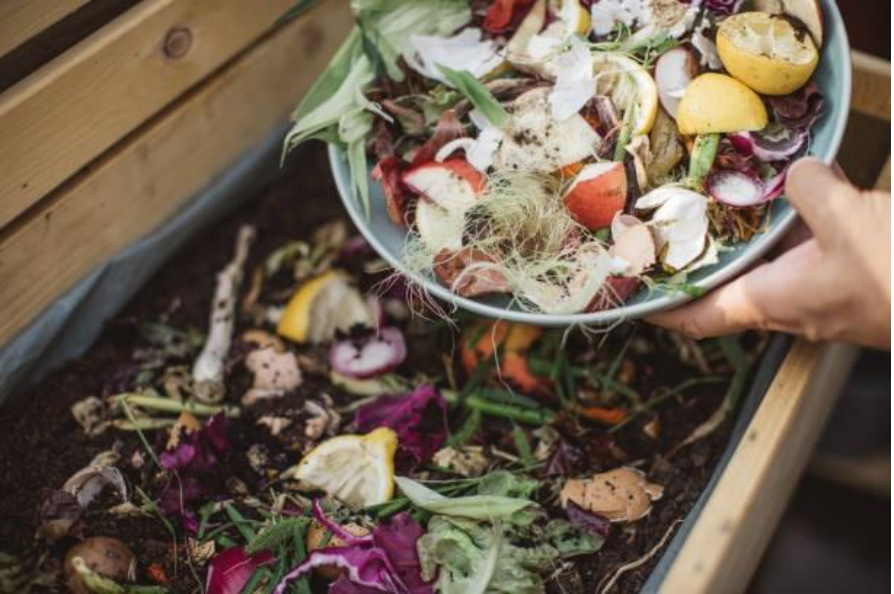
Food waste is something that isn’t mentioned as often when speaking about the climate crisis, as it is only accounting for 10% of the total percentage with the climate crisis.
The main issue with food waste is the significant resource waste it uses to bring your food from fork to plate, but also the carbon monoxide emissions. Deforestation is another major consequence for the ever-growing demand on the agriculture sector.
On a global scale, the average number of hectares of forests lost is 10 million each year. This happens everywhere but is most apparent in tropical forests in Brazil, Indonesia and the Democratic Republic of the Congo.
Climate activist Arielle Calajate, who is involved in multiple eco-friendly initiatives said, “People don’t realise how truly important the trees are to the climate, and responsible for a lot of what food we can eat. They give us fruits, nuts, healthy soil for food, a water cycle regulation, and pollination. So many important things are given to us by trees.”
Ireland’s deforestation rate is historically low for 2024, with only 670 hectares of trees lost. From 2001 to 2023, Ireland wasn’t as lucky and lost a total of 161,000 hectares of trees. For the small isle of Ireland, it meant we had lost 19 per cent of our national tree coverage from 2000 onwards.
According to Calajate,“by cutting down trees to provide us with more food, we are effectively hurting the one thing that is helping to keep everything okay. This is something the earth has been doing for centuries, long before we started abusing it.”
Statistics released by the Environmental Protection Agency (EPA) show that Ireland has wasted over 835,000 tonnes of food waste in 2023. This means that the average weight of food waste for a person in Ireland is 162kg. Ireland’s food wastage is higher than the European average, which is 132kg per person.
Statistics released by The Central Statistics Office (CSO) stated that food and non-alcoholic drinks increased in waste from 4.7% in the beginning of 2025. It is now at 5.0% in September 2025.
When you keep food in a highly acidic environment of vinegar or brine, it can add to the shelf life of that food for months, when they are properly preserved and sealed. This way of preserving food helps to prevent spoiling by preventing bacteria from growing.
Statistics by the Environmental Protection Agency mention that global food waste accounts for 8-10% of the total greenhouse gas emissions. When food is disposed of in landfills, it releases methane gas, which is a potent gas with a climate warming potential that is 84 times higher than carbon dioxide over a 20-year period.
There is no problem with the usage of agricultural land to produce food for the growing population, the problem lies in large percentages of these patches of land are used to grow food which is not consumed and wastes valuable resources.
Research done by the World Bank Organisation found that around 70% of the world’s water usage is used for food. This makes food a significant waste of freshwater and groundwater resources. Another resource used is the energy consumption, as 38% of the total energy used globally for food, is for food that is never eaten.
Your own impact on food waste can be a big help to stop the growing problem of food waste and its depletion of natural resources, and most are decisions that can be made at home. Buy in smaller quantities, if possible, from your local markets.
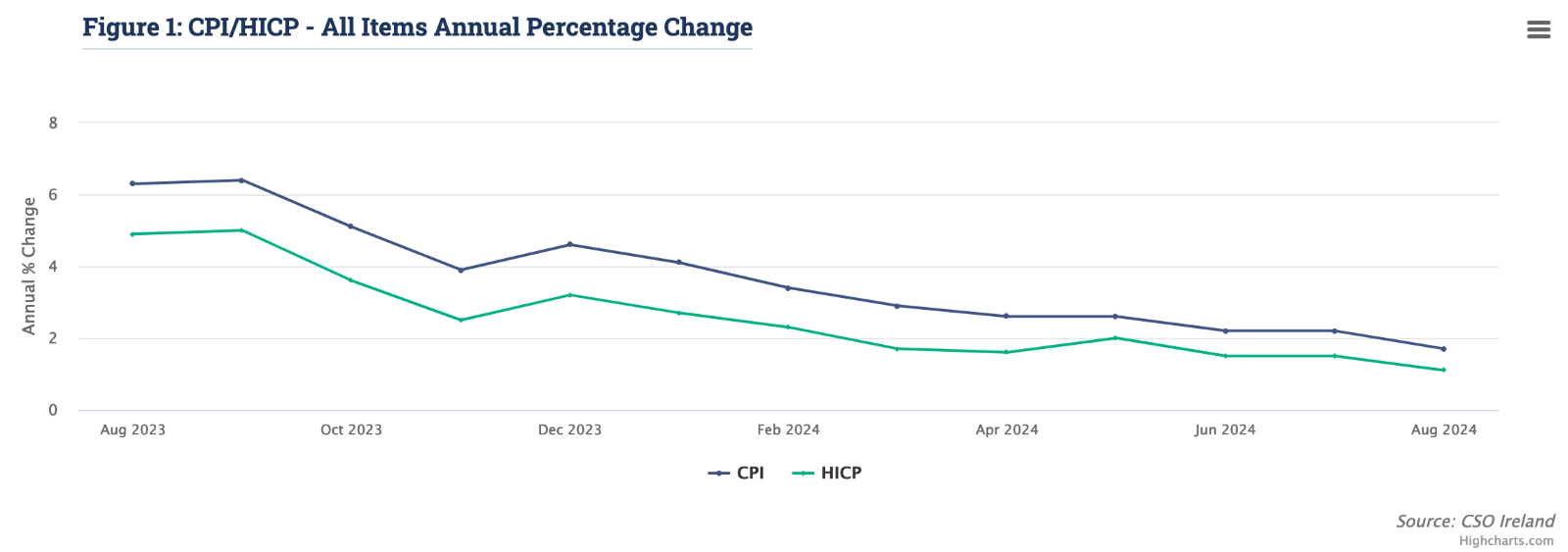
The latest statistics show that the Consumer Price Index (CPI) rose by 1.7% between August 2023 and August 2024, down from July’s increase of 2.2% from last year.
Commenting on the report Anthony Dawson a Statistician in the prices division said, “Today’s publication of the CPI shows that prices for consumer goods and services in August 2024 rose by 1.7% on average when compared with August 2023. This is the first time since June 2021 that the CPI, Ireland’s official measure of inflation, has been below 2.0%.”
Source: CSO Ireland
The biggest drop in pricing was found in clothing and footwear, which went down by 6%, and a drop of 2% in utility prices such as fuel, water and electricity.
When asked about the effect these drops have on consumers Maeve Ahern, an author on the report stated: “We’re looking at a positive downward trend for households in terms of their utility bills and clothing costs mostly due to providers cutting their rates by about 3%.”
Alcohol and tobacco saw a rise of nearly 4% as did transport costs, the highest increases in comparison to last year were found in restaurants and hotels at 4.5% which according to Ahern is a direct result of alcohol becoming more expensive this year.” The national average price for a pint of larger now sits at €6.25.
Transport has gone up “primarily thanks to an increase in petrol and diesel, alongside airfares getting more expensive as well,” says Ahern.
The CPI also stated that “Miscellaneous Goods & Services” have risen by 4%. This would be items such as health and motor insurance, or personal grooming services such as salons and barbers, according to Ahern.
According to the EU Harmonised Index of Consumer Prices (HICP), which measures the average inflation rates across the EU, prices on average went up by 1%.
Alongside the CPI the National Average Price table was released. This measures the average prices for select goods and services across the country.
Source: CSO Ireland.
Other notable items include a decrease in the cost of a slice pan on average, cheese and spaghetti, with a 2 litre carton of milk remaining the same price.
Dawson added: “It’s important to remember that this is only a flash estimate and not the final HICP which is released in January of next year, so full quality control can’t be guaranteed, these flash estimates are a useful indicator to see the type of trajectory we’re on however.”
“I’ve definitely been spending more the last few shops, I think things are just getting pricier everywhere, especially food,” said Mary Donnelly (36), a primary school teacher when asked about her shopping habits.
When asked about her thoughts on Ireland’s inflation rate dropping, she said, “I can’t say I have much a grasp on that, but if things don’t change soon, we’re all going to be making major changes to our lives, especially with the cost of rent on top of all this.”
John Scally, a senior economist with the Central Bank commented that, “we’re getting closer to our target of 2% annual inflation by 2025, 2% is an important target to hit for Ireland for the creation of conditions that will lead to sustainable growth for both households and for businesses as well.”
According to Scally, “inflation has become much harder to parse in recent years thanks to the ongoing war in Ukraine affecting prices of things like gas and even crop plants and of course the Covid 19 pandemic which completely threw off the world economy never mind just Ireland’s.”
“Ireland has always been at the whim of external inflation since we’re an open economy, and thankfully the shocks are beginning to subside, as of now we’re looking into inflation for next year and for two years ahead of that to keep our estimates as accurate as possible.”
“We’re looking into ways to further improve our accuracy by looking at implementing new tools like machine learning and AI which should help not only with the accuracy of our reports but also the speed we can get them finished at.”
It was Ronald Reagan, of all people, who pointed out that if prostitution was the world’s oldest profession, and politics it’s second oldest, there was often not a lot of difference between the two. Political corruption is as old as the hills, but is it inevitable?
“You will never get rid of the human tendency to corruption, but it can be combated with better safeguards, more openness and transparency,” said Sean Byrne, a lecturer in economics at Dublin Institute of Technology.
It’s important not to overstate the problem of corruption in Ireland. Political corruption was at its worst in the years before the Celtic Tiger and Ireland is currently ranked 25th out of 176 in Transparency International’s annual Corruption Perceptions Index, ranking joint 11th with Austria of the E.U member states. Corruption is certainly not as bad as some would have you believe, nor as widespread as in the past.
“Ireland ranked rather high in the official corruption index in the late nineties and early noughties, but since then levels of corruption have been declining significantly,” said John Gallagher, a PR course director at DIT.
It is a view echoed by Sean Byrne: “Relative to other countries, we are not doing too badly. A country like Italy, for example, is far more corrupt. The amount of over regulation by the state inevitably leads to corruption, because it is simply impossible to get anything done without it.”
If Ireland is not anymore corrupt than comparable European countries ,it has traditionally been weak at holding corrupt politicians to account.
“Parliament in Ireland is weak relative to government, and has no right to launch independent investigations,” said Sean Byrne, “contrast this to the UK, where independent parliamentary inquiries are common, for example, the recent Leveson Enquiry in to the press.”
It is often said that a society gets the politicians it deserves. Perhaps the public must shoulder some of the blame for allowing corruption to go unpunished in the past.
Sean Byrne detects an air of ambivalence from people and perhaps a level of tolerance:
“People don’t like the idea of corruption, but at the same time often have the idea that one day they might benefit from it,” he said.
But things are moving in the right direction. This July saw the publication of the Protected Disclosures Bill which provides for the protection of whistleblowers in all sectors of the economy. It was a move welcomed by Transparency International Ireland, an organisation dedicated to the eradication of corruption.
“This could be a hugely important step in the fight against corruption and promotion of good governance in Ireland” said John Devitt, Chief Executive of TI Ireland. “With almost half of all cases of fraud and other forms of wrongdoing exposed by whistle-blowers, it’s time that they enjoy the protection of the law for acting in the public interest,” he added.
“Our politicians have learnt a bitter lesson,” said Sean Byrne. “All the political parties are now eager to show themselves as full of probity – Fianna Fáil are particularly anxious to show that the era of Haughey and Ahern is behind them.”






You must be logged in to post a comment.